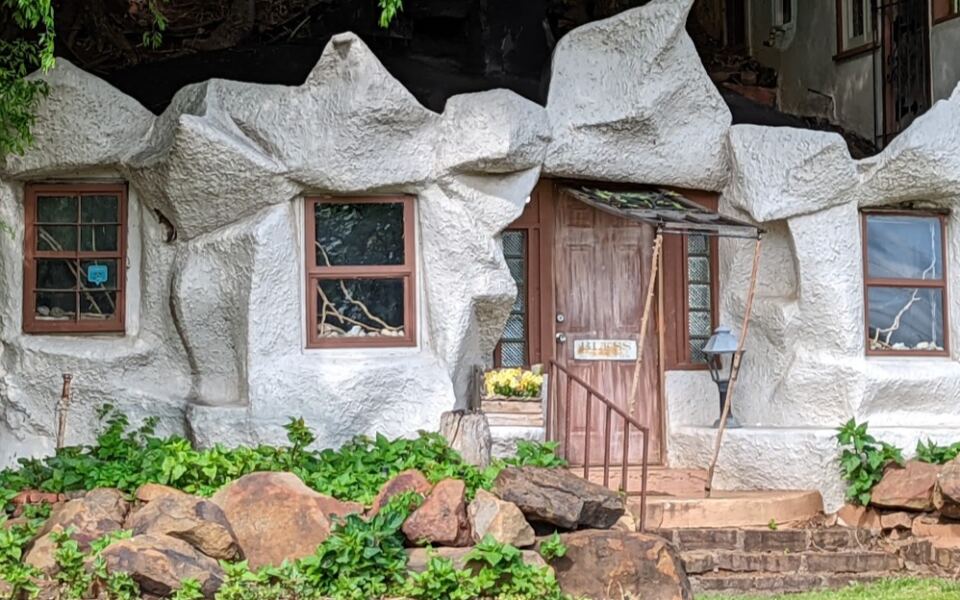
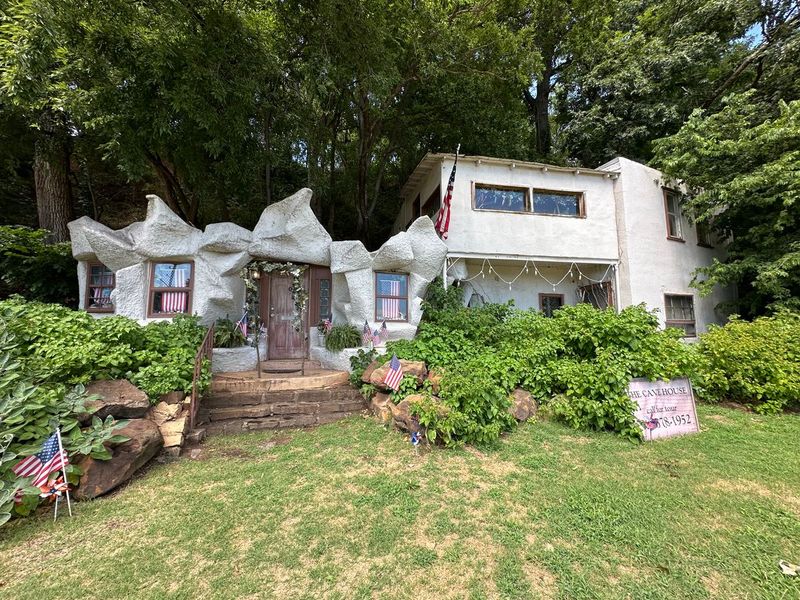
For years, Tulsa drivers have slowed down on one stretch of road just to stare at a house that looks like it was shaped by hand from a hillside.
Its walls bulge and curve like something out of an old fairy tale book.
Most people drive past and promise themselves they will stop one day.
The ones who finally do discover a century of local legends, a tree covered in keys, a yellow slide, and a host who turns every room into a story worth hearing.
1. A Storybook Oddity on Charles Page Boulevard
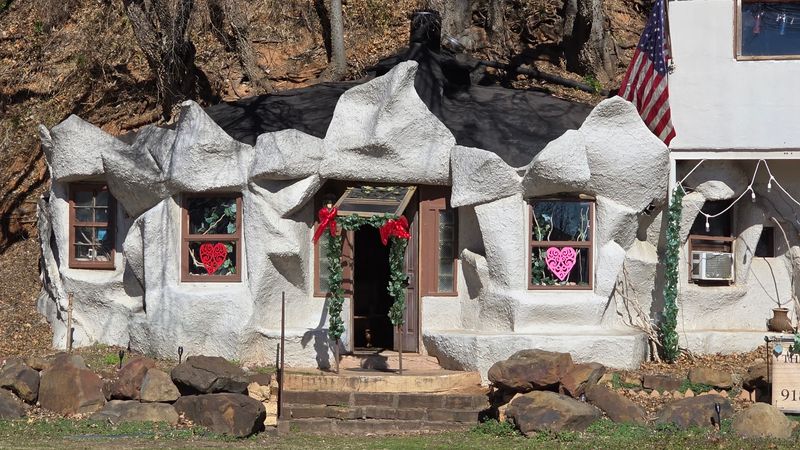
Some landmarks hide in plain sight, and this one has been doing it since 1924.
The Cave House sits at 1623 Charles Page Blvd, Tulsa, OK 74127, in Oklahoma, on the old route locals call The Line between downtown Tulsa and Sand Springs.
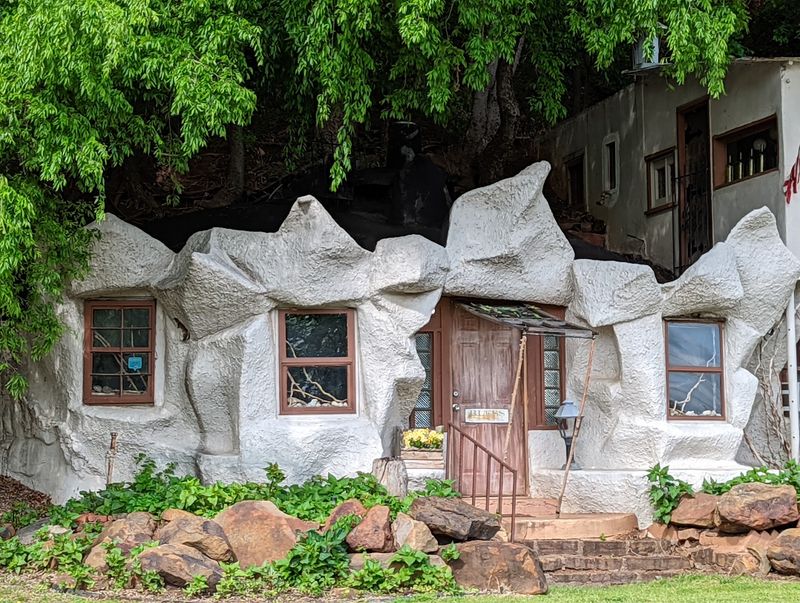
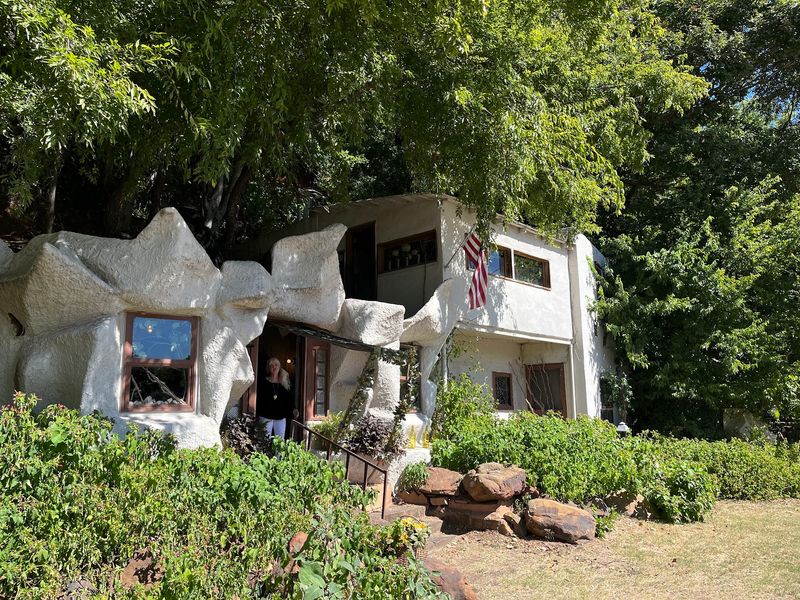
From the street, the place looks like a hillside cave that decided to become a home.
The exterior is curvy, unusual, and built to make passing drivers do a double take.
Plenty of Tulsans admit they drove by for decades before ever going inside.
Some passed it nearly every day for close to twenty years and kept saying they would visit eventually.
That curiosity is exactly what the house runs on.
It is officially listed as a tourist attraction, but it feels more like a neighborhood secret that finally opened its door.
The grounds are tidy and carefully maintained, which surprises people who expect a dusty roadside relic.
The lawn and setting give the odd architecture a polished frame.
Travelers find it through word of mouth, local pride, and even Atlas Obscura, which helped put it on the radar of out-of-state road trippers.
Once the exterior has done its job of reeling people in, the real adventure starts with the history behind those strange walls.
2. Bootleggers, Rumors, and a 1924 Beginning
Every good old house deserves a few whispered rumors, and this one collected plenty.
The building dates back to 1924, a time when Tulsa was booming and certain businesses preferred to stay out of sight.
Talk of bootleggers is part of the lore that guests hear during tours.
That is where the speakeasy reputation comes in.
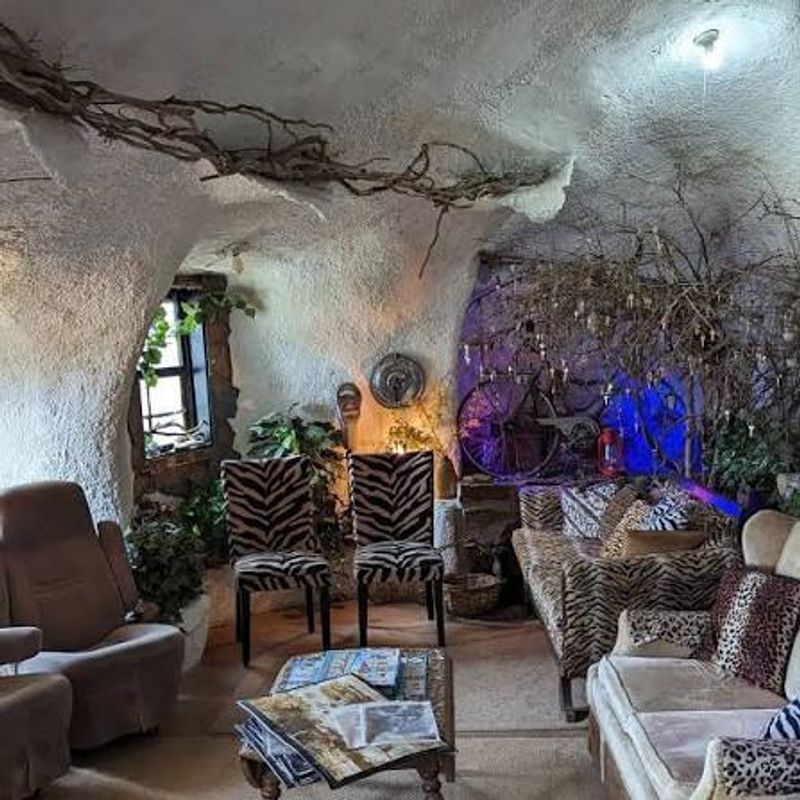
The hidden, hand-shaped interior fits neatly into the era’s tales of secret gatherings tucked behind unusual walls.
The tour blends documented history with folklore and fables.
Guests are shown historical records and many photographs that trace the building through the decades.
That mix matters.
Some stories are backed by paperwork, while others are local legends passed along over the years, and the tour lets both sides shine.
The building’s once shrouded past is a big part of its charm.
Adventures and misadventures alike are folded into the telling.
Over the decades, the house stood as a Tulsa landmark while owners and neighbors shaped its story.
Learning about those people is a highlight for many guests.
History buffs leave with a better sense of west Tulsa’s past.
Everyone else leaves with a few new tales to repeat on the drive home.
3. Linda, the Keeper of Every Tale
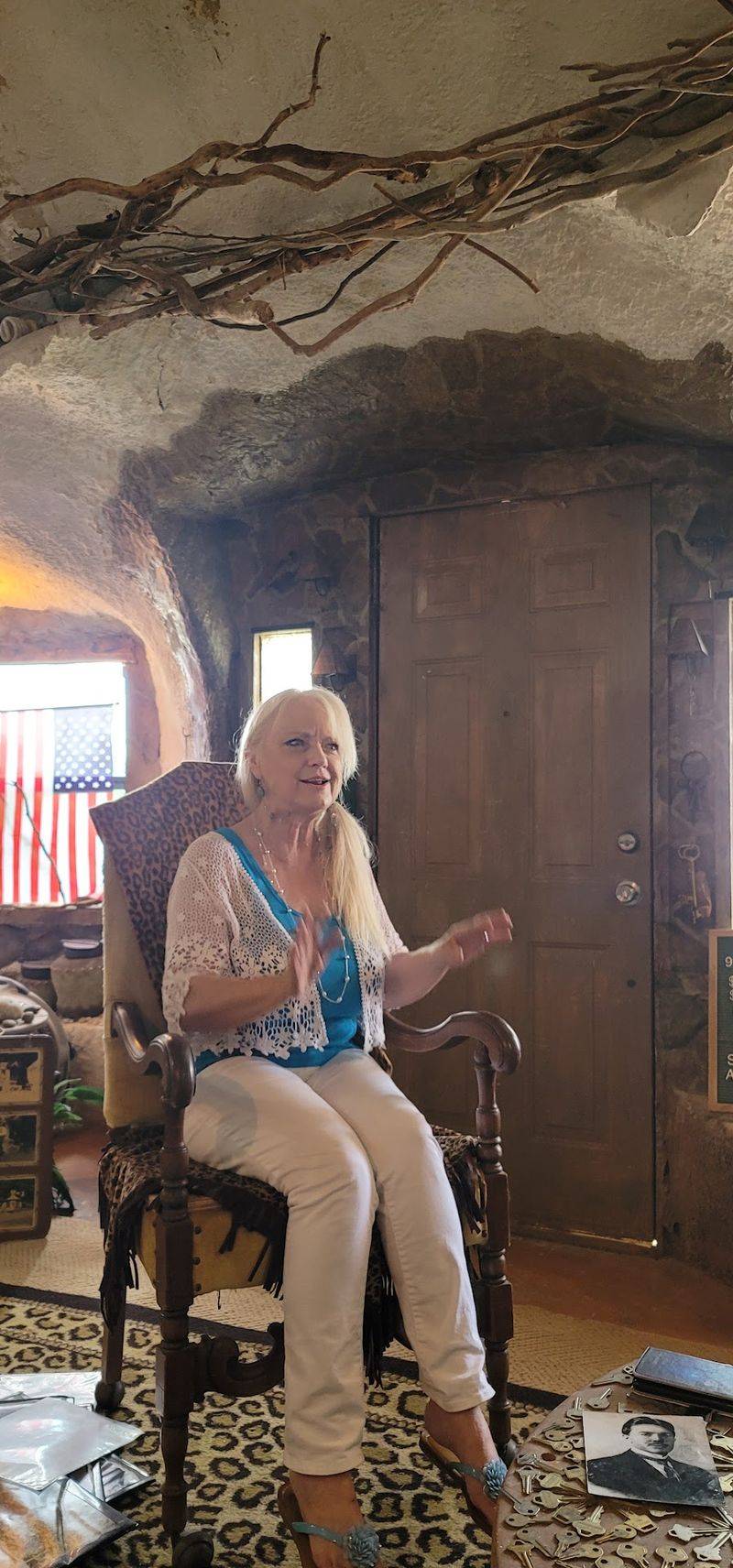
Ask almost anyone who has toured the house what they remember most, and the answer is not the walls.
It is Linda.
Linda Gail is the owner, steward, artist, and guide.
She leads tours personally and has a lifelong connection to the surrounding neighborhood.
Storytelling is the single most talked-about part of the experience.
Her humor and warmth make the tour feel like catching up with an old friend.
She keeps things interactive.
Questions are welcome, and groups often end up laughing together within minutes of arriving.
Part of the tour covers how she came to own the house.
That chapter tends to stick with people, since it involves a healthy dose of what many would call fate.
Her passion for preserving the building is obvious.
She has put thought into nearly every detail, from the decor to the way the stories unfold room by room.
Some guests say the house is the attraction, but the host is the treasure.
Others simply wish they had more time to listen.
A tour here is less a lecture and more a front-porch conversation that happens to happen inside a cave.
4. The Famous Key Tree
Here is a fair warning before visiting.
Know where your car keys are at all times.
One of the most memorable features inside is the key tree, a collection of keys gathered into a single striking display.
Guests can actually sit beneath it.
That small moment ends up being a favorite for many people who tour the house.
The keys are not random clutter.
Like most items here, they come with stories, and Linda shares the meaning behind the collection.
Keys show up as a theme throughout the space, alongside other collected objects.
Spotting them becomes a bit of a scavenger hunt.
Kids and grandkids tend to love this part, since it is easy to understand and fun to explore up close.
Adults appreciate the artistic thinking behind it.
The tree reflects the whole spirit of the place.
It is quirky, handmade in feel, and packed with personal history.
Visitors joke about leaving with fewer keys than they arrived with.
So far, the tree seems happy with its current collection, though it is always worth patting your pocket on the way out.
5. Keys, Bones, Buttons, and Other Curiosities
Collectors, brace yourselves.
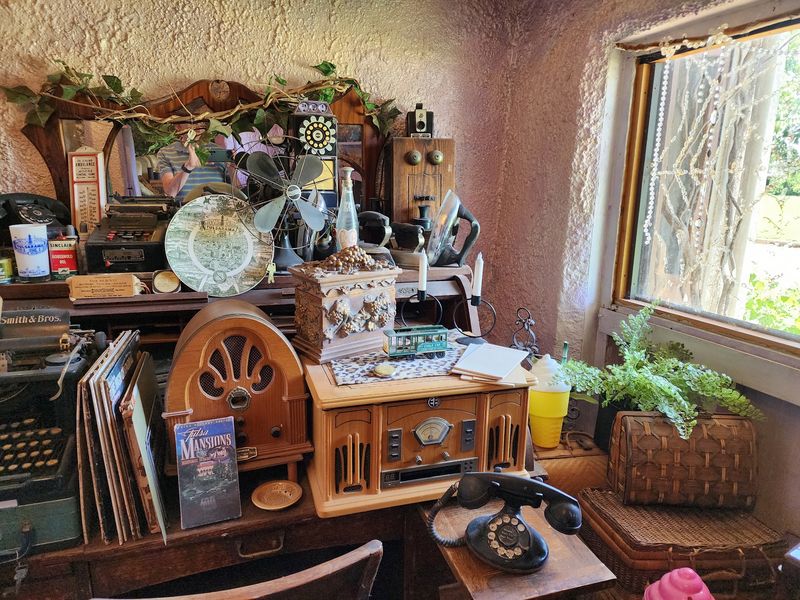
The interior is a museum of the marvelously odd.
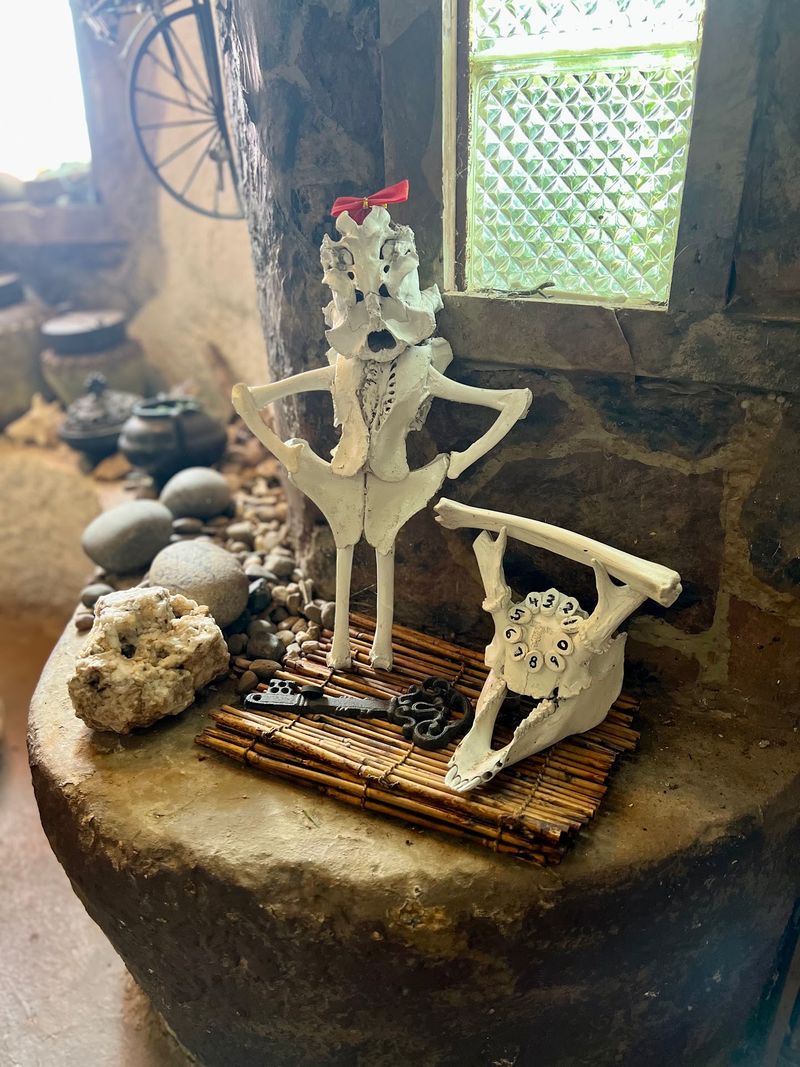
Beyond keys, the house holds bones, buttons, eclectic antiques, and all sorts of ephemera.
Every corner seems to hold something else to notice.
The decorations are artistic and detailed, matching the unusual exterior.
The look inside is beautiful and a little spooky, in the best storybook way.
Some guests insist a single visit cannot cover it all.
Even a full night inside would not be enough to catch every detail or ask every question.
Each piece in the collection carries a backstory.
Linda connects objects to people, events, and moments from the building’s long life.
That is what keeps the collection from feeling like a jumble.
It works more like a scrapbook spread across nooks and crannies.
The tour moves through these spaces slowly enough to take things in, with time for questions along the way.
Tip for curious minds: bring a list of questions.
You will likely think of new ones every few steps.
6. A Yellow Slide With a Purpose
Not many historic tours end with a slide.
This one does.
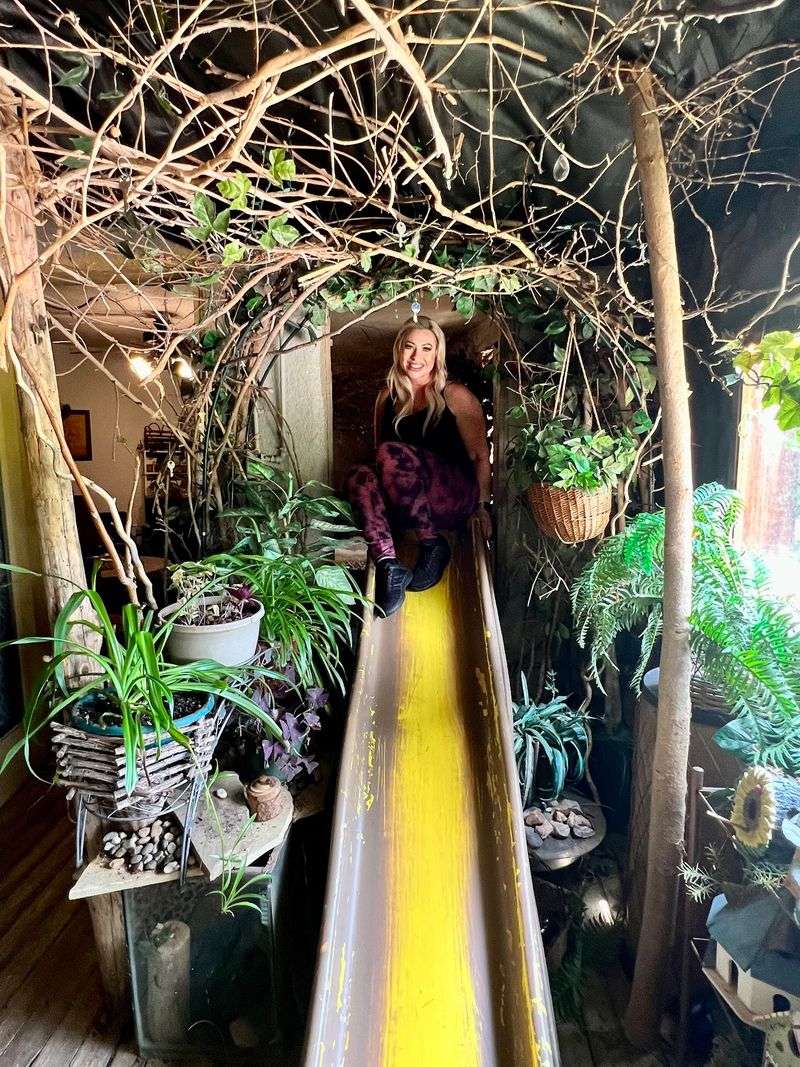
A yellow children’s slide is part of the experience, and guests of all ages are invited to go down it after touring the house.
It sounds silly, and that is the point.
The slide adds a burst of playfulness to a tour already full of laughter.
Grown-ups count it among their favorite moments.
Grandparents who bring grandchildren find it is an instant hit with younger guests too.
The slide also shows how hands-on the visit is.
This is not a velvet rope kind of place where everything stays behind glass.
Instead, guests sit under the key tree, browse photographs, and move through the space in a personal way.
That approach makes the house a strong pick for Oklahoma families looking for something different from the usual museum outing.
Leave your dignity at the top of the slide.
You can pick it up again at the bottom.
7. Who Will Love This Quirky Corner of Tulsa
Fans of the offbeat have found their headquarters.
The Cave House suits anyone who likes the whimsical, the historic, or the slightly strange.
Locals and travelers both tend to leave as fans.
Families do well here.
The experience is recommended for all ages, and kids enjoy the slide and key tree.
Groups work too.
Parties of seven adults have booked tours and come away calling it a highlight of their trip.
Solo travelers sometimes get the house almost to themselves.
Small groups of two can end up with a private-feeling tour when others do not show.
Route 66 road trippers have a special reason to stop.
The house makes a fitting old-time attraction for anyone celebrating the Mother Road’s anniversary.
Story lovers may get the most out of it.
Some guests say the conversation with Linda mattered even more than the rooms themselves.
Toward the end, many people linger to hear stories of others who found comfort and healing in the home.
It adds a thoughtful layer to an otherwise playful afternoon.
8. Reservations, Timing, and Planning Tips
Spontaneity is great, but not here.
Tours are by reservation only.
Call or reach out through the official website, cavehousetulsa.com, to book a time.
Linda is known for responding quickly when space is open.
Plan on spending a while.
Tours commonly run around an hour and a half to two hours, and many guests wish they had stayed longer.
Budget extra time after the main tour.
Sitting and chatting with Linda is part of the experience for many people.
Tours have taken place on weekdays and Sundays, but schedules can vary.
Hours and admission costs may change, so check details directly before driving over.
Running a little late is not always the end of the world.
Latecomers have still been welcomed into a group, though arriving on time is the kind thing to do.
The location on Charles Page Boulevard is easy to reach from downtown Tulsa or Sand Springs, making it a simple add-on to a city day trip.
A quick phone call now saves a disappointing drive-by later.
9. Worth More Than a Drive-By Glance
Oklahoma has big landmarks, but some of the best ones are small, strange, and full of heart.
The Cave House holds a 4.6 star standing from more than 450 people, and the reasons are clear.
Unique architecture, real history, and a passionate host make a rare combination.
It proves Tulsa has stories tucked behind its storefronts and street corners.
A hand-shaped house from 1924 is one of the most memorable.
For longtime locals, the visit settles years of wondering.
For travelers, it becomes the part of the trip they talk about later.
The house is quirky, yes.
In this case, quirky is a compliment.
So the next time The Line takes you past those curving stone walls, do not just slow down and stare.
Book the tour, find your keys, and let the stories take it from there.
Share this story