Oklahoma gets called flat prairie by people who have never driven south of the city.
Down near Sulphur, a wooded campus tells a much bigger story, one about a nation that built towns, raised families, and kept its traditions alive long before Oklahoma became a state.
Kids learn stickball from the people who still play it.
Families watch stomp dances, walk through a full-size village with winter and summer homes, and stand on a pavilion high above it all.
The best part for anyone watching the budget is that general entry has been free.
The exhibits cover hard chapters too, including forced removal, and they handle that history with care.
Keep reading for what to see, which days to go, how to find the place, and why one visit rarely feels like enough.
1. A Campus Tucked Into Sulphur
Southern Oklahoma hides one of the state’s most complete heritage stops at 867 Cooper Memorial Rd, Sulphur, OK 73086, in the United States.
The Chickasaw Cultural Center sits near the Chickasaw National Recreation Area, a short hop from the town’s lakes and trails.
It is officially a cultural center, though that label sells it short.
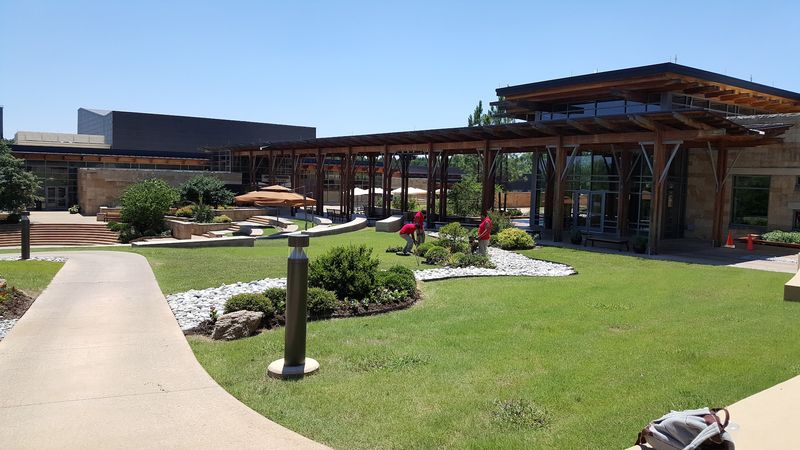
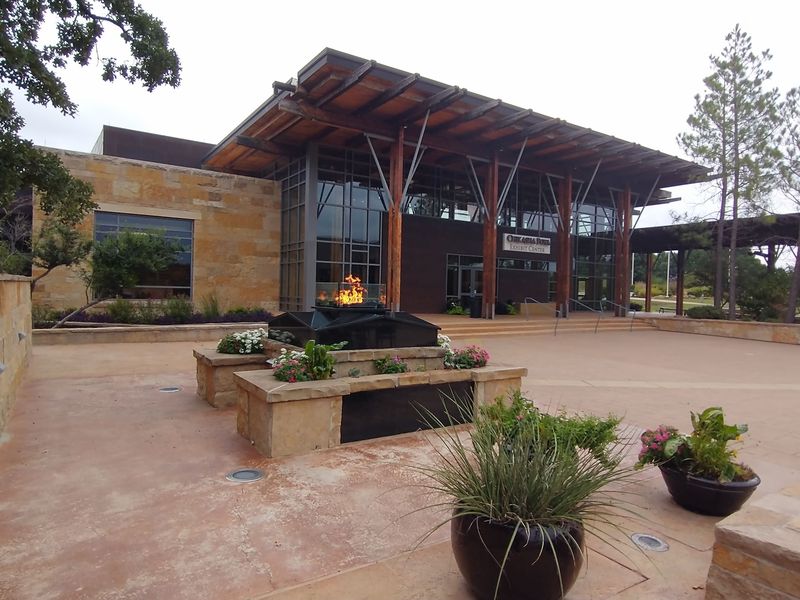
The campus combines a museum, a recreated traditional village, a theater, a research center, a cafe, a gift shop, and outdoor walking areas.
The goal is simple.
It shows how Chickasaw families lived before and after their forced removal from the Southeast, and how the nation thrives today.
The grounds are large enough that many families plan a full day.
Some even stretch the trip across several days because there is so much to see and do.
For day-trippers from Oklahoma City or Ardmore, Sulphur makes a manageable drive.
The center also pairs neatly with a stop at nearby Veterans Lake.
The address is easy to plug into a map app.
The surprise comes once the buildings appear among the trees.
2. The Story Behind the Exhibits
History here starts with the basics and builds from there.
The exhibit hall opens with an introduction to Chickasaw culture, covering daily life, beliefs, and community long before Oklahoma had borders.
From there, the story moves into harder territory.
A section on the Trail of Tears uses immersive design to explain the forced removal of the Chickasaw people from their homelands.
Letters written by children appear among the displays.
One exhibit includes a barber chair connected to the era when Native children had their hair cut off at government schools.
Those pieces make the history personal rather than abstract.
Many guests leave describing the section as deeply moving and sobering.
Balance matters in how the story is told.
The exhibits do not end with removal, and they move on to show a nation that rebuilt and carried its traditions forward.
Families who want their kids to hear more than one side of American history often choose this stop for exactly that reason.
It fills in chapters that many textbooks skip.
Plan for time in this hall.
Rushing through means missing small details tucked into every corner.
3. A Forest Built Indoors
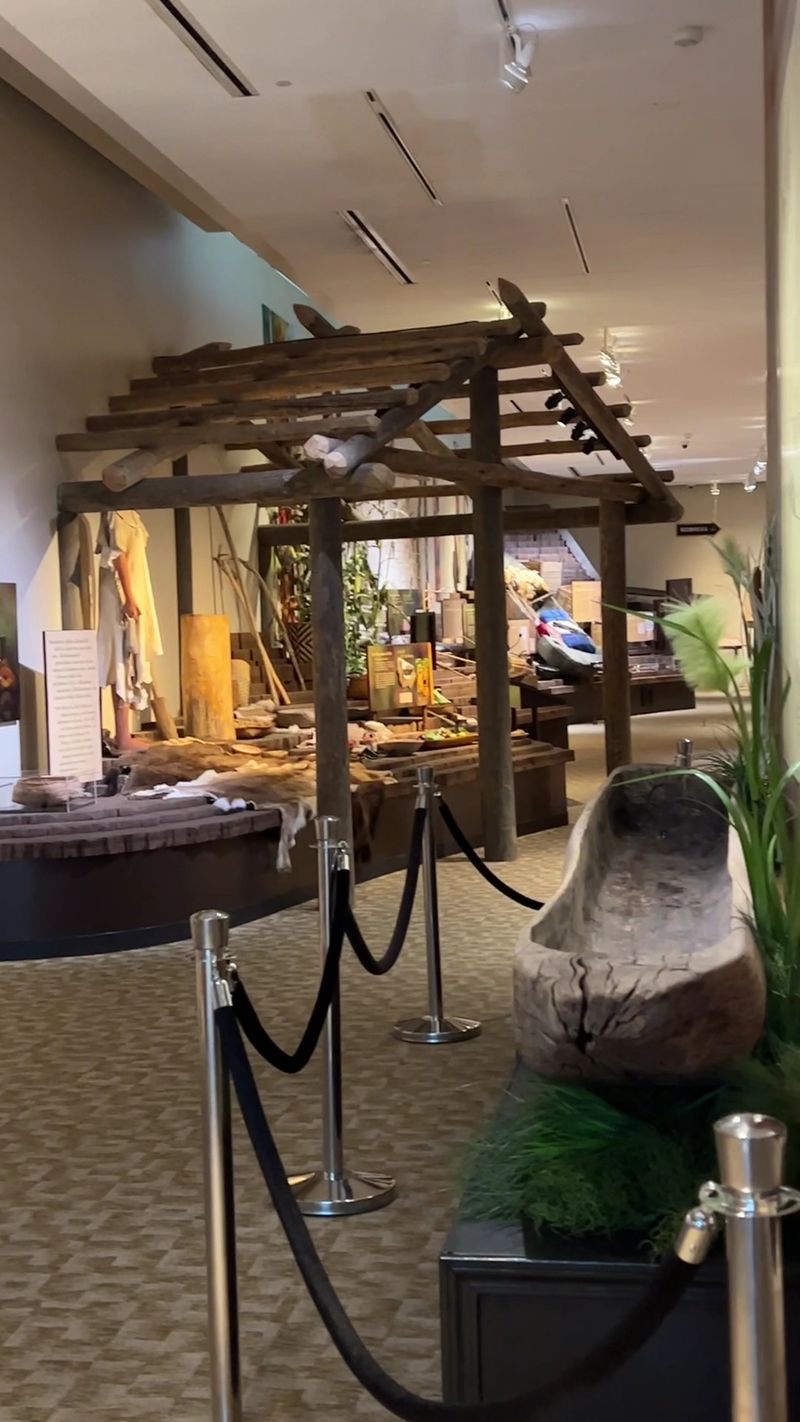
Few museums try to bring the woods inside, but this one does.
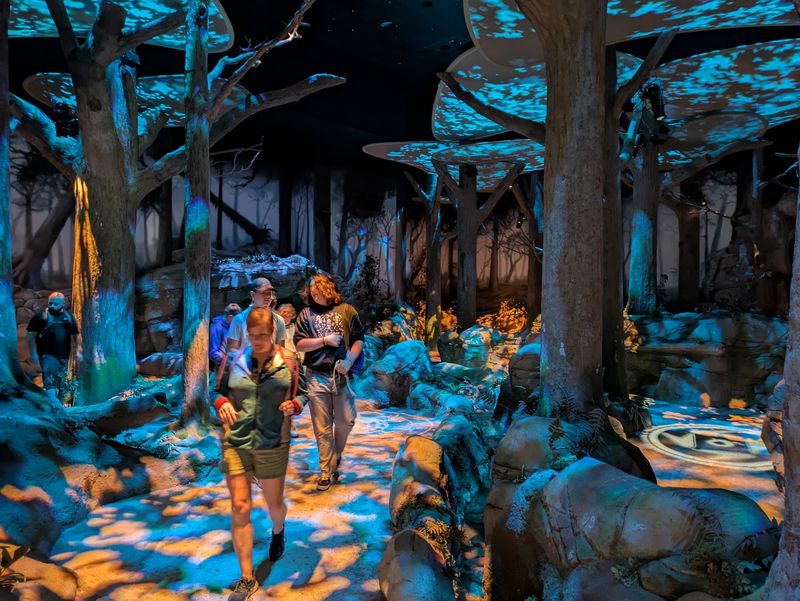
Part of the exhibit hall features an immersive forest simulation that places guests in the kind of landscape the Chickasaw once called home in the Southeast.
The setting helps explain why the land mattered so much.
Food, shelter, and community life were all tied closely to the forest.
Interactive displays appear throughout the museum as well.
Kids can press, explore, and learn rather than just read panels on a wall.
That hands-on approach keeps younger guests moving from one station to the next.
Parents often find themselves just as busy as their children.
A theater rounds out the indoor experience with films about Chickasaw history and culture.
The movies get strong praise for how well they are made.
One practical tip: the building can get cool, and the lobby has sold sweatshirts before.
A light layer is a smart pack for any season.
Between the forest, the films, and the interactive pieces, the indoor half alone can fill a morning.
The outdoor half is still waiting.
4. Inside the Traditional Village
Here is the heart of the headline.
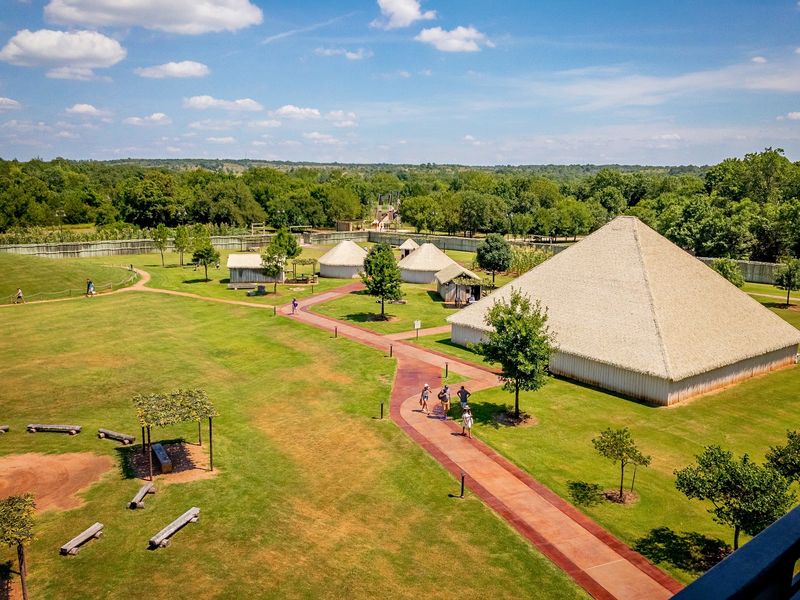
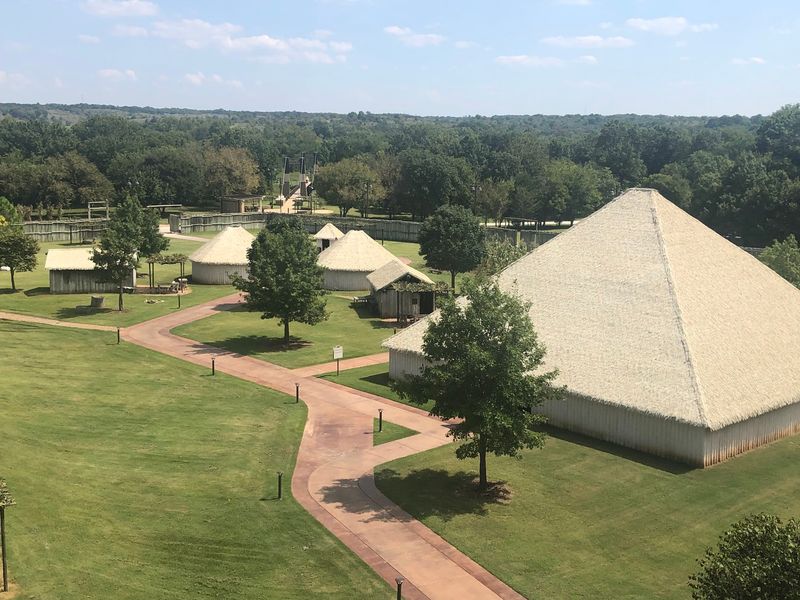
The Traditional Village is a life-size recreation of a Chickasaw community from the time before removal and long before statehood.
A surrounding wall encloses the site, the way protective walls once ringed real villages.
Inside, ceremonial buildings and family homes stand along with a dance circle.
Families lived in different homes depending on the season.
The village shows both winter houses and summer houses, with plaques explaining how each one worked.
A simulated Mississippian mound also rises within the site.
It connects the Chickasaw to the larger mound-building cultures of the Southeast.
The informational plaques make the village easy to explore at any pace.
Guides are often nearby to answer questions as well.
Kids tend to grasp history faster when they can walk through a doorway instead of looking at a photo.
Seeing where a family slept, gathered, and celebrated turns a lesson into a memory.
Construction work has roped off parts of the village at times.
Checking ahead before a trip built around the village is a wise move.
5. Stomp Dances and Stickball Lessons
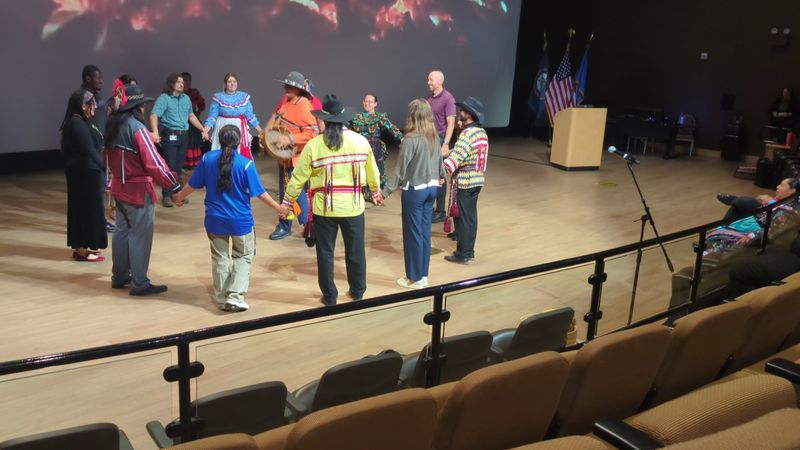
Watching is good, and joining in is better.
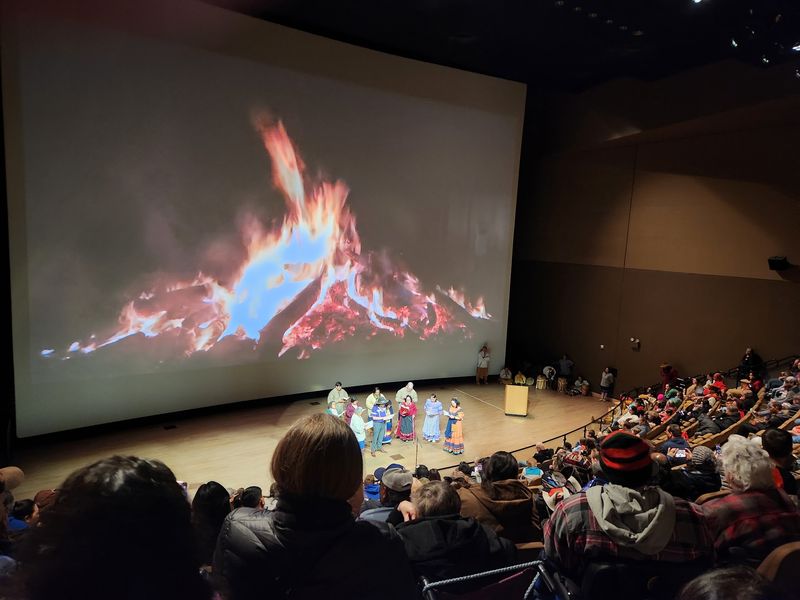
Stomp dance demonstrations are among the most talked-about parts of a visit, and guests are sometimes invited to take part.
Children especially love stepping into the circle.
Many families return just so their kids can dance again.
Seeing young Chickasaw performers carry these traditions forward leaves a strong impression.
It shows that the culture is living, not frozen behind glass.
Stickball gets its turn too.
Staff have taught kids how to play the traditional game and even played right along with them.
Stickball holds a long place in Chickasaw life, and learning it from people connected to the tradition makes it far more meaningful than a quick explanation.
Demonstrations, presentations, and classes also pop up on the schedule.
Topics shift, so repeat trips often bring something new.
Schedules for dances and demonstrations can change.
A quick check before leaving home helps families time their arrival around the performance they most want to see.
Bring comfortable shoes.
Somebody in the group is likely to get pulled into the action.
6. Views From the Sky Pavilion
For the big-picture look, head up.
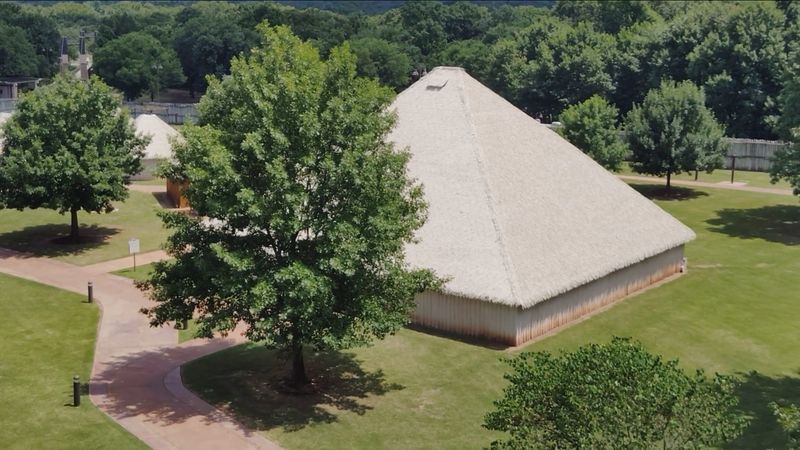
The Sky Pavilion is an elevated platform that offers a sweeping view over the Traditional Village.
From above, the layout of the community makes more sense.
The wall, the homes, the ceremonial structures, and the dance circle all fit together as one planned town.
It is a natural spot for family photos.
It also works as a quick orientation point before walking the village on foot.
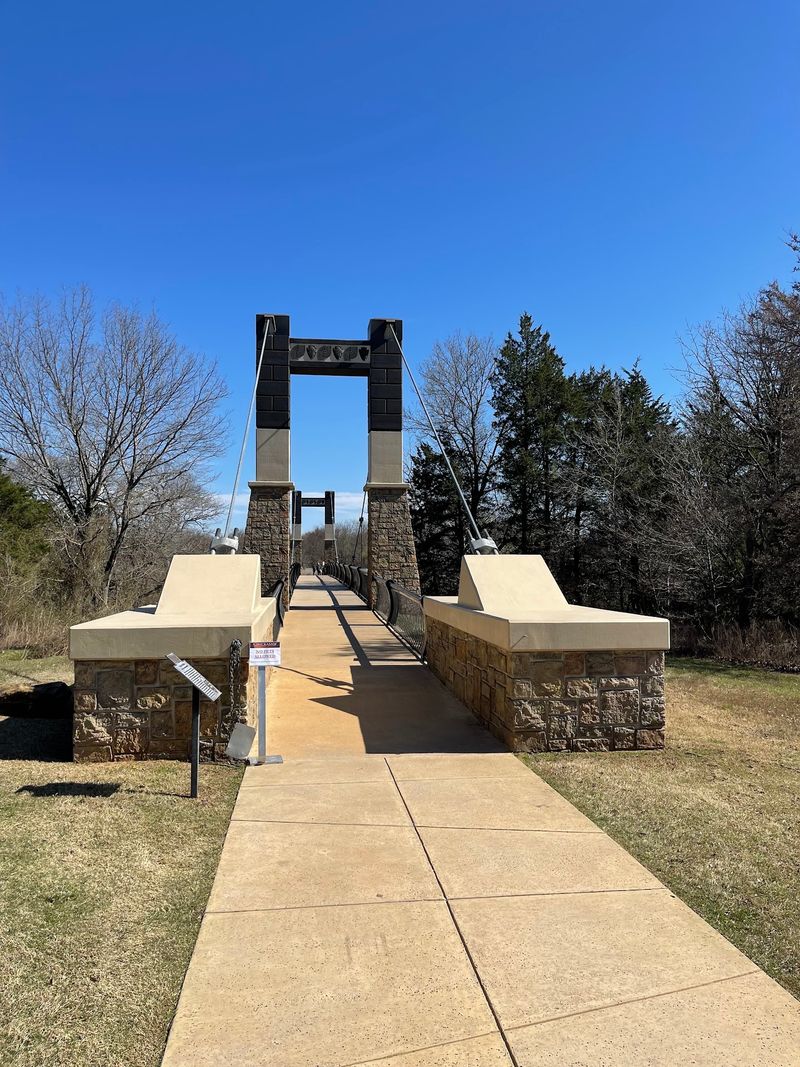
Nearby, the Friendship Bridge connects the main campus with a larger natural preserve area.
Guests who want more time outdoors can cross over and keep exploring.
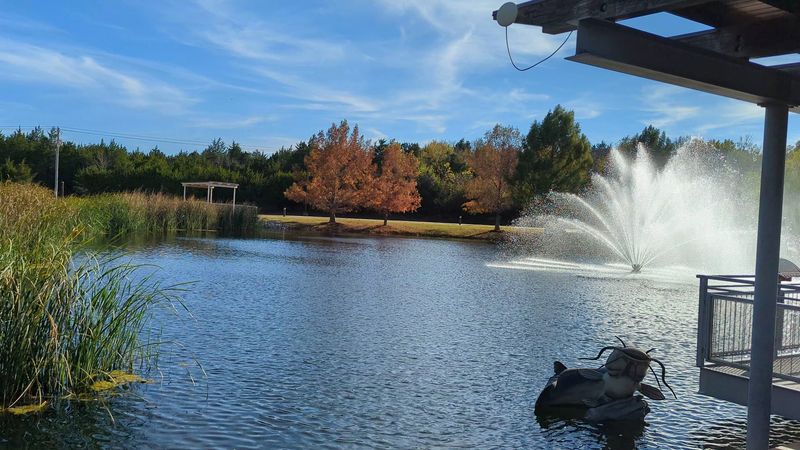
The outdoor grounds also include water features, native plants, walkways, and an amphitheater.
Everything is arranged to complement the buildings rather than compete with them.
A calm, peaceful atmosphere comes up often in descriptions of the campus.
On quieter weekdays, guests may have large stretches nearly to themselves.
Getting around the grounds involves some walking and uneven terrain.
Trams pick people up in the parking area and carry them to their chosen stop, which helps anyone with tired legs.
7. Gardens, Turtles and Little Surprises
Some of the best moments happen between the main attractions.
Feeding the turtles ranks as a quiet favorite with kids, and plenty of grown-ups enjoy it too.
Behind the village sits a garden area that is open for walking.
It is large, and staff have let guests pick from it.
The garden ties directly to Chickasaw traditions around growing food.
The Three Sisters, a planting tradition, has even been the theme of a seasonal celebration.
A butterfly garden adds another stop for families.
Bad weather can cut outdoor time short, so sunny days give the best shot at seeing everything.
Statues of Native American figures appear around the grounds as well.
They make good landmarks for kids who like to find the next one.
The center has also handed out free comic books.
Kids have been known to finish theirs within a day of getting home.
These small extras explain why so many people say there was more to do than they managed.
The campus rewards slow exploring and curious eyes.
8. Family Roots at the Holisso Research Center
Not every visit is about the village.
Some families come to trace their own history at the Holisso Research Center.
The center serves as a library and research space.
Staff have helped guests dig into land allotment history and other family records.
That kind of help matters to Chickasaw citizens and descendants.
It also interests anyone curious about how land and family records connect to Oklahoma’s past.
The library space is small and welcoming.
It offers a quieter break from the busier outdoor areas.
Researchers often make a full day of it.
Lunch at the cafe and a pass through the gift shop fit easily around time with the records.
Anyone planning serious genealogy work should contact the center ahead of time.
Research help may depend on staff availability, and construction has shifted some areas in recent years.
For everyone else, a peek inside still adds depth to the visit.
Seeing how history gets preserved is its own small lesson.
9. Cafe Stops and Gift Shop Finds
Hungry explorers do not have to leave campus.
The on-site cafe serves Native American themed dishes, and lunch there comes highly recommended.
Many people call a meal at the cafe a must.
It makes an easy midday break between the exhibits and the village.
Friendly kitchen staff and servers earn regular praise.
The whole team at the center, from the guards at the entrance to the tram drivers, gets credit for making guests feel welcome.
The gift shop draws attention too.
Shoppers mention neat gifts and good quality items.
It works well for picking up something that connects back to the visit.
Teachers and homeschool families may find it useful for extending the lesson at home.
Cafe items and gift shop stock can change.
Prices for food and merchandise are separate from general entry, so a little spending money helps.
Planning lunch on site also saves time.
More minutes stay free for the stomp dance or a second lap through the museum.
10. Hours, Cost and Finding the Road
Timing is everything, since the doors are not open every day.
The center runs Tuesday through Saturday from 10 AM to 5 PM and stays closed on Sunday and Monday.
Plenty of families have pulled up on a Monday and learned that the hard way.
Plan for a midweek or Saturday trip instead.
Entry has been free, which is a big win for budget-minded families.
Food and gift shop purchases cost extra, and policies may change, so confirm before driving.
Signage around the area can be limited.
One handy route runs from Veterans Lake inside the Chickasaw National Recreation Area along Cats Eye Road behind the lake, where a bridge leads to the campus.
Major construction began in recent years, with work expected to last a long while.
Some areas may be moved or closed off during that time.
Summer heat can be intense on the outdoor paths.
Cooler days make the village walk far more comfortable.
For overnight trips, Pauls Valley and Ardmore are both nearby options.
A multi-day plan suits homeschool groups and school-break travelers well.
11. Festivals Worth a Return Trip
One visit rarely settles it.
The calendar keeps adding reasons to come back.
The Toompalli festival has brought plenty of children’s activities along with dancing.
A butterfly festival has also drawn families to the grounds.
Seasonal celebrations rotate through the year.
The Three Sisters theme was one recent example.
Winter brings a Christmas drive-through display that has been free.
Lights, decorations, and photo spots make it a popular holiday outing.
Dates and details for events shift from year to year.
Checking the official website before planning around a festival saves a wasted drive.
Repeat guests often say they find something new each time.
With 4.8 stars across nearly 2,000 Google ratings, the center has clearly earned loyal fans.
For Oklahoma families looking for heritage, hands-on fun, and a free day out, this campus checks every box.
It proves the state has deep roots worth exploring, and it leaves plenty of reasons to plan the next trip before the car even leaves the lot.
Share this story