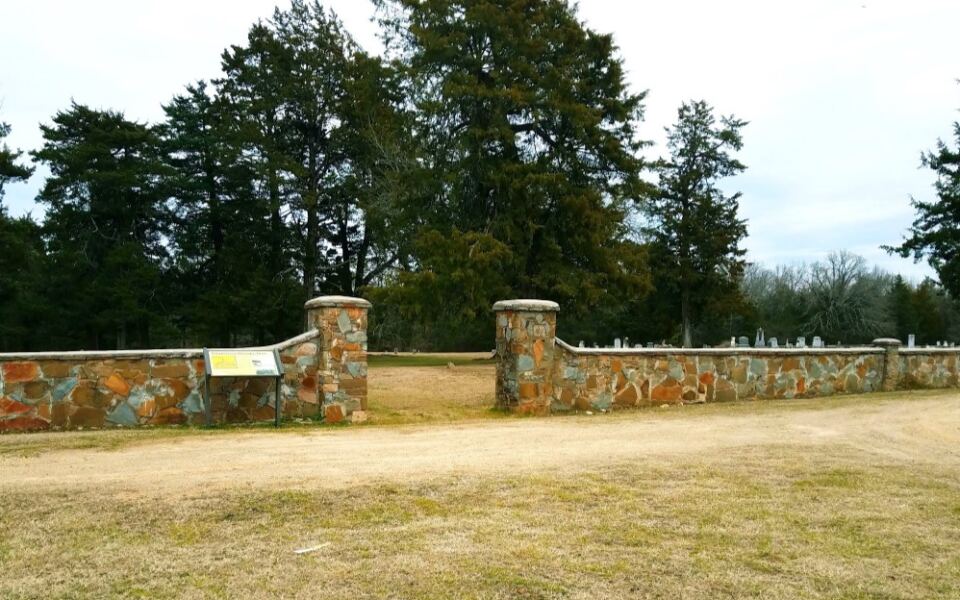
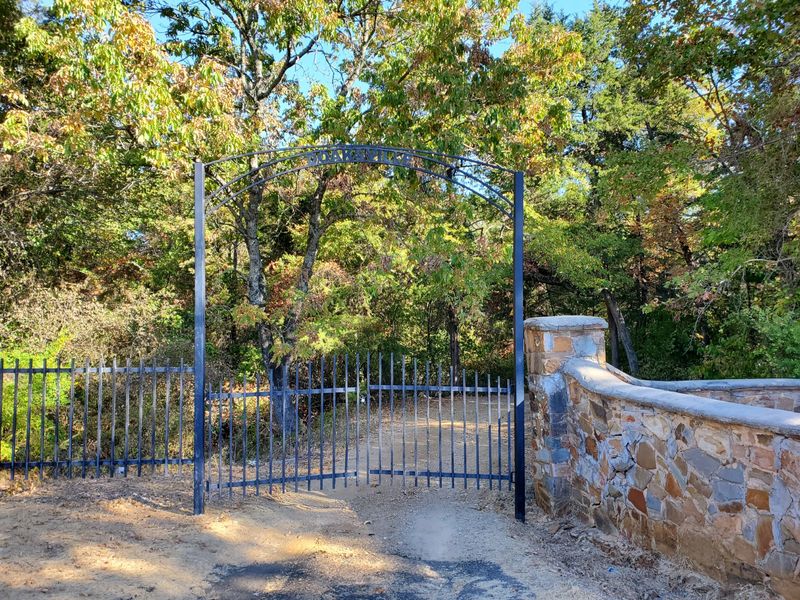
Behind a quiet cemetery in southeast Oklahoma, a short trail crosses an old rock fence and heads straight into the 1830s. On the other side sit the stone foundations of a town that once served as the first capital of the Choctaw Nation.
It began as a trading post, grew into a busy settlement, and then faded away until only its outlines remained. Today it costs nothing to explore, it stays open around the clock, and it tells one of the most important stories in Oklahoma history.
Keep reading to learn how this lost town rose and fell, what you will find along the path, and how to plan a family day trip to see it for yourself.
1. A Trailhead Hiding Behind Fort Towson Cemetery
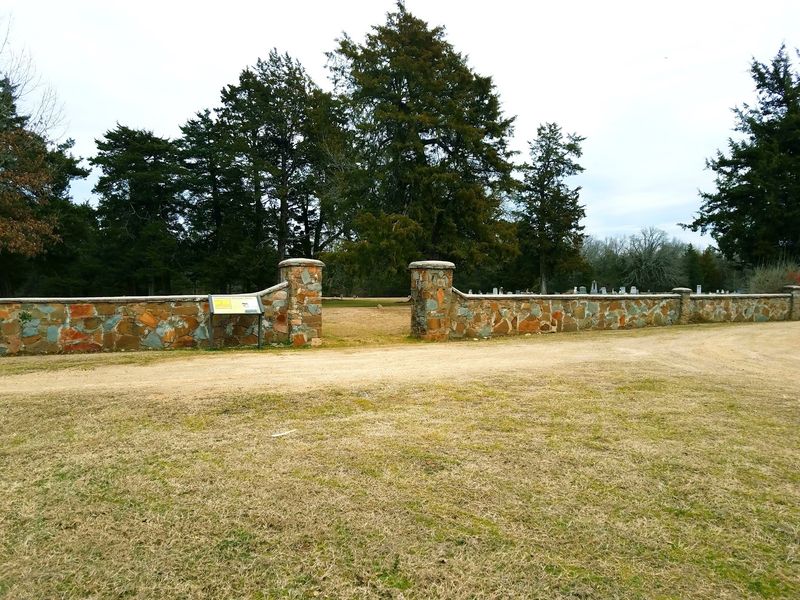
Some of the best history lessons in Oklahoma start with a little detective work. The Old Doaksville Townsite History Trail sits on Red Rd, Fort Towson, OK 74735, in Choctaw County in the southeast corner of the state.
The trail begins at the north end of Fort Towson Cemetery. From there, it heads east toward the remains of Doaksville, a ghost town with deep roots in Choctaw history.
The site is listed as a historical landmark. It is not a big museum with a gift shop and a ticket booth.
Instead, it is an outdoor walk through a place where a real town once stood. Signs, foundations, and a simple path do the storytelling here.
That low-key setup is part of the appeal. Families can park, stretch their legs, and start exploring without any fuss.
Fort Towson itself is a small town, so the trail fits nicely into a road trip through the lakes and forests of southeastern Oklahoma. It also proves, once again, that this state is far more than flat prairie.
So where exactly does the path go, and why does a pile of old stones matter so much? The answer starts with a trading post and a long, hard journey.
2. From Trading Post to Choctaw Capital
Doaksville did not begin as a capital. It started out as a trading post in what is now southeast Oklahoma.
The town became the end point for the Choctaw Trail of Tears. Choctaw families forced from their homelands in the Southeast arrived in this area after a long and painful removal.
For a time, the settlement served as a kind of refugee camp. People who had lost nearly everything gathered here and began to rebuild.
By the mid-1830s, Doaksville had become the first capital of the Choctaw Nation. That is a remarkable turn for a place that started as a simple spot to trade goods.
Knowing this background changes how the walk feels. Each foundation is a reminder of a community that held together through enormous hardship.
Many people who visit leave surprised that such an important chapter happened right here in Oklahoma. The site works as an open-air classroom for kids and adults alike.
Of course, every rise has a turning point. Doaksville’s story took a sharp twist in the decades that followed.
3. Why the Town Faded Away
Ghost towns rarely vanish overnight. Doaksville slipped away one blow at a time.
The first setback came when nearby Fort Towson closed. The town had leaned on the fort, and losing it hurt local business.
Then came the Civil War. Crops suffered, and the plantation-based economy of the area was badly damaged.
In 1863, the Choctaw capital moved to Chahta Tamaha. Doaksville lost the political role that had made it so important.
The final push arrived with the railroad. Tracks were built south of Doaksville, in the community around old Fort Towson, and the energy of the region shifted there.
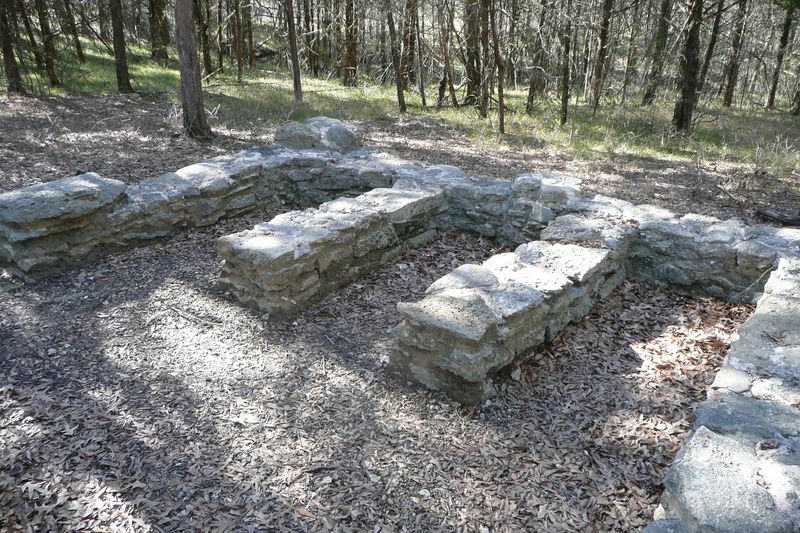
Without the fort, the capital, or the rail line, the old town slowly emptied out. What remains today are the foundations and the stories attached to them.
It is a tidy little lesson in how towns live and fade based on roads, rails, and decisions made far away. Kids who think history is boring may find the plot twists more gripping than expected.
4. Over the Rock Fence
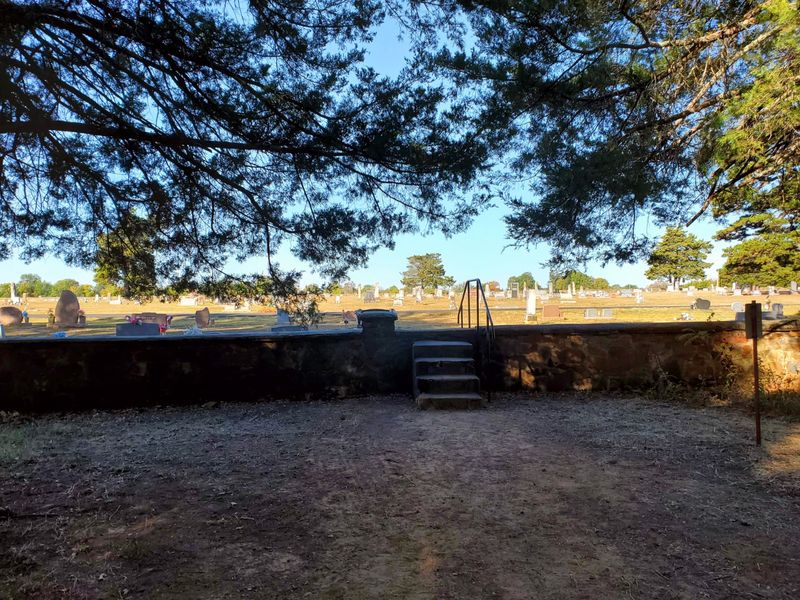
Here is the moment that makes this trail unforgettable. To reach the townsite, the path goes up and over a rock fence that separates the cemetery from old Doaksville.
Crossing it is often described as passing through a portal in time. One step, you are in a present-day cemetery, and the next, you are standing in a town from the 1830s.
It is a small physical act with a big payoff. Kids especially tend to remember climbing over a historic stone wall to reach a ghost town.
The fence also gives the walk a clear beginning. It works as a natural doorway into the story.
Families with very young children or anyone with mobility concerns may want to take this crossing slowly. A steady hand helps.
Once you are over, the trail opens up toward the townsite. The real treasure hunt for foundations begins right there.
5. Foundations Left Behind
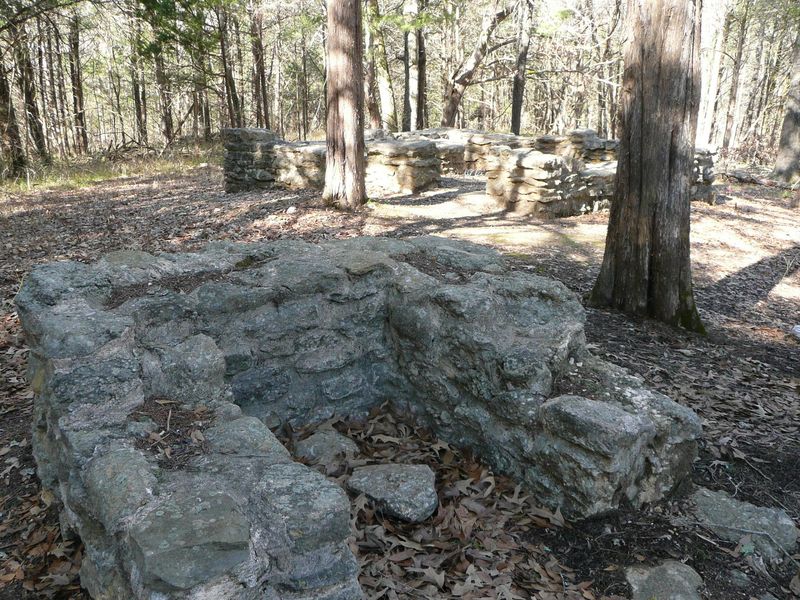
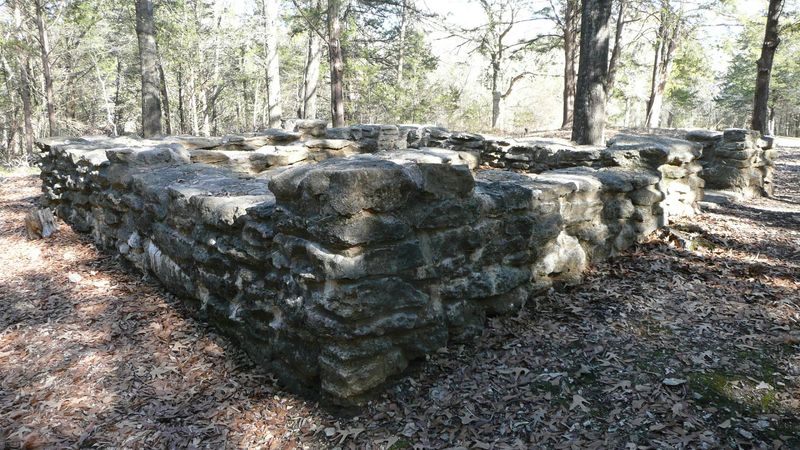
Buildings come and go, but foundations are stubborn. At Old Doaksville, they are the main attraction.
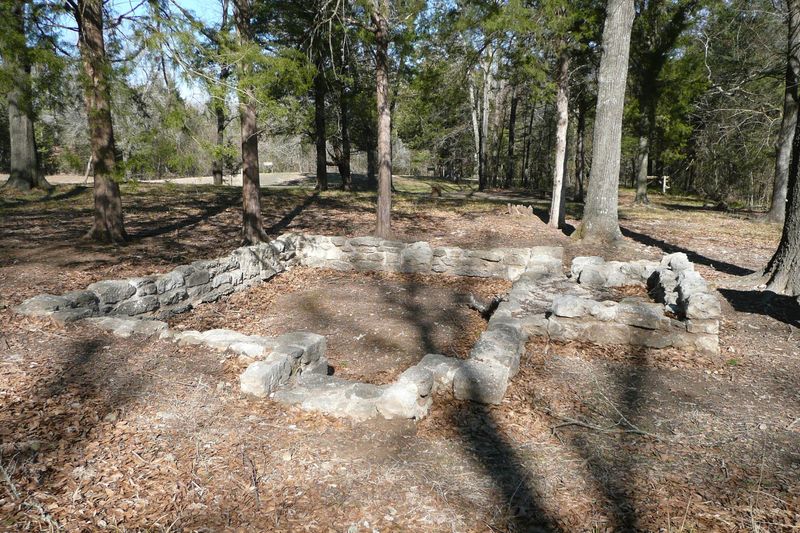
The trail winds past many stone foundations left from the original town. Each one marks where a structure once stood during the settlement’s busy years.
Walking among them helps the layout of the town come into focus. You start to understand how big and active the community really was.
Plenty of people spend over an hour here, wandering from one foundation to the next. It is easy to lose track of time once the history clicks.
For kids, it can feel like a scavenger hunt. Spotting the next set of stones keeps young explorers moving along the path.
Adults tend to appreciate the quieter side of it. There is something powerful about seeing real remains instead of a replica.
Bring curiosity and a little patience. The foundations reward anyone willing to slow down.
6. Signs That Tell the Story
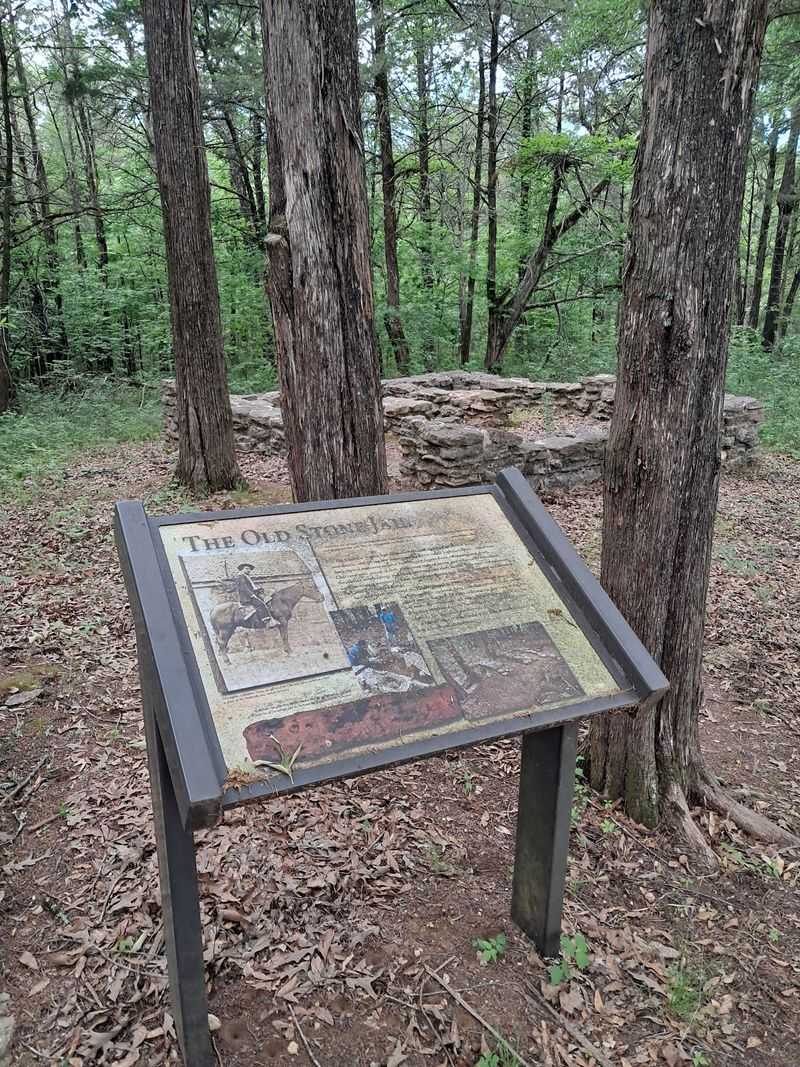
Without a tour guide, the signs do the heavy lifting. Old Doaksville has many interpretive markers placed along the trail.
They explain what stood at various spots and share pieces of the town’s history. Reading them turns a simple stroll into a self-guided lesson.
There is an honest catch, though. Time and weather have worn down some of the signs.
Pictures and print on certain markers have faded, and a few are hard or impossible to read. Planning ahead helps fill in the gaps.
A smart move is to read up before the trip. The website linked to the site, from the Red River Historian, offers background on Doaksville in Choctaw County.
Parents can even turn it into a pre-trip project. Kids who know a few facts beforehand often get more excited when they spot the matching foundation.
A little homework goes a long way here, and it makes the faded spots far less frustrating.
7. An Easy Walk for Curious Families
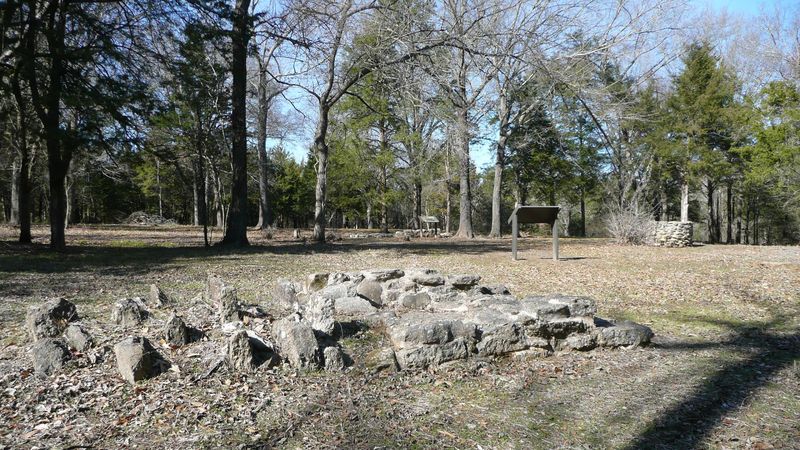
Not every history outing needs hiking boots and a full day. This one is a short, relaxed walk.
The trail has a reputation as a nice place to stroll and learn about the old settlement. Walking is the main activity, and that is exactly the point.
The grounds have been noted as well kept, with no high weeds crowding the trails. That makes it more comfortable for families with kids.
The overall setting is often called pretty and interesting. It is calm, open, and easy to explore at your own pace.
History fans will find plenty to chew on. Anyone interested in Oklahoma or Choctaw history tends to rank it as a must-see stop.
Younger kids may enjoy the fence crossing and the foundation hunt most. Older kids and teens often connect with the bigger story of removal and rebuilding.
It also suits road-trippers who want a meaningful break from the car. An hour here can feel like a whole chapter of a textbook come to life.
8. Planning Your Trip to Fort Towson
Good news for budget planners: the trail is listed as open 24 hours, every day of the week. No admission fee is listed in the available information.
Hours and access can change, so it is wise to check before driving. The Red River Historian website is a helpful place to start your research.
Daylight is the best time to go. The foundations and signs are much easier to see, and the fence crossing is safer with good light.
Fort Towson sits in southeastern Oklahoma, a region full of lakes and forests. It makes a solid stop on a longer weekend drive through the area.
Pack water, sturdy shoes, and maybe a printout of Doaksville history to make up for faded signs. Snacks for the kids never hurt either.
Plan for about an hour on the trail. History buffs may want a bit longer to read every marker.
Since services on site are limited, think of it as a simple outdoor visit. Respect the cemetery grounds on your way through.
9. A Quiet Stop Worth the Detour
Some places shout for attention, and others simply wait to be found. Old Doaksville is the patient kind.
With a near-perfect 4.9-star standing from a small batch of Google feedback, the trail clearly leaves an impression. People call it one of the great landmarks in Oklahoma and rich in history.
It is not flashy. There is no visitor center and some signs need fresh paint.
Still, the payoff is real. You get the first capital of the Choctaw Nation, the end point of the Choctaw Trail of Tears, and the remains of a once-thriving town, all on a short free walk.
For families who love proving Oklahoma has deep stories to tell, this spot belongs on the list. It pairs well with any drive through the southeast corner of the state.
Go with respect, go with curiosity, and leave the stones exactly as you found them. The past here has been waiting a long time for someone to listen.
Share this story