A stream slips through the rocks here like it knows it is part of the show.
One minute you are on Layton Road in Far Hills, where Somerset County looks tidy, green, and quietly expensive, and the next you are stepping into a wooded valley where mossy boulders, tiny flowers, stone steps, ponds, and shaded paths seem to have been arranged by someone with a very patient imagination.
That place is Leonard J. Buck Garden, a public garden that feels far more secret than it has any right to be. It is not loud. It is not packed with attractions trying to impress you.
Its whole charm is quieter than that. This 33-acre garden is built around rock outcroppings, woodland trails, streams, and plantings that change with the seasons.
It is the kind of New Jersey spot you tell one friend about, then immediately wonder whether you should have kept it to yourself.
The Hidden Rock Garden Tucked Away in Far Hills
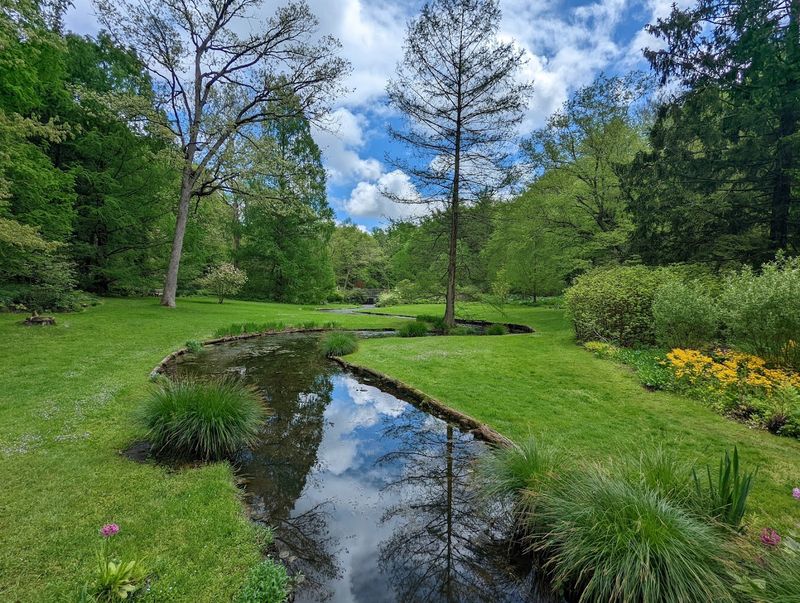
Far Hills is not exactly the first place most New Jerseyans think of when they want a quick garden escape. It is better known for rolling Somerset Hills scenery, old estates, winding roads, and that polished “yes, there are probably horses nearby” energy.
Then, tucked at 11 Layton Road, Leonard J. Buck Garden quietly interrupts the whole script.
The entrance does not announce itself like a theme park. That is part of the fun. You park, head toward the visitor area, and suddenly the land drops away into a wooded stream valley that feels much older and wilder than the road you just turned off.
The garden is managed by the Somerset County Park Commission, but it still carries the feeling of a private estate garden that accidentally became public.
The phrase “rock garden” undersells it a little. This is not a tidy bed of decorative stones around a patio.
Buck Garden is a layered landscape of natural rock outcroppings, slopes, shaded paths, water, and plants tucked into little pockets where they actually make sense. The rocks are not accessories.
They are the bones of the place. That is why the garden feels so different from a formal rose garden or a manicured park.
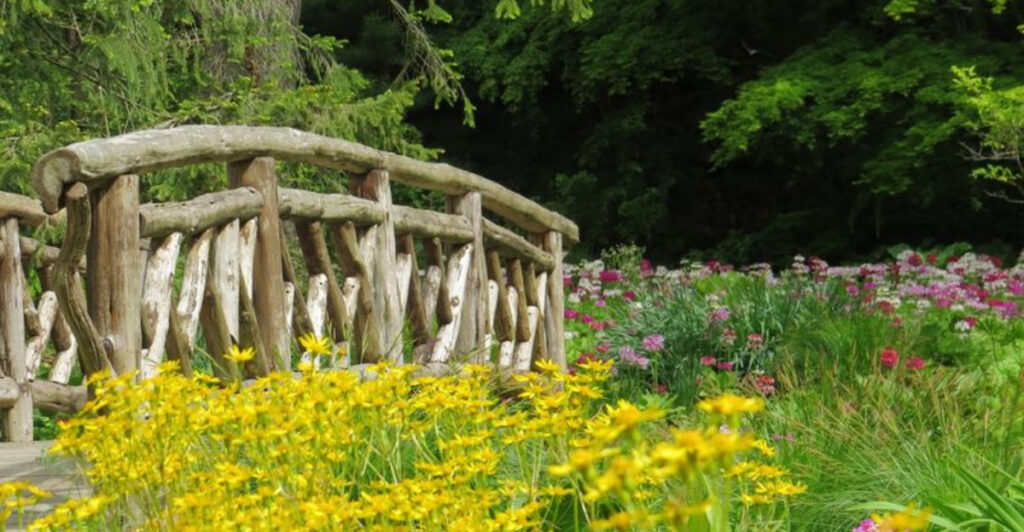
You do not walk through it in a straight line. You wander. A path bends around a boulder. A set of stone steps pulls you downhill. A pond appears through the trees. Ferns gather in the cool shade like they were gossiping before you showed up.
Because the garden sits in Far Hills, it also has that lovely New Jersey contradiction going for it. You are not deep in the wilderness.
You are in Somerset County, within reach of Route 202 and the broader Bedminster, Bernardsville, and Peapack-Gladstone area. Yet once the trees close in, it feels surprisingly removed from everything.
That is the real trick here. Buck Garden is easy enough to reach, but it does not feel easy. It feels discovered.
How Leonard J. Buck Turned a Glacial Valley Into a Living Work of Art
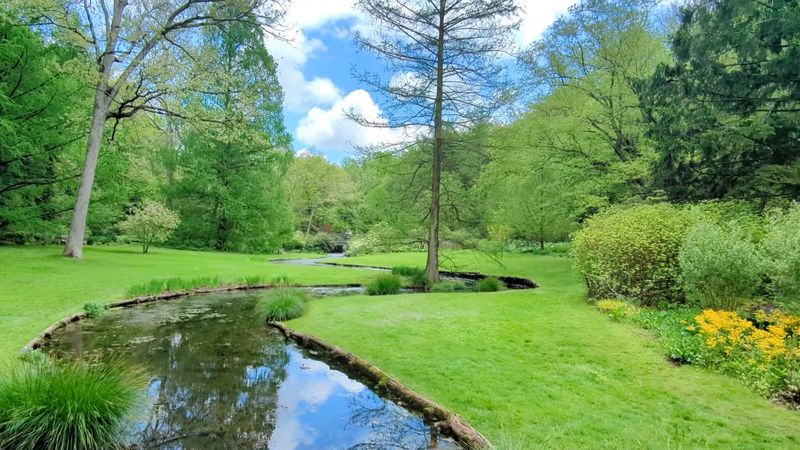
The story behind Leonard J. Buck Garden starts with the kind of New Jersey landscape most people would have admired from a distance and then left alone: a rocky, wooded valley shaped by ancient geology.
Leonard J. Buck saw something else in it. He saw possibility hiding in the stone. Buck developed the garden as part of his estate beginning in the late 1930s.
He worked with Zenon Schreiber, a respected landscape architect, and together they shaped a naturalistic garden around the large rock outcroppings already on the property. Their goal was not to make the place look designed in the obvious way.
In fact, the aim was the opposite. They wanted the garden to feel ecologically right, as if human hands had not barged in and started bossing nature around.
That restraint is what makes the garden so special. The rocks were not cleared out to make room for flower beds.
The rocks became the setting. Different exposures, slopes, cracks, and ledges created small microclimates, which allowed different plant communities to grow in different parts of the garden.
One area might feel cool and ferny. Another might catch just enough sun for flowering shrubs and alpine plants.
The whole place works like a series of small garden rooms, but without walls. The land itself has a much older backstory.
The nearby Moggy Hollow area is tied to the region’s glacial history, with the Wisconsin glacier, ancient Lake Passaic, and the Watchung Mountains all playing a role in shaping the terrain. You do not need a geology degree to enjoy it, but knowing that the rocks and ravines have that kind of history adds another layer to the visit.
After Buck’s time, the garden was donated by Helen Buck to the Somerset County Park Commission in 1976. That detail matters because it explains why the place still feels so carefully protected.
It was not created as a quick attraction. It was built slowly, deliberately, and with a deep respect for the land that was already there.
Why the Woodland Trails Feel Like a Secret New Jersey Escape
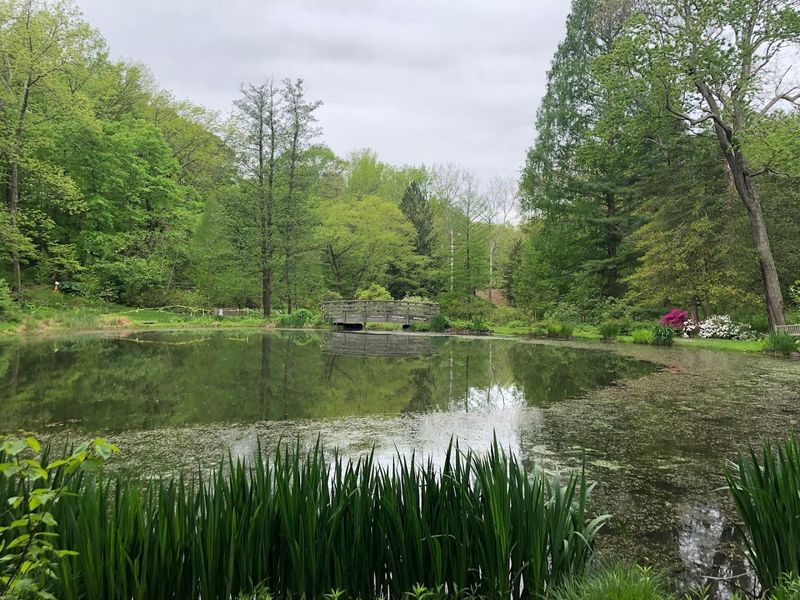
The best way to experience Buck Garden is to slow down before the garden makes you do it anyway. The paths are not built for rushing.
They twist through the valley, pass planted outcroppings, dip toward water, and lead you under enough tree cover that even a bright day can feel softened around the edges. This is where the garden earns its hidden-oasis reputation.
The trails connect different rock and woodland areas, but they never feel like a big loop you are trying to conquer. They feel more like a series of small invitations.
Turn here. Look down there. Step closer to that boulder. Notice the flowers growing out of what looks like an impossible crack in the stone.
It is also a very New Jersey kind of peaceful. Not empty. Not remote. Just tucked away in a way that makes you forget how close you are to errands, traffic, and whatever else was on your phone five minutes ago.
The paths are lined with wildflowers, ferns, shrubs, and trees, and because the garden changes through the year, the same trail can feel completely different from one visit to the next. Spring is the showiest season, especially when the wildflowers, alpine plants, azaleas, and rhododendrons start competing for attention.
But the woodland setting gives the garden interest beyond peak bloom. Summer brings deeper shade and fuller greenery.
Fall gives the rocks and paths a richer, moodier frame. Even when flowers are not the main event, the structure of the valley keeps things interesting.
The trails also have a nice balance of cultivated and untamed. You can tell the garden is cared for, but it does not feel scrubbed clean of personality.
Leaves gather where leaves should gather. Moss gets comfortable. Water moves the way water wants to move. The result is a place that feels designed without feeling decorated.
The Ponds and Streams That Make the Garden Feel So Peaceful
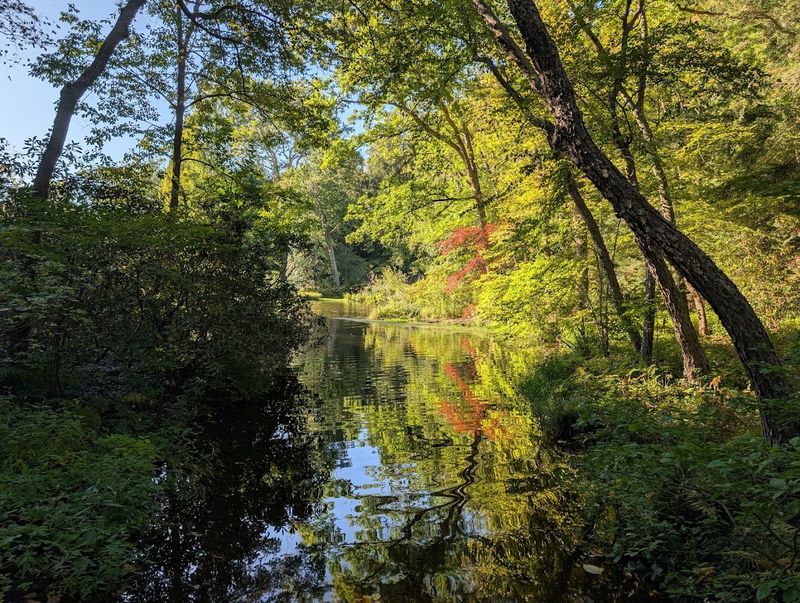
Water does a lot of quiet work at Leonard J. Buck Garden.
It softens the rocks, cools the air, and gives the trails a rhythm. You may come for the flowers, but the ponds and streams are what make the place feel settled, like the whole valley is breathing at a slower pace.
There are moments when the water is obvious, catching light in a pond or slipping beside the path. Other times, you hear it before you see it.
That little sound changes the entire mood of a walk. A garden with water always has movement, even when nobody is speaking and nothing dramatic is happening.
At Buck Garden, the streams feel especially natural because they belong to the valley rather than looking like they were dropped in afterward. The rock outcroppings help make the water scenes feel more dramatic without trying too hard.
Water near a lawn is pleasant. Water moving through a wooded rock garden feels like a small discovery.
The stones create edges, shadows, and narrow views, so you rarely see everything at once. You catch pieces of the landscape as you walk: a pond through branches, a stream below a slope, a damp patch where ferns are having the time of their lives.
This is also where the garden’s design intelligence really shows. Buck and Schreiber used the natural terrain instead of flattening it into something easier and less interesting.
The valley’s dips, ledges, and slopes make the water feel like part of the original story, not an ornamental feature. That matters because peaceful places are often ruined by trying too hard to be peaceful.
Buck Garden avoids that. There are no grand fountains demanding applause. No overbuilt viewing platforms telling you exactly where to stand. The water is simply there, doing what water does best.
It gives the garden its hush. Not silence, exactly, but a softer soundscape: moving water, birds, footsteps on paths, wind in leaves.
Where Wildflowers, Ferns, Azaleas, and Rock Outcroppings Steal the Show
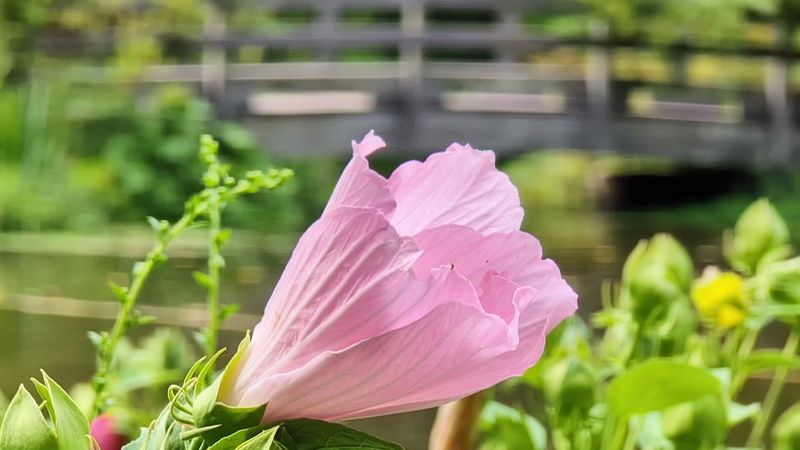
A tiny flower growing beside a massive rock should not be as charming as it is, but Buck Garden makes that combination its signature move. The scale keeps changing.
One minute you are looking at a broad rocky slope, and the next you are leaning in to notice a delicate bloom that looks like it picked the most dramatic possible place to live. The plant collection is one of the biggest reasons this garden has national horticultural significance.
The Somerset County Park Commission notes rare and exotic rock garden plants tucked among the rocks, woodland trails lined with wildflowers, and ferns growing throughout the garden.
At the base of the valley walls, azaleas and rhododendrons bring color in May and early June, which is one reason spring gets so much attention here.
But this is not a one-week wonder. The garden is known for having something interesting in bloom almost every week of the year.
That does not mean every visit is a fireworks show. It means the garden rewards people who actually look.
Bloodroot, trillium, primroses, violets, daffodils, ferns, flowering shrubs, and alpine plants all contribute to the layered effect, depending on the season and the specific area of the garden. The rock outcroppings make those plants feel even more impressive.
Instead of sitting in neat rows, many of them appear in pockets, crevices, slopes, and shaded edges. That gives the garden a natural rhythm.
Plants are not just displayed. They are placed in conversation with stone, light, moisture, and elevation.
It is the kind of garden where plant lovers can happily nerd out over labels and varieties, while casual visitors can simply enjoy the scene without needing to know a single Latin name. That is not easy to pull off.
Some botanical spaces feel like outdoor classrooms first and beautiful places second. Buck Garden manages to be both.
The ferns deserve their own little round of applause, too. They give the garden that cool, old-woods texture, especially in shaded areas near rocks and water.
They are not flashy, but they make everything else look better. Honestly, very New Jersey of them.
What to Know Before Visiting Leonard J. Buck Garden
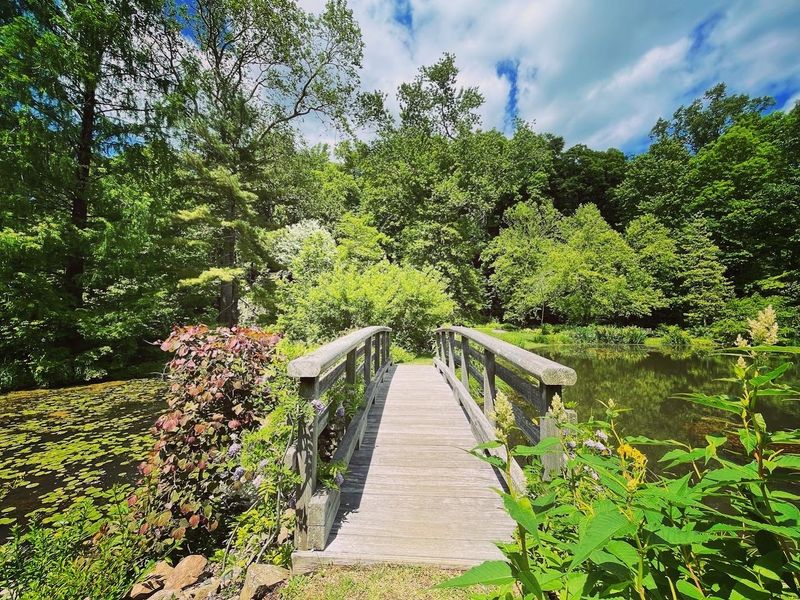
A few practical details make a visit smoother, and this is one place where checking the basics really does pay off. Leonard J.
Buck Garden is located at 11 Layton Road in Far Hills, and it is part of the Somerset County Park Commission system. Admission is free, though it is always smart to check the official county page before heading over because hours and seasonal rules matter here.
The regular posted hours are Monday through Friday from 10 a.m. to 4 p.m. From May through August, Thursday hours extend from 8 a.m. to 7 p.m.
Weekend access is seasonal: Saturday hours are 10 a.m. to 5 p.m. and Sunday hours are noon to 5 p.m. from April through November. From December through March, the garden is closed on weekends and major holidays, and it is also closed on Thanksgiving Day.
The visitor setup is more helpful than you might expect for a garden that still feels tucked away. The original carriage house has been renovated as a Visitors’ Center, with administrative offices, a meeting room, and restroom facilities.
Parking has also been improved, which helps during the busy spring bloom period. There are some rules worth respecting, partly because the garden contains rare and fragile plant collections.
Pets need to stay home, except for service animals. Food is restricted inside the garden, though bottled water and baby bottles are allowed.
Picnicking is limited to designated areas near the Visitors Center deck and the picnic tables above the Flower Border. Visitors are also asked not to climb rocks, walk in garden beds, pick plants, move labels, bike, skate, fish, swim, or turn the paths into a playground.
Professional photographers should arrange permits in advance through the park commission. Casual photos are fine, and frankly, it would be difficult not to take a few.
The best visit is unhurried. Give yourself enough time to follow the paths, pause by the water, read a few plant labels, and let the rocks and flowers do their quiet little magic act.
Share this story