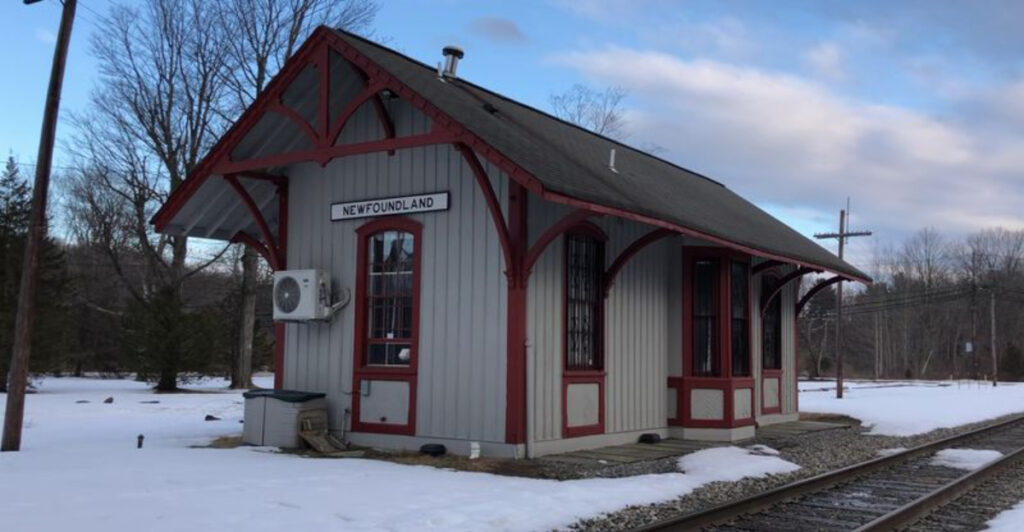
A weathered wooden depot, one set of railroad tracks, and a place called Newfoundland. That was enough to give one of the most quietly memorable movies of the early 2000s its entire personality.
Tucked into the Morris County side of this small North Jersey community, the Newfoundland railroad station had already been standing for well over a century when cameras arrived for The Station Agent. Then Peter Dinklage moved into the building—on screen, anyway—and the little 1872 depot suddenly had a second identity.
The movie had no explosions, superheroes, or expensive sets. It was shot in just 20 days for roughly $500,000, with much of its charm coming from places that already existed.
More than two decades later, the station is still there beside the tracks, looking remarkably suited to the understated film that made it famous. In a state packed with recognizable movie locations, this one feels different.
Hollywood did not transform the place. It simply noticed what was already there.
The Little Newfoundland Station That Time Almost Forgot
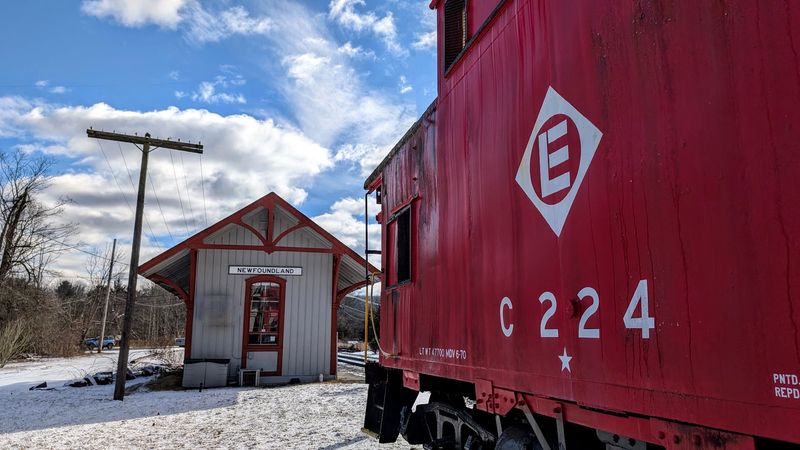
Long before anybody showed up with a movie camera, Newfoundland Station had already lived several lives. The wooden depot was built in 1872 by the New Jersey Midland Railway in what is now the Newfoundland section of Jefferson Township.
The surrounding community can be confusing on a map because Newfoundland stretches around the Morris-Passaic county line, but the station itself sits on the Jefferson Township side in Morris County, near Bigelow Road and Green Pond Road. In its early years, this was practical infrastructure, not picturesque scenery.
The railroad helped connect rural North Jersey communities with the larger transportation network, and the line eventually became part of the New York, Susquehanna and Western system. By the late 19th century, maps showed both passenger and freight facilities in Newfoundland.
But stations have a habit of becoming invisible once people stop needing them. Passenger trains disappeared, automobiles took over more everyday travel, and the old depot lost the purpose for which it had been built.
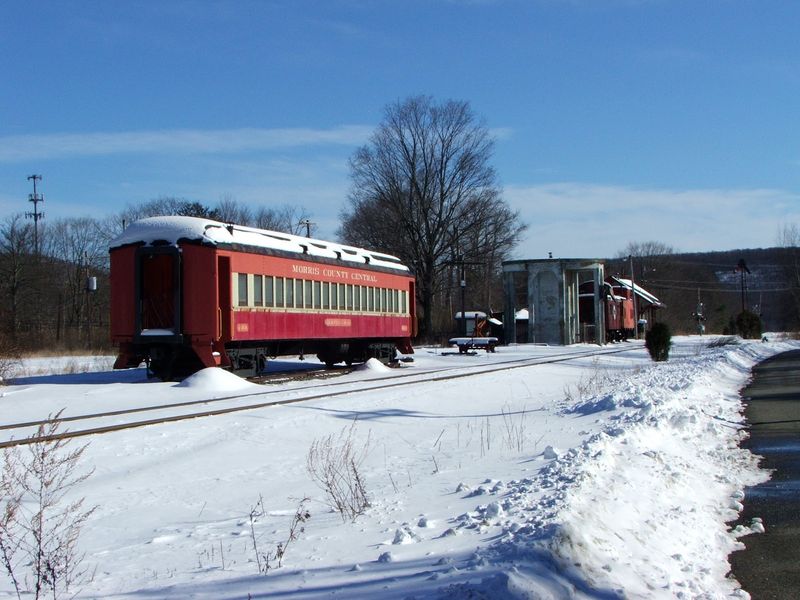
There was a brief return of railroad excitement in the 1970s when the Morris County Central Railroad moved its vintage steam excursion operation to Newfoundland. Beginning July 4, 1974, old locomotives once again hauled passengers through the area, drawing crowds to a stretch of track that had grown quiet.
Oddly enough, the depot itself remained in rough shape. The excursion railroad did not own the building, and its operator was not permitted to restore it, even after offering to do the work.
The tourist trains lasted until December 14, 1980, when the Morris County Central ran its final trips between Newfoundland and Stockholm. After that, the little station slipped back into the background.
It was old, worn, and easy to overlook—which, as it turned out, was exactly what one filmmaker needed.
How The Station Agent Found Its Perfect New Jersey Setting
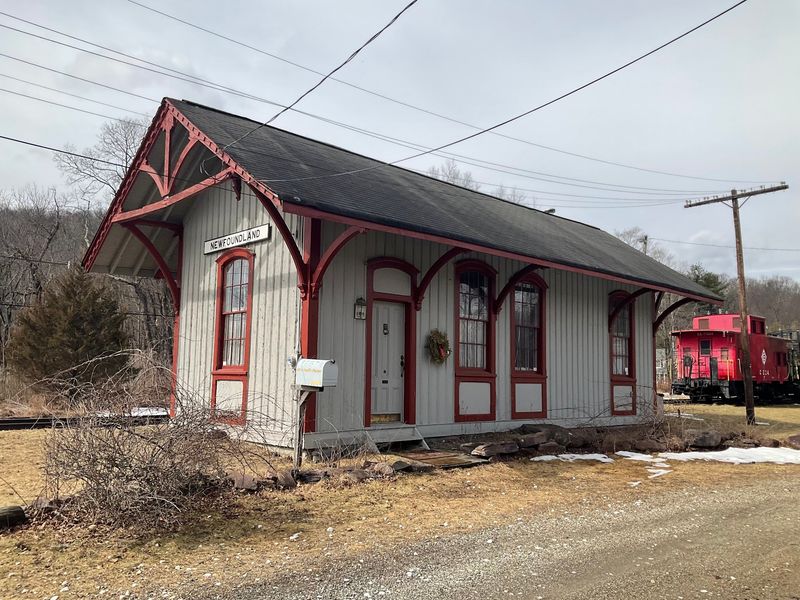
Tom McCarthy did not write a movie and then send a location scout hunting for a suitably scruffy train station. The process basically happened in reverse.
McCarthy has said the Newfoundland depot itself was his original inspiration. The station was not far from where he grew up, and he encountered it while visiting his brother, who had bought a house in the area.
McCarthy met the depot’s owner, discovered that he was a railroad enthusiast, and was introduced to the wonderfully specific world of people who love trains enough to organize their free time around them. He even attended a railfan meeting.
Soon, a story began taking shape around the building. That origin explains why The Station Agent never feels as though rural New Jersey has been pasted behind the actors.
The place came first. Newfoundland’s tracks, wooded roads, weathered structures, and out-of-the-way corners dictated the mood.
The movie follows Finbar McBride, known as Fin, who inherits an abandoned depot after the death of his friend and moves there hoping to be left alone. That plan lasts about five minutes.
Joe, played by Bobby Cannavale, operates a snack truck nearby and has enough conversational energy for several people. Olivia, played by Patricia Clarkson, is an artist carrying a much heavier kind of loneliness.
Gradually, the three build a friendship nobody particularly planned on having. Filming stayed close to home.
In addition to Newfoundland, production used locations around Hoboken, Dover, Lake Hopatcong, Rockaway, Hibernia, Oak Ridge, and other parts of New Jersey. The schedule was pure independent-film survival mode: 20 shooting days, about $500,000, and roughly eight script pages a day.
McCarthy recalled that there was often time for only one take and, if they were lucky, a safety take. Somehow, that rush never made it onto the screen. The film moves at Newfoundland speed.
Why This Humble Railroad Depot Became the Heart of the Film
Remove the station from The Station Agent and you do not simply lose a filming location. You lose the movie’s organizing idea.
Fin arrives at the depot because he wants distance—from strangers, from unwanted attention, and from a world that repeatedly reduces him to his height before learning anything else about him. An abandoned railroad building seems ideal.
It is isolated without being completely cut off. Trains still pass nearby, giving a lifelong rail enthusiast something to watch while requiring very little conversation.
Then the joke slowly reveals itself: this supposedly lonely place becomes the spot where everybody keeps turning up. Joe parks his food truck practically outside Fin’s door.
Olivia drifts into his life after a pair of memorably bad encounters involving her car. A young girl named Cleo wants him to speak to her class about trains.
The station that Fin chooses as a retreat keeps behaving more like a tiny neighborhood center. That tension works because the real depot looks exactly like somewhere a person might disappear for a while.
It is modest and functional rather than grand, especially compared with the elaborate historic terminals elsewhere in New Jersey. There are no marble waiting rooms or soaring ceilings needed here.
A small wooden building beside the tracks does the job. Even the railroad becomes part of the storytelling.
One of the movie’s liveliest sequences has Joe driving alongside a moving train while Fin films it, a burst of motion in a story that usually prefers long walks and uncomfortable silences. Yet most of the time, the tracks simply sit there as a reminder that things pass through, whether Fin wants them to or not.
That is what makes Newfoundland such a clever setting. The movie is about people who think they have stopped moving. The station, built for departures and arrivals, quietly disagrees.
How Peter Dinklage Helped Put Newfoundland on the Movie Map

Peter Dinklage was not originally part of the idea—at least not in the way audiences eventually saw him. McCarthy has explained that when he first developed Fin, the character was not specifically written as a man with dwarfism.
He knew Fin was disconnected from other people but had not settled on the reason. Then he ran into Dinklage, a friend he had previously directed in a New York play.
McCarthy said the encounter clicked immediately. He could see Dinklage bringing both the emotional weight and the outsider quality the character needed without turning Fin’s height into the entire story.
That decision changed more than the casting. Dinklage gives the movie its center of gravity.
Fin rarely explains himself when a look will do, and that restraint suits Newfoundland almost suspiciously well. Put a louder performance in that little depot and the whole thing might tip over.
Instead, actor and setting operate on the same frequency. McCarthy later described Dinklage as much more outgoing, funny, and quick-witted than Fin, meaning the performance required him to strip away much of his natural comic energy and play things inward.
The result became one of the breakthrough performances of Dinklage’s career. The film earned major attention on the independent circuit, while Dinklage received a Screen Actors Guild nomination for his leading performance.
The ensemble was recognized as well. Suddenly, moviegoers far beyond Morris County knew a fictional version of Newfoundland.
They knew the tracks, the depot, the snack truck parked nearby, and the odd little community that formed around Fin. Years before Dinklage became internationally recognizable as Tyrion Lannister on Game of Thrones, one of his defining roles was a quiet train enthusiast living in an old North Jersey station.
Newfoundland could hardly have asked for a more unlikely ambassador.
The Railroad History That Came Long Before Hollywood
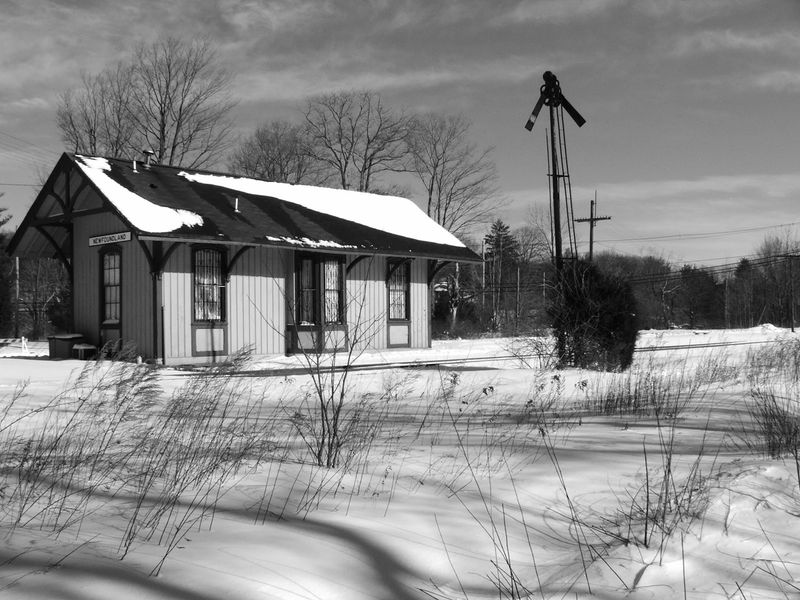
The movie may have given the depot celebrity status, but the railroad story here begins in the 19th century. Newfoundland Station dates to 1872, when the New Jersey Midland Railway was pushing through northern New Jersey.
The Midland eventually became part of the New York, Susquehanna and Western Railroad in the 1880s, and the line through Newfoundland remained an important piece of the region’s transportation landscape. Back then, a station like this could shape the fortunes of an entire small community.
Northern New Jersey’s lakes, mountain air, inns, and summer resorts were much easier to market when visitors could arrive by rail instead of bouncing along primitive roads for miles. Newfoundland sat in a part of the state that once attracted vacationers looking for a rural escape from New York and its increasingly crowded suburbs.
Later came the Morris County Central, which adds one of the most fun chapters to the station’s backstory. The heritage railroad began elsewhere in Morris County in 1965 before arranging to lease roughly 10 miles of unused Susquehanna trackage between Newfoundland and Beaver Lake in late 1973.
Moving the entire operation took months. Brush had to be cleared, track prepared, and facilities made ready before steam trains returned on July 4, 1974.
The rides ran through woods, curves, river crossings, and scenery around the Oak Ridge Reservoir. At Newfoundland, the operation added practical visitor facilities including a loading platform, restrooms, a gift-shop caboose, and a snack car.
The one thing it could not fix was the old 1872 station building. That irony is almost too perfect.
The depot survived years when it was considered an eyesore, outlasted the tourist railroad that wanted to restore it, and eventually became valuable precisely because it still looked old enough to carry a story. Hollywood arrived late.
The tracks had already supplied more than a century of material.
What Became of the Famous New Jersey Station After Filming Ended
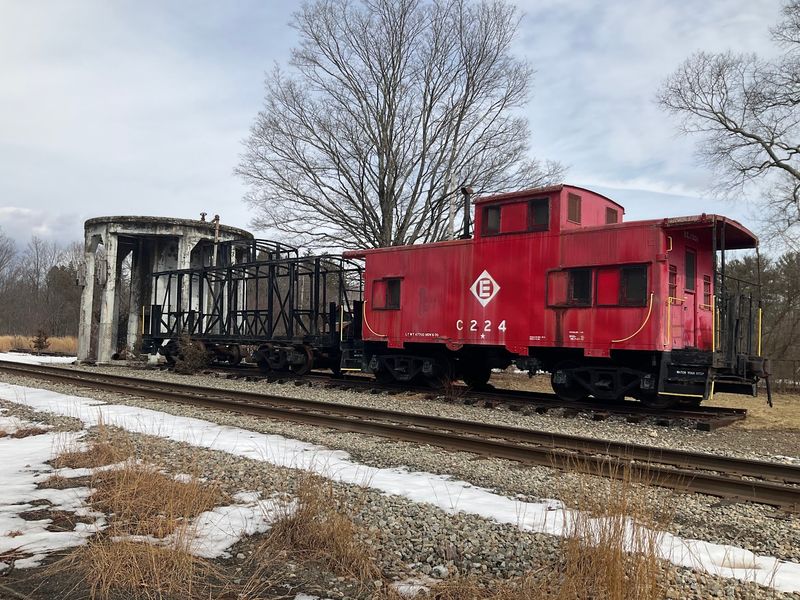
When the cameras left, Newfoundland did not turn into a movie-set attraction with velvet ropes and a gift shop full of Peter Dinklage mugs. That would have felt wildly wrong anyway.
The depot survived, and the railroad beside it remained part of a working system rather than becoming a decorative prop. The New York, Susquehanna and Western still operates a freight network across New Jersey, New York, and Pennsylvania, and the rail corridor through this part of North Jersey remains tied to that system.
The station building itself has also endured, an increasingly unusual survivor from the New Jersey Midland era. Its address is generally listed as 58 Bigelow Road in Newfoundland, within Jefferson Township.
At various points since the film, its interior has been renovated and the property has been presented for uses beyond its original railroad purpose, but the exterior remains recognizable as the building that framed so much of The Station Agent. The film, meanwhile, did considerably more than fade into the early-2000s indie pile.
At the 2003 Sundance Film Festival, it won the Audience Award in the dramatic category, the Waldo Salt Screenwriting Award for McCarthy, and a Special Jury Prize for Patricia Clarkson’s performance. McCarthy’s screenplay later won further recognition, and Miramax picked up the movie after Sundance.
That success gave an old New Jersey railroad depot a strange kind of permanence. The station had once existed to connect Newfoundland with places beyond it.
The Station Agent ended up doing much the same thing, only without selling a single ticket. A building that spent years being passed by became one people remembered.