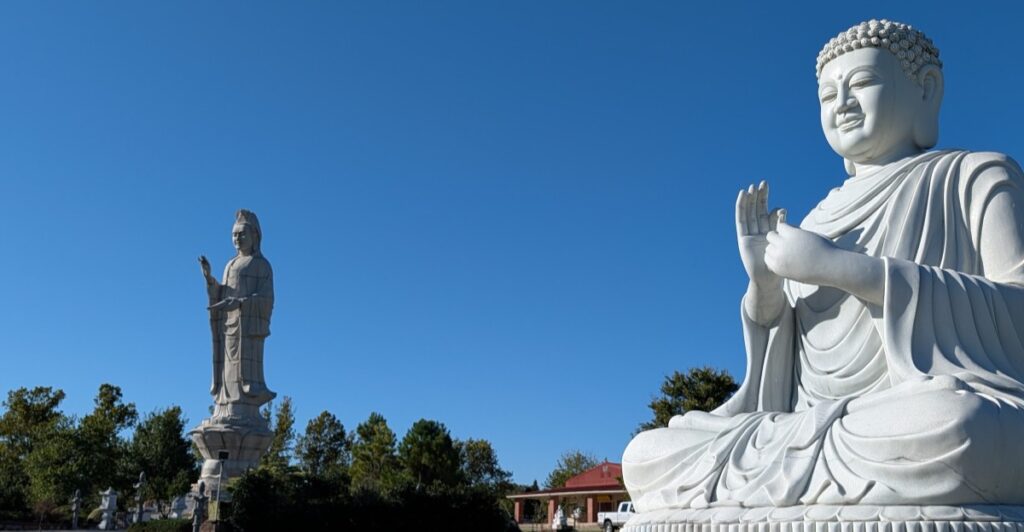
On the east side of Tulsa, a giant Buddha statue rises above a quiet road and seems to wave drivers in.
Most people zip past without knowing they can stop.
Behind that statue sits a peaceful garden filled with more statues, a small pond, and a wooden bridge.
It costs nothing to walk the grounds, and it might be the calmest hour you spend in Oklahoma this year.
Keep reading to learn the story behind the place, what to see once you park, the rules that keep it peaceful, and the hours that make a weekend visit easy to plan.
1. A Temple on East 21st Street
Some landmarks hide in plain sight, and this one is tall enough to stop traffic.
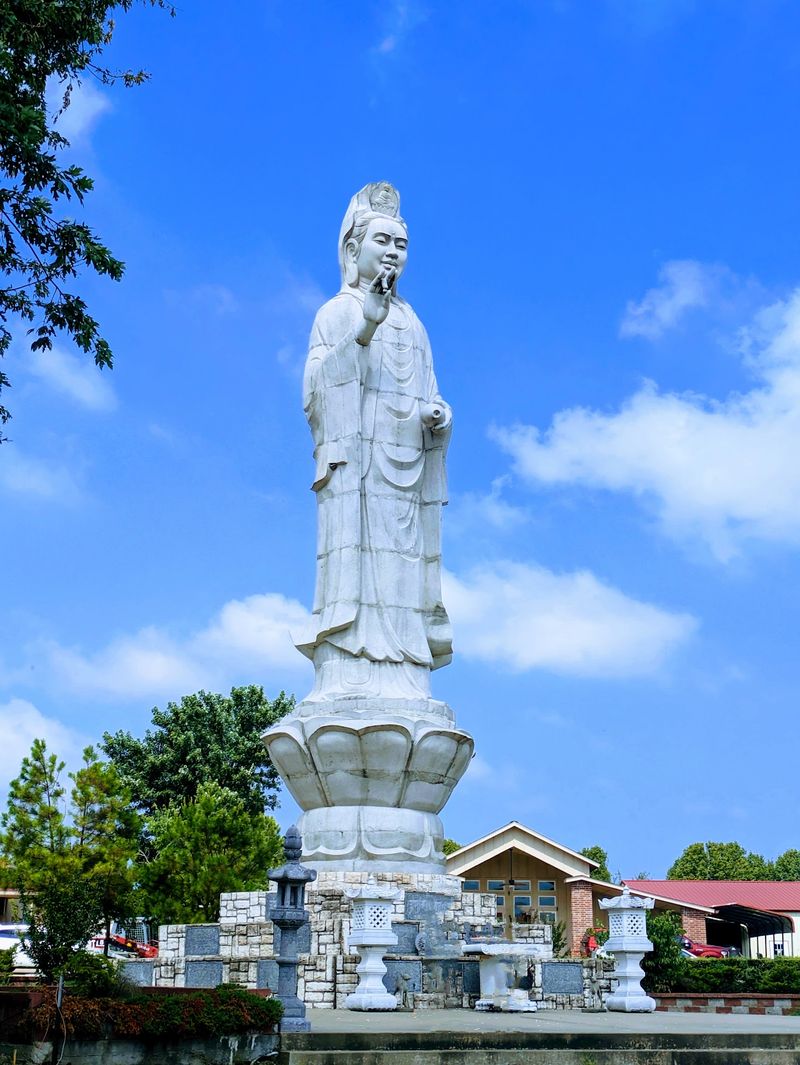
The spot is Chua Tam-Bao, a Buddhist temple at 16933 E 21st St, Tulsa, OK 74134, in the United States.
It sits on the eastern side of the city, far from the busy downtown core.
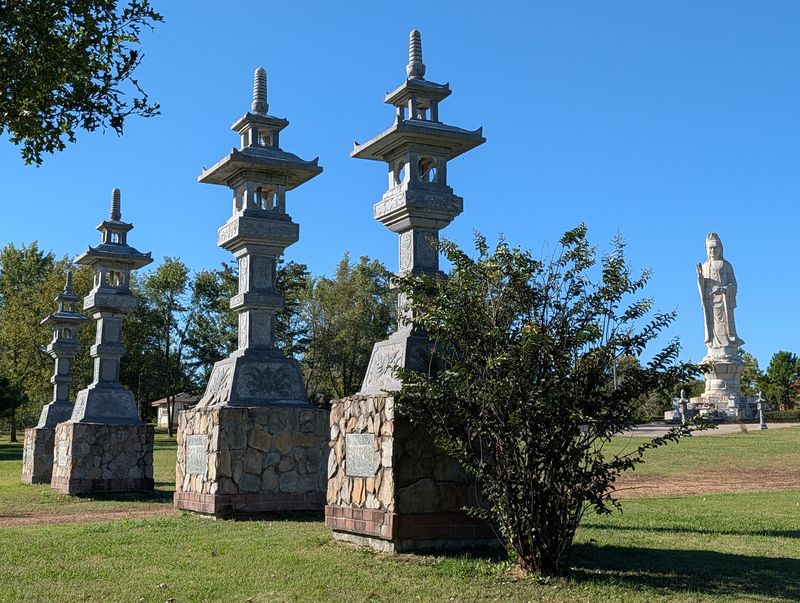
The first thing most people notice is the large Buddha sculpture near the road.
It is visible before you even turn in, and it acts like a quiet welcome sign for the whole property.
The temple is an active religious community, not a theme park or a museum.
That matters, because the grounds are shared with the public as a kindness, and the buildings serve the people who worship there.
Still, the garden is open for anyone to wander during daytime hours.
There is no admission fee to walk among the statues, which makes it one of the easiest low-cost outings in Tulsa.
Families, solo explorers, and curious day-trippers all end up here for the same reason.
They saw that statue from the road and simply had to find out what was behind it.
2. From Farmhouse Altar to Many Acres
Big things often start small, and the history here proves it.
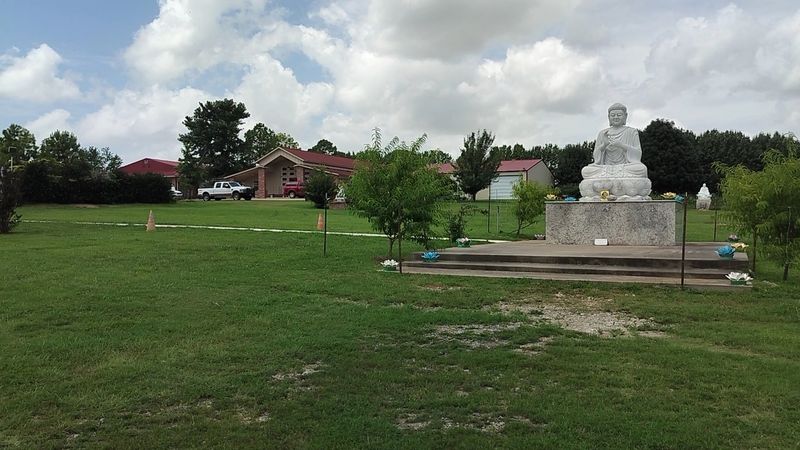
Longtime members of the community recall a time when the main house on the property served as the main altar.
Later, worship moved into a barn, and three statues marked that early chapter.
The growth came step by step.
Members remember an interest-free loan, the construction of restrooms, and a program where forgiving that loan earned your name on a brick.
More land was purchased over time.
Trees were planted, and then more trees were added after that.
That slow, steady effort shaped the grounds people walk today.
The temple now spreads across many acres filled with statues and history.
Knowing this backstory changes how the garden reads.
Each path and statue reflects years of work by a dedicated community rather than a single grand construction project.
It is a homegrown Oklahoma story in its own way.
A small group built something lasting, one brick and one tree at a time.
3. The Buddha That Greets the Road
Few statues in Oklahoma pull off a better first impression.
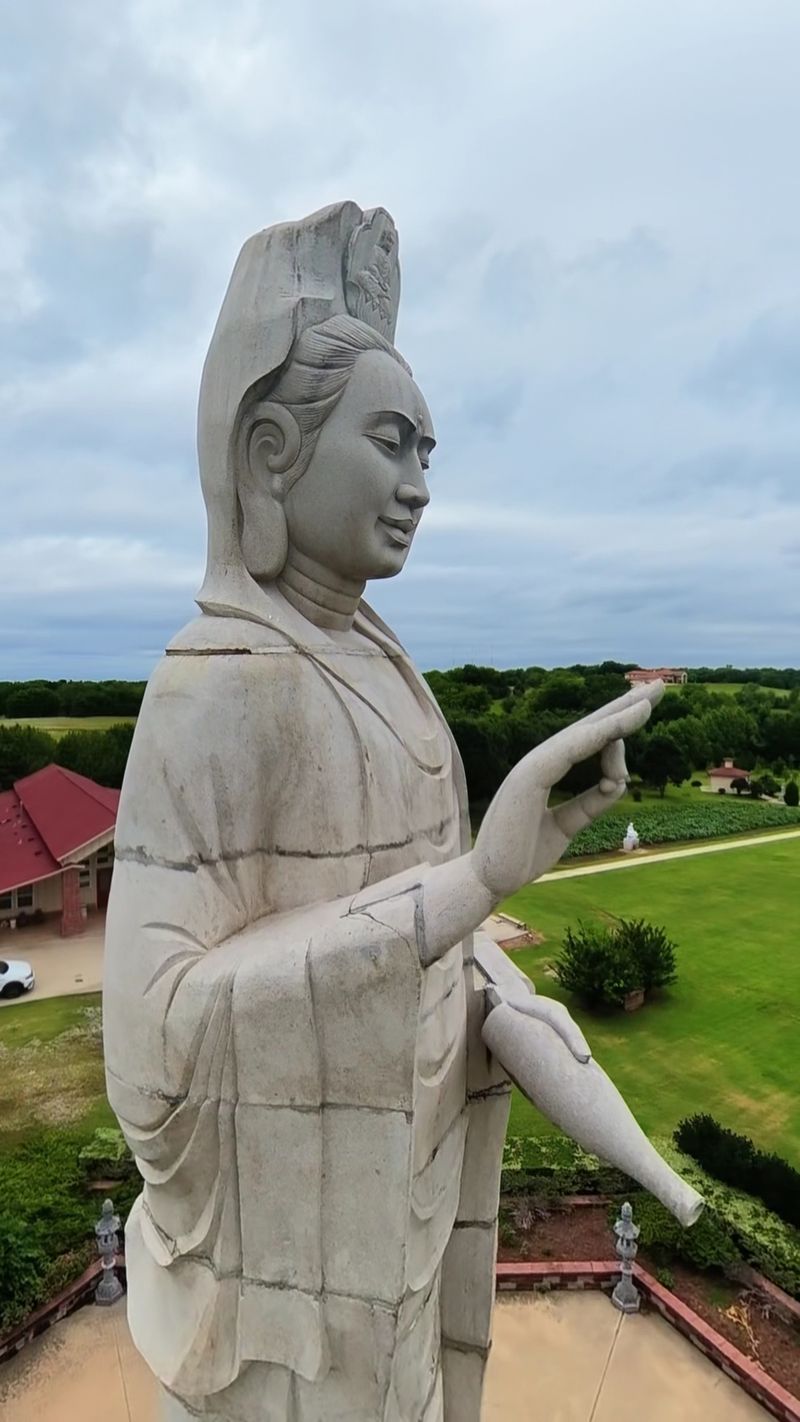
The enlightened Buddha sculpture stands as the centerpiece of the grounds.
It faces the road and almost beckons people inside, which is exactly how many first-timers end up parking.
Up close, its scale becomes clear.
It towers over the garden and gives the whole property a focal point.
Signs posted around the grounds ask guests not to climb on the statue.
Sadly, not everyone listens, and members of the community have expressed real disappointment about it.
So here is the simple rule for families.
Look, admire, take photos from the ground, and keep little climbers on the path.
At times, parts of the area around the main statue have had piles of dirt and stored materials nearby.
The grounds are a working property, so expect some spots to look more like an ongoing project than a finished postcard.
None of that dims the main event.
The giant Buddha remains the reason most people turn off East 21st Street in the first place.
4. A Garden Full of Statues
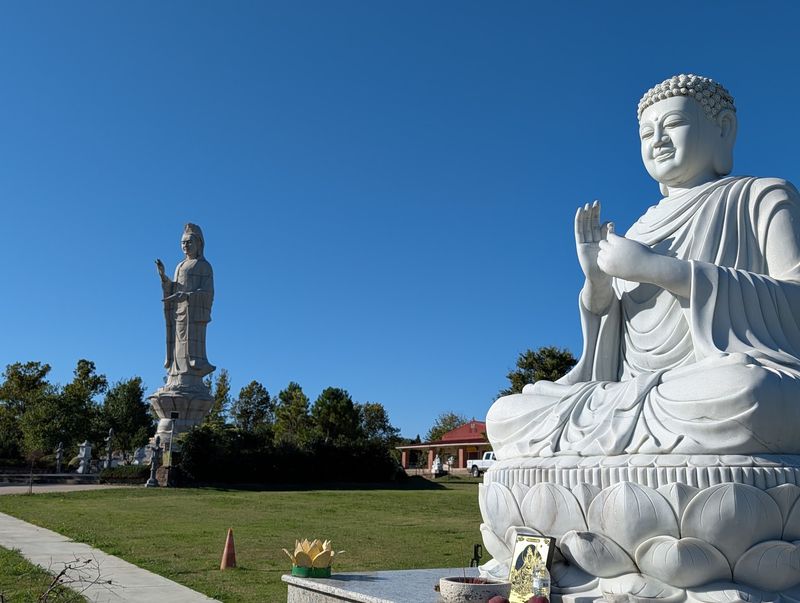
Count the statues if you like, but you will probably lose track.
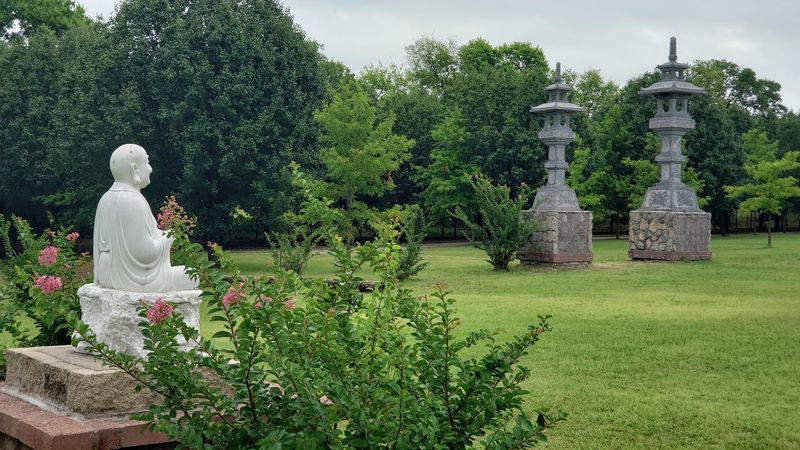
The garden holds many different statues and versions of the Buddha.
Each turn of the path reveals another figure, which keeps the walk interesting from start to finish.
Kids tend to treat it like a quiet treasure hunt.
Ask them to spot how many different poses they can find, and the visit suddenly has a goal.
The grounds are generally well kept, with neat areas around the main paths.
A few corners show stored items such as old displays, poles, and lumber, so it helps to stay on the clear walkways.
For adults, the variety offers a gentle introduction to Buddhist art.
You do not need to know the meaning of every figure to appreciate the care behind them.
It is also a rare outing that asks for nothing but time.
No tickets, no lines, just a slow loop past one figure after another.
5. Pond, Bridge, and a Little Island
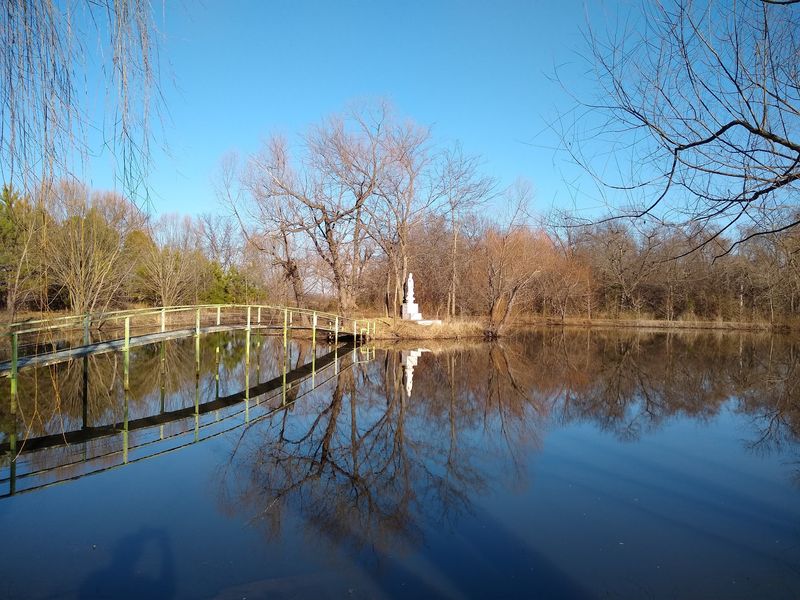
Water changes a garden, and this one has a small pond to prove it.
Toward the back of the property, a wooden bridge crosses the pond to a little island.
It is one of the most photographed corners of the grounds.
Here is the catch.
At times the bridge to the island has been closed for repairs, so access may not always be possible.
Even when the bridge is off limits, the pond area still makes a fine place to pause.
Benches and quiet spots nearby invite a few minutes of rest.
Parents should keep a close eye on young children near the water.
The pond is part of a sacred space, not a play area.
Check conditions when you arrive, and treat a closed bridge as a reason to come back later.
A second trip is never a bad excuse in a free garden.
6. Room to Think, Space to Meditate
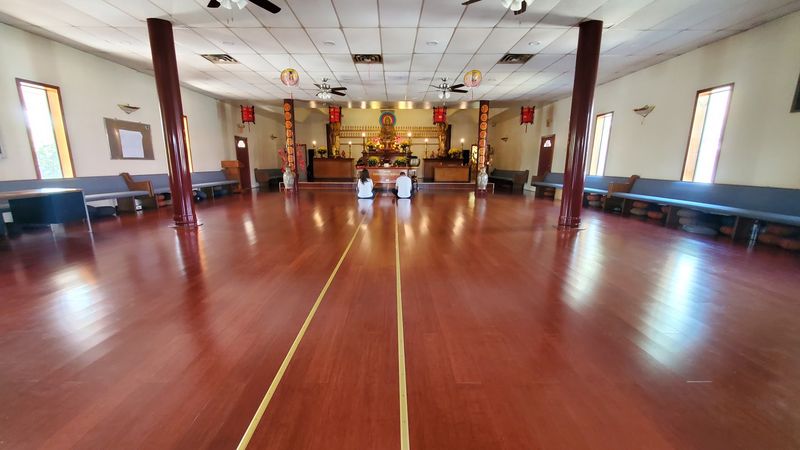
Silence is the main attraction for many regulars.
People come here to think through big decisions, settle their minds, or simply sit.
Nobody approaches you as you walk, so you are free to move at your own pace.
The grounds include a structure where meditations take place.
It is not always open, so plan to enjoy the outdoor spaces if the doors are shut.
Across the garden, several spots work well for quiet reflection.
Many people describe leaving calmer than when they arrived.
The temple also offers an English language service on Sundays at 9 a.m.
Newcomers are welcome to simply show up, and some who try it describe the community as unusually kind.
Schedules can change, so confirm the service time before driving out.
A quick check saves a wasted Sunday morning.
For anyone new to meditation, this is a low-pressure place to start.
The garden does most of the teaching on its own.
7. Good Manners on Sacred Ground
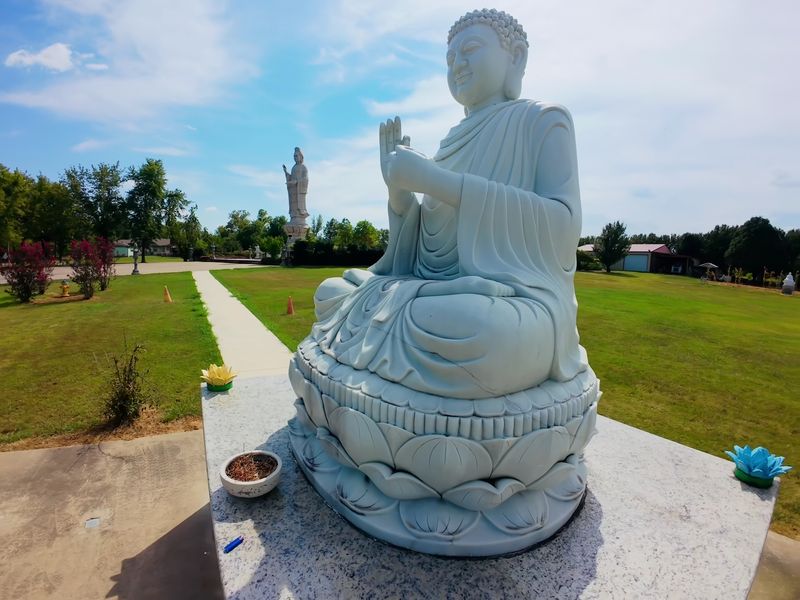
Free does not mean anything goes.
Signs around the property remind guests that the grounds and buildings are private religious spaces.
They ask people to be respectful, to avoid climbing or defacing statues, and not to bring weapons onto the grounds.
The buildings are typically off limits unless a service is happening.
The garden is the part meant for roaming.
It also helps to set expectations.
Often nobody is around to greet guests or answer questions, and the buildings may be closed even when the gates are open.
One friendly surprise has made the rounds over the years.
A resident dog named Lucky has been known to tag along and lead people to favorite spots.
A few simple habits go a long way here:
Keep voices low.
Stay on paths.
Leave every statue exactly as you found it.
The temple shares its garden as a gift, and good manners are the easiest way to say thanks.
8. Hours, Cost, and Planning Your Trip
Planning a visit takes about thirty seconds, which is part of the charm.
Listed hours run 8 a.m. to 7 p.m. every day of the week, Monday through Sunday.
Walking the grounds is free.
Hours may change, and some people have arrived during listed times to find the gate locked.
Checking the temple website at ducquanam.com before you leave is a smart move.
The temple sits on East 21st Street on the east side of Tulsa.
For many families in the Tulsa area, that means a short drive, and it fits easily into a day trip from Oklahoma City too.
Plan for an hour or so to see the statues, the pond, and the quieter corners.
Wear comfortable shoes, since the property covers many acres.
Bring water and maybe a notebook for older kids.
There are no tickets to buy and no gift shop to budget for.
Daylight hours are the window, so arrive with enough time to enjoy the garden before closing.
9. Why This Garden Earns the Detour
Oklahoma has plenty of places that surprise people, and this garden belongs near the top of that list.
Many describe it as a hidden spot in the city that makes you forget you are in Tulsa at all.
It holds a strong 4.8-star standing across more than 150 opinions, which says a lot about how people feel after a visit.
It is not polished everywhere.
Some corners hold stored materials, the bridge may be under repair, and you might not meet a single person to chat with.
Yet the core experience stays the same.
A towering Buddha, a garden of statues, a small pond, and plenty of quiet ask nothing of you but respect.
For families chasing free weekend outings, it delivers a cultural lesson without a lecture.
For solo visitors, it offers a calm reset that costs nothing.
Next time that giant statue catches your eye from East 21st Street, go ahead and turn in.
The garden has been waiting patiently, as any good Buddha would.
Share this story