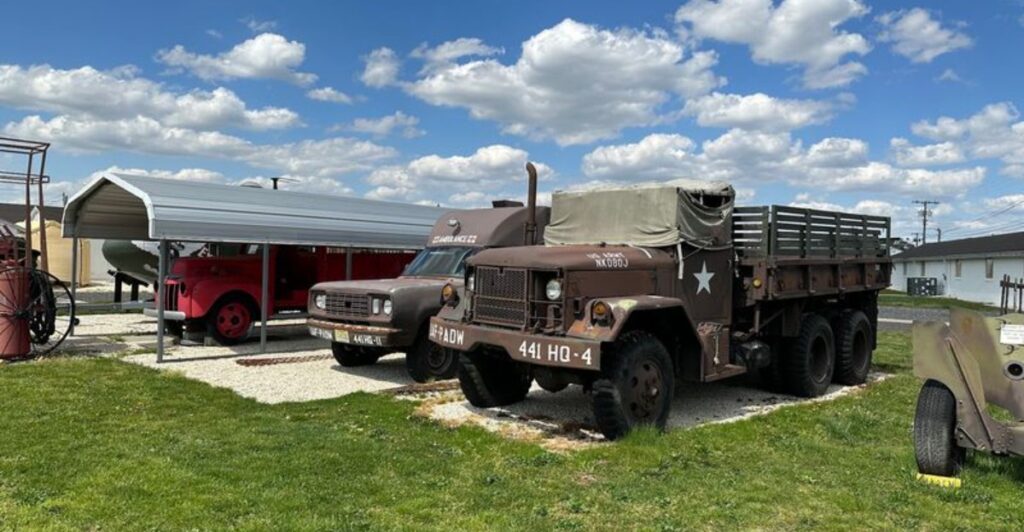
A hand-cranked submarine, a 45,000-ton battleship, and the remains of a coastal fortress may sound like pieces from three entirely different road trips. In New Jersey, they are all waiting within a few hours of one another.
The state’s military history reaches far beyond the familiar Revolutionary War landmarks, stretching from colonial barracks and Civil War innovations to World War II airfields, Cold War radar laboratories, and deeply personal accounts of Vietnam. Some stops fill enormous aircraft hangars.
Others place visitors in quiet farm fields where the ground itself tells the story. Together, they reveal how soldiers trained, engineers experimented, families endured, and local communities became part of events much larger than themselves.
Whether you want to climb through a warship, examine an early jet engine, or simply understand what happened on a landscape you have driven past countless times, these 13 destinations turn New Jersey into one remarkably layered military-history trail.
1. New Jersey Vietnam Veterans’ Memorial and Vietnam Era Museum – Holmdel

Two timelines run beside each other inside this Holmdel museum. One follows events unfolding in Vietnam, while the other tracks the political protests, music, cultural shifts, and national arguments taking place back in the United States.
That parallel approach makes the experience especially effective. Visitors do not encounter the war as an isolated sequence of battles, but as a complicated era that affected service members, families, students, activists, and entire communities.
Personal stories carry much of the weight. Letters, photographs, recorded testimony, and objects donated by veterans bring individual voices into a subject often reduced to dates and statistics.
The Circle of Letters connects messages sent from overseas with the people waiting at home, while the Testimony Theater presents perspectives from veterans and others whose lives were changed by the conflict. Outside, the circular memorial honors the New Jersey residents who were killed or remain missing.
Their names are arranged according to the dates they were lost, giving each day on the wall a painful human dimension. A restored Huey helicopter adds another unmistakable symbol of the war.
This is a reflective stop, not one to hurry through between errands. Leave time for both the indoor exhibits and the memorial grounds.
The museum stands near the PNC Bank Arts Center, and its schedule can change around programs and ceremonies, so checking ahead is wise.
2. InfoAge Science and History Museums – Wall Township
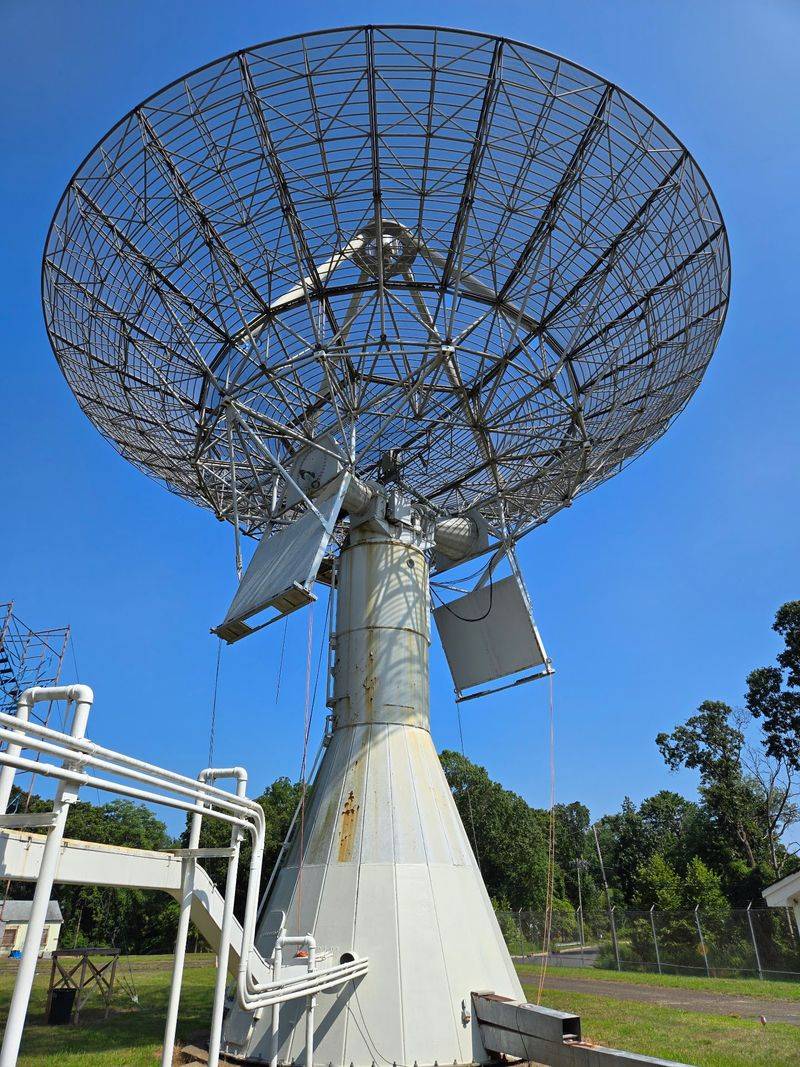
Long before smartphones could pinpoint a location or stream a live image, scientists at Camp Evans were working on technology that would transform communication, radar, warfare, and eventually space exploration.
The former Army research laboratory now houses InfoAge, a sprawling collection of museums where military history meets the wonderfully nerdy side of American innovation.
Radar provides the strongest link to the site’s wartime past. Engineers here tested and improved systems used to detect aircraft, including technology designed to identify low-flying targets hidden by terrain.
The campus also played a role in the first successful radar contact with the moon, an experiment that helped demonstrate the possibilities of long-distance communication beyond Earth. The experience reaches well beyond a single subject.
Depending on which buildings and galleries are open, visitors may encounter vintage radios, early computers, military vehicles, electronic equipment, model trains, shipwreck artifacts, and displays devoted to New Jersey’s technological history. That variety makes InfoAge particularly good for mixed-interest groups.
One person can study communications gear while another investigates old computers or gets a closer look at a tank. This is not a polished, one-hour museum with a predictable route.
It feels more like a campus full of discoveries, supported by volunteers who often know the smallest details behind the machinery. Hours for individual exhibits may vary, so review the schedule before making the drive.
Give yourself more time than expected; there is always another room, antenna, or wonderfully strange device around the corner.
3. Naval Air Station Wildwood Aviation Museum – Lower Township

Historic Hangar No. 1 does not ease visitors into the experience. Its enormous wooden interior immediately opens around rows of aircraft, engines, military equipment, and hands-on displays, all housed where naval aviators once prepared for service during World War II.
The building is not merely shelter for the collection; it is one of the museum’s most important artifacts. Naval Air Station Wildwood operated as a dive-bomber training facility from 1943 to 1945.
Young pilots practiced dangerous maneuvers over southern New Jersey before being assigned to combat, and dozens died in training accidents. Exhibits preserve their stories while explaining the demanding work that took place at the station.
The aircraft collection spans several eras and includes jets, helicopters, trainers, and other machines that invite close inspection. Unlike museums where every display feels distant, this one encourages interaction.
Visitors can sit in selected cockpits, try controls, and examine equipment from angles that reveal just how cramped and complicated military aviation could be. Children have plenty to touch, but aviation enthusiasts will find serious hardware to study.
The museum is located at Cape May Airport, making it an easy addition to a Shore trip when everyone needs a break from beaches and Victorian houses. One practical warning matters: the historic hangar is not climate-controlled.
Dress for the weather, especially during colder months or on sweltering summer afternoons. The museum operates throughout most of the year, although its winter schedule is more limited.
4. Fort Mott State Park – Pennsville
Stand beside one of Fort Mott’s massive gun batteries and the Delaware River suddenly looks less peaceful. This broad waterway was once a strategic approach to Philadelphia, and the fort formed part of a three-site defensive system intended to stop enemy ships before they could reach the city’s ports, shipyards, and industrial facilities.
Construction began in the late 1800s, when advances in naval weapons pushed the United States to strengthen its coastal defenses. Fort Mott worked alongside Fort Delaware on Pea Patch Island and Fort DuPont across the river.
Its disappearing guns could rise above concrete parapets to fire, then drop back down for reloading and protection. Although the fort never exchanged fire with an attacking fleet, it remained an active military post through several periods of national tension.
Today, visitors can walk past batteries, magazines, observation areas, and long concrete corridors built into the riverbank. Interpretive signs explain the purpose of each structure, while the open layout makes it easy to appreciate the fort’s scale.
A small museum and visitor center add context when open, but much of the appeal comes from exploring outside. Bring comfortable shoes and allow time for the riverfront trail rather than treating this as a quick museum visit.
The grounds are also good for picnicking, and seasonal ferry service may connect the area with Fort Delaware. Some interiors and facilities have limited schedules, so confirm access before setting out.
Even when buildings are closed, the batteries and river views make the defensive strategy remarkably easy to picture.
5. Old Barracks Museum – Trenton
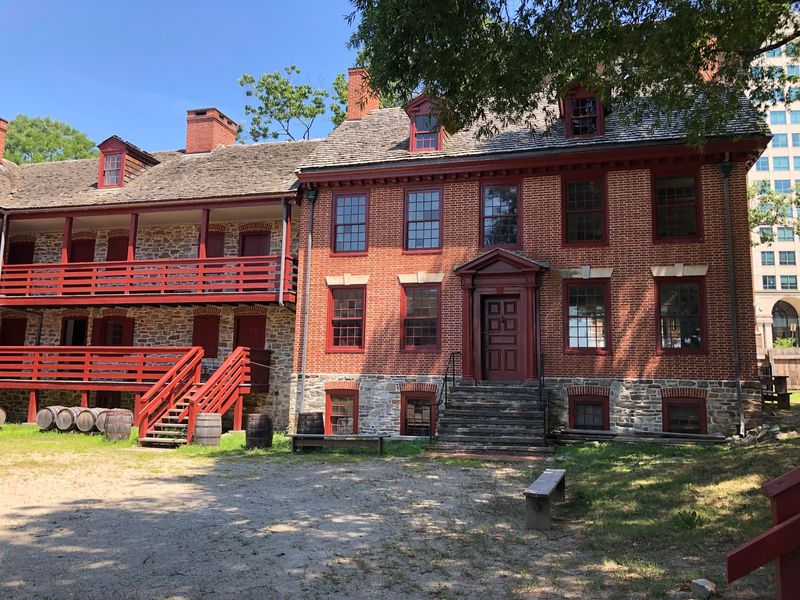
The thick stone walls in downtown Trenton have sheltered British soldiers, Continental troops, prisoners of war, and patients fighting smallpox. Built in 1758 during the French and Indian War, the Old Barracks survived while the city grew around it, leaving an unusually tangible piece of colonial military life within sight of the State House.
Guided interpretation is central to the visit. Rather than wandering through silent rooms filled only with labels, guests meet historical interpreters who explain how enlisted men slept, ate, dressed, and endured military discipline.
Four galleries and a short film provide broader context, but the details inside the building make the story stick: narrow bunks, period clothing, medical tools, and rooms that reveal how little personal space soldiers possessed. The Revolutionary War brought several new roles.
The barracks housed troops from both sides at different moments, held British prisoners, and served as an army hospital under Dr. Bodo Otto. His work included inoculating Continental soldiers against smallpox, a dangerous but crucial effort during an epidemic that threatened Washington’s army as seriously as British weapons did.
Because tours and living-history demonstrations shape the experience, arrive with enough time to join the full program. The museum sits in the heart of Trenton, making it easy to pair with the State Museum, State House, or nearby Battle Monument.
Paid parking options are available around downtown, but read signs carefully. This is one place where having a knowledgeable guide open doors and explain the scars in the stone makes all the difference.
6. Princeton Battlefield State Park and Clarke House Museum – Princeton
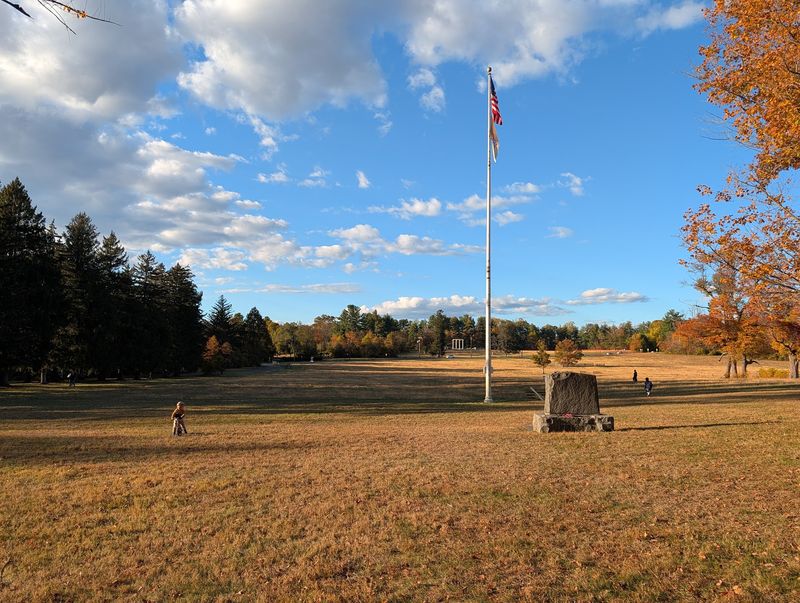
A cannonball reportedly crashed through the Clarke House during the Battle of Princeton, but the farmhouse soon faced a grimmer purpose. Wounded soldiers from both armies were carried inside after the fighting on January 3, 1777, transforming the Quaker home into a temporary field hospital.
The house now serves as the interpretive heart of Princeton Battlefield State Park. Period rooms and exhibits introduce the Clarke family, the battle, and the medical realities that followed it.
One of the most notable casualties was Brigadier General Hugh Mercer, who was treated in the house but died from his wounds nine days later. His story connects the military maneuvering outside with the human cost borne inside these rooms.
Beyond the house, walking the open field allows visitors to trace portions of Washington’s surprise attack against British forces. Monuments mark important figures and events, while the Mercer Oak’s successor recalls the famous tree that stood near the battle for centuries.
The landscape has changed, but enough open ground remains to understand why troop position and movement mattered. Museum hours can be limited, particularly outside scheduled tours and programs, so plan around access to the Clarke House rather than assuming its doors will be open.
The battlefield grounds are worthwhile on their own and provide an easy walk, though sturdy footwear helps after wet weather. Downtown Princeton is only a short drive away, making this a natural first stop before lunch and a stroll along Nassau Street.
Quiet as it appears now, this field helped change the momentum of the Revolution.
7. Monmouth Battlefield State Park Visitor Center – Manalapan
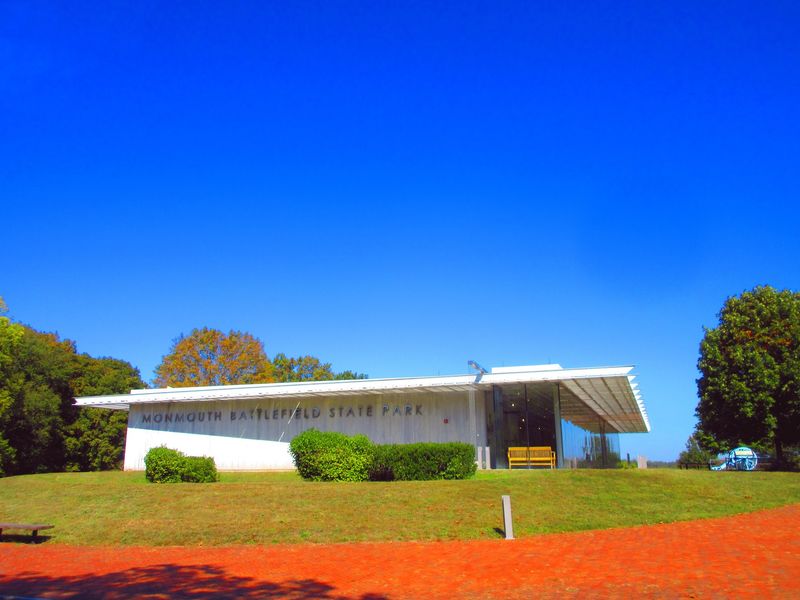
Heat shaped the Battle of Monmouth almost as decisively as gunfire. On June 28, 1778, thousands of soldiers fought across exposed fields in punishing temperatures, and many collapsed from heat exhaustion.
That brutal summer setting becomes much easier to grasp when looking through the visitor center’s broad windows toward the preserved landscape. Inside, maps, artifacts, timelines, and military displays explain one of the Revolutionary War’s largest battles.
The exhibits follow the British withdrawal from Philadelphia, Washington’s pursuit, and the confusion that nearly turned an opportunity into disaster.
They also address the legend of Molly Pitcher, traditionally associated with Mary Ludwig Hays, who carried water during the fighting and may have helped operate a cannon after her husband was injured.
The park’s real strength is the connection between gallery and ground. Once the exhibits establish where troops moved, visitors can head onto miles of trails crossing fields, orchards, and wooded sections of the battlefield.
The result is more revealing than studying a map alone: distances stretch farther than expected, slopes become noticeable, and the scale of the engagement comes into focus.
Reenactments and special programs can make summer visits especially memorable, although the same exposed terrain that challenged soldiers still produces hot walks today.
Bring water, sun protection, and shoes suited to uneven ground. The visitor center offers the best starting point, but leave enough time to explore outdoors. History here is not confined to a display case; it rolls across the entire horizon.
8. Battleship New Jersey Museum and Memorial – Camden
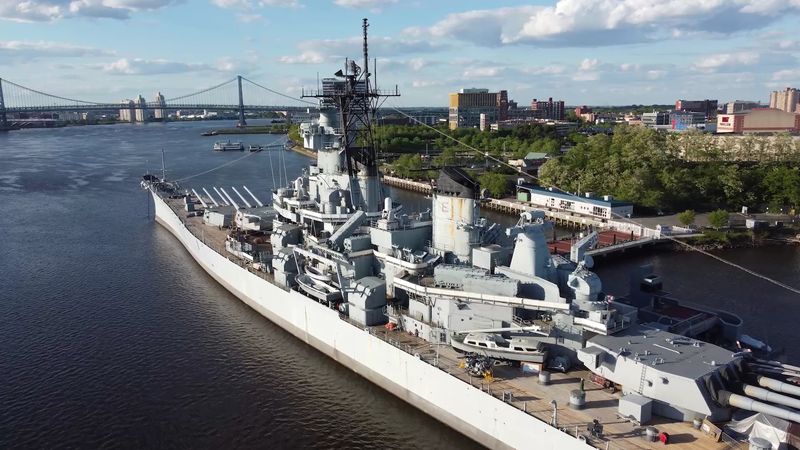
Everything changes once you climb aboard the “Big J.” Hallways narrow, ladders steepen, and the enormous vessel seen from the Camden waterfront becomes a maze of bunks, control rooms, weapons systems, machinery, and working spaces.
The physical effort of moving through the ship is part of understanding what life aboard it demanded.
Commissioned in 1943, USS New Jersey served during World War II, the Korean War, the Vietnam War, and operations off Lebanon before its final decommissioning in 1991. Its long career earned 19 battle and campaign stars, more than any other American battleship.
Visitors can explore crew berthing areas, the captain’s and admiral’s quarters, navigation spaces, the Combat Engagement Center, and areas connected to the ship’s immense 16-inch guns. Color-coded routes let guests choose how deeply to explore.
A shorter introductory path covers essential spaces, while longer routes involve more ladders and tighter passages. Specialty experiences may venture into a gun turret or engine room, and overnight programs let groups sleep in Navy bunks.
Those options make repeat visits surprisingly easy to justify. Wear secure, comfortable shoes and avoid bringing bulky bags.
Anyone with limited mobility should review accessibility information before buying tickets because many historic areas require climbing. Parking is available near the Camden waterfront, and the Philadelphia skyline provides a dramatic backdrop from the deck.
Allow at least two hours for a basic visit; rushing through a ship this large misses both the details and the sheer audacity of its engineering.
9. Millville Army Air Field Museum – Millville
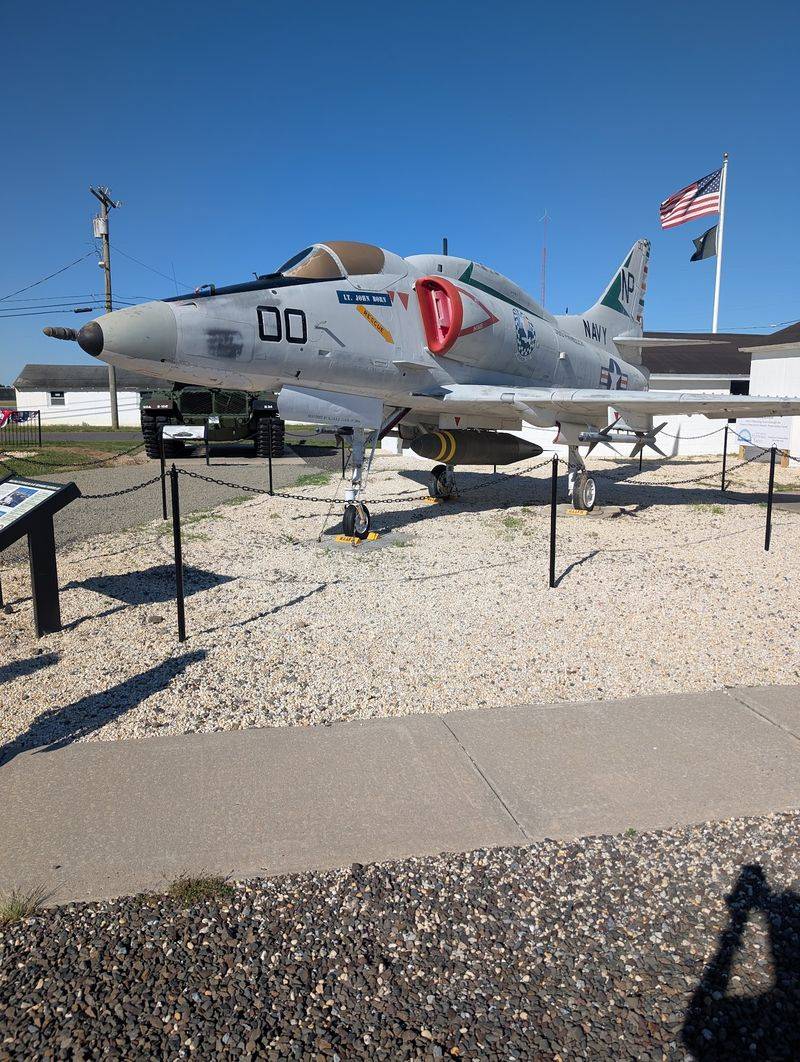
Rows of young fighter pilots once arrived in Millville to master the P-47 Thunderbolt, one of World War II’s heaviest and most powerful single-engine fighters. Some left for combat overseas.
Others never made it beyond training. The museum at Millville Airport keeps both parts of that story in view.
Opened by the military in 1943, Millville Army Air Field became an important gunnery training base for fighter pilots. Displays cover the pilots, instructors, mechanics, civilian employees, and local residents who turned a South Jersey airfield into a wartime operation.
Uniforms, photographs, flight equipment, personal belongings, and aircraft components give the exhibits a strong hometown connection rather than presenting aviation history as a parade of famous machines. The P-47 remains the star, but the collection travels beyond one aircraft.
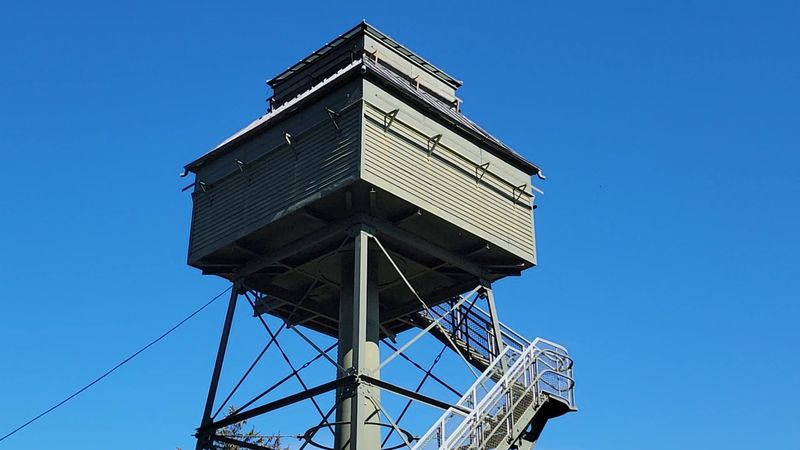
Exhibits have addressed the Tuskegee Airmen, Navajo Code Talkers, women in aviation, military communications, and later generations of veterans. Outside, visitors can see larger pieces such as a C-47 exhibit, an M60 tank, and a World War II observation tower.
A Link Trainer demonstrates the early technology used to teach instrument flying without leaving the ground. Because the museum occupies an active airport setting, aircraft activity may add an unexpected soundtrack to the visit.
Admission is generally affordable, and parking is straightforward. Check current hours and tour availability before traveling, particularly if you want access to exhibits beyond the main building.
This is a compact museum with a deep local memory, best explored slowly enough to read the names beneath the photographs.
10. Aviation Hall of Fame and Museum of New Jersey – Teterboro
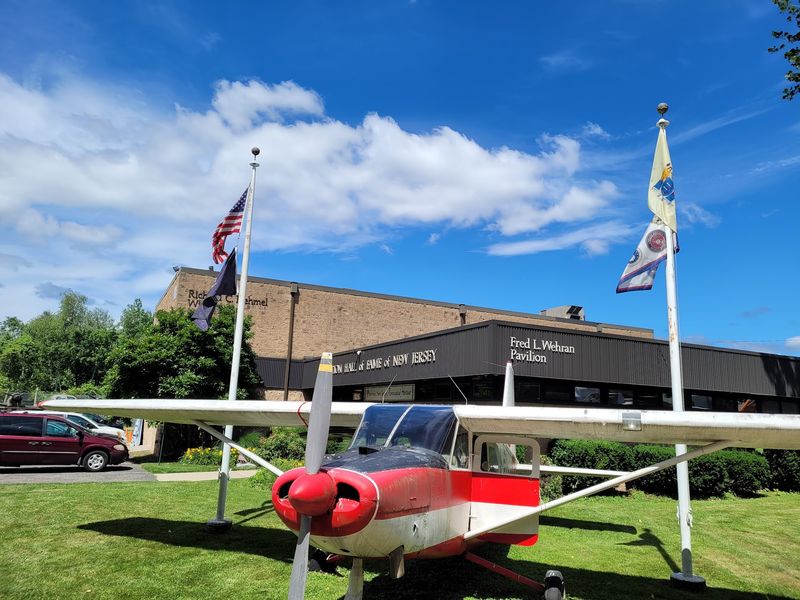
An engine built to push the X-15 rocket plane toward the edge of space is not the only machine competing for attention in this Teterboro collection. Aircraft, helicopters, flight controls, models, and a pioneering American hovercraft crowd the museum with stories from New Jersey’s surprisingly influential aviation past.
The Hall of Fame celebrates pilots, engineers, astronauts, inventors, and industry leaders with connections to the state. Military aviation is woven throughout those biographies.
Visitors encounter the development of aircraft technology alongside accounts of the people who tested it, flew it, and occasionally risked everything to make it work.
Exhibits range from early flight through the jet and space ages, so the museum provides a useful bridge between the propeller-driven aircraft found elsewhere on this list and the advanced systems that followed.
Hands-on elements keep the machinery from feeling too remote. The Fundamentals of Flight exhibit demonstrates basic aerodynamics, while cockpit sections and control displays offer a closer look at what pilots actually handled.
The museum’s relatively intimate size also works in its favor; unusual objects are close enough to inspect without disappearing inside an enormous gallery. Located beside Teterboro Airport, the setting feels appropriately active, with business aircraft moving nearby.
The museum keeps a limited weekly schedule, so this is not a place for an unplanned drop-in. Confirm hours before driving, and give yourself roughly 90 minutes to explore.
For anyone fascinated by the leap from fragile early airplanes to rockets and high-speed jets, it packs an impressive amount of hardware into one stop.
11. Fort Hancock and Sandy Hook Proving Ground – Highlands
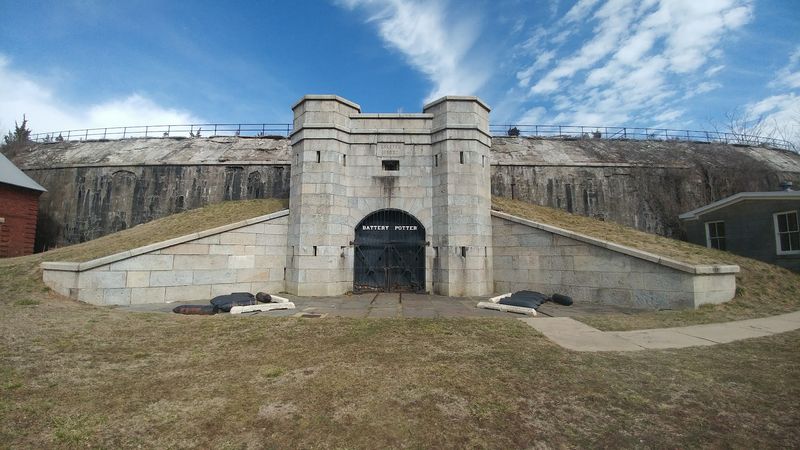
Beachgoers pass old officers’ homes, concrete batteries, and former military buildings on their way toward the ocean, often without realizing they have entered one of the country’s most strategically important coastal sites.
Sandy Hook guarded the entrance to New York Harbor for generations, and the remains of Fort Hancock turn the narrow peninsula into an open-air lesson in changing warfare.
The Army established the Sandy Hook Proving Ground in 1874 to test artillery and ammunition. Fort Hancock later expanded the military presence with gun batteries designed to defend the harbor from enemy ships.
As technology advanced, the defenses changed from disappearing guns and massive concrete emplacements to radar-guided weapons and Nike missiles intended to stop attacks from the air. Visitors can walk through the historic district, see Battery Potter and other surviving fortifications, and follow paths past the yellow-brick Officers’ Row.
The History House presents domestic life at the post, while ranger-led programs and occasional battery tours unlock spaces that are otherwise difficult to understand. Nearby, the Sandy Hook Lighthouse adds an earlier layer to the peninsula’s defensive and maritime story.
Fort Hancock parking is free even during the summer beach-fee season, but access to museums and interiors varies by day and season. Check the program schedule before going if a guided tour matters to you.
Otherwise, treat the fort as a self-guided outdoor exploration and bring water, walking shoes, and sun protection. The combination of empty gun positions, sea wind, and distant Manhattan views is difficult to forget.
12. Washington’s Headquarters Museum at Morristown National Historical Park – Morristown
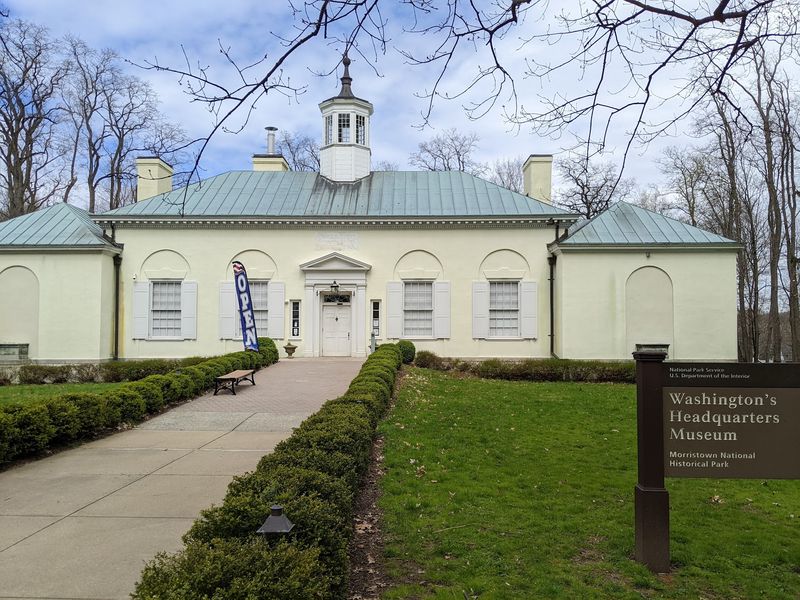
George Washington’s sword, a rare Ferguson rifle, and original Revolutionary-era documents give this museum more than enough reason to linger before walking next door.
Yet the real reward comes from seeing how those objects connect to the Ford Mansion, where Washington directed the Continental Army through the exceptionally harsh winter of 1779–1780.
The museum occupies a Colonial Revival building designed by John Russell Pope, the architect later responsible for the Jefferson Memorial. Inside, the Military Gallery displays muskets, pistols, cannon, maps, portraits, and other material connected to the fight for independence.
Another gallery examines clothing, tableware, music, and domestic objects, showing what the broader eighteenth-century world looked like beyond the battlefield. The Discover History Center adds interactive elements for younger visitors.
Tours of the Ford Mansion begin at the museum. Washington, Martha Washington, aides, servants, guards, and visiting dignitaries crowded into the home while Theodosia Ford and her children occupied only a small portion of their own house.
Furnished rooms reveal the uncomfortable overlap between private family life and military command. Do not confuse this stop with Jockey Hollow, another section of the same national historical park where the army’s rank-and-file soldiers camped.
Visiting both creates the fullest picture: polished headquarters in town, reconstructed huts in the woods, and miles of difficult logistics between them. Mansion access is generally by guided tour, and schedules may vary, so arrive early when possible.
Plan at least half a day if you intend to explore both locations properly.
13. National Guard Militia Museum of New Jersey – Sea Girt
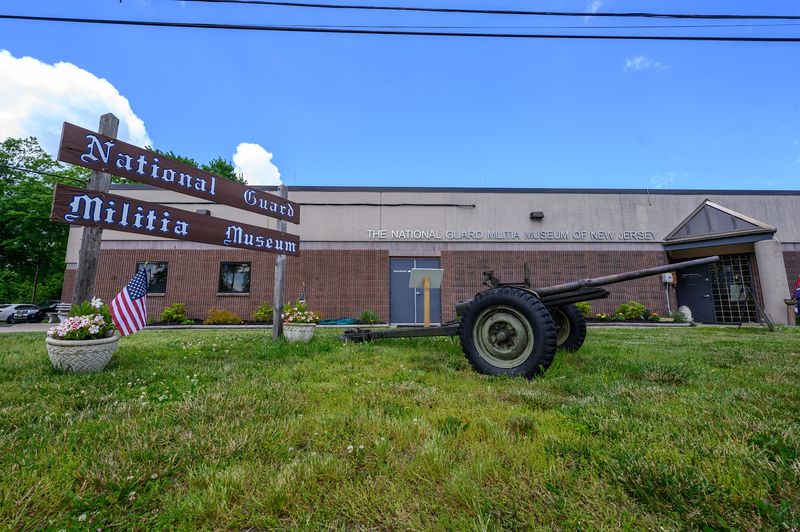
The strangest vessel on this list never sailed into combat. Known as the Intelligent Whale, the squat iron submarine was built during the Civil War era, powered by crew members turning a hand crank, and designed to let a diver exit through a hatch in its bottom to attach explosives to an enemy ship.
Visitors can peer inside and appreciate just how optimistic its inventors were about six people operating in such a cramped space. That remarkable machine anchors a broader account of New Jersey’s citizen soldiers.
The museum follows the state militia and National Guard from the colonial period through the Revolution, Civil War, world wars, and modern deployments. Weapons, uniforms, flags, photographs, vehicles, and personal artifacts emphasize how national conflicts reached into New Jersey towns and families.
Researchers will find another major strength in the museum’s extensive New Jersey Civil War material and veterans’ oral-history collection. Recorded recollections preserve details that official documents often overlook: daily routines, friendships, fear, humor, and the difficult transition home.
Volunteer docents can add even more context, particularly when an artifact connects to a unit or community they know well. The museum stands near the entrance to the National Guard Training Center in Sea Girt and offers free admission on weekdays.
Outdoor displays of tanks, armored vehicles, and aircraft are located within the installation, where access may require identification and an arranged escort. Call ahead if those displays are a priority.
The weekday schedule demands a little planning, but the Intelligent Whale alone makes this one of New Jersey’s most distinctive military history stops.