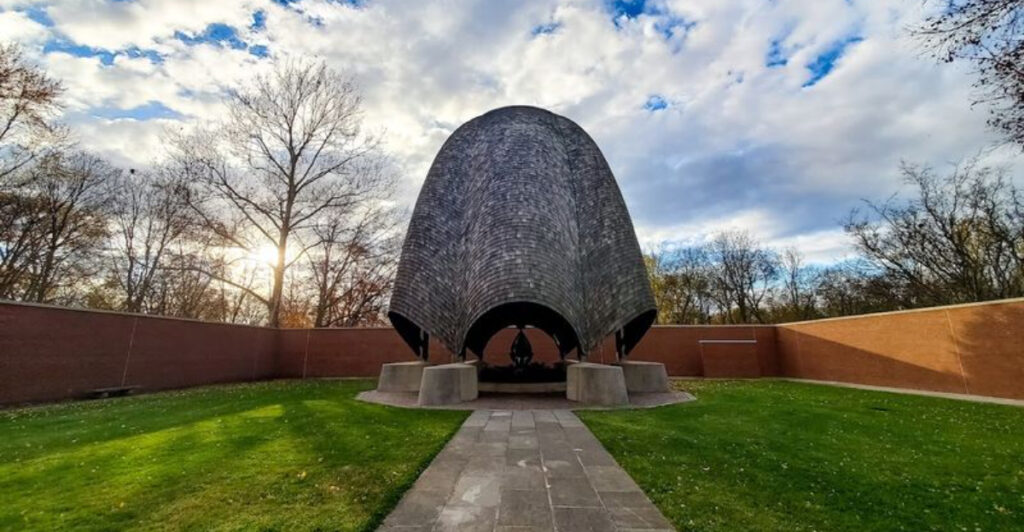
The Roofless Church in New Harmony is one of Indiana’s most unusual architectural landmarks, inviting visitors into an open-air sanctuary where the sky serves as the ceiling. Designed by renowned architect Philip Johnson, this striking structure blends modern design, tranquil gardens, and thoughtful symbolism into a space created for reflection rather than traditional worship.
Instead of stained-glass windows and vaulted roofs, you’ll find graceful walls framing the landscape and a peaceful atmosphere that feels unlike anywhere else in the state. If you’re searching for one of Indiana’s most unique hidden gems, the Roofless Church is a destination you’ll never forget.
A Sanctuary That Starts With the Sky
The first surprise at The Roofless Church is how quickly your eyes move upward. Most churches guide attention toward stained glass, a ceiling, or a distant altar, but this one leaves the largest surface completely open.
Sky becomes the missing piece and the main design feature at the same time, which gives the entire space an unusual kind of lift.
That open top changes the scale of everything inside the walls. A breeze has room to travel, shifting the air in a way enclosed sanctuaries never can, and the soundscape stays alive with birds, leaves, and whatever the season happens to bring.
Instead of shutting out the outside world, the structure edits it, keeping the distractions low while letting nature remain part of the experience.
The walls still give the place shape, so it never reads like a random garden or empty lot. There is a clear sense of entry, direction, and purpose as you move in, and that structure matters because it preserves the gravity of a worship space without relying on a conventional roofline.
You step into something formal, but not heavy. That contrast is where the place becomes memorable. It carries the visual language of a church, yet the missing roof removes any sense of confinement and replaces it with openness, light, and weather.
Even on a quiet day, the design creates motion overhead, and every cloud passing across the opening becomes part of the architecture for a few seconds.
New Harmony has several thoughtful, beautifully kept spaces, but this one announces itself differently. It does not compete with size or ornament.
It pulls you in through restraint, through the strange confidence of a sacred space that leaves the most important view completely uncovered.
The Canopy at the Center Changes Everything
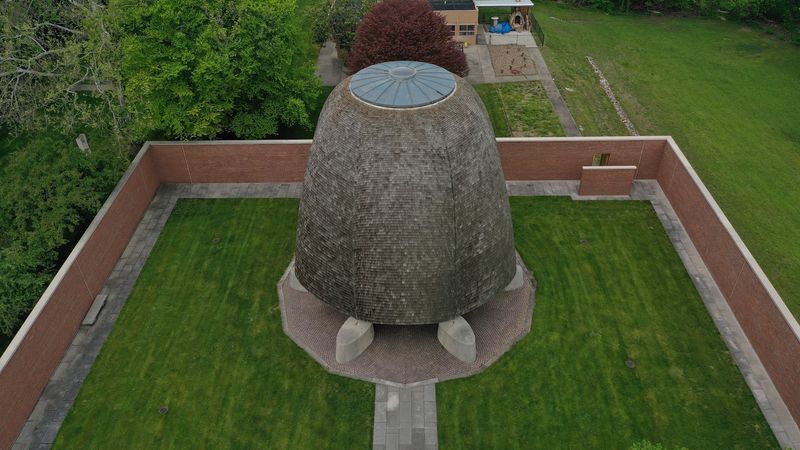
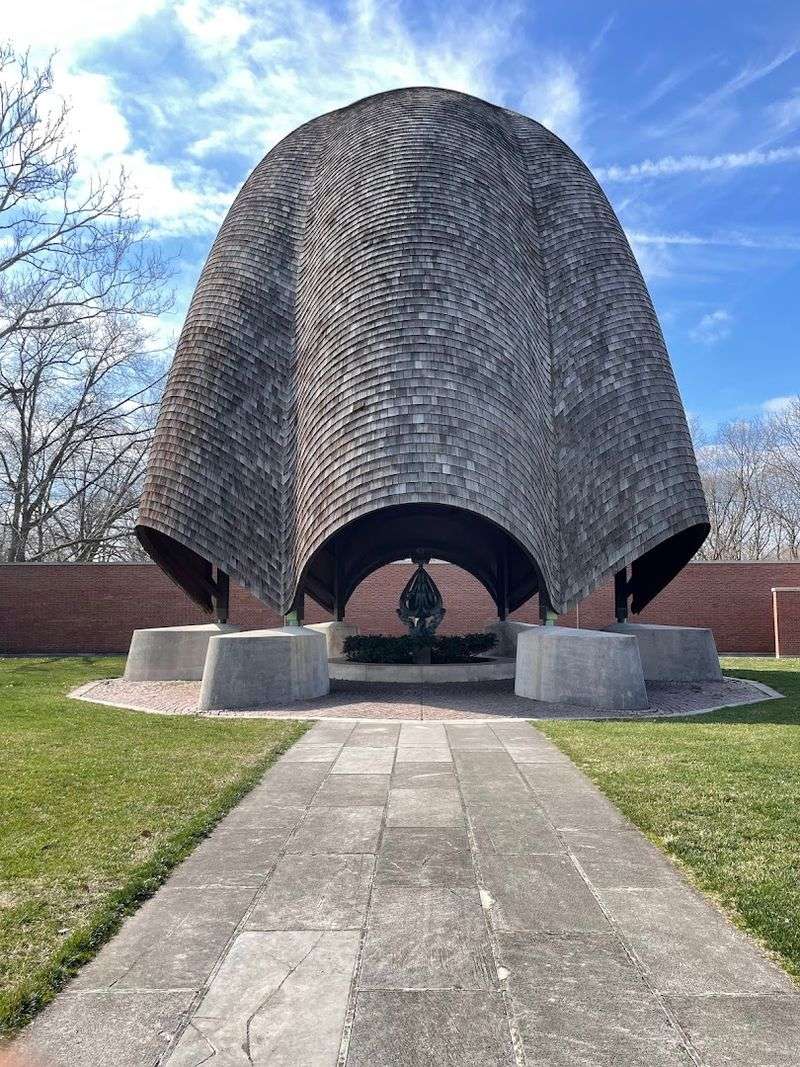
Once you are inside, the eye lands on the church’s defining visual move: a covered area over the central altar while the rest of the sanctuary remains exposed. That single sheltered element gives the whole composition its tension.
It is a simple idea, but it creates a strong focal point and makes the open portions around it feel intentional rather than unfinished.
The canopy works like punctuation. It marks the sacred center, anchors ceremonies, and keeps the space legible even if you know nothing about the site’s story before arriving.
Weddings make immediate sense here, and so do quiet private moments, because the layout naturally tells you where attention is meant to gather.
Without a full roof, light does not pour in evenly. It shifts, breaks, and changes around the altar zone, which means the church rarely looks exactly the same from one hour to the next.
Morning light gives the space one character, while softer late day brightness can make the central structure feel almost stage-like, only calmer and far less performative.
That interplay between shelter and exposure is the genius of the place. If everything were open, the design might read as a novelty.
If everything were covered, it would lose the quality that makes it singular. By protecting one key point and leaving the rest to daylight and weather, the church turns absence into form.
You do not need a service, a wedding, or a special event to understand why this arrangement works. Standing there for a few minutes is enough.
The architecture tells the story on its own, with one covered destination in the middle and a ceiling of moving clouds above everything else.
Gardens, Gates, and the Quiet Details You Could Miss
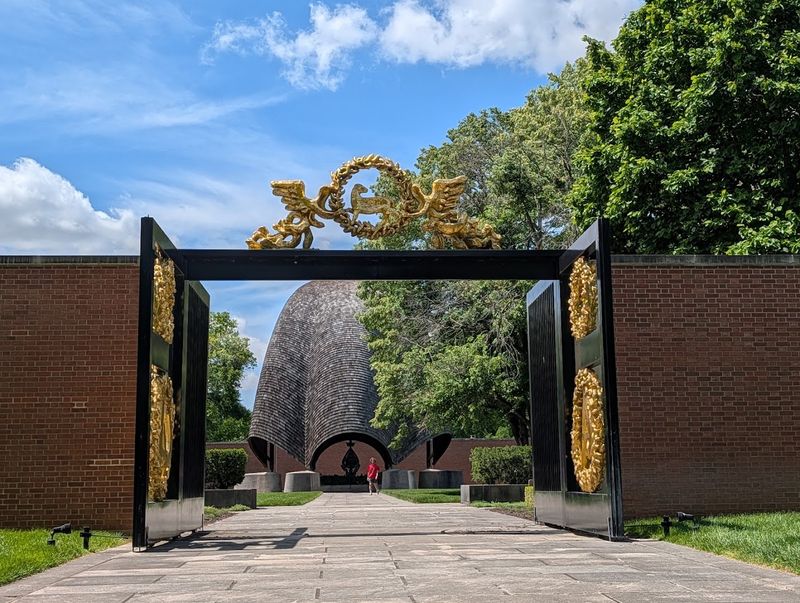
The Roofless Church is not only about the structure at its center. The approach matters, the borders matter, and the landscaped details around the church do a lot of quiet work before you even settle into the main view.
Well-kept grounds, flowers, seating, and formal entry features make the visit feel composed from the outside in. The black and gold gate is especially effective because it sets a tone without overexplaining the place.
It adds ceremony to arrival, giving the church a threshold that feels meaningful even if you are only stopping for a short walk. Small design choices like that shape your pace, encouraging you to slow down rather than treat the site as a quick roadside photo.
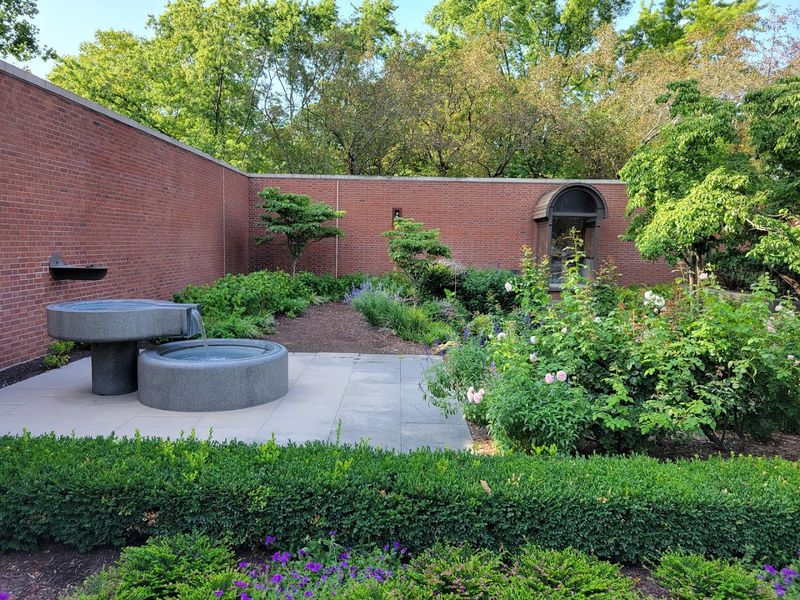
Inside the grounds, the gardens soften the geometry of the walls and pathways. Instead of a stark architectural statement sitting alone, the church becomes part of a fuller environment where flowers, greenery, and open views all support the sense of calm.
There is also enough seating to make lingering easy, whether you want a few quiet minutes or a longer pause. One of the appealing extras here is that the property rewards a second look.
Fountain features, art elements, and framed sightlines can slip past if you rush in, snap a picture, and head out. The site is more satisfying when you move slowly and let the details reveal themselves in sequence.
That sequence gives the church texture beyond its most famous trait. Yes, the missing roof is the headline, but the surrounding design keeps the place from becoming a one-note curiosity.
It is a carefully maintained setting with enough visual punctuation to keep your attention moving from gate to garden to altar to the landscape beyond.
Why This Corner of Indiana Suits It So Well
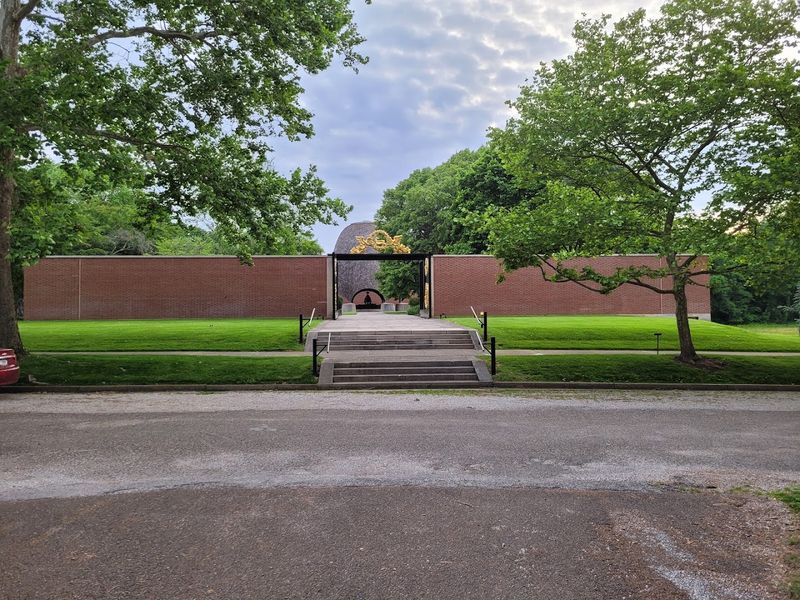
The Roofless Church would be striking almost anywhere, but its location in New Harmony gives it extra force. This is not a random object dropped beside a highway or wedged into a loud commercial strip.
It sits in a town long associated with ideas, design, order, and experiments in how people live together, which makes the church feel connected to a wider local character.
You do not need a full history lesson to pick up that context. The town’s pace is slower, the setting more reflective, and the architecture around it does not overwhelm the church’s unusual form.
That restraint helps the site land properly. It comes across less like a stunt and more like a serious expression of place.
There is also something fitting about finding this structure in southwestern Indiana, where open sky can feel expansive and the transition between town and landscape stays visible. The church takes advantage of that regional openness.
Its design allows weather, season, and daylight to remain present rather than blocked out, so the building is constantly in conversation with its surroundings.
New Harmony’s scale helps too. In a larger city, a roofless sanctuary might get swallowed by traffic noise and dense development.
Here, the calm streets and measured rhythm let the building keep its own voice. You can actually hear the quiet around it, which turns the site from an architectural oddity into a fuller sensory experience.
That connection between structure and setting is a big reason the church works so well. Indiana has plenty of historic stops and scenic detours, but this one depends on its town as much as its walls.
The result is a destination that feels rooted instead of transplanted, shaped by local atmosphere as much as design.
How to Experience It Without Rushing Past the Best Part
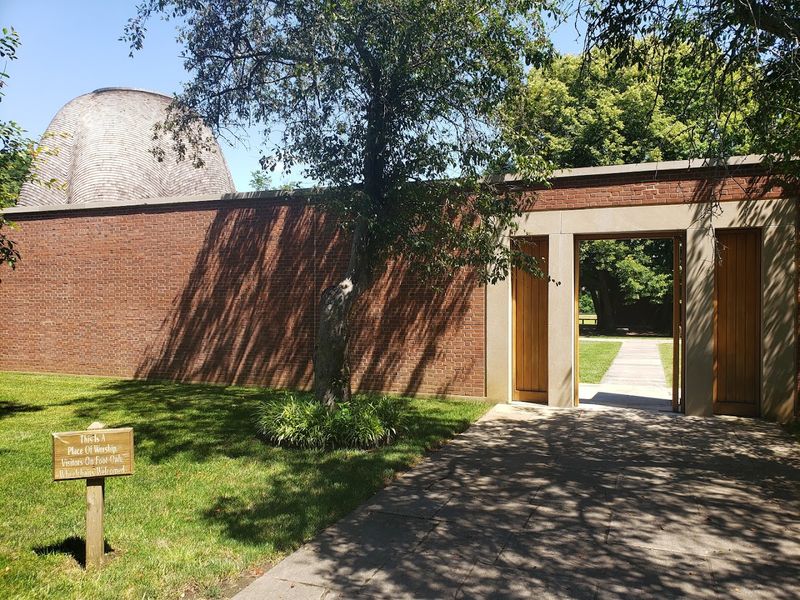
This is a place that can be seen in a few minutes but understood much better in twenty or thirty. If you treat The Roofless Church as a quick visual stop, you will still get the novelty of the open sanctuary.
Stay a little longer, though, and the subtle pleasures start doing the heavier lifting. The best approach is simple: enter slowly, stop near the center, and give your attention to the changing conditions overhead.
Clouds passing across the opening alter the brightness inside the walls, and even a mild breeze changes how the space reads. The church behaves differently from a typical historic site because it is never fully sealed off from the day around it.
After that, move to the edges. The perimeter reveals how carefully the grounds are arranged and how the open structure frames outward views rather than hiding them.
Benches and seating areas make it easy to pause, and that pause matters more here than at a busier attraction packed with exhibits or signage.
If you enjoy photography, timing can shape the entire visit. Softer light tends to flatter the stone, walls, and surrounding greenery, while harsher midday sun emphasizes the graphic contrast between solid surfaces and the exposed sky.
Either way, the church rewards wide shots as much as smaller detail studies around the gates, flowers, and central focal point. It also helps to arrive with the right expectations. This is not a sprawling complex with endless rooms to explore.
It is a concise experience built around design, stillness, and setting, which is exactly why a measured visit works best. Give it room to unfold, and the church becomes far richer than a single unusual photo opportunity.
Peaceful, Photo-Ready, and Surprisingly Flexible
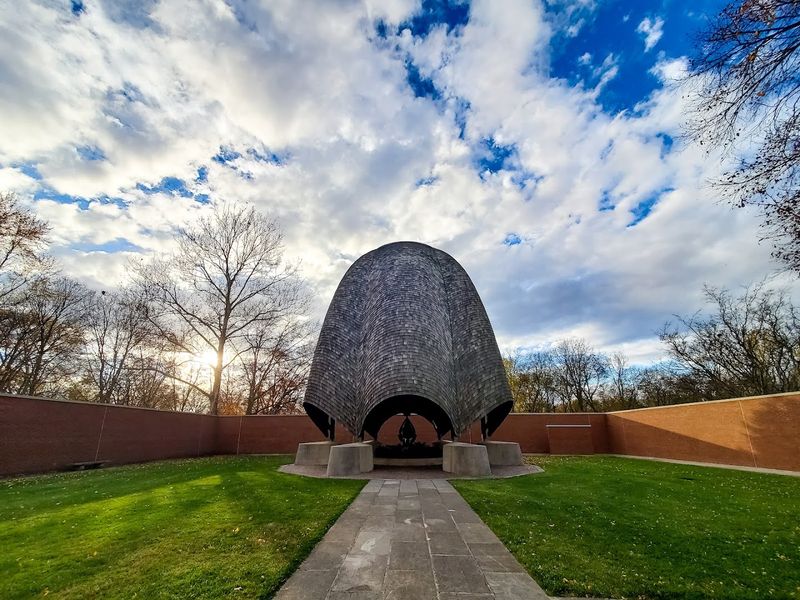
One reason The Roofless Church attracts such affection is that it supports more than one kind of visit. It functions beautifully as a quiet place for reflection, but it also clearly lends itself to ceremonies, portraits, and meaningful gatherings.
The layout is formal enough to hold an event, yet open enough to avoid stiffness. You can see that flexibility in the way the space is arranged. Seating areas suggest lingering, the central altar area gives events a natural focal point, and the grounds are polished without becoming fussy.
For weddings especially, the appeal is obvious: a built-in sense of occasion with fresh air, gardens, and a backdrop that barely needs decoration.
Even on an ordinary day with no event underway, the church carries that sense of readiness. It looks maintained, cared for, and composed, which changes how you move through it.
Instead of reading like an abandoned ruin or quirky relic, it feels active in the broadest sense, available for prayer, photography, contemplation, or simply a quiet break during a day in town.
That versatility also explains why the church draws both architecture lovers and casual travelers. You do not need a deep interest in religious design to appreciate how photogenic the site is.
The contrast between enclosed walls and open sky makes nearly every angle visually clean, and the surrounding flowers and pathways add depth without clutter.
Some places are wonderful to look at but awkward to use. This one manages both.
It is visually distinctive, easy to understand, and naturally suited to the kinds of moments people want to mark, whether that means a ceremony, a photo session, or a few uninterrupted minutes in one of the quietest corners of New Harmony.
The Final Reason This Stop Stands Out
Plenty of roadside attractions earn attention by being odd. The Roofless Church earns attention by turning its oddness into coherence.
A church without a roof could have been a gimmick, a one-line detour that sounds better than it looks, but this place is too disciplined, too well composed, and too rooted in its setting for that.
Everything important here supports the central idea. The walls define the sanctuary, the open top redirects your attention upward, the covered altar gives the space order, and the surrounding gardens keep the experience from feeling bare.
Nothing is trying too hard, and that restraint is exactly why the site carries such unusual power. It also helps that the church is accessible in spirit even if you are not arriving for worship.
You can step inside as someone interested in architecture, small towns, landscape design, or simply a quiet break from the road, and the place still meets you on its own terms.
It does not demand a specific background to be appreciated. That makes it one of Indiana’s most interesting under-the-radar stops. Not because it is packed with spectacle or programmed activity, but because it offers a rare kind of clarity.
In a few carefully shaped elements, it gives you sky, structure, silence, and a strong sense that design can shift how a familiar building type is understood.
If your travels usually favor places with clean visual identity and a story you can grasp without reading a plaque for ten minutes, this one delivers.
The Roofless Church is compact, calm, and unlike nearly anything else in the Midwest. You arrive expecting a curiosity and leave having seen a remarkably complete piece of place-making.
Share this story