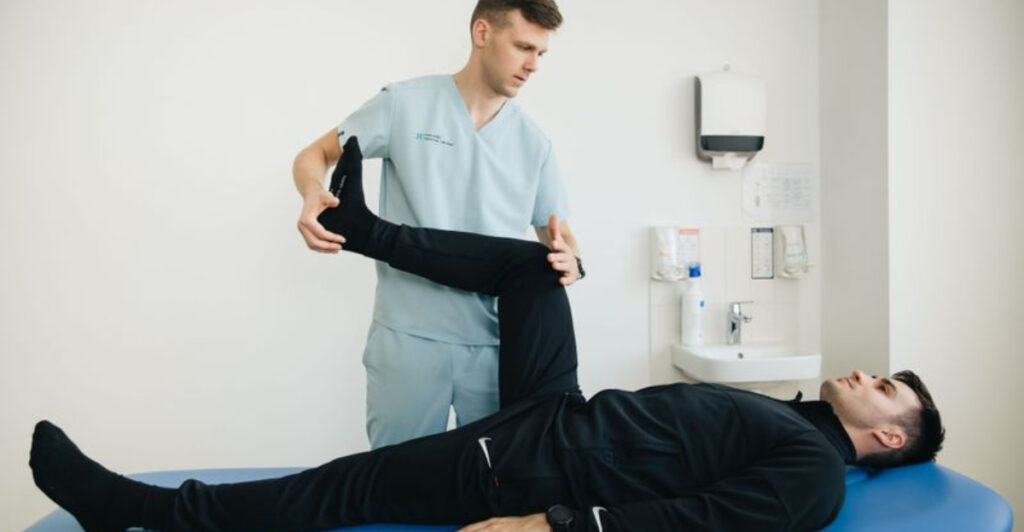
One awkward landing. One hamstring that suddenly says “absolutely not.” One shoulder that starts barking halfway through a tennis serve.
A sports injury can turn a packed training calendar into a long stretch of watching from the sidelines, and getting cleared for everyday activity is not always the same thing as being ready to sprint, cut, jump, throw, or compete again. That is where sports-focused rehabilitation earns its keep.
Across New Jersey, physical therapists are pairing traditional rehab with turf work, strength training, gait analysis, force-plate testing, concussion care, and sport-specific drills that look a lot more like practice than a doctor’s office.
Some of the centers below cater heavily to competitive athletes; others have huge statewide networks that make consistent treatment much easier to fit into real life.
From Bergen County to the Shore and South Jersey, these are 11 rehab centers worth knowing when the goal is not simply feeling better, but confidently getting back in the game.
1. Trifecta Therapeutics: Sports Rehabilitation and Performance Center
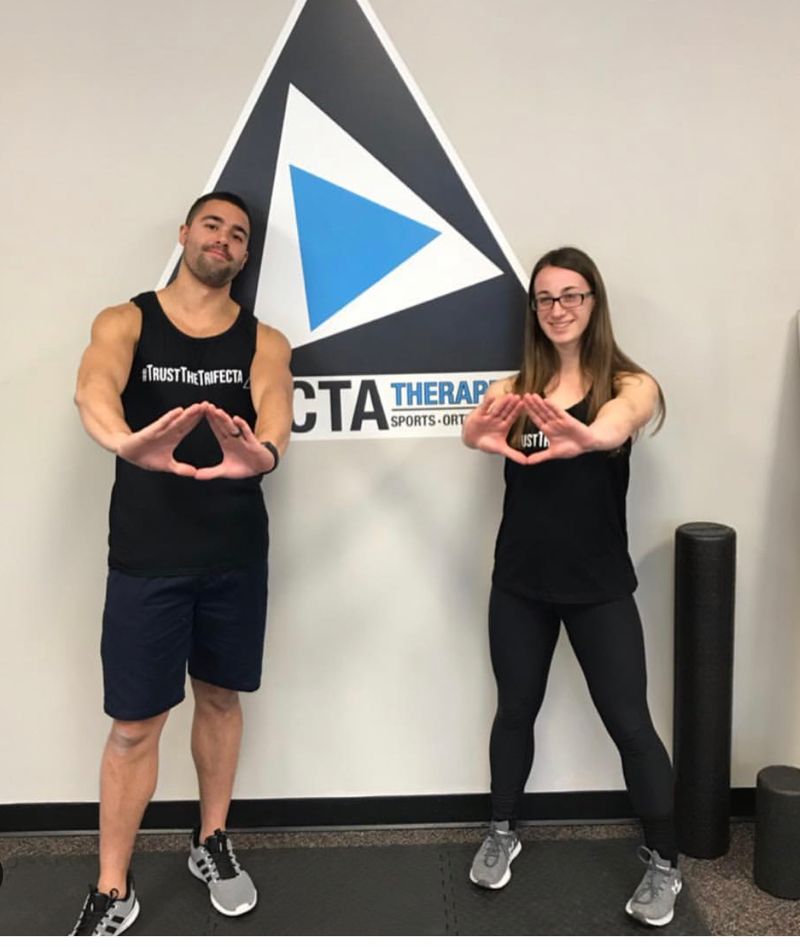
There is a point in sports rehab when resistance bands and treatment tables need to give way to squats, jumps, sprints, and movements that actually resemble the sport you are itching to play again. That transition is a big part of what makes Trifecta Therapeutics stand out.
Its South Jersey facilities in Cherry Hill, Glassboro, and Swedesboro blend physical therapy with strength and conditioning, giving recovering athletes access to squat racks, plyometric boxes, battle ropes, agility equipment, cardio machines, and sport-specific gear for activities ranging from basketball and soccer to golf and boxing.
The menu of services goes well beyond treating a sore knee, too.
Trifecta offers orthopedic and sports physical therapy, dedicated ACL rehabilitation, concussion management, manual therapy, dry needling, sports performance training, and a bridge program designed for that often-tricky space between traditional rehab and full athletic activity.
The practice emphasizes individualized treatment with doctors of physical therapy rather than handing much of the session off to aides, which should appeal to athletes who want close attention as their workload increases.
Practical bonus: Trifecta advertises direct-access physical therapy and same-day appointments, while weekday hours at its locations often stretch into the evening. For students, working adults, and athletes trying to squeeze rehab around practice, that flexibility is no small thing.
2. EDGE Physical Therapy and Sports Medicine
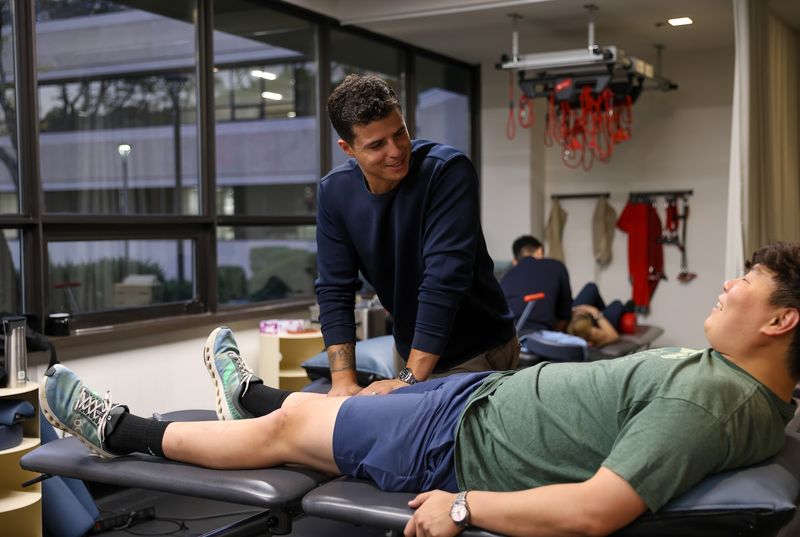
If your idea of rehabilitation involves less “clinic” and more “performance lab,” EDGE PRO in Paramus will make sense quickly.
The athlete-focused arm of EDGE Physical Therapy and Sports Medicine works inside TNT Training at 407 Sette Drive, where the setup includes indoor turf, a sprint track, strength and conditioning space, and tools used to measure progress instead of relying entirely on how an athlete says a knee or ankle feels that day.
Return-to-sport work can incorporate force-plate and jump testing, movement screens, strength and power assessments, running progressions, cutting, deceleration, and other sport-specific demands.
That makes it especially interesting for ACL patients and competitors returning to field and court sports, where being able to jog pain-free is only the beginning.
EDGE also mixes rehabilitation with recovery options including blood-flow restriction training, dry needling, compression, cryotherapy, cupping, and other services depending on the location.
The broader practice has sites in Paramus and Fort Lee, but athletes looking for the strongest sports-performance emphasis should pay particular attention to EDGE PRO.
Its hours extend into the evening during the week, with weekend visits available by appointment, which helps when training and school or work already own most of the calendar.
This is a place built around answering a more demanding question than “Does it hurt?”—namely, “Are you actually ready to play?”
3. Valley Health System Return to Sport Program
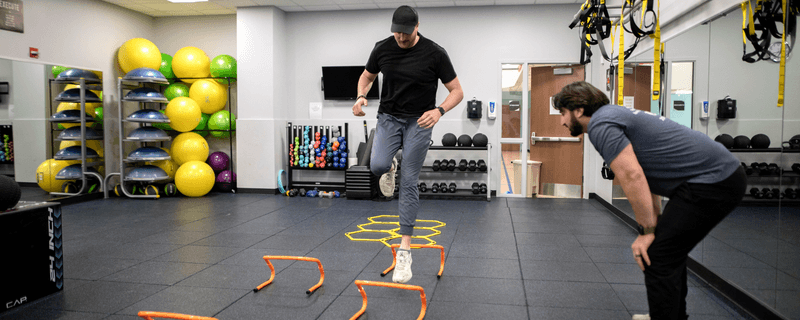
The last stretch of recovery can be surprisingly awkward. You may be finished with the early phases of physical therapy, yet still nowhere near comfortable exploding off one leg, absorbing contact, changing direction at full speed, or trusting the injured area when competition gets chaotic.
Valley Health System built its Return to Sport Program specifically around that gap. Based at Valley Health LifeStyles at the Valley Center for Health and Fitness in Mahwah, the program is aimed at athletes progressing from injury rehabilitation toward higher-level competitive movement.
Treatment begins with an assessment of readiness, then moves into individualized work addressing areas such as strength, agility, endurance, movement quality, and injury prevention. Sport-specific movement is a major piece rather than an afterthought, and Valley describes the process as a gradual progression beyond standard physical therapy.
One particularly useful feature is the involvement of sports physicians, who periodically attend therapy sessions to assess athletes and help with return-to-play decisions. The program can serve athletes recovering from muscle, tendon, and joint injuries, sport-related concussions, or a slower-than-expected post-surgical recovery.
For serious high school, collegiate, and other competitive athletes in North Jersey, that combination of medical oversight and performance-minded rehabilitation gives Valley a clear niche: this is less about getting someone back to normal errands and more about preparing the body for the messy, high-speed demands of actual competition.
4. Twin Boro Physical Therapy
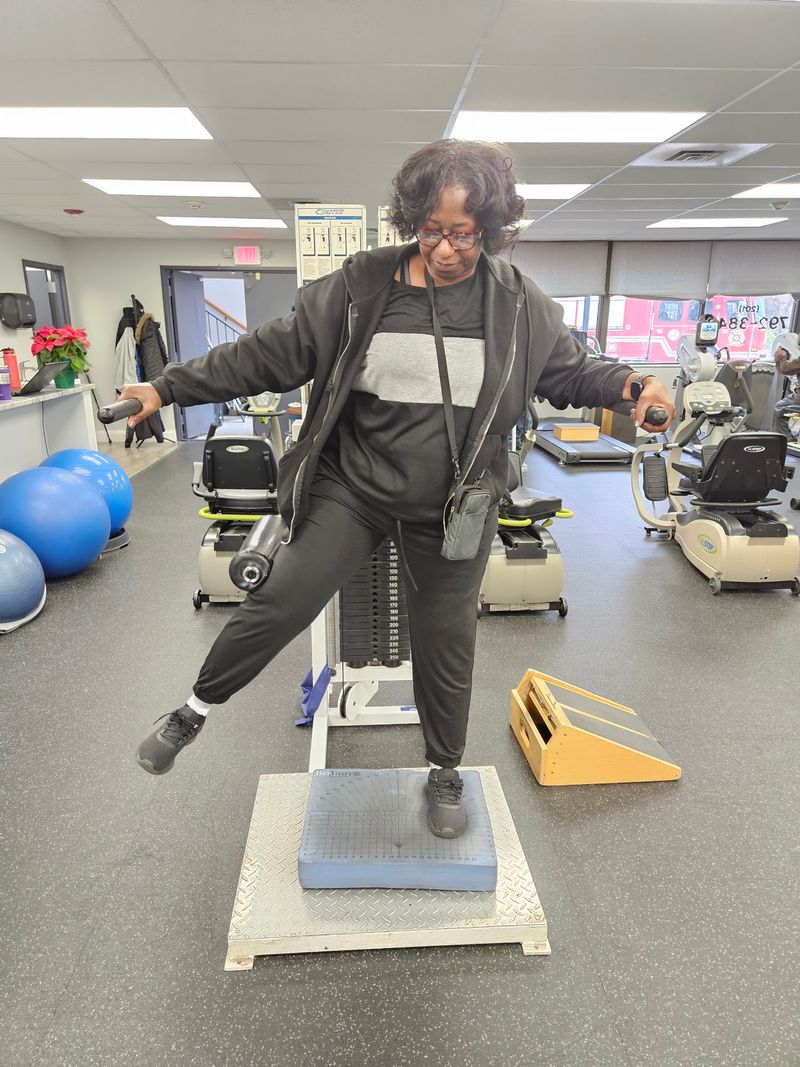
Convenience matters more in rehab than people sometimes admit. A brilliant treatment plan is not nearly as useful when reaching the clinic requires an hour-long drive three times a week, and that is where Twin Boro Physical Therapy has a major New Jersey advantage.
The practice has more than 50 locations across the state, so athletes in many communities can find treatment without turning every appointment into a road trip. Sports rehabilitation is a core part of the operation, covering everyone from competitive players to weekend warriors.
Rather than stopping once basic strength and range of motion return, its programs can incorporate conditioning and functional movements tied to the demands of a particular sport.
A recovering runner, for example, may gradually work back toward running-specific movement, while a throwing athlete can progress through exercises more closely related to repetitive throwing.
Twin Boro also takes a criteria-based approach to challenges such as ACL recovery, looking at factors including strength, balance, flexibility, muscular endurance, gait, proprioception, and the athlete’s ability to perform sport-specific agility work instead of promising a universal return date.
Its broader rehabilitation offerings include orthopedic care, hand therapy, spine rehabilitation, and other specialties, making it useful when an injury is more complicated than a simple strain.
For New Jersey athletes who value a large network without giving up sports-specific programming, Twin Boro makes a compelling case—especially when consistency and proximity are what keep rehab from falling off the weekly schedule.
5. JAG Physical Therapy
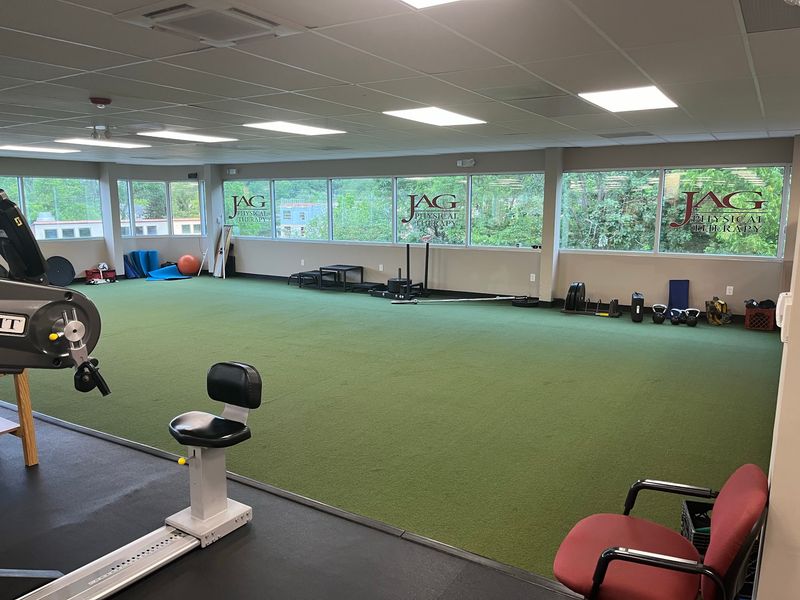
Seeing the JAG name around New Jersey is not difficult, and that reach is part of the appeal. The physical and occupational therapy network operates extensively throughout the state, with clinics in every New Jersey county and a sports medicine program that serves recreational athletes alongside high-level competitors.
The sports pedigree is easy to spot: JAG has worked as a physical therapy provider for organizations including the New Jersey Devils, NYCFC, NJ Youth Soccer, and Rutgers Athletics. For the person nursing a cranky Achilles after a Sunday 5K, however, the useful part is how that athletic experience translates into everyday treatment.
JAG’s sports services include gait analysis, injury-prevention work, return-to-sport rehabilitation, athletic training, and access at some locations to equipment such as the AlterG Anti-Gravity Treadmill, which allows running or walking at reduced body weight during rehabilitation.
Programs are individualized around the demands of the athlete and the activity rather than assuming every knee, shoulder, or ankle needs the same playbook.
There is also enough breadth in the network to address concussion rehabilitation, orthopedic injuries, post-operative recovery, hand problems, and other issues that can accompany or complicate a sports injury.
With so many New Jersey locations, amenities and specialties vary by clinic, so it is worth checking which services the nearest office provides before booking.
The trade-off for that little bit of homework is access to a sports-focused network that is unusually easy to find around the state.
6. SportsCare Physical Therapy
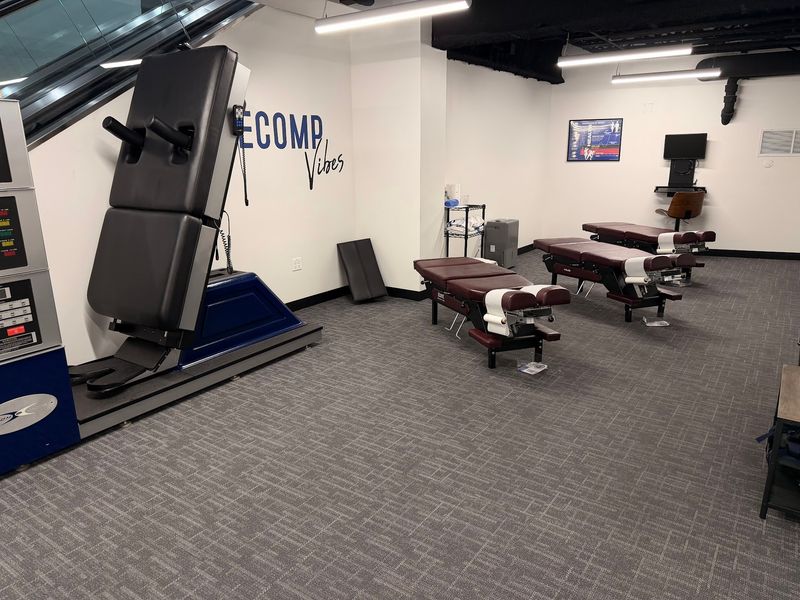
Some SportsCare locations put you remarkably close to the action. The Stockholm clinic sits inside Skylands Ice World, while the Randolph office operates inside SportsCare Arena—settings that feel especially fitting when the whole point is getting an athlete back onto a rink, field, court, or running route.
SportsCare has been operating since 1997 and now maintains a large network of clinics, with a particularly strong presence across New Jersey. Its rehabilitation services cover orthopedic and sports injuries, post-surgical care, and specialized needs that vary by office.
Certain locations offer blood-flow restriction therapy, dry needling, aquatic therapy, or running-focused assessment; the Hoboken clinic, for example, lists video gait analysis, ACL rehabilitation, running injuries, sports-related conditions, and concussion-related care among its specialties. SportsCare also has a RecoveryCare program at select New Jersey offices.
These athletic recovery rooms feature options such as intermittent compression, massage guns, foam rollers, stretching equipment, and guided recovery routines—a useful extra for active patients whose goal extends beyond simply resolving pain.
The network advertises complimentary wellness screenings as well as an effort to schedule evaluations within 24 to 48 hours, which can make the irritating period between “something is definitely wrong” and “I finally have an appointment” a little shorter.
With so many locations and different specialty services, choose the clinic based on your sport and injury rather than automatically picking whichever SportsCare sign happens to be closest.
7. Ivy Rehab HSS Physical Therapy Center of Excellence
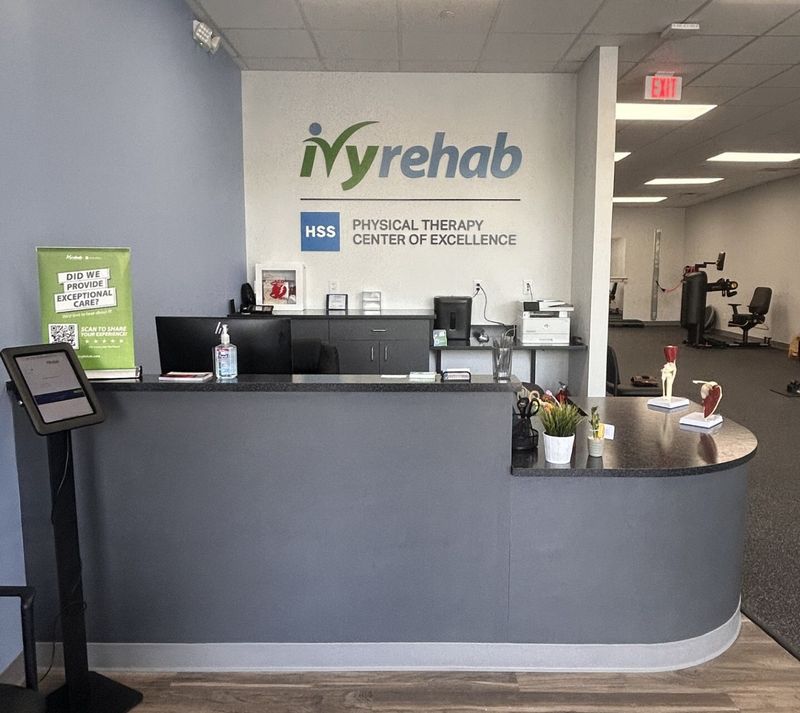
The “HSS” in the name is the detail that separates these clinics from a standard neighborhood physical therapy office.
Ivy Rehab’s Centers of Excellence were developed in collaboration with Hospital for Special Surgery, with HSS providing enhanced clinical training and the centers being held to defined standards involving continuing education, outcomes, and patient satisfaction.
New Jersey has a healthy collection of them, with current locations listed in communities including Jersey City, Englewood, Marlboro-Morganville, Middletown, Piscataway, Wayne, Secaucus, Flemington, Chatham Township, Woodbridge-Avenel, and Princeton-Lawrenceville.
That spread makes the concept much more useful than a single destination clinic.
For injured athletes, available services can include orthopedic therapy, post-surgical treatment, prehabilitation, soft-tissue work, sports injury screenings, and other physical therapy programs, though the exact mix depends on the office.
The Jersey City location is an especially convenient example: it sits at 254 Newark Avenue and keeps unusually broad hours, operating until 9 p.m. on weekdays and offering Saturday appointments.
That is the kind of scheduling detail anyone juggling rehab with a commute will appreciate. These centers are a strong fit for patients who want the accessibility of a regional outpatient network while placing a premium on orthopedic-focused clinical standards.
Just remember that “Center of Excellence” describes a network model rather than one identical experience everywhere, so checking the staff specialties and services at your chosen New Jersey clinic is smart before making the first appointment.
8. Kessler Rehabilitation Center
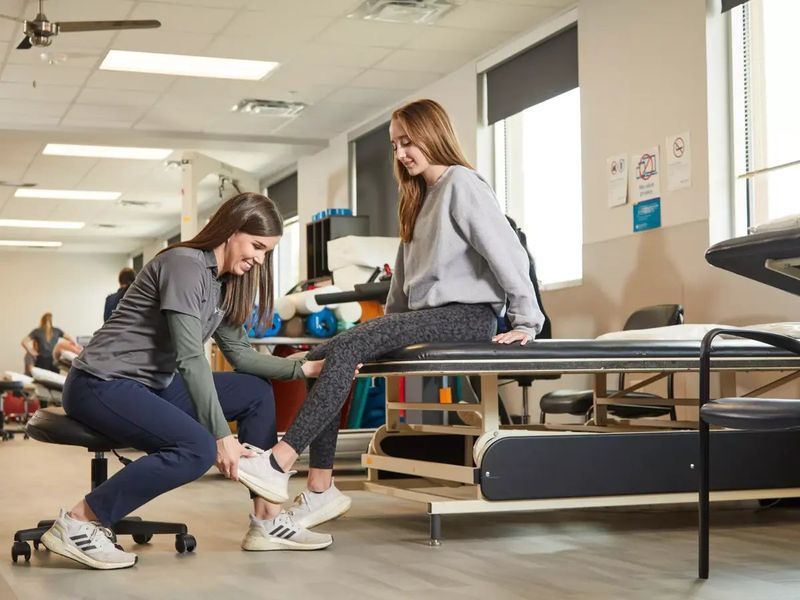
Kessler’s name is practically part of the rehabilitation vocabulary in New Jersey, and its outpatient network gives injured athletes plenty of options without requiring everyone to trek to the same flagship facility.
Kessler Rehabilitation Center operates more than 100 locations around the state, treating musculoskeletal problems that include sprains, strains, orthopedic injuries, and post-operative conditions.
For athletes, the important phrase to look for when choosing a location is “Select Sports – Sports Medicine.” Numerous offices list the program, but individual specialties can differ substantially.
The Eatontown Route 35 center, for instance, offers sports medicine alongside an ACL program, concussion rehabilitation, blood-flow restriction, cupping, and dry needling.
The Toms River Route 37 East location adds a golf program to its sports and ACL services, while other offices around the state combine sports medicine with orthopedic and concussion rehabilitation.
That variation can actually work in a patient’s favor: rather than treating Kessler as one generic statewide chain, athletes can search for an office whose specialty menu lines up with their injury and sport.
Many locations also keep early morning or evening appointments, helpful for fitting repeat sessions around school, work, and practice schedules. Kessler belongs on this list because of that combination of scale and specialization.
It may be the practical choice for someone who wants sports-focused care but also needs the flexibility of a broad New Jersey network—and who would rather spend recovery time doing exercises than sitting in Turnpike traffic.
9. Atlantic Sports Health
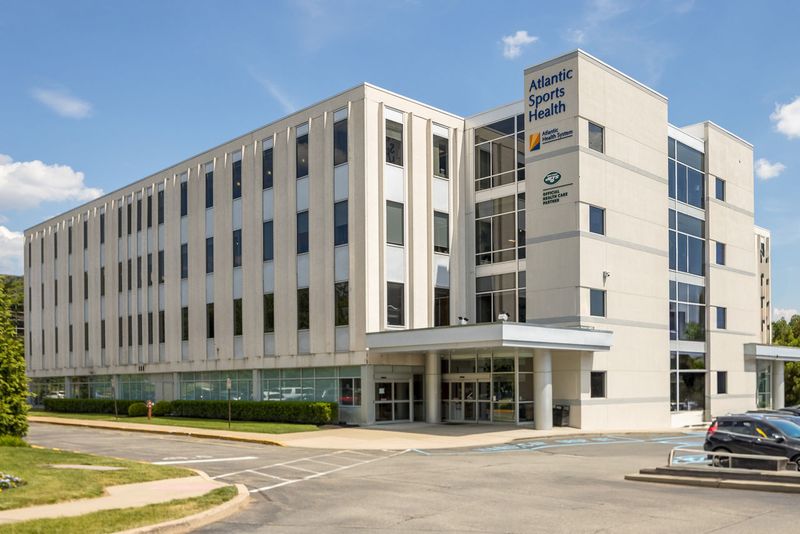
Not every sports injury fits neatly into a physical-therapy-only box. A stubborn knee can require medical evaluation; a concussion demands a different kind of attention than a pulled hamstring; an overuse problem may involve training habits that need to change before the pain simply comes roaring back.
Atlantic Sports Health stands out because rehabilitation sits within a broader sports medicine system. Its physical therapy program treats students, recreational athletes, and competitive athletes, with individualized plans developed in coordination with physicians when appropriate.
Sports physical therapy is available in Morristown and Rockaway, where programs focus on restoring function and returning patients to activity.
The larger Sports Health service also deals with acute injuries such as sprains and fractures, overuse problems including tendinitis and stress fractures, mild traumatic brain injury, injury prevention, conditioning, and return-to-play decisions.
There are some interesting specialist touches, too. Atlantic lists services and certifications that include Pilates-based work and Titleist Performance Institute approaches for golfers, while its multidisciplinary sports health team extends beyond therapists and physicians to areas such as sports nutrition and sports psychology.
The Morristown physical therapy location at 111 Madison Avenue keeps evening hours during the week, and the Rockaway facility also stays open into the evening Monday through Friday.
For athletes whose situation may require more than an exercise progression and a few mobility drills, having rehab connected to a larger medical sports program can be a meaningful advantage.
10. Hackensack Meridian JFK Johnson Rehabilitation Institute
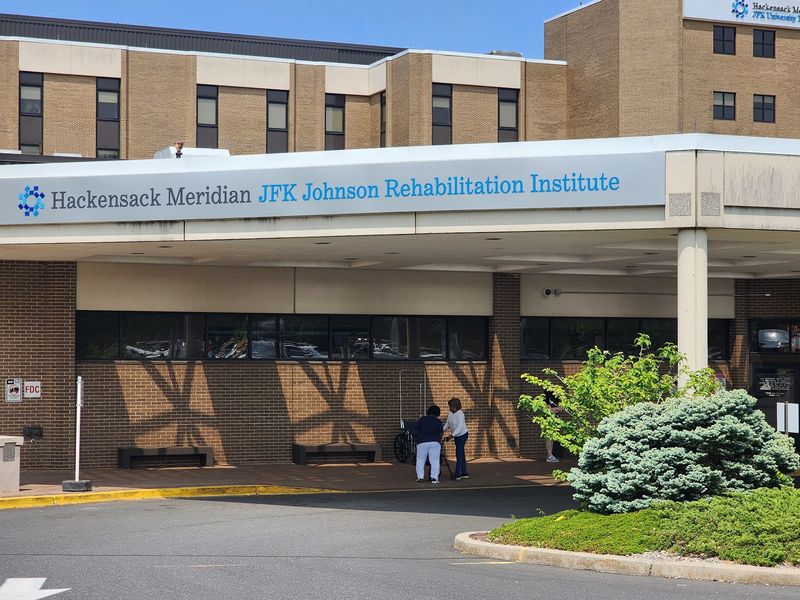
A weekend-warrior injury and a complicated musculoskeletal problem can both keep someone away from the activities they love, but they do not always need the same level of medical firepower. JFK Johnson Rehabilitation Institute in Edison is the choice on this list for patients who may benefit from a particularly broad rehabilitation system.
Its Center for Sports and Spine Medicine works with people dealing with sports injuries, chronic musculoskeletal pain, and spine-related problems, using individualized plans aimed at restoring function while employing nonsurgical approaches when appropriate.
The care team includes physical medicine and rehabilitation physicians, and available treatment can combine therapeutic exercise and rehabilitation with medical evaluation or interventional approaches for suitable patients.
That makes the institute especially worth knowing when an injury has lingered, a straightforward recovery has become anything but straightforward, or pain is interfering with both sport and ordinary life.
Sports and musculoskeletal specialist Dr. Craig Van Dien, for example, lists expertise in diagnostic musculoskeletal ultrasound, which can provide real-time imaging when investigating potential sources of pain.
The main JFK Johnson campus is at 65 James Street in Edison, with a dedicated number for sports injury and pain rehabilitation through the Center for Sports and Spine Medicine. This is not the boutique performance-gym experience of some other entries here.
Its strength is the opposite: access to a substantial rehabilitation institute where physical therapy, rehabilitation medicine, sports care, and more complex recovery needs can connect under a larger clinical umbrella.
11. COAST Rehab – Complete Orthopedic and Sports Therapy
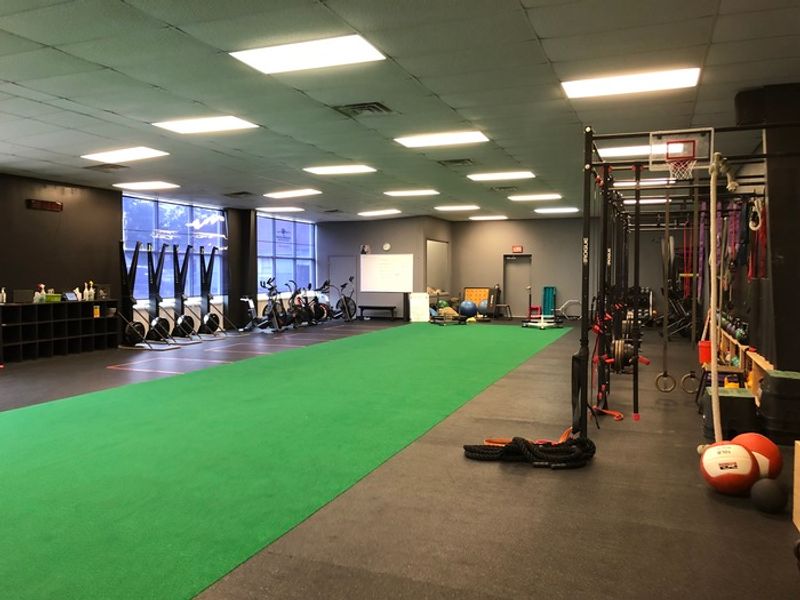
Runners, golfers, gym regulars, and Shore-area athletes will find plenty that feels familiar at COAST Rehab. With offices in Freehold, Manasquan, and Toms River, the practice keeps its focus squarely on orthopedic physical therapy, sports injuries, post-operative rehabilitation, and returning active patients to the things they actually want to do.
Its sports offerings are refreshingly specific. COAST addresses running injuries, golf-related problems, concussion therapy, and CrossFit injuries and screening rather than treating “sports rehab” as one enormous catch-all category.
The staff’s credentials add another layer to that focus. Katherine DeLorenzo, a doctor of physical therapy and board-certified Sports Clinical Specialist, also holds strength and conditioning credentials and has specialty experience that includes post-concussion care, spine injuries, and gymnastics-related rehabilitation.
Another therapist, Kimberly Salvato, is a certified running gait analyst—exactly the sort of background that becomes useful when a runner keeps getting hurt despite resting and restarting training.
COAST also offers strength and conditioning options for healthy athletes after physical therapy, helping create a bridge between formal rehab and independent training.
Its three locations make it particularly convenient for Monmouth and Ocean County residents, with the Manasquan office right on Main Street and additional clinics along Route 9 in Freehold and Indian Head Road in Toms River.
For athletes who prefer a smaller regional practice with clearly defined sports specialties, COAST is an easy one to keep on the radar.