Some New Jersey bridges announce themselves before you ever reach them. The George Washington Bridge flashes between apartment towers like a steel curtain.
The Driscoll suddenly opens up over the Raritan, and half the car seems to exhale because the Shore is finally starting to feel real. The Pulaski Skyway, meanwhile, looks like it was sketched by someone who loved factories, rail yards, and dramatic entrances.
New Jersey’s bridges are not just ways to get somewhere else. They are traffic chokepoints, skyline makers, summer rituals, commuter battlegrounds, and little geography lessons hiding in plain sight.
They connect the state to New York, Philadelphia, Delaware, Staten Island, the Turnpike, the Parkway, the ports, the beaches, and occasionally your last nerve. These 12 bridges help explain New Jersey better than a map ever could.
1. George Washington Bridge
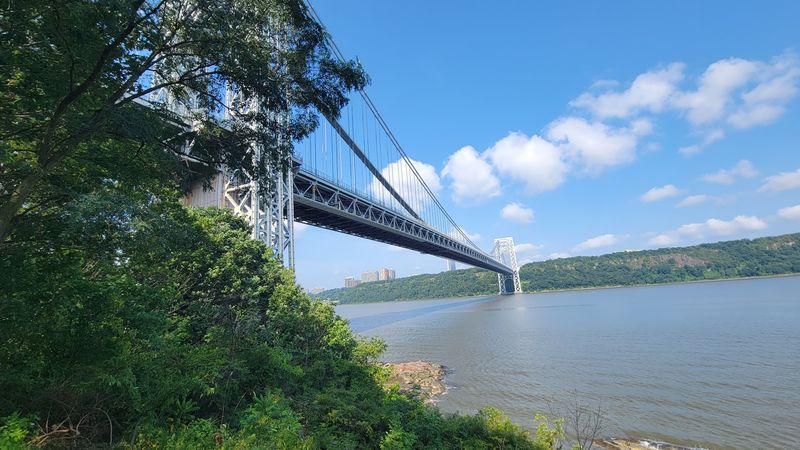
At Fort Lee, the roadway seems to aim straight at the Hudson, then the towers take over. The George Washington Bridge is the big one, the bridge that makes even seasoned New Jersey drivers glance up for half a second before going back to watching brake lights.
Connecting Fort Lee with Upper Manhattan, it is one of the most recognizable pieces of infrastructure in the country and still feels huge no matter how many times you cross it. Part of its legend is pure volume: 14 lanes split across two levels, a constant pulse of cars, buses, trucks, and commuters moving between New Jersey and New York.
But the GWB is not just busy; it has presence. The exposed steel towers give it a muscular, no-nonsense look, and when the giant American flag is flying beneath the upper arch, the whole span feels like a civic monument with traffic reports.
For visitors, the best way to appreciate it is not from the middle lane during rush hour. Walk or bike the path, or view it from Fort Lee Historic Park, where the bridge, Palisades, and Manhattan skyline line up in one of North Jersey’s great “oh, right, this place is dramatic” moments.
Tolls are collected heading into New York, so the Jersey-bound ride comes with one tiny mercy.
2. Governor Alfred E. Driscoll Bridge
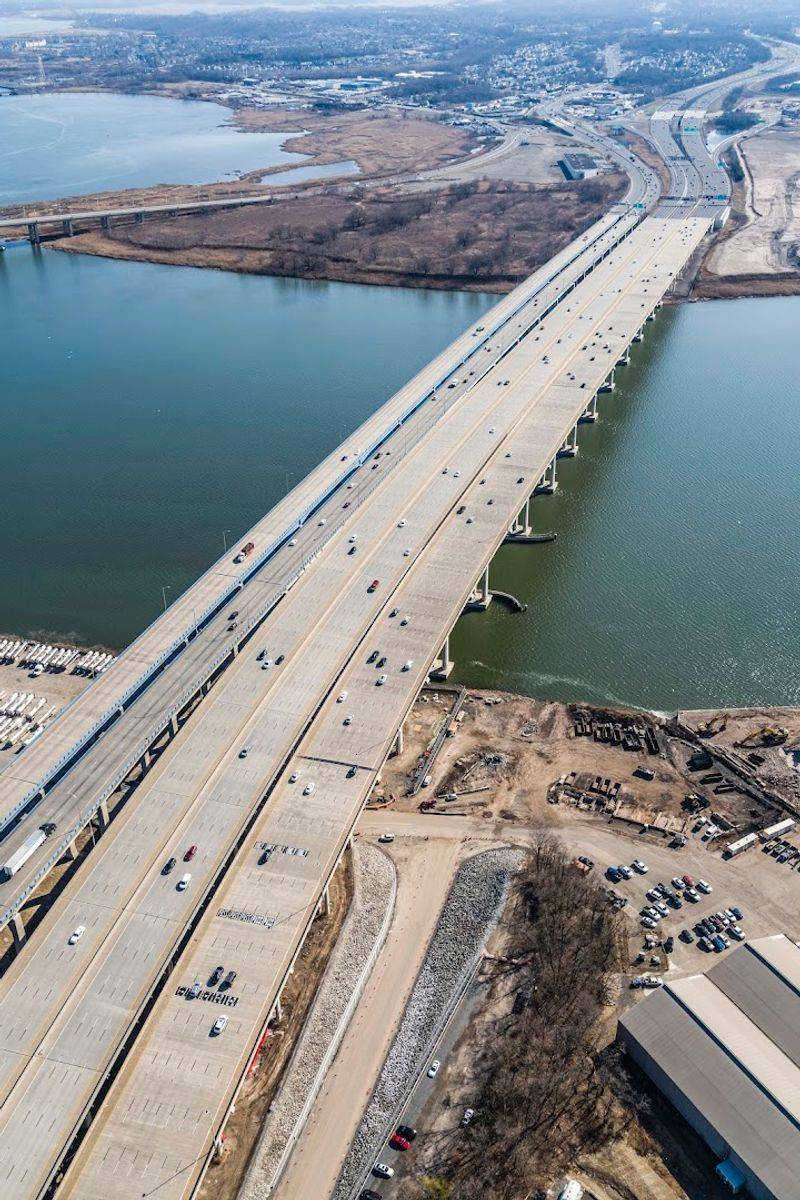
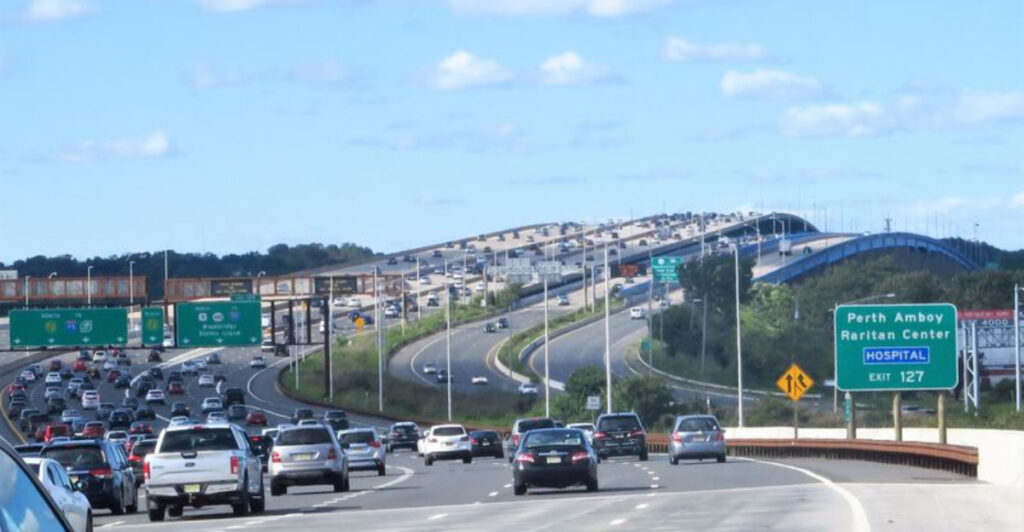
Ask a Parkway regular where the Shore trip really begins, and there is a decent chance they will point to the Driscoll. This massive Garden State Parkway crossing carries traffic over the Raritan River between Woodbridge and Sayreville, right where Central Jersey starts loosening its tie and thinking about beach chairs.
It is not the prettiest bridge on the list, and it is not trying to be. Its icon status comes from scale, usefulness, and ritual.
With 15 travel lanes, it has the broad-shouldered feel of a bridge built because New Jersey kept outgrowing its own shortcuts. On summer Fridays, it becomes a rolling census of coolers, roof racks, beach umbrellas, and drivers pretending they are not checking the traffic app every six minutes.
What makes the Driscoll memorable is that sudden openness: after miles of Parkway compression, the view spreads across the Raritan, industrial edges, and distant water. It is a practical bridge with an emotional job, carrying commuters all year and Shore-bound families when the state collectively tilts east.
If you are planning around it, timing matters more than scenery. Hit it before peak beach traffic or after the dinner rush, because this bridge can turn “almost there” into a full personality test.
3. Walt Whitman Bridge
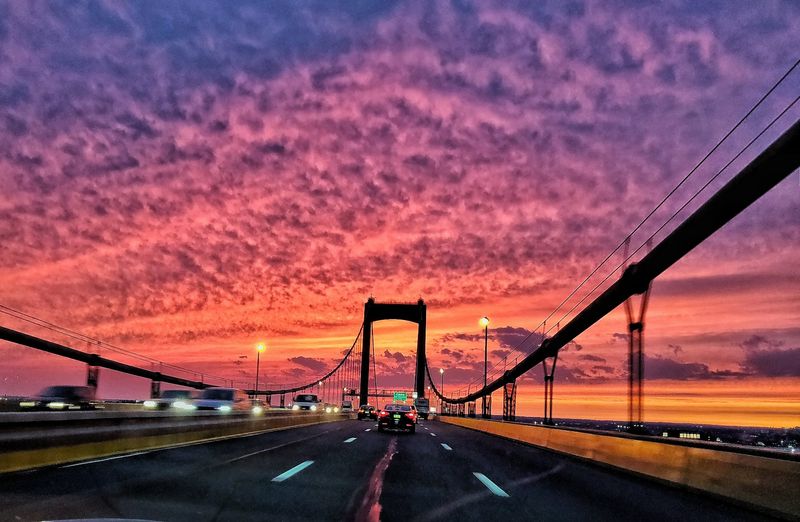
The first thing the Walt Whitman Bridge does well is make Philadelphia feel close. One minute you are in Gloucester City, South Jersey streets and ramps all around you, and then the Delaware River opens up with Center City rising ahead.
This bridge has long been one of the region’s workhorses, carrying I-76 between New Jersey and Philadelphia with seven lanes and a steady flow of commuters, sports fans, truck traffic, and Shore-bound visitors coming from the Pennsylvania side. Opened in 1957, it has a midcentury confidence to it: broad, direct, and built for motion.
It is especially tied to game-day geography. Anyone heading from South Jersey to the stadium complex knows the Whitman as the span that delivers you into that familiar mix of tailgates, skyline, and South Philly impatience.
For New Jersey readers, its importance is simple: it is one of the main doors between Camden County and Philadelphia, and it helps explain why South Jersey often feels culturally stitched to both the Garden State and the city across the river.
The views are best when traffic gives you enough breathing room to notice the river, the ship traffic, and the way the skyline slides into place. It is not delicate, but it is dependable, and that counts for plenty.
4. Benjamin Franklin Bridge
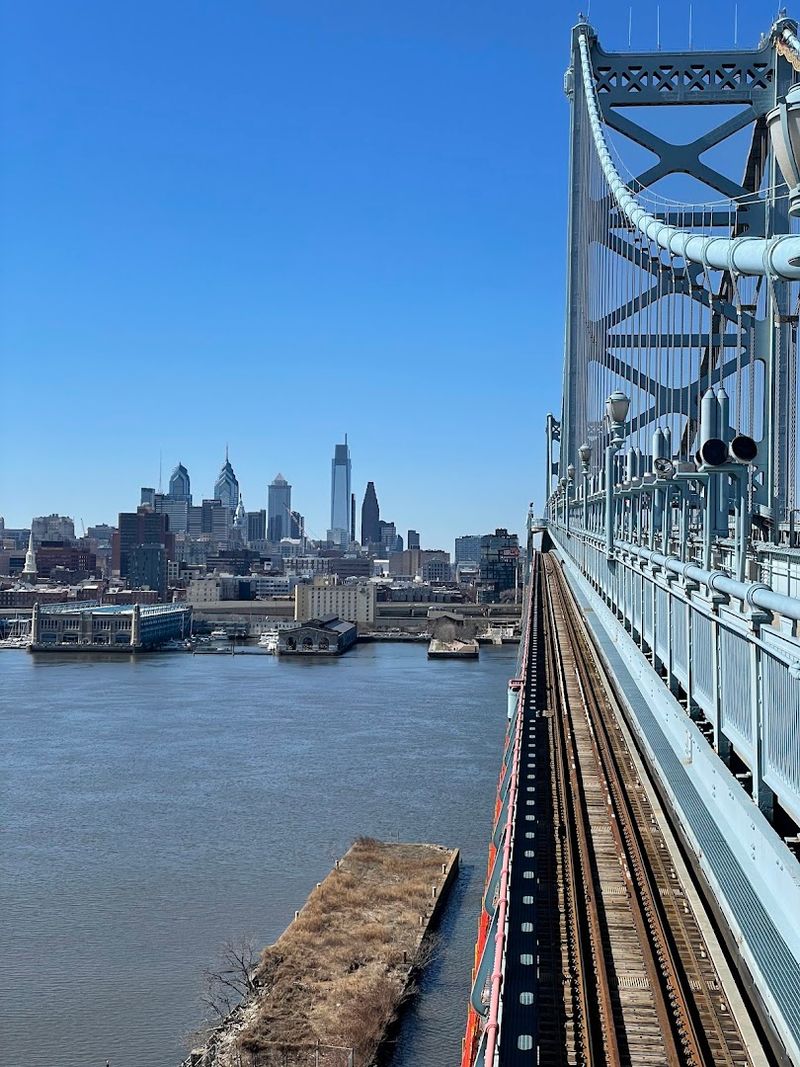
Blue steel, old-school towers, PATCO trains, walkers, cyclists, and cars all sharing one famous crossing: the Benjamin Franklin Bridge has layers. Opened in 1926 as the Delaware River Bridge, it connects Camden with Center City Philadelphia and still feels like the ceremonial front door between the two cities.
It is one of the rare bridges on this list that is worth experiencing outside a car. The pedestrian walkway gives you a slow-motion version of the crossing, with Camden’s waterfront on one side, Philadelphia’s skyline on the other, and the Delaware River below doing its quiet, muscular work.
That is the move if you want to actually feel the bridge instead of just merge onto it. The Ben Franklin also carries PATCO, which gives it a daily rhythm different from the purely vehicular spans.
Trains rattle through, runners use the walkway, commuters stream across the lanes, and at night the decorative lighting can make the whole bridge feel like a piece of regional theater. It belongs to commuters, sure, but also to photographers, skyline watchers, and anyone who wants a cheap, memorable outing with a big payoff.
Park in Camden near the waterfront or take PATCO, then walk far enough to let the wind remind you that this is not just a postcard.
5. Outerbridge Crossing
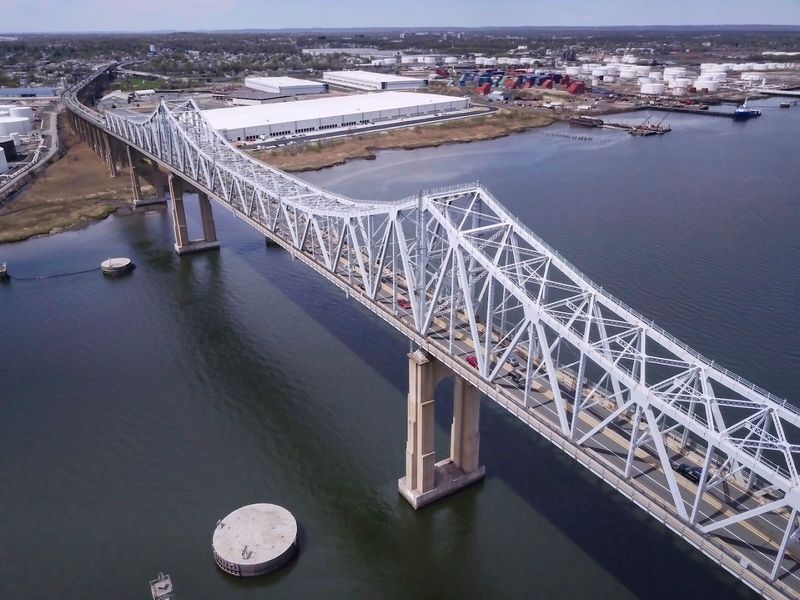
There is something wonderfully no-frills about the Outerbridge Crossing. It does not have the glamour of the GWB or the sweeping arch of Bayonne, but it has the grit of a bridge that knows exactly what job it was hired to do.
Opened in 1928, it links Perth Amboy with Staten Island across the Arthur Kill, making it a key southern Staten Island crossing and a familiar route for drivers moving between Middlesex County, the Garden State Parkway, Route 440, and New York. The name sounds like a description, but it actually honors Eugenius H.
Outerbridge, the Port Authority’s first chairman, which is a very New Jersey kind of twist: even the bridge name has backstory homework. The crossing itself has an industrial edge, with water, warehouses, and working waterfront scenery replacing postcard polish.
That is part of its appeal. It feels connected to the New Jersey of refineries, shipping, old port towns, and practical shortcuts.
Locals use it when it makes sense; everyone else discovers it when the traffic gods say the Goethals or Bayonne are not happening today. If you are driving it, expect function over romance, plus the occasional satisfying glimpse of the Arthur Kill and the machinery of the region doing what it does best: moving stuff, constantly.
6. Delaware Memorial Bridge
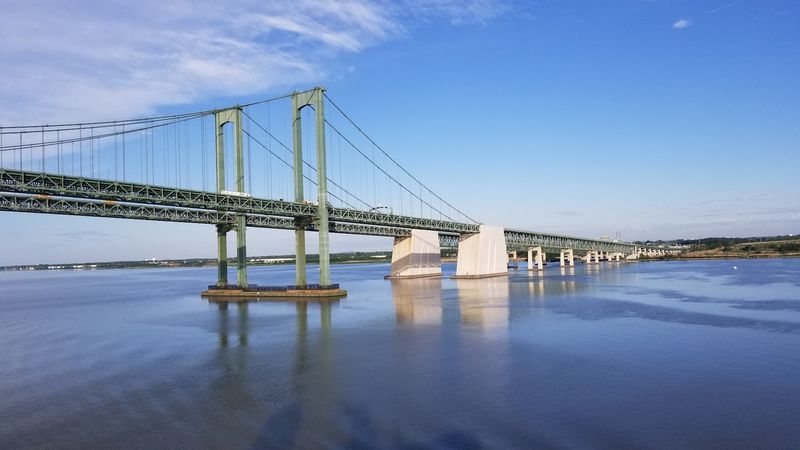
South Jersey has a way of saving one of its biggest statements for the state line. The Delaware Memorial Bridge rises between Pennsville, New Jersey, and New Castle, Delaware, in twin suspension spans that feel both graceful and serious.
It is a major East Coast connector, carrying traffic between the New Jersey Turnpike, I-295, Delaware, and points farther south. For many drivers, this is the bridge of road trips: the moment New Jersey ends, the moment vacation begins, or the moment you realize you should have stopped for coffee 20 miles ago.
Its name gives the crossing more weight than a typical toll bridge. It serves as a memorial to military members who died in World War II, the Korean War, Vietnam, and Operation Desert Storm, with a war memorial near the bridge adding a solemn counterpoint to all that highway movement.
The twin spans are also busier than many people realize, carrying more than 100,000 vehicles a day across eight lanes. The view is broad and open, with the Delaware River widening toward the bay and a big-sky feeling you do not always get in denser parts of New Jersey.
It is practical, patriotic, and quietly impressive, which is a very South Jersey combination.
7. Pulaski Skyway
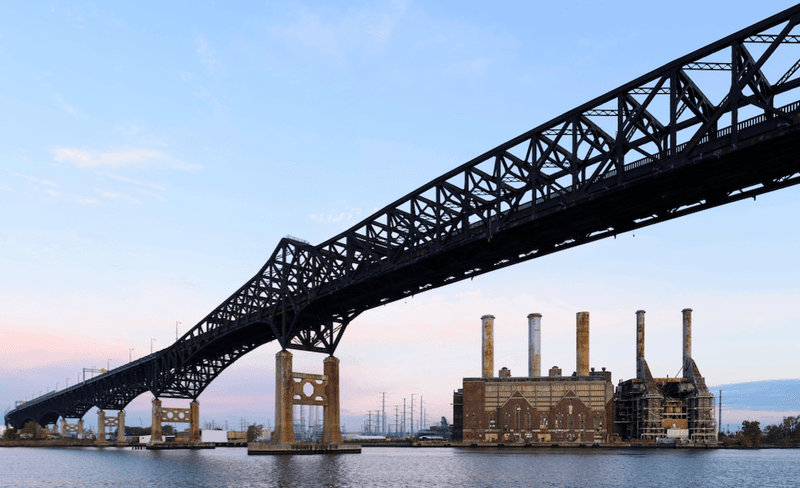
Few bridges in New Jersey have more attitude than the Pulaski Skyway. It looks less like a normal road and more like an elevated dare, carrying U.S. 1/9 over the Passaic River, Hackensack River, rail lines, industrial flats, and the kind of landscape filmmakers use when they want instant edge.
Opened in 1932, it was built as part of the old Route 1 Extension and counted among the early limited-access “super highways” in the United States. That history is still visible in the design.
The lanes feel narrow, the ramps are quirky, trucks are banned, and the whole thing has a vintage toughness that modern highways rarely possess. Drivers either love it, tolerate it, or avoid it with elaborate personal rules.
Still, the Skyway earns its place because it captures a specific New Jersey mood: steel, smoke, skyline, ambition, and a little bit of chaos. On the right day, the view toward Jersey City and Manhattan can be startling, especially when the Meadowlands and old industrial structures fall away beneath you.
This is not a leisurely Sunday drive, and nobody should treat it like a sightseeing road. But as a piece of New Jersey identity, the Pulaski is unbeatable: dramatic, stubborn, useful, and somehow still standing after generations of complaints.
8. Bayonne Bridge
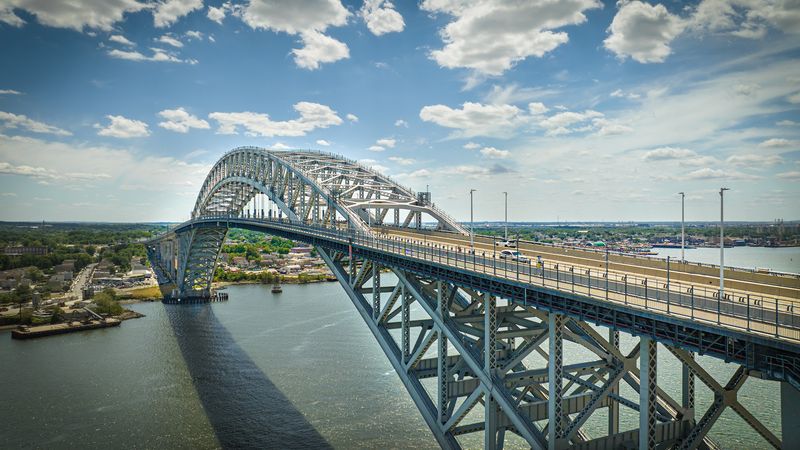
A great arch can make a bridge feel almost elegant, even when it is surrounded by container ships and port traffic. The Bayonne Bridge does exactly that.
Stretching over the Kill Van Kull between Bayonne and Staten Island, it brings a little architectural drama to one of the busiest working waterways in the region. Opened in 1931, the bridge is known for its long steel arch, and its modern chapter is just as interesting as its original one.
The roadway was raised to create more clearance for larger ships heading to nearby port facilities, turning the bridge into a rare case where a historic structure adapted to a changing global shipping economy instead of simply being replaced.
For visitors, the best surprise is the shared pedestrian and bicycle path, which gives you a close look at the arch and a high perch over the water.
You see the New Jersey-New York border not as a line on a map, but as cranes, ships, neighborhoods, and tidal water all pressed together. Bayonne itself gives the bridge a grounded, local feel; this is not a touristy crossing, but it rewards curiosity.
Go for the structure, stay for the odd thrill of watching giant maritime traffic slide beneath your feet.
9. Goethals Bridge
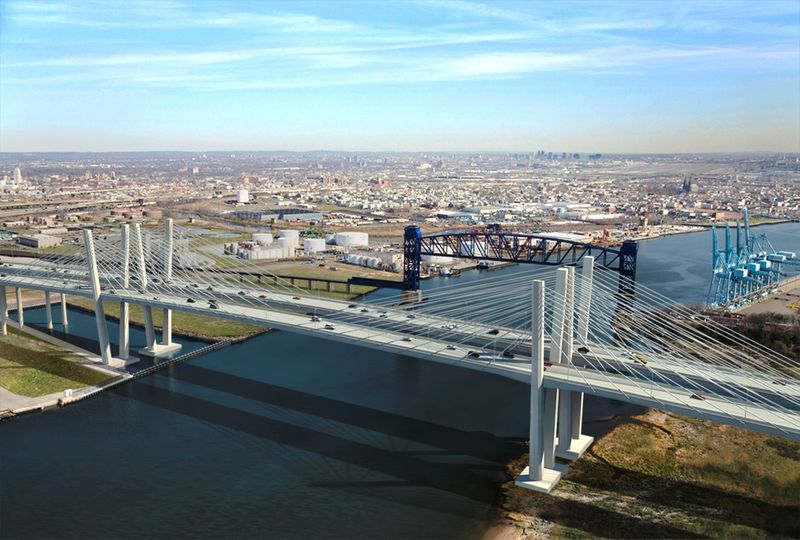
The Goethals Bridge feels like New Jersey’s logistics brain in bridge form. It connects Elizabeth with Staten Island, but its real neighborhood is bigger than that: Newark Liberty International Airport, the port, the Turnpike, rail yards, warehouses, and the constant choreography of goods moving through the region.
The original bridge opened in 1928, the same day as the Outerbridge Crossing, but today’s Goethals is a modern cable-stayed replacement, with new spans opened in 2017 and 2018. That gives it a different feel from many older bridges on this list.
The lines are cleaner, the shoulders are wider, and the whole thing feels built for the traffic reality New Jersey actually has, not the traffic reality engineers hoped for a century ago.
It is especially important for freight and commercial movement, but regular drivers know it as one of the key Staten Island options when the route to New York needs a little strategy.
The shared-use path is a bonus, open around the clock when weather and maintenance allow, with access on the Elizabeth side near Bayway and Trenton Avenue. It is not a cute bridge, and that is the point.
The Goethals is serious infrastructure, the kind that keeps shelves stocked, flights fed, ports humming, and commuters negotiating with their navigation apps.
10. Newark Bay Bridge
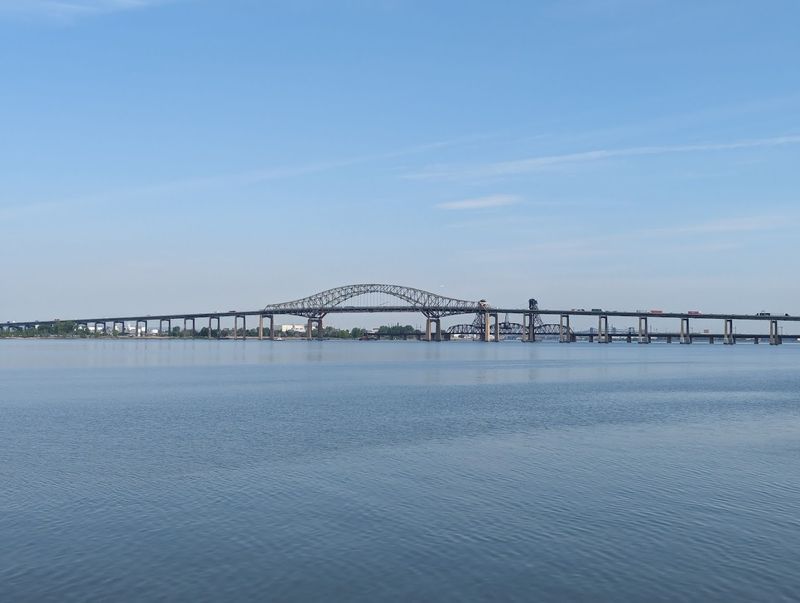
From a distance, the Newark Bay Bridge has that classic industrial silhouette: steel arches, wide water, and the New Jersey Turnpike Extension threading itself toward Hudson County. Officially the Vincent R.
Casciano Memorial Bridge, it connects Newark and Bayonne over Newark Bay and carries traffic that often has one thing on its mind: getting to or from the Holland Tunnel corridor without losing too much time. It opened in 1956, and for decades it has been one of those bridges many people use constantly without pausing to name.
That almost makes it more New Jersey. It does not need romance; it needs to work.
The crossing gives you a compressed tour of the state’s economic engine, with port cranes, rail lines, warehouses, water, and skyline fragments all showing up in quick succession.
It is also a bridge in transition, with plans moving forward to replace it with a new cable-stayed span as part of a broader modernization of the Newark Bay-Hudson County Extension.
That makes the existing bridge feel even more worth noticing now. It represents an older Turnpike-era New Jersey, built for postwar growth and still carrying the pressure of modern commuting.
Drive it for the view if traffic allows, but respect it for the job: linking the ports, Hudson County, and New York-bound traffic in one very busy sweep.
11. Commodore Barry Bridge
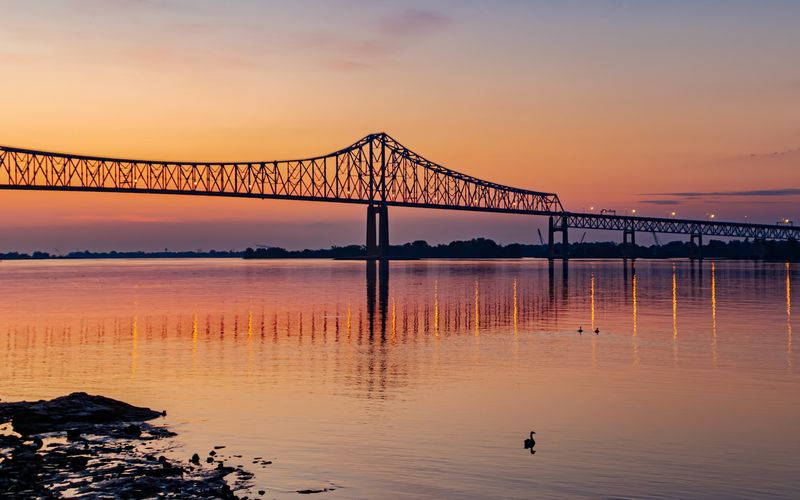
Downriver from the busier Philadelphia crossings, the Commodore Barry Bridge has a different personality: bigger, quieter, and a little underappreciated.
It stretches between Chester, Pennsylvania, and Bridgeport, New Jersey, carrying drivers across a wide section of the Delaware River with the confidence of a bridge that does not need to be in every skyline photo.
Opened in 1974, it is a cantilever bridge with five lanes and a long, impressive profile. The New Jersey side lands in Gloucester County, making it useful for drivers headed toward South Jersey towns, Route 322, and Shore routes that do not require wrestling with the most crowded Philly approaches.
Its setting is part of what makes it interesting. This is working-river scenery: industry, open water, cargo movement, and low-slung communities that have depended on the Delaware for generations.
The bridge does not offer a pedestrian stroll or a tourist-ready overlook, so the experience is mostly from behind the wheel. Still, the crossing has a satisfying spaciousness, especially compared with tighter urban bridges farther north.
It is also a reminder that New Jersey’s bridge story is not only about New York and Philadelphia commuters. It is about regional links up and down the Delaware, connecting smaller places that still matter to the state’s daily rhythm.
12. Betsy Ross Bridge
Not every important bridge has to be the loudest one in the room.
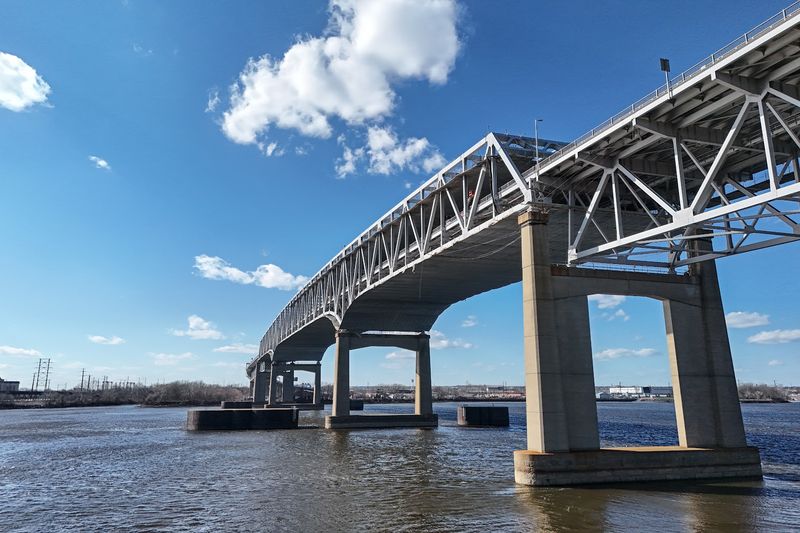
The Betsy Ross Bridge, connecting Philadelphia with Pennsauken, is often the practical choice: less famous than the Ben Franklin, less stadium-bound than the Walt Whitman, but extremely useful if you are moving between Northeast Philadelphia, Camden County, Route 130, and Route 73.
Opened in 1976, it is a continuous steel truss bridge with six lanes and a name that gives it instant colonial-era branding, even if the actual drive is pure modern traffic math. The Betsy Ross has a slightly tucked-away quality compared with the more dramatic central crossings, which can be a blessing.
It serves drivers who know exactly where they are going and would rather skip the ceremonial skyline moment if it means a cleaner route. The bridge’s value is in its efficiency and its place in the local road network, especially for people navigating South Jersey’s shopping corridors, industrial areas, and suburban towns.
Visually, it is not showy, but the trusswork has a sturdy, geometric appeal, and the Delaware views still sneak in when the traffic opens up. Think of it as the bridge for people who do not need applause.
It gets you across, keeps North Camden and Pennsauken connected to Philadelphia, and quietly earns its spot.
Share this story