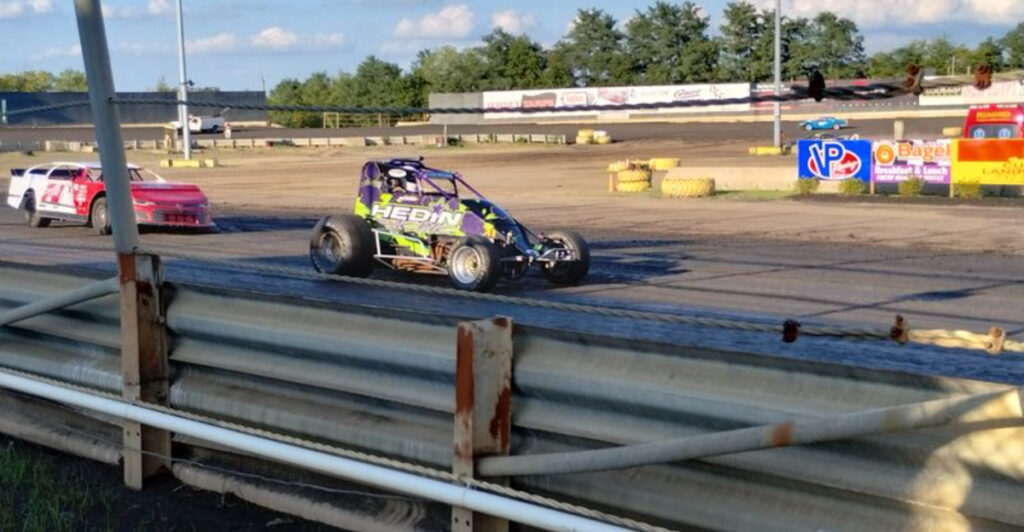
A Saturday night at New Egypt Speedway never needed much polish to feel like a big deal. You could hear the engines before you saw the lights, feel the grit settle on your shoes, and watch kids press against the fence like they were studying rocket science instead of stock cars sliding through a clay turn.
This was not the kind of New Jersey night built around reservations, valet parking, or a dress code. It was jeans, hoodies, ear protection, French fries, and somebody’s grandfather explaining why the outside groove mattered.
Tucked in New Egypt, in Ocean County’s Plumsted Township, the speedway became one of those places locals measured time by: first races, first dates, family traditions, and summer Saturdays that smelled faintly of fuel and dust. Since 1946, this track has carried a little bit of old New Jersey forward, one loud lap at a time.
The Saturday Night Roar That Became a New Jersey Tradition
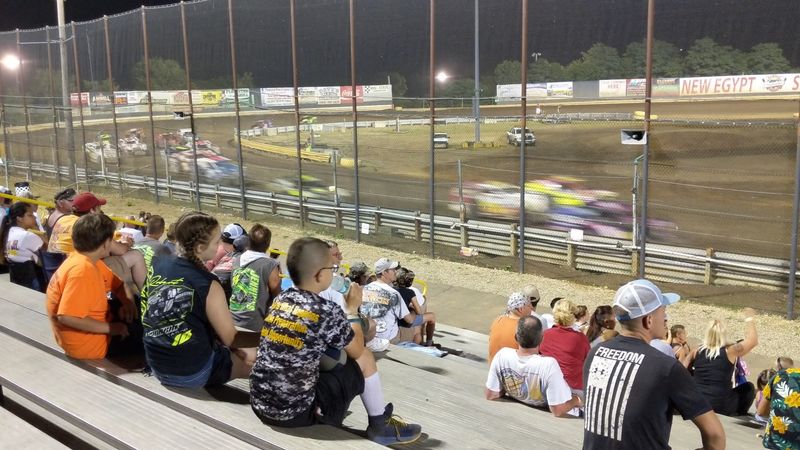
By the time the sun dropped behind the trees around 720 County Road 539, the whole place had a way of changing character. New Egypt Speedway sits in a quieter part of Ocean County, surrounded by rural roads and piney stretches that feel far removed from the Turnpike rush, but race night always woke up the neighborhood.
Saturday was the magic word. For decades, families planned around it.
Parents packed sweatshirts even on warm evenings because the night air could sneak in after dark. Kids asked for snacks before the first heat race was over.
Regulars claimed their preferred spots in the grandstands, not because the view was bad elsewhere, but because tradition has assigned seating even when the tickets do not. That is the thing about a local dirt track: it works on rhythm.
Gates open, hot laps begin, the clay gets worked in, and people who may not have seen each other since last weekend pick up the same conversations. Somebody talks about last week’s feature.
Somebody else remembers a driver from 20 years ago. The announcer’s voice rolls over the crowd, and suddenly everyone is looking toward turn one.
New Egypt Speedway built its reputation on that kind of weekly familiarity. It was not just a place where cars went fast.
It was a place where generations learned how to watch a race. They learned which classes sounded different, why a restart could change everything, and why the final few laps could make a calm adult jump up like a kid.
For families, the appeal was refreshingly simple. The show was loud. The stakes were local. The entertainment did not require a screen.
Even younger kids could follow the basics: green means go, checkered means somebody is going home happy, and dirt means everyone might need a shower later.
How New Egypt Speedway Went From Small Dirt Oval to Local Legend
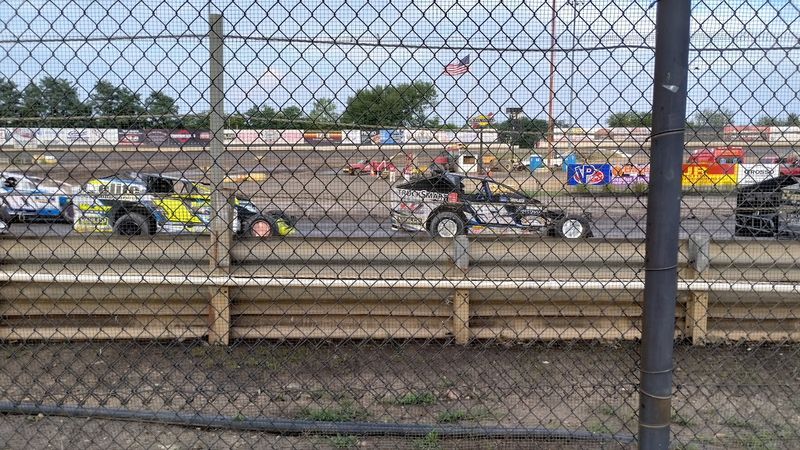
The track’s story starts in 1946, when New Egypt Speedway opened as a small quarter-mile dirt facility. That timing matters.
Postwar New Jersey was changing quickly, and little speedways like this gave communities a place to gather around something noisy, affordable, and a little bit daring. The original layout was modest, but it had staying power.
In the 1960s, the speedway was converted into a paved track, which reflected where short-track racing was headed at the time. Asphalt brought a different style of racing and a different identity.
Through the years, New Egypt hosted serious competition, including NASCAR Whelen Modified Tour events during its paved era in the 1980s. For a small-town track, that was no small footnote.
Then came the rough patch. By the early 1990s, the facility had fallen into neglect. Like many old racetracks, it could have simply disappeared, replaced by something tidier and quieter. New Jersey has seen plenty of beloved places vanish that way.
A track takes up land. It makes noise. It needs constant maintenance. Once the weeds start winning, it is easy for people to assume the story is over.
But New Egypt’s story took a sharp turn in 1997, when the Grosso family stepped in and brought the speedway back to life. That revival was not a quick coat of paint and a hopeful banner.
The facility was rebuilt and reintroduced as a dirt racing venue, bringing the track closer to its earliest roots. The work drew attention beyond town lines, and the Grossos were recognized during Daytona Speedweek in 1998 for their rehabilitation efforts.
Later, under Bill Miscoski and Fred Vahlsing, the speedway continued to evolve into a 7/16-mile D-shaped clay oval, the layout many modern fans know best. That is how a small postwar dirt oval became something bigger: not by staying frozen in time, but by surviving every version of itself.
Why Families Have Kept Filling These Bleachers for Generations
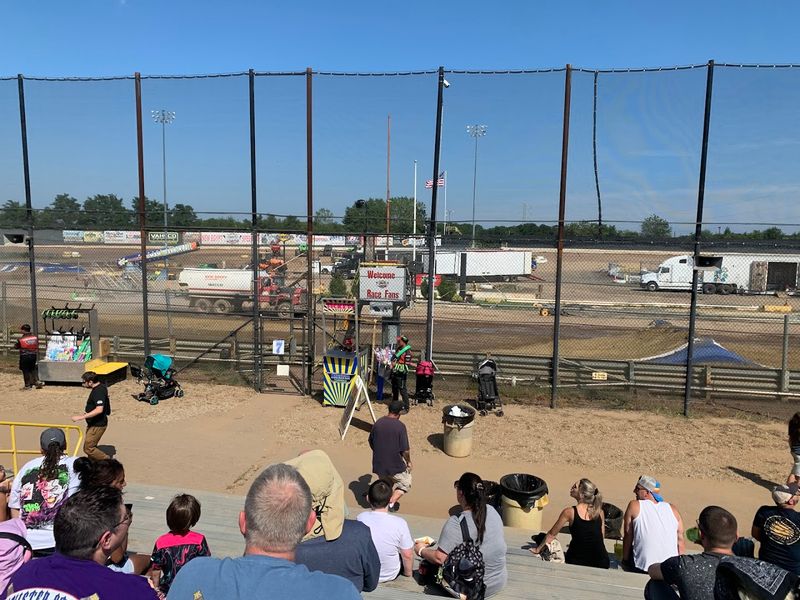
Ask around long enough and you will hear the same kind of New Egypt Speedway story in different voices. Somebody came with their father.
Somebody brought their daughter for her first race. Somebody met friends there every Saturday for a whole summer and still talks about it like it happened last week.
The family pull was never complicated. Dirt-track racing gives kids something immediate to react to. The cars are close. The sound is physical.
The action happens right in front of them, not on a faraway field where the players look like moving dots. Even when a child does not understand the difference between a Modified and a Sportsman car, they understand a slide through the turn and a last-lap pass.
Parents liked it because it felt casual. Nobody had to whisper. Nobody had to dress up. A little dust on a sweatshirt was part of the deal.
Grandparents liked it because the place still felt connected to the New Jersey they remembered, when weekend entertainment was more local and less polished. You did not need a giant production.
You needed lights, cars, a decent seat, and maybe something hot from the concession stand. The speedway also understood the practical side of being family-friendly.
Recent event pricing showed kids 11 and under admitted free for some races, with reduced pricing for teens, seniors, and military guests. That matters.
A family night out can get expensive fast in New Jersey, and tracks that make room for kids are really making room for the next generation of fans. There were other small details families noticed.
The facility listed accessible parking, a wheelchair ramp near the main entrance, and a dedicated viewing section along the front stretch. Cameras were allowed, which meant parents could capture the first race-night grin without feeling like they were breaking some fussy rule.
The result was a place where families did not just attend. They accumulated memories. Same grandstands, different kids, same roar.
The Clay, the Cars, and the Noise That Make This Place Unforgettable
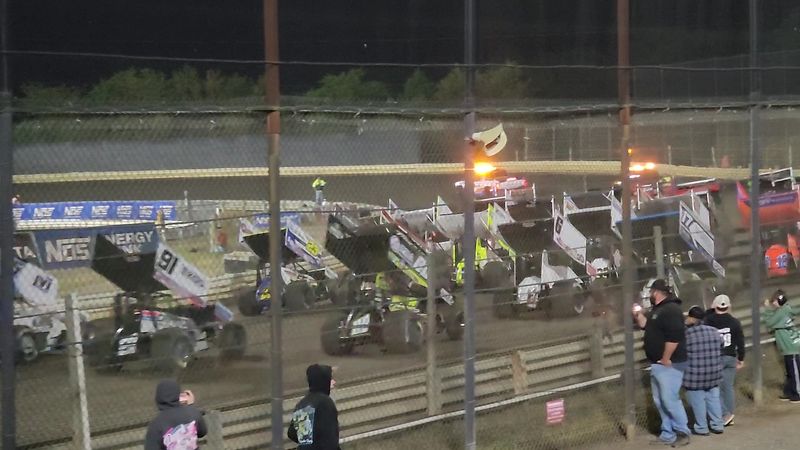
Dirt racing has a personality all its own, and New Egypt Speedway’s clay oval gave the place its bite. Asphalt racing can be fast and clean, but clay adds mood.
The surface changes as the night goes on. Moisture matters. Lines move. A driver who looked unbeatable early can suddenly be searching for grip while someone else finds speed near the cushion.
That is part of what made the 7/16-mile D-shaped oval so compelling. The track was big enough to let cars stretch out, but still tight enough for fans to feel close to the action.
When a pack charged into the corner, you could see the choices happening in real time. Dive low and hope it sticks.
Roll the outside and carry momentum. Protect the lead. Risk the pass. Dirt racing is basically chess with louder consequences.
The cars brought their own character, too. Modifieds had that angular, elbows-out look that made them seem impatient even when parked.
Crate Sportsman fields gave fans tight weekly competition. Four Cylinders, Street Stocks, Sprint Cars, Vintage divisions, and special events all added different flavors to the calendar.
In October 2025, the World of Outlaws NOS Energy Drink Sprint Cars returned to New Egypt for the first time since 2017, bringing the kind of national-level energy that reminds everyone why the place mattered beyond Ocean County. And then there was the sound.
Not background sound. Not pleasant ambience. The kind of sound that makes conversation pause mid-sentence because the field is taking the green. The kind that makes small kids cover their ears and smile at the same time.
The kind that tells you exactly where you are without looking at a sign. Food was part of the texture, too.
The speedway promoted Joey G’s for food and Lauren’s Sweet Shop for sweets and snacks, which is exactly the sort of detail that turns an event into a routine. Race, snack, cheer, repeat. That is a strong formula.
The Comeback Story That Saved a Beloved Racing Landmark
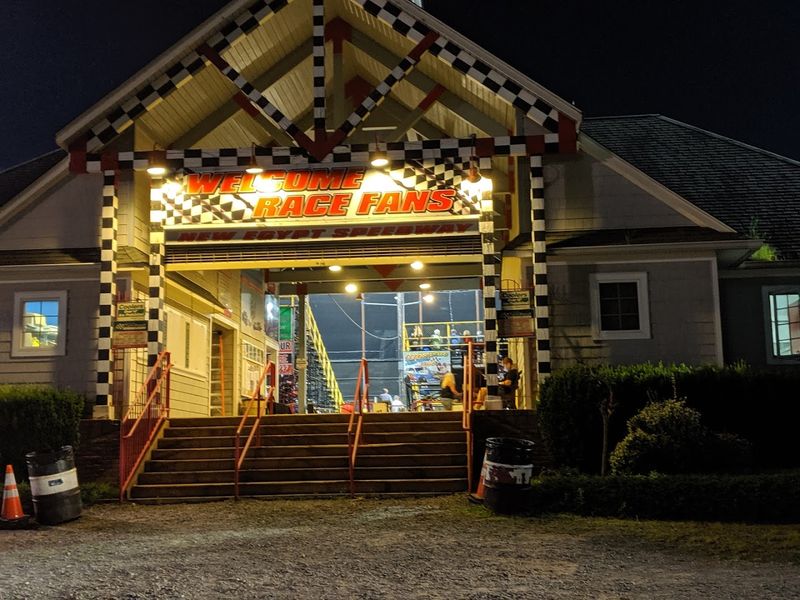
New Jersey is not especially gentle with old racetracks. Land is valuable. Noise complaints are real. Maintenance is expensive.
Even beloved places can become vulnerable once the economics stop working. That is why New Egypt Speedway’s 1997 revival still feels like the hinge point in its story.
Before the Grosso family took over, the property had been neglected for years. It would have been easy to let the track fade out, especially in a state where development pressure rarely takes a weekend off.
Instead, the facility was rescued, rebuilt, and returned to racing life. The comeback worked because it respected what people loved while giving the track a serious reset.
Bringing dirt racing back connected the speedway to its 1946 beginnings, but the revived version was not just nostalgia in a fresh coat. It became a competitive Central Jersey dirt oval with enough pull to draw weekly racers, special events, and fans who cared deeply about the place.
In 2006, Bill Miscoski and Fred Vahlsing became part of the next major chapter. Under their ownership, New Egypt Speedway was shaped into the modern 7/16-mile D-shaped clay oval.
That layout helped define the track’s later identity and gave it a reputation for close, physical racing. For fans, those improvements mattered because they meant the old local landmark was not merely surviving.
It was still trying to be good. The speedway’s comeback also gave New Jersey race fans something increasingly rare: continuity.
Families who might have lost the track in the 1990s got more years of Saturday nights. Kids who were not alive for the revival grew up thinking New Egypt had simply always been there, which is how local treasures are supposed to feel.
Of course, comebacks are never guaranteed forever. They require owners, workers, racers, sponsors, and fans all pulling in the same direction. New Egypt had that for a long time, which is why its uncertain moments hit people so hard.
What Comes Next for One of New Jersey’s Most Cherished Tracks
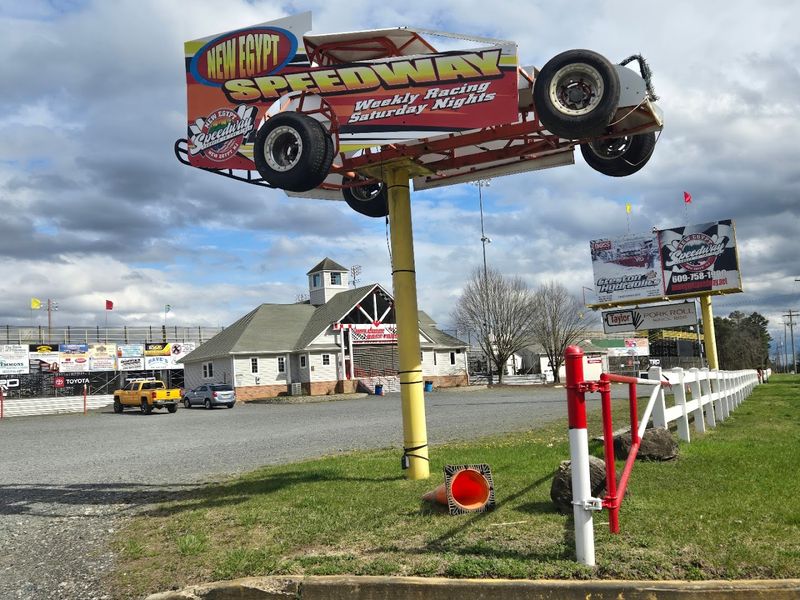
The latest chapter is not as tidy as fans would like. New Egypt Speedway is not operating as a racetrack for the 2026 season under its current ownership, and the property has been listed for sale with an asking price reported at $8.5 million.
For a place built on Saturday-night certainty, that kind of pause feels strange. The listing has described the property as a turnkey motorsports facility, which is an important phrase.
It means this is not just a forgotten patch of land with a few memories attached. The speedway still has the bones of a working venue: the clay oval, infrastructure, equipment, and the name recognition that comes from roughly 80 years of racing history.
It sits on about 48 acres, which gives any future owner something substantial to work with. There has also been public interest from people who want to keep racing alive there.
That matters, because the future of a track like New Egypt cannot be measured only in acreage or asking price. Its value is also in the weekly habits it created, the drivers who came through, and the families who still think of the place whenever they hear engines in the distance.
Names connected to the track’s broader racing story only add to that weight. Martin Truex Jr., Ray Evernham, Stewart Friesen, Kenny Brightbill, and Billy Pauch are among the drivers associated with New Egypt’s history.
For longtime fans, those are not just résumé names. They are reminders that local tracks are where bigger racing stories often begin.
Whatever happens next, New Egypt Speedway has already earned its place in New Jersey’s motorsports memory. It began as a small dirt oval in 1946, survived reinvention, neglect, revival, and decades of Saturday-night noise.
That is more than most local landmarks ever manage, and it is why so many families still talk about the track as if the dust has barely settled.
Share this story