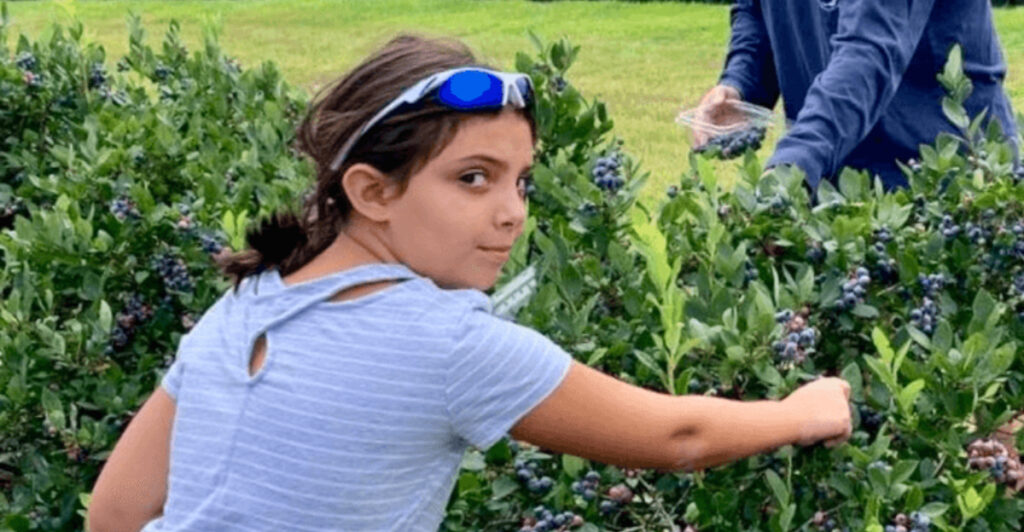
Twelve pints of blueberries, picked straight from the bush under the South Jersey summer sun, will set you back just $30 at DiMeo Farms. That works out to $2.50 a pint, which feels almost suspiciously reasonable when you’re used to staring at tiny supermarket containers with much bigger price tags.
But the berries are only part of the day here. Tucked into the Pinelands outside Hammonton, DiMeo Farms pairs its U-pick fields with shaded picnic tables, nature trails, a creek for kayaking and swimming, and the kind of unhurried afternoon that makes you forget you came here to accomplish anything.
The family traces its blueberry-growing history back 110 years, and the farm still specializes in the crop that made this corner of New Jersey famous. For anyone who likes a summer outing with dirt on their shoes and something useful to bring home, this one checks an impressive number of boxes.
Meet the Family Farm Behind Hammonton’s Blueberry Tradition
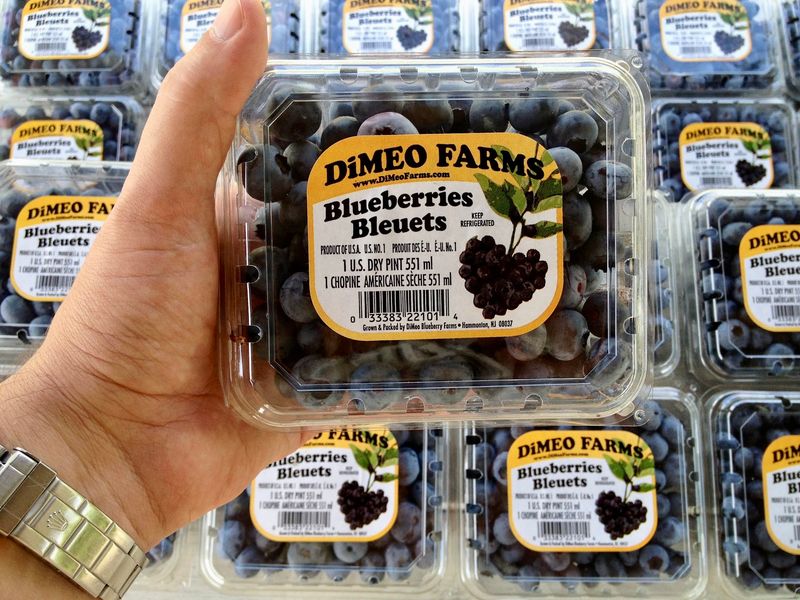
Blueberries around Hammonton are not some cute seasonal trend. They are part of the agricultural identity of South Jersey, where acidic Pinelands soil helped turn the crop into a serious industry.
The New Jersey Department of Agriculture has long referred to Hammonton as the “blueberry capital of the world,” although the actual birthplace of the cultivated blueberry sits farther north at Whitesbog in Burlington County.
There, Elizabeth Coleman White worked with USDA botanist Frederick Coville to develop blueberries that could be reliably cultivated, leading to the first commercial crop in 1916.
DiMeo Farms has its own connection to that era. According to the family, Great-Grandpop DiMeo began growing blueberries in 1916, and today the operation describes itself as a fourth-generation family farm with 110 years of blueberry-growing history.
The DiMeos say their various farms together account for about 986 acres of New Jersey blueberries, while family members have preserved close to 500 acres of farmland. At the Hammonton property, the focus goes beyond harvesting fruit.
DiMeo also runs a blueberry plant nursery, selling bushes to backyard gardeners, landscapers, nurseries, and commercial growers. Anthony DiMeo III is among the fourth generation continuing the operation.
That background matters when you pull onto Nesco Road because this does not feel like somebody planted a few berry rows to add another summer attraction. Blueberries are the business here.
They are grown, picked, propagated, sold as plants, and discussed with the kind of specificity you would expect from a family that has been working with them for generations. In a town already surrounded by blueberry fields, that makes DiMeo’s history feel right at home.
What Makes DiMeo’s Blueberries Organic Non-GMO and Heirloom
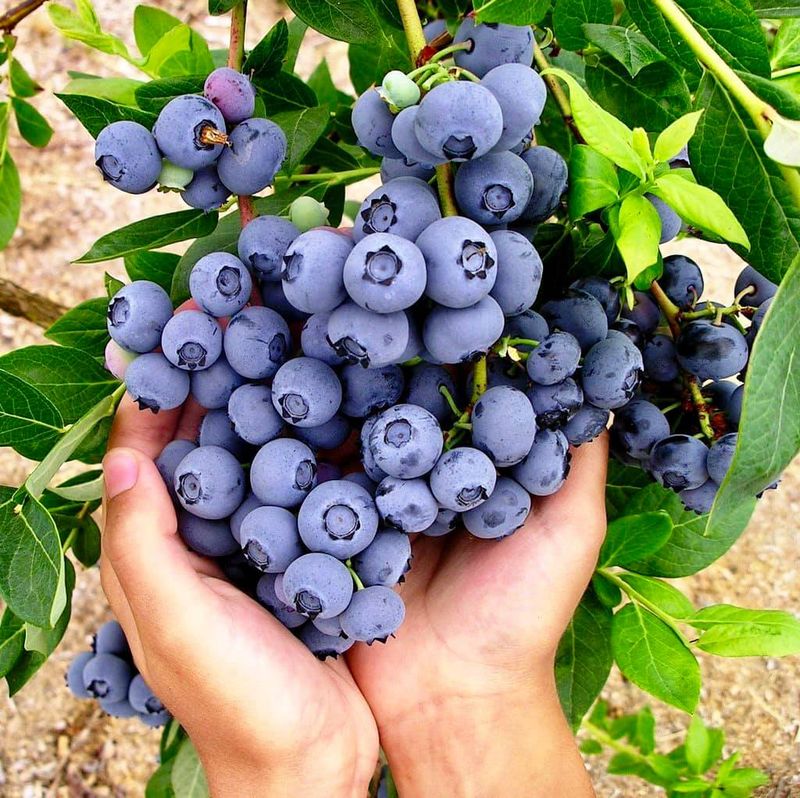
The three words DiMeo puts front and center are “organic,” “non-GMO,” and “heirloom,” but there is an important bit of fine print worth understanding before you pick. The farm markets its U-pick blueberries and many of its plants as organically grown, non-GMO, and heirloom, and says it favors older varieties for their flavor.
It also states that its blueberry plants are not genetically modified and that many are grown outdoors rather than pushed along in greenhouses. The “organic” part requires more explanation.
DiMeo’s own terms and conditions specifically state that its fruit and plants are not certified organic and that the operation grows both conventionally and organically grown blueberries and plants. The farm says its use of “organic” refers to its own growing practices rather than USDA organic certification.
Those practices, according to DiMeo, include using OMRI-listed soil products, pheromone traps and mating-disruption techniques to help control beetles, along with products approved for organic use when needed.
The farm also clarifies that when it uses the word “certified” for plants, it is referring to certification for virus and disease status, not organic certification.
As for “heirloom,” DiMeo emphasizes older blueberry varieties rather than treating every bush as interchangeable. Its nursery offers dozens of varieties and promotes mixes of early-, mid-, and late-season plants to stretch the harvest across summer.
That variety is one reason a pint picked in the field can be more interesting than the standardized berries most of us toss into a grocery cart. Some bushes may give you bigger fruit, others smaller berries with a sharper or sweeter edge.
The best strategy is pleasantly low-tech: taste as you pick, find a row you like, and keep filling the pint.
Why Picking Your Own Blueberries for $2.50 a Pint Is Such a Sweet Deal
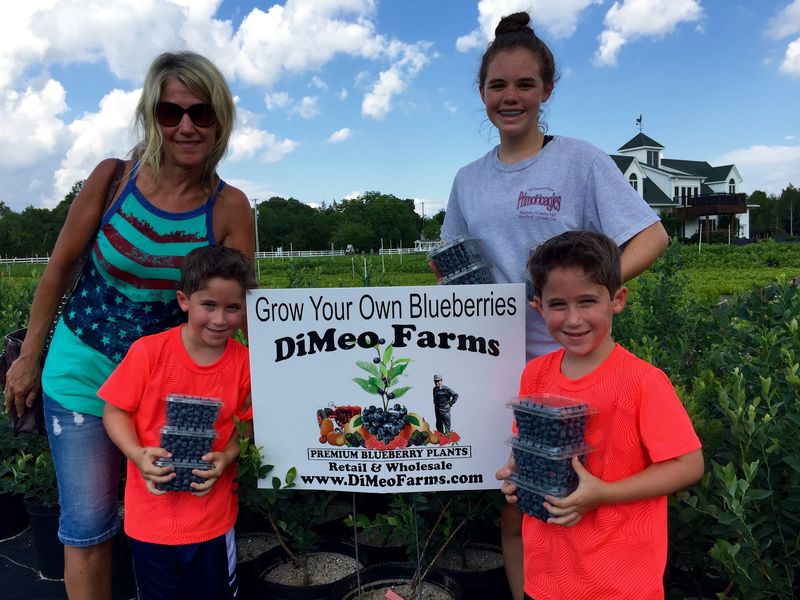
Here is the number that gets everyone’s attention: $2.50. DiMeo lists its U-pick blueberries at $2.50 per pint for the 2026 season, but this is not a stop-in-for-one-pint setup.
The farm currently requires a minimum of 12 pints, making the minimum blueberry purchase $30. For a family, a couple of serious berry eaters, or anyone with freezer space, that is a much more useful amount than it sounds.
Twelve pints disappear quickly once blueberries start going into pancakes, muffins, smoothies, yogurt, pies, jam, or handfuls grabbed straight from the refrigerator. The setup is unusually straightforward in another way: DiMeo says there is no general admission or entrance fee for its blueberry-picking experience.
Your money goes toward the berries rather than a wristband before you have even reached the field. Containers are handled by the farm as well.
Pickers are not allowed to bring their own pints; DiMeo supplies stackable recycled-plastic pint containers and gives customers a reusable shopping bag for carrying the harvest home. A cooler is a smart addition to the car, especially if you plan to hang around after picking or have a longer drive home.
The farm specifically recommends bringing one with ice for the berries. There is also something satisfying about the economics of doing the work yourself.
Nobody is pretending U-pick means effortless food. You walk the rows, find the ripe fruit, fill each container, and discover how slowly a pint fills when half the berries somehow end up in your mouth.
But that is exactly what makes the $30 haul feel different from grocery shopping. By the end, you know which bushes produced it, how ripe it was when picked, and why your fingertips have turned slightly purple.
What It’s Really Like to Spend a Summer Day at DiMeo Farms
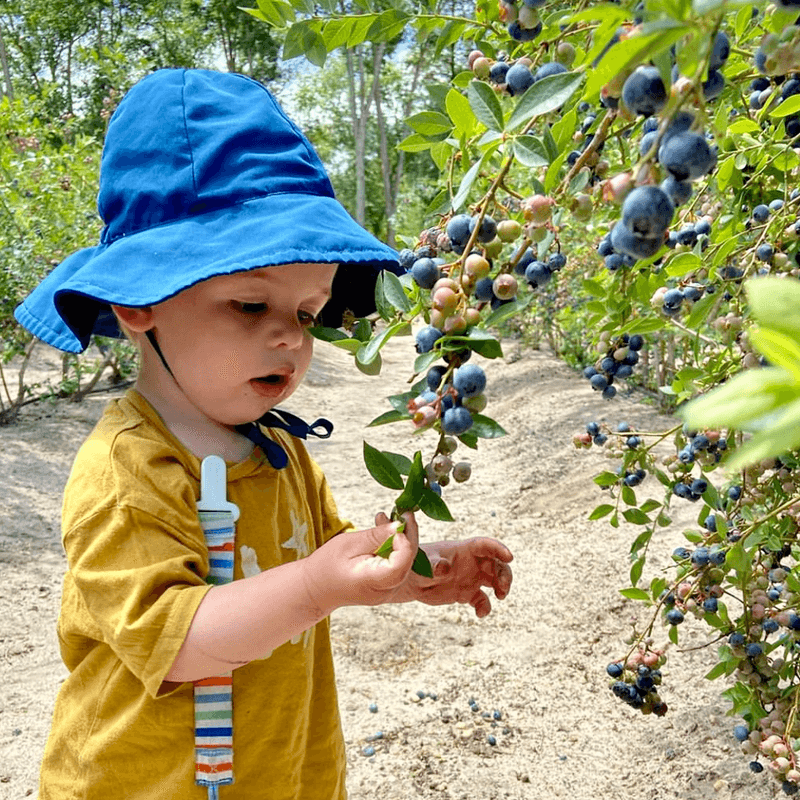
A good day here starts with not rushing it. You arrive in the Pinelands, trade pavement for blueberry rows, grab the farm-provided containers, and begin scanning bushes for the deepest blue fruit you can find.
DiMeo operates its U-pick during June, July, and August, which gives the place a different feel depending on when you visit and which varieties are producing. The farm even mentions playing relaxing music around the picking area, an oddly specific touch that tells you this is meant to be more than a twenty-minute produce run.
Once your pints are full, you do not necessarily have to head straight for the car. The property includes fully shaded picnic areas set among the woods, including smaller tables for kids, so packing sandwiches and cold drinks makes sense.
DiMeo allows visitors to bring a picnic and describes the setup as BYOB for adults who want to enjoy a bottle of wine with lunch. Bring plenty of water too; South Jersey in July has never been shy about humidity.
A cooler with ice earns its trunk space twice, keeping drinks cold during the afternoon and protecting the blueberries on the ride home. Clothing deserves a little thought as well.
This is farm country in the Pine Barrens, not an air-conditioned attraction with paved walkways, so shoes you do not mind getting dirty are the correct choice. Families can spread the picking among several people, while determined blueberry fans can settle into a productive row and quietly fill container after container.
There is no need to manufacture entertainment out of it. Spotting the fattest berry on a bush, comparing who filled a pint first, and discovering that a warm berry eaten five seconds after picking tastes different from one shipped to a supermarket is plenty.
There’s More to Do Here Than Fill a Basket With Blueberries

The surprising part comes after the harvest, when a blueberry farm starts looking a little more like a Pinelands summer hideout. During picking season, DiMeo gives U-pick customers access to shaded picnic areas, nature trails, and a creek where the farm offers kayaking and swimming.
Kayaks are available for customers, and the farm also promotes decidedly low-key activities such as forest bathing, “earthing,” and even Pilates.
You can participate in exactly as much of that as appeals to you; sitting beneath the trees with lunch while somebody else enthusiastically communes with the forest is also a perfectly respectable plan.
Dogs are welcome according to the farm, adding another reason the outing works for people who would rather not leave a pet home all afternoon. Then there is the nursery.
A berry-picking trip can easily end with a blueberry bush in the back of the car, because DiMeo sells plants directly from the farm.
Three-year-old blueberry bushes are currently advertised at $15 each, and the nursery also lists pink lemonade blueberries, red raspberry plants, thornless blackberries, and planting supplies such as peat moss.
Beyond the property, the location puts you deep in one of New Jersey’s most distinctive landscapes. DiMeo is near Wharton State Forest and historic Batsto Village, the preserved ironmaking community tucked into the Pine Barrens.
That combination makes the farm easy to fold into a longer South Jersey day without forcing the itinerary. Pick in the morning, eat lunch in the shade, paddle the creek if the weather cooperates, and suddenly a fruit run has taken most of the afternoon.
Just remember that the extra activities are tied to blueberry season and U-pick visits rather than operating as separate public attractions.
What to Know Before You Make the Drive to Hammonton
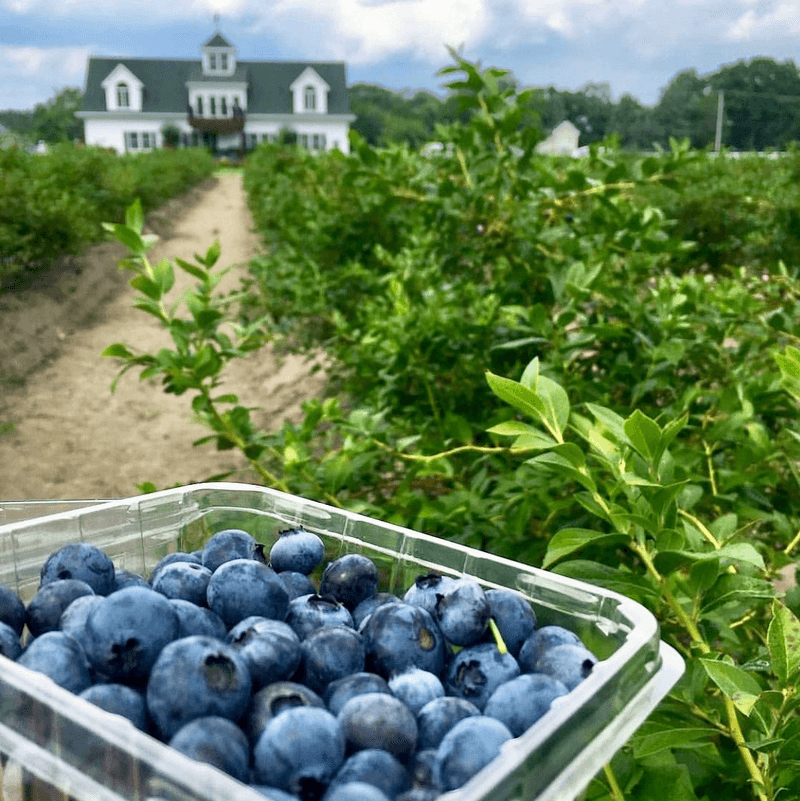
Put 3101 Nesco Road, Hammonton, NJ 08037 into the GPS, but make the phone call before turning the key. DiMeo’s blueberry U-pick is open by appointment only, and the farm specifically asks visitors to call first because ripe fruit can be picked out on busy days.
The number is 609-561-5905, and same-day appointments may be available. For the 2026 season, U-pick is offered during June, July, and August.
As of August, the farm lists general business hours of 10 a.m. to 5 p.m. Monday through Saturday, with Sunday closed, but an appointment is still required for blueberry picking.
The current U-pick price is $2.50 per pint with a 12-pint minimum, so plan on spending at least $30 on berries. Leave your own berry baskets at home because DiMeo requires customers to use the farm-provided pint containers.
What should come with you is a cooler packed with ice, water, lunch if you want to use the picnic area, sunscreen, and shoes suited to actual farm ground.
If kayaking or creek swimming is part of the plan, having towels and a change of clothes in the car is considerably smarter than discovering afterward that blueberry-stained shorts are now your dry outfit.
Prices, availability, picking conditions, and hours can change as the season progresses, which is another reason the pre-trip call matters. By August, especially, what is ripe one week may look very different the next.
That bit of planning is a small trade for a day that can end with a cooler full of freshly picked Hammonton blueberries, lunch under the Pinelands trees, and perhaps a young blueberry bush wedged carefully into the car for the ride home.