Deep in the hills near Newport, Tennessee, something unexpected rises from the forest. A white Buddhist peace pagoda sits quietly on a mountain ridge, far from the tourist trails and highway billboards that usually mark East Tennessee landmarks.
Most people drive past without ever knowing it exists, but those who find it discover a place that feels worlds away from everyday life.
A Peace Pagoda Hidden in the Hills of East Tennessee
Finding a traditional Buddhist temple in rural Tennessee sounds like the setup to a story someone made up. But wind your way up a steep mountain road near Newport, and you’ll discover exactly that.
The Great Smoky Mountains Peace Pagoda sits on a ridge where the air feels thinner and the world below fades into green folds of forest.
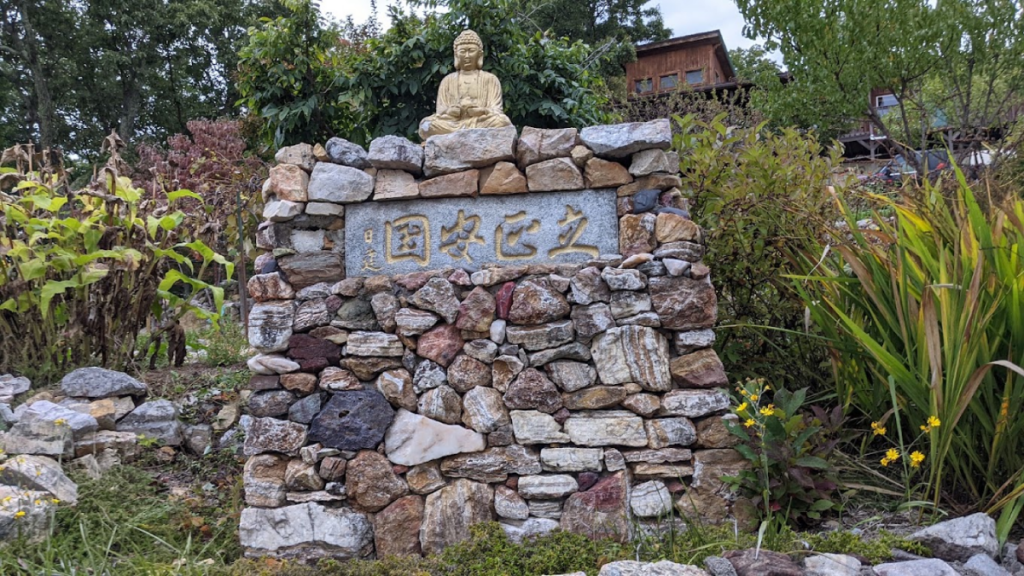
This isn’t some roadside attraction thrown together for tourists. The pagoda is part of a living Buddhist monastery run by monks from the Nipponzan Myohoji order, a Japanese Buddhist tradition focused on peace and prayer.
They’ve been building this sanctuary by hand for years, carving out a space where ancient spiritual practices meet Appalachian wilderness.
What makes it so surprising isn’t just the location. It’s how completely it belongs there once you arrive.
The white walls of the pagoda glow against the mountain backdrop, and prayer flags flutter in the breeze like they’ve always been part of the landscape. Visitors often describe feeling like they’ve stepped through a portal into another country entirely.
Most Tennesseans have never heard of this place. It doesn’t show up on highway signs, and you won’t find gift shops or parking lots crowded with tour buses.
The monks welcome visitors, but they’re not advertising. This is a working temple first, a hidden landmark second.
If you’re used to the usual Tennessee attractions, this one will catch you off guard. No neon signs, no gift shops selling magnets, just mountains, prayer, and a kind of quiet that’s hard to find anywhere else.
It’s the kind of place that makes you rethink what belongs in the Smoky Mountain region.
The Quiet Road That Leads to the Pagoda
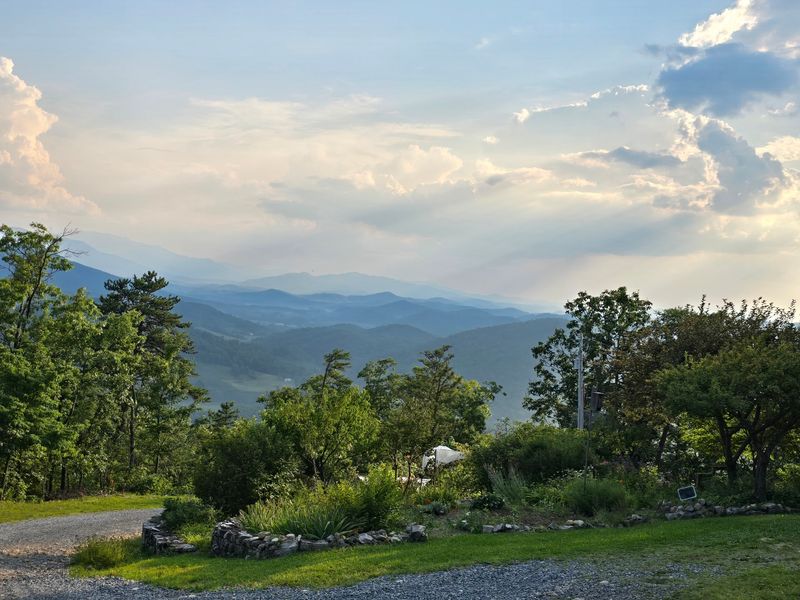
Getting to the Peace Pagoda isn’t like driving to most Tennessee destinations. You leave Highway 321 behind and turn onto a road that climbs fast.
The pavement gives way to gravel, and the incline gets serious. Switchbacks snake up the mountainside, tight enough that you’ll be glad nobody’s coming the other way.
Reviewers aren’t kidding when they say four-wheel drive helps. The road is steep, loose in places, and unforgiving if you’re not paying attention.
Some visitors park at the bottom and hike up instead, which turns the journey into a workout but also gives you time to notice how the forest changes as you climb.
The monks leave walking sticks at the base of the trail for anyone who needs them. It’s a small gesture, but it tells you something about the people who run this place.
They know the mountain is tough, and they’re not trying to make it easy, just manageable.
As you go higher, the noise of the world below drops away. No highway hum, no leaf blowers, no neighbor’s dog barking. Just wind moving through trees and the crunch of gravel under your feet or tires. The forest closes in on both sides, thick and green, and you start to understand why the monks chose this spot.
By the time you reach the top, you’ve left more than elevation behind. The climb itself becomes part of the experience, a transition from the everyday rush into something slower and more deliberate.
It’s not an easy road, but easy roads don’t usually lead anywhere worth remembering.
Why a Buddhist Peace Pagoda Was Built Here
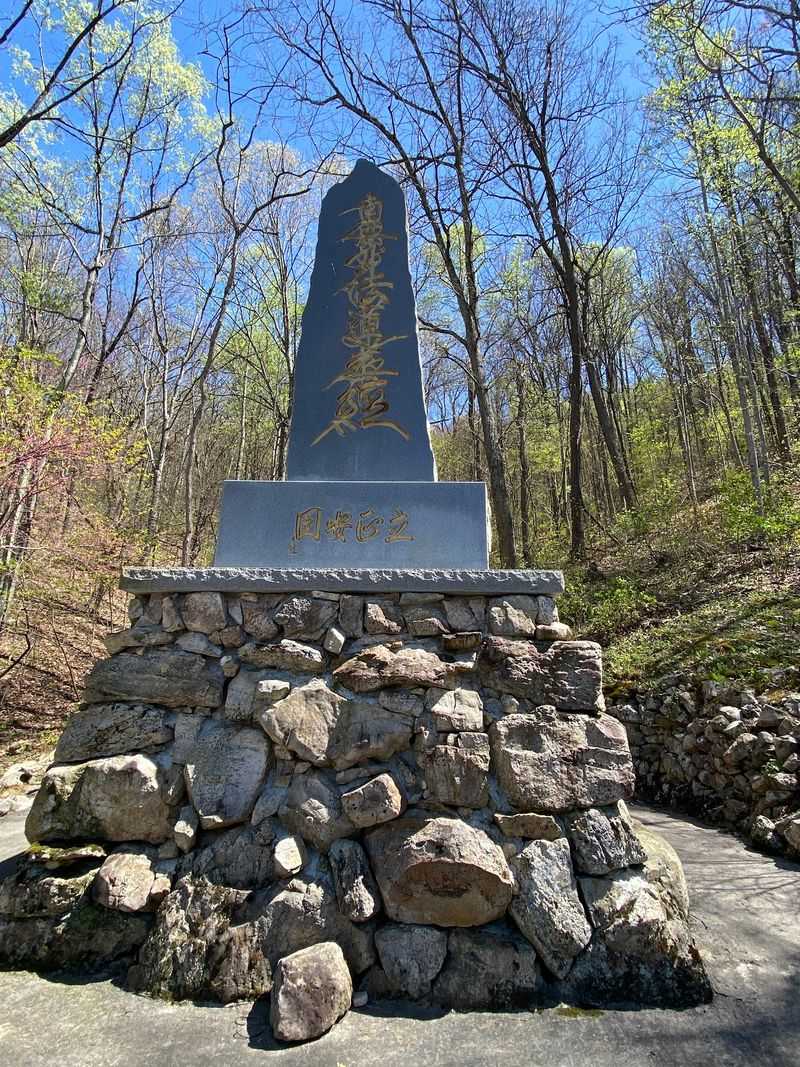
Peace pagodas aren’t random architectural choices. They’re built with purpose, part of a global movement started by a Japanese Buddhist monk named Nichidatsu Fujii after World War II.
He believed the world needed physical monuments to peace, places where people could pray for an end to violence and war.
The Nipponzan Myohoji order has built peace pagodas on every continent, from London to New Delhi to San Francisco. Each one serves as a reminder that peace isn’t just an idea.
It’s something you have to build, stone by stone, prayer by prayer.
So why Tennessee? Why plant a symbol of Japanese Buddhism in the Appalachian mountains?
The monks saw the land and felt it matched their mission. Remote enough to offer real quiet, beautiful enough to inspire reflection, and open enough to welcome anyone willing to make the climb.
Building the pagoda here also challenges assumptions. Buddhism isn’t just for cities or coasts or countries where it’s the dominant religion. It can take root anywhere people are searching for peace, including a mountain ridge in East Tennessee where most folks have never met a Buddhist monk.
The construction itself is an act of devotion. Monks and volunteers work together during seasonal work parties, mixing concrete, hauling materials, shaping the temple by hand.
It’s slow, deliberate work that mirrors the patience required to build peace in a world that doesn’t always value it. Every wall raised is both a prayer and a statement.
The Nipponzan Myohoji Monks Behind the Mountain Sanctuary
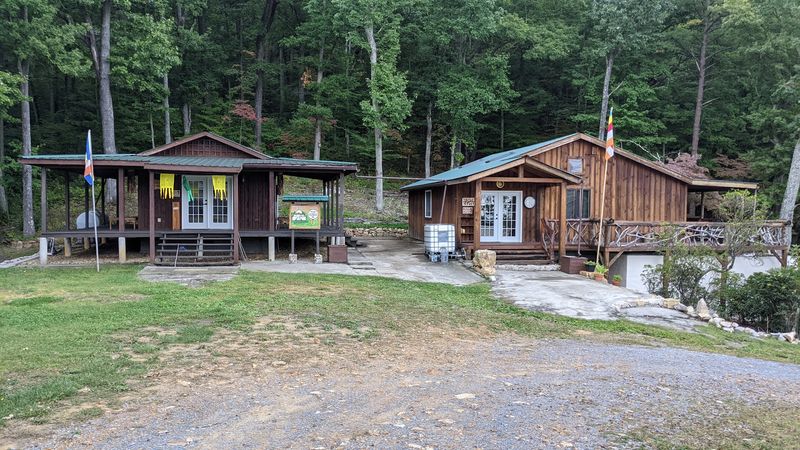
Walk onto the property and you might spot one of the resident monks working on the temple or tending the grounds. They’re not sitting in meditation all day, though prayer is central to their lives.
They’re builders, caretakers, and hosts, often doing the physical labor required to keep the sanctuary running.
Nipponzan Myohoji is a Japanese Buddhist order that centers its practice on chanting the Lotus Sutra and promoting nonviolence. The monks here follow that tradition, rising early to pray and spending their days maintaining the pagoda and welcoming visitors who make the climb.
It’s a simple life by modern standards, but that’s the point.
Visitors describe the monks as warm and welcoming, quick to explain the history of the site or invite people to sit in the prayer temple. The monks don’t preach or push their beliefs on anyone. They open the temple doors and let the place speak for itself.
If you have questions, they’ll answer. If you just want to sit quietly, they respect that too.
It’s hospitality without agenda, rare in a world that usually wants something from you.
Living on a remote mountain in a foreign country, far from the urban centers where Buddhism is more common, takes commitment. These monks aren’t here for comfort or convenience.
They’re here because they believe peace starts with creating spaces where people can find it.
What You’ll Find When You Reach the Great Smoky Mountains Peace Pagoda
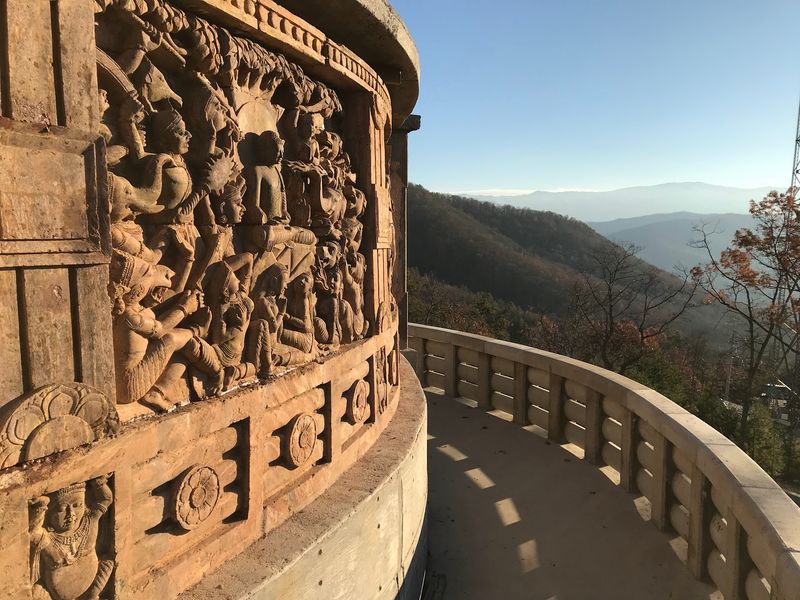
Once you reach the top, the view opens up. Mountains roll out in every direction, layered in shades of blue and green depending on the light.
The pagoda itself stands white and elegant, its design unmistakably Buddhist, unmistakably out of place in the best possible way.
Inside the main prayer temple, you’ll find Buddhist statues, altars, and spaces meant for quiet reflection. Visitors are welcome to enter, though it’s understood you’ll remove your shoes and keep your voice low.
The atmosphere isn’t heavy or overly formal. It just asks for respect.
There’s also a visitor center with information about the history of peace pagodas and the Nipponzan Myohoji mission. Spend time reading the displays and you’ll start to understand the scope of what the monks are doing here.
It’s not just about building one temple. It’s about contributing to a global network of peace monuments.
A walking trail winds around the property, past shrines where ashes of the deceased have been enshrined. It’s a reminder that this place holds meaning for people beyond casual visitors.
Families have chosen to honor loved ones here, drawn by the peace and beauty of the mountain setting.
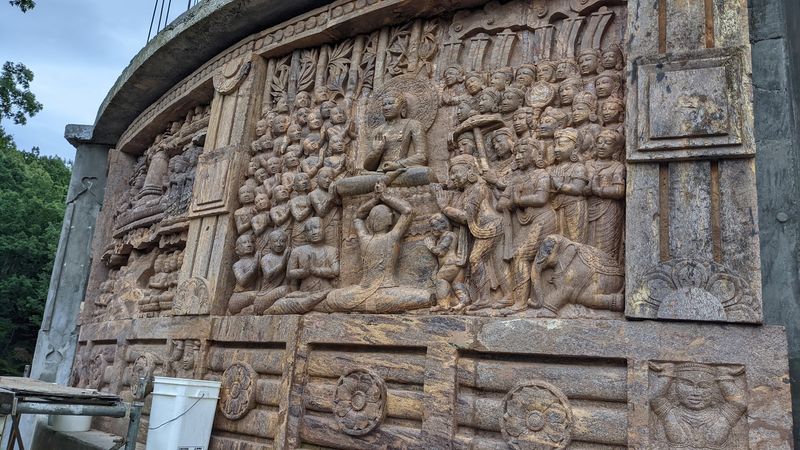
The unfinished statue mentioned in reviews is part of ongoing construction. The pagoda is still being built, and that’s part of its story.
You’re not visiting a completed tourist site. You’re witnessing a work in progress, something being shaped over years by hands and faith and persistence.
More Than a Hidden Attraction: A Place for Peace and Reflection
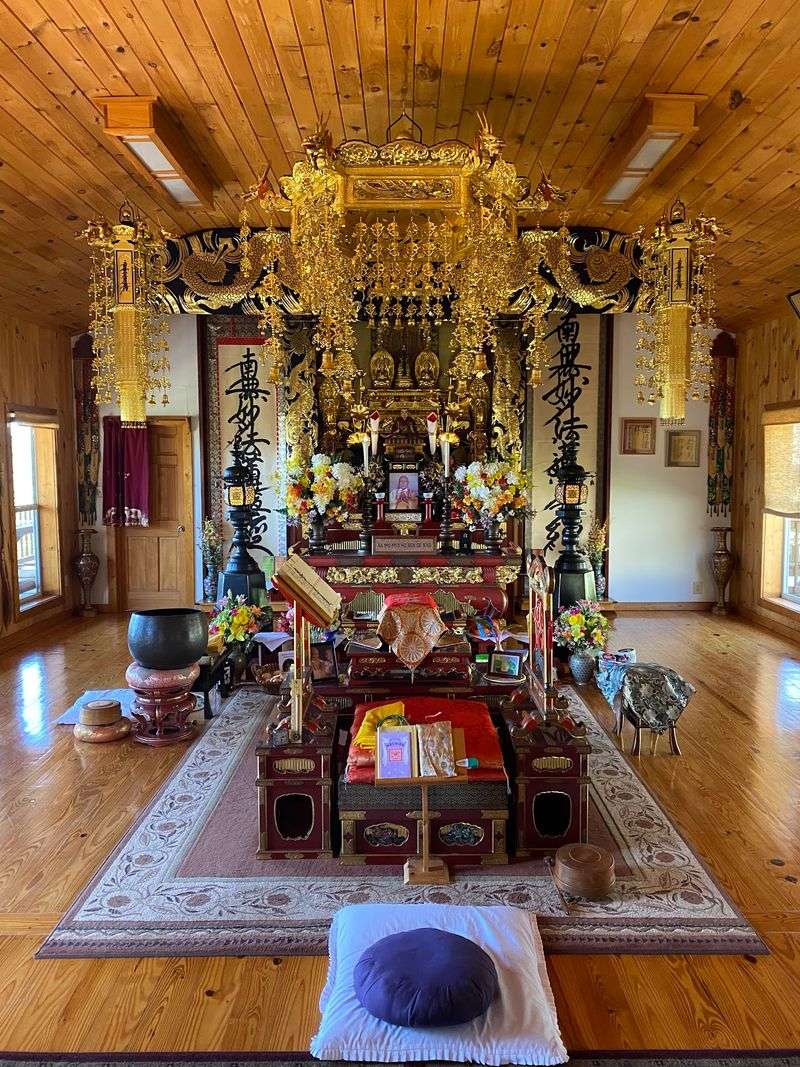
Some people come to the pagoda because they’re curious. Others come because they’re searching for something.
What starts as a side trip off the beaten path often turns into something deeper once you’re standing on that ridge with nothing but mountains and sky around you.
The quiet here isn’t just an absence of noise. It’s a presence, something you can feel settling into your chest and slowing your thoughts.
Visitors talk about spending an hour in the prayer temple or on the walking trail and losing track of time entirely. That’s not an accident. The place is designed to pull you out of your usual rhythm.
You don’t have to be Buddhist to feel the effect. People from all backgrounds and belief systems come here and find something meaningful.
Maybe it’s the beauty of the setting, maybe it’s the simplicity of the space, or maybe it’s just the rare chance to be somewhere that isn’t trying to sell you anything.
For some, it’s a spiritual experience. For others, it’s just a really good escape from the noise and rush of regular life. Both are valid reasons to make the climb.
The monks don’t seem concerned with labeling what happens here. They just keep the doors open and let people find what they need.
In a world that’s constantly demanding your attention, a place like this feels radical. No phones ringing, no notifications, no agenda beyond sitting still and breathing.
It’s a reminder that peace isn’t something you chase. It’s something you make space for.
What to Know Before Visiting This Little-Known Tennessee Landmark
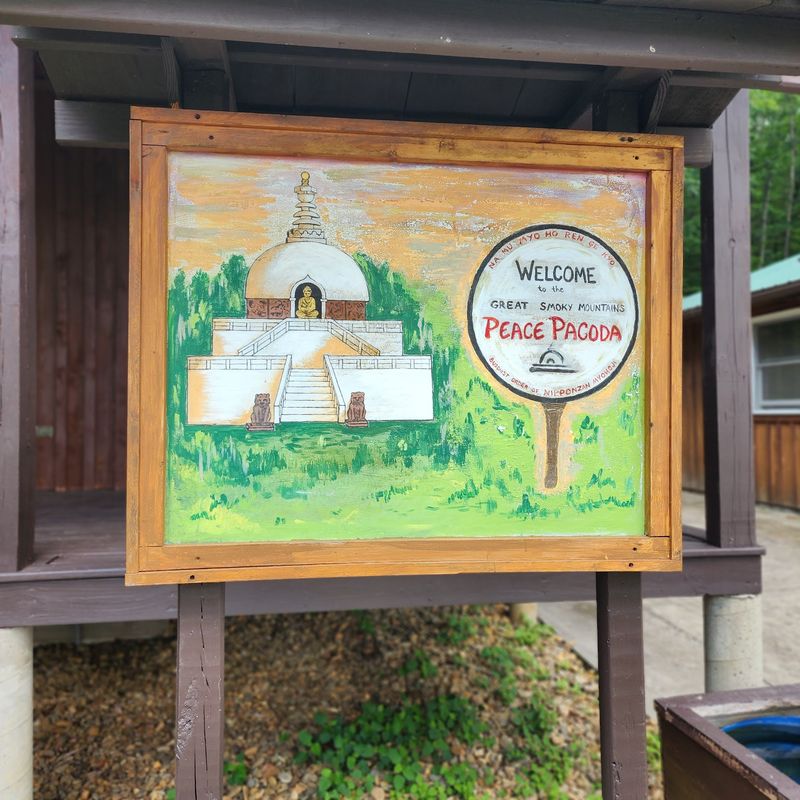
The pagoda is located at 1878 Peace Pagoda Way in Newport, Tennessee. It’s open daily from 7 AM to 7 PM, which gives you plenty of daylight to visit.
Here’s the practical stuff. Four-wheel drive or all-wheel drive is strongly recommended for the road up. If you don’t have that, park at the bottom and hike. It’s steep, but people with knee surgeries and back issues have done it.
Grab one of the walking sticks left at the trailhead if you need extra support.
Dress comfortably and bring water, especially if you’re hiking. The climb is a workout, and Tennessee summers get hot.
Wear shoes with good grip since the gravel can be slippery, particularly on the way down.
This is an active religious site, so respect matters. Remove your shoes before entering the prayer temple. Keep your voice low. Don’t take photos inside the temple or visitor center unless you’re sure it’s allowed.
Many visitors choose not to photograph the interior out of respect, and that’s a good instinct to follow.
The monks are usually around, but don’t expect a guided tour. They’re working, praying, or resting.
If they’re available and you have questions, they’re happy to talk. If they’re not, explore on your own and soak in the atmosphere.
The place reveals itself without much explanation needed. Just show up with an open mind and a willingness to climb.
Share this story