A frog pond at the governor’s mansion, a 19th-century projection room in a country estate, a Pine Barrens village built around iron and glass, and a Morristown garden where wisteria steals the show in May — New Jersey’s mansion scene is much stranger, prettier, and more story-packed than most people give it credit for.
These are not just big old houses with velvet ropes and squeaky floors.
They are former political headquarters, family estates, botanical hideaways, industrial power centers, and weekend escapes that somehow survived long enough for the rest of us to wander through. Some feel grand in the “polished antiques and formal rooms” way.
Others win you over with gravel paths, rambling gardens, carriage barns, and the sense that half the state’s history passed through the front door. Here are 13 New Jersey mansions where the grounds are as memorable as the walls.
1. Morven Museum & Garden, Princeton
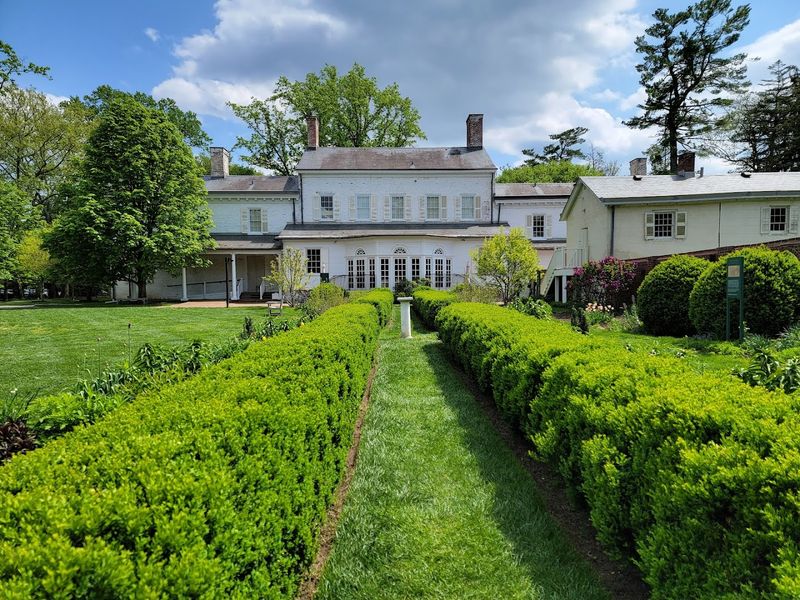
There is something wonderfully Princeton about a mansion that can pull off Revolutionary history, governor’s mansion elegance, and a garden stroll without seeming to try too hard.
Morven sits on Stockton Street, close enough to the university bustle to feel central, but its lawns and brick façade have a calmer, old-New Jersey rhythm.
The estate is best known as the former home of Richard Stockton, a signer of the Declaration of Independence, and later served as New Jersey’s first governor’s mansion. Today, it operates as a museum and garden on five acres, with exhibitions that connect the house to the wider story of the state.
The grounds are not just decorative filler, either. Morven’s garden has more than 250 years of horticultural history behind it, and visitors can wander the outdoor spaces even if they are not committing to a full museum afternoon.
This is the mansion to visit when you want history without the heavy museum mood. Tour the galleries, look for the details that still feel domestic rather than staged, then give yourself time outside.
Princeton has plenty of polished corners, but Morven feels like one of the rare places where the city’s past still has dirt under its fingernails.
2. Drumthwacket, Princeton
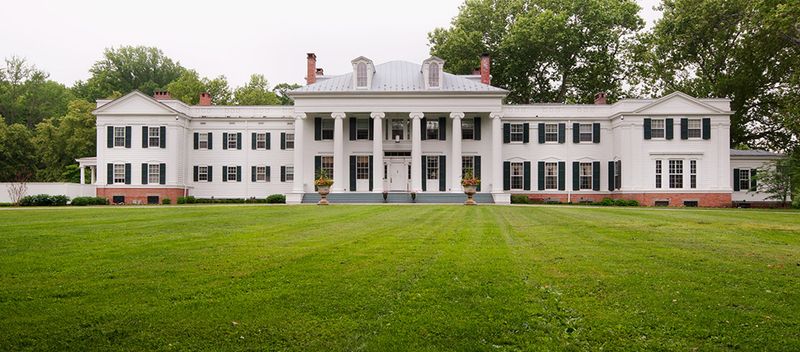
A governor’s residence with a frog pond sounds like something New Jersey would invent just to keep itself from getting too fancy. Drumthwacket is, in fact, the official residence of the Governor of New Jersey, but the estate has more personality than its formal title suggests.
Set on land tied to the 1777 Battle of Princeton, the mansion carries layers of political, architectural, and family history, with three major families shaping its story before it became one of the state’s most recognizable executive residences.
Public tours usually focus on the six rooms used for meetings and receptions, so this is not a wander-anywhere mansion experience.
It is more curated, more ceremonial, and honestly, that is part of the appeal. You are seeing the polished front stage of New Jersey government, but inside a house that still feels rooted in private estate life.
Tours also highlight the art, antiques, and architecture, and when the weather cooperates, visitors may be able to walk through the gardens after the guided portion. Plan ahead, because this is not the kind of place where you simply pull into the driveway on a whim.
The payoff is getting to peek inside a living political landmark that still knows how to charm.
3. Liberty Hall Museum, Union
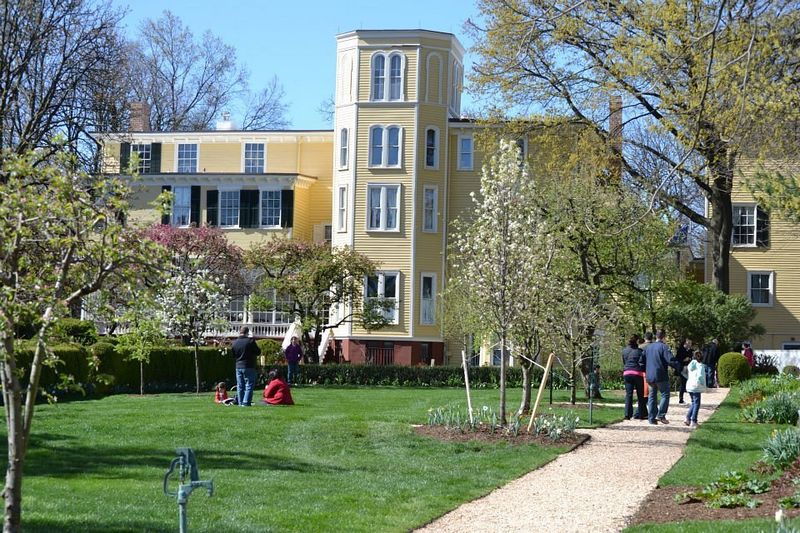
The fun of Liberty Hall is that it refuses to stay in one century. It began as a Georgian-style home connected to William Livingston, New Jersey’s first elected governor and a signer of the United States Constitution, then grew over generations into a much larger Victorian mansion.
That shift alone makes the house feel like a timeline you can walk through, with rooms and collections showing how one family’s life changed as the country around them changed, too.
Located at Kean University in Union, Liberty Hall covers more than 240 years of American history and holds family collections that include furniture, ceramics, textiles, toys, and tools.
The grounds are a major reason it belongs on this list. The museum includes an arboretum and gardens, and the property’s horticultural history has been part of its identity for centuries.
This is a great pick for readers who like their mansion visits with a little breadth: founding-era politics, Victorian domestic life, family heirlooms, and outdoor space all in one stop. It is also practical in a way some grand estates are not.
You are not driving into the middle of nowhere; you are going to a historic site tucked into a modern campus setting, which gives the whole visit a neat past-meets-present contrast.
4. Emlen Physick Estate, Cape May
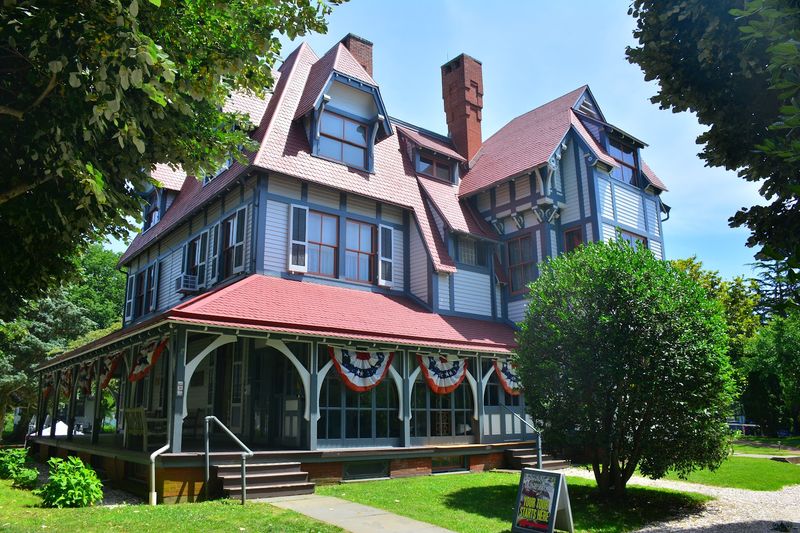
Cape May already looks like it dressed up for the occasion, but the Emlen Physick Estate is one of the places that explains why the town’s historic reputation has teeth.
Built in 1879 for Dr. Emlen Physick, the 18-room mansion is one of Cape May’s signature Victorian landmarks and is closely tied to architect Frank Furness, whose designs were never shy about making a point.
The house is known for its Stick-style architecture, with exterior details that feel more animated than prim: porches, rooflines, chimneys, and woodwork that reward anyone who slows down before walking inside. The estate is not just a pretty house, either.
Its tours lean into Victorian life, decorative arts, customs, and the people who actually lived and worked there, including the Physick family. The grounds and carriage house help make it an easy Cape May stop even for someone who is not usually a house-museum person.
Pair it with a walk around town, but do not treat it like a quick photo op. The best part is seeing how the mansion’s bold architecture matches Cape May’s larger personality: ornate, confident, a little theatrical, and still completely comfortable being the center of attention.
5. Skylands Manor, Ringwood
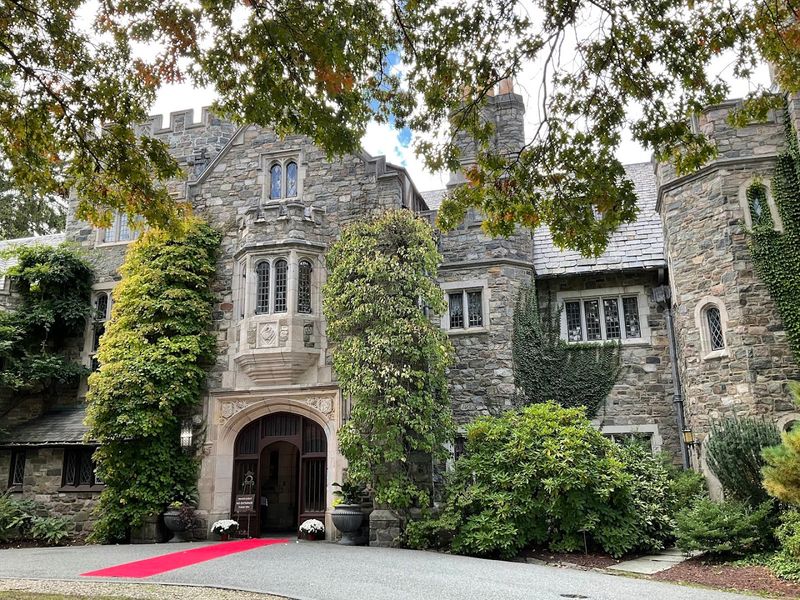
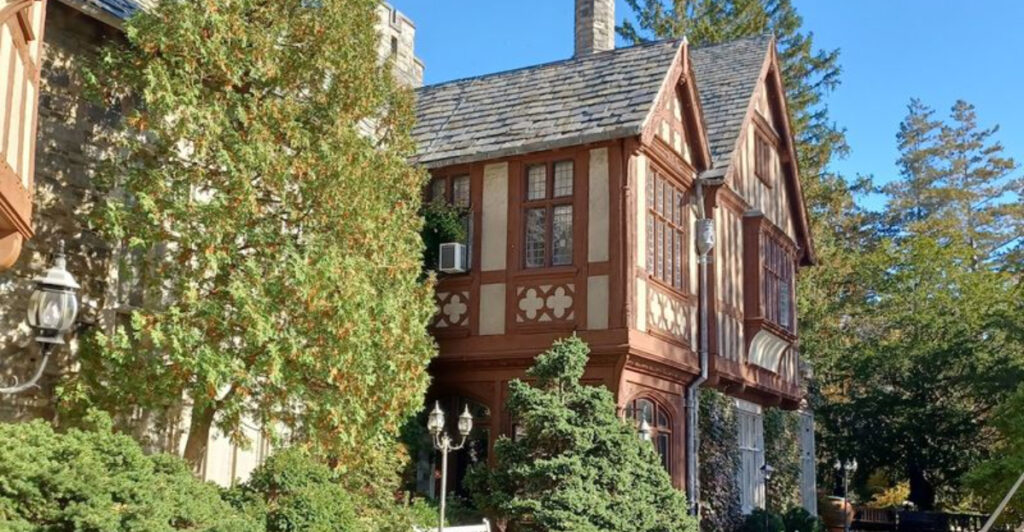
The first thing Skylands Manor does is make northern New Jersey look like it has been hiding an English countryside fantasy in the Ramapo Mountains.
Designed in the late 1920s by architect John Russell Pope for Clarence McKenzie Lewis, the manor is a 44-room Jacobean-style mansion built with native stone and half-timbering.
It anchors the New Jersey State Botanical Garden, which is why a visit here feels less like “tour a mansion, then leave” and more like a full afternoon of wandering. The gardens are the headline for many visitors: formal areas, specialty plantings, ponds, statuary, and enough seasonal change that repeat visits make sense.
The larger botanical garden includes 96 acres within Ringwood State Park, surrounded by extensive woodland and mountain views. Interior tours are more limited than the grounds, with guided tours of the manor’s ground floor offered on selected Sundays, so check the schedule before building your day around going inside.
Still, even if the house is closed, the trip can hold its own. Come for the manor’s story and architecture, but give most of your time to the gardens.
This is one of those places where the mansion and landscape really do feel like they were designed to impress each other.
6. Ringwood Manor, Ringwood
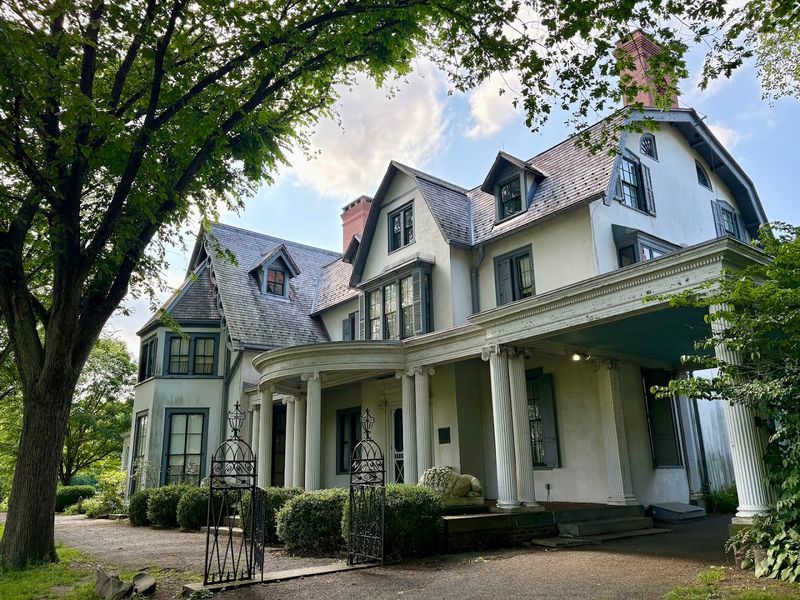
Ringwood Manor has a different kind of glamour than Skylands, even though the two share a state park neighborhood. This one is tied less to botanical fantasy and more to iron, industry, wealth, and a long sweep of New Jersey history.
The manor sits at the heart of Ringwood State Park and is surrounded by historic structures, gardens, landscapes, and extensive collections that tell stories of family life, community, industry, and culture. Its significance stretches far beyond one family portrait over a mantel.
The area drew ironmasters for more than 200 years because of rich magnetite deposits, and by the Gilded Age, Ringwood Manor had become a summer estate for industrial figures including Peter Cooper and Abram S. Hewitt and their families.
Architecturally, it is not a one-note mansion. Additions over time left it with several styles, including Federal, Italianate, Gothic Revival, and Neoclassical elements.
That mix gives it a layered, lived-in quality. One practical note: interior access can change because of restoration work, so check current tour availability before heading out, but do not dismiss the trip if you cannot go inside.
The grounds, carriage barn programming, and surrounding park still make it a strong stop for history lovers who like their estates with a little grit.
7. Dey Mansion, Wayne
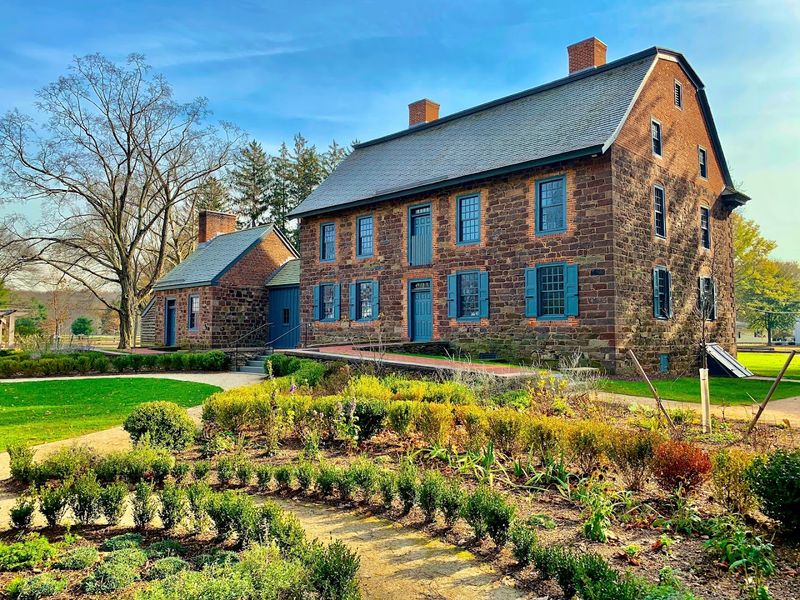
Imagine your houseguest is George Washington, he stays for months, and two centuries later people are still coming by to talk about it. That is the central pull of Dey Mansion in Wayne, which served as Washington’s headquarters during the summer and fall of 1780.
Built around 1770 by Theunis and Hester Dey, the mansion is a strong example of Georgian architecture and remains one of northern New Jersey’s most compelling Revolutionary War sites. The visit is strongest when you think of it not as a fancy mansion tour, but as a headquarters tour.
The house helps make military history feel spatial and practical: rooms where decisions happened, a landscape tied to troop movements, and a domestic setting temporarily pulled into the pressure of war.
The museum’s programming focuses on colonial life, the people of the American Revolution, and preservation, which gives the place more depth than a single “Washington slept here” fact.
Tours typically run on the hour during museum days, and the site is easy to reach at 199 Totowa Road, making it one of the more straightforward mansion-history visits in the region.
Go for the Revolutionary connection, stay for how surprisingly intimate the whole place feels once you picture an army’s business unfolding inside a family home.
8. Kuser Farm Mansion, Hamilton Township
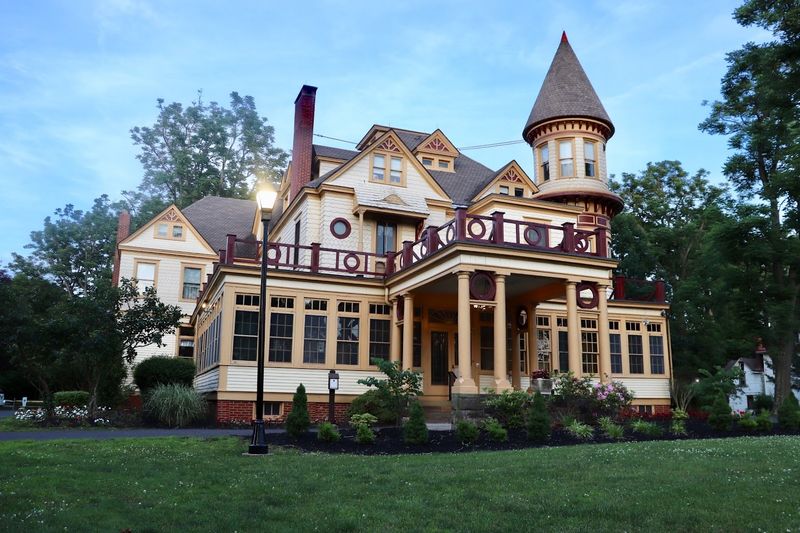
Kuser Farm Mansion is the kind of place that sneaks up on you. From the outside, it gives you Queen Anne country-home charm: turrets, porches, woodwork, and that unmistakable late-19th-century confidence.
Built in 1892, the mansion sits on 22 acres that remain from the Kuser family’s original 70-acre estate in Hamilton Township.
The township purchased the property in 1976 with help from New Jersey’s Green Acres preservation program, and since 1979, the mansion has operated as a house museum with guided tours and community programming.
What makes it especially fun is that it feels less stiff than some grand estates. It has the bones of a wealthy family retreat, but the park setting keeps the mood easygoing.
Visitors come for free mansion tours during the main season, and the property is also known locally for holiday events, including Winter Wonderland Christmas tours.
This is a good mansion for readers who want something historic but approachable, especially if they are traveling with family members who might revolt at a four-hour museum day.
Walk the grounds, take the tour, and look for the domestic details that show how a well-off New Jersey family lived when a “country home” still meant a serious estate.
9. Smithville Mansion, Eastampton
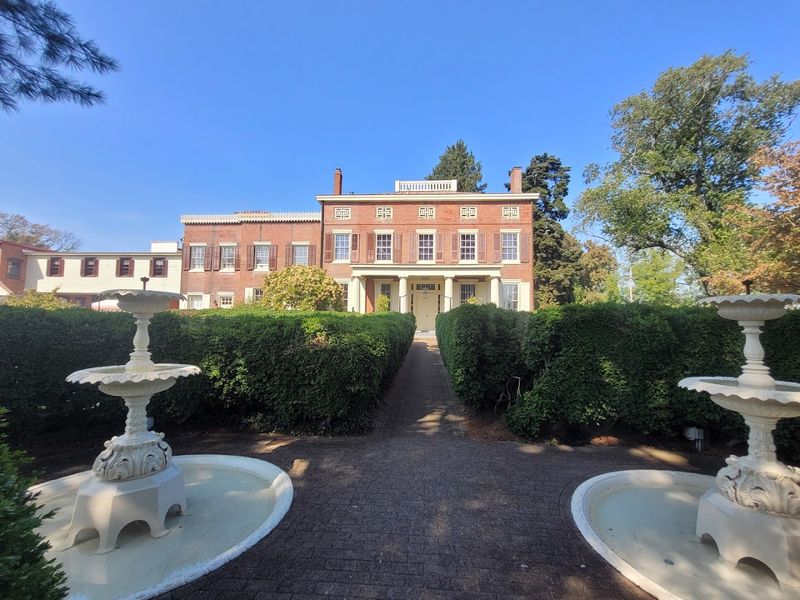
Smithville Mansion comes with a whole village around it, which immediately makes the visit feel bigger than the house itself.
Located within Historic Smithville Park in Eastampton, the mansion is part of the Burlington County Parks system and sits inside a historic district listed on both the National and New Jersey Registers of Historic Places.
The site grew from a small mill operation on Rancocas Creek into a major industrial plant that employed hundreds of workers from the 1860s into the 1920s. That background gives the mansion a different flavor from the purely genteel estates on this list.
This was not just a pretty house in a pretty park. It was tied to invention, labor, manufacturing, and the rise of an industrial village.
The mansion is associated with Hezekiah B. Smith, an industrialist, inventor, and politician, and his wife Agnes, whose own story adds an unexpected layer: she studied medicine and worked as an editor of a national publication.
For a visit, do not rush straight to the mansion and back to the car. The worker’s house, schoolhouse, trails, creekside setting, and preserved village pieces are part of the appeal. Smithville is at its best when you let the whole park explain why the mansion mattered.
10. Batsto Mansion, Hammonton
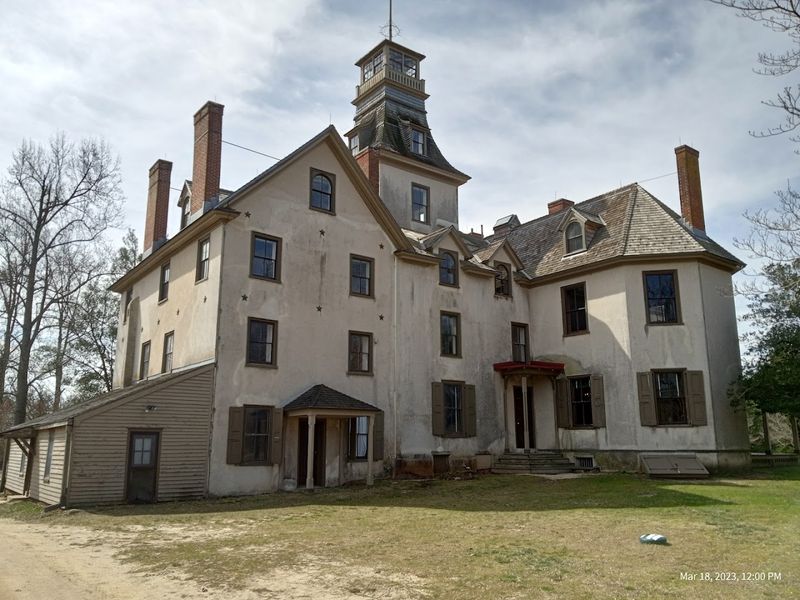
The road into Batsto already feels like a mood shift: pines, sandy soil, and that unmistakable sense that the Pinelands keep their own clock. Batsto Mansion sits at the heart of Batsto Village, a preserved industrial town in Wharton State Forest with roots in iron and glass production.
From 1766 to 1867, the village produced valuable Pine Barrens goods, and it later changed course after Philadelphia industrialist Joseph Wharton purchased the property in 1876. The mansion reflects that industrial prosperity, but the surrounding village is what makes the experience stand out.
You are not just touring a grand house; you are walking past a post office, sawmill, general store, and other structures that make the community’s old working life easier to picture.
Guided mansion tours are usually affordable and relatively short, starting from the porch and lasting under an hour, but space can be limited, so calling ahead is smart if the interior is the main reason for your trip.
Even without a tour, the grounds make Batsto worth the drive. It has a quieter, earthier beauty than the formal garden estates: less clipped hedge, more Pine Barrens atmosphere. That makes it one of the most distinctly New Jersey mansions on the list.
11. Acorn Hall, Morristown
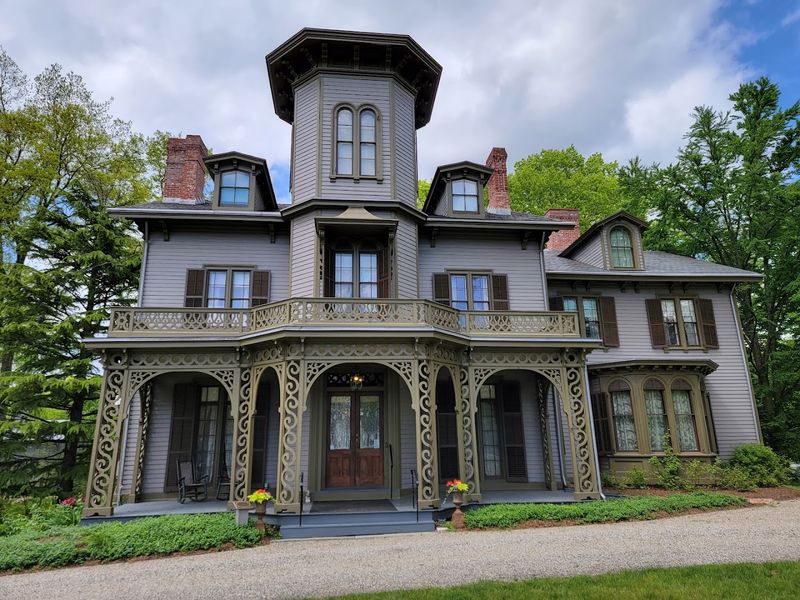
Some mansions impress by being enormous. Acorn Hall impresses by seeming almost stubbornly intact.
Built as a private residence in 1853 and enlarged and remodeled in 1860 in the Victorian Italianate villa style, the Morristown house preserves a detailed picture of upper-middle-class life in the late 19th century.
The rooms are the draw here because so many original furnishings, fabrics, finishes, and decorative arts remain tied to the Crane and Crane-Hone families.
That gives the visit a more personal texture than a mansion filled with random period pieces. You are not just looking at “Victorian things”; you are seeing the material world of specific families who lived in this space over generations.
The museum also hosts local history exhibitions and includes a formal garden, making it a lovely add-on to a Morristown day that might otherwise revolve around Revolutionary War sites.
Acorn Hall is also part of the New Jersey Women’s Heritage Trail, a detail that hints at how much social and domestic history can live inside a single address.
The vibe is quieter than a blockbuster mansion, and that is the point. Come when you want a close-up look at everyday refinement, family continuity, and the kind of preserved interiors that make history feel less distant.
12. Van Vleck House & Gardens, Montclair
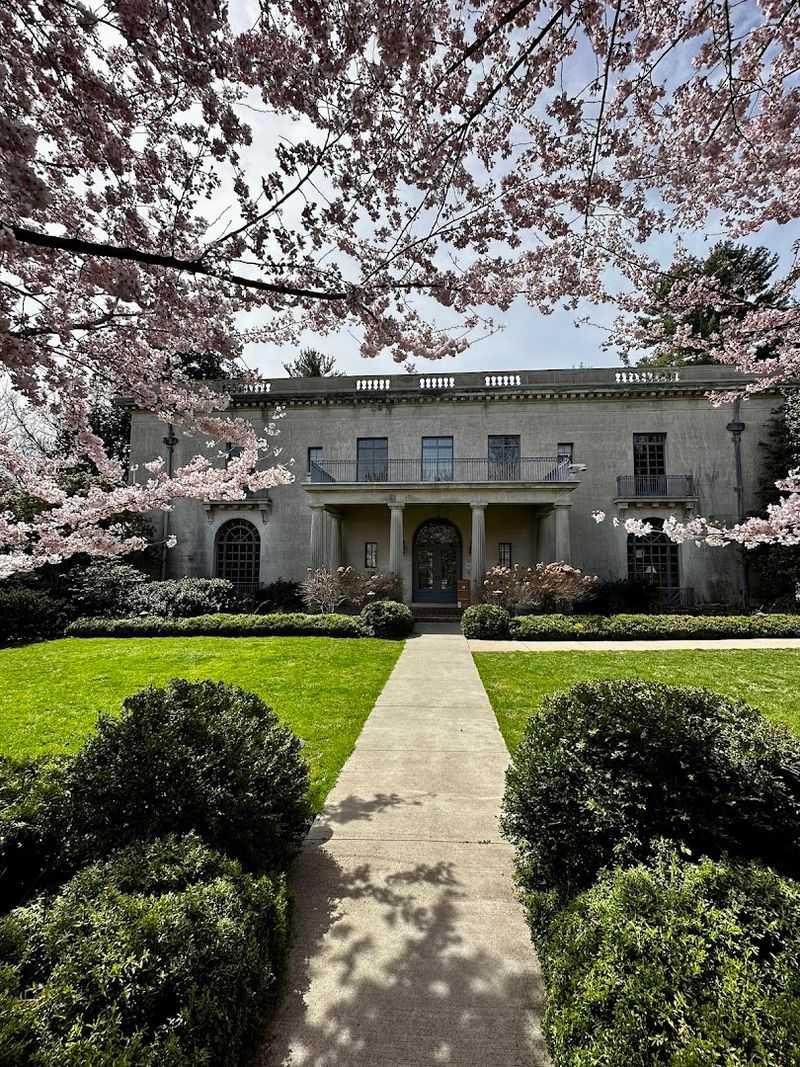
Van Vleck is for the person who says they want to see the mansion, then spends the whole visit staring at the plants. The Montclair estate began as a private family property, and three generations of the Van Vleck family shaped the house and grounds over time.
The current Italianate house was built in 1916 by Joseph Van Vleck, while later family influence helped turn the gardens into the lush public resource they are today.
The gardens are the real star: nearly six acres of formal plantings, arboretum space, rhododendrons, azaleas, and seasonal color that makes the property feel far larger than it is.
This is not the mansion visit to choose if you want a dramatic room-by-room interior tour. It is better understood as a garden estate with a beautiful historic house anchoring the scene.
The setting feels very Montclair in the best way: cultured, leafy, calm, and still woven into neighborhood life. Go during bloom season if you can, but even a quiet off-peak walk has its rewards.
The paths, terraces, and old plantings make it a natural choice for readers who care as much about landscape history as architecture. Van Vleck proves that sometimes the grounds are not the supporting act. They are the reason you came.
13. Macculloch Hall Historical Museum, Morristown
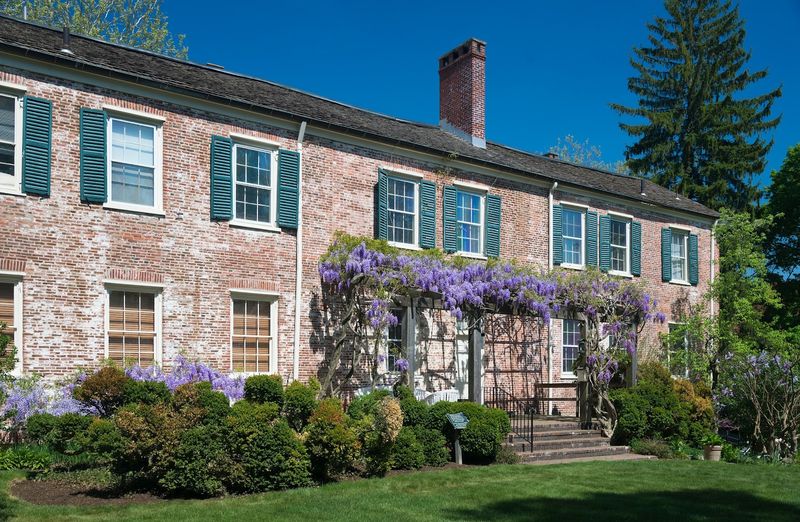
A Morristown mansion with roses, political cartoons, and Morris Canal history is exactly the kind of layered place this list was made for. Macculloch Hall was built beginning in 1810 by George Macculloch on what was originally a 26-acre gentleman’s farm, and Macculloch is closely associated with the creation of the Morris Canal.
The Federal-style brick mansion later became a museum, preserving the history of the Macculloch-Miller families along with fine and decorative arts, family archives, and a major collection of work by political cartoonist Thomas Nast.
That Nast collection gives the museum a sharp, unexpected edge; this is not just wallpaper, silver, and portraits.
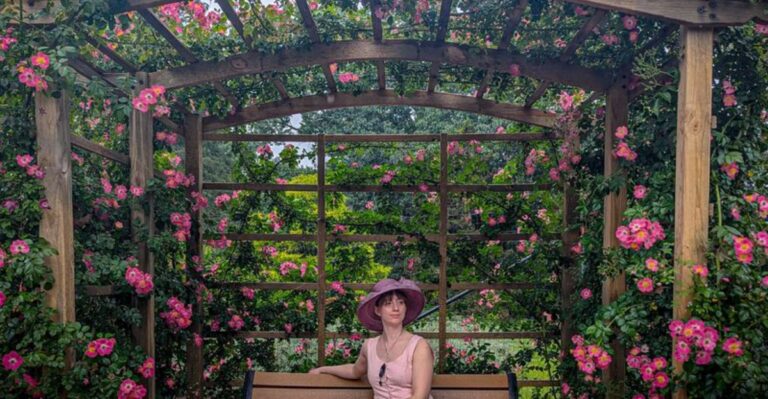
Outside, the gardens are a major reason to visit, especially from spring into early summer. The garden story stretches back to 1810, and today’s seasonal plantings include daffodils, wisteria, roses, and perennials, with the gardens generally open free daily from morning to dusk.
The museum itself has more limited hours, so plan ahead if you want to go inside. Still, even a garden-only stop feels worthwhile.
Macculloch Hall is intimate, smart, and a little surprising — a mansion where beauty and civic history keep bumping into each other in the best possible way.
Share this story