A kayak slips away from the gravelly edge of Lake Aeroflex, and within a few paddle strokes, the ordinary sounds of North Jersey start falling away. The water darkens beneath the boat, the wooded shoreline closes around it, and a tiny airplane may suddenly skim overhead before disappearing beyond the trees.
This is Kittatinny Valley State Park, a sprawling Sussex County escape that somehow remains easy to overlook. Hidden just off Route 206 near Newton, the park brings together deep glacial water, wildflower meadows, rocky forest trails, old railroad corridors, and an airport run by the New Jersey Forest Fire Service.
Its headline attraction is Lake Aeroflex, the deepest natural lake in the state, but the best reason to linger is the park’s unhurried rhythm. Even on a pleasant weekend, it is possible to find a quiet trail, an empty stretch of shoreline, or a bench where the only commotion comes from frogs, birds, and leaves shifting overhead.
Kittatinny Valley State Park hides more than 5,000 acres of quiet Sussex County wilderness
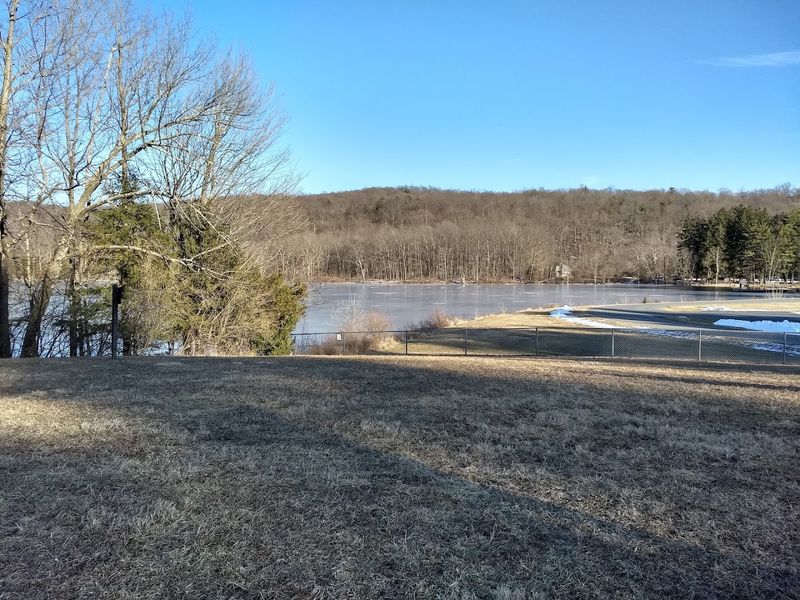
At 5,656 acres, this is no pocket-size patch of greenery squeezed between subdivisions. Kittatinny Valley State Park spreads across a broad piece of central Sussex County near Andover and Newton, protecting forests, wetlands, meadows, limestone outcroppings, lakes, and the headwaters of the Pequest River.
Yet its entrances can feel surprisingly modest. Turn off busy Route 206 toward Goodale Road, and the change happens quickly: traffic noise fades, tall grasses appear beside the road, and wooded hills begin blocking the outside world.
The park was formally dedicated in 1994 after its land was acquired through New Jersey’s Green Acres Program. Its name traces back to a Lenape word commonly translated as “great mountain” or “endless hill,” a fitting reference to the long Kittatinny ridge running across northwestern New Jersey.
Unlike parks organized around one major viewpoint or crowded recreation area, Kittatinny Valley feels scattered in the best possible way. The visitor center, lakes, trailheads, airport, fishing areas, and rail trails occupy different corners, so visitors naturally spread out rather than gathering in one packed hub.
That layout creates the sense that the park is much farther from civilization than it really is. One moment brings a broad meadow humming with insects; the next leads into a dim hemlock stand or along a wetland where beavers have been busy.
The main visitor center at 199 Goodale Road provides a useful starting point, but the park rewards anyone willing to study the map and explore beyond the first parking lot.
Some of its most peaceful spaces sit along short side trails, old farm lanes, and lake edges that receive only a fraction of the traffic found at better-known Sussex County destinations.
Lake Aeroflex brings paddlers to New Jersey’s deepest natural lake
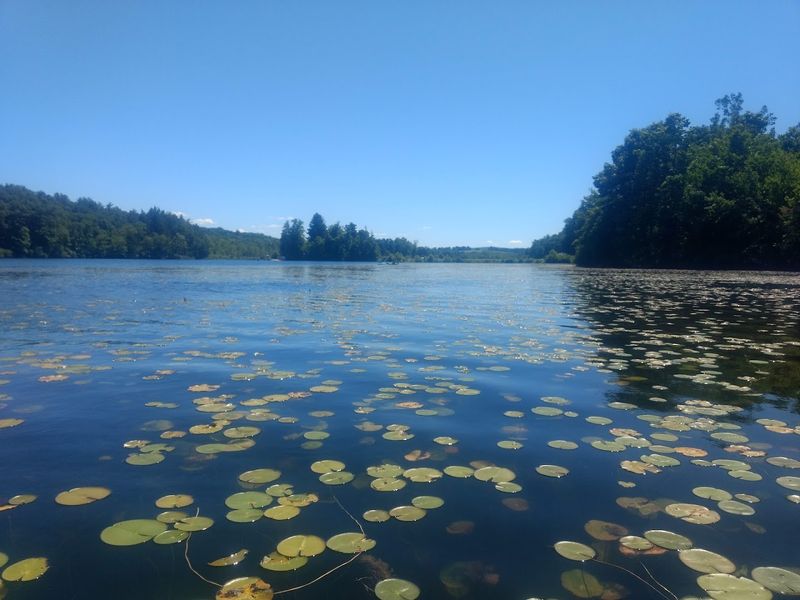
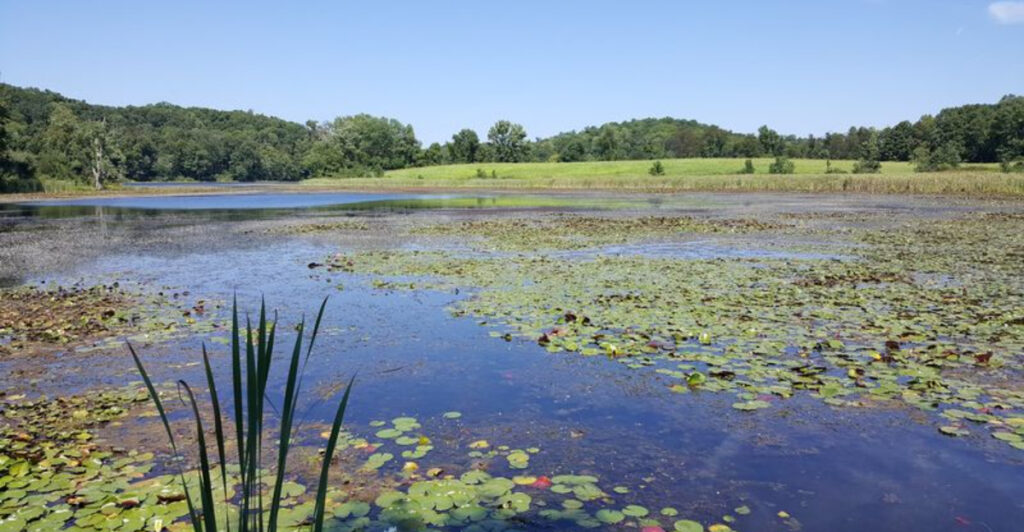
From the surface, Lake Aeroflex looks calm and approachable, a long ribbon of water framed by thick woods. Underneath, however, the bottom drops to roughly 110 feet, making it New Jersey’s deepest natural lake.
Also known as New Wawayanda Lake, the 119-acre lake has the cold, well-oxygenated depths needed to support fish that could not survive year-round in many shallower waters around the state. That hidden depth gives every paddle a slight sense of mystery.
Kayakers and canoeists can launch from the Limecrest Road side of the park, then follow the irregular shoreline past pockets of lily pads, overhanging branches, and quiet coves. Because the lake lacks the busy marina atmosphere found at larger recreation areas, the experience tends to stay refreshingly low-key.
A few anglers may be working the deeper water, while turtles disappear from logs and kingfishers dart between trees. The lake is designated as a holdover trout lake, meaning its colder layers can sustain trout through the summer.
New Jersey Fish and Wildlife stocks it with brown and rainbow trout, and Lake Aeroflex is also among the small number of state waters stocked with landlocked salmon.
Those fish make the lake especially intriguing for serious freshwater anglers, though anyone fishing for trout or salmon needs the appropriate New Jersey license and trout stamp and should check current seasonal rules.
Paddlers do not need to chase fish to appreciate what makes Aeroflex special. Move toward the quieter northern stretches, pause the paddle, and the boat may drift almost silently beneath forested slopes.
Then comes the park’s signature surprise: the distant hum of an engine, followed by a small aircraft rising above the trees from the neighboring runway. It is an odd combination, but somehow the lake remains peaceful.
Four glacial lakes offer peaceful places to kayak fish and slow down
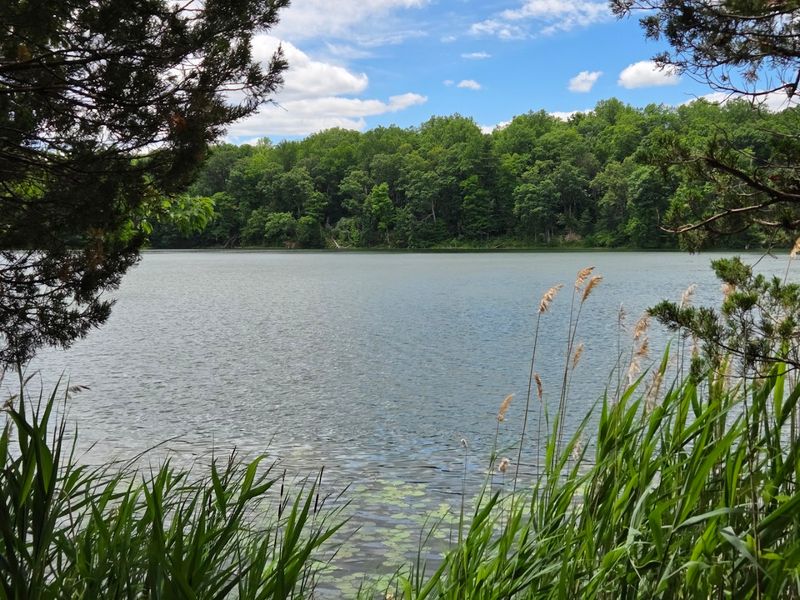
Locals who know the park well do not stop at Aeroflex. Kittatinny Valley contains four principal lakes and ponds, each with its own access, mood, and reason to bring along a fishing rod or small boat.
Lake Aeroflex is the largest and most dramatic, but Gardner’s Pond, Twin Lakes, and White’s Pond give visitors room to find quieter water. Gardner’s Pond covers about 39 acres on the opposite side of the airport from Aeroflex.
Reaching it is part of the experience: visitors approach on foot through the small-plane parking area, while canoes and lightweight boats must be carried by hand or moved on a small cart to the shore. That extra effort filters out casual crowds, leaving a peaceful pond bordered by woods and wetlands.
Twin Lakes, a roughly 29-acre waterbody off Goodale Road, is easier for paddlers carrying car-top boats. Shoreline access also makes it a practical choice for anglers who would rather settle into one spot than spend the day casting from a kayak.
White’s Pond feels even more tucked away, reached from Goodale Road or the Sussex Branch Trail and reserved for shoreline fishing rather than boat launching. Together, these waters reveal why Kittatinny Valley rarely feels repetitive.
A morning can begin with a broad-water paddle on Aeroflex, continue with a woodland walk to Gardner’s Pond, and end beside the reeds at White’s Pond without leaving the park. Fishing opportunities vary among the lakes, but trout, salmon, bass, pickerel, and panfish all contribute to the park’s reputation as a serious freshwater destination.
Ice fishing may also be allowed when winter conditions are safe, though ice thickness and park advisories always deserve careful attention. There are no beach crowds, concession stands, or booming speakers here.
The entertainment is simpler: the splash of a fish, the dip of a paddle, and the occasional ripple spreading across otherwise still water.
Forest paths and abandoned railroad beds make it easy to disappear into nature
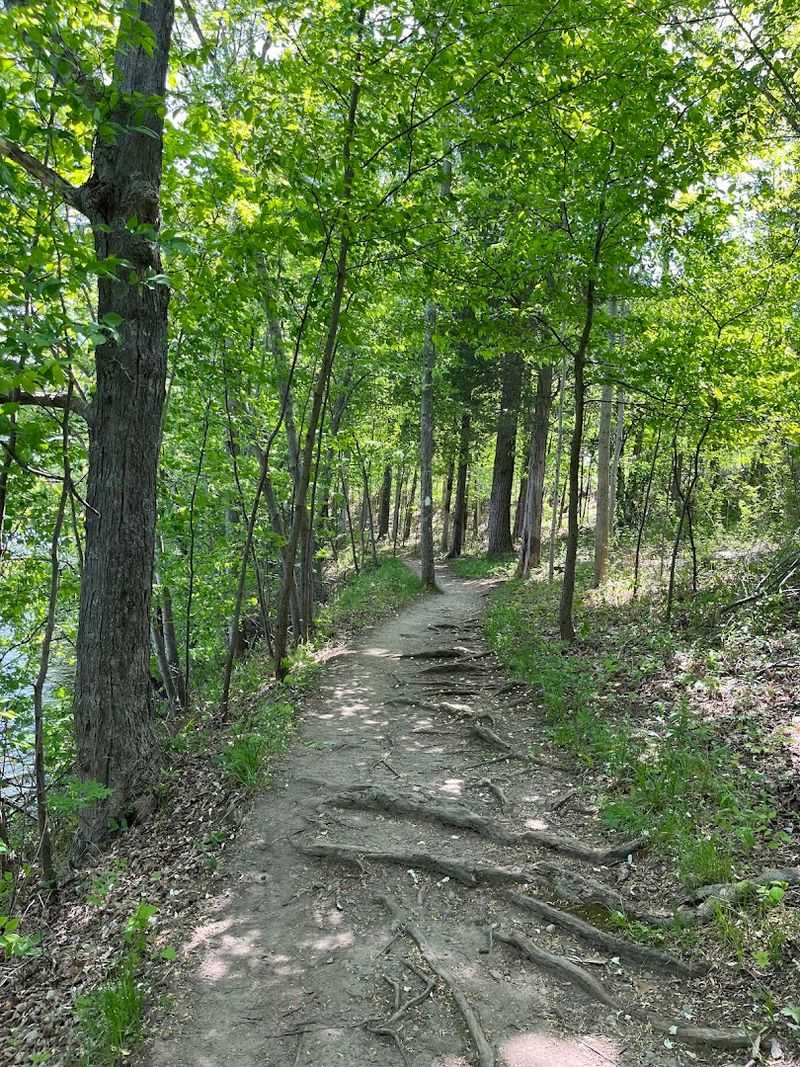
Eleven official trails weave through the park’s core, providing more than 15 miles of hiking and connections to a much larger regional network. That variety matters because Kittatinny Valley is not limited to one type of walk.
The half-mile Vernal Trail offers a quick woodland outing, while the 0.8-mile Hemlock Trail slips through cooler, shaded terrain. The 1.2-mile Limestone Trail highlights the rocky geology beneath the forest, and the 2.6-mile Glacial Trail provides a longer look at the landscape shaped by ice and water.
Hikers looking for more mileage can tackle the 6.8-mile Andover Loop, while mountain bikers gravitate toward the park’s narrower, more technical routes with roots, stones, ledges, and natural obstacles. The biggest change of pace comes on the old railroad corridors.
The Sussex Branch Trail runs for about 20 miles overall, passing directly through Kittatinny Valley on a generally level cinder surface suited to walking, cycling, horseback riding, cross-country skiing, and other nonmotorized use. Its gentle grade is no accident.
Trains once traveled this route, and remnants of its working past remain in rock cuts, raised embankments, old bridge sites, and passages that once allowed livestock or farm equipment beneath the tracks.
The park’s rail-trail story is linked to lines formerly operated by the Delaware, Lackawanna and Western Railroad and the New York, Susquehanna and Western Railroad.
Today, the sound of locomotives has been replaced by bicycle tires crunching over gravel and songbirds calling from the brush. Connections to the Paulinskill Valley, Great Valley, and Lehigh and Hudson River rail trails open the door to much longer adventures beyond the park’s immediate boundaries.
Still, there is no need to turn the visit into an endurance challenge. A slow walk from the visitor center through meadow, forest, and wetland can reveal limestone ledges, old stonework, frog-filled pools, and enough unmarked-looking side scenery to make an ordinary afternoon feel like an expedition.
Aeroflex-Andover Airport gives this secluded park an unexpected twist
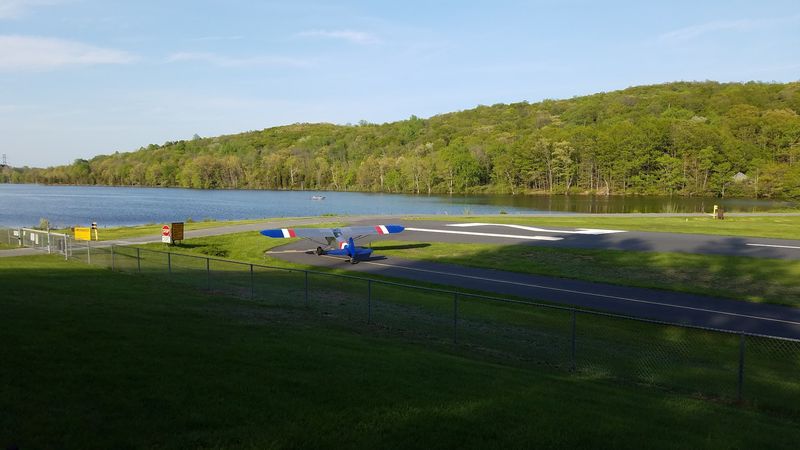
First comes the engine noise, faint enough to be mistaken for a lawn mower somewhere beyond the woods. Seconds later, a small plane appears above Lake Aeroflex and drops toward a runway hidden inside the state park.
Aeroflex-Andover Airport is one of Kittatinny Valley’s strangest and most memorable features, and it turns an otherwise classic woodland landscape into something found nowhere else in New Jersey’s park system.
The airport’s roots stretch back to 1957, when Frederick Hussey II, owner of the Aeroflex Corporation, constructed the runway and related facilities on family property.
The state acquired the airport in the mid-1990s, and it is now operated by the New Jersey Forest Fire Service. Aeroflex-Andover is a non-towered general aviation airport rather than a commercial terminal, so there are no security lines, baggage carousels, or passenger jets roaring over the picnic tables.
The aircraft are smaller, and many are used for private flying, training, maintenance, or state operations. More than 50 private aircraft are based at the facility, which also offers fuel, hangar storage, tie-down space, and flight instruction.
Its most important role becomes clearer during wildfire season, when the Forest Fire Service can use the site as a northern base for aerial fire detection and suppression work. For visitors, the runway adds movement without overwhelming the park.
Hikers may glimpse planes through breaks in the trees, paddlers can watch them cross above the lake, and families sometimes pause near the airport side simply to see what takes off next.
The combination sounds mismatched on paper—deep lake, quiet forest, working airfield—but it has been part of this landscape for decades.
Rather than spoiling the secluded atmosphere, the occasional plane becomes another small event in a park where very little feels predictable.
Wildflower meadows, quiet woods, and abundant wildlife complete the sanctuary-like escape
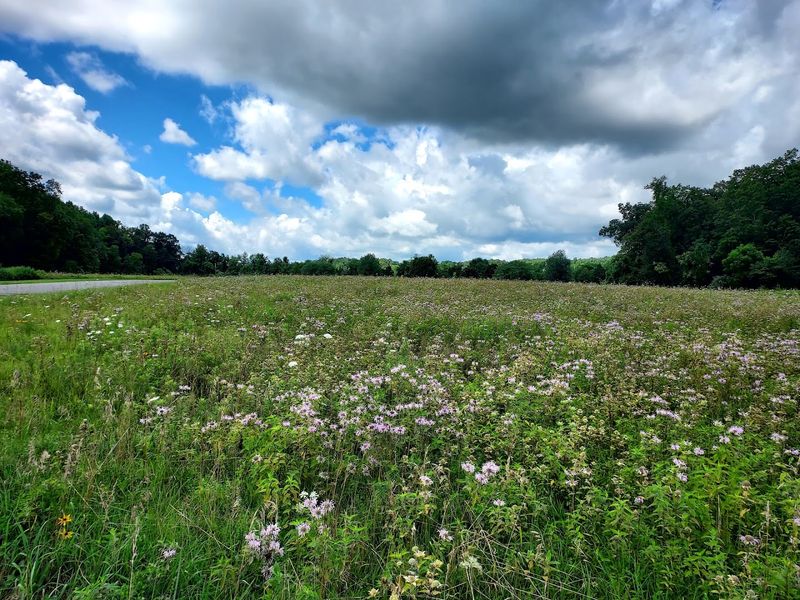
Summer brings black-eyed Susans and wild bergamot to the open fields, while butterflies move between native plants near the visitor center’s butterfly and hummingbird garden. By autumn, those meadows turn tawny and the surrounding maples brighten, giving the park an entirely different personality.
The mixture of open grassland, wetlands, mature forest, ponds, and rocky terrain creates habitat for an unusually broad collection of wildlife.
More than 200 bird species have been recorded in and around Kittatinny Valley, including water-loving birds, woodland songbirds, hawks, sandpipers, egrets, and the quick-moving kingfishers often spotted near the lakes.
Beavers and muskrats work the wetter corners, while foxes, bobcats, white-tailed deer, and black bears travel through the larger forested areas. Bear sightings are not guaranteed, of course, but this is still North Jersey bear country, so food should be secured and wildlife given plenty of room.
The park’s smaller residents often provide the better show anyway. Frogs call from vernal pools, dragonflies patrol sunny openings, turtles line up on half-submerged logs, and ruby-throated hummingbirds sometimes flash through the garden behind the historic visitor center.
What makes these encounters memorable is the lack of competition for attention. There are no amusement rides, crowded boardwalks, or elaborate attractions pulling visitors from one stop to the next.
A fallen tree beside a pond can become a half-hour wildlife-watching post. A patch of flowers can hold monarchs, swallowtails, and bees moving in different directions.
Even the park’s developed areas retain a lightly touched quality, as though the trails and old roads were threaded through the landscape rather than stamped on top of it.
Kittatinny Valley’s deepest lake may earn the headline, but its real character appears in these quieter moments, when the forest settles, the water stops moving, and 5,656 acres briefly seem to belong to nobody else.