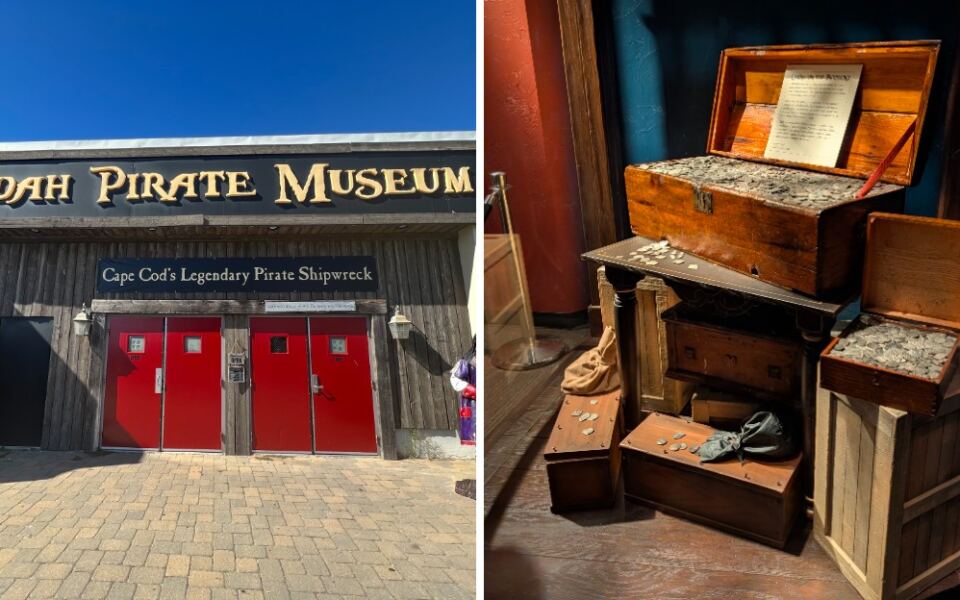
Somewhere on Cape Cod, you can actually touch real pirate treasure pulled from the ocean. Not a replica, not a movie prop, but genuine pieces recovered from a shipwreck dating back to 1717.
The wreck sat hidden off the Massachusetts coast for more than 260 years before divers found it in 1984. Even now, the story is not finished, because artifacts are still being recovered from the sand.
That is the part I find especially fascinating. You can walk through a full-size ship recreation, then look into a working lab where crusty objects from the seafloor slowly reveal coins, tools, and other pieces of the past.
For a rainy day on Cape Cod, this feels like a pretty good trade for the beach. One minute you are driving along an ordinary road, and the next you are standing beside treasure that spent centuries underwater.
The Only Pirate Treasure Of Its Kind Is Sitting Right Here
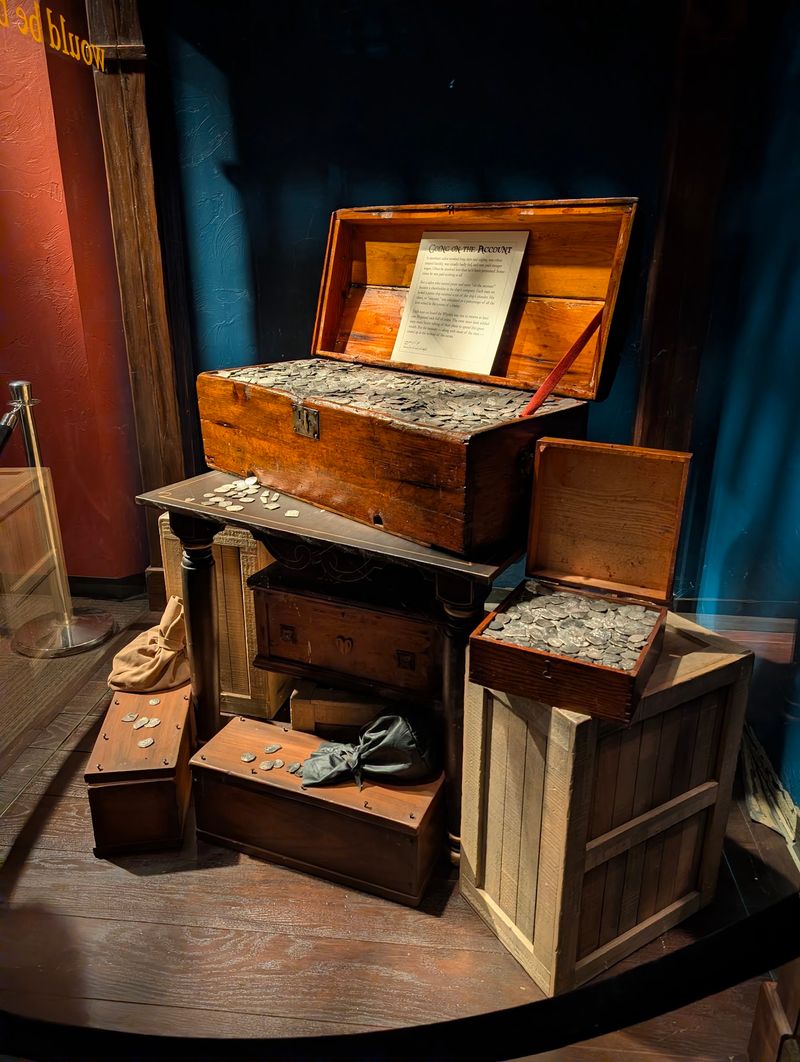
Most pirate treasure lives in movies, bedtime stories, and very questionable maps. At the Whydah Pirate Museum, the loot is real, and it came straight off the bottom of the Atlantic.
Every artifact here traces back to one ship, the Whydah Gally. That focus makes the whole place feel like a single, gripping story instead of a random pile of old stuff.
The Whydah is often called the world’s only fully authenticated pirate shipwreck. In other words, experts know exactly whose ship this was and who sailed it.
So the coins, cannons, and everyday gear in the cases aren’t guesses or stand-ins. They belonged to an actual pirate crew from the early 1700s.
Some finds might catch you off guard. Bits of fabric and wood survived centuries underwater, right beside the shinier stuff.
My advice is to slow down and read the signs. The small details are where the pirate world really comes alive.
Kids get the treasure thrill. Adults get the history, and nobody leaves feeling cheated.
Massachusetts has plenty of historic sites, but few come with a pirate crew attached. That alone earns this stop a spot on your Cape Cod list.
Black Sam Bellamy Was Basically A Pirate Celebrity
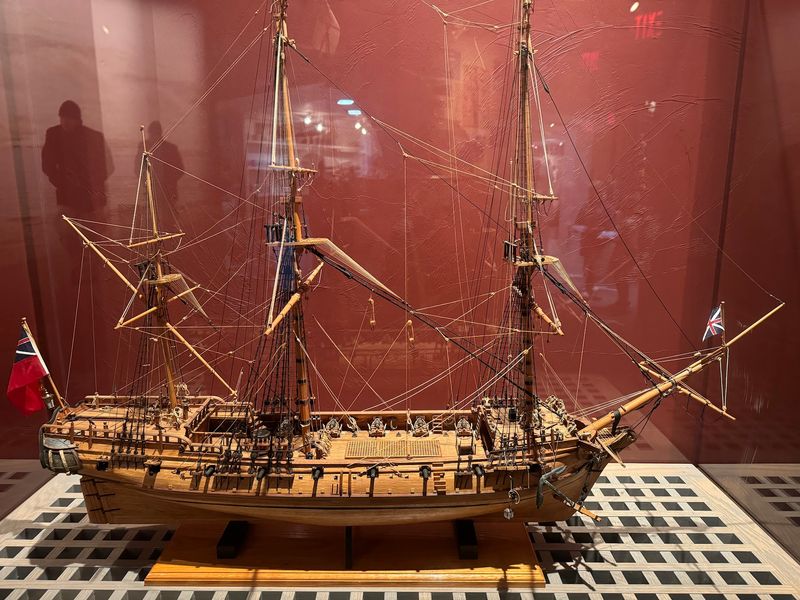
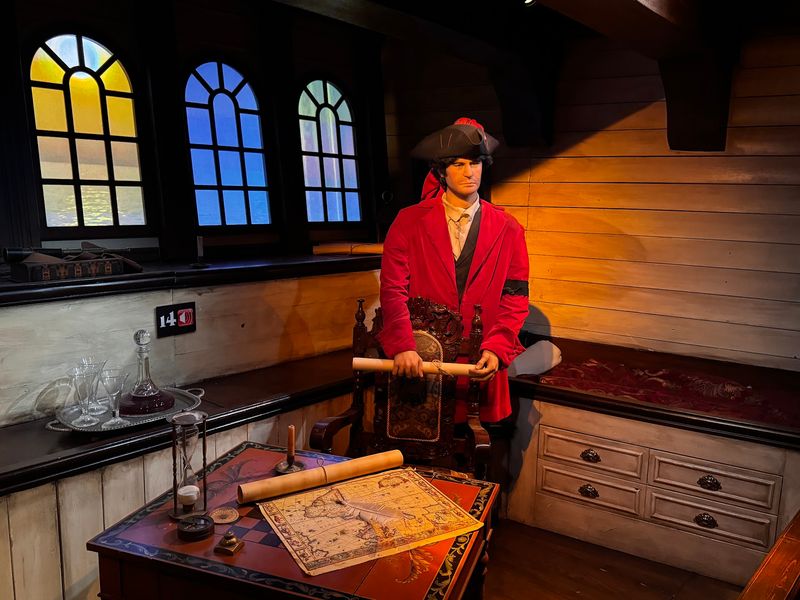
Samuel Bellamy was only in his late twenties when he became one of the richest pirates on record. People called him Black Sam, reportedly because he skipped the powdered wig and wore his dark hair tied back.
His pirate career lasted roughly a year. Yet in that short stretch, his crew captured more than 50 ships.
Bellamy liked to paint himself as a kind of Robin Hood of the sea. He reportedly saw wealthy merchants as the true villains, which makes for a pretty bold sales pitch.
The museum digs into how ordinary sailors ended up flying a pirate flag. Low pay, harsh captains, and rough conditions pushed many of them toward a life of plunder.
You also learn how pirate crews ran things. Many voted on decisions and split their takings by agreed-upon shares, which sounds surprisingly organized for outlaws.
I like that the story treats these men as real people rather than cartoon villains. That makes the artifacts later on hit much harder.
Keep Bellamy’s name in mind as you go. He shows up again and again, like the lead character in a very salty novel.
The Ship Had A Darker Past Before The Pirates Took Over
Before it ever flew a pirate flag, the Whydah was built in London as a slave ship. It was named after Ouidah, a busy slave-trading port in West Africa.
In early 1717, the ship was finishing a voyage that had carried enslaved Africans to the Caribbean. Bellamy’s crew captured it near the Bahamas and made it their flagship.
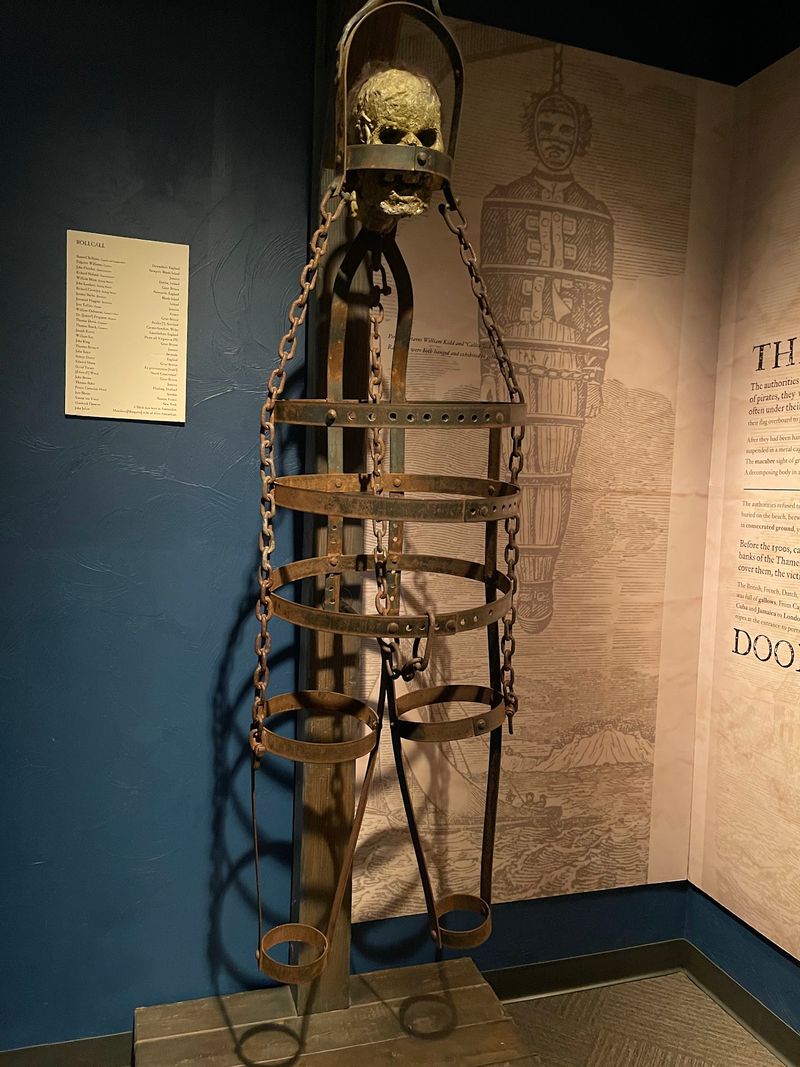
The museum doesn’t sugarcoat this part of the story. Displays address the slave trade directly, which gives the treasure a heavier and more honest context.
Pirate crews of that era sometimes included men of African descent. Bellamy’s crew did too, adding another layer to the story.
For older kids, this section can spark real conversations on the drive home. Parents of younger children might want to read ahead and steer the talk.
I appreciate a museum that trusts visitors with the full truth. The swashbuckling fun lands better when it sits on solid, honest history.
That balance is a big reason the Whydah story feels so meaningful today. It’s adventure and accountability in the same building.
Take a moment here before rushing to the gold. The story you just read explains where much of it came from.
A Bell From The Seafloor Solved A 268-Year Mystery
A fierce nor’easter slammed into the Whydah off Cape Cod on April 26, 1717. The ship broke apart near present-day Wellfleet, and its treasure scattered into the shifting sand.
For centuries, the wreck was more legend than fact. Treasure hunters talked about it, but nobody could pin down where it actually rested.
Then came explorer Barry Clifford, who located the wreck in 1984. His team relied on old records, including a map by a colonial salvager sent to recover the loot.
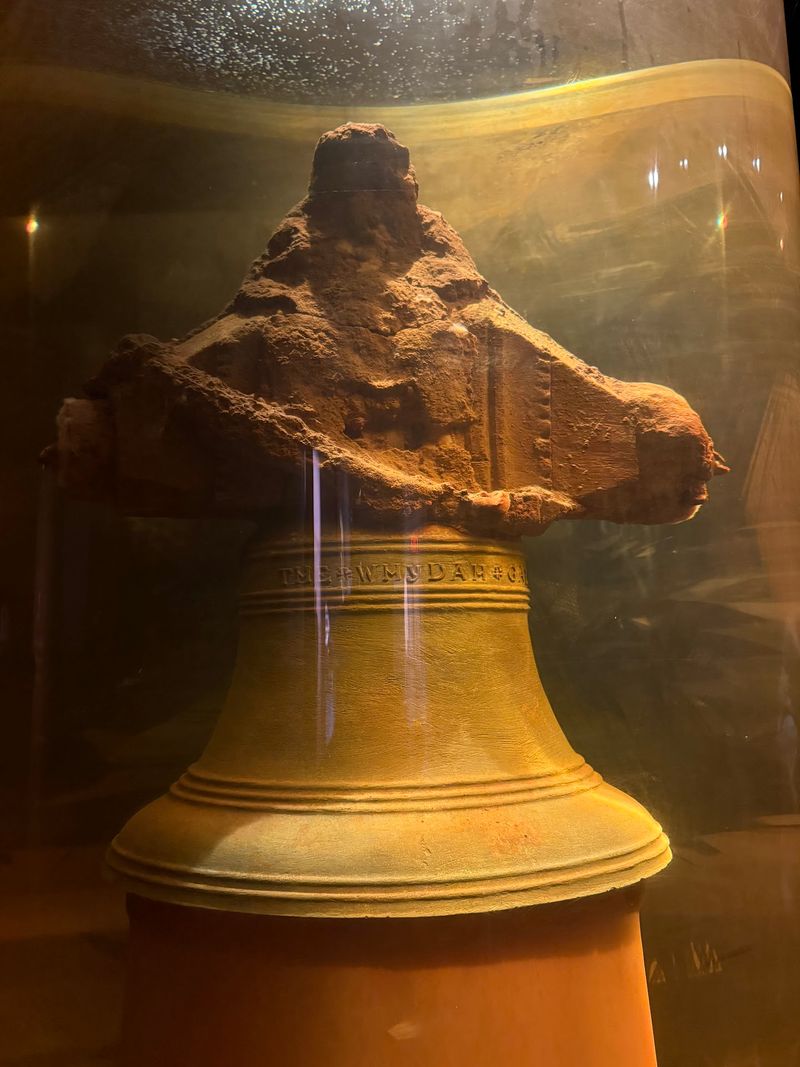
The real proof showed up in 1985. Divers raised the ship’s bell, inscribed with the words The Whydah Gally 1716.
That bell settled the debate for good. Suddenly, Massachusetts had a confirmed pirate shipwreck with a name, a captain, and a crew.
I can’t imagine the excitement of reading that inscription after it spent centuries underwater. Talk about a mic drop from the ocean floor.
The museum walks you through the search step by step. It’s part history lesson and part detective story, and both halves are a blast.
Watch for maps and timelines along the way. They help you track how a rumor became one of history’s great finds.
You Get To Climb Aboard A Full-Size Pirate Ship
Your visit starts with a short film, and skipping it would be a rookie mistake. It sets up the Whydah story and the wider world of pirates before you see a single artifact.
From there, the museum follows one path from room to room. You can’t really get lost, which is great news for anyone traveling with wandering kids.
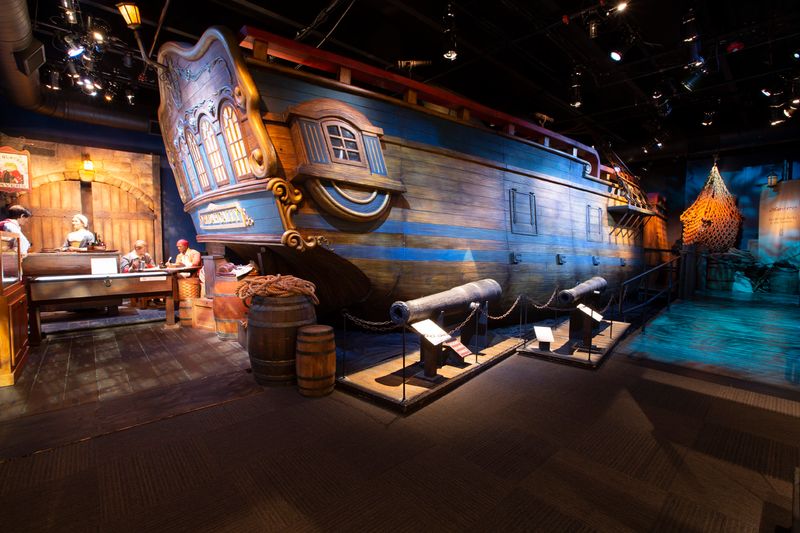
The real showstopper is a full-size recreation of part of the ship. You can step aboard and stand on the deck yourself.
Lifelike pirate figures pose around the ship in different roles. Some are working, some are lounging, and all of them look like they’d swipe your snacks.
The lighting is dim to match the seafaring mood. Most kids will love the drama, though very young or sensitive ones might want a hand to hold.
I like how the design pulls you forward like chapters in a book. Each room builds on the last, so the story never stalls.
Give yourself time to linger on deck. It’s the closest most of us will ever get to a working pirate ship, and that’s probably for the best.
Go Ahead, Touch The Treasure (But Leave The Camera Alone)
Go ahead and touch it. Yes, really, the museum has a spot where you can place your hand on genuine pirate treasure.
Silver coins from the Whydah, often called pieces of eight, were Spanish money in Bellamy’s time. Holding history that old feels a little like breaking a rule, except it’s totally allowed.
Cannons and other heavy gear from the ship are on display too. Seeing their size up close makes pirate life feel much less glamorous and much more real.
Now for the rule you can’t break. Photography isn’t allowed in most of the museum, with only a few marked spots open for pictures.
That might sound frustrating at first. In practice, it keeps people looking at the artifacts instead of their screens.
I believe the no-photo policy makes the experience feel more special. You’ll remember the treasure because you actually looked at it.
Save your camera for the approved areas and the gift shop. Your phone gets a break, and your brain gets the good stuff.
Families with little ones should point out the touch spot early. It’s a great reward for small explorers who’ve been patient.
Those Lumpy Rocks Are Hiding Something Shiny
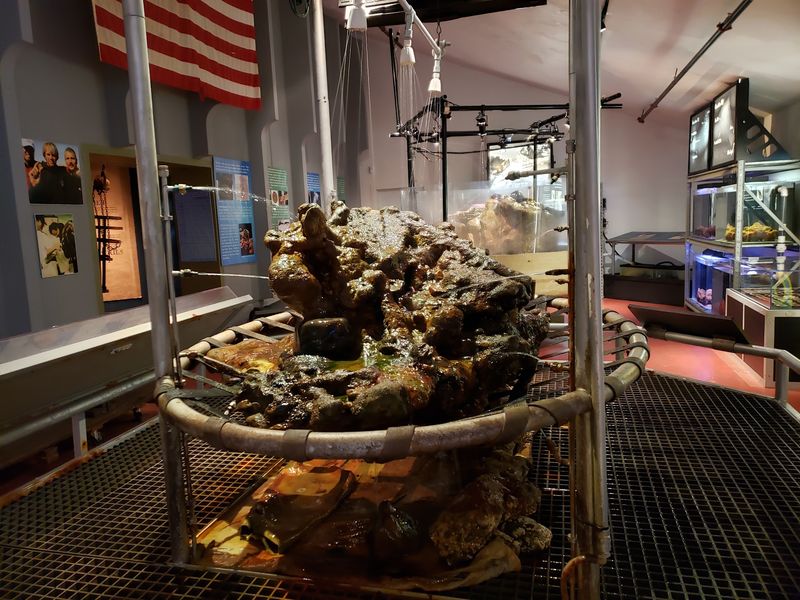
Some of the Whydah’s treasure still looks like a lumpy gray rock. Those lumps are called concretions, and they form when sand, shells, and minerals harden around metal objects underwater.
The museum’s lab area shows how scientists open them up. Coins, tools, and other objects can hide inside, waiting for careful hands to free them.
Archaeologists use X-rays to peek inside before they start chipping. It’s a slow process that can take a very long time for a single piece.
The excavation of the Whydah is still going on. New items keep coming up from the wreck site, so the lab display changes over time.
That’s a big reason some people return for another look. The treasure story isn’t finished, and you get a front-row seat to the next chapter.
I like this part because it shows the patience behind the sparkle. Real treasure hunting involves less swinging from ropes and more tiny tools.
Curious kids may leave wanting to become marine archaeologists. Honestly, that’s a better career dream than pirate, and the dental plan is probably better.
Ask questions if staff are nearby. The people here clearly love this stuff.
Plan Your Raid Before You Set Sail
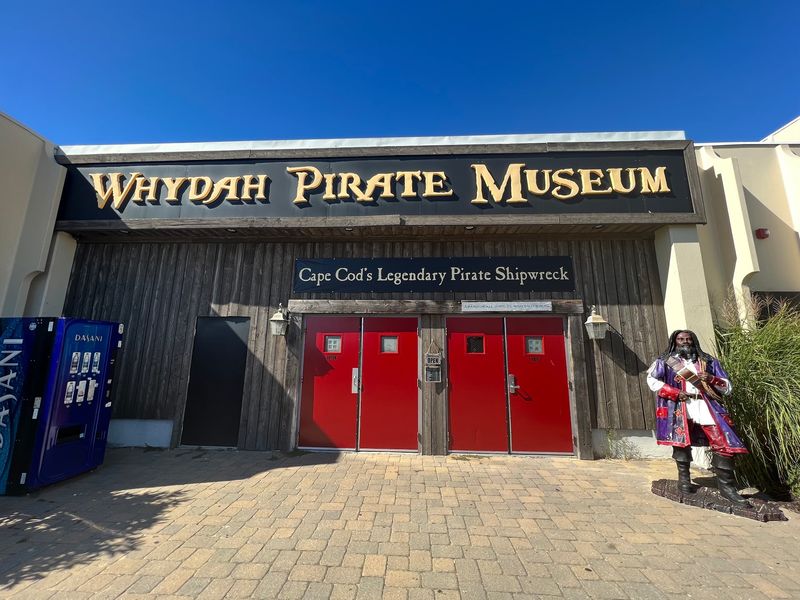
Finding your way to the treasure is easier than following any pirate map. The Whydah Pirate Museum sits at 674 MA-28, West Yarmouth, MA 02673, right along a main road on the Cape.
Hours run 10 AM to 4 PM, Thursday through Sunday. The museum is closed Monday through Wednesday, so plan your week accordingly.
Most visitors can see everything in about an hour to an hour and a half. Anyone who studies every sign may want a little extra time.
Ask about the audio guide when you buy tickets. It costs extra, but it adds a lot more story to each exhibit.
Free parking is available on site, and restrooms are inside. The layout is accessible, and small strollers can roll through without trouble.
Food and drinks aren’t allowed in the exhibit areas. Eat before you go, or grab a bite nearby afterward.
You can book tickets online or simply stop in. Booking ahead saves a step on a packed vacation day.
A gray afternoon on the Cape is the perfect excuse. Massachusetts weather can change fast, and pirates never minded a little gloom.
Save Some Energy For Knots, Books, And Pirate Loot Of Your Own
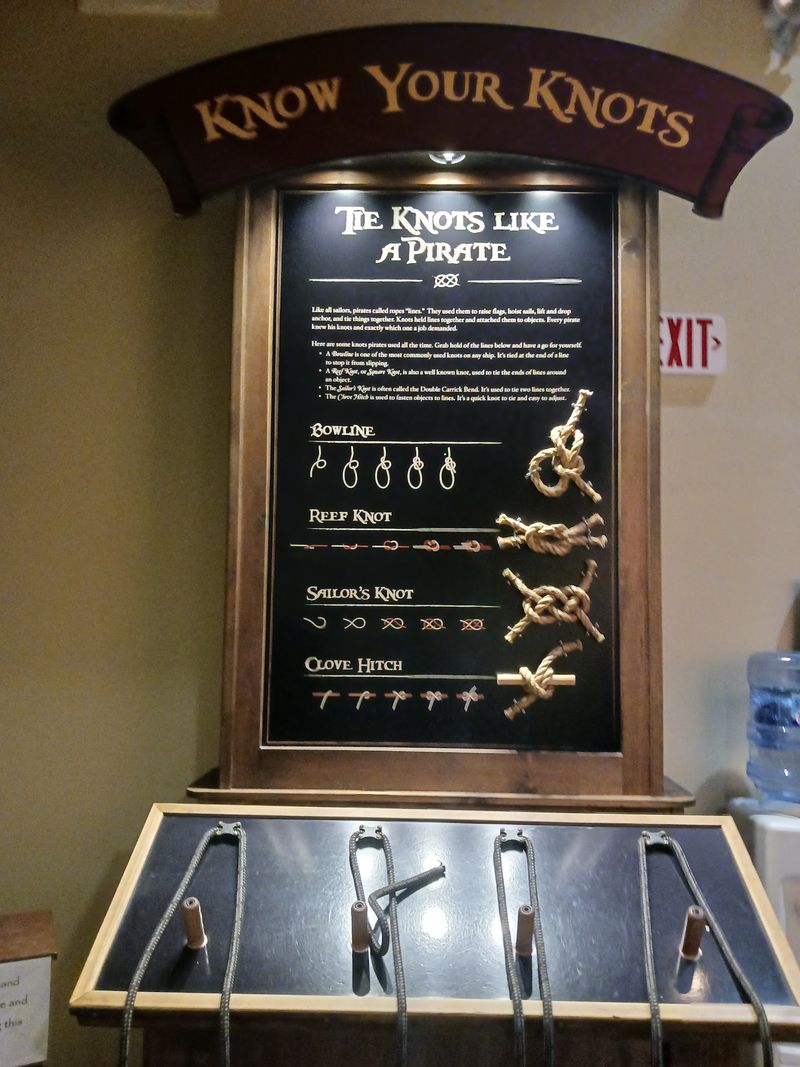
Learning to tie a sailor’s knot sounds simple until the rope starts fighting back. The museum includes a hands-on knot-tying activity, and it can be surprisingly addictive.
Other interactive touches pop up along the path too. They give restless hands something to do between the reading-heavy displays.
Then comes the gift shop, which makes a fun final stop. It carries books, souvenirs, and museum shirts for anyone who wants a pirate memento.
Book lovers should check the shelves closely. A good pirate history makes the trip last long after you leave.
The Whydah Pirate Museum also hosts special programs from time to time. Check the schedule before your trip to see what’s on.
I believe this museum is one of the most memorable stops in all of Massachusetts. It packs a real shipwreck, a real captain, and real treasure into one easy visit.
Few places let you hold a piece of a legend in your hand. Even fewer let you do it before lunch.
So grab the family, a curious friend, or just yourself. Black Sam Bellamy’s loot has waited over 300 years, and it’s ready for visitors.
Share this story