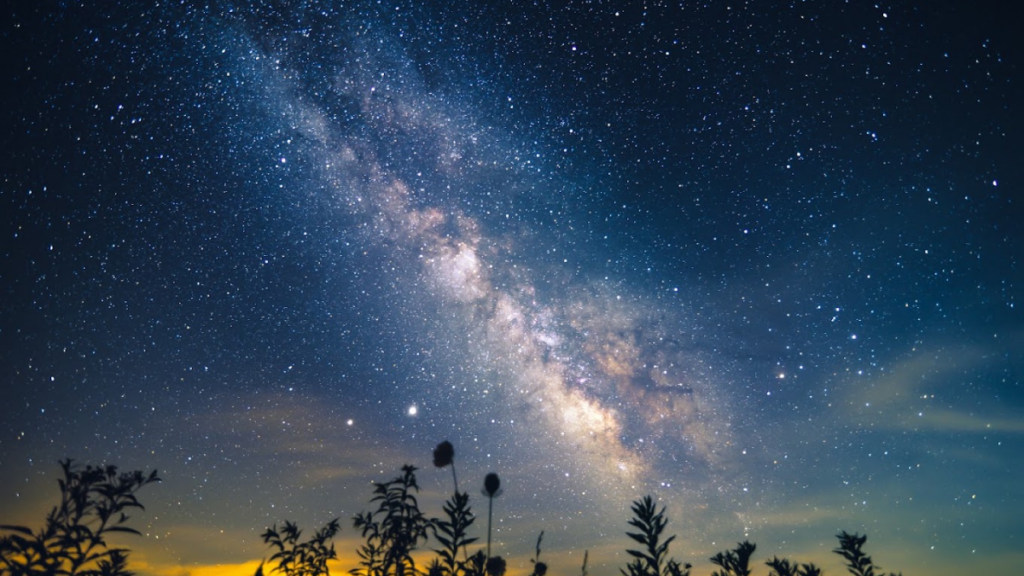
Most people pack up and leave state parks when the sun starts to set, but at Pickett CCC Memorial State Park in Jamestown, staying after dark opens up a whole new experience. This remote park transforms into one of Tennessee’s best spots for stargazing once night falls, thanks to its official International Dark Sky Park designation.
Whether you spend the day hiking through caves and rock formations or simply relaxing by the lake, the real magic happens when thousands of stars light up the sky above the forest canopy.
Pickett CCC Memorial State Park Feels Remote From the Moment You Arrive
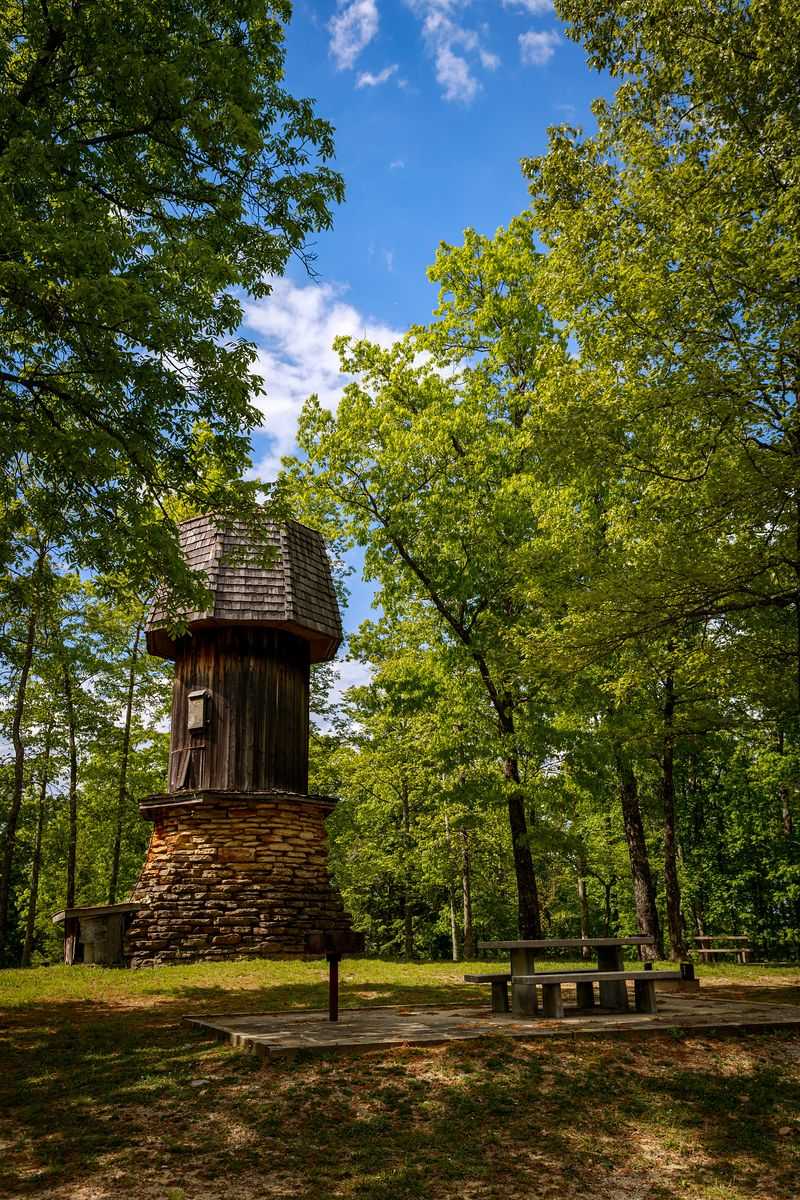
Getting to Pickett means leaving behind the noise and traffic of everyday life. The park sits tucked away on the Cumberland Plateau in northern Fentress County, covering over 19,000 acres of thick forest and sandstone bluffs.
Cell service disappears quickly here, and that’s part of what makes it special.
The park borders Big South Fork National River and Recreation Area, adding even more wilderness to explore. Dense trees line the roads leading in, and you’ll notice the air feels different.
It’s quieter, cleaner, and somehow heavier with the sense that you’ve stepped into a place where nature still runs the show.
Historic stone cabins built by the Civilian Conservation Corps in the 1930s and 1940s dot the landscape. These aren’t your typical rental cabins with all the modern bells and whistles.
They’re solid, simple, and designed to blend into the forest around them, with thick walls that shut out the world and private porches perfect for listening to rain on the leaves.
Visitors consistently mention how peaceful the park feels compared to busier Tennessee destinations. There’s a 12-acre lake, a small museum, and a nature center, but nothing feels crowded or overdeveloped.
The park office staff are welcoming and knowledgeable, happy to point you toward trails or share stories about the area’s history.
From the moment you roll into Pickett, it’s clear this isn’t a place you just pass through. It’s somewhere you settle into, slow down, and remember what it feels like to be surrounded by nothing but trees, rock, and sky.
That remoteness becomes even more important once the sun goes down.
Spend the Day Exploring Trails, Rock Formations, and Quiet Forests
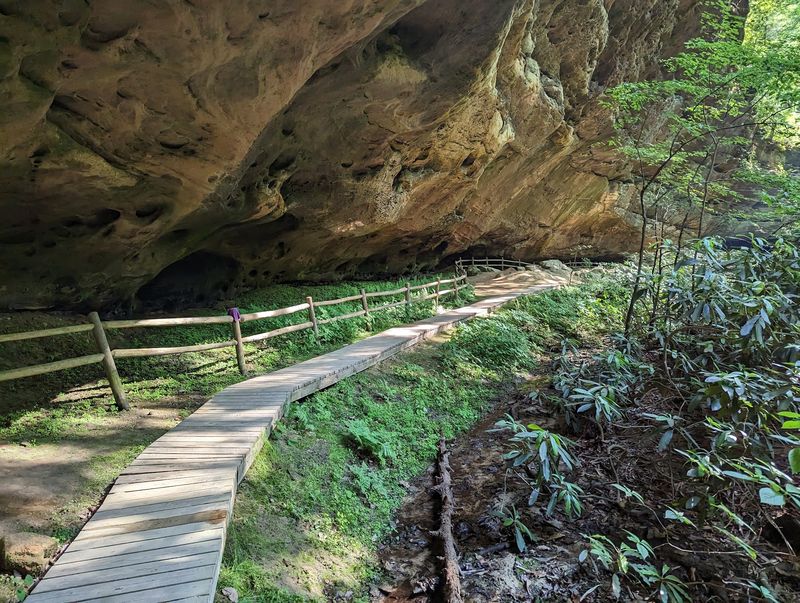
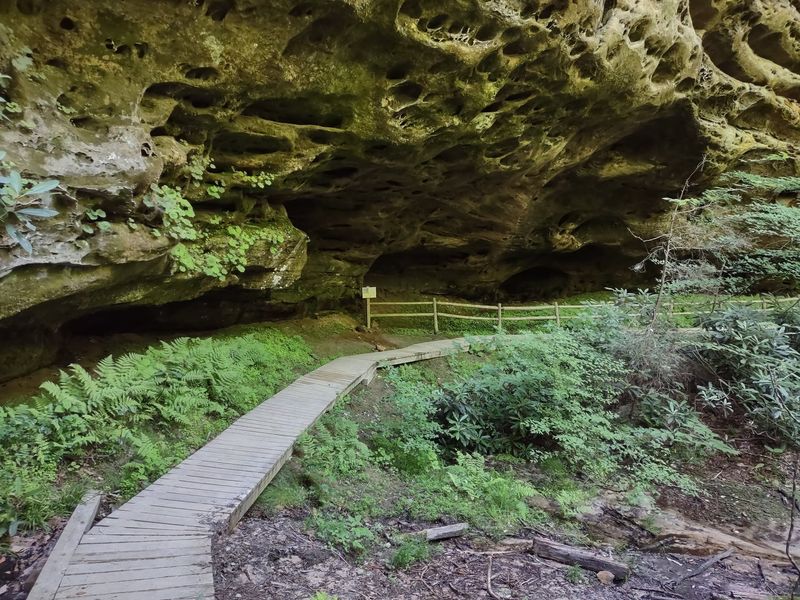
Before the stars come out, Pickett offers plenty to keep you busy during daylight hours. The trail system here ranges from easy lakeside walks to moderate hikes that lead you through towering sandstone bluffs and massive rock shelters.
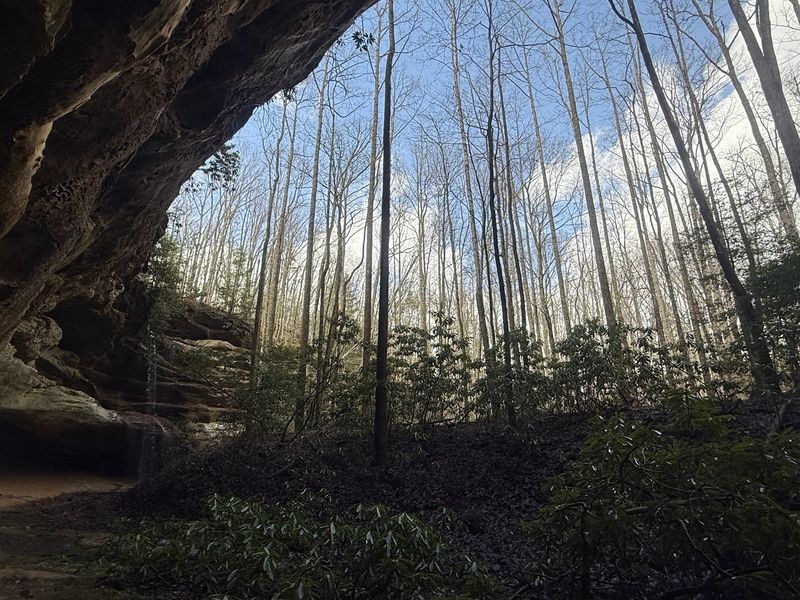
Hazard Cave is a favorite among visitors, a huge rock overhang that filters light beautifully in the late afternoon.
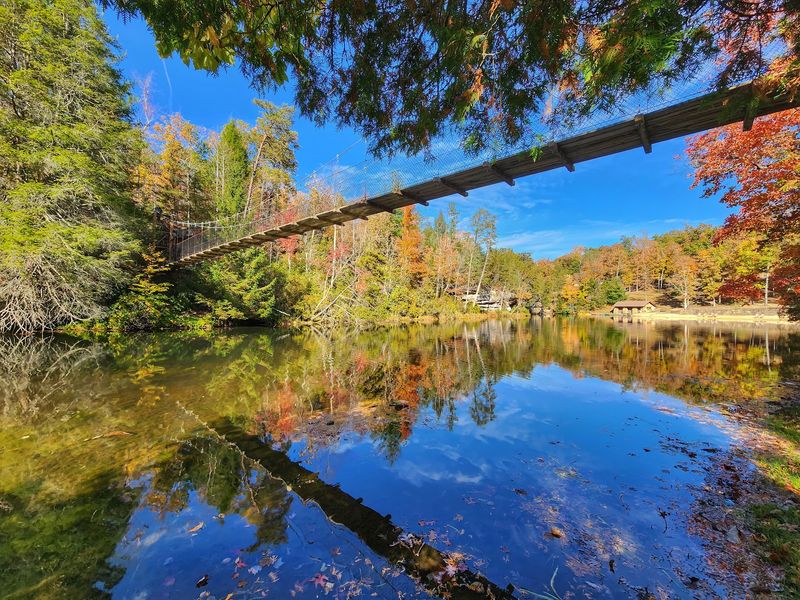
The Lake and Island Trails give you peaceful views of Arch Lake and take you across a fun swinging suspension bridge to a small island. It’s a great spot for photos and a nice break from more rugged terrain.
Some sections can get steep and slippery after rain, so sturdy shoes are a smart move.
Natural Bridge is another must-see formation, though trail access can change depending on weather and maintenance. Indian Rockhouse and Pogue Creek Canyon also showcase the park’s unique geology.
These aren’t flashy tourist traps with gift shops and guardrails everywhere, just raw, beautiful rock shaped over thousands of years.
Families with younger kids will find plenty of manageable trails, and even toddlers have been spotted enjoying the shorter routes. Rangers lead guided lantern tours to some of the caves, sharing knowledge about the area’s natural history and occasionally spotting rare salamanders or other wildlife along the way.
Fishing, kayaking, and canoeing on the lake add more variety to your day. Rentals are available if you don’t bring your own gear.
There’s also a small beach area for swimming during warmer months, though some facilities may be closed for seasonal improvements. The park’s layout makes it easy to fill an entire day without ever feeling rushed or bored, setting the stage perfectly for what comes after sunset.
Nearby Twin Arches Makes the Area Even More Worth Exploring
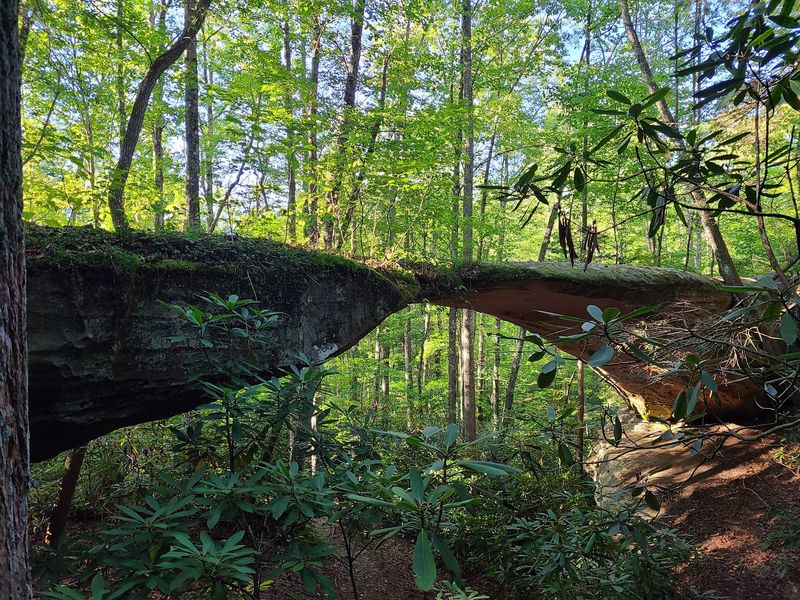
Just a short drive from Pickett, Twin Arches stands as one of the most impressive natural features in the entire Big South Fork region. This double arch formation is massive, with one arch stretching 135 feet and the other reaching 103 feet across.
Standing beneath them makes you feel incredibly small in the best possible way.
The hike to Twin Arches is moderate and family-friendly, making it accessible for most visitors. It’s roughly a two-mile round trip, and the trail takes you through beautiful forest before opening up to reveal the arches themselves.
Many people combine a visit to Pickett with a morning or afternoon trip to see this stunning geological wonder.
Other nearby attractions include Slave Falls and Needle Arch, both worth adding to your itinerary if you have extra time. The entire area is rich with waterfalls, rock formations, and hidden caves that reward those willing to explore a bit beyond the main park boundaries.
Visitor reviews frequently mention how much these side trips enhance the overall experience. Spending the day hiking to Twin Arches or exploring Big South Fork trails means you’ll be perfectly tired and ready to relax by the time evening rolls around.
That physical exhaustion makes the transition to nighttime stargazing even more satisfying.
Rangers at Pickett can provide directions and trail maps for these nearby spots. Some trails may be temporarily closed due to storm damage or maintenance, so it’s smart to check current conditions at the visitor center.
Having these extra options nearby transforms a simple overnight trip into a full outdoor adventure, giving you plenty of reasons to stay multiple days and truly soak in everything the region offers.
As Sunset Approaches, the Park Starts to Feel Completely Different
Something shifts at Pickett when the sun begins to drop behind the tree line. The forest sounds change as daytime birds go quiet and nocturnal creatures start stirring.
The air cools noticeably, even in summer, and the quality of light becomes softer, almost golden as it filters through the leaves.
This is when most day visitors pack up and head out, but staying means you get the park almost entirely to yourself. Cabin guests settle onto their private porches, and campers start their evening routines.
There’s a collective slowing down, a shared understanding that the rush of the day is over and something different is about to begin.
If you’re staying in one of the historic stone cabins, the thick walls and covered porches create the perfect setting for this transition time. You can sit outside with a warm drink and watch the last light fade while listening to the forest come alive with new sounds.
It feels almost meditative, like the park is preparing you for what’s coming next.
Even the lake takes on a different character as dusk settles in. The water becomes mirror-smooth, reflecting the changing sky and surrounding trees.
Any breeze dies down, and the stillness feels almost tangible. It’s easy to understand why so many visitors describe this time of day as therapeutic.
Rangers sometimes schedule special evening programs or guided night hikes during certain times of year. These experiences add another layer to your visit, offering expert insight into the park’s nocturnal ecosystem.
But even without organized activities, simply being present during this magical hour makes staying after dark worthwhile. The best part, though, is still ahead once full darkness arrives and the sky opens up completely.
Pickett Is One of Tennessee’s Special Places for Dark-Sky Stargazing
Pickett CCC Memorial State Park earned its International Dark Sky Park designation for good reason. This certification isn’t handed out casually.
It means the park actively protects its night environment by minimizing light pollution and preserving natural darkness, creating ideal conditions for viewing the night sky.
The park maintains a dedicated astronomy field specifically for stargazers. It’s a short drive from the main cabin and camping areas, positioned to maximize darkness and minimize any residual light from park facilities.
Serious astrophotographers set up tripods here during meteor showers and other celestial events, capturing images that would be impossible near cities or even smaller towns.
Light pollution from nearby communities is virtually nonexistent. The park’s remote location on the Cumberland Plateau, combined with the surrounding forest buffer, creates a natural shield against artificial light.
On clear nights, this protection allows thousands of stars to become visible, including the vivid band of the Milky Way stretching across the sky.
Rangers are knowledgeable about astronomy and happy to answer questions about what you’re seeing. Some visitors time their trips to coincide with meteor showers like the Perseids or Geminids, when dozens of shooting stars per hour light up the darkness.
Others simply want to see the Milky Way’s galactic core, something impossible to spot from most Tennessee locations.
The park provides information about current sky conditions and upcoming celestial events at the visitor center. Even if you’re not an experienced stargazer, the staff can point you toward the best viewing spots and times.
This combination of natural darkness, dedicated viewing areas, and knowledgeable support makes Pickett stand out as one of Tennessee’s premier destinations for anyone interested in astronomy or simply experiencing a truly dark night sky.
Clear Nights Can Reveal Stars You Rarely See Near Bigger Cities
When full darkness falls at Pickett and the sky is clear, the view overhead is genuinely breathtaking. Thousands of pinprick stars become visible to the naked eye, far more than most people have ever seen before.
The Milky Way appears as a bright, cloudy band stretching from horizon to horizon, with its galactic core showing rich detail and color.
Visitors regularly capture stunning, unedited photos using nothing more than a smartphone on a tripod. The darkness is so complete that even basic camera equipment can reveal nebulae, star clusters, and distant galaxies.
For anyone used to urban or suburban skies where only the brightest stars shine through, this experience feels almost otherworldly.
Constellations become easy to trace without needing star charts or apps. Orion’s belt, the Big Dipper, Cassiopeia, and dozens of other formations stand out clearly.
During certain times of year, planets like Jupiter, Saturn, Venus, and Mars are visible as bright points of light that don’t twinkle like stars.
Meteor showers transform into spectacular shows here. Instead of catching one or two shooting stars per hour like you might from a backyard in town, you can see dozens streaking across the sky.
The lack of competing light means even faint meteors are visible, making every shower feel like a major event.
Some visitors report seeing satellites tracking across the sky, the International Space Station passing overhead, and even the occasional distant airplane that looks like a slow-moving star. The sheer amount of activity happening above us becomes obvious when you can actually see it all clearly.
This perspective shift, this reminder of how much we miss when artificial light washes out the night sky, is what keeps people coming back to Pickett after dark again and again.
Stay After Dark and Turn a Simple Park Visit Into a Full-Day Escape
Booking an overnight stay at Pickett transforms a simple day trip into something much more memorable. The park offers several cabin options, from the historic CCC-era stone structures to more modern accommodations.
All provide comfortable bases for your adventure, with full kitchens, reliable Wi-Fi (surprisingly), and that crucial element, proximity to the best stargazing spots.
Camping is another excellent option if you prefer being even closer to nature. The campground offers both tent sites and spots suitable for smaller RVs and pop-up campers, though larger rigs might struggle with the terrain and site layout.
Waking up to birdsong and forest smells, then falling asleep under a canopy of stars, creates a complete outdoor experience.
The combination of daytime activities and nighttime stargazing makes for a perfectly balanced trip. You can hike to caves and waterfalls, paddle around the lake, visit the small but informative museum, and then cap it all off with hours spent under the stars.
This full-day rhythm, this blend of active exploration and quiet contemplation, is hard to replicate anywhere else.
Many visitors describe their time at Pickett as restorative. The lack of cell service forces you to disconnect from constant notifications and news cycles.
The darkness at night, rather than feeling scary or isolating, becomes peaceful and grounding. You remember what it’s like to be part of the natural world rather than just passing through it.
Planning a trip during a new moon maximizes your stargazing potential, as even moonlight can wash out fainter stars. Rangers can help you time your visit for optimal conditions.
Whether you’re an experienced astronomer or someone who’s never really looked up at the night sky before, staying after dark at Pickett offers something rare and valuable in our increasingly bright, busy world.