A set of century-old painted-glass doors is not what you expect to find while heading out for tea on Route 9. Neither is a stained-glass window bearing the exact number of the building you just walked into.
Yet those are only two of the odd, beautiful details waiting inside the Lizzie Rose Tea Room at 217 East Main Street in Tuckerton.
The tea room occupies a restored Victorian home dating to 1860, and once you are seated among antique furnishings with a pot of loose-leaf tea and a three-tiered stand on the table, the Downton Abbey comparisons start making sense.
This is not a polished hotel trying to manufacture old-world character. The house had more than a century and a half of history before anyone ordered a scone here.
Owners Liz and Dan Reichard restored it, filled it with period details, and turned an old Tuckerton landmark into one of South Jersey’s more unexpected afternoon stops.
How a Restored 1860 Victorian Home Became the Lizzie Rose Tea Room
Long before anyone was pouring tea here, the building had a job tied directly to Tuckerton’s maritime past. The Victorian house dates to 1860 and was originally built as a Custom House associated with Tuckerton’s seaport history.
Liz and Dan Reichard later renovated and refurbished the property, keeping its historic character at the center of what became the Lizzie Rose Tea Room. That backstory matters because the building does not feel like a new restaurant decorated to resemble an old house.
It actually is an old house, with the scale, rooms, architectural quirks, and accumulated details that come with one. There is even a persistent story surrounding the property that it may once have been connected to the Underground Railroad.
The tea room itself presents that as a rumor, not a proven chapter of the building’s history, which is an important distinction, but it certainly adds another question to a house already full of them. The restoration also makes sense in the context of Tuckerton.
This little Ocean County borough has a long relationship with the water, fishing, boatbuilding, and the culture of the Barnegat Bay region. Just down Main Street, the 40-acre Tuckerton Seaport preserves those traditions through exhibits, historic structures, programs, and activities along Tuckerton Creek.
Against that backdrop, turning an 1860 building into something people can still walk into and enjoy feels particularly fitting. Instead of becoming a house you admire from the sidewalk, the property remains part of everyday Tuckerton life.
You can sit inside, look around, order tea, and spend an hour or two noticing just how much of the building’s personality survived the trip into the 21st century.
The Downton Abbey Inspiration Is Everywhere You Look
You half expect somebody to announce that tea is served. That is the fun of the Downton Abbey influence here: it comes through less as a television theme and more as a fondness for the rituals and visual details that make period dramas so satisfying.
The Victorian house already provides the right bones, while the china, antique furniture, decorative glass, teapots, formal table settings, and room-by-room arrangement do the rest.
The inspiration reportedly grew from owner Liz Reichard’s love of Downton Abbey, and the finished space leans into that grand-but-domestic feeling rather than trying to recreate a specific room from the series.
That distinction saves it from becoming gimmicky. There are no cardboard aristocrats lurking around the corner and no requirement that you arrive dressed like the Dowager Countess.
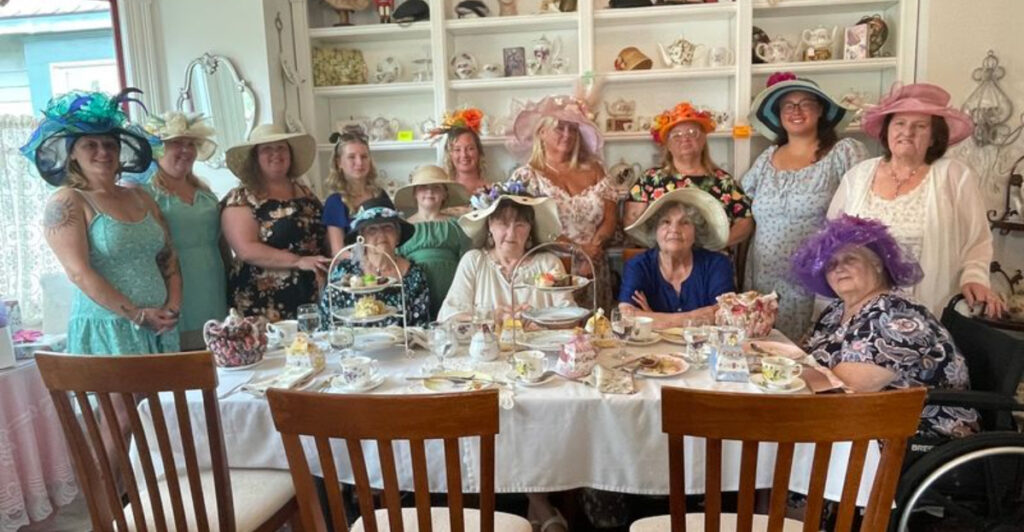
In fact, the tea room specifically says there is no dress code, so jeans are as legitimate as pearls and a fancy hat. Fridays in 2026 do give guests an excuse to have a little more fun with it.
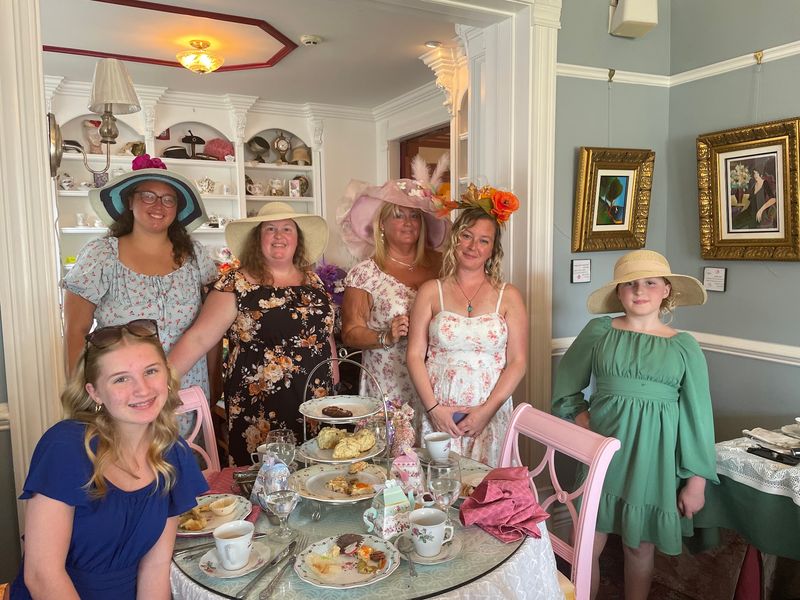
The tea room has been holding Fascinator Fridays, when visitors can wear their own fascinator or borrow one there, which is probably as close as most of us are getting to having a reason to dress for tea without receiving an invitation from an earl. Even without the accessories, though, the setting does most of the work.
A proper pot on the table, small sandwiches arriving on tiers, antique objects within arm’s reach, and a Victorian room around you create the period-drama effect naturally. It feels playful without requiring anyone to play a part.
Antique Details Make Every Room Feel Like Another Era
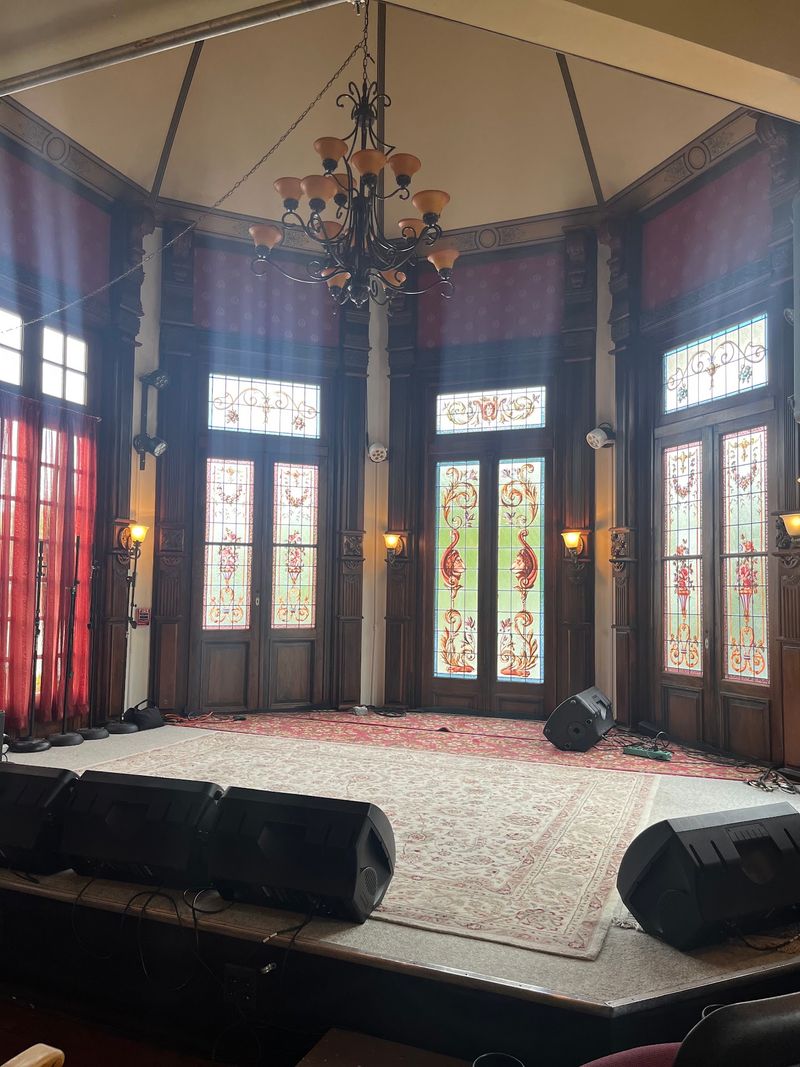
The front doors deserve a moment before you even start thinking about scones. Lizzie Rose has a pair of painted-glass doors that are around 100 years old and were brought to New Jersey from South America.
They are exactly the sort of architectural detail that makes you slow down, partly because they are beautiful and partly because they raise the obvious question of how century-old South American glass ended up in a Victorian house in Tuckerton. Inside, that same layered approach continues.
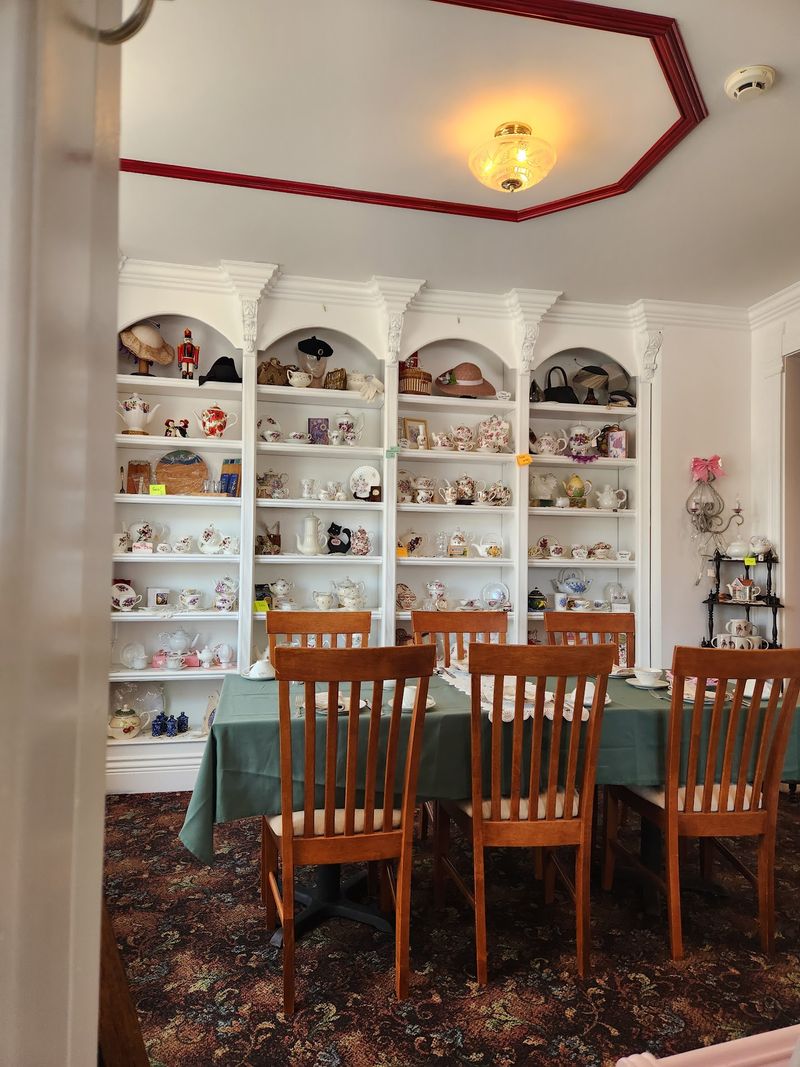
The tea room is not furnished with a matching set ordered all at once to produce an instant “Victorian look.” Antique pieces, patterned china, teacups, decorative objects, painted glass, and traditional furniture share the rooms, giving you plenty to inspect between pours. The house itself helps enormously.
Victorian homes were divided into more distinct rooms than the wide-open layouts people build today, so moving through Lizzie Rose has a naturally intimate feeling. You are not sitting in one enormous dining room with 40 other tables.
The business emphasizes limited seating and smaller gatherings, and that scale works especially well here. One detail even gets its own mention on the tea room’s current website: an Aynsley china pattern, a fitting choice in a place where the cups and saucers are part of the visual experience rather than an afterthought.
The result is the kind of room where your eyes keep wandering. You notice the shape of a chair, then a cabinet, then another tea set, then light coming through old glass.
None of those things alone would create the effect. Put them together inside a house from 1860, though, and checking your phone suddenly feels strangely out of place.
Afternoon Tea Comes With Scones Sandwiches and Plenty of Charm
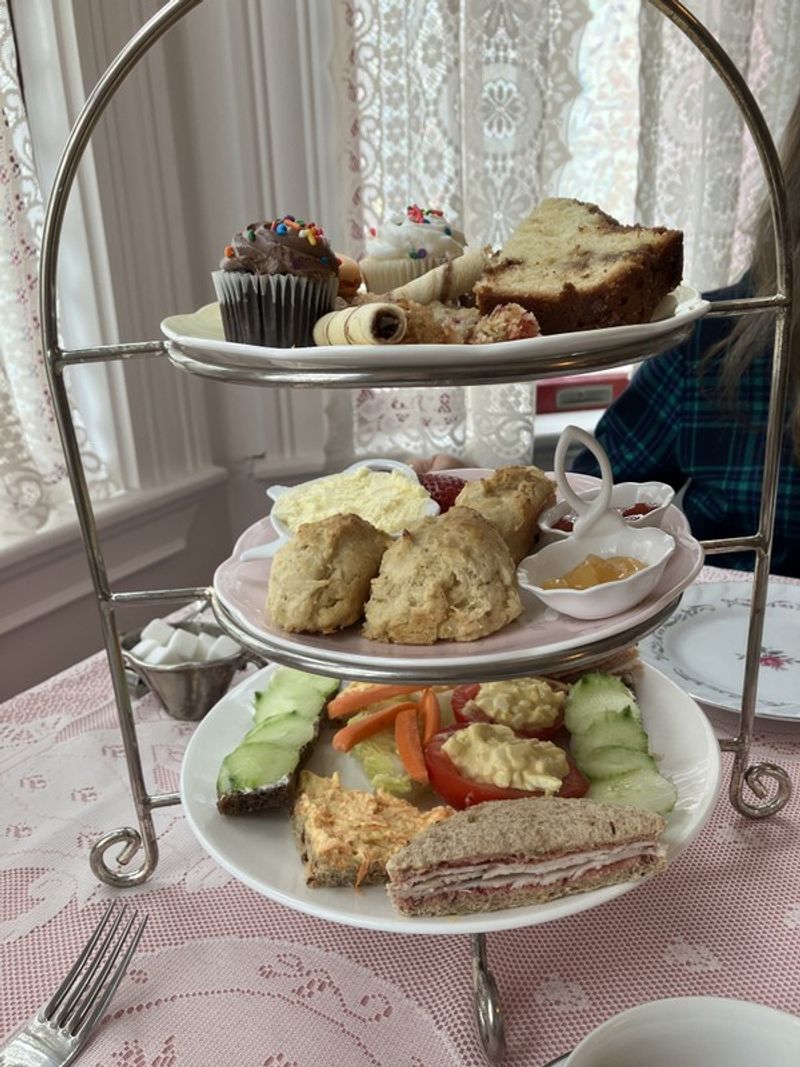
Here is the practical part worth knowing before making the drive: full afternoon tea is not something to leave to chance. Lizzie Rose asks guests to contact the tea room at least 24 hours ahead for an afternoon tea reservation.
Walk-ins can still stop by, but the walk-in offering is limited to scones and desserts rather than the complete service. The full experience follows the traditional three-tier format.
Freshly made finger sandwiches share the spread with quiche, scones served with lemon curd and clotted cream, and small desserts, with seasonal changes keeping the exact lineup from being permanently locked in. The tea selection includes traditional, specialty, herbal, and iced options.
Fridays bring an additional wrinkle: rotating varieties of quiche are offered, and the tea room also advertises a Friday combination of quiche, salad with raspberry vinaigrette, a scone, and a pot of tea. Dietary requests are handled more thoughtfully than you might expect from such a small operation.
Vegetarian selections, nut-free requests, certain food-allergy accommodations, and gluten-free options may be available with advance notice. The kitchen is not certified gluten-free, however, so cross-contact is possible.
Full vegan and dairy-free afternoon tea menus are not currently offered; the alternative listed for those guests is seasonal fresh fruit with premium loose-leaf tea. And on a nice South Jersey afternoon, the best table may not be inside at all.
Weather permitting, the tea room serves on the front porch, which turns a formal-sounding English tradition into something pleasantly local: tea, scones, and Main Street Tuckerton passing quietly in front of you.
The Mysterious Stained Glass Window Adds to the House’s Story
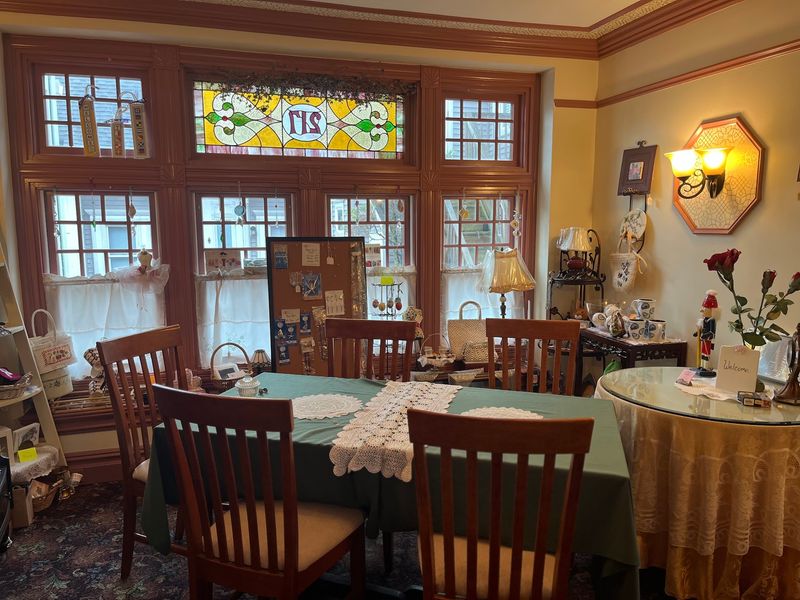
Some antiques come with immaculate records of where they were made, who owned them, and how they changed hands. The stained-glass window at Lizzie Rose has chosen a much better route: mystery.
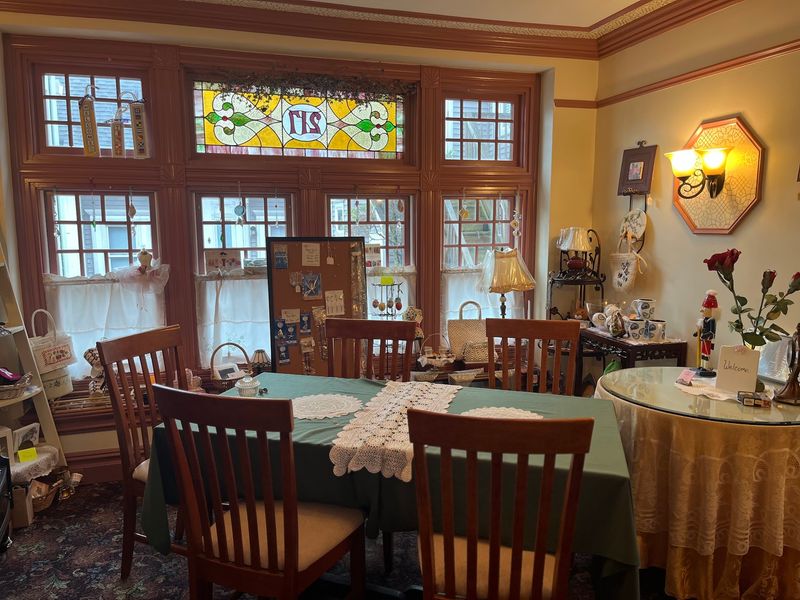
Built into the tea room is a stained-glass piece marked with the number “217,” the same number as the property’s address at 217 East Main Street. The tea room itself describes the window and its history as one of the building’s most intriguing features.
The story circulating around it gets stranger. According to accounts of the property, the window was found years ago in the woods before eventually ending up here, bearing a number that happened to match the address.
That is exactly the sort of tale an old Victorian house deserves. Whether you are naturally inclined toward historical mysteries or prefer to stick with facts you can document in a ledger, the coincidence is hard to ignore.
It also fits the broader character of Lizzie Rose because this is a house where objects have clearly lived lives before arriving in their present rooms. The century-old painted-glass doors came from South America.
The building began life in the 19th century. The furnishings span generations.
Then there is a piece of stained glass bearing “217” that seems almost suspiciously well suited to the place. What makes the detail work is that nobody needs to invent a supernatural explanation or turn the house into a haunted attraction.
The unanswered question is entertaining enough on its own. While afternoon tea gives people an obvious reason to visit, objects like this window give the visit a story afterward.
The scone will be gone before you leave. The puzzle of how that piece of glass found its way to number 217 is considerably harder to finish.
Why This Tuckerton Tea Room Is Worth a New Jersey Day Trip
Tuckerton works especially well when you have no interest in spending your day racing from one attraction to another. Lizzie Rose is at 217 East Main Street, not far from Garden State Parkway Exit 58, and the tea room’s own directions bring drivers east on Route 539 to Route 9 before turning north toward the property.
Free parking is available behind the building. As of 2026, regular tea-room hours are Friday through Sunday from 11 a.m. to 4 p.m. Thursday is reserved for private events of six or more, and the full afternoon tea requires at least 24 hours’ notice.
That schedule makes it easy to build a low-key Shore-area day around a reservation rather than making tea the only stop.
Tuckerton Seaport at 120 West Main Street is nearby and spreads across 40 acres on Tuckerton Creek, focusing on the maritime culture, folk traditions, and environment of the Barnegat Bay and Pinelands region.
It is also a useful reminder that Tuckerton is not simply a place you drive through on Route 9 while heading somewhere farther south.
The borough has its own history, and the old Custom House now occupied by Lizzie Rose happens to connect nicely with it. Back at the tea room, there is a small gift shop, the building is handicap accessible, and no dress code is required.
On good-weather days, the front porch becomes part of the seating plan. Put all of that together and the appeal is refreshingly straightforward.
You get an old New Jersey house that still has stories to tell, an unhurried afternoon tea that actually requires an afternoon, and a town where the maritime past is never very far away. For a couple of hours, 217 East Main Street makes modern New Jersey feel considerably more Victorian.