The strange thing about New Jersey is how quickly it can change on you. One minute you’re wedged between diners, traffic lights, and strip malls, and the next you’re standing beside a glacial lake, a roaring waterfall, or a stretch of dunes that feels nowhere near the Turnpike.
That is the Garden State’s best trick: it keeps its wild side closer than you think. New Jersey may be small, but it manages to pack in mountain ridges, coastal marshes, ancient forests, dramatic cliffs, and one very famous waterfall that helped power an entire city.
Some of these spots ask for hiking boots. Others only require a camera, a little curiosity, and maybe the patience to find parking on a sunny weekend.
For anyone who thinks they already know this state, these natural wonders are a reminder that New Jersey still has plenty of surprises left.
1. Sunfish Pond
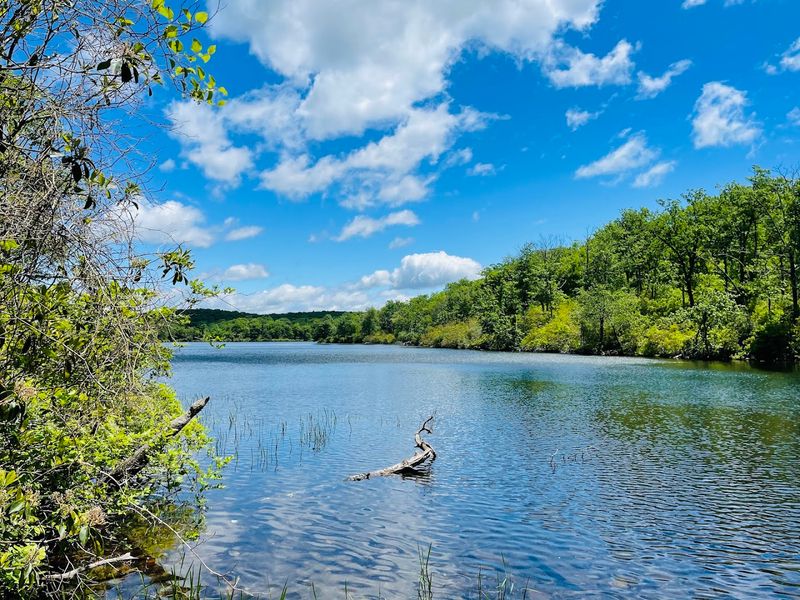
A glacial lake sitting high above the Delaware River is not exactly what most people picture when they think of New Jersey, which is part of what makes Sunfish Pond feel so satisfying to reach.
This clear, quiet body of water rests within Worthington State Forest, tucked into the Kittatinny Mountains, and getting there requires a real hike rather than a quick roadside stop.
That little bit of effort is the point. By the time the trees open and the water appears, it feels earned.
The pond is best known for its setting along the Appalachian Trail, which gives it a little extra mythology. Hikers come through with packs, locals tackle it as a day trip, and everyone seems to pause at the shoreline for the same reason: it is one of those places where New Jersey suddenly looks much bigger and wilder than expected.
The water is protected, so this is not a swimming hole or picnic-chaos kind of stop. Think sturdy shoes, snacks packed in, and a leave-no-trace mindset.
Go for the hike, the rock-studded shoreline, and the quiet sense of being far from everything. Just know that the climb can be rocky and steeper than casual walkers expect, especially in warm weather.
Start earlier in the day, bring more water than you think you need, and give yourself time to linger when you finally get there.
2. High Point State Park
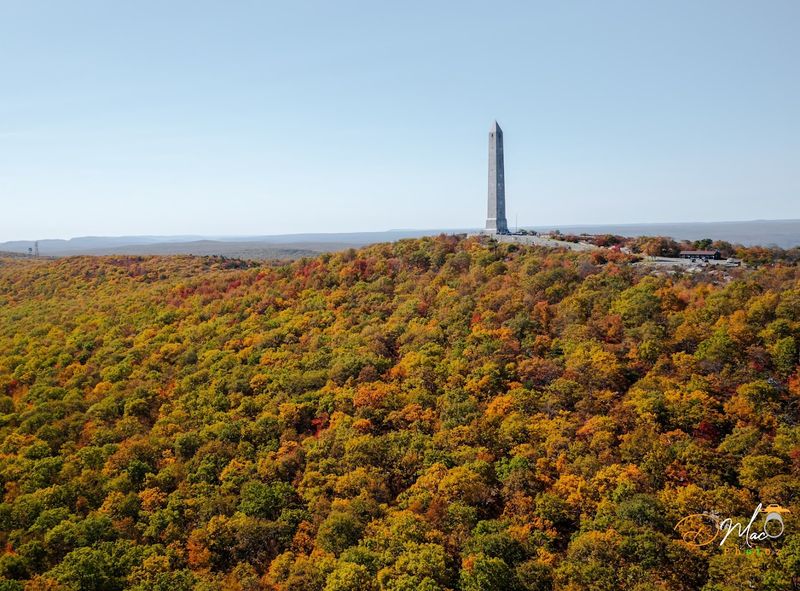
The view from the top of New Jersey comes with a little drama, and thankfully, not the Turnpike kind. High Point State Park sits in the far northwest corner of the state, where the landscape finally stretches its legs into rolling ridges, forested hills, and long views that spill into Pennsylvania and New York.
At 1,803 feet, this is the highest elevation in New Jersey, and the monument at the summit makes the whole thing feel official in the best possible way. What makes High Point worth the trip is not just the bragging rights.
It is the way the park gathers several versions of outdoor New Jersey in one place. You can drive near the monument for a relatively easy view, hike trails that weave through woods and fields, or cool off near Lake Marcia when the season allows.
In fall, the ridgelines turn into a patchwork of color, and on a clear day, the visibility makes the state feel far less crowded than its reputation. This is a great pick for anyone who wants maximum payoff without planning an expedition.
Families, casual hikers, photographers, and leaf-peepers can all make a day of it. The summit area can get busy on beautiful weekends, so arriving earlier helps.
Bring a layer, too. The breeze up here can make it feel like New Jersey turned the thermostat down a few degrees.
3. The Palisades
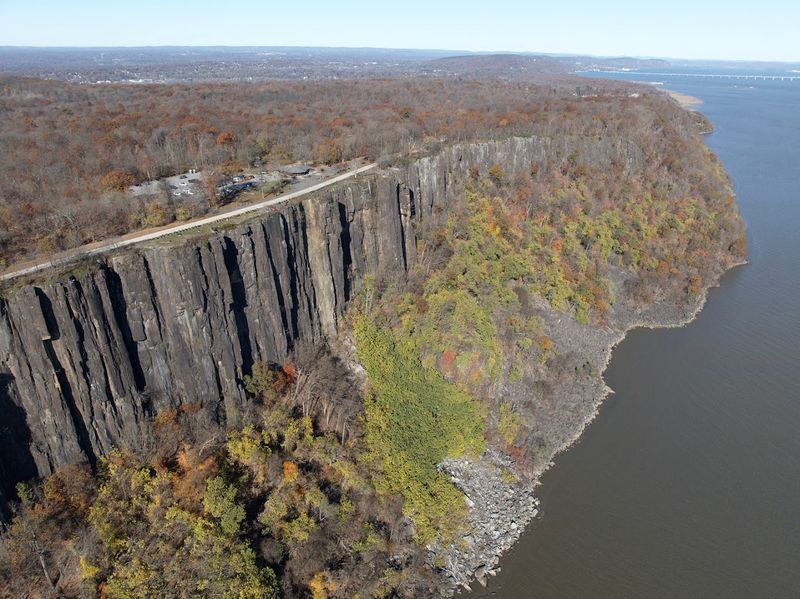
There is something wonderfully cinematic about seeing sheer cliffs rise above the Hudson River while Manhattan sits right across the water pretending to be the main attraction.
The Palisades are one of New Jersey’s most striking landscapes: tall, dark, column-like cliffs formed from ancient volcanic rock, running along the river in a way that feels both rugged and oddly elegant.
They are close to traffic, bridges, and city noise, yet the moment you step onto a trail, the whole scene shifts. The best way to appreciate the Palisades is to give them more than a quick overlook stop.
The viewpoints are excellent, but the trails add texture: steep stone steps, wooded paths, river-level stretches, and glimpses of the cliffs from below that make them look even more impressive. This is where New Jersey shows off its vertical side, and it does not need mountains to do it.
For a relaxed visit, stick to the scenic overlooks and bring coffee for a slow morning by the river. For something more memorable, try a hike that drops down toward the shoreline, then climbs back up through the trees.
Just pay attention to trail difficulty before heading out, because some routes are steeper and rockier than they first appear. Parking areas can fill when the weather is kind, so this is another place where early birds win.
4. Delaware Water Gap
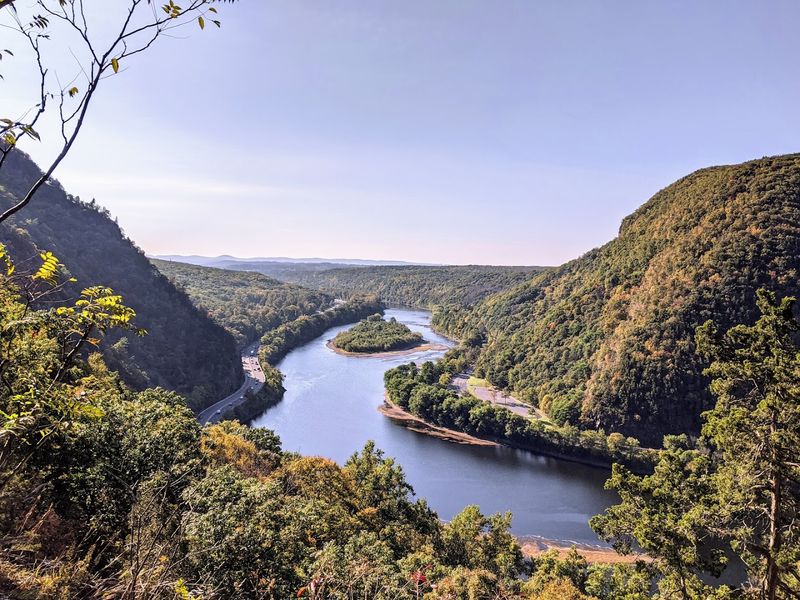
The Delaware Water Gap looks like nature took a deep breath and split the mountains open to let the river through.
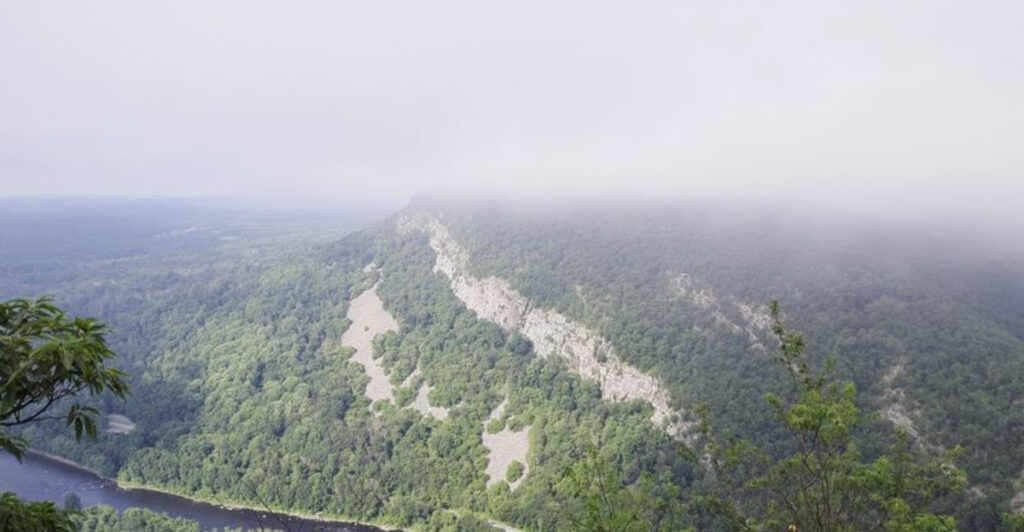
Straddling the New Jersey and Pennsylvania border, this area is one of the most dramatic landscapes within easy reach of much of the state, with forested ridges, river bends, rocky overlooks, waterfalls, and enough trails to humble anyone who claimed they were “just going for a quick walk.”
On the New Jersey side, the big move is hiking Mount Tammany, a classic for a reason.
The climb is steep enough to make your legs file a complaint, but the payoff is one of the most famous views in the region: the Delaware River curving between Mount Tammany and Mount Minsi. It is the kind of overlook that makes people suddenly very quiet, which is rare and therefore worth appreciating.
But the Water Gap is not only for serious hikers. You can paddle, fish, take scenic drives, explore quieter trails, or simply follow the river and let the day unfold.
Weekends can get crowded, especially around the most popular trailheads, so plan with a little patience. Good footwear matters here, and so does checking conditions after rain.
This is wild New Jersey at its most muscular: rocky, green, river-cut, and completely capable of making you forget how close you are to home.
5. New Jersey Pinelands / Pine Barrens
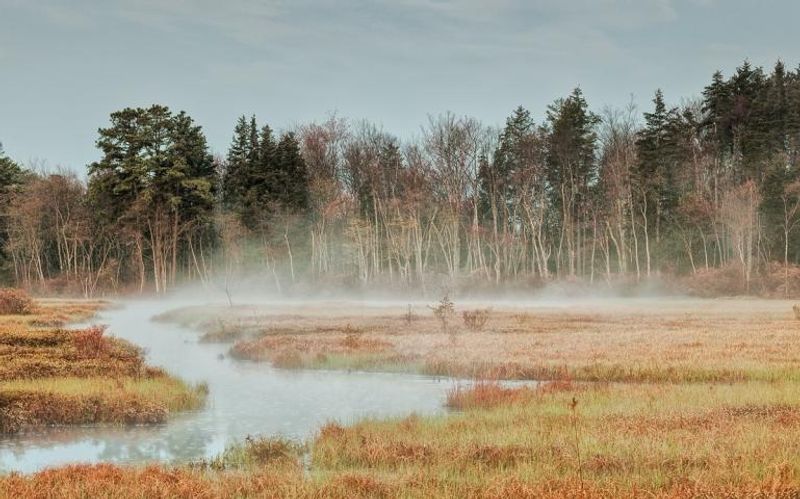
The Pine Barrens do not reveal themselves all at once. At first glance, they can look spare, flat, and almost too quiet.
Then you notice the tea-colored streams, the sandy roads, the pitch pines twisting in odd directions, and the way the whole place seems to operate by its own rules. This is one of New Jersey’s most unusual landscapes, and it is far more alive than the name “barrens” suggests.
The Pinelands cover a huge swath of South Jersey, creating a world of cedar swamps, cranberry bogs, rare plants, hidden waterways, and small towns with deep roots.
The water often runs brown because of natural tannins from leaves and roots, not pollution, which gives creeks and rivers that dark, glassy look that feels instantly recognizable once you have seen it.
Kayaking or canoeing is one of the best ways to understand the area, especially on quieter rivers where the trees crowd close and the pace slows down. This is not the place to rush through with a checklist.
Choose a forest, preserve, or paddling route, then give yourself time to wander. Wharton State Forest is a popular starting point, but the larger region rewards repeat visits.
Some roads are sandy and remote, so do not treat every map line like it is friendly to every car. The Pine Barrens are mysterious, understated, and deeply New Jersey in a way that refuses to perform for anyone.
6. Island Beach State Park
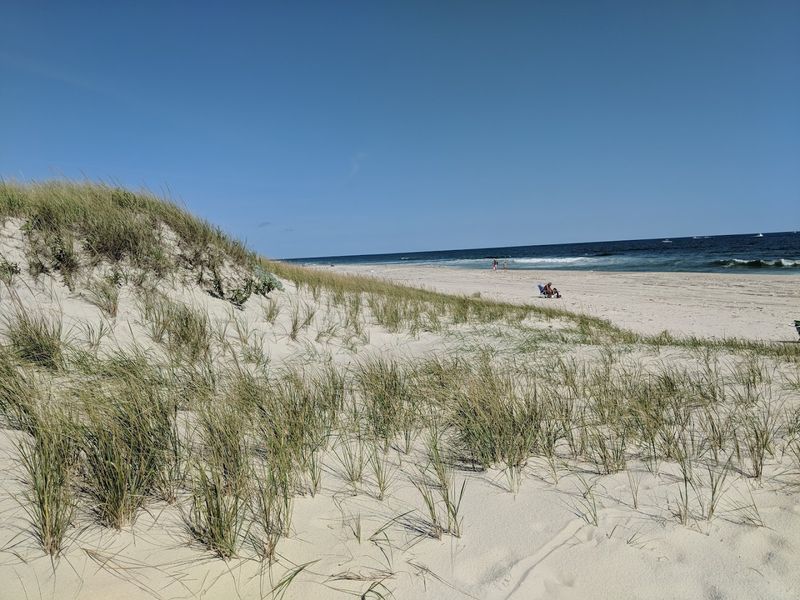
The road into Island Beach State Park feels like New Jersey slowly shedding its beach-town noise. The boardwalk energy fades, the dunes rise, and suddenly the coast looks less like a summer production and more like a barrier island doing exactly what barrier islands have done for centuries.
This narrow stretch of preserved shoreline sits between the Atlantic Ocean and Barnegat Bay, and it is one of the best places in the state to see the shore without all the extra decoration. Island Beach is known for its dunes, maritime forest, salt marshes, surf fishing, and long, undeveloped feel.
You may spot ospreys overhead, fox tracks in the sand, or shorebirds working the waterline like tiny, determined commuters. The beach itself is beautiful, but the park’s real charm is its wilder texture.
It reminds you that the Jersey Shore is not only arcades, beach badges, and fried things in paper boats. Come for a swim in season, a long walk, a fishing day, or a quiet off-season visit when the wind and waves are the main event.
Summer entry can be limited when parking fills, so earlier is better on hot weekends. Bring what you need, respect the dunes, and do not expect a commercial beach scene once you are inside.
That is the whole appeal. Island Beach feels like the Shore before everyone started arguing over parking.
7. Paterson Great Falls
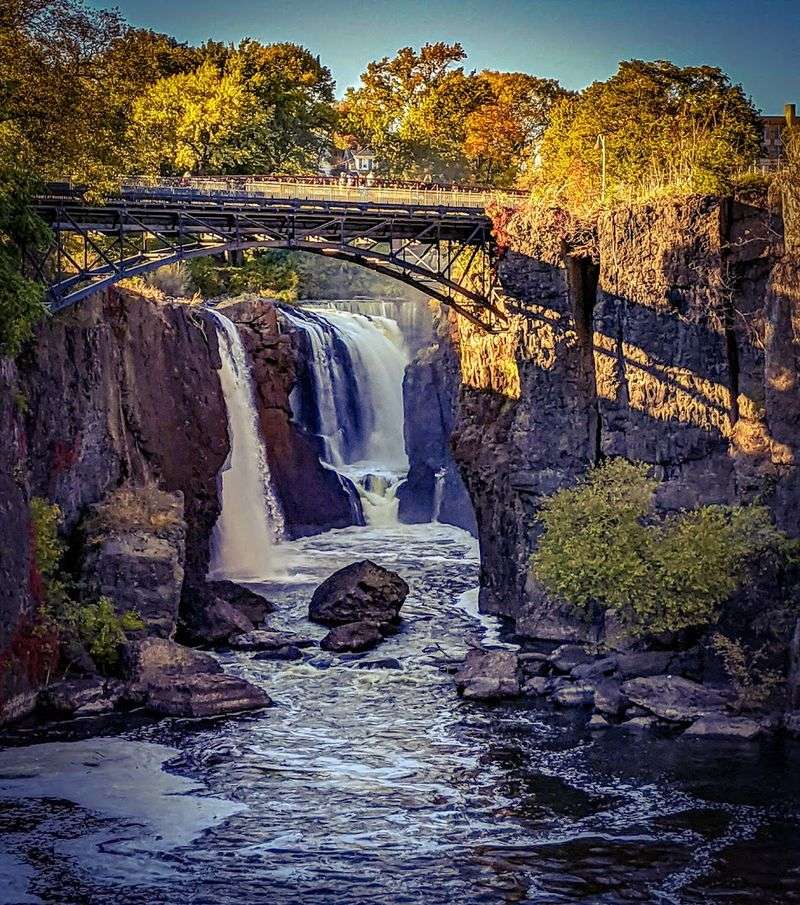
Few natural wonders in New Jersey arrive with this much sound. Paterson Great Falls does not politely trickle or pose in the background.
It drops with force, throwing mist into the air and reminding everyone nearby that water once helped build one of America’s great industrial cities. That combination of raw nature and urban history is what makes the falls so fascinating.
You are not hiking miles into the wilderness to find them; you are standing in Paterson, watching the Passaic River put on a show. The falls are about power in every sense.
Their height and volume made them a natural force long before factories and mills grew around them, and that layered setting gives the place a different mood from the state’s quieter natural spots. Brick buildings, bridges, viewing areas, rushing water, and city streets all share the same frame.
It feels gritty, historic, and alive. This is a good stop for people who want a big visual payoff without a long trail.
The viewing areas make it easy to appreciate the falls from different angles, though conditions can change with weather and water levels. After heavy rain, the falls can be especially dramatic, but also expect slick surfaces and more visitors.
Go with curiosity, not just a camera. The best part is realizing that one of New Jersey’s most impressive natural sights is woven directly into the story of a working city.
8. Buttermilk Falls
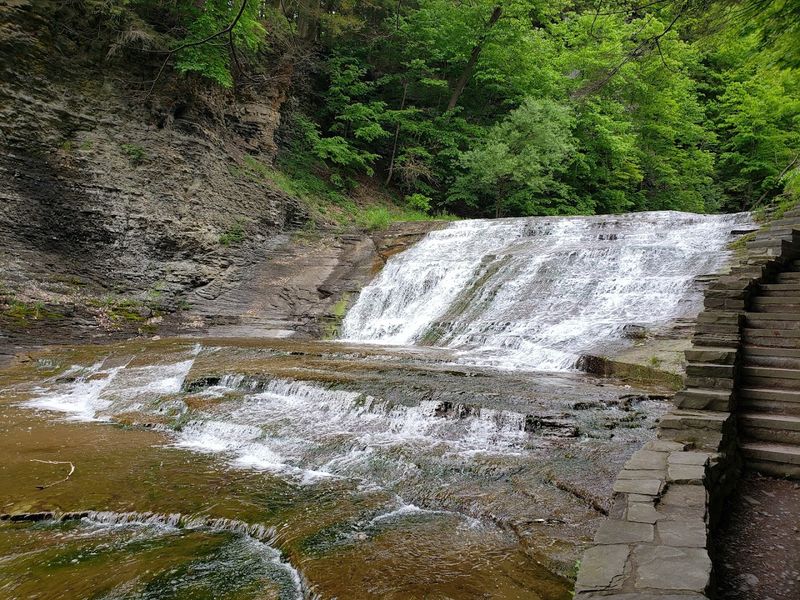
The first surprise at Buttermilk Falls is how quickly it appears. After winding through the quieter roads of the Delaware Water Gap region, you suddenly find a tall cascade spilling down the mountainside, looking far too dramatic to be sitting so close to a road.
It is often described as New Jersey’s tallest waterfall, and whether you are there for the title or just the view, the place makes an immediate impression. The falls are especially striking after rain or during wetter seasons, when the water fans down the rock in bright, rushing sheets.
A staircase climbs alongside the cascade, giving visitors a chance to see it from different heights before connecting to longer trails for those who want to turn a waterfall stop into a real hike. That flexibility is part of the appeal.
You can make it a quick scenic visit or use it as the start of something more ambitious. The setting is rustic, so come prepared rather than expecting polished park infrastructure.
Roads in the area can be narrow, seasonal, or rough depending on conditions, and cell service may be spotty. Wear shoes with grip, especially if the steps are damp.
Buttermilk Falls is at its best when you let it feel a little out of the way. It has the satisfying quality of a place that still feels discovered, even when plenty of New Jersey hikers already know exactly where to find it.
9. Tripod Rock at Pyramid Mountain
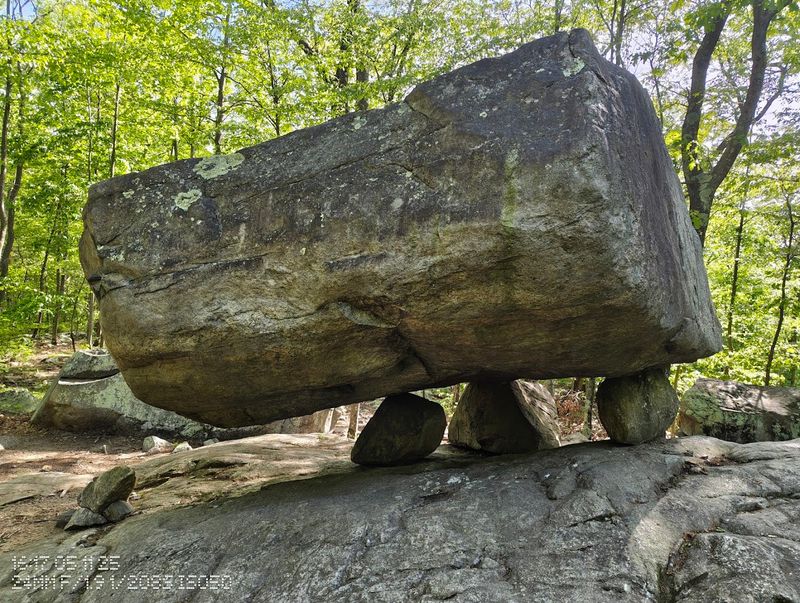
A massive boulder balanced on three smaller stones sounds like something a mischievous giant would leave behind, which is exactly why Tripod Rock is so fun to see in person.
Found within Pyramid Mountain Natural Historic Area in Morris County, this glacial erratic has become one of North Jersey’s great “wait, how is that possible?” trail rewards.
It is strange, photogenic, and just scientific enough to make you feel smarter for staring at a rock. The wonder here comes from the Ice Age story behind it.
Glaciers moved huge stones across the landscape, and Tripod Rock is one of the most memorable leftovers: an enormous slab perched in a way that seems almost arranged.
The surrounding preserve adds to the trip, with wooded trails, rocky outcrops, wetlands, and views that make the hike feel varied rather than just a march toward one landmark.
This is a strong choice for hikers who want something more interesting than a standard loop but not necessarily an all-day mountain challenge. Trails can be rocky and rooty, so sneakers with decent tread are better than casual slip-ons.
The parking lot is not endless, and weekends can be popular, especially when the weather is crisp. Go for the oddball geology, stay for the surprisingly rugged pocket of Morris County.
Tripod Rock proves that sometimes New Jersey’s most memorable natural sights are not sweeping vistas, but one very stubborn boulder refusing to sit normally.
10. Cape May Point State Park
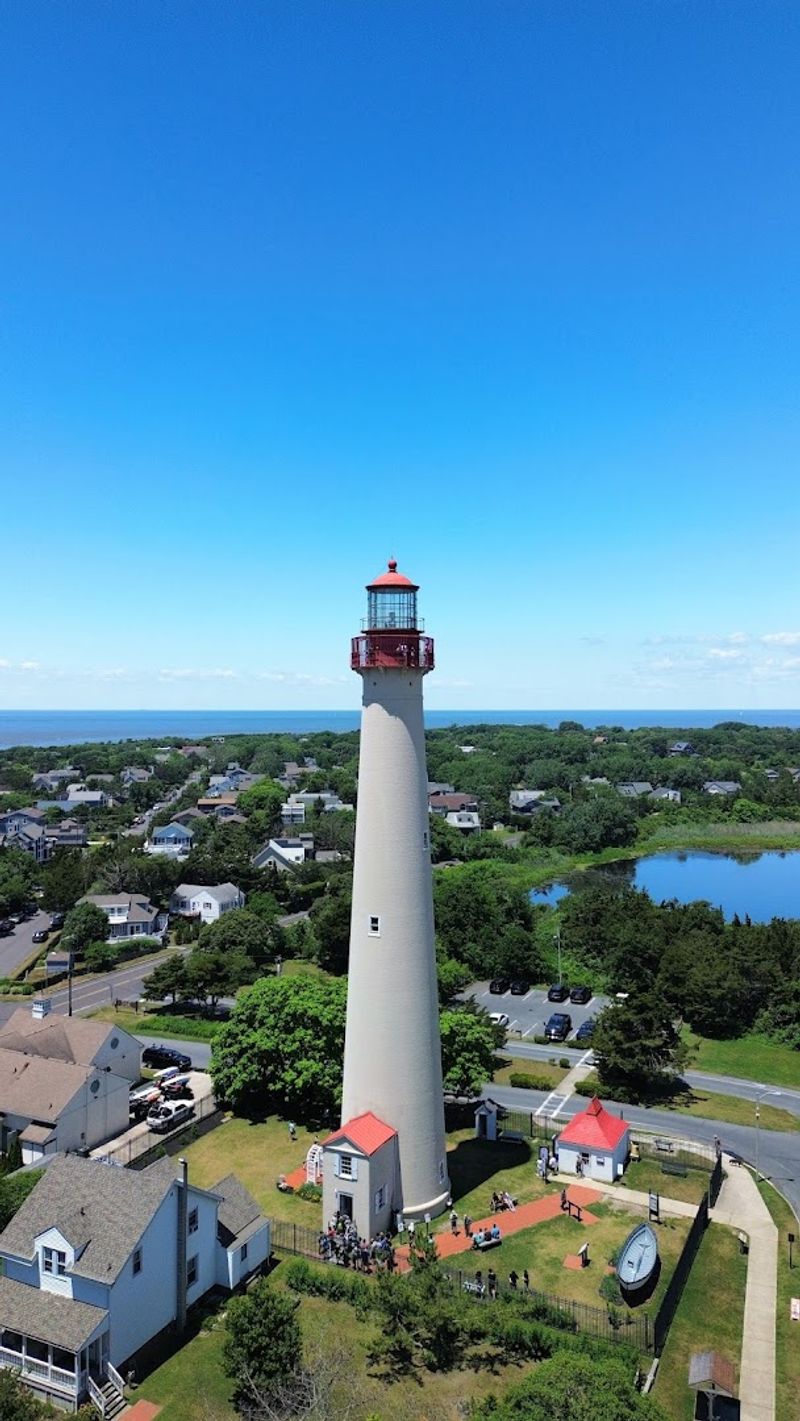
At Cape May Point State Park, the landscape feels like a meeting place: ocean, bay, dunes, marsh, birds, wind, and sky all crowding into one small corner of New Jersey. This is the southern tip of the state, and it has a different rhythm from the bigger beach towns nearby.
Things move more quietly here. People scan the water, pause along the trails, and look up often, because the next impressive thing may be flying overhead.
The park is especially beloved for birding, and not in a niche, only-for-experts way. During migration seasons, Cape May becomes one of the best places in the country to watch birds funnel along the coast.
Hawks, songbirds, shorebirds, and monarch butterflies all pass through at different times, turning the area into a living travel corridor. Even if you cannot identify a single species, the movement itself is exciting.
Beyond the wildlife, the park offers short trails, beach views, freshwater marsh, dunes, and the famous lighthouse nearby. It is easy to pair with a Cape May day, but it deserves more than a quick stop between shops and dinner reservations.
Parking is usually straightforward compared with busier beach areas, though peak summer and migration weekends can still draw crowds. Bring binoculars if you have them, but do not worry if you do not.
Cape May Point is one of those places where simply paying attention is enough.
Share this story