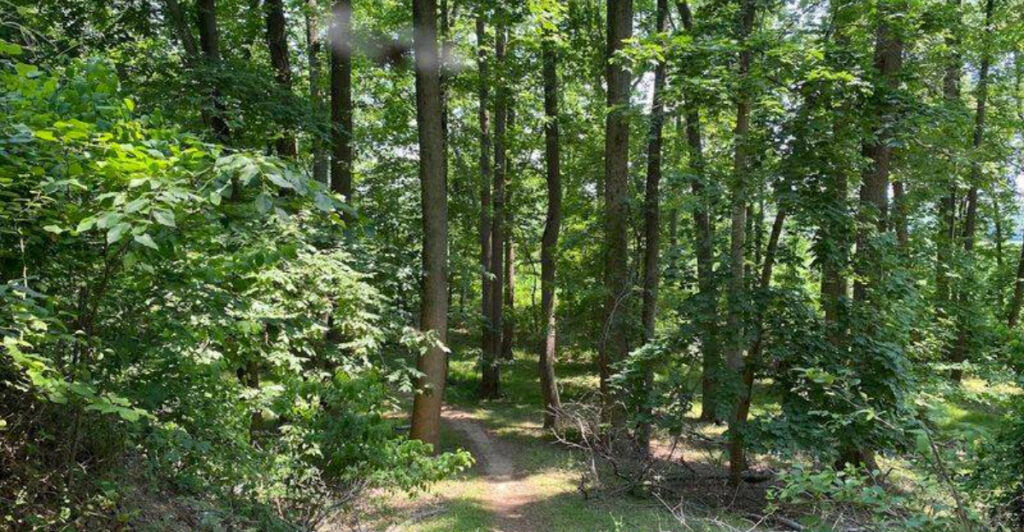
A wooden footpath disappears beneath tall trees, the noise of nearby roads fades, and suddenly the loudest thing around is a woodpecker hammering somewhere across the marsh. That quick change is what makes Rancocas State Park such a satisfying surprise.
Spread across sections of Westampton, Hainesport, and Mount Laurel, this Burlington County park does not announce itself with a grand entrance, crowded visitor plaza, or famous overlook. It simply slips into the landscape around Rancocas Creek, protecting forests, meadows, wetlands, and miles of lightly traveled trails.
Some paths follow sandy woods roads. Others pass frog ponds, tidal marshes, and bluffs above the water.
The park is close to Interstate 295, Route 38, and busy suburban neighborhoods, yet certain corners can feel remarkably removed from all of them. When South Jersey locals need a few quiet hours without driving to the mountains or fighting for trail space, this is where they vanish.
A Little-Known Burlington County Park Feels Worlds Away From Suburban New Jersey
The surprise begins before you have even finished the drive. Rancocas Nature Center, the most welcoming entry point for first-time visitors, sits at 794 Rancocas Road in Westampton, roughly two miles from Interstate 295.
Shopping centers, residential streets, and the steady movement around Mount Holly are all nearby, but they fall away quickly once the road narrows and the trees close in.
Instead of a large state park sign followed by gates and ticket booths, visitors find a white house, two modest parking areas, picnic tables, and a trail map near the edge of the woods.
That low-key arrival tells you plenty about Rancocas State Park. This is a rustic park rather than a polished recreation complex.
Much of it is divided into separate parcels, and there is no central headquarters tying everything together. Visitors should arrive with water, a trail map, and realistic expectations about restrooms and other facilities.
The Nature Center has indoor facilities during its operating hours, but the wider park is much more woods than infrastructure. That arrangement is part of the appeal.
Rancocas rarely produces the parking-lot scramble common at New Jersey’s better-known mountain trails. There is no dramatic summit attracting busloads of hikers and no swimming beach packing the shoreline on summer weekends.
People come here for unhurried walks, trail runs, birding, creek access, and the simple luxury of hearing leaves move without a crowd talking over them. The landscape also feels slightly untamed.
Trails may be sandy, muddy, rooty, or covered in leaves depending on the season. Bugs can be ambitious during warm weather, and wetlands mean waterproof shoes are often a smarter choice than spotless sneakers.
Rancocas rewards visitors who enjoy nature without requiring it to be neatly packaged. It is close enough for an after-work walk, yet quiet enough to make suburban Burlington County seem much farther away.
Rancocas Creek Winds Through Forests and a Freshwater Tidal Marsh
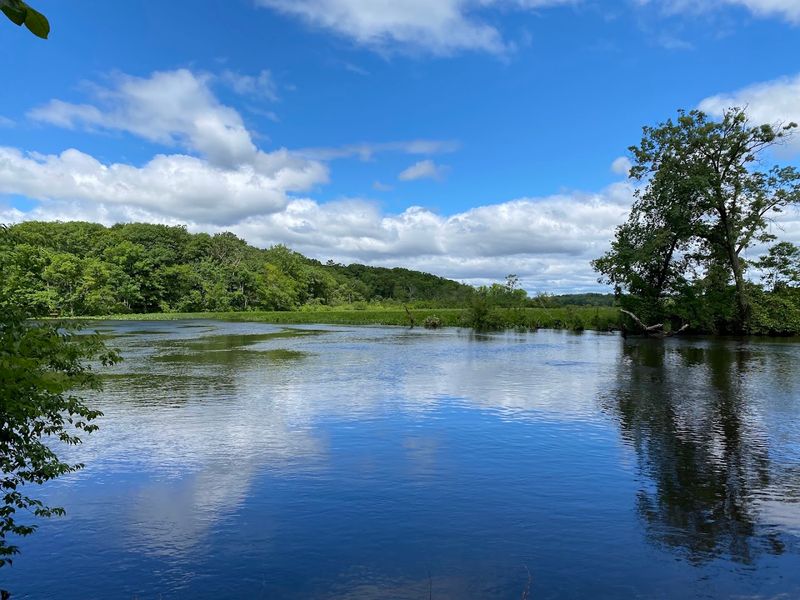
Stand quietly near the North Branch of Rancocas Creek and the park begins to reveal how much is happening beneath its calm surface. The creek is affected by tides even though this is not an oceanfront landscape, creating an extensive freshwater tidal marsh where water levels rise and fall with the Delaware River system.
Mudflats appear, marsh grasses shift in the current, and shallow edges become feeding territory for birds, turtles, frogs, and other wildlife. The water is the park’s organizing feature.
Rancocas Creek divides into north and south branches before the two meet near Hainesport in an area historically known as the Forks. Trails approach the creek from several directions, sometimes running close enough for clear views and sometimes remaining just above the floodplain beneath hardwood trees.
On still mornings, the water can look almost motionless. After heavy rain or during tidal changes, the same stretch takes on more energy, carrying branches, leaves, and ripples through the marsh.
One of the best places to appreciate the contrast is along the trails near the Nature Center. The woods can feel enclosed at first, with oak, maple, sweetgum, and other hardwoods creating a layered canopy.
Then the trees open, and the view stretches across wetland vegetation toward the creek. It is not a postcard panorama with mountains in the distance.
The beauty is closer and more detailed: exposed roots gripping a bank, dragonflies hovering above dark water, and herons standing so still they resemble pieces of driftwood. The tidal marsh also keeps the park from feeling visually repetitive.
A trail walked in early spring may offer open views through bare branches and flooded lowlands. By midsummer, the same route can be thick with green growth.
Autumn brings warm color to the hardwoods, while winter makes the bends of the creek easier to see. Visitors should remember that tidal ground and lowland forest can remain wet long after rain has stopped.
Mud is not a maintenance failure here; it is part of a functioning floodplain. That connection between creek, marsh, and forest is exactly what makes Rancocas different from the drier pine trails found elsewhere in South Jersey.
Miles of Trails Lead Through Three Distinct Corners of the Park
Calling Rancocas a single hiking destination is a little misleading. Its official trail system is spread across three clusters in Westampton, Hainesport, and Mount Laurel, giving visitors several noticeably different ways to explore the park.
The trail network includes more than 18 miles of routes, with options ranging from brief connectors to loops of several miles. Westampton is the easiest place to begin.
Trails surrounding the Rancocas Nature Center pass through meadows, wetlands, and woods, with names such as Deer Run, Little Brook, Maple Leaf, Meadow View, Squirrel Run, and Wildlife Walk. The 2.3-mile Rancocas Trail provides a longer option, while the short Turkey Feather Trail works more like a connector between routes.
Several trails immediately around the Nature Center are reserved for walking, and dogs and bicycles are not permitted on that portion of the network. Hainesport offers more mileage and a slightly rougher backwoods feel.
The three-mile Creekside Trail makes a broad loop near both branches of Rancocas Creek, while Oak Ridge Trail follows a sandy woods road through the uplands between them.
Mossy Bluff, Great Horned Owl, Red Fox, and Virginia Pine add shorter connections that make it possible to build a walk around the time and energy you have available.
The Hainesport section also includes routes used by cyclists and equestrians, along with creek access for fishing and paddling. The Mount Laurel cluster sits around Spencer Memorial Park and the woods bordering the South Branch.
Rancocas Woods Loop covers approximately 1.4 miles, while Towering Trees, Rancocas Creek, and Ironstone Bluff provide shorter side trips. This section works well when you want a manageable woodland walk rather than an all-afternoon outing.
Most routes are easy in terms of elevation, but easy does not always mean paved or spotless. Expect roots, sand, seasonal mud, fallen leaves, and occasional wet patches.
Saving a trail map before entering is wise because the disconnected sections can confuse visitors who assume every route begins at the Nature Center. Once the layout makes sense, Rancocas becomes the kind of park where you can return repeatedly without walking the same trail each time.
Meadows, Wetlands, and Hardwood Forests Create a Constantly Changing Landscape
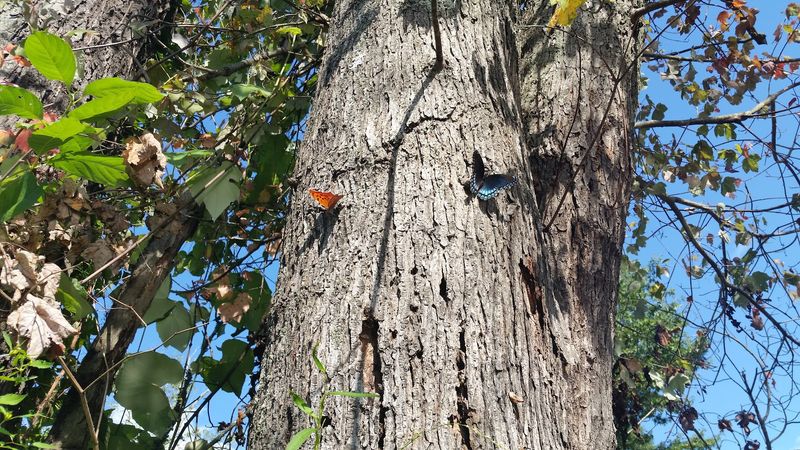
One turn might place you beneath a dense hardwood canopy; the next can send you along the edge of a sunny meadow buzzing with insects. That rapid change is one of Rancocas State Park’s best tricks.
Rather than protecting one signature landscape, the park brings several habitats together along the creek corridor, and each one changes the mood of the walk. The meadows near the Nature Center feel especially lively from late spring through early fall.
Grasses and wildflowers attract butterflies, bees, dragonflies, and songbirds, while the open sky creates a bright contrast with the nearby woods. Around the center grounds, visitors can also find a dragonfly pond, frog pond, Monarch waystation, sensory activity area, and gardens designed to support pollinators and wildlife.
These are small features, but they make a short walk surprisingly rewarding, particularly for families who prefer frequent discoveries over a long march through uninterrupted forest. The wetlands slow everything down.
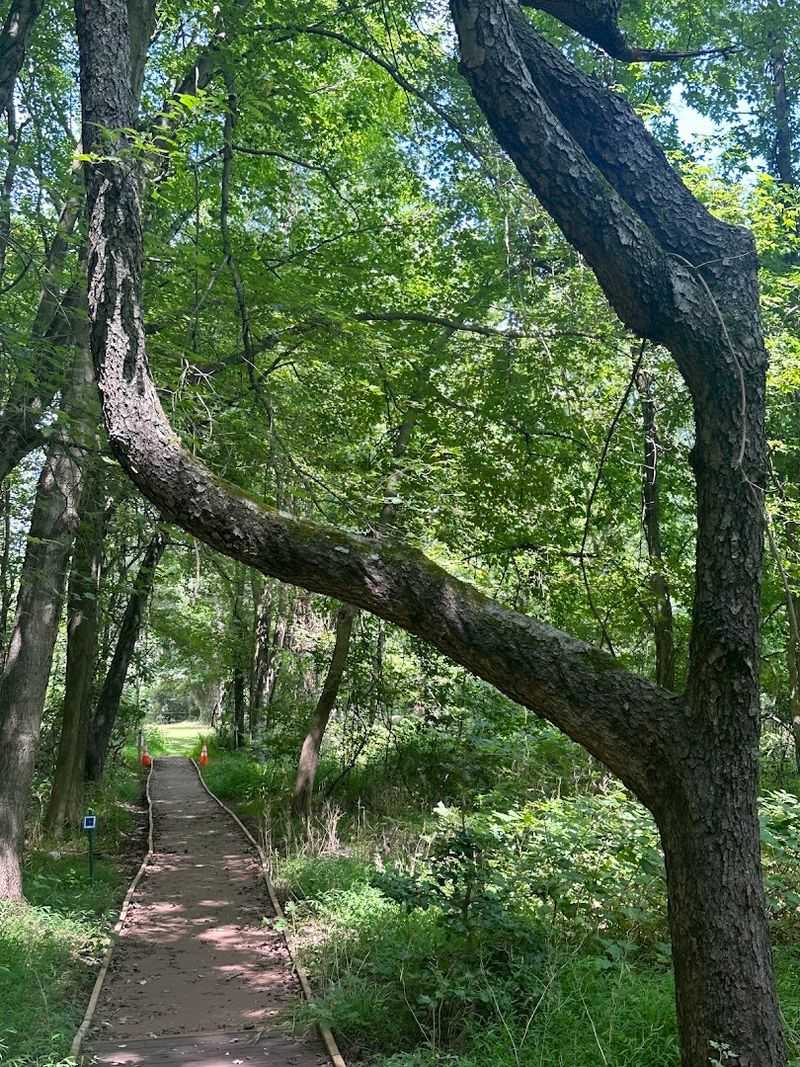
Boardwalks and low paths bring visitors close to places where water gathers beneath trees and around thick vegetation. Frogs call from hidden pockets, turtles may appear near ponds and creek edges, and birds move between the marsh and canopy.
A designated natural area protects upland and lowland hardwood forest beside the North Branch and its freshwater tidal marsh, giving visitors a concentrated look at how those environments overlap. Deeper in the Hainesport and Mount Laurel sections, the atmosphere becomes more shaded and enclosed.
Oaks and pines line sandy routes, while bluffs create subtle changes in elevation above the creek. No climb is especially demanding, but even a small rise can provide a different view across the floodplain.
Season matters here. Spring brings wet ground, frog activity, and fresh growth.
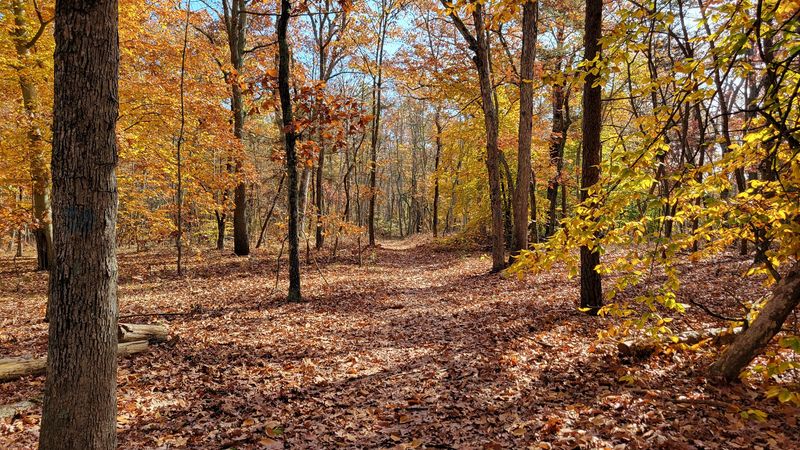
Summer fills the trails with shade but also mosquitoes and ticks, making repellent and a post-hike tick check sensible. Autumn is arguably the park’s showiest period, when hardwood color reaches the water’s edge.
Winter strips away the foliage and exposes the curves of the land. Rancocas never relies on one breathtaking viewpoint; it keeps changing the scenery a few hundred feet at a time.
Paddling, Fishing, and Wildlife Watching Reveal the Park’s Quieter Side
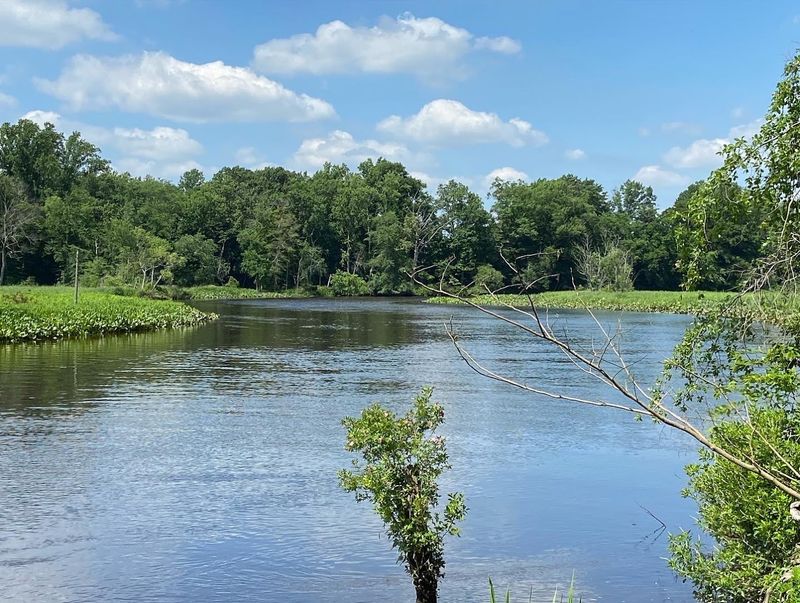
The park gets even quieter once you stop treating the trails as the whole attraction. Rancocas Creek creates opportunities for paddling and fishing, particularly in the Hainesport section, where visitors can find canoe access alongside miles of wooded trails.
A kayak or canoe places you at water level, where wooded banks, marsh vegetation, and bends in the creek replace the usual view from a footpath. This is tidal water, so a paddle requires more planning than simply dropping a boat into a pond.
Current, water level, weather, and the location of access points all matter. Paddlers should check conditions before launching, carry required safety equipment, and understand how the tide may affect the return trip.
The creek’s calm appearance can be deceptive when water levels are changing. Preparation pays off with a perspective most walkers never see: the underside of overhanging branches, quiet pockets beside the marsh, and long stretches where road noise disappears almost completely.
Fishing is another unhurried way to experience the park. The Hainesport area provides access to Rancocas Creek, although anyone casting a line must follow current New Jersey fishing license requirements and freshwater regulations.
This is not a developed fishing pier with bait shops and snack stands nearby. It is a bring-your-own-gear setting where patience is more useful than a packed itinerary.
Wildlife watchers do not need a boat or fishing rod to enjoy the creek. The mix of open meadow, swamp forest, freshwater tidal marsh, and mature woods supports a broad range of bird and animal life.
Great blue herons, woodpeckers, hawks, waterfowl, songbirds, turtles, deer, and frogs are all possible sightings, though nothing arrives on schedule. Early morning and the final hours before dusk tend to be quieter, and binoculars turn small movements across the marsh into the best part of the visit.
The local approach is simple: move slowly, lower your voice, and keep looking along habitat edges. At Rancocas, the memorable moment is often not something huge.
It is a heron lifting from the creek, a turtle slipping from a log, or a sudden splash in the reeds that leaves you wondering what made it.
The Rancocas Nature Center Brings Visitors Even Closer to the Wild
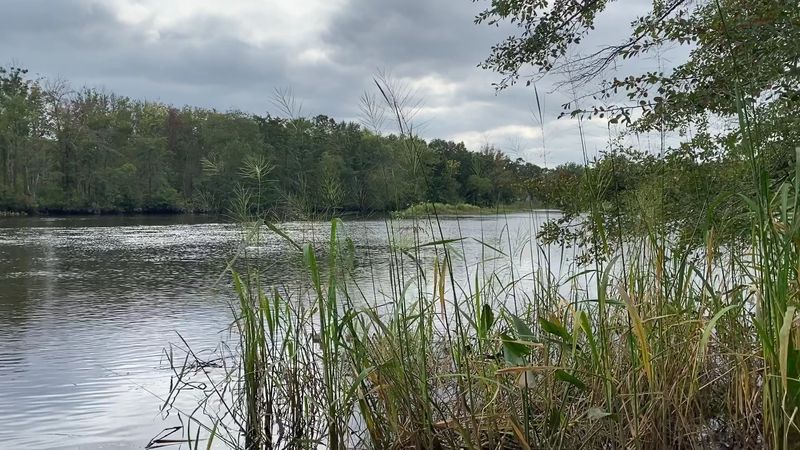
The white house beside the Westampton trails is more than a convenient landmark. Rancocas Nature Center has been providing environmental education in the park since 1977, turning a 210-acre portion of the property into an approachable outdoor classroom.
Its approximately three miles of trails pass through meadow, forest, and wetland habitats, making the center the best starting point for families, first-time visitors, and anyone who prefers a little guidance before heading deeper into the park.
Inside the Visitor Center, natural history displays, trail maps, a nature store, live animals, and restrooms give visitors useful context for what they may encounter outside.
The displays include native reptiles and other educational specimens rather than rescued wildlife; the organization is an education center, not an animal hospital or shelter.
Programs held throughout the year cover subjects such as reptiles, bats, frogs, botany, birding, and seasonal changes, while guided walks help visitors identify details they might otherwise pass without noticing.
The grounds are designed for wandering at a gentle pace. A children’s garden sits near the parking area, while a dragonfly pond, frog pond, butterfly house, Monarch waystation, sensory space, and pollinator garden create several easy stops before the main trails even begin.
Picnic tables and benches are available from morning until dusk, though grilling, smoking, amplified music, and leaving trash behind are prohibited. The outdoor trails are generally open seven days a week until dusk.
Dogs and bicycles are not permitted on the Nature Center trails, helping protect wildlife and keeping the area comfortable for school groups and young children. Visitor Center hours can vary by season, so checking the current schedule before arriving is sensible.
A small suggested donation helps support the nonprofit organization’s educational work and trail maintenance. That modest contribution suits the place.
Rancocas Nature Center does not try to turn the woods into an attraction packed with distractions. It simply gives visitors enough information to look more closely.
By the time you return to the white house with muddy shoes and a few new bird names, the quiet forest outside feels less empty and much more alive.