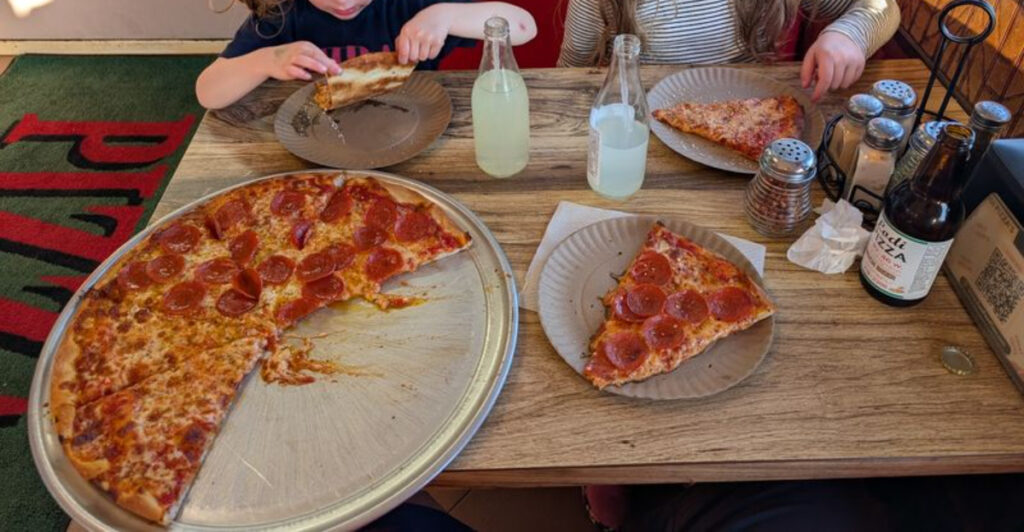
A square slice lands on the counter with a crisp, browned bottom, a thick but airy middle, and enough bubbling cheese to require at least one napkin. The setting is not a polished pizza hall with glowing menu screens and app-based rewards.
It is Lodi Pizza Restaurant, a cash-only Route 46 fixture where the ATM, vintage register, and framed Sopranos memorabilia feel as much a part of the experience as the tomato sauce.
Since 1969, this family-run Bergen County pizzeria has built its reputation the slow way: one Sicilian pie, one phone order, and one returning customer at a time.
The thick squares receive most of the attention, but thin round pies, fried calzones, arancini, pasta dinners, and hot Italian sandwiches give regulars plenty of reasons to work through the menu.
More than five decades after opening, Lodi Pizza still operates like the neighborhood place it has always been—straightforward, familiar, and very serious about getting the crust right.
Lodi Pizza Restaurant Has Been a Route 46 Landmark Since 1969
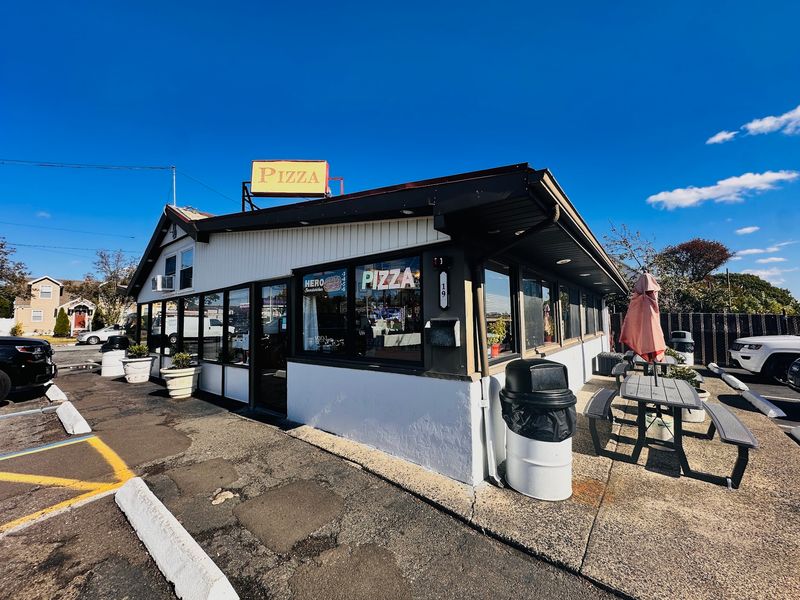
Route 46 is not exactly designed for lingering. The busy North Jersey corridor is lined with dealerships, shopping centers, diners, and businesses people pass while trying to get somewhere else.
Yet at 19 US-46 in Lodi, generations of drivers have made a point of pulling over for pizza. Lodi Pizza Restaurant opened in 1969 and has remained family-run, surviving shifting food trends, changing neighborhoods, and more than a few debates over what makes a proper Jersey slice.
Its staying power comes from resisting the urge to turn itself into something newer or flashier. There is no elaborate concept to decode.
Customers walk in, study the pies, place an order at the counter, and leave with the kind of food they may have been eating here since childhood. That continuity matters in Bergen County, where old-school Italian-American restaurants are part of the local fabric.
A customer who first stopped by after school can return decades later with children or grandchildren and find the same focus on pizza, calzones, pasta, and hot sandwiches.
The address is especially convenient for travelers moving between Lodi, Hackensack, Garfield, and the surrounding Route 46 communities, while an on-site parking area removes the usual North Jersey search for a legal space.
Current listed hours generally begin at 10 a.m. Monday through Saturday and noon on Sunday, with closing around 8 p.m., making the restaurant as practical for a quick lunch slice as it is for an early family dinner.
That accessibility has helped, but convenience alone does not keep a pizzeria open for more than half a century. Lodi Pizza earned landmark status by giving people a reason to remember the turnoff.
Thick Sicilian Slices Remain the Main Attraction
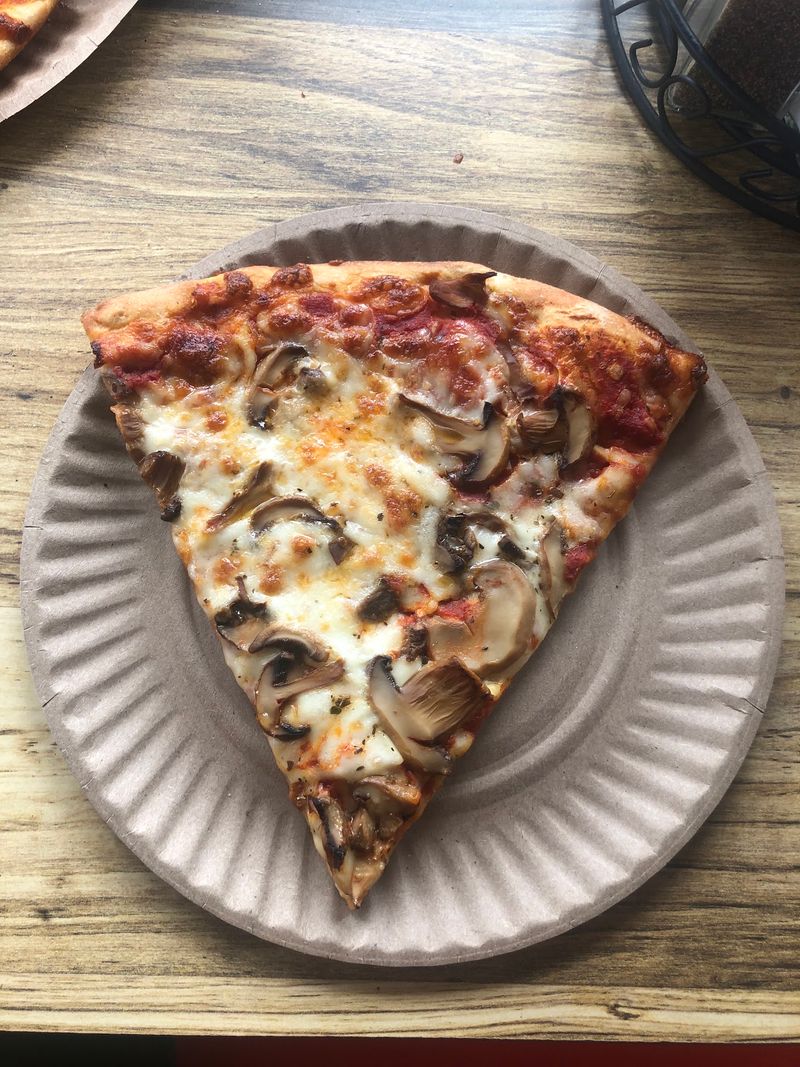
The first thing to notice about the Sicilian slice is that it has real height without eating like a block of bread. The crust rises into a substantial square with an airy interior, while the pan gives the underside and edges enough crispness to hold everything together.
That contrast is the entire game with Sicilian pizza. Make it too dense and it becomes exhausting halfway through.
Let the base stay too soft and the cheese and sauce slide away the moment the slice is lifted. Lodi Pizza has had decades to find the middle ground.
Its plain Sicilian keeps the formula easy to understand: a sturdy crust, bright tomato sauce, melted cheese, and browned corners that many customers quietly hope to claim first. The sauce brings enough tang to cut through the richness, while the crust remains chewy rather than heavy.
Toppings turn the slice into a full meal. A supreme Sicilian can arrive covered with sausage, pepperoni, mushrooms, peppers, onions, and olives, yet the base is built to support the load instead of collapsing beneath it.
Pepperoni adds crisp, salty edges; sausage brings a deeper, seasoned bite; mushrooms and vegetables soak up the sauce without turning the center into a soggy mess. Even a simple half-plain, half-pepperoni order shows why these pies work so well for groups with different ideas about dinner.
The squares are filling, but the appeal is not simply their size. Plenty of pizzerias can bake thick dough in a rectangular pan.
What keeps fans returning is the balance between the crunchy bottom, soft center, tomato, cheese, and toppings. It feels generous without becoming chaotic—the pizza equivalent of somebody who knows exactly how much is enough.
Thin Round Pies Keep the Classics Simple and Satisfying
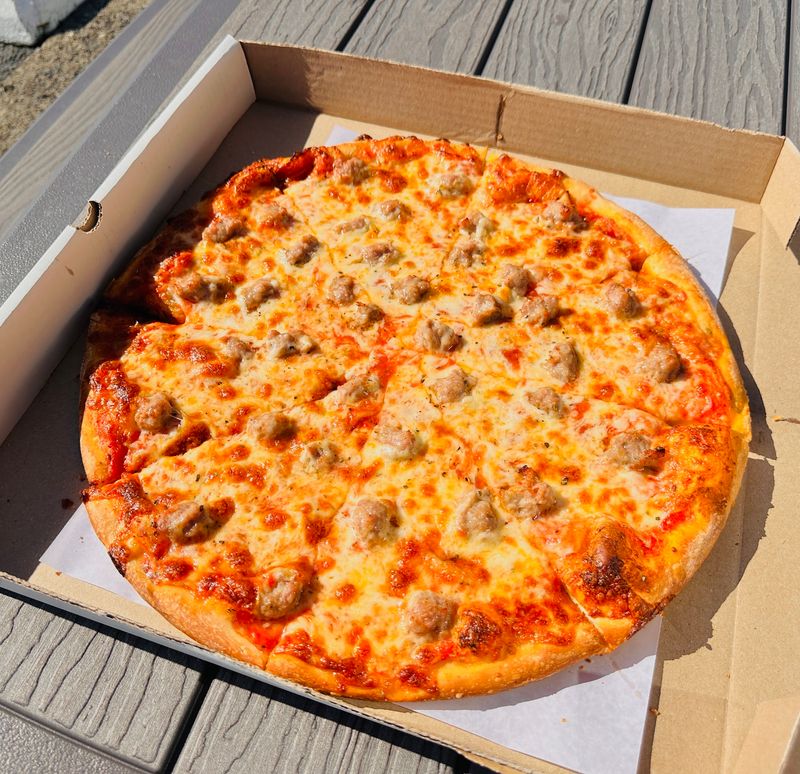
Not every visit needs to begin with the thickest slice in the case. Lodi Pizza’s round pies offer a thinner, foldable alternative for customers who prefer the classic North Jersey combination of crisp crust, tomato sauce, and mozzarella.
A plain cheese pie is the useful test. There are no piles of toppings available to distract from underseasoned sauce or a weak base, so each part has to do its job.
Here, the crust has enough structure to pick up by the tip and enough flexibility for the traditional fold. The cheese melts evenly across the surface, leaving browned spots around the edges, while the tomato flavor remains present instead of disappearing beneath the mozzarella.
Sausage is one of the most frequently praised additions, especially among regulars who appreciate a topping with actual seasoning and texture. Rather than overwhelming the pie, it works with the sauce and cheese, giving each slice a savory boost.
Pepperoni, meatball, mushrooms, and other familiar choices allow diners to stay firmly within pizzeria territory, while half-and-half combinations prevent the usual negotiation over toppings. White pies move in a different direction, replacing tomato sauce with a richer combination that can include ricotta and mozzarella.
The result is creamier but still grounded by the thin crust. Pizza Boscaiola also appears among the restaurant’s customer favorites, offering another option for diners ready to move beyond a standard cheese pie.
The round pizzas do not try to compete with the Sicilian by imitating its heft. They succeed because they deliver a separate experience: thinner, crisper, easier to fold, and suited to anyone who believes the best pizza order is often the least complicated one on the menu.
Calzones, Arancini, and Italian Dinners Go Beyond Pizza
Watch the counter long enough and eventually somebody leaves carrying a bag that clearly contains more than a pie. Pizza may be the headline at Lodi Pizza Restaurant, but the wider menu follows the familiar rhythm of a neighborhood Italian-American kitchen.
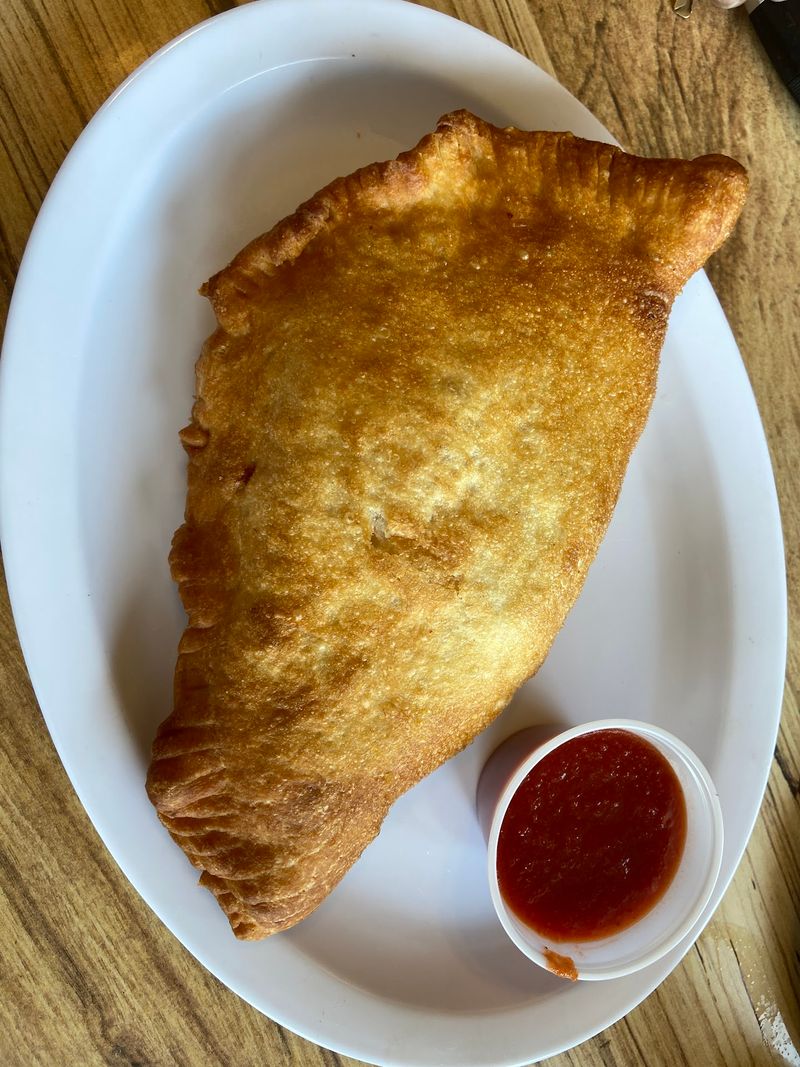
Calzones are available fried or baked, which is an important distinction for people with strong opinions on the subject. A baked calzone offers the more traditional bread-like shell, browned in the oven and wrapped around warm cheese and optional fillings.
The fried version is less restrained, arriving with a crisp, blistered exterior that turns the whole thing into a wonderfully rich handheld meal. Fried ham calzones are among the dishes customers regularly single out.
Arancini bring the menu back toward its Sicilian roots. These breaded rice balls are fried until crisp outside while remaining soft and savory in the center.
They work as an appetizer for the table, although sharing becomes less appealing after the first bite. For a sit-down meal, the choices extend into lasagna, spaghetti with marinara, stuffed shells, and other pasta plates built for customers who came hungry enough to require a fork.
Chicken parmigiana appears in multiple forms, including a hot sandwich and fuller dinner-style preparations, while meatball and veal parmigiana heroes continue the red-sauce tradition.
Chicken cutlet sandwiches, antipasto salad, soup, and crusty bread make it possible to assemble a complete meal without ordering pizza at all—though skipping the pizza entirely may require unusual discipline.
The variety also explains why Lodi Pizza functions as more than a quick slice counter. One person can order a Sicilian square, another can settle in with lasagna, and someone else can leave happily carrying a fried calzone.
Nobody has to compromise, except perhaps the person expected to share the arancini.
A Sopranos Appearance Gave the Neighborhood Favorite Screen Time
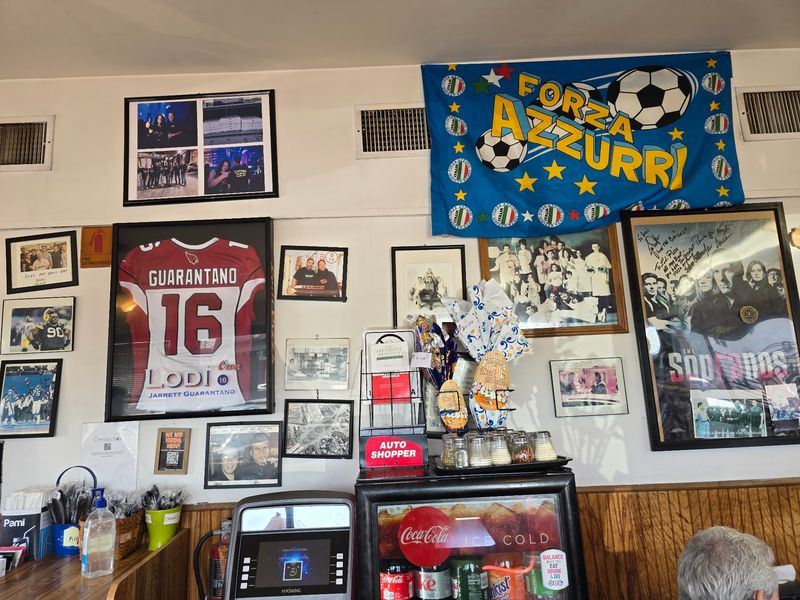
Long before television crews arrived, Lodi Pizza already looked ready for its close-up. The restaurant’s genuine North Jersey character made it a natural fit for The Sopranos, a series famous for filming in real homes, restaurants, storefronts, and roadside businesses across the state.
Lodi Pizza appeared in “Employee of the Month,” the fourth episode of the show’s third season. During the episode, Tony Soprano and Furio Giunta meet Ralph Cifaretto at the pizzeria, placing the real Route 46 restaurant directly inside the show’s fictional mob world.
The scene did not require the business to transform itself into a sleek television set. Its familiar counter-service appearance and lived-in surroundings already supplied the authenticity the production needed.
Today, framed and signed Sopranos memorabilia inside the restaurant preserves that connection, giving fans something to examine while waiting for a pie. It is a fun piece of local history, particularly because Lodi and the surrounding Bergen County area appear repeatedly throughout the series.
Satin Dolls, another Lodi business, famously doubled as the Bada Bing, making the borough a small but memorable part of the show’s geography. Still, Lodi Pizza does not feel like a themed attraction built around a brief television appearance.
There are no elaborate recreations or forced references competing with lunch. The connection is simply another layer in a restaurant that was already more than 30 years old when the episode aired.
Fans may arrive because they recognize the location, take a photo, and point out where the characters stood, but the experience quickly returns to normal pizzeria business. A box is folded, a pie comes out of the oven, and the most important question becomes whether to order Sicilian or round.
The Cash-Only Counter and Time-Capsule Dining Room Keep It Old School
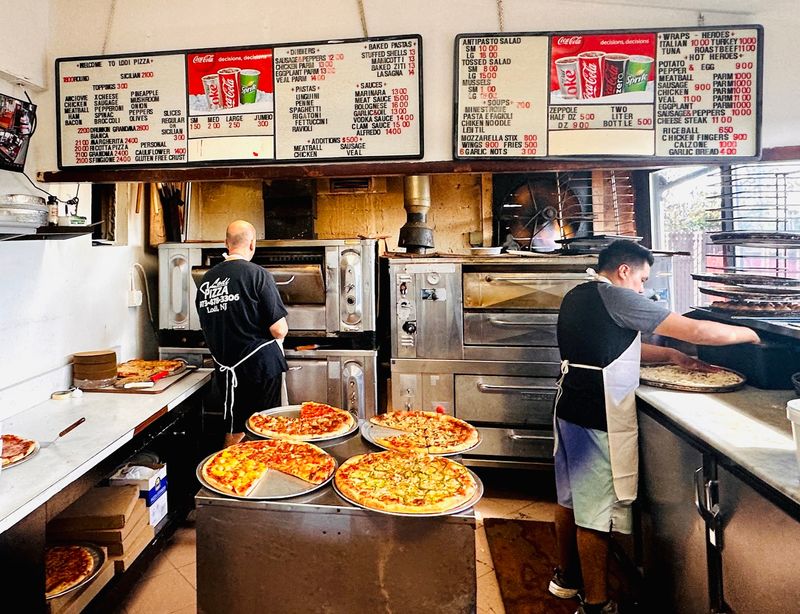
Cash only means cash only, although the ATM inside can rescue anyone who arrives holding nothing but a phone and a credit card. The policy is one of several details that make Lodi Pizza feel less like a carefully staged retro restaurant and more like a business that simply kept doing things its own way.
Orders are placed at the counter or by phone, the vintage-style register remains part of the scene, and pizza boxes move steadily from the kitchen to customers waiting for takeout. During busy periods, a freshly made pie may require patience, particularly when several phone orders are ahead in the queue.
That wait is easier to accept when the alternative is a reheated slice designed for speed rather than quality. The dining room continues the same unpolished charm.
Framed photographs, Italian-American decorations, and Sopranos memorabilia cover walls that have accumulated character naturally rather than through a designer’s mood board. Indoor seating allows families to turn a pizza pickup into dinner, while outdoor tables provide another option in suitable weather.
The soundtrack is largely functional: kitchen noise, conversation, phones ringing, boxes being assembled, and customers discussing which pie belongs to whom. Practical touches keep the experience from becoming inconvenient for the sake of nostalgia.
The restaurant has parking, air conditioning, accessible seating, and hours that cover both lunch and dinner. Yet it retains the straightforward personality of an earlier neighborhood pizzeria.
There are no complicated ordering rituals and little need for menu coaching. Bring cash, know whether you want a square or a triangle, and leave room for a calzone or rice ball.
After more than five decades, Lodi Pizza Restaurant still understands that an old-school atmosphere works best when nobody has to pretend.