Texas knows how to do things big, and nowhere is that more obvious than along its highways and back roads. From giant cowboys to oversized teacups, the Lone Star State is packed with quirky attractions that make you slam on the brakes and reach for your camera. These aren’t your average tourist traps—they’re bold, bizarre, and unapologetically Texan landmarks that celebrate everything from local history to pure imagination.
1. Paisano Pete (Fort Stockton)
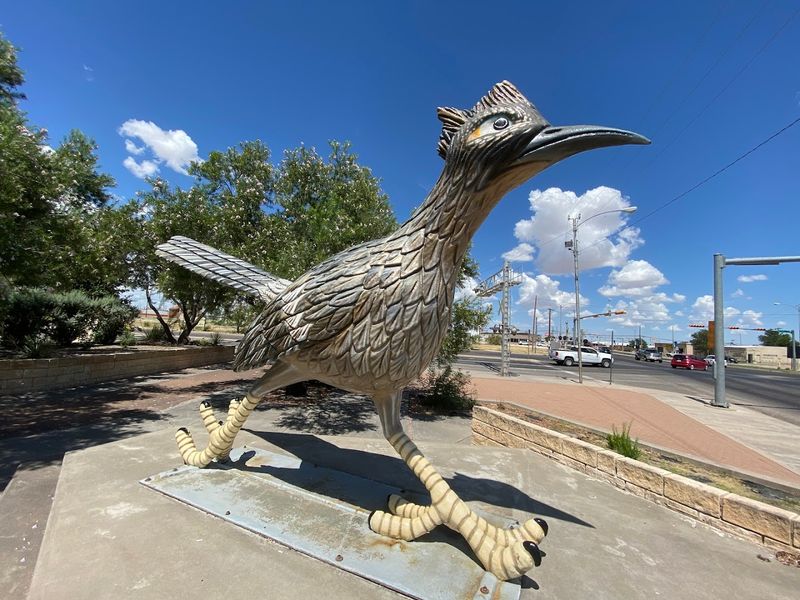
Standing twenty feet tall and stretching over twenty-two feet long, this roadrunner statue greets travelers rolling through Fort Stockton with a grin only a bird that size could pull off. Paisano Pete has been watching over this West Texas town since 1979, and he’s become more than just a photo op—he’s practically the town mascot. The statue sits right off Interstate 10, making it an easy pit stop for anyone cruising between El Paso and San Antonio.
Fort Stockton wanted something memorable to represent the area, and what better choice than the roadrunner? This bird is tough, fast, and perfectly suited to the harsh desert climate surrounding the town. Pete was built to honor that scrappy spirit, and locals take pride in their oversized feathered friend.
The statue is made of fiberglass and steel, painted in bright colors that pop against the dusty landscape. His beak points forward like he’s about to take off down the highway, and his legs are sturdy enough to withstand decades of wind, sun, and the occasional dust storm. Kids love climbing around the base for pictures, and adults appreciate the nostalgia of classic roadside Americana.
Fort Stockton itself is a small town with a big personality, and Pete fits right in. The area is known for its historic sites, including old frontier forts and natural springs that once served as vital watering holes for travelers. But these days, most people stop because of Pete.
Whether you’re a serious roadside attraction hunter or just someone who needs to stretch their legs, Paisano Pete delivers. He’s goofy, he’s huge, and he’s exactly the kind of landmark that makes a long drive through West Texas a little more interesting. Snap a selfie, grab some snacks at a nearby gas station, and keep rolling—Pete will still be there next time you pass through.
2. World’s Largest Cowboy Boots (San Antonio)
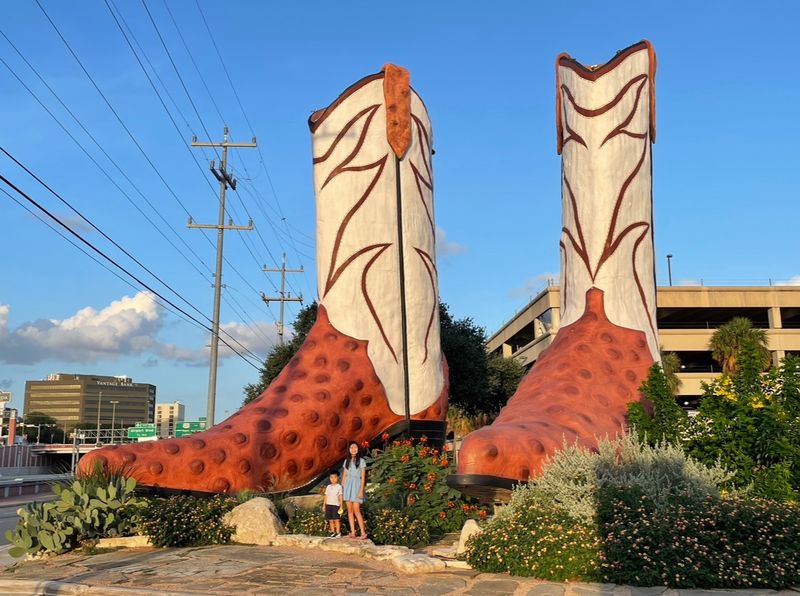
Parked outside North Star Mall in San Antonio, a pair of enormous cowboy boots stands taller than most people’s living rooms. These aren’t just big—they’re thirty-five feet tall and bright red, impossible to miss even if you tried. Created by artist Bob Wade in 1979 for a Washington, D.C. art exhibition, the boots eventually found their permanent home in Texas, where they fit right into the landscape.
The boots were originally part of a temporary installation called “Daddy’s Boots,” meant to celebrate Western culture and cowboy heritage. After their debut on the East Coast, they traveled around before settling in San Antonio, a city that knows a thing or two about cowboy style. They’ve been standing guard at the mall since the early 1980s, welcoming shoppers and tourists alike.
Made from steel and fiberglass, the boots are designed to look like classic work boots with stitching, heels, and even weathered details that make them feel authentic despite their cartoonish size. Kids love running between them, and photographers can’t resist the challenge of fitting both boots into a single frame. They’ve become one of San Antonio’s most recognizable landmarks, right up there with the Alamo and the River Walk.
The mall itself is a popular shopping destination, but plenty of people stop by just to see the boots. They represent Texas pride in its purest form—bold, unapologetic, and a little bit cheeky. Over the years, they’ve been featured in countless travel guides, Instagram posts, and family vacation albums.
What makes these boots special isn’t just their size—it’s the way they capture the spirit of Texas in a single, larger-than-life image. They’re playful without being tacky, and they remind everyone who sees them that sometimes bigger really is better. If you’re in San Antonio, swing by North Star Mall and pay your respects to the world’s most famous footwear.
3. Cadillac Ranch (Amarillo)
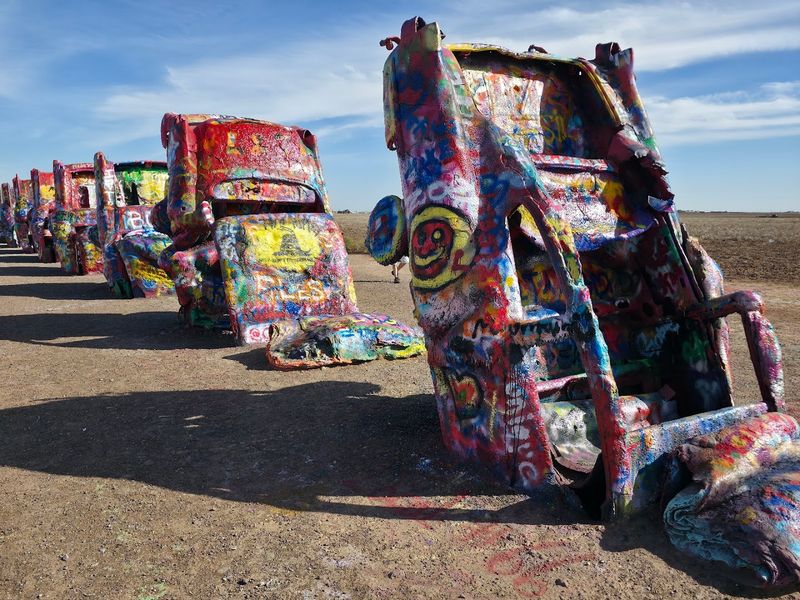
Out in a field just west of Amarillo, ten Cadillacs are buried nose-first in the dirt, their tail fins pointing toward the sky like metallic tombstones. Cadillac Ranch has been standing since 1974, when a group of artists known as the Ant Farm planted these vintage cars as a tribute to the golden age of American automobiles. It’s become one of the most iconic roadside attractions in the country, and it’s completely free to visit.
The cars range from a 1949 Club Sedan to a 1963 Sedan, representing the evolution of the Cadillac’s famous tail fin. Each one is covered in layers of spray paint, applied by thousands of visitors over the decades. The colors change constantly, creating a living canvas that reflects whoever happened to stop by that day.
Bringing your own spray paint is encouraged—this is one of the few places where graffiti is not only allowed but celebrated.
Located right off Interstate 40, the installation sits on private land but is open to the public year-round. There’s a small dirt parking area, and from there, it’s a short walk across the field to reach the cars. The ground can get muddy after rain, so wear shoes you don’t mind getting dirty.
What started as an art project has become a cultural landmark, attracting everyone from road trippers to professional photographers. The contrast between the rusted metal, bright paint, and wide-open Texas sky creates a scene that feels both surreal and quintessentially American. Some visitors leave messages, others just add their mark to the chaos, and a few simply stand back and take it all in.
Cadillac Ranch isn’t polished or curated—it’s raw, messy, and constantly evolving. That’s exactly what makes it special. Whether you’re an art lover, a car enthusiast, or just someone looking for a memorable detour, this quirky installation delivers every time.
4. Eiffel Tower With Cowboy Hat (Paris)
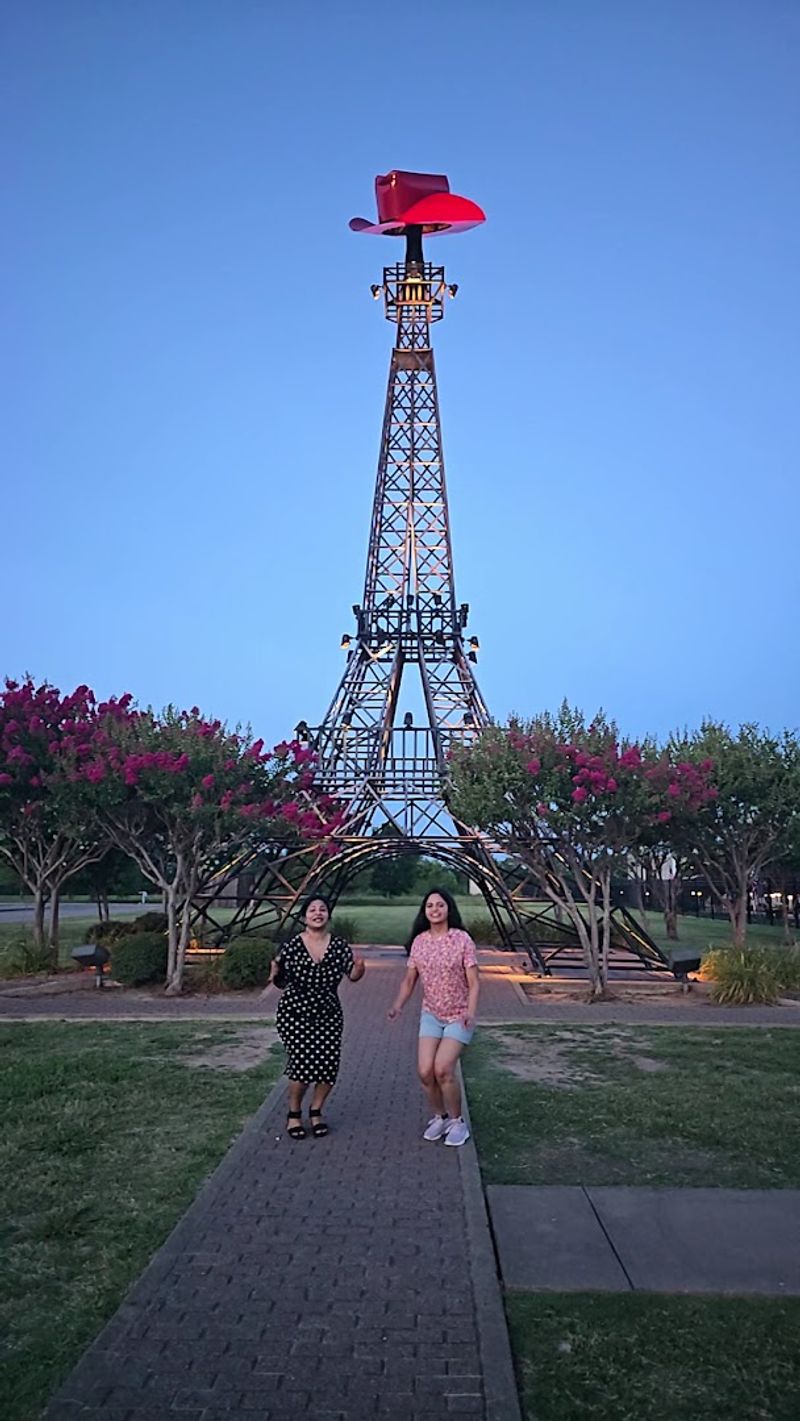
Paris, Texas, decided it needed its own Eiffel Tower, so in 1993, the town built a sixty-five-foot replica and topped it off with a giant red cowboy hat. The result is one of the most charming and unexpected landmarks in the state—a perfect blend of French elegance and Texas swagger. It stands in front of the Paris Civic Center, proudly declaring that this Paris has its own unique style.
The tower itself is made of steel and painted to match the original structure in France, complete with lattice detailing and a pointed top. But the cowboy hat is what really sets it apart. Made of red metal, the hat sits at a jaunty angle, giving the whole structure a playful personality.
It’s a visual pun that works surprisingly well, and locals love it.
Paris, Texas, has a population of around 25,000 people, and the tower has become a source of pride for the community. It’s featured on postcards, T-shirts, and countless tourist snapshots. The area around the tower is well-maintained, with benches and landscaping that make it a pleasant spot to visit, especially in the evening when the tower is lit up.
The hat was added in 1998, five years after the tower was built, as a way to distinguish this Eiffel Tower from all the other replicas scattered around the world. And it worked—there’s no mistaking this one for anything but Texan. Visitors can walk right up to the base and snap photos from every angle, and there’s plenty of parking nearby.
Whether you’re passing through on a road trip or making a special detour, the Eiffel Tower with a cowboy hat is worth the stop. It’s quirky, it’s clever, and it represents the kind of small-town creativity that makes Texas roadside attractions so memorable. Paris may not have the Seine, but it’s got something even better—a landmark with personality.
5. World’s Largest Spur (Lampasas)
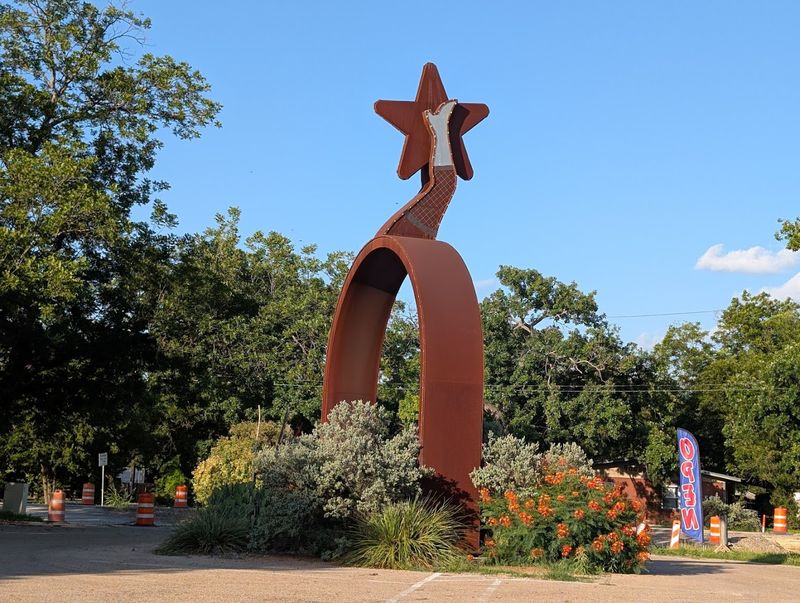
In Lampasas, a small town in Central Texas, a massive spur rises from the ground like a monument to cowboy culture. This isn’t your average piece of ranch equipment—it’s a towering sculpture that measures several feet tall and weighs hundreds of pounds. The spur is a tribute to the town’s ranching heritage, and it’s become a popular stop for travelers exploring the Texas Hill Country.
Spurs have been an essential tool for cowboys since the days of the open range, used to communicate with horses and control their movements. Lampasas wanted to honor that history in a big way, so they commissioned this oversized version and placed it in a spot where everyone could see it. The sculpture is made of metal, carefully crafted to resemble a traditional Western spur with a rowel, shank, and heel band.
The spur sits near the town square, surrounded by historic buildings and local shops. Lampasas itself is known for its natural springs and old-fashioned charm, making it a pleasant place to spend an afternoon. The spur adds an extra layer of character, giving visitors a reason to stop, stretch their legs, and snap a few photos.
What’s impressive about this attraction is how it manages to be both functional as a town symbol and entertaining as a roadside oddity. It’s not trying to be ironic or overly artsy—it’s just a straightforward celebration of cowboy life, rendered in a size that demands attention. Kids enjoy posing next to it, pretending to be cowboys themselves, while adults appreciate the craftsmanship and the nod to Texas history.
Lampasas may not be the biggest town in Texas, but it knows how to make an impression. The World’s Largest Spur is proof that even small communities can create landmarks worth visiting. If you’re driving through Central Texas and need a break from the highway, swing by Lampasas and pay your respects to this giant piece of cowboy gear.
6. Sam Houston Statue (Huntsville)
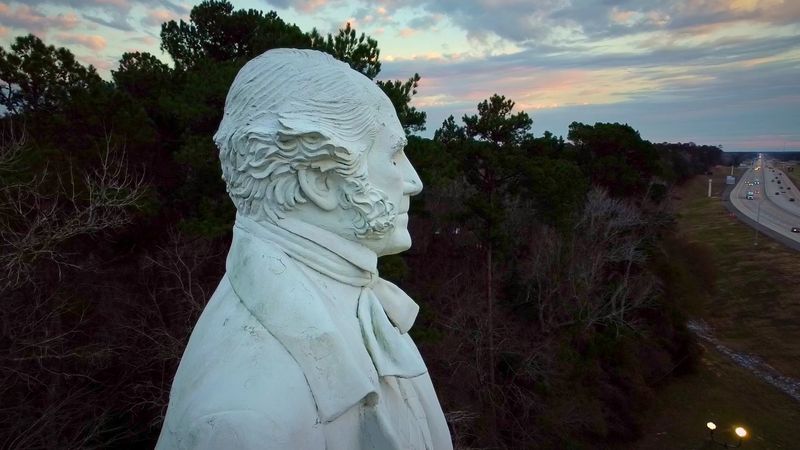
Just off Interstate 45 near Huntsville, a colossal white statue of Sam Houston rises sixty-seven feet into the air, making it one of the tallest statues of an American hero in the country. Dedicated in 1994, this tribute to the legendary general and Texas statesman is impossible to miss as you drive between Houston and Dallas. The statue depicts Houston in a contemplative pose, standing with a cane and gazing toward the future of the state he helped create.
Sam Houston is one of the most important figures in Texas history, serving as the first president of the Republic of Texas and later as governor. He led the Texan army to victory at the Battle of San Jacinto, securing independence from Mexico in 1836. Huntsville, where Houston lived during his later years, is a fitting location for this massive monument.
The statue is made of concrete and steel, covered in a bright white finish that stands out against the East Texas pines. It weighs over thirty tons and took years to plan and construct. Sculptor David Adickes, known for creating other giant statues across Texas, designed this piece to honor Houston’s legacy in a way that matched his larger-than-life reputation.
There’s a visitor center at the base where you can learn more about Houston’s life and the construction of the statue. The area includes picnic tables and a small gift shop, making it a convenient rest stop for families on long drives. The statue is visible from the highway, but it’s worth pulling off to see it up close and appreciate the scale.
What makes this statue special is how it captures both the grandeur and the humility of Sam Houston. He’s not depicted in battle gear or on horseback—instead, he’s shown as a thoughtful leader, someone who shaped the future of Texas with vision and determination. It’s a powerful reminder of the state’s history and the people who fought for its independence.
7. Texas Crab Festival Grounds (Crystal Beach)
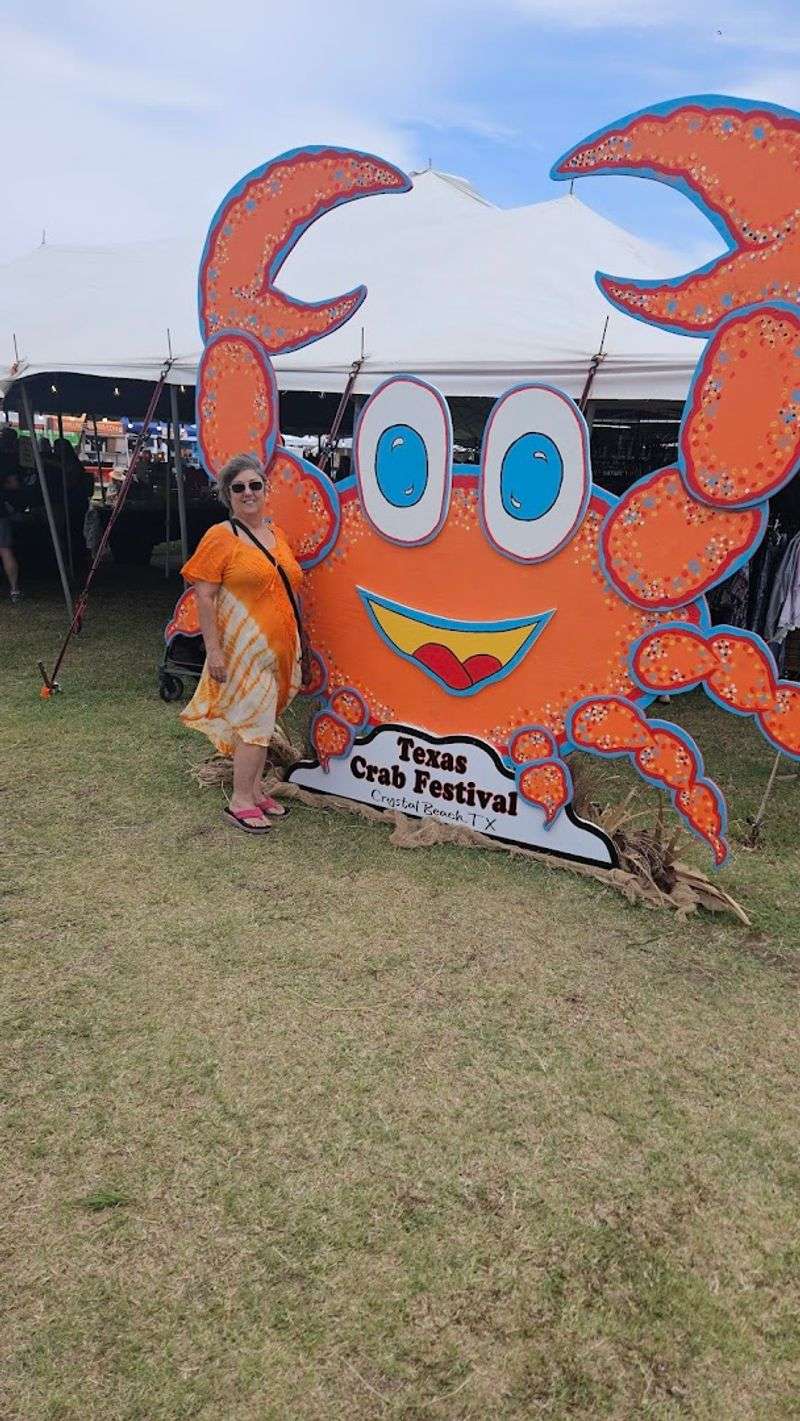
Crystal Beach, a laid-back coastal town on the Bolivar Peninsula, celebrates its seafood heritage with oversized crab sculptures and decorations scattered around the Texas Crab Festival grounds. The annual festival draws thousands of visitors each spring, but the quirky crab-themed landmarks stay put year-round, welcoming beachgoers and road trippers with a healthy dose of coastal charm. These giant crustaceans are a reminder that Texas beaches have their own unique flavor, far removed from the glitz of more commercialized coastlines.
The festival itself has been running for decades, featuring live music, crab races, arts and crafts, and of course, plenty of fresh seafood. But even when the tents and stages are packed away, the grounds retain their playful character. Giant crab claws, painted shells, and whimsical sea creature sculptures dot the area, making it a fun spot for photos and a quirky detour from the usual beach routine.
Crystal Beach is accessible by a free ferry ride from Galveston, which adds an element of adventure to the trip. The town itself is quiet and unpretentious, with beach houses on stilts, local seafood shacks, and miles of sandy shoreline. The crab-themed decorations fit perfectly into this easygoing atmosphere, celebrating the local fishing industry without taking themselves too seriously.
Visitors can walk around the festival grounds at their leisure, checking out the various crab sculptures and enjoying the Gulf breeze. The area is family-friendly, with plenty of space for kids to run around and explore. During festival season, the place comes alive with crowds, but off-season visits offer a quieter, more relaxed vibe.
What makes the Texas Crab Festival grounds special is how they embrace the community’s identity. This isn’t a manufactured tourist attraction—it’s a genuine celebration of local culture, rendered in oversized, colorful crabs. Whether you’re a seafood lover, a beach bum, or just someone who appreciates a good roadside oddity, Crystal Beach delivers a unique coastal experience that’s unmistakably Texan.
8. World’s Largest Cedar Rocker (Lipan)
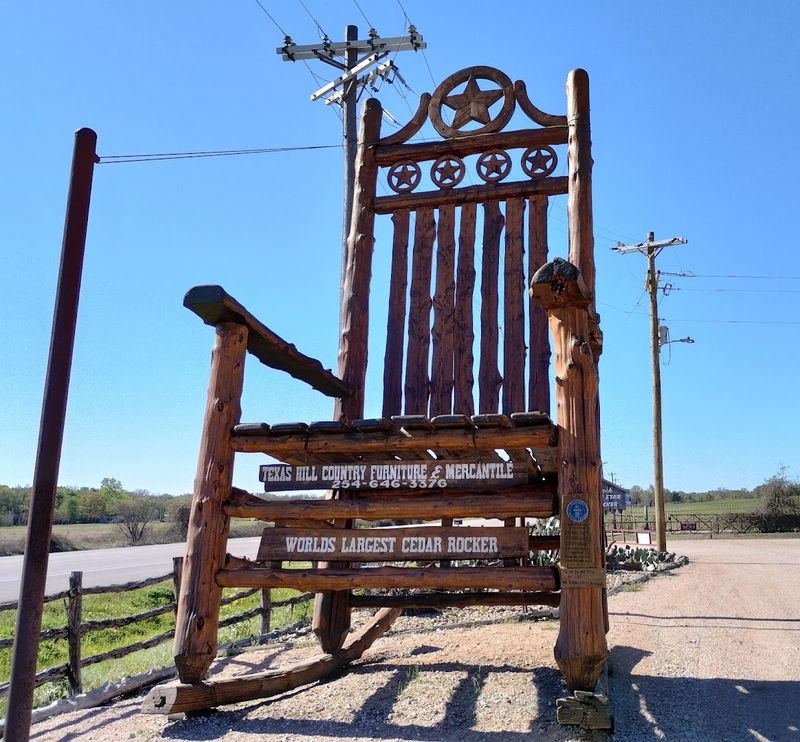
Sitting proudly in Lipan, a small town southwest of Fort Worth, the World’s Largest Cedar Rocker towers over passersby with a height of nearly thirty feet. This massive rocking chair was built in 2008 by local craftsmen using Texas cedar, and it’s become a beloved landmark for the community. The rocker is fully functional in theory, though you’d need a ladder and a serious sense of adventure to actually sit in it.
Lipan is known as the “Cedar Capital of Texas,” thanks to the abundance of cedar trees in the area. The town wanted a landmark that reflected this identity, and what better way than with a giant piece of furniture made entirely from local wood? The rocker was designed and constructed by local volunteers, making it a true community project that everyone in town can be proud of.
The chair sits near the town’s main drag, visible from the road and easily accessible for photos. Its construction is impressive—thick cedar beams form the frame, and the seat is wide enough to fit a small car. The rockers themselves are curved and smooth, giving the whole structure a sense of motion even when it’s standing still.
The wood has weathered beautifully over the years, developing a natural patina that adds to its rustic charm.
Visitors often stop to take pictures, and kids love the challenge of trying to climb up to the seat (though that’s not officially encouraged). The rocker has been featured in various Texas travel guides and social media posts, drawing curious travelers who want to see what all the fuss is about. It’s also a popular spot for family photos and group shots, especially for anyone passing through on a road trip.
Lipan may be small, but the World’s Largest Cedar Rocker proves that big ideas can come from anywhere. It’s a quirky, charming, and unmistakably Texan attraction that celebrates local craftsmanship and community pride. If you’re driving through Erath County, make a quick detour to Lipan and see this giant chair for yourself—it’s worth the stop.
9. Big Tex (Dallas)
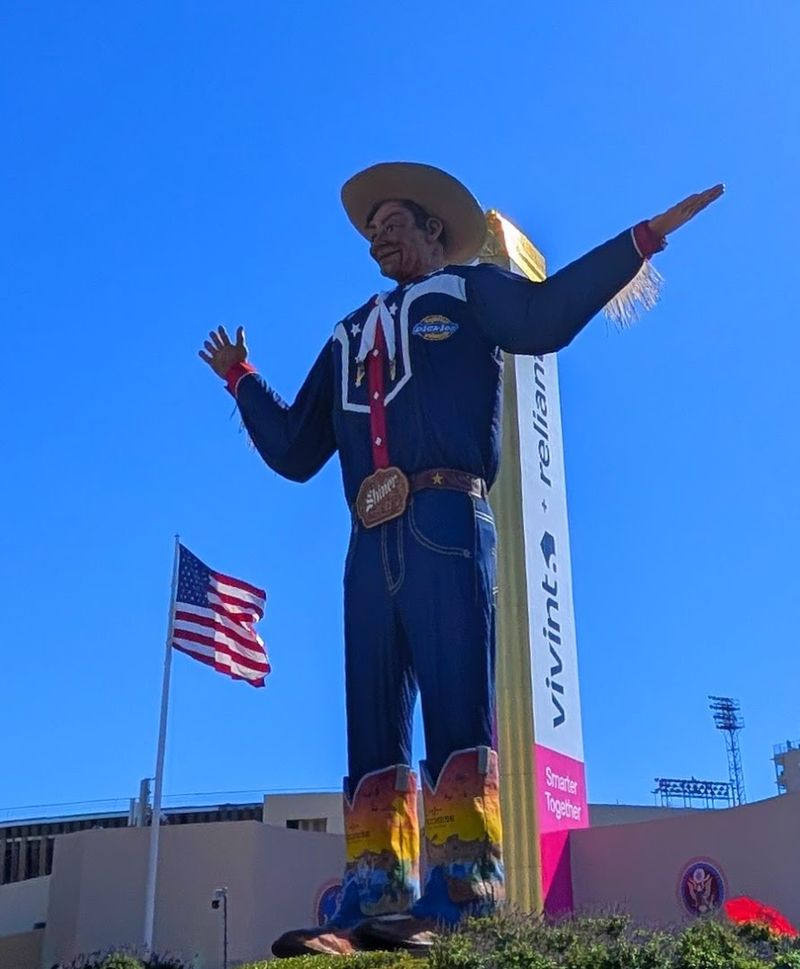
Every fall, Big Tex greets millions of visitors at the State Fair of Texas in Dallas, standing fifty-five feet tall and wearing a size 70 boot. This towering cowboy has been the fair’s official mascot since 1952, and he’s become one of the most recognizable symbols of Texas pride. With his booming recorded voice welcoming fairgoers and his massive cowboy hat shading the midway, Big Tex is more than just a statue—he’s an institution.
Big Tex started life as a giant Santa Claus in Kerens, Texas, before being transformed into a cowboy and moved to Dallas. Over the decades, he’s undergone several renovations and updates, including a complete rebuild after a fire destroyed the original statue in 2012. The new Big Tex debuted in 2013, taller and more detailed than ever, with improved animatronics and a fresh coat of paint.
The statue is made of steel and fiberglass, dressed in blue jeans, a plaid shirt, and a ten-gallon hat. His belt buckle alone is bigger than most people, and his boots are custom-made to fit his enormous feet. Big Tex waves mechanically and speaks pre-recorded messages throughout the day, offering greetings and fair updates in a deep, friendly voice.
The State Fair of Texas runs for about three weeks each autumn, and Big Tex is the centerpiece of the entire event. He stands near the entrance, impossible to miss, and serves as a meeting point for families and friends navigating the sprawling fairgrounds. Visitors line up to take photos with him, and his image appears on everything from T-shirts to corny dogs.
What makes Big Tex special is his longevity and his connection to generations of Texans. For many people, seeing Big Tex means fall has arrived, and the fair is in full swing. He’s a nostalgic icon, a photo op, and a symbol of everything big and bold about Texas.
Whether you’re a first-time visitor or a fair veteran, Big Tex never fails to impress.
10. World’s Largest Bowie Knife (Bowie)
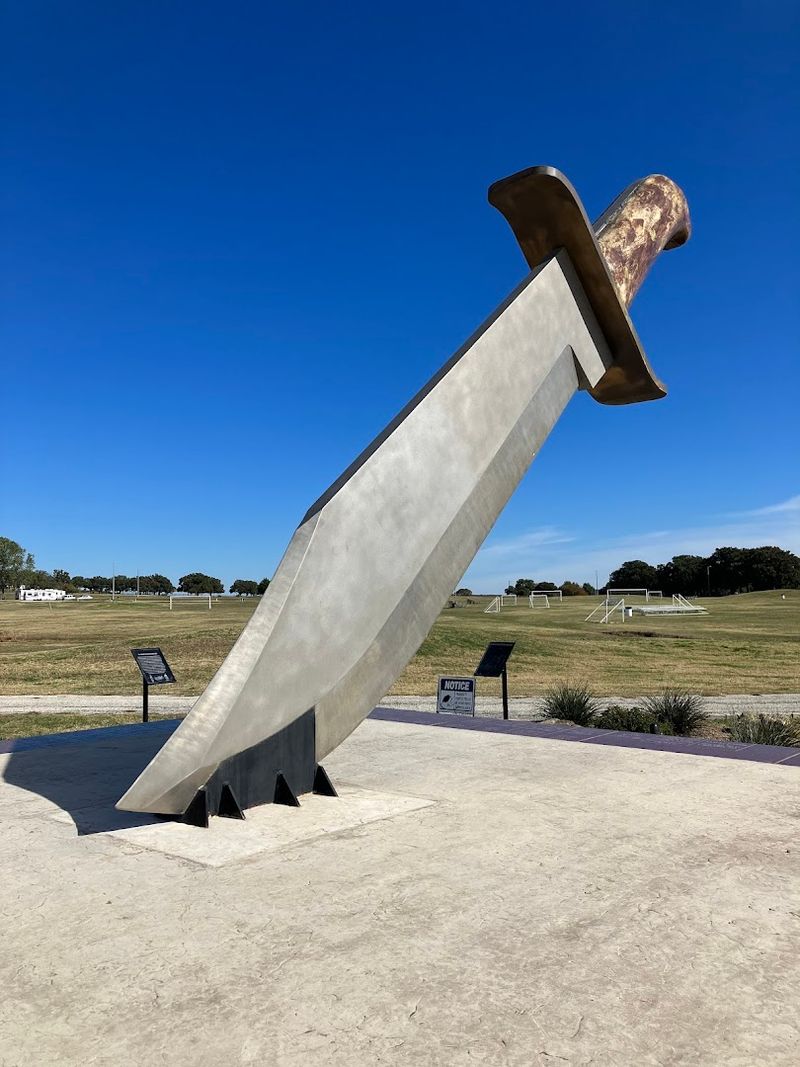
Bowie, Texas, honors its namesake with a colossal knife sculpture that measures over twenty feet long and weighs several hundred pounds. This isn’t just any knife—it’s a replica of the famous Bowie knife, the weapon popularized by legendary frontiersman Jim Bowie. The sculpture stands near the town’s visitor center, serving as both a historical tribute and a conversation starter for anyone passing through.
Jim Bowie is best known for his role in the Battle of the Alamo, where he died defending the mission against Mexican forces in 1836. The Bowie knife, a large fixed-blade weapon with a distinctive clip point, became synonymous with his name and remains an iconic symbol of the American frontier. The town of Bowie, named in his honor, decided to celebrate that connection with the biggest knife they could build.
The sculpture is made of metal, carefully crafted to resemble a traditional Bowie knife with a wooden handle, brass guard, and gleaming blade. It’s mounted on a sturdy base, angled upward as if ready for action. The level of detail is impressive, from the texture of the handle to the shine of the blade, making it clear that this was a labor of love.
Visitors can walk right up to the knife and take photos from every angle. The area around the sculpture is well-maintained, with informational plaques explaining the history of Jim Bowie and the significance of the knife. It’s a quick stop, but a memorable one, especially for history buffs and fans of Texas lore.
Bowie is a small town with a big sense of pride, and the World’s Largest Bowie Knife reflects that perfectly. It’s a bold, unapologetic celebration of frontier history, rendered in a size that demands attention. Whether you’re a knife collector, a history enthusiast, or just someone who appreciates a good roadside attraction, this giant blade is worth the detour.
Stop by, snap a photo, and salute the memory of one of Texas’s most legendary figures.
11. World’s Largest Dr Pepper Bottle (Waco)
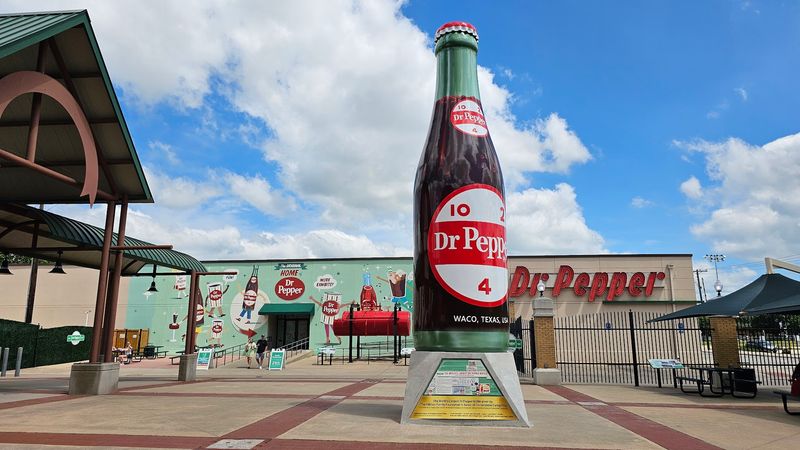
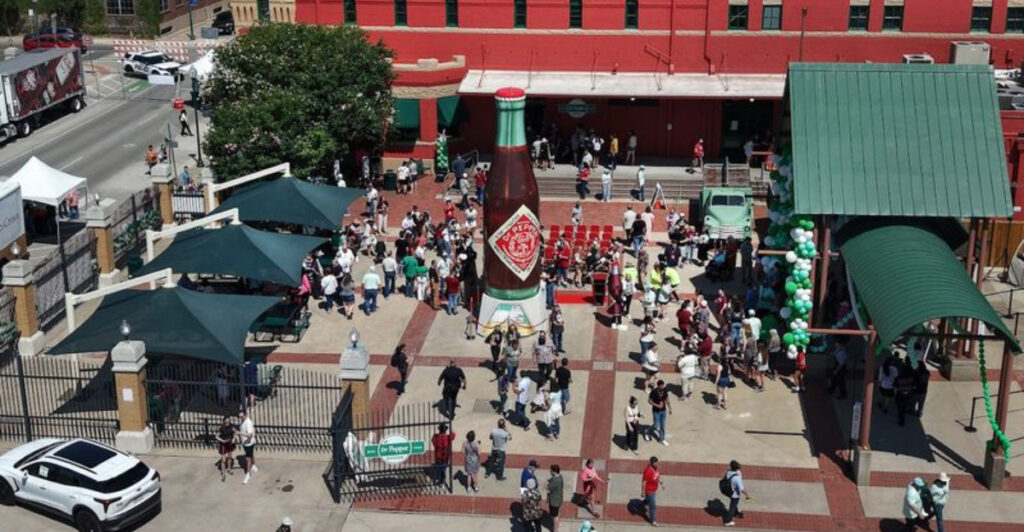
Waco is the birthplace of Dr Pepper, and the city celebrates that legacy with a towering replica of the iconic soda bottle. Standing several stories tall, this giant bottle is located near the Dr Pepper Museum, a must-visit destination for anyone curious about the history of America’s oldest major soft drink. The bottle is painted in classic Dr Pepper colors, complete with the vintage logo and branding that fans of the soda will instantly recognize.
Dr Pepper was invented in Waco in 1885 by pharmacist Charles Alderton, who created the unique blend of 23 flavors at Morrison’s Old Corner Drug Store. The drink quickly gained popularity and eventually became a national sensation. The Dr Pepper Museum, housed in the original bottling plant, tells the story of the soda’s rise to fame, and the giant bottle outside serves as a perfect introduction to that history.
The bottle sculpture is made of fiberglass and metal, designed to look like a vintage Dr Pepper bottle from the mid-20th century. It’s mounted on a pedestal and positioned near the museum entrance, making it an easy photo op for visitors. The colors are bright and eye-catching, and the bottle’s size makes it visible from blocks away.
Waco has embraced its connection to Dr Pepper, and the giant bottle is just one of many nods to the soda found throughout the city. The museum itself is packed with memorabilia, vintage advertisements, and interactive exhibits that explore the drink’s cultural impact. After checking out the bottle, visitors can head inside to learn more about the science and marketing behind one of the world’s most beloved beverages.
What makes this attraction special is how it ties together local pride, corporate history, and roadside kitsch into one memorable landmark. The World’s Largest Dr Pepper Bottle isn’t just a sculpture—it’s a symbol of Waco’s unique place in American pop culture. Whether you’re a Dr Pepper fanatic or just someone who appreciates a good roadside attraction, this giant bottle is worth the stop.
12. Hempstead Cemetery’s Monumental Grave Markers (Hempstead)
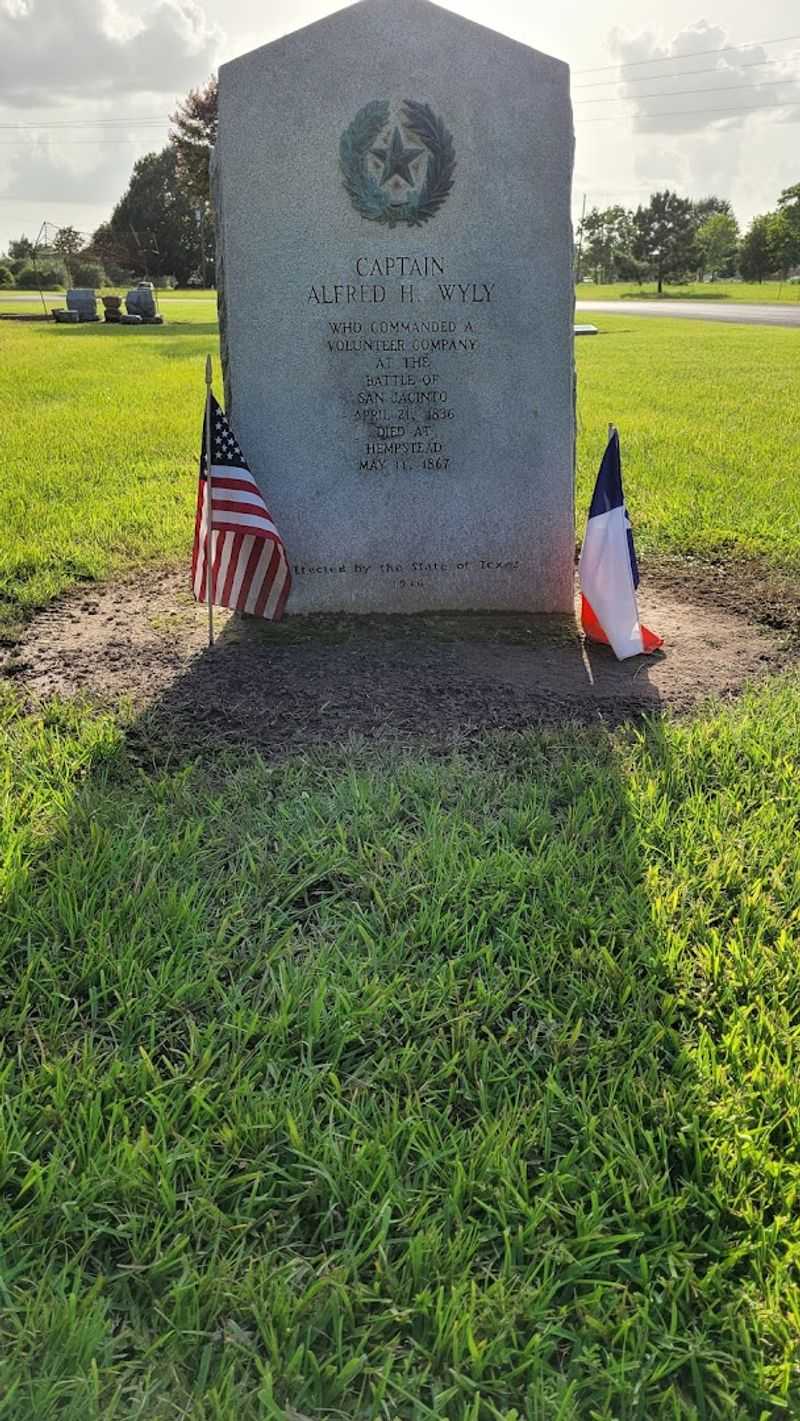
Hempstead Cemetery is home to some of the most impressive grave markers in Texas, with towering monuments and elaborate headstones that tell the stories of the town’s early settlers and prominent citizens. These aren’t your typical cemetery markers—they’re grand, ornate structures made of marble, granite, and limestone, some reaching heights of over fifteen feet. Walking through the cemetery feels like stepping into an outdoor museum of 19th and early 20th-century funerary art.
Hempstead, located northwest of Houston, was an important railroad town in the late 1800s, and many of the people buried here were influential figures in the region’s development. Their families commissioned elaborate monuments to honor their legacies, resulting in a collection of grave markers that range from simple obelisks to intricate sculptures featuring angels, crosses, and draped urns.
The cemetery is well-maintained, with shaded pathways winding between the graves. Visitors can explore at their own pace, reading inscriptions and admiring the craftsmanship of the markers. Some of the monuments are so large and detailed that they rival anything found in famous cemeteries like New Orleans’s St. Louis Cemetery or Savannah’s Bonaventure Cemetery.
What makes these grave markers particularly striking is their size and the level of detail carved into the stone. Many feature intricate floral designs, religious imagery, and epitaphs written in flowing script. Some are topped with statues of angels or other figures, their expressions frozen in eternal mourning or contemplation.
The combination of artistry and history makes Hempstead Cemetery a fascinating destination for anyone interested in Texas heritage or cemetery tourism.
Visiting a cemetery might not be everyone’s idea of a fun road trip stop, but Hempstead Cemetery offers something truly unique. The monumental grave markers are a testament to the town’s history and the people who built it, rendered in stone that has stood the test of time. If you’re in the area and appreciate history, architecture, or just the quiet beauty of old cemeteries, this is a worthwhile detour.
Share this story