A copper fleche over Newark, a hand-wound clock in Shrewsbury, a chapel pulpit brought from France, and an Atlantic City sanctuary hiding more than 100 stained-glass windows just a few blocks from casino traffic — New Jersey’s church architecture has range. These are not just pretty buildings with tall steeples and old stone.
They are places where immigrant neighborhoods gathered, Revolutionary War soldiers left marks, college traditions grew, and local artisans tucked serious beauty into wood, glass, brick, marble, and plaster. Some feel grand enough to stop you mid-sentence.
Others are quieter, sitting beside old graveyards or neighborhood parks, waiting for you to notice the details. Since many are active houses of worship, a good visit means checking current hours, being respectful during services, and slowing down once you step inside.
That is where the best parts usually are: overhead, underfoot, and hidden in plain sight.
1. Cathedral Basilica of the Sacred Heart, Newark
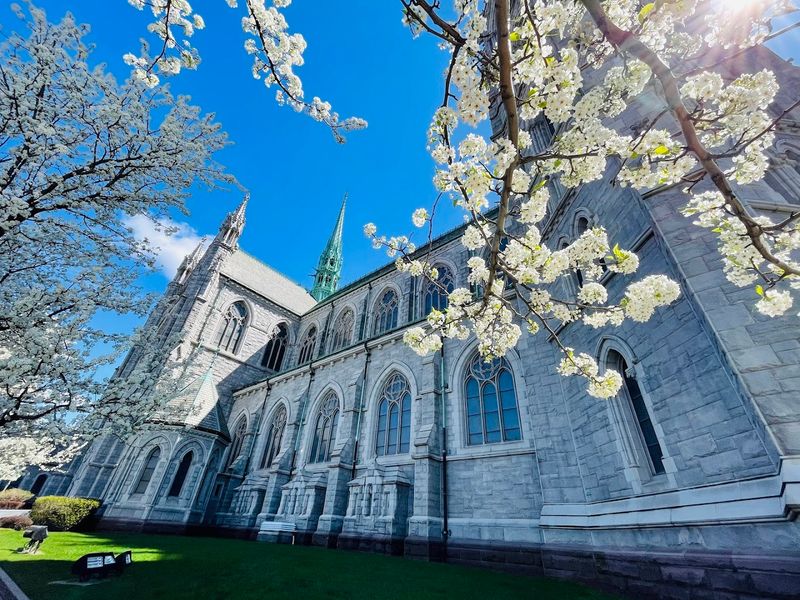
You can spot the cathedral before you fully arrive, which feels appropriate for a building that does not do “background scenery.”
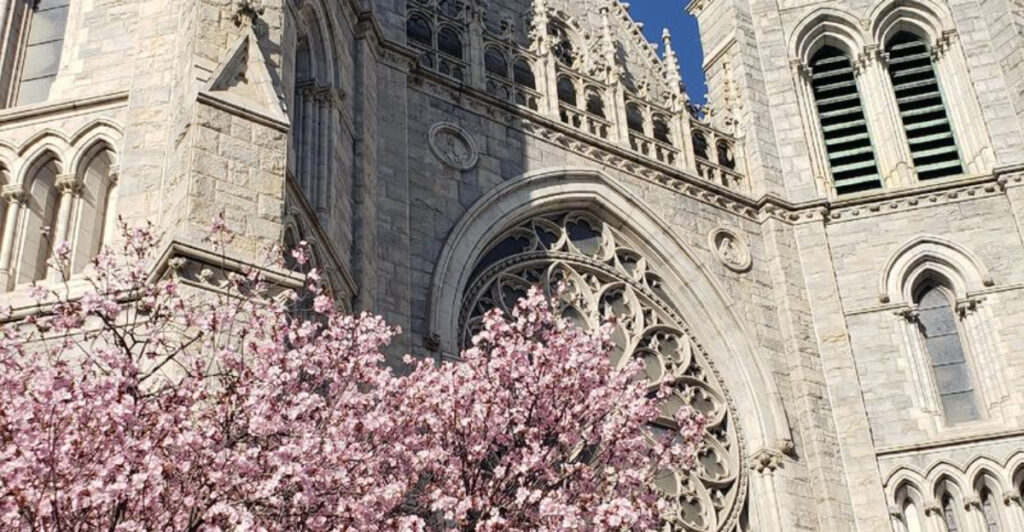
Facing Branch Brook Park, the Cathedral Basilica of the Sacred Heart rises with French Gothic confidence: pointed arches, soaring towers, carved stone, and windows that seem designed to make even a cloudy Newark afternoon behave itself.
The cathedral’s history stretches back to the late 19th century, with construction beginning in the 1890s and dedication arriving decades later in 1954.
That long timeline is part of the drama; this place was not rushed, and it shows. Inside, the scale is the first thing that gets you.
The nave has that hushed, upward pull that makes people instinctively lower their voices, even if they only came in for architecture. Look for the rose windows, the stonework, the carved details, and the way the light changes the mood from one bay to the next.
It is the kind of church where you should give yourself time to walk slowly rather than pop in for a quick photo. Pair it with a stroll through Branch Brook Park, especially during cherry blossom season, and you get one of Newark’s best architectural one-two punches.
2. St. Lucy’s Church, Newark
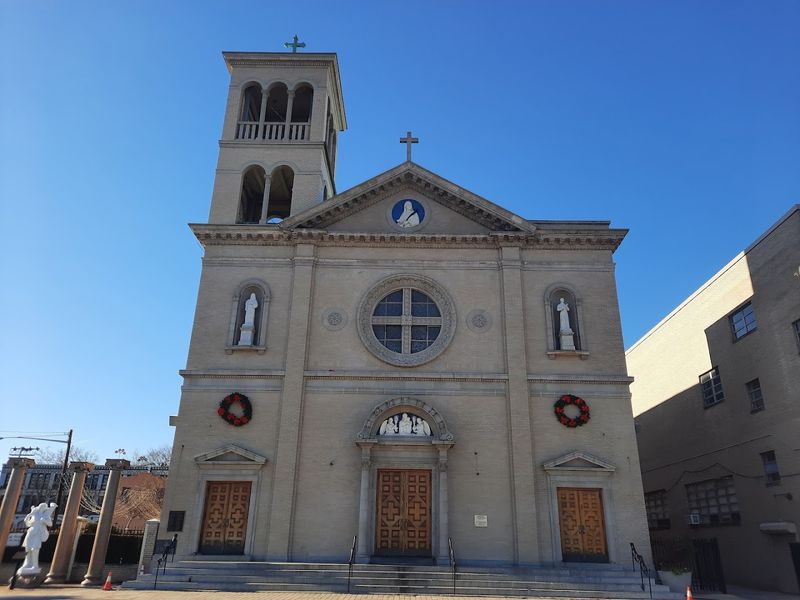
The first clue that St. Lucy’s is not an ordinary neighborhood church is the façade: a broad arched entry, a rose window, pale brick, white terra cotta trim, and a presence that still feels tied to Newark’s old First Ward.
Completed in 1925, the church served the area’s Italian-American community and became one of the city’s great landmarks of immigrant faith and pride.
Architecturally, it mixes Romanesque Revival bones with lively decorative flourishes, which is a tidy way of saying it has structure, personality, and plenty of visual confidence. The interior is where St. Lucy’s really starts showing off.
Murals, stained glass, sculpture, reliefs, and ornate altar work fill the space with a level of decoration that rewards lingering. Artist Gonippo Raggi, whose work appears in several major church interiors, helped shape the visual character here, especially through the murals completed in the 1940s.
The church is also closely associated with devotion to St. Gerard Majella, giving it a cultural pull that reaches beyond Newark. Go with an eye for layers: Italian immigrant history, old neighborhood memory, and craftsmanship that has survived urban change.
It is close to Branch Brook Park, so it also fits neatly into a Newark architecture outing with the Cathedral Basilica nearby.
3. Grace Church, Newark
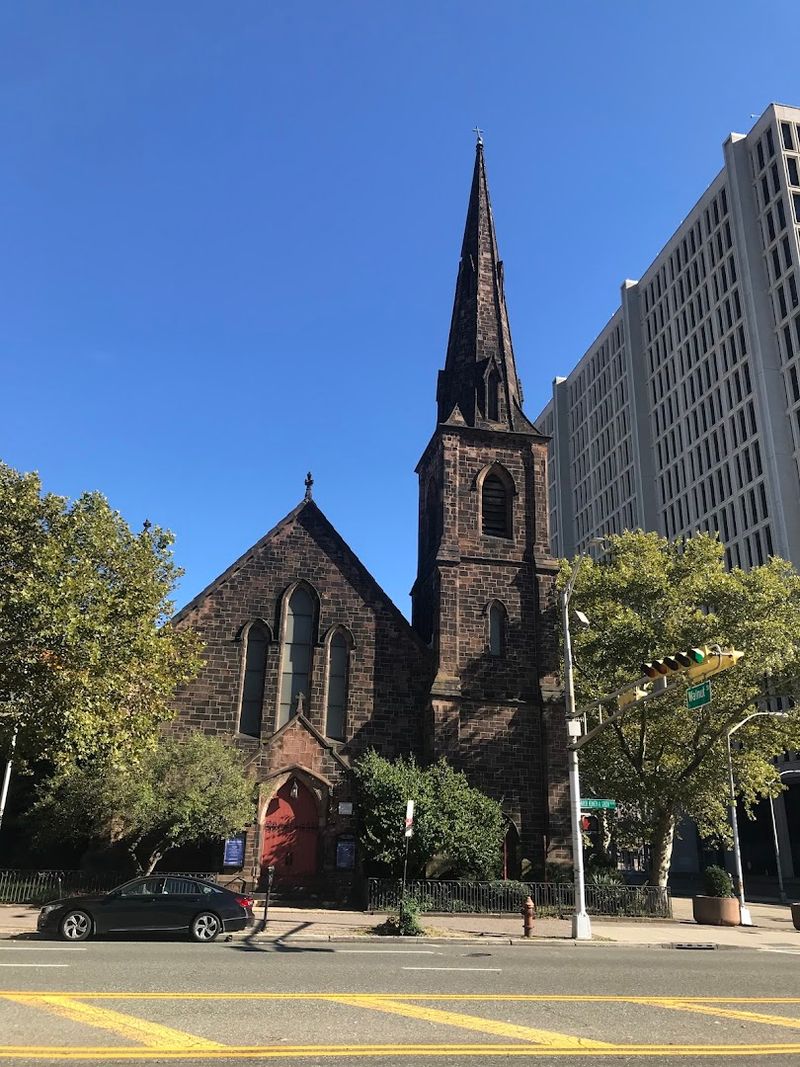
On Broad Street, Grace Church has the kind of Gothic Revival profile that makes downtown Newark feel older, deeper, and a little more theatrical. Founded in 1837, the parish built its church in 1848 with a design by Richard Upjohn, one of the major names in American ecclesiastical architecture.
The building has the crisp, vertical energy you want from Gothic Revival: pointed arches, stone texture, stained glass, and a sense that the whole structure is gently pulling your gaze upward. What makes Grace especially interesting is that it is not just architecturally handsome; it has cultural footnotes tucked into the rafters.
Samuel Augustus Ward, an early prominent organist here, wrote the melody later used for “America the Beautiful.”
That is the sort of detail that makes a casual visit suddenly feel like you have stepped into a national trivia answer. The church also sits on layered Newark ground, with its history tied to the city’s early civic and religious life.
Visit for the architecture, but pay attention to the music heritage and the stained glass. Grace feels less like a museum piece than a working old soul in the middle of a city that has changed around it many times.
4. St. Peter’s Episcopal Church, Morristown
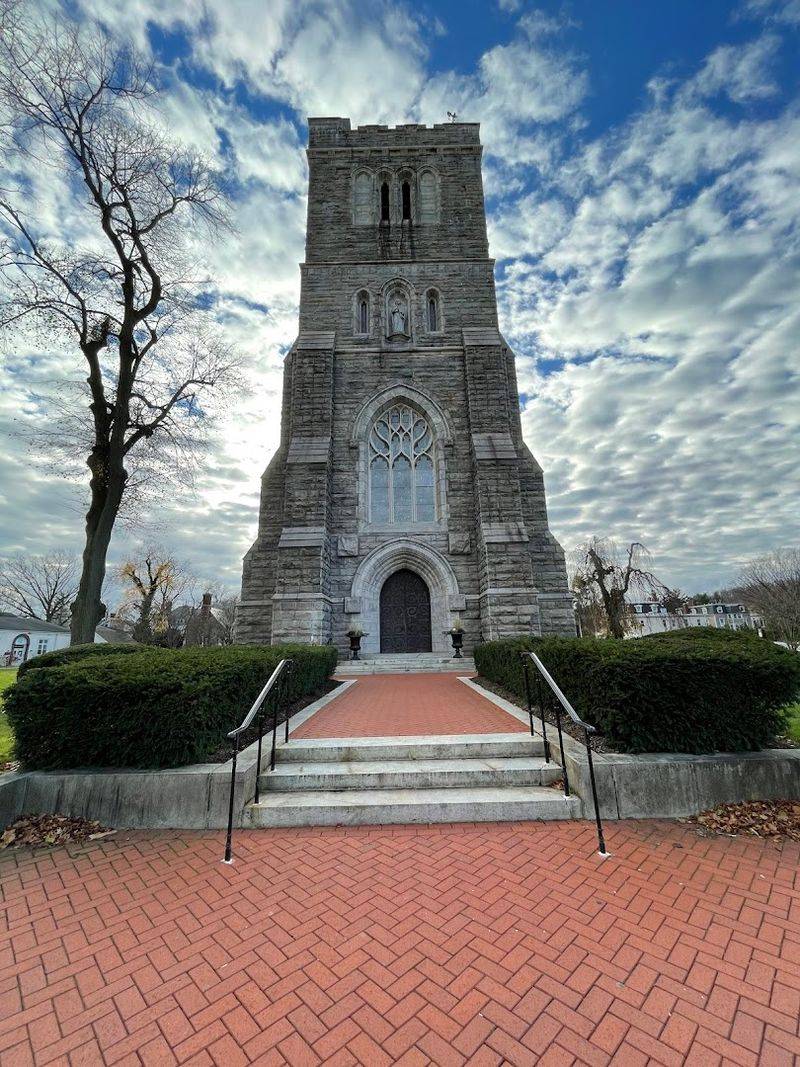
A good Gothic church should have a little mystery, and St. Peter’s in Morristown understands the assignment. The parish was founded in 1827, though its Anglican and Episcopal roots in the area go back to the 1760s.
The current building was designed by Charles McKim of McKim, Mead & White, and over 24 years of construction it became one of New Jersey’s most impressive neo-Gothic church complexes.
It was modeled on English medieval parish churches, but it does not stop there; the interior also folds in Byzantine-style mosaics, a Siena-marble altar, and a Spanish-baroque rood screen.
This is a church for detail hunters. The Norman-style bell tower has 119 steps and a 49-bell carillon, which gives the building a presence you can hear as well as see.
Inside, look for the wrought-iron screen, the corona light, the English stained-glass windows, and the Tiffany window in the chapel. The surrounding complex, with its cemetery and parish buildings, makes the whole place feel like a small historic precinct rather than a standalone sanctuary.
Morristown is already rich with Revolutionary-era history, so St. Peter’s adds another layer: a grand, beautifully worked church that feels both deeply local and wonderfully transportive.
5. First Presbyterian Church of Elizabeth, Elizabeth
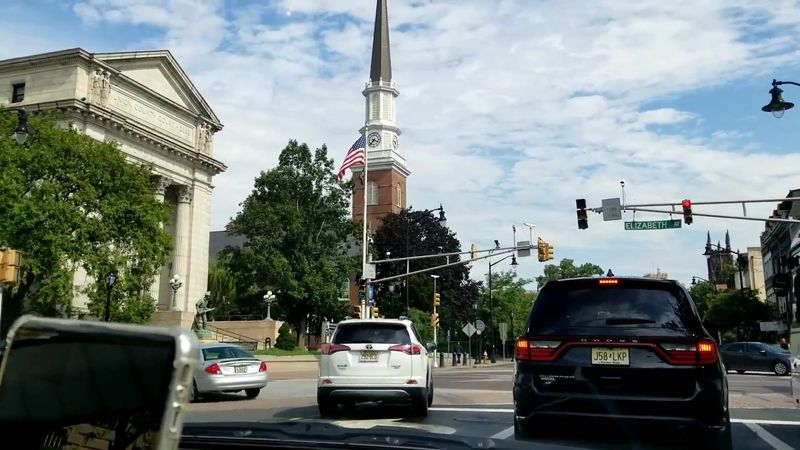
Few New Jersey churches can make a claim as old and weighty as this one. The First Presbyterian Church of Elizabeth traces its origins to the founding of Elizabeth in 1664 and is recognized as the first church organized in New Jersey for worship in the English language.
Before it became Presbyterian in 1717, it was Congregational, and its early life was tied closely to the settlement of Elizabethtown itself. The church received a royal charter from King George II in 1753, which gives you a hint of just how far back the story goes.
What you see today carries that history in a layered way. The church has been rebuilt after major losses, including a Revolutionary War fire and a 1946 fire that left only the outer walls.
That gives the site a different kind of beauty from some of the showier churches on this list. It is not only about a façade or a sanctuary; it is about endurance.
The surrounding burial ground adds to the sense that you are standing in one of the state’s oldest civic and spiritual spaces. This is a strong stop for readers who like their architecture with colonial roots, old cemetery paths, and a reminder that New Jersey history did not start with diners, parkways, or shore traffic.
6. Princeton University Chapel, Princeton
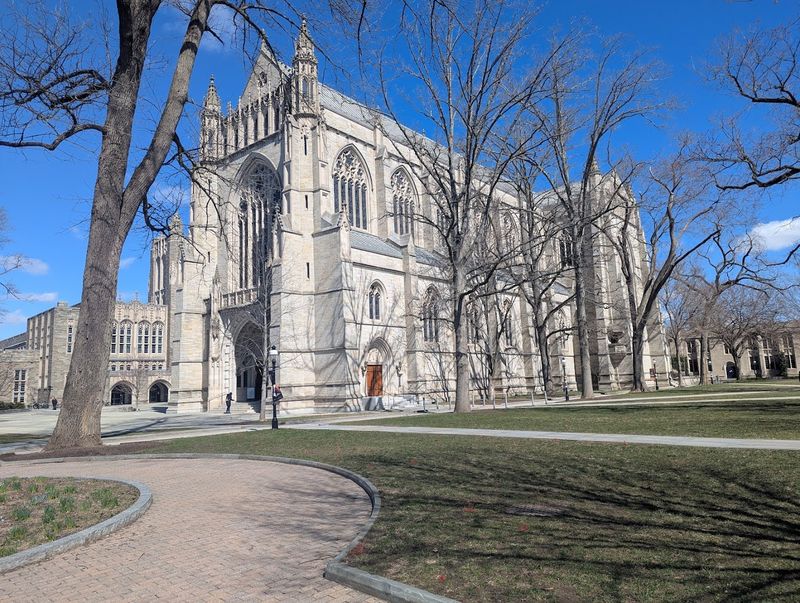
A campus chapel does not usually prepare you for this much drama. Princeton University Chapel looks like it wandered out of the English Middle Ages and decided to stay for class.
Completed in 1928, the chapel was designed by Ralph Adams Cram in a style based on 14th-century English Gothic. It replaced the Marquand Chapel, which burned in 1920, and when finished, it could seat about 2,000 people, making it an unusually large university chapel for its time.
Inside, the building is packed with academic symbolism and craftsmanship. The stained-glass windows, pew engravings, memorial stones, and carved furnishings all help turn the chapel into a visual history lesson.
John Witherspoon appears in the Great South Window, James Madison is represented in another window, and the nave pews were made from oak originally intended for Civil War gun carriages. Even the pulpit has a story: it was brought from France and likely dates to the mid-16th century.
The best way to experience it is to approach from the campus paths, step inside quietly, and let the scale reset your expectations. It is grand, yes, but also thoughtful, full of details that reward a second lap.
7. Old Tennent Presbyterian Church, Manalapan
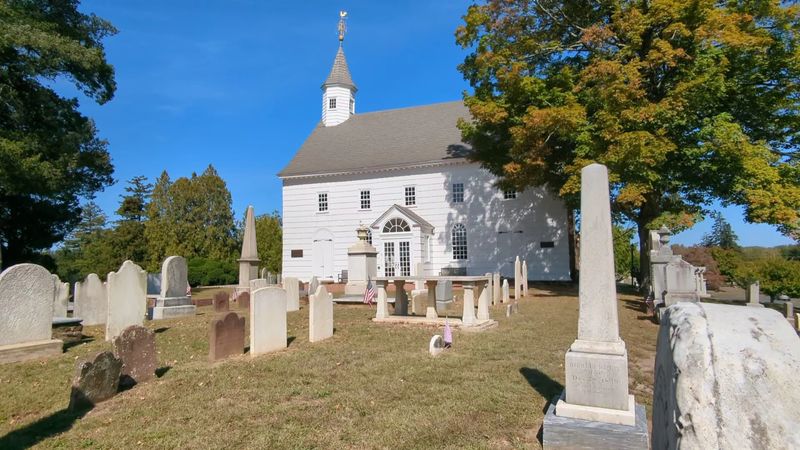
Some historic places feel polished for visitors; this one feels like history kicked up dust, left marks, and stayed. Old Tennent Presbyterian Church traces its roots to 1692, when Scottish Presbyterians fleeing religious persecution established themselves near Freehold.
A larger building followed in 1731, and the current church went up about two decades later, becoming influential enough to help set a pattern for other Presbyterian churches. Its plain, sturdy presence is a big part of the appeal.
This is not ornate drama. This is colonial New Jersey with its sleeves rolled up.
Its Revolutionary War story is the reason many people seek it out. During the Battle of Monmouth, the church was used as a field hospital for Continental soldiers, while fighting took place within about 500 yards of the building.
The graveyard deepens the visit, with notable Revolutionary figures buried on the grounds, including Joshua “Jack” Huddy and Nathaniel Scudder.
Go for the architecture, but stay for the setting: the old cemetery, the quiet Manalapan roads, and the sense that this church witnessed one of the state’s defining wartime moments from terrifyingly close range.
It is one of the best entries on this list for anyone who likes their landmarks understated but absolutely loaded with story.
8. St. Michael’s Episcopal Church, Trenton
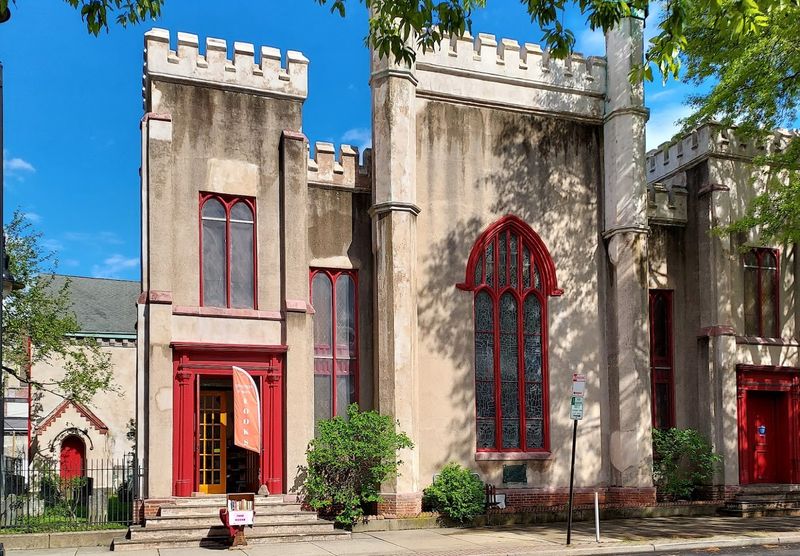
Stand at St. Michael’s long enough, and Trenton starts to feel like a stack of centuries instead of just a capital city with busy streets. The parish dates to 1703, and its Trenton church was built before 1748 on what was then King Street, now North Warren Street.
During the Revolutionary War, the congregation’s divided loyalties led the church to close for a time, and the building later saw both Continental and British occupation. Hessian soldiers used it as a barracks and stable, and fighting during Washington’s surprise attack on December 26, 1776, reached the churchyard.
The building’s look today carries later chapters too. In 1849, St. Michael’s added its Warren Street frontage, giving the church a Gothic Revival façade with a castle-like feel.
The turrets remain, even though the bell tower no longer stands. Inside, the stained glass is a major reason to visit, including two historic Tiffany windows and an image of St. Michael in full warrior mode.
The graveyard adds another layer, with an earliest tombstone dated 1763 and memorials tied to prominent families. This is not a quick-glance landmark.
It is Trenton history in stone, glass, and churchyard paths, with just enough drama to make every detail feel like it belongs in a Revolutionary-era footnote.
9. Sacred Heart Church, Trenton
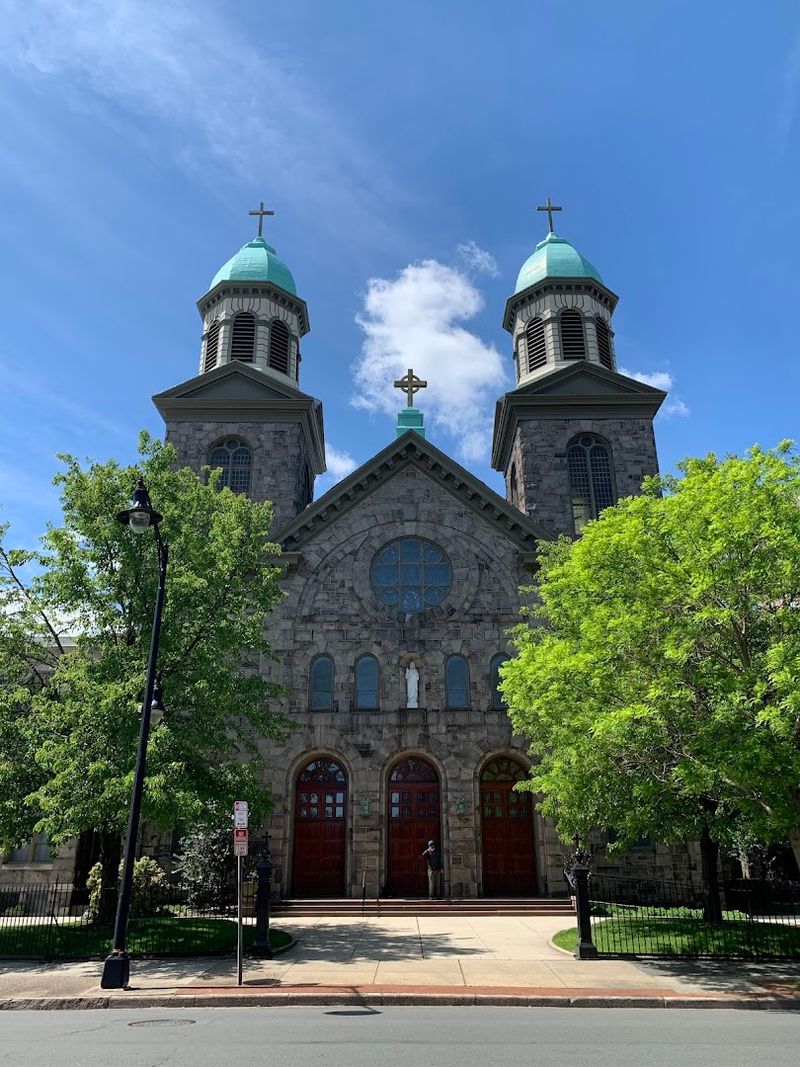
Sacred Heart quietly carries a major title: it belongs to the oldest Catholic parish in New Jersey. The parish’s roots go back to New Jersey’s first Catholic church, dedicated to St. John the Baptist and built in Trenton in 1814.
The current Sacred Heart Church, an 1880s Romanesque landmark designed by noted Catholic church architect Patrick Keely, is part of a five-building complex on South Broad Street. Its heavy arches, twin-tower presence, and brick-and-stone solidity make it feel grounded in the city rather than perched above it.
What makes Sacred Heart worth including is the combination of architectural weight and parish continuity. It is not just an attractive old church; it inherited the traditions of the earlier Catholic community that helped establish the faith’s public presence in the state.
The Romanesque design gives the exterior a muscular, almost fortress-like quality, while the restoration history reminds you that buildings like this require constant care. If you visit, look at the towers first, then the rhythm of the arches, then the way the complex fits into the surrounding Trenton streetscape.
It is especially rewarding for anyone interested in Catholic history, preservation, and the way a landmark can anchor a neighborhood for generations.
10. Christ Church, Shrewsbury
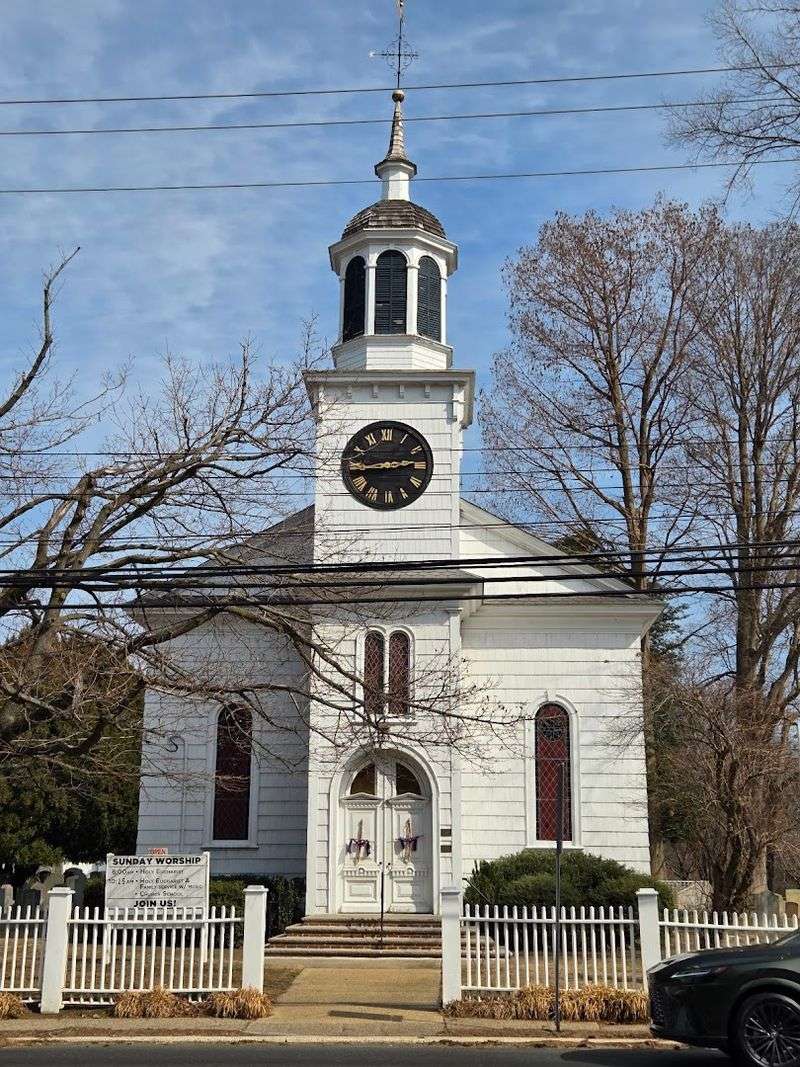
The clock at Christ Church is hand-wound every week by volunteers, which is exactly the kind of detail that makes this Shrewsbury landmark feel alive instead of merely old. The parish was founded in 1702, with early services held in the home of Lewis Morris, who later became royal governor of New Jersey.
The congregation acquired land at Broad Street and Sycamore Avenue in 1706, built an early brick church in the 1730s, and later constructed the present church between 1769 and 1774 under the direction of noted colonial architect Robert Smith. There is a lot to look for here, and much of it comes with a story attached.
The church received a royal charter from King George II in 1738, and that document is still on display. During the Revolution, patriot soldiers used the building as barracks, damaged symbols associated with the British Crown, and left behind marks including a musket ball embedded in wood.
The tower clock, added in 1874, still keeps time, while the bell known as “Old Eli” has its own transatlantic backstory. This is a terrific stop for people who like colonial architecture without too much polish rubbed onto it.
The church feels dignified, weathered, and wonderfully specific to Monmouth County.
11. Jacob’s Chapel AME Church, Mount Laurel
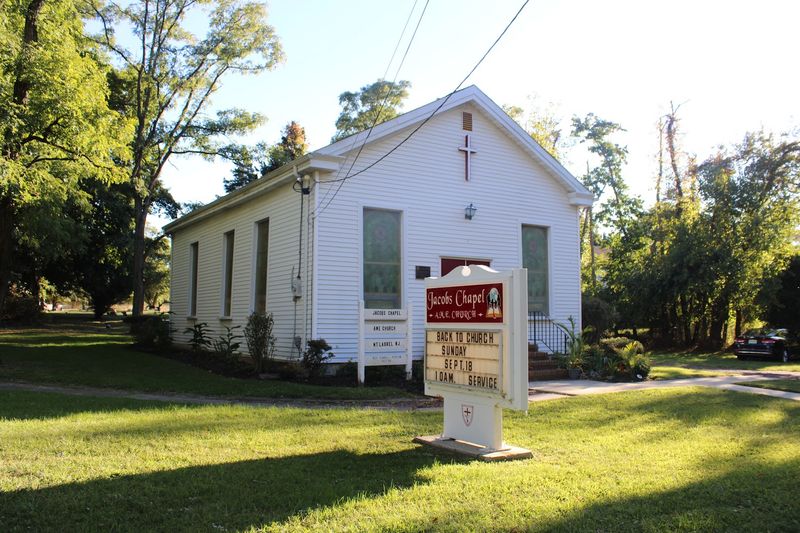
Jacob’s Chapel tells a story that is both architectural and deeply human. Built in 1867, it is one of the oldest African Methodist Episcopal churches in the region and stands in Mount Laurel as part of the history of Colemantown, an antebellum African American settlement established in 1828.
The property includes the chapel, the Colemantown Meeting House, and an associated cemetery, making it more than a single building. It is a rare surviving cluster of spaces tied to Black worship, education, community life, and self-determination in Burlington County.
The site’s significance is striking. The cemetery dates to around 1849, and the present chapel was built under the leadership of Jacob Mitchell, an AME minister known for helping Black congregations build sanctuaries.
The Colemantown Meeting House, placed in the settlement around 1840 and later moved to its current location, served as both an early worship space and a schoolhouse. It is described as one of New Jersey’s oldest surviving all-Black schoolhouses and a rare survivor among early Black church buildings.
The church is also listed on the National Register of Historic Places and connected to Underground Railroad history. Visit with respect and curiosity; this is one of the most meaningful landmarks on the list.
12. Old Swedes Trinity Episcopal Church, Swedesboro
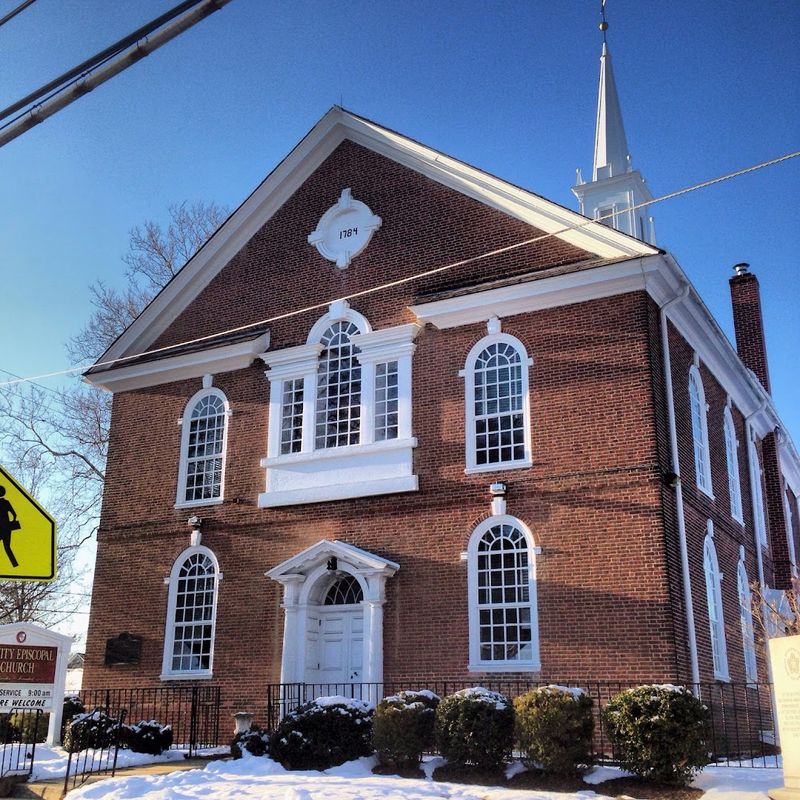
There is something wonderfully New Jersey about finding Swedish colonial history tucked into Gloucester County. Old Swedes Trinity Episcopal Church traces its beginnings to Swedish Lutheran settlers who worshiped in a log cabin on the site in 1703.
The current church building dates to 1784, and the congregation affiliated with the Episcopal Church in 1789. That gives the place a layered identity: Swedish roots, Episcopal tradition, colonial-era architecture, and a setting that still feels connected to the old road patterns of South Jersey.
The beauty here is quieter than at the giant Gothic showpieces. Think late-18th-century restraint, historic proportions, and the calm of a site that has been used for worship for more than 300 years.
Its grounds are typically the kind of place where you want to walk slowly, notice the churchyard, and take in the proportions from a few different angles. Give yourself time to look around the exterior before heading in, because the building’s character comes from proportion and age rather than spectacle.
It is a strong reminder that some of New Jersey’s most important landmarks do not need towers scraping the sky. A modest old church can carry plenty of weight.
13. Our Lady of Grace Church, Hoboken
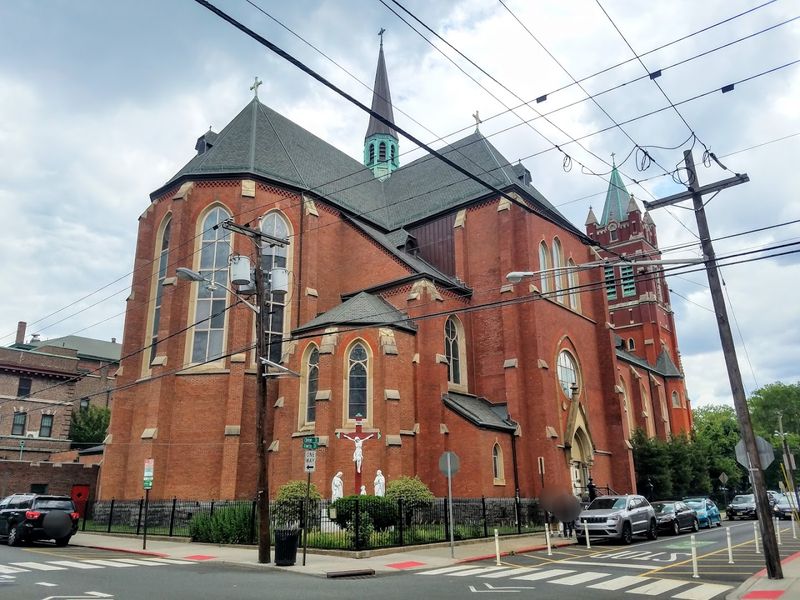
Set across from Church Square Park, Our Lady of Grace has the rare ability to make busy Hoboken slow down for a second. Built in 1878, the church showcases Second Gothic Revival design by Francis G.
Himpler, a prominent local architect. Its exterior and interior Gothic features remain largely intact, including a richly decorated rose window and a highly articulated central portal.
In a city known for brownstones, waterfront views, and relentless foot traffic, this church adds a different kind of vertical elegance. The parish story reaches back to 1851, when the Catholic mission in Hoboken began.
Work on the present church started in 1874, and the building was dedicated in 1878. That makes it both a landmark of Catholic Hoboken and a serious piece of local architecture.
The best approach is from the park side, where you can appreciate how the façade frames the square. Then look closely at the entrance, the stone and brickwork, and the stained glass that has benefited from preservation efforts over the years.
Our Lady of Grace feels especially rewarding because it is woven into everyday city life. People pass it on errands, kids cut through the park nearby, and still the building holds its ground beautifully.
14. St. Nicholas of Tolentine Church, Atlantic City
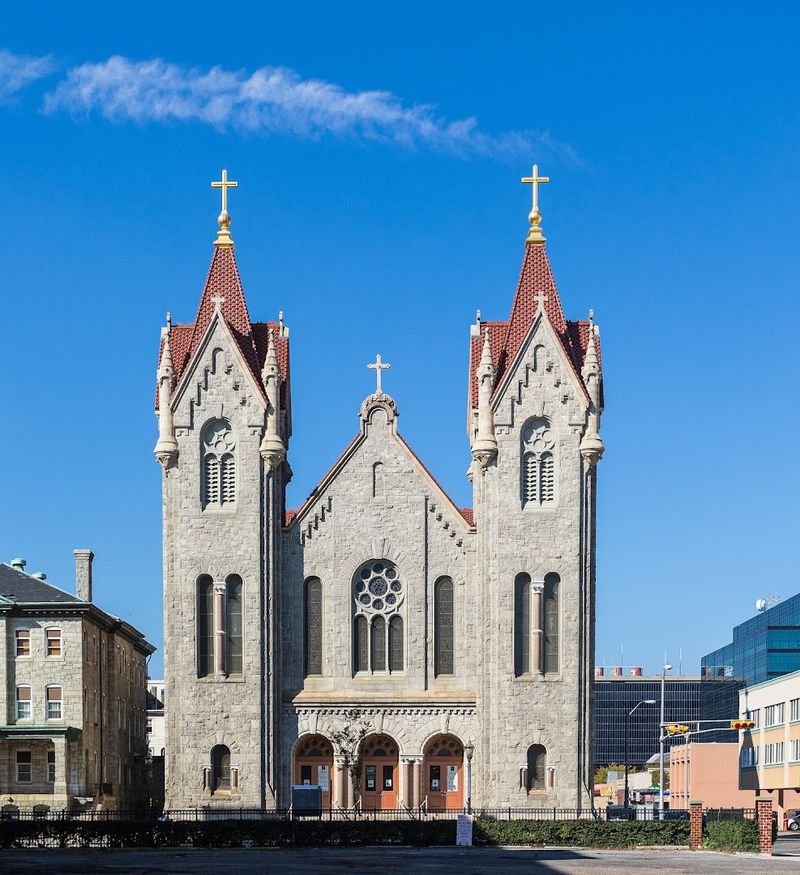
A few blocks from the casino glow, St. Nicholas of Tolentine pulls off a neat trick: it feels both hidden and impossible to miss. The Romanesque Revival church stands on Pacific Avenue with 120-foot towers and roots going back to 1902.
From the outside, it has the sturdy, old-city confidence of a pre-casino Atlantic City landmark. Step inside, though, and the place becomes a full art lesson.
The interior is the reason St. Nicholas belongs on any serious list of beautiful New Jersey churches. Visitors are met with five altars, 18 murals, dozens of symbols connected to Christ’s passion and death, and about 142 stained-glass windows made in Germany and Philadelphia.
That is not decoration for decoration’s sake; it is a complete visual program, layered across the sanctuary in color, image, and symbol. Tours have been offered on Sundays in the past, though it is smart to confirm current availability before planning around one.
The contrast is part of the fun: outside, Atlantic City hums along with boardwalk energy and traffic; inside, St. Nicholas preserves an older, richer version of the city that many visitors never think to look for.
15. Crescent Avenue Presbyterian Church, Plainfield
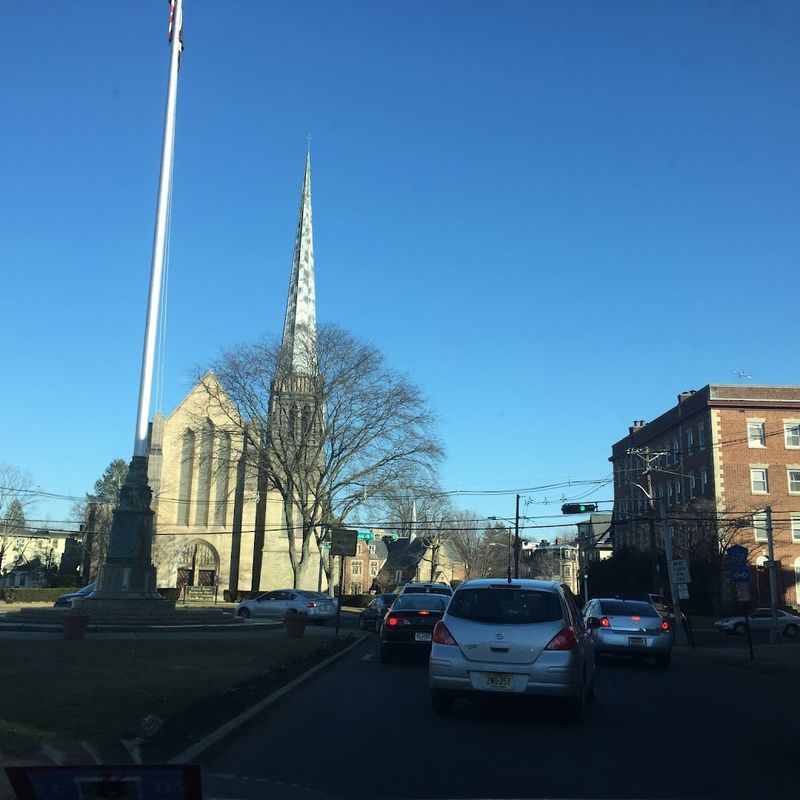
Crescent Avenue Presbyterian has a comeback story built into its walls. The original church was built in 1871, designed by Ebenezer Roberts, and at the time was the largest Presbyterian church in New Jersey.
Then came a devastating fire in 1931. Rather than erase the past completely, the church was rebuilt from 1932 to 1934 using a new design by Zantzinger, Borie & Medary while incorporating the original foundation and bell tower base.
That gives the building an unusual architectural memory: part survival, part reinvention. Today, the Plainfield church is known for its neo-Gothic sanctuary and its role as a community and music space.
The church is also home to the Crescent Concert series, which makes it a good pick for readers who want to experience a historic sanctuary as more than a static landmark. Look for the vertical lines, the massing, and the way the reconstructed exterior echoes stone even through cast-stone materials.
The building has dignity without feeling frozen. It has been damaged, rebuilt, studied, preserved, and still used.
That combination makes it one of Union County’s most compelling church landmarks, especially for anyone interested in architecture that has survived a major second act.
Share this story