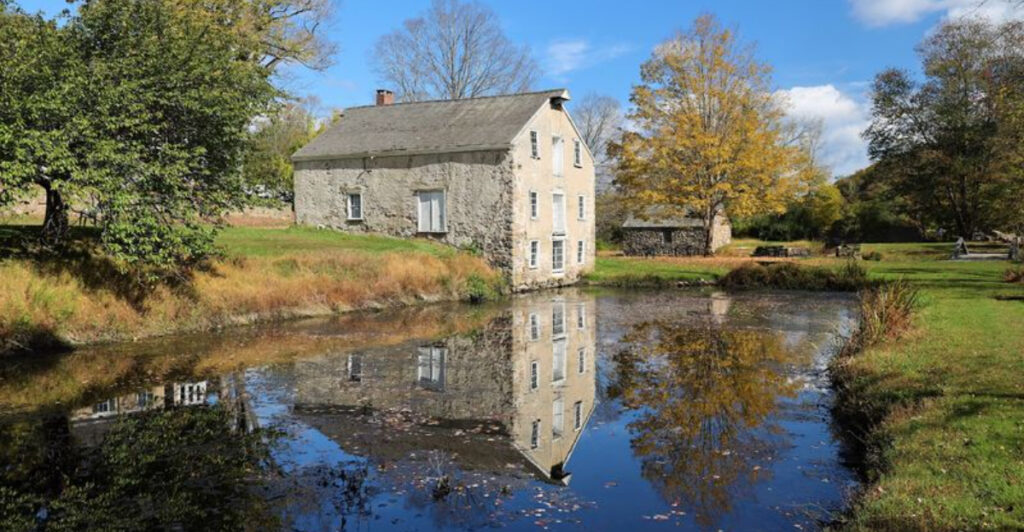
A rusted furnace wall in the woods. A castle ruin above a mountain lake.
A quiet cemetery reached by a half-mile path near the Delaware River. New Jersey has a funny way of hiding its history where you least expect it, usually just beyond a parking lot, behind a curtain of trees, or at the end of a trail that looks ordinary until the story starts showing through.
These are not museum walks disguised as hikes, and they are not the same Revolutionary War stops everyone already knows by heart. They are places where the landscape does half the storytelling.
You get stone foundations, old military roads, river cliffs, industrial villages, and forest paths that make the past feel less like a textbook and more like something you just stumbled into by accident. Lace up, bring water, and leave room in your day for a few “wait, this was here the whole time?” moments.
1. Grand Loop Trail and Yellow Trail Loop, Jockey Hollow Area — Morristown
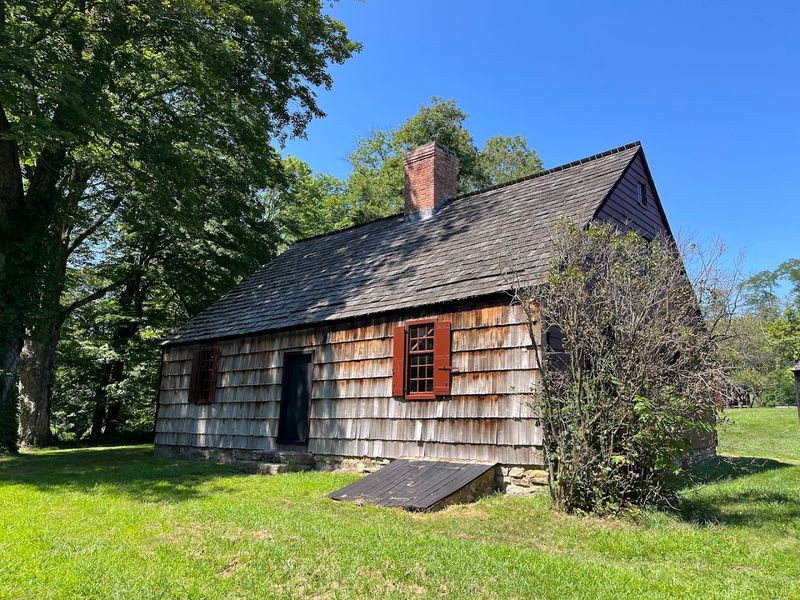
The woods at Jockey Hollow can feel surprisingly peaceful for a place that once held one of the hardest winters of the American Revolution.
Walk under the tall trees today and you hear birds, leaves, maybe a passing jogger; in 1779 and 1780, this was where Continental Army soldiers endured snow, hunger, cramped huts, and the miserable business of surviving long enough to keep a revolution alive.
That contrast is what makes the Grand Loop Trail and Yellow Trail Loop such a satisfying pairing. The Yellow Trail is the better pick for history-first hikers, since it connects key interpretive sites through the Jockey Hollow area, while the longer Grand Loop gives you the bigger woodland sweep if you want to stretch the day into a real hike.
The park has roughly 27 miles of marked trails, with the Yellow Trail at about 2.25 miles and the White Trail, also known as the Grand Loop, at about 6.5 miles. Start near the visitor center if you want context before heading out; the full-scale soldier hut model helps the landscape click into place.
This is not a flashy hike, and that is exactly the point. It sneaks up on you.
2. Watchung Reservation History Trail — Mountainside/Berkeley Heights
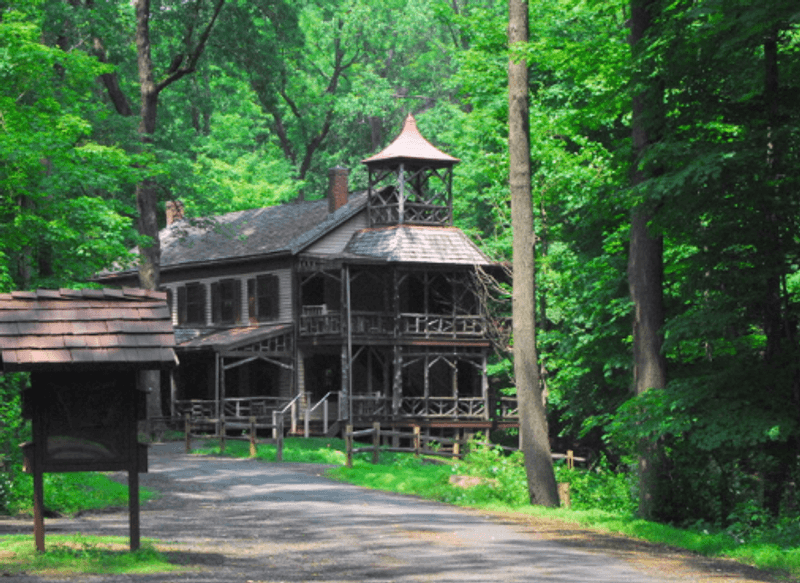
A pink blaze in Watchung Reservation is not just telling you where to turn; it is basically nudging you deeper into Union County’s backstory.
The Watchung Reservation History Trail runs about six miles through a preserve of more than 2,000 acres, linking sites that show how this land was used long before it became one of North Jersey’s most beloved green spaces.
The fun here is that it does not feel like one single “historic attraction.” It feels like a scavenger hunt through woods, water, old roads, and remnants of earlier lives.
You can start and end at Trailside Nature & Science Center, which makes planning easy, but the trail can also be accessed from the Deserted Village of Feltville or Lake Surprise.
That flexibility helps if you want the full loop or just a history-heavy sample. The reservation itself was part of the Union County Parks system designed by the Olmsted Brothers, so even the broader landscape has pedigree.
Bring a downloaded map or trail notes, because six miles of curiosity can turn into six miles of second-guessing quickly. The reward is a hike that feels layered, like the forest has footnotes.
3. Finn’s Point Trail at Fort Mott State Park — Pennsville
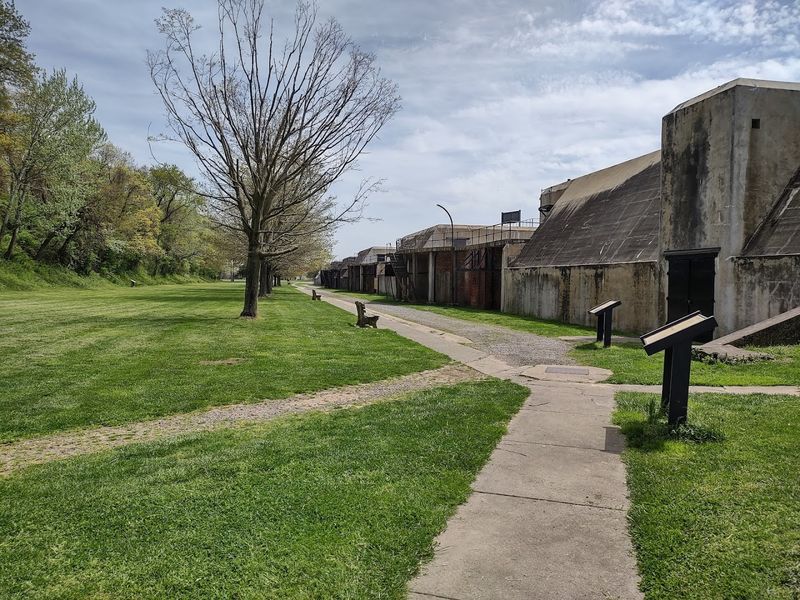
The half-mile walk to Finn’s Point National Cemetery is short enough that you might underestimate it, which would be a mistake.
Fort Mott State Park already has the kind of scenery that makes you slow down: broad Delaware River views, old military structures, grassy spaces, and that quiet South Jersey openness that feels far removed from the Parkway-and-Turnpike version of the state.
Then the trail leads you toward a cemetery with a heavier story. Finn’s Point is the final resting place of thousands connected to the Civil War era, including Confederate prisoners of war and Union guards who died while tied to Fort Delaware on Pea Patch Island.
The park’s own materials describe the Finns Point Trail as a half-mile walking path from Fort Mott to the national cemetery, while the Fort Mott History Trail adds another layer by interpreting the fort’s construction, regional importance, and 19th-century military technology.
This is a good choice for readers who want a historic outing without committing to a rugged climb.
Come for the fort, walk the trail, pause at the river, and give yourself time to let the place feel as solemn as it should.
4. Ramapo Lake Spur, Castle, Cannonball, and Ramapo Lake Trail — Ramapo Mountain State Forest
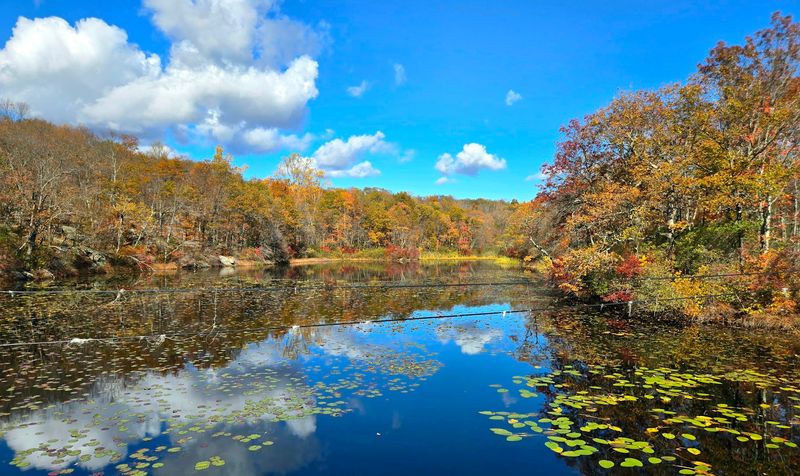
Nothing says “New Jersey hike with a plot twist” quite like climbing through the woods and suddenly finding stone castle ruins above a lake.
This Ramapo Mountain State Forest route delivers the drama without requiring an all-day expedition, especially if you stitch together the Ramapo Lake Spur, Castle Loop, Cannonball Trail, and Ramapo Lake sections into a manageable loop.
The forest itself offers miles of trails, from old roads to rockier climbs, and Ramapo Lake is the 120-acre centerpiece that gives the route its scenic anchor. But the castle ruins are the hook.
The Castle Point Short Loop described by the New York-New Jersey Trail Conference runs about three miles, follows the shore of Ramapo Lake, and climbs to the ruins of an old stone castle and tower with wide views.
That combination is hard to beat: water, woods, ruins, skyline glimpses if the day cooperates, and just enough uphill to make the payoff feel earned.
Parking near Skyline Drive is popular, so earlier is better on weekends. This is the hike for someone who wants their local-history walk with a little gothic energy and a great overlook at the top.
5. Long Path and Shore Trail Loop — Palisades Interstate Park

The Palisades make history feel vertical. One moment you are high above the Hudson with Manhattan across the water, and the next you are descending stone steps toward the river, wondering how a place this wild is pressed so close to the city.
The Long Path and Shore Trail are the two backbone routes here: one follows the cliff-top world, the other traces the riverfront below, and connecting trails let hikers build loops between them. That makes this a choose-your-own-adventure hike, but also one that deserves a little planning.
The park stretches about 12 miles along the New Jersey side of the Hudson, covers roughly 2,500 acres, and includes a National Historic Landmark landscape where the cliffs themselves are a National Natural Landmark.
Fort Lee Historic Park adds the clearest Revolutionary War connection, with a reconstructed encampment, visitor center, and overlooks tied to the 1776 defense of the Hudson.
Conditions matter here: the Giant Stairs area has been closed while rockfall hazards are assessed, so check the current route before committing to a loop. Even with that caveat, the Palisades still feel like one of New Jersey’s grandest historic walks.
6. Hasenclever Iron Trail — Long Pond Ironworks State Park
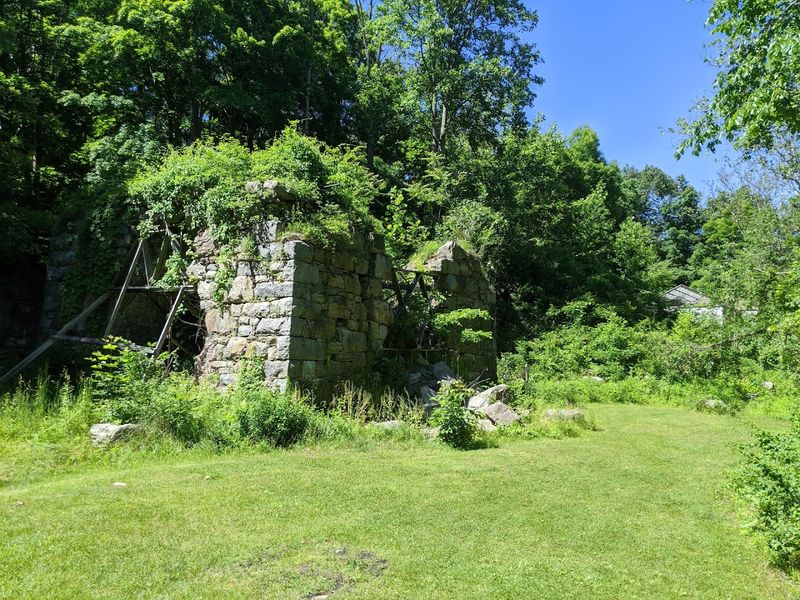
Old iron towns have a different kind of silence. It is not empty; it feels paused.
That is the magic of the Hasenclever Iron Trail at Long Pond Ironworks State Park, where the woods hold the remains of a once-busy ironworking community.
The park sits in northern Passaic County and includes the Long Pond Ironworks Historic District, where old stone walls, furnaces, waterwheels, and village remnants help turn a hike into a walk through New Jersey’s industrial backbone.
The Hasenclever Iron Trail is listed at about 1.3 miles on the park map, which makes it approachable, but the story around it is much bigger than the mileage.
Long Pond Ironworks was founded in the 1760s, and during the Revolutionary War era, ironmaster Robert Erskine supported the American cause by supplying iron products to the Continental Army while also serving as George Washington’s chief mapmaker.
That is the kind of detail that makes you look at every wall and foundation differently. This is not a “race to the overlook” hike.
It is slower and more observant. Wear shoes that can handle uneven ground, then let the ruins do the talking.
7. Batsto Village History Trail — Wharton State Forest
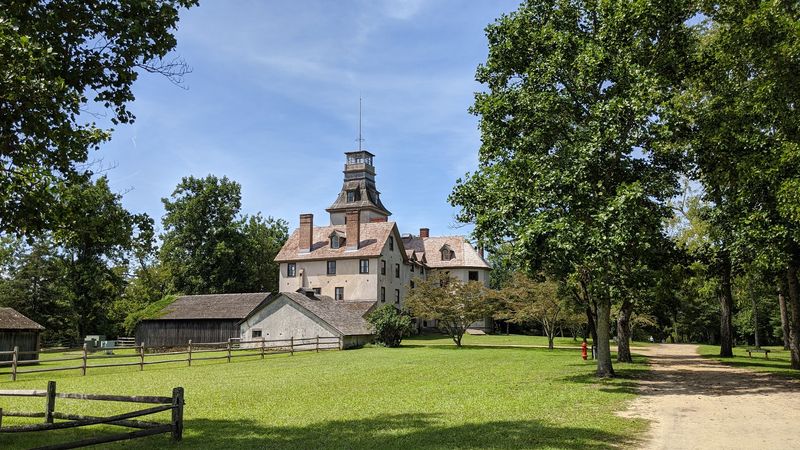
The Pine Barrens can make even a short walk feel mysterious, and Batsto Village uses that mood beautifully. The History Trail here moves through a preserved village that began in 1766, when the natural resources around the Batsto River made the area ideal for iron production.
That iron mattered. During the Revolutionary War, Batsto Iron Works supplied cannons, cannonballs, and camp kettles to the Continental Army, which gives the quiet village lanes a much bigger national story than their peaceful setting suggests.
Today, visitors can explore a preserved Pine Barrens industrial town with highlights that include an 1852 post office, an 1882 water-powered sawmill, and the 36-room Batsto Mansion.
The trail works especially well for mixed groups because it offers history without a punishing hike, scenery without needing deep wilderness skills, and enough buildings and interpretive stops to keep the walk from becoming just another loop through the woods.
Pair the village walk with nearby Batsto Lake views if you want more time outside. It is one of those rare New Jersey places where the past does not feel buried.
It feels like it is still sitting there, waiting for you to notice it.
Share this story