The farther you wander from Indiana’s busiest highways, the more surprising the state becomes. Hidden among forests, winding rivers, quiet backroads, and rolling farmland are destinations that reward curious travelers with dramatic waterfalls, rugged hiking trails, historic landmarks, unusual attractions, and landscapes many people never expect to find in the Hoosier State.
These are the kinds of places that don’t always make the front page of travel guides but leave the strongest impressions once you arrive. These 8 off-the-grid Indiana destinations prove that some of the state’s best adventures begin where the crowds end.
1. Cataract Falls State Recreation Area (Spencer)
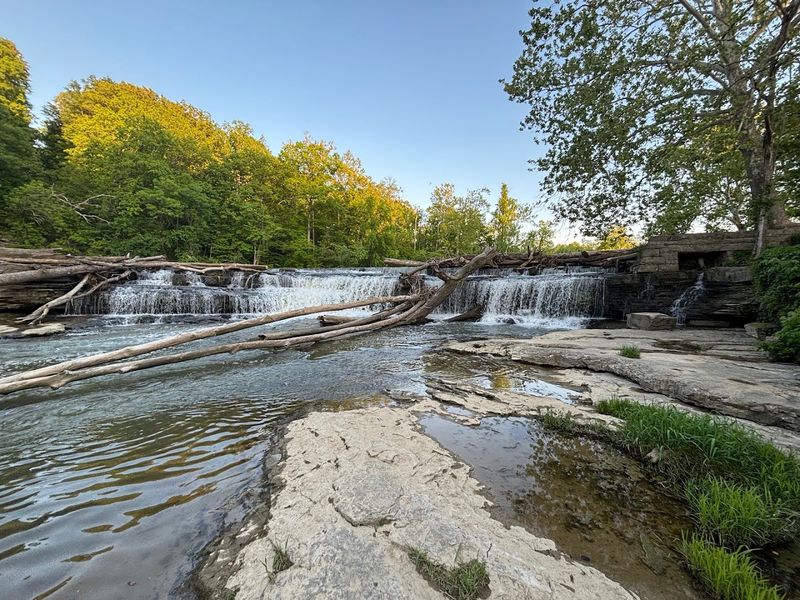
Start with water, because Cataract Falls makes its case fast. The twin cascades pour over broad limestone shelves in a series of steps, creating the kind of rushing, textured view that keeps your eyes moving from one ledge to the next.
Instead of a single dramatic drop, you get a layered scene with current, rock, and forest all working together. The best part is how accessible it is without losing its quiet edge. Short walks lead to overlooks, and the paths are easy enough that you can focus on the scenery instead of treating the visit like a workout.
That makes this a smart stop for mixed-age groups, casual explorers, or anyone who wants a beautiful payoff without a long march through the woods.
A covered bridge adds a strong dose of Indiana character without hijacking the setting. It sits naturally among the trees and water, giving the area that old-road, backcountry charm that works in photos but looks even better in person.
Picnic areas round things out, so it is easy to linger instead of treating the falls as a quick roadside glance. Season matters here, but not in the way you might think.
Spring brings louder water, summer fills the woods with green, fall adds warm color around the stone, and winter strips everything back to the essential lines of rock and current. You are not chasing one perfect week on the calendar.
For an off-the-grid Indiana stop, Cataract Falls lands in a sweet spot between easy and memorable. It offers real scenery, a peaceful setting, and enough variety to reward both a first visit and a return trip.
When a place combines moving water, limestone texture, and a shaded forest without much fuss, the mileage starts making sense very quickly.
2. AFCA Antique Fan Museum (Zionsville)
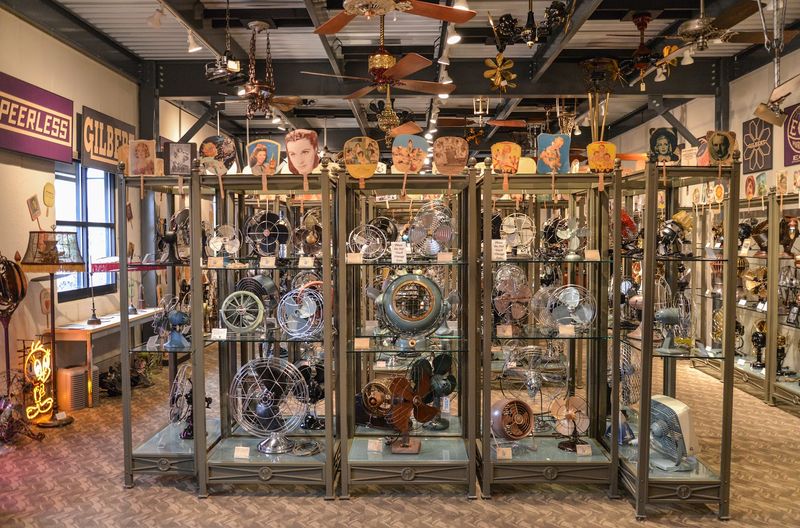
Here is the kind of museum that sounds oddly specific until you step inside and realize how much visual punch it has. The AFCA Antique Fan Museum turns a household object into a parade of design, engineering, and early electric ambition, with hundreds of fans showing off brass, iron, curves, cages, and surprisingly elegant details.
A quick stop can easily stretch longer once you start noticing how different each machine is. Some pieces lean ornate and decorative, while others look built for pure performance.
That contrast is part of the fun, because you are not just looking at old appliances, you are seeing how style and technology once shared the same table.
The blades, bases, switches, and guard patterns give every display case a lot more variety than you might expect.
Because the subject is so unusual, the museum avoids the tired rhythm of more predictable attractions. You do not walk in already knowing what every room will deliver, and that uncertainty works in its favor.
Even visitors who never thought twice about electric fans usually end up pausing at the craftsmanship, especially on the earliest examples.
Free admission seals the deal. That makes this an easy detour when you are exploring Zionsville or passing through central Indiana and want something different from the standard small-town museum formula.
It is compact enough to feel manageable, but distinctive enough to stay in your memory afterward. Off-the-grid does not always mean remote forest roads and trail maps. Sometimes it means finding a place with a niche so delightfully strange that it sidesteps every travel cliche on the board.
The AFCA Antique Fan Museum pulls that off with style, turning spinning history into one of the most unexpected stops in the state.
3. Seven Pillars of the Mississinewa (Peru)
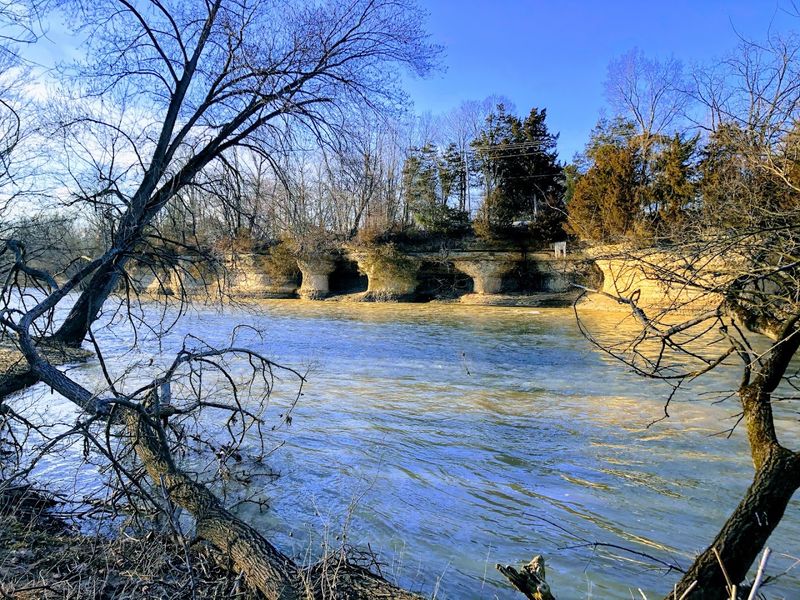
Not every Indiana landmark announces itself with signs, crowds, or a built-up visitor zone. The Seven Pillars of the Mississinewa rises quietly above the river, with tall limestone formations that look striking precisely because the setting stays so calm.
You get cliff faces, water, woods, and a sense of scale that appears almost out of nowhere. The river is central to the experience. From the bank, the pillars already stand out, but on the water the perspective changes and the stone seems taller, broader, and more sculptural.
A canoe or slow paddle route turns the landmark into a moving scene, where the current and shoreline reveal different angles little by little.
That measured pace suits the place. This is not a destination built around noise or a packed itinerary, and it does better when you let the landscape hold your attention without forcing a schedule on it.
Birds, tree cover, and the shape of the river do plenty of the work. The geology is the headline, yet the surrounding environment matters just as much.
Forest edges soften the cliffs, reflections play across the water, and the whole area has a tucked-away quality that separates it from more heavily trafficked natural sites. It is the kind of place where a quiet afternoon can feel richer than a full day elsewhere.
Indiana has no shortage of pleasant river scenery, but the Seven Pillars adds a dramatic vertical element that changes the mood entirely. The combination of limestone walls and the Mississinewa’s slower, quieter character gives this stop a distinct identity.
When you want a natural landmark that reads both peaceful and impressive at the same time, this one delivers without overplaying its hand.
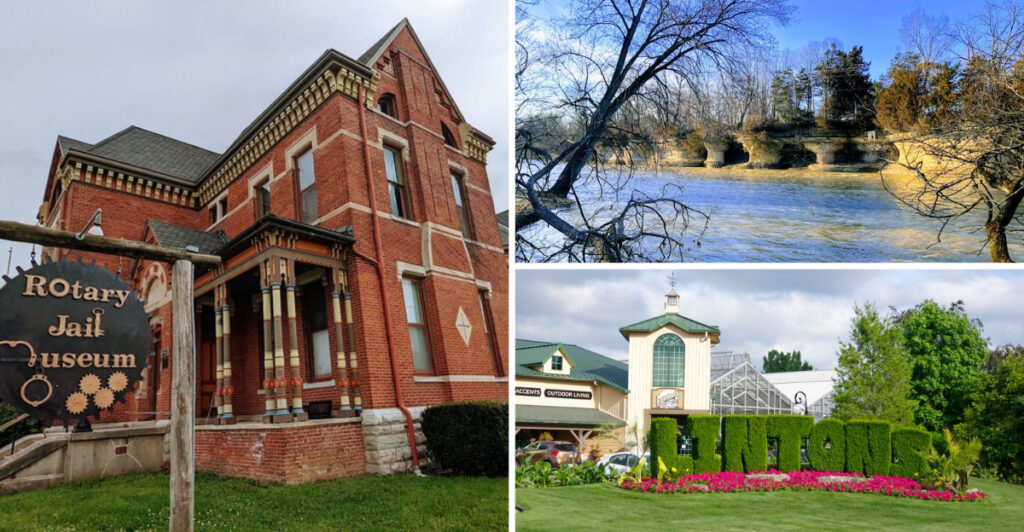
4. Rotary Jail Museum (Crawfordsville)
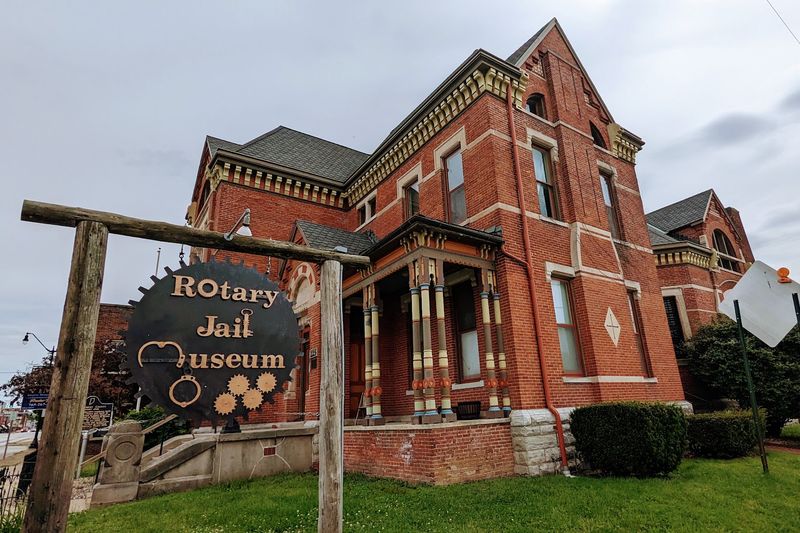
Some historic sites impress with grandeur, and some win by being completely unlike anything else. The Rotary Jail Museum belongs in the second category, built around a rotating cell block concept that sounds part engineering experiment, part cautionary tale.
Before you even get into the stories, the basic mechanics are enough to pull your attention in. The building itself carries a strong Victorian presence, which gives the whole visit a slightly formal exterior before the unusual interior takes over.
Then the iron, the circular design, and the tightly arranged cells shift the mood in a hurry. You are suddenly looking at a space that feels inventive and unsettling at the same time.
Guided tours are especially useful here because this place benefits from explanation. The jail is not merely old, it is old in a very specific and controversial way, and hearing how the rotating system worked adds real weight to what you are seeing.
That context turns odd machinery into a sharper story about design choices, daily life, and public safety from another era.
It is also a refreshing break from predictable museum layouts. Instead of display cases leading you through a familiar sequence, the structure itself becomes the main exhibit.
Every angle reinforces the fact that this was a serious working building with an idea at its center, whether that idea now seems clever, harsh, or both.
Crawfordsville has a stop that can satisfy history buffs, architecture fans, and travelers who simply like the bizarre corners of Americana. The Rotary Jail Museum does not rely on nostalgia or polished spectacle.
Its appeal comes from sheer peculiarity, backed by real hardware and a design you are unlikely to encounter again anywhere in the state.
5. Clayshire Castle (Bowling Green)
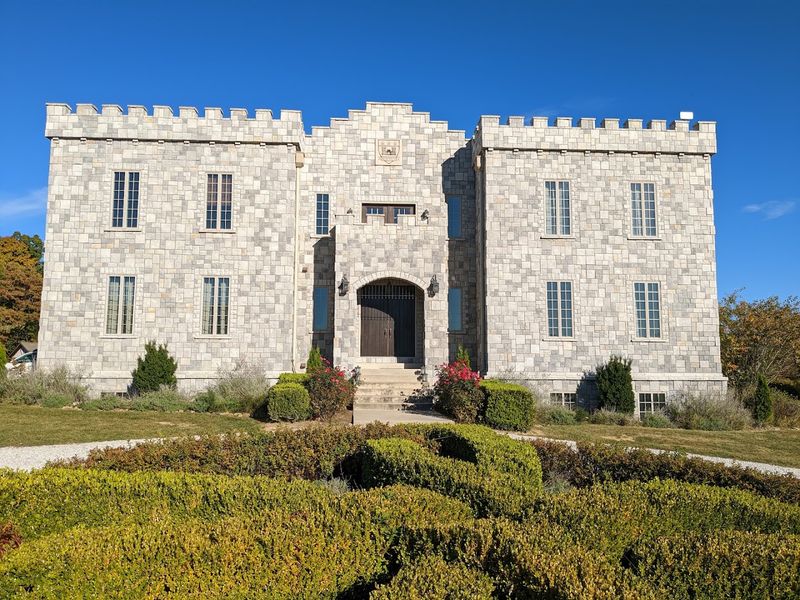
Then there is the castle, because apparently rural Indiana decided a medieval silhouette belonged in the landscape.
Clayshire Castle rises with stone walls, towers, and battlements that look startling against the surrounding countryside, creating one of those rare roadside sights that makes you slow down immediately. It is unexpected in the best possible way.
Part of the appeal comes from contrast. Farm country and wooded roads set one expectation, then this fortress-style structure interrupts the scene with vertical lines, textured masonry, and old-world references that have no interest in blending in.
That boldness gives the place its pull, even when you are simply taking in the exterior and grounds. Because it is privately owned, this stop works best with respectful curiosity rather than an all-access mindset.
You are there to admire the architectural detailing, the proportions, and the visual drama of a full-sized castle standing where many travelers would never anticipate one. In a state loaded with barns, brick storefronts, and courthouses, this profile is unforgettable.
The setting helps. Open space around the structure gives the towers room to stand out, and the grounds add a polished, picturesque frame without overwhelming the building itself.
Depending on the light, the stone can read warm and storybook-like or more imposing and theatrical, which keeps the exterior interesting from different angles.
Clayshire Castle succeeds as an off-the-grid destination because it does not need a long checklist of activities to justify the detour. The sight of a convincing medieval-style stronghold in southern Indiana is already the event.
When you want a stop with visual surprise, unusual scale, and zero chance of being confused with anything nearby, this one easily earns its spot.
6. Linton’s Enchanted Gardens (Elkhart)
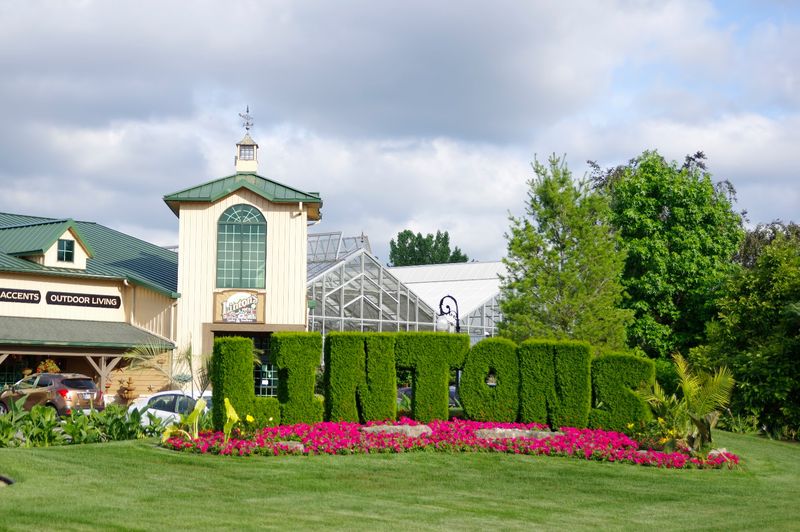
Some places are hard to categorize, and that is exactly why they work. Linton’s Enchanted Gardens mixes the structure of a garden center with the visual playfulness of a storybook setting, filling the property with pathways, fountains, sculptures, seasonal displays, and quirky buildings that keep drawing you around the next bend.
It is less about rushing to a main attraction and more about noticing one carefully arranged scene after another. The landscaping does a lot of heavy lifting here. Flower beds, water features, and tucked-in decorative elements create constant visual variety, so the grounds never flatten into a simple retail stop.
Even when you are browsing plants or gifts, the environment keeps nudging the experience into something more playful and immersive.
That whimsy could have become overwhelming, but the design appears controlled enough to stay inviting. Instead of piling on randomness, the property uses pathways and focal points to guide your eye, giving each section a purpose.
You can wander casually, pause for photos, or just enjoy the fact that ordinary errands are nowhere in sight. Seasonal changes are part of the draw. Different times of year bring different colors, displays, and moods, which means a return visit would not be a simple repeat.
The place knows how to use decoration without turning every corner into a spectacle, and that balance helps it stay charming rather than chaotic.
Elkhart is not short on attractions, but Linton’s has its own lane. It offers a more designed, whimsical kind of escape, where the pleasure comes from detail, pacing, and visual surprise instead of big-ticket thrills.
For travelers who like gardens with personality and spaces that lean creative without losing their polish, this stop is easy to recommend.
7. Jug Rock Nature Preserve (Shoals)
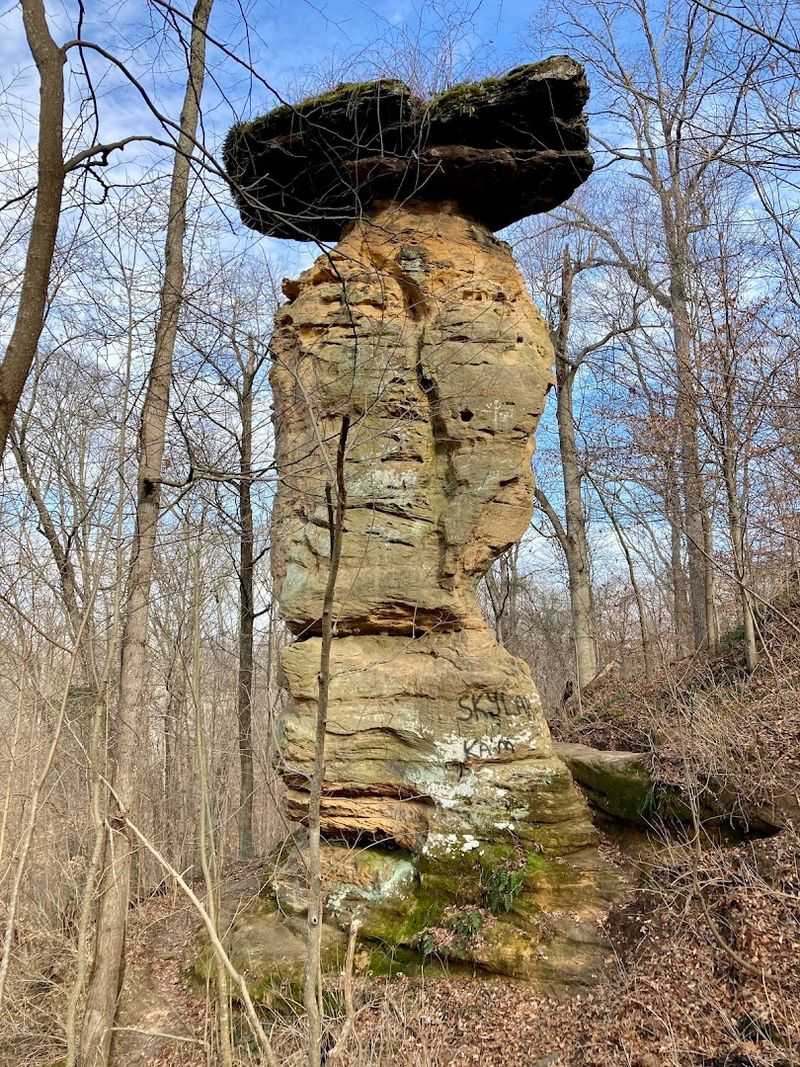
Jug Rock proves that one unusual shape can carry an entire destination. Rising from the woods with its distinct jug-like profile, this freestanding rock formation has enough character to stop you mid-trail and enough geological intrigue to keep you studying the contours.
It is an easy landmark to remember because almost nothing else in Indiana looks remotely similar. The approach helps build the reveal without dragging it out.
A relatively short, manageable trail takes you through quiet woodland, so the walk adds context without demanding serious hiking legs or extensive planning.
By the time the formation comes into view, the surrounding trees frame it well and make the rock stand out even more sharply.
Its shape is the obvious headliner, but the scale matters too. This is not a small roadside boulder with a clever nickname, it is a substantial feature with a profile that speaks clearly from a distance.
Erosion did the sculpting over a very long stretch of time, and the result has a silhouette that looks almost deliberate.
The preserve’s calm setting gives Jug Rock an advantage. There is no need for a long list of distractions because the woodland quiet and focused trail keep your attention exactly where it should be.
That simplicity makes the site satisfying, especially on a day when you want a nature stop with a clear objective and a strong visual payoff.
Southern Indiana has plenty of scenic terrain, yet Jug Rock stands apart by offering a highly specific geological oddity in an approachable format. You can visit without turning it into an all-day expedition, and still come away with a memorable sense of place.
For travelers who appreciate natural landmarks with a little personality built right into the stone, this preserve delivers.
8. Hemlock Cliffs (English)
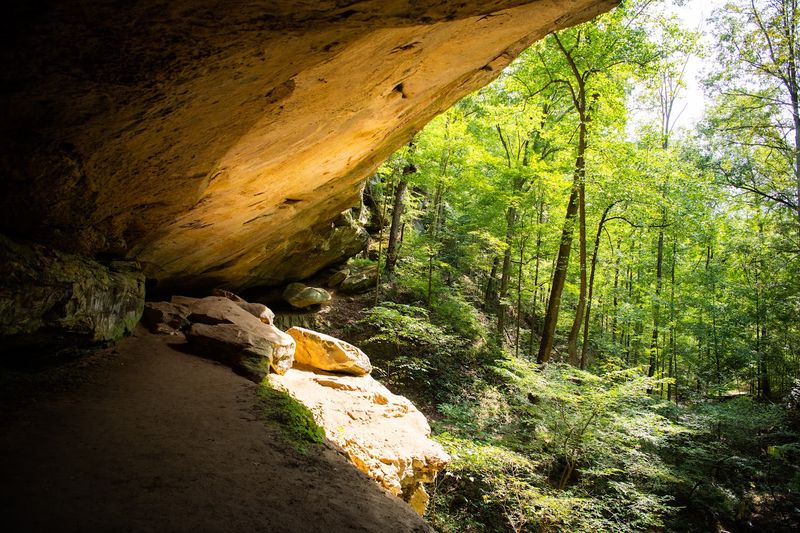
Hemlock Cliffs changes the temperature of the day the moment you enter the trail. Tucked within Hoosier National Forest, this box canyon route pulls you into a cooler, shadier landscape of sandstone walls, overhangs, rock shelters, and seasonal waterfalls that can make southern Indiana look far more rugged than many visitors expect. It is a compact hike with a lot going on.
The terrain creates a strong sense of enclosure without becoming oppressive. Cliffs rise around the path, narrow passages focus your view, and the interplay of stone, moisture, and tree cover gives the area a noticeably different texture from standard woodland trails.
Even in warmer weather, the setting can seem hushed and sheltered. One standout detail is the presence of eastern hemlock trees, which add to the canyon’s cool, distinctive character.
Combined with dripping rock faces and the occasional waterfall, they help shape a landscape that reads almost like a small pocket ecosystem set apart from the surrounding forest. That contrast is a big part of the trail’s appeal.
You also get variety without needing a huge mileage commitment. Rock shelters, cliff edges, and changing light keep the route visually active, so the hike stays rewarding from one section to the next.
It is a smart pick for travelers who want geological interest and scenic drama without signing up for a punishing backcountry challenge.
Among Indiana’s quieter natural destinations, Hemlock Cliffs has serious range. It offers shade, stone, water, and a stronger sense of remoteness than its accessibility might suggest.
When you want a trail that delivers cool canyon scenery, unusual plant life, and a setting that seems set apart from the rest of the state, this one deserves a place near the top of the list.
Share this story