Texas holds some of the most beautiful and unique churches in America, from small country chapels built by European immigrants to massive cathedrals that took decades to complete. These sacred spaces tell stories of faith, community, and the diverse cultures that shaped the Lone Star State. Whether you’re drawn to intricate hand-painted interiors or soaring Gothic spires, these eight churches showcase architectural styles and historical significance that make them worth visiting, even if you’re just passing through.
1. The Chapel of St. Basil (Houston)
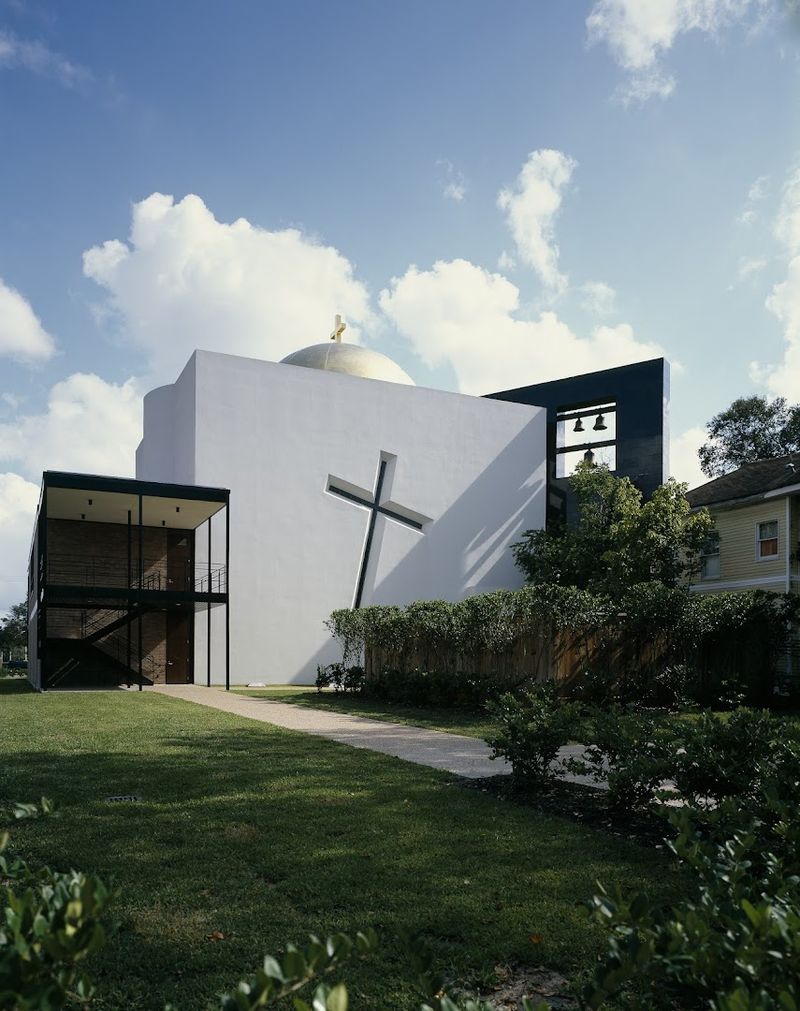
Built in 1997 on the University of St. Thomas campus, this striking chapel breaks every rule you might expect from traditional church design. Architect Philip Johnson created something that looks more like modern art than a place of worship, and that’s exactly what makes it unforgettable. The golden dome catches sunlight in ways that change throughout the day, while the Byzantine-inspired interior feels intimate despite the bold exterior.
Walk inside and you’ll find yourself surrounded by rich colors and sacred imagery that contrast beautifully with the contemporary architecture. The chapel seats only about 600 people, making it feel personal rather than overwhelming. Natural light filters through stained glass in unexpected ways, creating an atmosphere that invites quiet reflection.
What sets this chapel apart is how it honors ancient Christian traditions while embracing modern design principles. The cube-shaped main structure represents earth and humanity, while the sphere of the dome symbolizes heaven and the divine. These geometric shapes aren’t just artistic choices but theological statements built in brick, limestone, and glass.
Students and visitors often describe the space as both calming and inspiring. The acoustics work beautifully for the university’s choir performances, which happen regularly throughout the academic year. Even if you’re not Catholic or particularly religious, the building itself offers something worth experiencing.
Located in the Museum District, the chapel fits right into Houston’s cultural landscape. It’s free to visit during open hours, and the surrounding campus makes for a pleasant walk. Photography enthusiasts love capturing how the building’s angles and surfaces interact with Texas sunlight.
This isn’t your grandmother’s church, and that’s the point. St. Basil proves that sacred architecture can evolve while still creating space for contemplation and community. The chapel has won multiple design awards and regularly appears on lists of Houston’s most interesting buildings, standing as proof that modern faith spaces can be just as meaningful as centuries-old cathedrals.
2. St. Louis Catholic Church (Castroville)
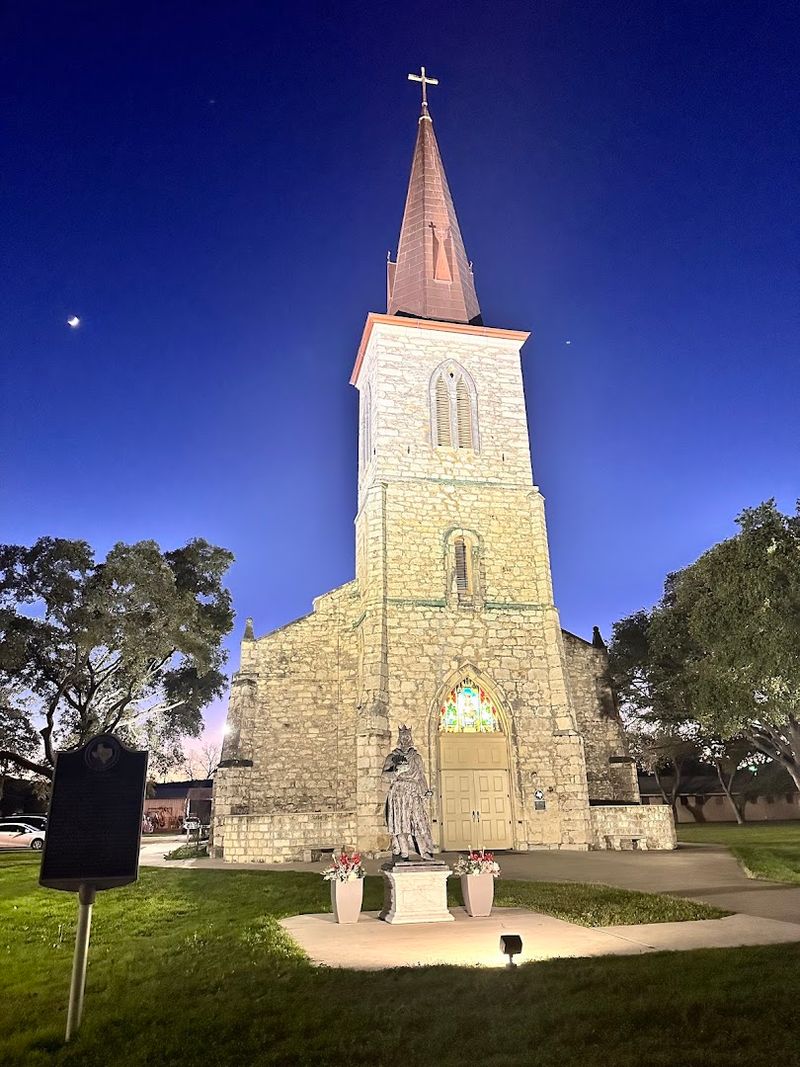
Castroville wears its Alsatian heritage proudly, and nowhere is that more evident than at St. Louis Catholic Church. French settlers from the Alsace region arrived in 1844 and immediately began planning a church that would remind them of home. The current Gothic Revival structure, completed in 1870, stands as a testament to their determination and craftsmanship.
The white limestone exterior practically glows against the Texas sky, with its tall steeple visible from all over this small Hill Country town. Original wooden pews still line the interior, worn smooth by generations of worshippers. Stained glass windows imported from Europe cast colorful patterns across the sanctuary during morning mass.
What makes St. Louis particularly special is how it anchors an entire community’s identity. Castroville calls itself the “Little Alsace of Texas,” and this church serves as the heart of that cultural preservation. Annual festivals and celebrations often center around the church grounds, where locals gather much like their ancestors did over 150 years ago.
The church’s cemetery tells its own fascinating story. Headstones bear French and German surnames of founding families, and the oldest markers date back to the settlement’s earliest days. Walking among them provides a tangible connection to the pioneers who carved out new lives in an unfamiliar land.
Inside, the altar features hand-carved details that showcase European woodworking traditions. The stations of the cross are original to the building, each one a piece of folk art that combines religious devotion with practical craftsmanship. Nothing feels overly ornate or pretentious, just honest and enduring.
Castroville sits just west of San Antonio, making St. Louis an easy addition to any Hill Country road trip. The church remains an active parish, so services happen regularly. Visitors are welcome to explore the grounds and interior when the building is open, though calling ahead ensures you won’t arrive during a private ceremony or event.
3. San Fernando Cathedral (San Antonio)
Standing in San Antonio’s Main Plaza since 1731, San Fernando Cathedral holds the distinction of being the oldest continuously functioning cathedral sanctuary in the United States. That’s nearly three centuries of baptisms, weddings, funerals, and daily masses in the same sacred space. The building witnessed Spanish colonial rule, Mexican independence, the Texas Revolution, and everything that followed.
The cathedral’s connection to Texas history runs deep and sometimes dark. During the Battle of the Alamo, General Santa Anna reportedly raised a blood-red flag from the church tower, signaling no quarter would be given to defenders. Some historians believe the remains of Alamo defenders, including Davy Crockett and Jim Bowie, were buried somewhere on the cathedral grounds, though this remains disputed and unproven.
Today’s visitors encounter a building that has been expanded and renovated multiple times while maintaining its historical core. The original adobe walls from the 1700s still stand within the larger Gothic Revival structure completed in the 1870s. White limestone and ornate details replaced simpler colonial architecture, but the spirit of the place endures.
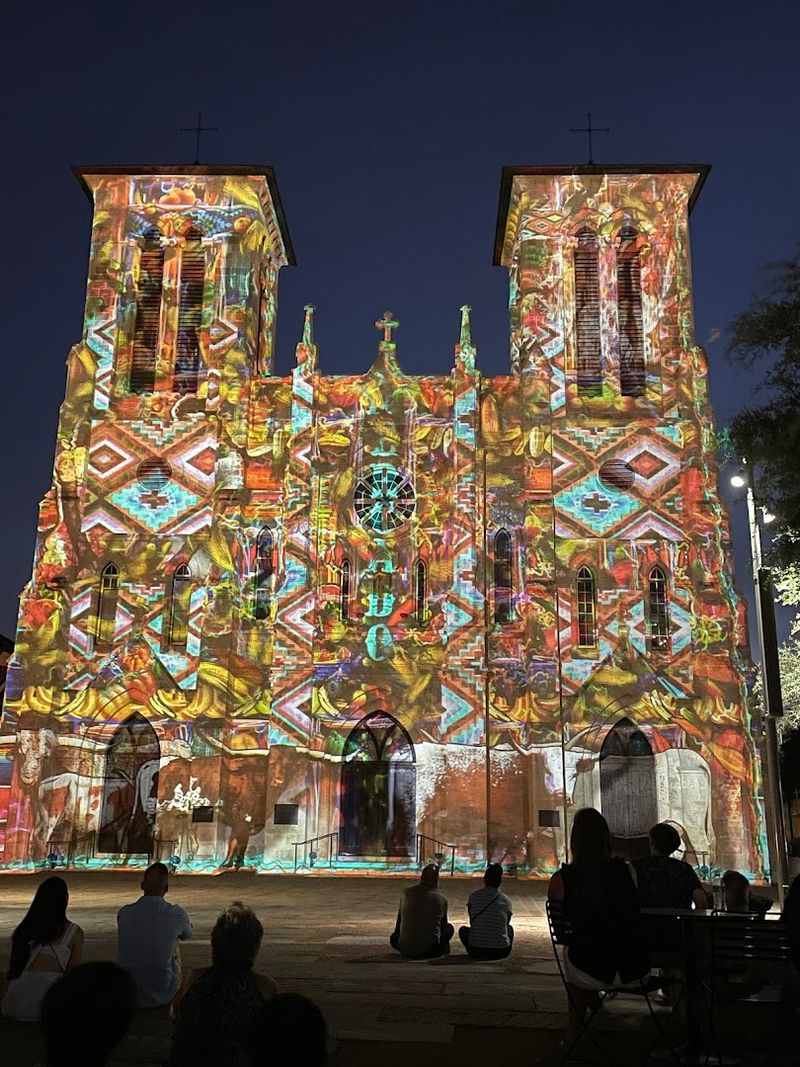
What truly sets San Fernando apart is the nightly “San Antonio: The Saga” light show projected onto the cathedral’s facade. This 24-minute presentation uses cutting-edge technology to tell 300 years of history through stunning visuals and music. Watching the building’s walls seem to transform and come alive draws crowds year-round, turning the cathedral into both a historical monument and a contemporary art installation.
The interior features soaring ceilings, elaborate altars, and religious artwork spanning multiple centuries. Natural light filters through stained glass windows during the day, while carefully placed lighting creates drama after dark. The cathedral seats over 1,000 people and serves as the mother church for the Archdiocese of San Antonio.
Located in the heart of downtown, San Fernando remains easily accessible and welcomes visitors throughout the week. Mass is celebrated daily, and the building stays open for prayer and tourism. The combination of deep historical significance and ongoing community relevance makes this cathedral essential viewing for anyone interested in Texas heritage.
4. St. John the Baptist Catholic Church (Ammannsville)
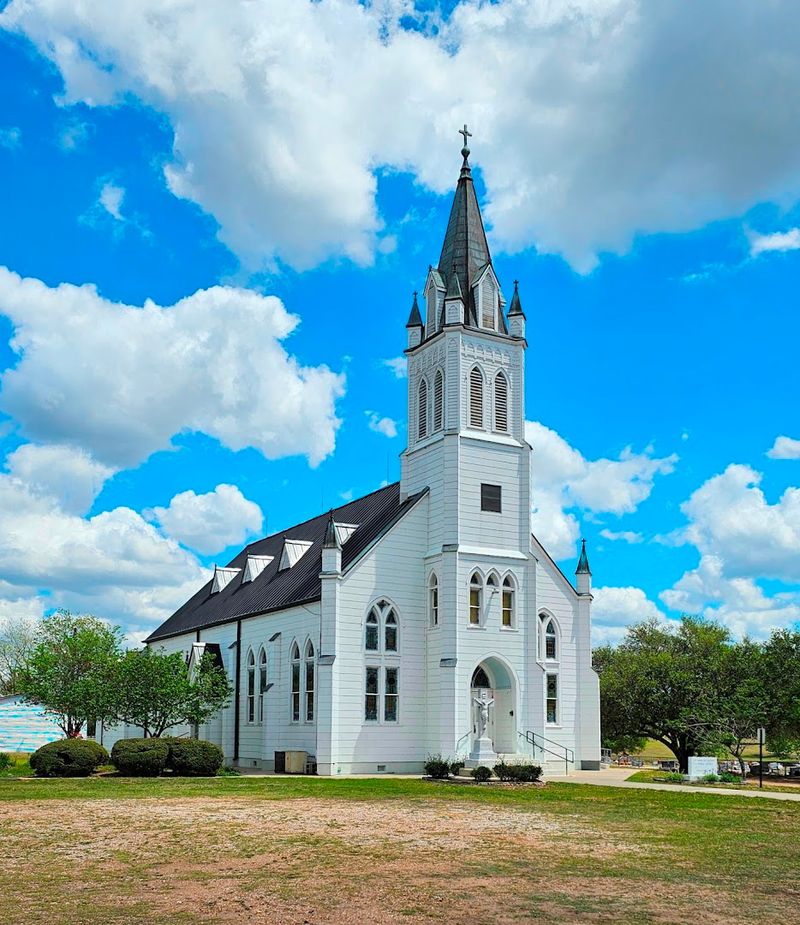
You might drive right past Ammannsville without noticing it exists. This tiny community in Fayette County barely registers on most maps, but its church punches way above its weight in terms of beauty and historical significance. St. John the Baptist Catholic Church looks modest from the outside, a simple white wooden structure with a pointed steeple rising above the surrounding farmland.
Step through the doors and prepare to have your expectations completely overturned. The interior explodes with color and intricate hand-painted designs covering nearly every surface. German and Czech immigrants who settled here in the mid-1800s brought their artistic traditions with them, transforming this humble building into something extraordinary.
The painted decorations aren’t just pretty patterns but carefully planned religious symbolism executed with remarkable skill. Columns appear to be marble through trompe l’oeil techniques, while angels, saints, and biblical scenes adorn the walls and ceiling. The altar area features especially elaborate work, with gold leaf accents and detailed murals that could hold their own in much larger, wealthier churches.
What makes St. John’s particularly moving is the context. These were poor farming families who poured their limited resources and considerable talents into creating beauty for their community. They didn’t have money for imported artwork or professional decorators, so they did the work themselves with house paint and determination.
The church still serves a small but devoted congregation. Sunday mass brings together descendants of founding families and newer residents who appreciate the building’s unique character. The painted interior requires ongoing maintenance, and the community works hard to preserve what their ancestors created.
Getting to Ammannsville requires commitment since it’s not on the way to anywhere else. The church sits about halfway between Houston and Austin, accessed via farm roads through rolling countryside. Call ahead to confirm the building will be open, as it’s not always unlocked outside of service times.
Photography is usually permitted, but remember this is an active house of worship deserving respect.
Visiting St. John the Baptist feels like discovering a secret. The contrast between the plain exterior and ornate interior creates genuine surprise, while the rural setting adds to the sense of stumbling onto something special and unexpected in the Texas countryside.
5. Immaculate Conception Cathedral (Brownsville)
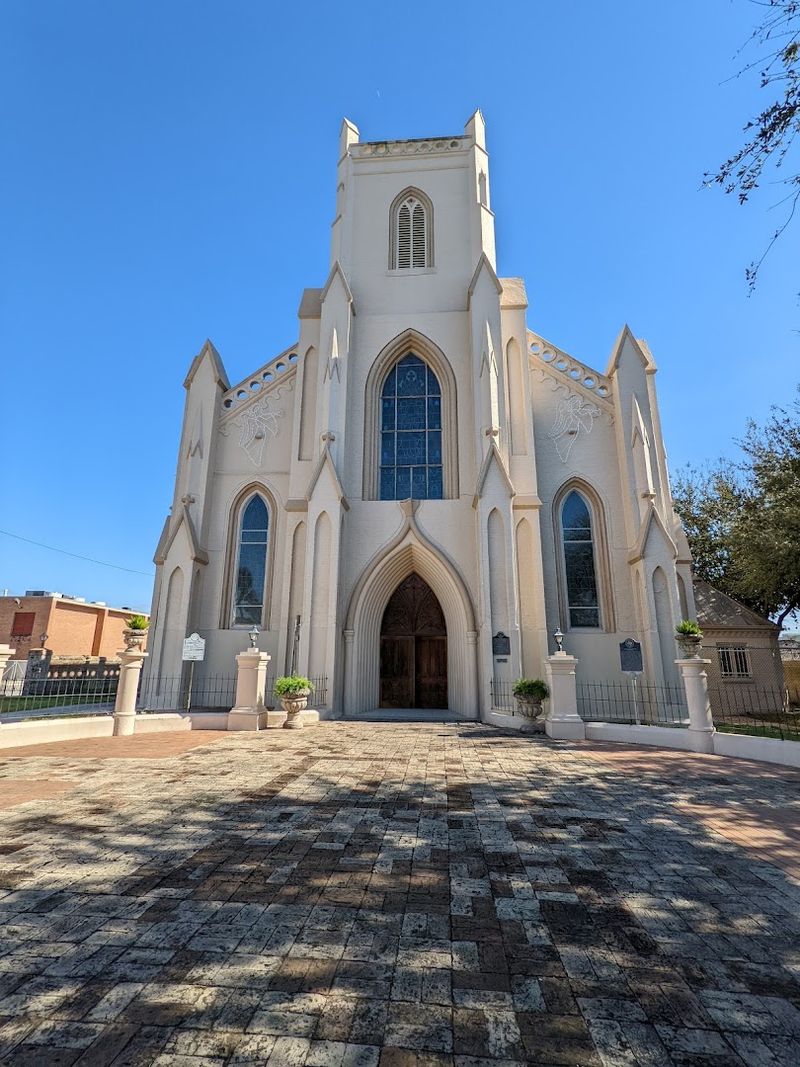
Brownsville sits at the very southern tip of Texas, where the Rio Grande separates the United States from Mexico. Immaculate Conception Cathedral reflects this border location, blending Mexican baroque influences with American Catholic traditions in ways that create something distinctly regional. The cathedral has served as a spiritual anchor for the community since the mid-1800s, though the current building dates to 1859.
The exterior presents a warm, welcoming face to the surrounding downtown area. Cream-colored walls and a prominent bell tower give the building presence without overwhelming the relatively modest scale. Architectural details show clear Spanish colonial influence, connecting the cathedral to the broader Catholic heritage of the region stretching back centuries.
Inside, the sanctuary balances ornate decoration with functional worship space. High ceilings create a sense of grandeur, while the layout keeps the congregation close to the altar. Stained glass windows filter the intense South Texas sunlight into softer, more contemplative hues.
Religious statuary and artwork represent both European traditions and local artistic expressions.
The cathedral’s history intertwines with the complicated story of the border itself. During various periods of conflict and cooperation between the U.S. and Mexico, the church served as neutral ground where families separated by politics and borders could maintain connections. This role as a bridge between cultures continues today.
Immaculate Conception functions as the mother church for the Diocese of Brownsville, which covers a vast territory across South Texas. The cathedral hosts major diocesan events, ordinations, and celebrations that draw Catholics from throughout the region. Daily masses serve a diverse congregation reflecting Brownsville’s multicultural character.
The surrounding neighborhood contains other historic buildings and provides context for the cathedral’s role in community development. Walking around the area reveals layers of history, from 19th-century commercial buildings to more recent development. The cathedral grounds include gardens and outdoor spaces where parishioners gather before and after services.
Visitors should expect to encounter a living, working church rather than a museum piece. Services are conducted primarily in Spanish, reflecting the congregation’s demographics. The cathedral welcomes tourists but asks for appropriate respect during religious ceremonies.
Downtown Brownsville offers other attractions within walking distance, making the cathedral part of a larger exploration of this unique border city.
6. St. Mary’s Catholic Church (High Hill)
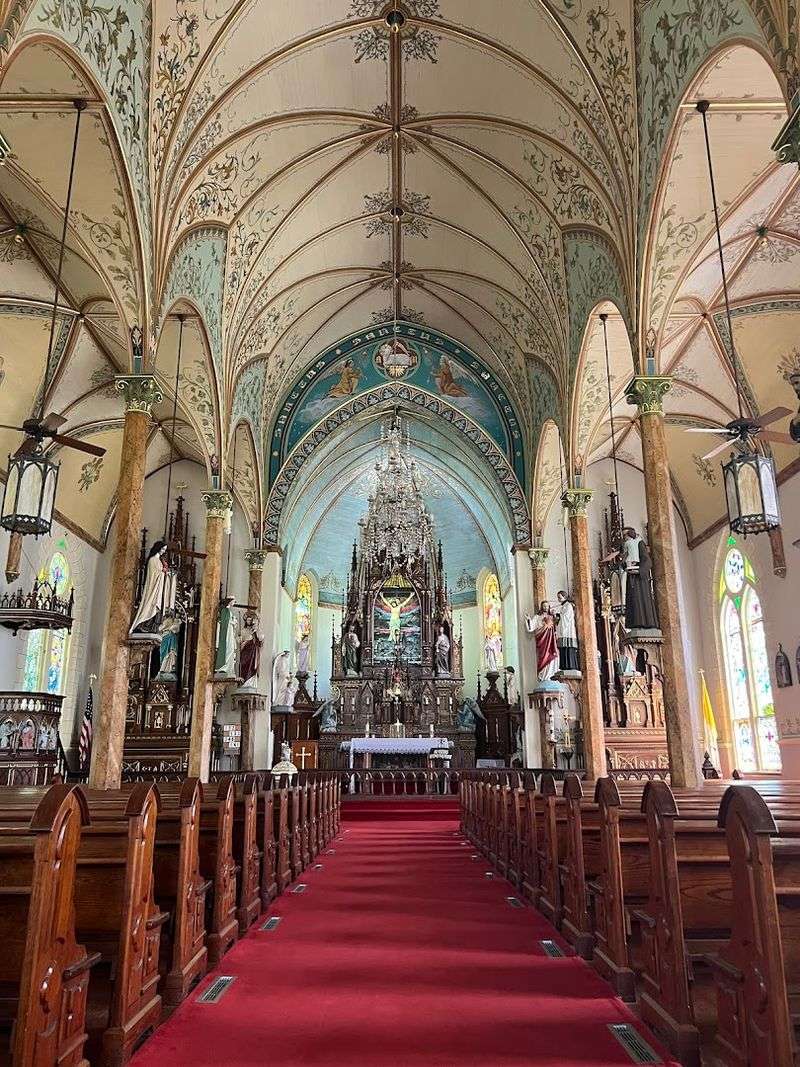
High Hill earned its nickname as the “Queen of the Painted Churches” through St. Mary’s absolutely stunning interior. This isn’t just decoration for decoration’s sake but a complete artistic vision executed with breathtaking attention to detail. Czech and German immigrants built the current structure in 1906, replacing an earlier church that had served the community since the 1870s.
From the outside, St. Mary’s looks impressive but not particularly unusual. The white wooden exterior and towering steeple follow patterns seen in many rural Texas churches. That’s part of what makes the interior so shocking and delightful when you first enter.
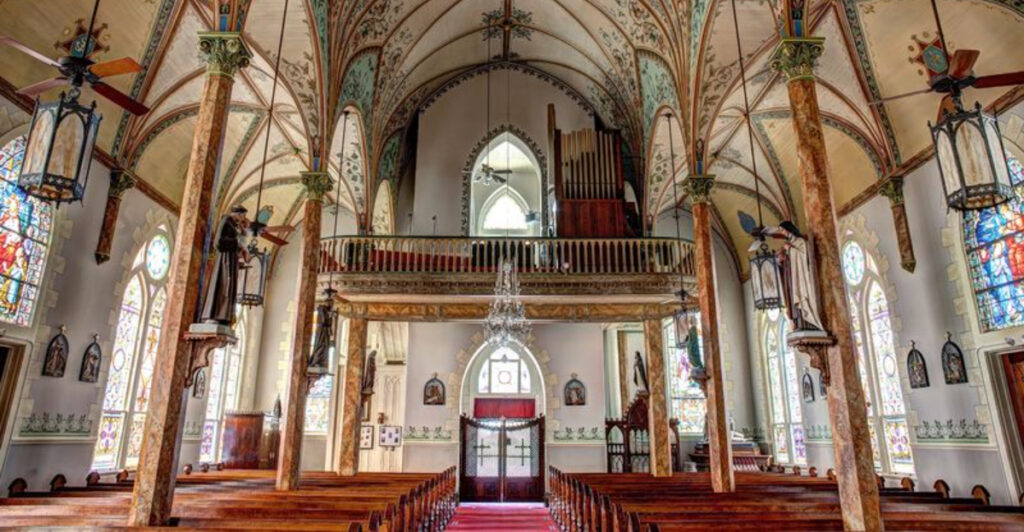
Every surface seems to sing with color and pattern. The ceiling features elaborate frescoes depicting religious scenes and symbolic imagery. Columns are painted to resemble various types of marble, complete with realistic veining and shading.
The altar area showcases particularly intricate work, with gold accents and detailed figurative paintings that demonstrate serious artistic skill.
What elevates St. Mary’s beyond other painted churches is the cohesiveness of the design. Everything works together as a unified whole rather than a collection of separate decorative elements. The color palette, the symbolic program, and the architectural features all support each other in creating an immersive sacred environment.
The artists responsible for this masterpiece were mostly self-taught parishioners working under the direction of more experienced painters. They used basic house paints and brushes, working from scaffolding during whatever time they could spare from farming. The project took years to complete, with multiple generations contributing to the final result.
High Hill remains a small community, and St. Mary’s continues as an active parish. Sunday mass brings together families who have worshipped here for generations. The church also attracts visitors from around the world who come specifically to see the painted interior.
Getting to High Hill requires driving through beautiful Texas countryside between Houston and Austin. The church sits prominently in the small town center, impossible to miss. Visiting hours vary, so checking ahead ensures you won’t arrive when the building is locked.
A small donation box inside helps fund ongoing preservation work.
Photographers love St. Mary’s for obvious reasons, though the lighting can be tricky inside. The painted surfaces create texture and interest in every direction, making composition decisions almost overwhelming. Taking time to simply sit and absorb the visual richness often proves more rewarding than rushing through with a camera.
7. The Cathedral Shrine of the Virgin of Guadalupe (Dallas)
Dallas’s Catholic cathedral underwent a remarkable transformation beginning in the 1990s, emerging as the Cathedral Shrine of the Virgin of Guadalupe. This designation recognizes the building’s importance as a pilgrimage site and honors the patroness of the Americas. The current structure, completed in 1902, received extensive renovations that enhanced its beauty while accommodating modern liturgical needs.
The exterior presents an imposing presence in downtown Dallas, with twin bell towers and Spanish colonial revival details that stand out among the surrounding modern architecture. Red tile roofing and cream-colored stone create warmth and visual interest. The cathedral occupies an entire city block, with grounds that provide green space in the urban core.
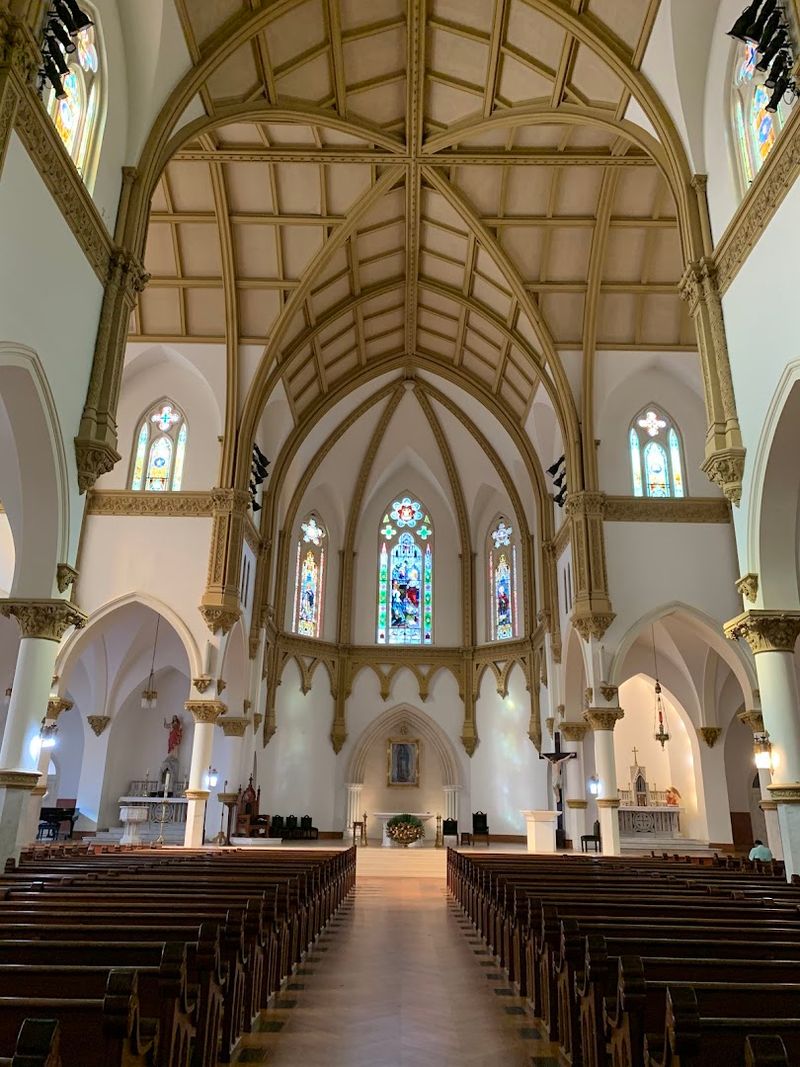
Inside, the sanctuary impresses with its scale and artistic richness. The renovation added stunning new artwork, including a massive mosaic of Our Lady of Guadalupe that serves as the focal point behind the main altar. This mosaic alone contains over 3 million pieces of glass and stone, creating an image visible from every part of the cathedral.
Stained glass windows tell biblical stories and honor various saints, with light streaming through them to create ever-changing patterns across the interior. The ceiling features elaborate painting and decorative elements that draw the eye upward. Marble, bronze, and precious materials appear throughout, reflecting the cathedral’s importance within the diocese.
The cathedral serves as the mother church for the Diocese of Dallas, which covers a large swath of North Texas. Major diocesan events, ordinations, and celebrations happen here, drawing Catholics from throughout the region. The designation as a shrine means the cathedral also attracts pilgrims seeking spiritual renewal and connection to the Guadalupe tradition.
Daily masses serve a diverse congregation reflecting Dallas’s multicultural character. Services are offered in multiple languages, including English, Spanish, and Latin. The cathedral also hosts concerts, lectures, and community events that extend its role beyond purely religious functions.
Located in the Arts District, the cathedral sits near other cultural attractions including museums, theaters, and restaurants. Visitors can easily combine a cathedral visit with broader exploration of downtown Dallas. Parking can be challenging during weekday business hours, but the cathedral is accessible via public transportation.
The building remains open for prayer and tourism throughout the week, though calling ahead confirms access during special events. Guided tours are sometimes available and provide deeper insight into the cathedral’s history, art, and religious significance.
8. Sts. Cyril and Methodius Catholic Church (Dubina)
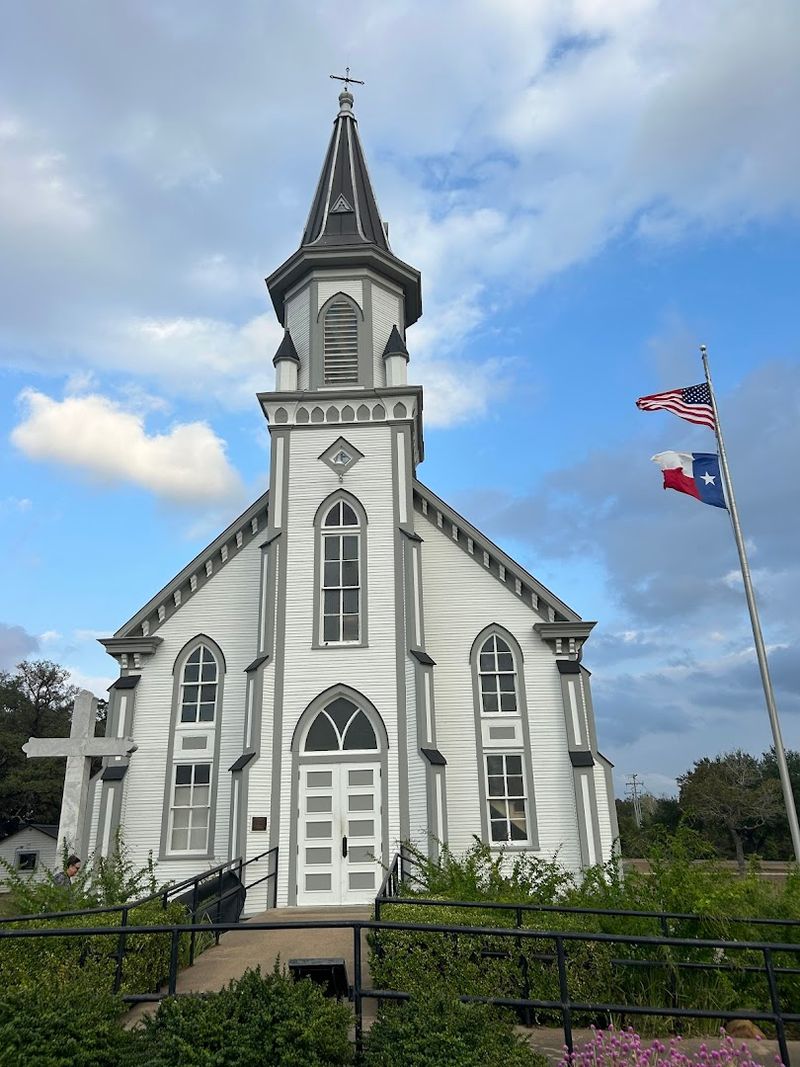
Dubina barely qualifies as a town, more of a crossroads in Fayette County where Czech immigrants established a community in the 1850s. Sts. Cyril and Methodius Catholic Church stands as the most visible reminder of that heritage, a jewel box of folk art and devotion that continues to draw visitors despite its remote location.
The church building itself follows a simple plan common to rural Texas churches of the era. White wooden siding, a steeply pitched roof, and a tall steeple create a silhouette that reads as “church” from a distance. Nothing about the exterior prepares you for what awaits inside.
Opening the door reveals an explosion of color and pattern that feels almost overwhelming at first. Every available surface carries painted decoration, from the ceiling to the walls to the columns supporting the gallery. The work shows clear Czech folk art influences, with patterns and motifs that would look at home in Central European churches.
Unlike some painted churches where the decoration feels haphazard or added piecemeal, Sts. Cyril and Methodius presents a remarkably unified artistic vision. The color palette remains consistent throughout, dominated by blues, golds, and deep reds.
Geometric patterns frame figurative religious paintings, creating rhythm and visual flow that guides your eye around the space.
The altar area receives the most elaborate treatment, with intricate paintings of saints and angels surrounding the tabernacle. Trompe l’oeil techniques make flat surfaces appear three-dimensional, adding depth and architectural interest. Gold leaf accents catch whatever light enters through the windows, creating subtle shimmer and movement.
This tiny church serves an equally tiny congregation these days, with Sunday mass drawing maybe a few dozen people. Most are descendants of the Czech families who built the church and created its decorations. The sense of continuity and tradition runs strong, even as the surrounding countryside empties of residents.
Finding Dubina requires determination and good directions, as GPS sometimes struggles with these back roads. The church sits along a rural highway, clearly marked with signs directing visitors to the painted churches of Fayette County. The building is often locked outside of service times, but a phone number posted outside connects you with someone who can arrange access.
Visiting Sts. Cyril and Methodius works best as part of a larger painted churches tour through this region. Several other decorated churches sit within a short drive, each with its own character and artistic approach.
Share this story