Texas is home to more than just cattle and longhorns. Scattered across the state’s deserts, forests, and backyards live some of the strangest creatures you’ve ever seen. From bats with wrinkled faces to lizards that squirt blood from their eyes, these animals prove that truth really is stranger than fiction.
Get ready to meet ten bizarre Texas residents that might be closer than you think.
1. Pallid Bat
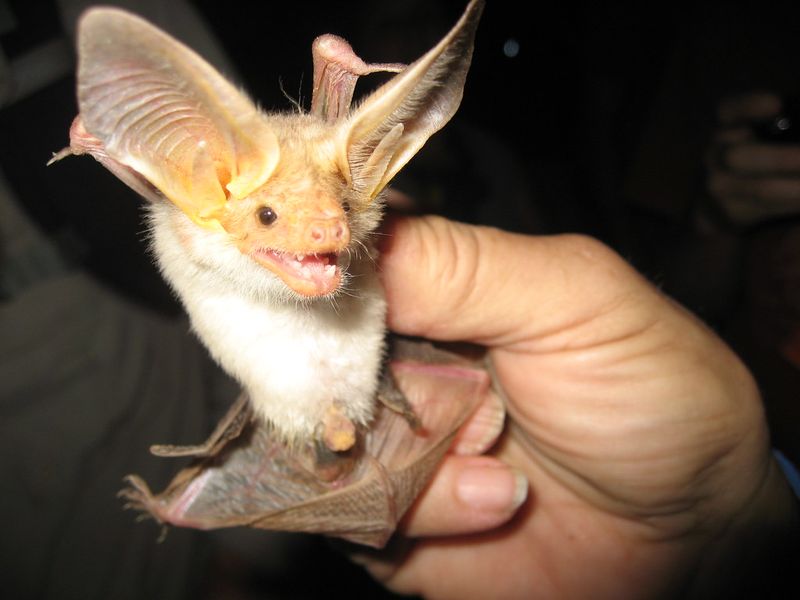
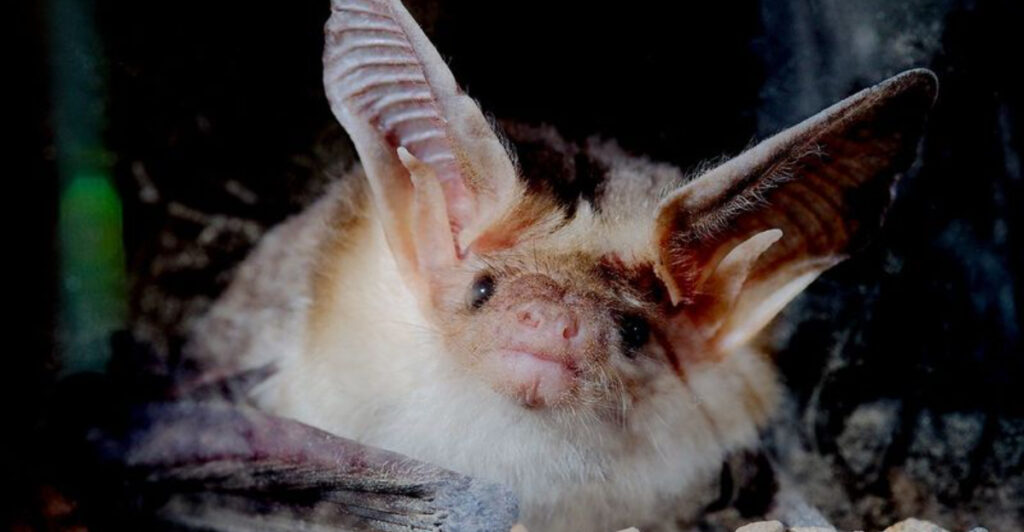
With ears nearly as long as its entire body, the pallid bat looks like something dreamed up by a cartoon artist. But this peculiar creature is very real and calls Texas home. Unlike most bats that snatch insects mid-flight, this oddball prefers hunting on the ground, stalking scorpions and centipedes like a tiny, winged predator.
What makes this bat truly remarkable is its immunity to scorpion venom. While a scorpion sting would send most animals running, the pallid bat chomps down without hesitation. Scientists believe special proteins in its blood neutralize the toxins, making it one of nature’s most fearless hunters.
It’s like having a built-in superpower that turns deadly prey into a midnight snack.
These bats roost in rock crevices, caves, and sometimes even abandoned buildings across West Texas. During the day, they huddle together in groups, their pale yellowish fur making them look almost ghostly. When darkness falls, they emerge with their oversized ears working like radar dishes, picking up the faintest sounds of scurrying prey.
The pallid bat’s hunting strategy is wonderfully weird. Instead of echolocation alone, it listens for the footsteps of insects and scorpions moving across sand and rock. Once it pinpoints a target, it swoops down and lands directly on top of its victim, wrapping its wings around the struggling creature before delivering a swift bite.
Homeowners in rural Texas areas might spot these bats around porch lights, where insects gather in abundance. They’re completely harmless to people and actually provide excellent pest control. A single pallid bat can consume hundreds of scorpions and crickets in one night, making them valuable neighbors despite their unusual appearance.
Conservation efforts focus on protecting their roosting sites, which are increasingly threatened by development and cave disturbances. If you find one roosting near your property, consider yourself lucky. These gentle insect-eaters are far more beneficial than scary, proving that weird doesn’t mean dangerous in the animal kingdom.
2. Texas Horned Lizard
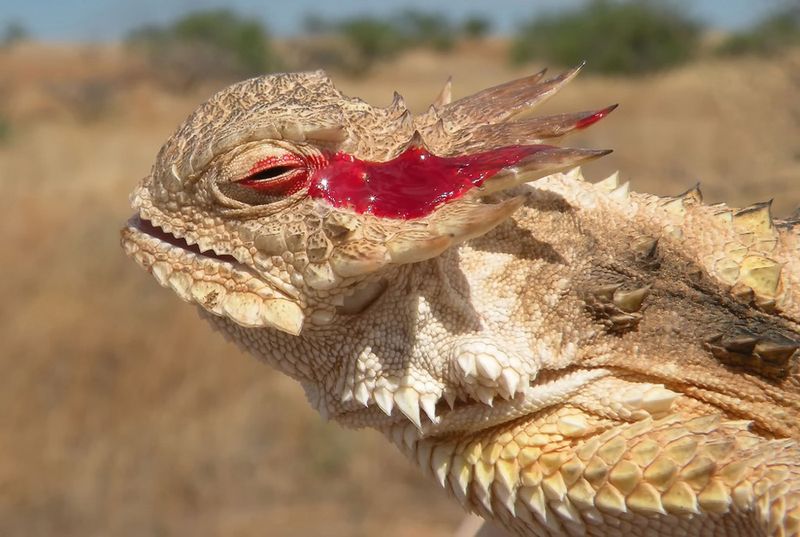
Imagine a miniature dragon no bigger than your palm, covered in sharp spikes and capable of shooting blood from its eyes. That’s the Texas horned lizard, and yes, the blood-squirting part is absolutely true. This spiky little reptile has earned legendary status across the Lone Star State, though spotting one today takes serious luck.
The blood-squirting defense mechanism sounds like pure fiction, but it’s science at its strangest. When threatened by predators like coyotes or foxes, the horned lizard increases blood pressure in its head until tiny vessels near its eyes rupture. It can shoot this blood up to five feet, and the liquid tastes absolutely disgusting to would-be attackers.
Talk about a memorable first impression.
These lizards once scurried across Texas backyards by the thousands, but their numbers have dropped dramatically. The main culprit? Fire ants, which invaded Texas decades ago and now compete with horned lizards for their favorite food: native harvester ants.
Without enough harvester ants to eat, young horned lizards struggle to survive, making each sighting increasingly precious.
Their appearance alone makes them unforgettable. Crown-like horns circle their heads, and rows of pointed scales line their flattened bodies. This armor isn’t just for show—it makes them nearly impossible for snakes to swallow.
When threatened, they can also inflate their bodies to appear larger, adding another trick to their impressive survival toolkit.
Horned lizards are masters of camouflage, blending perfectly with sandy soil and rocky terrain. They’ll sit motionless for hours, waiting for ants to march past before snapping them up with lightning-quick tongue flicks. One lizard might eat hundreds of ants in a single day, making them incredibly efficient hunters despite their small size.
Finding one in your backyard today would be remarkable. Urban development has fragmented their habitat, and many Texans have never seen one in the wild. Conservation groups are working to restore native ant populations and protect remaining horned lizard territory, hoping future generations will know these remarkable reptiles as more than just memories.
3. Attwater’s Prairie Chicken
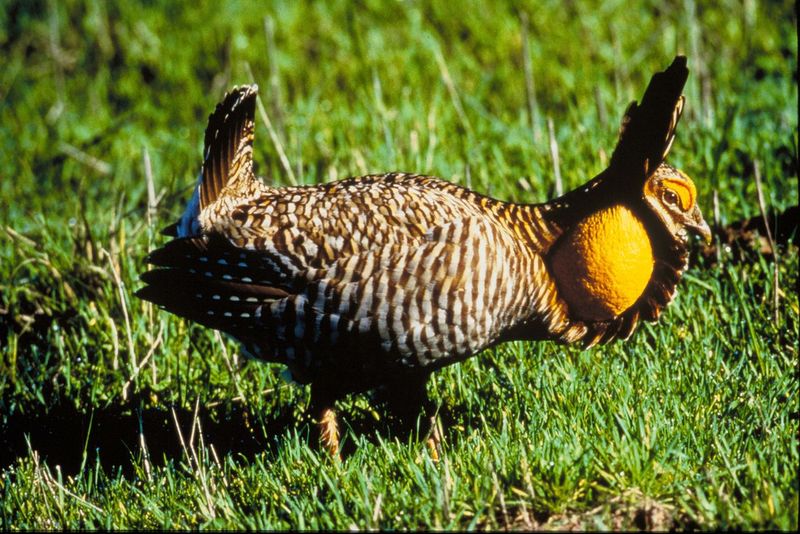
Picture a chicken doing an elaborate dance routine complete with booming sound effects and inflatable neck balloons. That’s the Attwater’s prairie chicken during mating season, and it’s one of the most spectacular shows in Texas wildlife. Unfortunately, it’s also one of the rarest, with fewer than 200 birds surviving in the wild.
Males gather at traditional dancing grounds called leks each spring, where they perform synchronized displays to attract females. They inflate bright orange air sacs on their necks, raise pointed feathers above their heads, and stomp their feet while producing deep, resonant booming sounds that carry across the prairie. The whole performance looks like something choreographed for a nature documentary.
These birds once numbered in the millions across Texas coastal prairies, their booming calls a common soundtrack to spring mornings. But as settlers converted grasslands to farmland and cities, prairie chicken habitat vanished. By the 1990s, they teetered on the brink of extinction, with only a handful of individuals remaining in scattered locations.
What makes them so vulnerable is their specialized habitat requirements. Attwater’s prairie chickens need vast expanses of native tallgrass prairie with specific plant species for nesting and feeding. They won’t adapt to other environments, making them incredibly sensitive to landscape changes.
When their prairie disappears, so do they.
Captive breeding programs have become their lifeline. Biologists collect eggs from wild nests, hatch them in protected facilities, and raise chicks until they’re strong enough for release. It’s painstaking work requiring years of dedication, but slowly, carefully, the population is inching upward.
Each released bird represents hope for the species’ survival.
Seeing an Attwater’s prairie chicken in the wild requires visiting protected preserves like Attwater Prairie Chicken National Wildlife Refuge near Eagle Lake. Even there, sightings aren’t guaranteed. These birds remain critically endangered, their future dependent on continued conservation efforts and habitat restoration.
Their bizarre mating dance might seem comical, but their survival story is dead serious.
4. Texas Blind Salamander
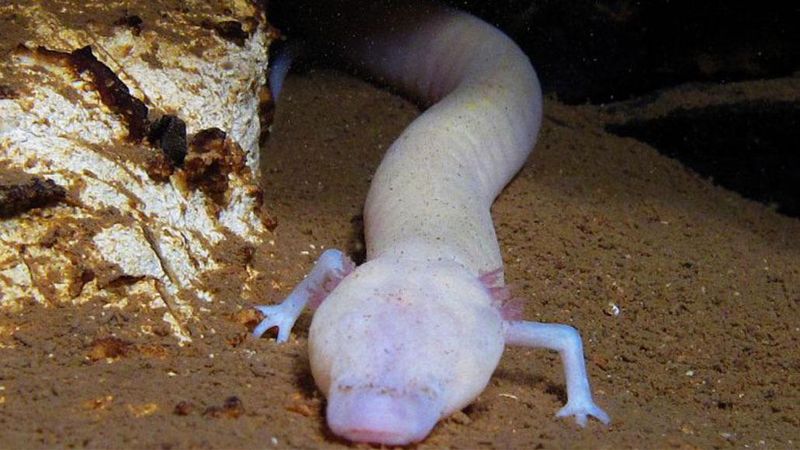
Deep beneath the Texas Hill Country, in flooded caves that never see sunlight, lives one of evolution’s strangest experiments. The Texas blind salamander looks like a creature from another planet—ghostly white, completely eyeless, with bright red external gills that wave like delicate feathers. It’s been evolving in total darkness for millions of years, losing features it didn’t need and developing others perfectly suited for underground life.
These salamanders measure about four inches long and have translucent skin so thin you can see their internal organs. Without eyes, they navigate their lightless world using incredible senses of smell and touch. Sensitive receptors covering their bodies detect the tiniest water movements, allowing them to hunt tiny crustaceans and snails in complete blackness.
They live exclusively in the Edwards Aquifer, a massive underground water system beneath San Antonio and surrounding areas. This aquifer provides drinking water to millions of Texans, meaning the salamander’s health directly reflects water quality. When salamander populations decline, it’s often an early warning that something’s wrong with the aquifer itself.
Scientists consider them living fossils, virtually unchanged for millions of years. Their ancestors likely had eyes and lived above ground, but as they adapted to cave life, natural selection favored individuals without vision. Why waste energy growing eyes in eternal darkness?
Over countless generations, eyes disappeared entirely, replaced by enhanced chemical and tactile senses.
Pollution poses the biggest threat to these unique amphibians. Because they live in groundwater, any contaminants entering the aquifer—pesticides, chemicals, urban runoff—directly impact their habitat. They can’t simply move to cleaner water; their entire species depends on this single underground ecosystem.
Protecting them means protecting the aquifer’s purity.
You’ll never find one in your backyard unless you have a well connected to the Edwards Aquifer. Even then, they rarely surface, preferring the stable temperatures and total darkness of their underground realm. Researchers study them in specialized facilities, carefully monitoring wild populations through underwater cave surveys.
Each salamander represents millions of years of evolutionary history, a living reminder that Texas’s weirdest animals often hide completely out of sight.
5. Nine-Banded Armadillo
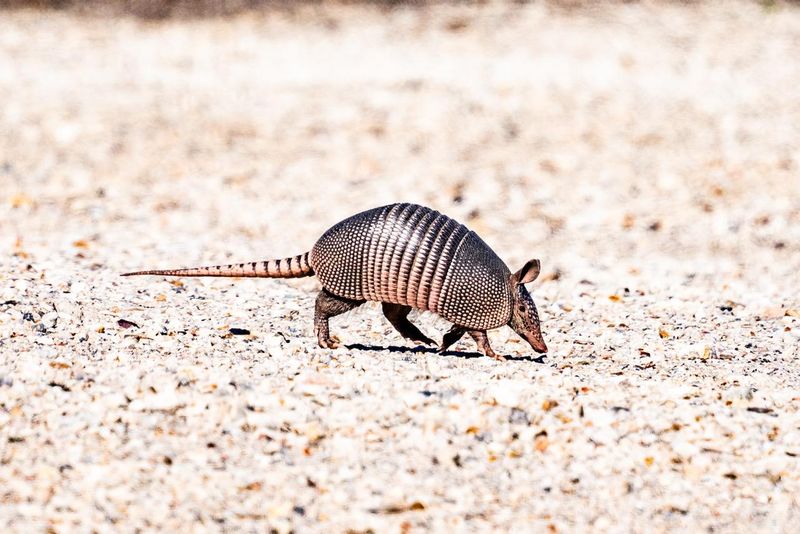
Nothing says Texas quite like spotting an armored mammal waddling across your lawn at twilight. The nine-banded armadillo looks like nature’s experiment in medieval armor design, complete with banded plating and a pointy, pig-like snout. Despite their prehistoric appearance, these creatures are relatively new to Texas, having migrated north from Mexico only in the past 150 years.
Their armor consists of tough, leathery plates made from bone covered in keratin—the same material as your fingernails. Nine flexible bands around the midsection allow them to bend and move, though contrary to popular belief, Texas armadillos can’t roll into complete balls. Only certain South American species have that ability.
Ours just run surprisingly fast or dig frantically when threatened.
Armadillos are phenomenal diggers, using powerful claws to excavate burrows and hunt for food. They can hold their breath for up to six minutes, allowing them to stick their entire heads underground while rooting for insects. A single armadillo might dig dozens of holes in one night, leaving your yard looking like a miniature construction site by morning.
Their diet consists mainly of insects, grubs, and other invertebrates. They’re particularly fond of fire ants, making them valuable allies in pest control despite their destructive digging habits. An armadillo can consume thousands of ants in one feeding session, using its long, sticky tongue to lap them up from underground colonies.
Here’s something truly bizarre: female armadillos always give birth to identical quadruplets. Always. Every pregnancy produces four genetically identical babies from a single fertilized egg.
Scientists still don’t fully understand why this happens, but it makes armadillos unique among mammals. Those four babies will look absolutely identical, like nature’s version of cloning.
You’ll most likely encounter armadillos at dawn or dusk when they emerge to forage. They have terrible eyesight but excellent hearing and smell. If you startle one, it might jump straight up—a defense mechanism that unfortunately often results in collisions with car undercarriages.
Despite this quirky behavior, they’re harmless to humans and increasingly common in Texas backyards, bringing their ancient armor into modern suburban life.
6. Houston Toad
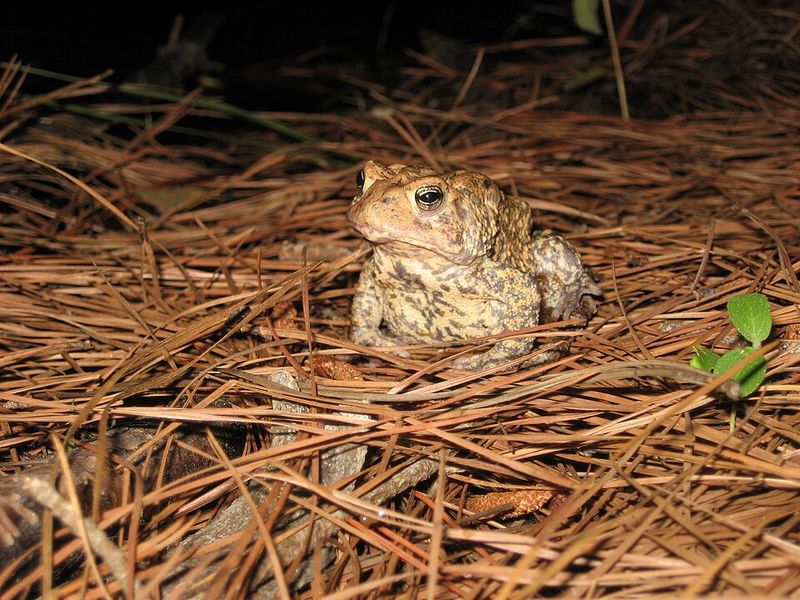
Houston might be famous for space exploration, but it’s also home to one of North America’s rarest amphibians. The Houston toad is a small, brownish creature with a voice far bigger than its body—males produce high-pitched trills that sound like old-fashioned telephones ringing. Once common across East Texas, this little toad now clings to survival in just a few isolated populations.
What’s particularly strange about Houston toads is their breeding behavior. They emerge from underground burrows only after heavy rains, sometimes spending months hidden beneath the soil waiting for perfect conditions. When warm spring rains finally arrive, hundreds might appear overnight, transforming quiet ponds into deafening choruses of competing male calls.
Males sing from shallow water, inflating their throats into balloon-like vocal sacs that amplify their courtship trills. Each male claims a small territory and calls continuously, sometimes for hours, trying to attract females. The loudest, most persistent singers usually win mates, making these breeding events intense vocal competitions.
Habitat loss nearly wiped out Houston toads entirely. Urban sprawl around Houston destroyed countless breeding ponds, while agriculture and development fragmented remaining populations. By the 1970s, biologists feared extinction was inevitable.
The species became one of the first amphibians listed under the Endangered Species Act, sparking decades of conservation efforts.
Today, most surviving Houston toads live in Bastrop County, east of Austin. Protecting them requires maintaining the specific sandy soils they need for burrowing and preserving temporary pools where they breed. Even slight changes to water chemistry or rainfall patterns can devastate breeding success, making them extremely vulnerable to climate shifts.
Captive breeding programs work to boost wild populations, with biologists releasing thousands of tadpoles into protected habitats each year. But success isn’t guaranteed—young toads face predators, disease, and habitat challenges that claim most before they reach breeding age. Each adult that survives represents a small victory in the fight against extinction.
If you live in East Texas and hear high-pitched trilling after spring rains, you might be hearing one of Texas’s rarest residents. Houston toads prove that weird doesn’t mean expendable—sometimes the strangest creatures need our help the most.
7. Mexican Free-Tailed Bat
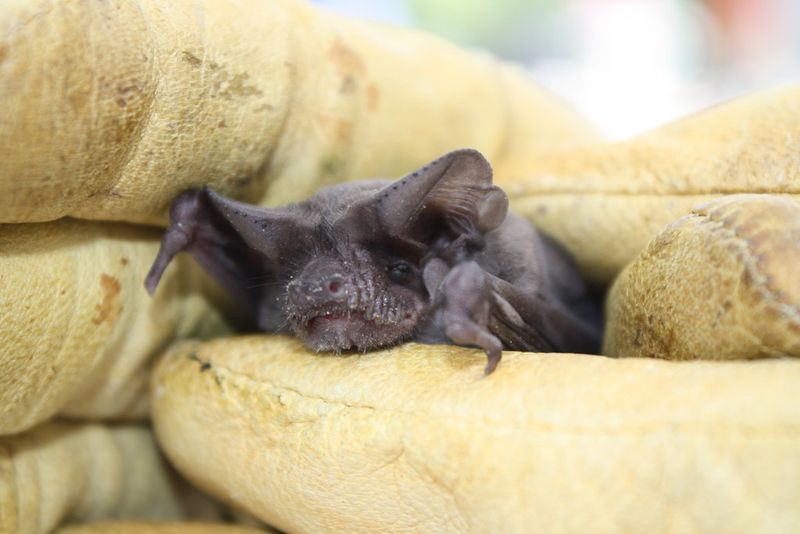
Every summer evening in Austin, tourists gather beneath the Congress Avenue Bridge to witness one of nature’s most spectacular shows. As the sun sets, millions of Mexican free-tailed bats pour from beneath the bridge in a dark, swirling river that stretches across the sky. It’s the largest urban bat colony in North America, and it happens right in downtown Texas.
These bats get their name from tails that extend beyond the membrane connecting their hind legs—a relatively rare feature among bat species. They’re built for speed, with long, narrow wings that allow them to fly faster than most other bats, sometimes reaching speeds over 60 miles per hour. When millions fly together, they create radar signatures visible on weather stations.
What’s truly remarkable is their appetite. A single Mexican free-tailed bat can consume its body weight in insects every night—that’s thousands of moths, beetles, and mosquitoes. When you multiply that by millions of bats, the colony consumes tons of insects nightly, providing invaluable pest control for Texas agriculture and reducing mosquito populations around cities.
These bats migrate thousands of miles between Mexico and Texas each year. Females arrive in Texas each spring, gathering in massive maternity colonies where they give birth to single pups. Bracken Cave near San Antonio hosts the world’s largest bat colony—up to 20 million individuals during peak season.
The sound of millions of baby bats calling for their mothers creates a deafening chorus inside the cave.
Mother bats face an incredible challenge: finding their single pup among millions of nearly identical babies. They use a combination of scent and unique vocalizations, somehow locating their offspring in the chaos. Scientists still marvel at this ability, which seems almost impossible given the sheer numbers involved.
Mexican free-tailed bats are surprisingly tolerant of humans, which explains their comfort roosting beneath busy bridges and in urban areas. They’ve adapted to city life remarkably well, using buildings and structures as artificial caves. This adaptability has helped their populations remain stable while other bat species decline.
If you live anywhere in Texas, Mexican free-tailed bats are probably hunting insects above your neighborhood right now. They’re not just weird—they’re incredibly beneficial neighbors, quietly controlling pest populations while most people sleep. The next time you see bats swooping through streetlights at dusk, you’re watching one of Texas’s most successful urban wildlife stories unfold.
8. Texas Alligator Lizard
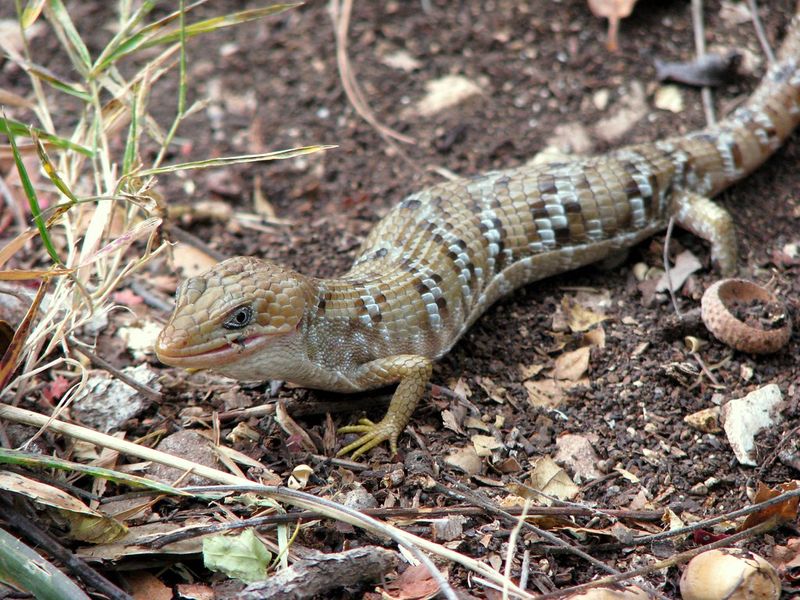
Spotting a Texas alligator lizard feels like discovering a tiny dragon hiding in plain sight. Despite the intimidating name, these lizards rarely grow longer than a foot and pose zero threat to humans. They get their name from rough, alligator-like scales covering their elongated bodies, giving them a prehistoric appearance that’s both fascinating and slightly unsettling.
These lizards occupy a relatively small range in West Texas, preferring rocky hillsides and canyon areas with plenty of hiding spots. Unlike many lizards that bask openly in the sun, alligator lizards are secretive, spending most of their time beneath rocks or in crevices. This shy behavior makes them difficult to observe, even in areas where they’re relatively common.
One of their strangest features is their stiff, inflexible bodies. Most lizards move with fluid, snake-like motions, but alligator lizards walk with a peculiar, stiff-legged gait that looks almost mechanical. Their tails are extremely long—often twice their body length—and can detach if grabbed by predators, wriggling independently to distract attackers while the lizard escapes.
Texas alligator lizards are live-bearers rather than egg-layers, which is unusual among lizards. Females give birth to fully formed babies after carrying them internally for several months. Litters typically contain four to twelve young, each a perfect miniature replica of the adults.
This reproductive strategy helps protect developing young from egg predators and harsh environmental conditions.
Their diet consists mainly of insects, spiders, and other small invertebrates. They’re patient hunters, waiting motionless near hiding spots until prey wanders close enough to strike. Despite their fearsome name and appearance, they’re gentle creatures that rarely bite even when handled.
Their main defense is simply hiding or fleeing to the nearest rock crevice.
Finding one requires patience and knowledge of their preferred habitat. Look in rocky areas with scattered vegetation, especially near canyon edges or hillsides with loose stone. Morning and late afternoon offer the best chances, when lizards emerge briefly to hunt or bask.
Even then, their camouflage and secretive nature make them easy to miss.
Texas alligator lizards remind us that weird doesn’t mean common. Their limited range and secretive habits mean many Texans never encounter them, even outdoors enthusiasts who spend considerable time in appropriate habitats. But for those lucky enough to spot one, it’s a memorable glimpse of one of Texas’s most unusual reptiles.
9. Texas Striped Bark Scorpion
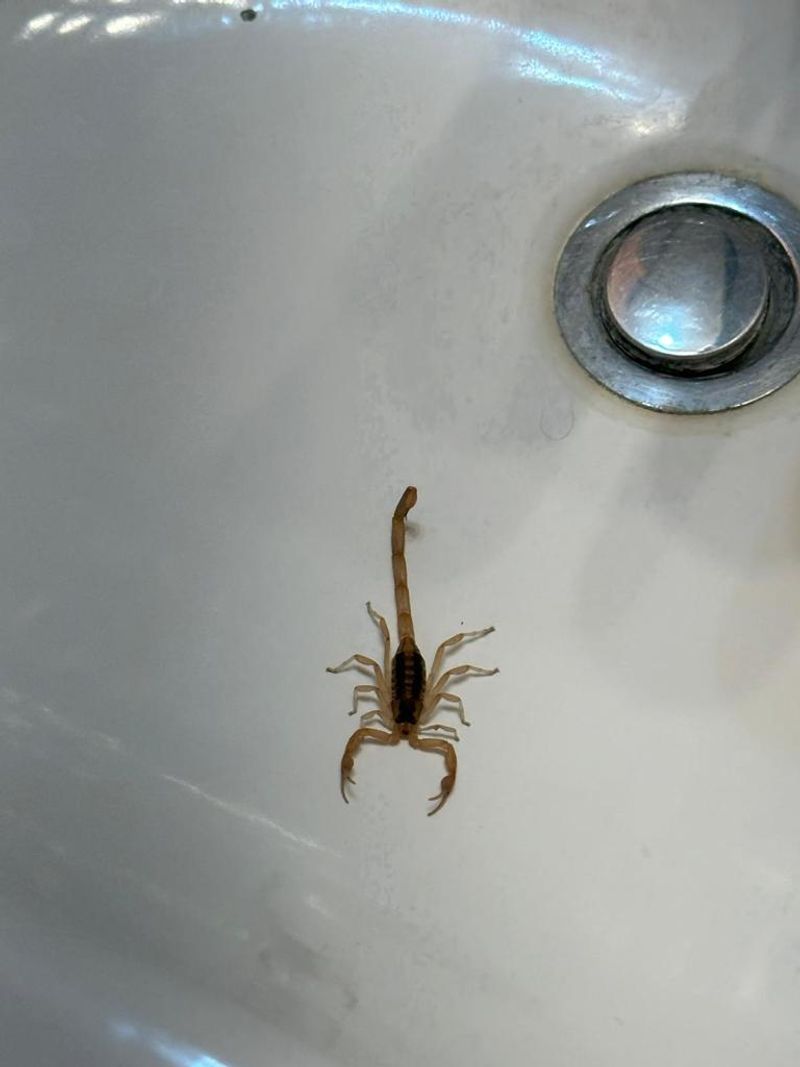
Check your shoes before putting them on in Texas, because you might have an unexpected houseguest. The Texas striped bark scorpion is the state’s most common scorpion species, and it absolutely loves hanging around human dwellings. With dark stripes running down its tan back and a tail that curves menacingly overhead, it looks every bit the desert predator—except it’s probably living under your porch right now.
These scorpions are expert climbers, which sets them apart from many ground-dwelling scorpion species. They scale walls, trees, and even ceilings with ease, using tiny claws at the ends of their legs like miniature grappling hooks. This climbing ability explains why they’re often found in unexpected places like inside cabinets, behind picture frames, or tucked into folded towels.
Their venom is relatively mild compared to more dangerous scorpion species. A sting feels similar to a bee sting—painful and irritating but rarely dangerous to healthy adults. The scorpion uses its venom primarily for hunting insects and other small prey, not for defense.
When threatened, it would rather run and hide than stand and fight.
Bark scorpions are nocturnal hunters with a fascinating trick: they glow under ultraviolet light. Shine a blacklight in your yard at night, and any scorpions present will light up with an eerie blue-green fluorescence. Scientists aren’t entirely sure why scorpions evolved this trait, but it makes finding them remarkably easy for researchers and homeowners alike.
Their diet consists mainly of crickets, roaches, and other insects that plague Texas homes. In this sense, scorpions provide beneficial pest control, hunting the same bugs that annoy homeowners. A single scorpion might consume dozens of crickets over a summer, quietly working as an unpaid exterminator in your walls and attic.
Females carry babies on their backs for several weeks after birth, creating a disturbing sight if you stumble upon a mother with dozens of tiny scorpions clinging to her. The babies eventually disperse to hunt independently, but until then, they ride along like passengers on the world’s creepiest bus.
Prevention beats confrontation when dealing with bark scorpions. Seal cracks around doors and windows, remove debris piles near your home, and keep firewood stored away from structures. Despite their scary appearance and painful sting, these scorpions are just trying to survive, hunting the same pests you’d rather not have around anyway.
They’re weird, they’re common, and yes, they might be living in your backyard right now.
Share this story