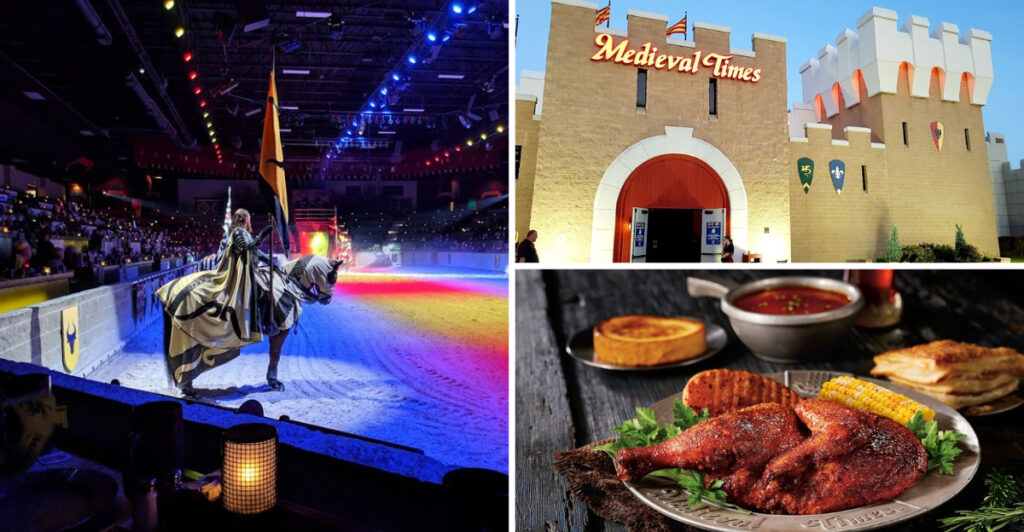
Dinner becomes much more memorable when it’s paired with jousting knights, galloping horses, and the atmosphere of a medieval castle. Medieval Times Dinner & Tournament in Schaumburg brings centuries-old pageantry to life with thrilling live performances, impressive horsemanship, and a hearty four-course feast served inside a grand castle-inspired setting.
From the moment you cross the drawbridge, the immersive experience transforms an ordinary night out into an adventure filled with cheering crowds, royal ceremonies, and nonstop action. Whether you’re celebrating a special occasion or simply looking for one of Illinois’ most unique dining experiences, this castle-themed restaurant delivers entertainment that’s every bit as satisfying as the meal.
The Castle on Roselle Road That Changes the Whole Mood
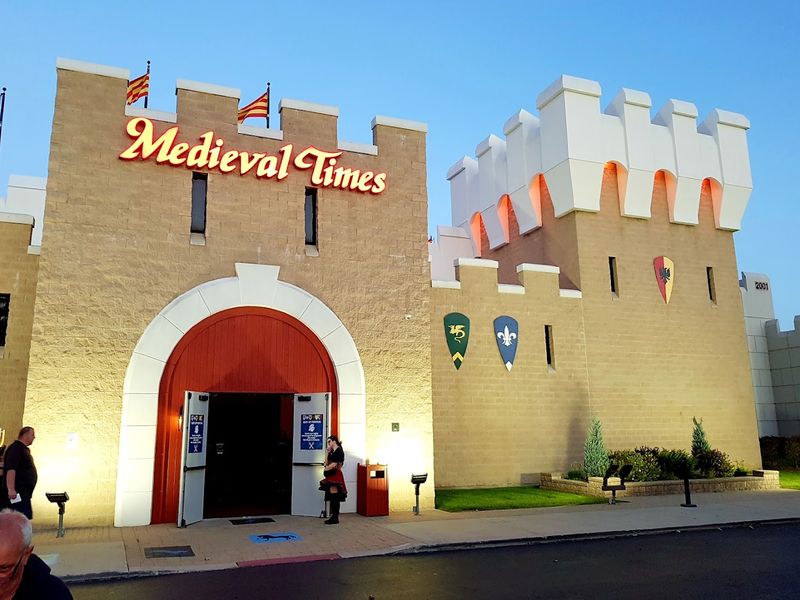
There are places that rely on a sign, and then there is Medieval Times in Schaumburg, where the building itself does the heavy lifting.
Set at 2001 N Roselle Rd, the venue rises like a storybook fortress dropped into suburban Illinois, complete with stone walls, battlements, and a silhouette that makes passing traffic slow down for a second look.
Long before the first trumpet call, the architecture signals that this outing is supposed to be bigger, louder, and more theatrical than a standard dinner reservation.
That visual commitment matters because the castle is not tucked into a quaint historic district where old stone already blends in. It stands out against wide roads, retail corridors, and the familiar rhythm of Schaumburg, which gives the arrival a playful jolt.
You are not easing into the evening here. You are driving toward towers, parking beside a fortress, and stepping into an experience that knows spectacle is part of the appeal.
Even before the arena show begins, the design sets a useful expectation: this is dinner theater built for immersion, not subtlety. Staff remain in character, the common areas lean into medieval pageantry, and the scale helps families, groups, and date-night crowds relax into the premise quickly.
Instead of asking whether the theme works, the place pushes you toward a better question – how far will it go? Quite far, as it turns out. The Schaumburg castle turns anticipation into part of the entertainment, making the walk from parking lot to doorway feel less like prelude and more like opening scene.
In a region filled with polished chain dining and efficient event spaces, that kind of arrival lands with unusual force.
Jousting, Falcons, and an Arena That Rarely Sits Still
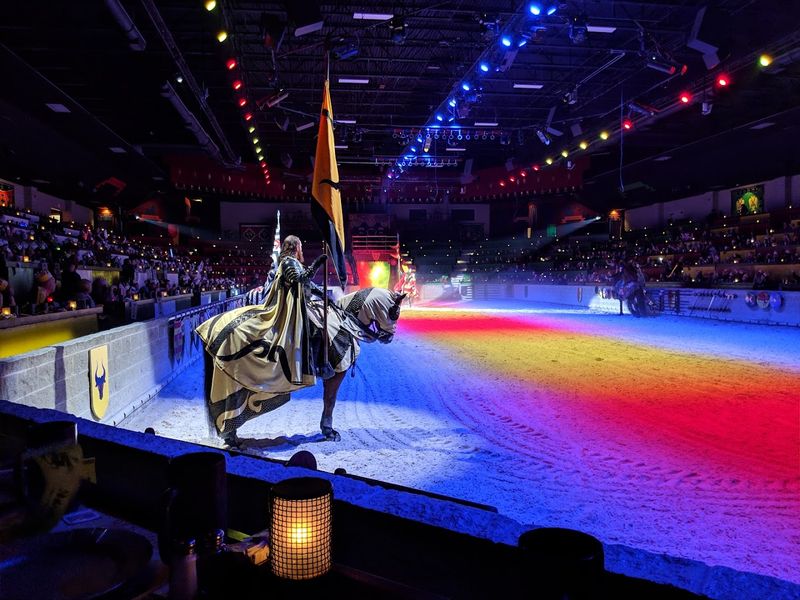
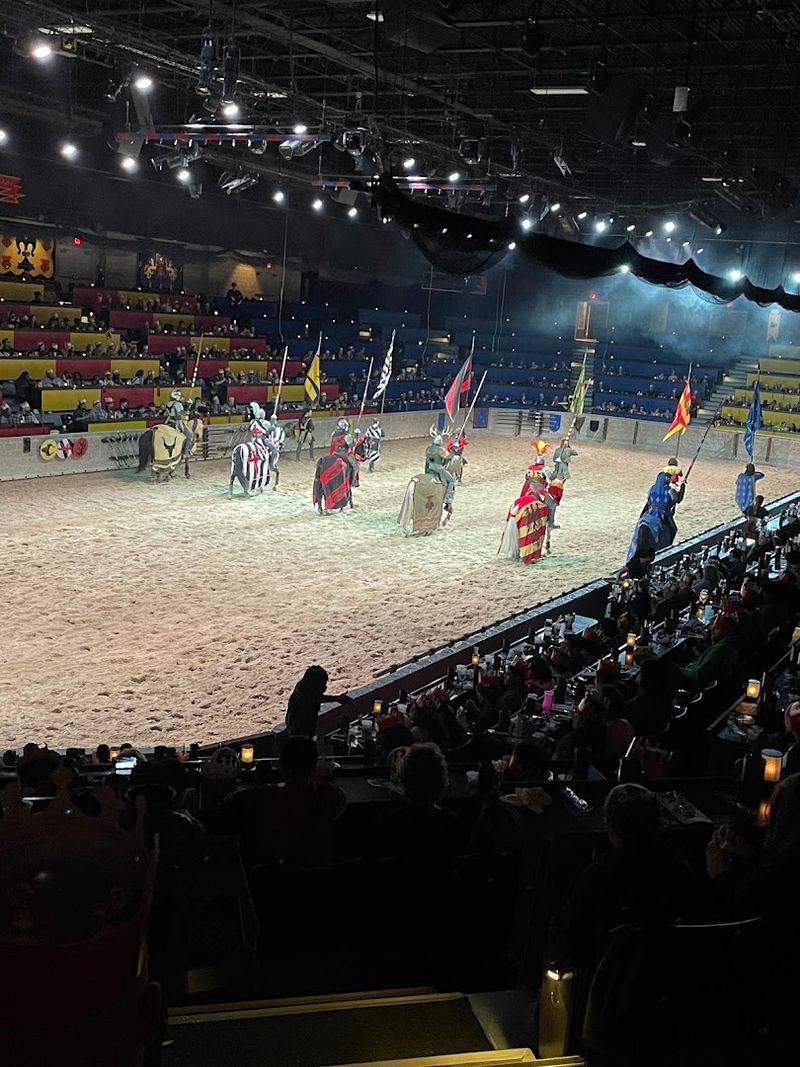
The main event is not a background performance playing while dinner happens. At Medieval Times in Schaumburg, the show is the engine of the night, and it moves with enough speed to keep the room locked in.
Horses charge across the arena, knights compete in mounted contests, sword fights escalate the stakes, and the pacing keeps shifting so the spectacle does not flatten into one long stretch of clashing metal.
Jousting is the headline draw for obvious reasons. It delivers the sharpest visual payoff, especially when riders lean into the pass and the arena crowd erupts for its assigned knight.
Yet the production does not rely on lances alone. Horsemanship sequences show off control and training, foot combat changes the rhythm, and falconry adds an unexpected airborne moment that breaks up the evening in a smart, memorable way.
The arena format also helps the experience play well for mixed-age groups. Younger kids have a clear hero to follow, adults can appreciate the athletic precision underneath the theatrics, and big reactions are not just allowed but basically built into the evening.
Cheering sections, color-coded loyalties, and a visible storyline give the event structure, so the excitement feels directed rather than chaotic.
That makes a difference over the course of a two-hour outing. Instead of watching isolated stunts, you are following a live production with recurring entrances, dramatic pauses, and a finale designed to lift the whole room.
The Schaumburg location understands that dinner theater succeeds when the performance keeps finding new gears, and this one does exactly that, right up to the last clash in the sand.
A Four-Course Feast Built for the Theme, Not Fine Dining
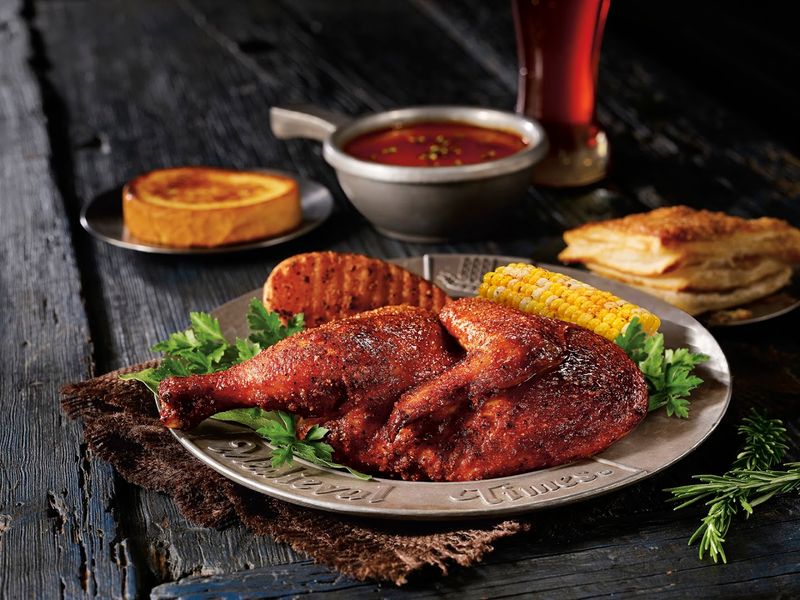
The meal at Medieval Times works best when understood as part of the performance rather than a separate culinary event. Courses arrive in sync with the show, the menu leans hearty and straightforward, and the utensil-free setup folds dinner into the medieval premise instead of treating food like an interruption.
That framing is important, because the appeal here is not white-tablecloth precision. It is the pleasure of tearing into roasted chicken while knights race past in the arena.
The standard meal is built around recognizable comfort items, including tomato soup, garlic bread, chicken, corn, potato, and dessert. Some diners lock onto the soup as a standout, while others simply appreciate that the food arrives hot and in a steady rhythm rather than all at once.
Portions tend to be generous, which suits a crowd that came expecting spectacle and a full evening, not a tiny tasting menu.
Eating with your hands could sound gimmicky on paper, but inside the castle it becomes one of the most effective details. It makes the table more animated, gives kids another reason to buy into the setting, and strips away any temptation to approach the night too seriously.
Even the themed naming helps, turning a basic first course into part of the storytelling rather than just another bowl of soup. By the time dessert arrives, dinner no longer feels separate from the tournament.
It has become another piece of the performance, making the meal memorable not because it aims for fine dining, but because it fully embraces the world Medieval Times has created.
Illinois Theater Energy, Right Down to the Staff in Character
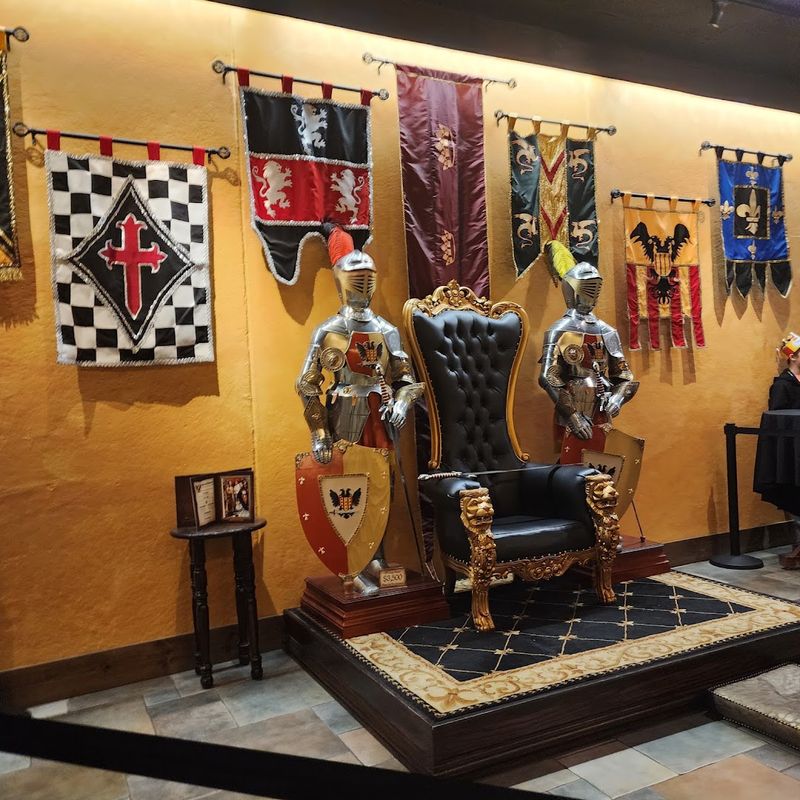
One reason the Schaumburg castle works so well is that the performance does not stop at the arena wall. Staff members carry the tone through check-in, seating, table service, and post-show interactions, which gives the entire building a coherent rhythm.
Addressing guests in themed language could have landed as awkward or halfhearted, but here it reads as part of a larger commitment to keeping the illusion active from room to room.
That matters in a venue this large. When hundreds of people arrive for the same show, the difference between organized and chaotic becomes obvious fast, and Medieval Times seems designed to channel that volume into momentum.
Quick check-in, clearly handled seating, and servers moving courses with practiced timing help the evening feel structured, even while the room is loud and the arena is pulling attention in several directions at once.
The staff also play an underappreciated role in translating the energy of the show to each table. A cheering section only works if service can keep pace with crowd noise, excitement, and the stop-and-start pattern of live entertainment.
Strong servers help guests know when to look down at the plate, when to look up at the sand, and when it is time to yell for their knight without holding back.
No live production hits perfection every single night, and occasional service misses are part of the reality of a dinner theater operating at scale. Still, the dominant impression here is of a place that understands character work as logistics as much as charm.
In Illinois, where themed restaurants often stop at decor, this one carries the concept through human performance, and that extra effort changes the entire night.
More Than the Arena: Horses, Souvenirs, and Extra Moments
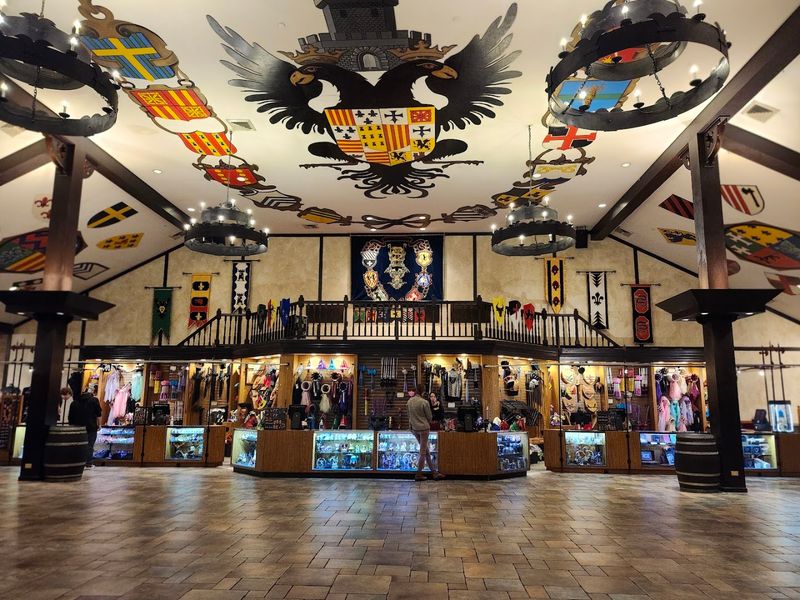
The arena show gets top billing, but the supporting pieces around it are a big reason the evening feels complete rather than rushed. Medieval Times in Schaumburg gives the night a wider footprint through its gift shop, pre-show gathering areas, photo opportunities, and horse viewing components.
Those extras matter because they extend the experience before and after the tournament, letting the castle operate like a small world instead of a single room with bleachers.
The merchandise area is not subtle, and that is part of the fun. Swords, crowns, themed clothing, souvenir cups, and toy weapons turn the retail space into another layer of visual spectacle, especially for families with kids already locked into their knight allegiance.
Even adults who never planned to browse for long tend to slow down once they spot racks of capes or walls lined with shiny medieval props.
Then there are the animal-centered details, which add texture beyond the combat sequences. Being able to glimpse the horses up close or watch them being prepared helps connect the polished stage picture to the real training and care behind it.
That shift from pageantry to physical reality gives the performance more weight, because the equestrian skill on display is not movie magic. It is practiced live work happening a short distance away.
Post-show photos and ceremonial add-ons also fit naturally into the format. A child getting knighted, a family snapping pictures after the action, or a group lingering with souvenir purchases all stretch the night in a useful way.
Schaumburg’s castle is strongest when treated as an event space with layers, not a rush-in, rush-out dinner booking.
How to Time Your Visit for the Smoothest Night in Schaumburg
For a place built around noise, cheering, and fast-moving performance, Medieval Times in Schaumburg runs best when you plan with a little breathing room. The practical side starts with the obvious advantage: a large free parking lot that removes one common suburban headache immediately.
That simple detail changes the tone on arrival, especially for families or groups coordinating multiple people, costumes, or excited kids before showtime.
Getting there early is usually the smartest move, not because the evening is difficult to navigate, but because the castle has enough surrounding activity to make extra time useful. Early arrival gives you space for check-in, pre-show photos, a drink, a quick gift shop lap, or a moment to settle in before the arena energy takes over.
It also helps avoid turning the first minutes into a scramble, which is the exact opposite of how this kind of theatrical outing should begin.
Inside, the show and meal are paced together, so once you are seated the night tends to move quickly. That makes this a good choice for people who want an experience with structure rather than an open-ended evening of wandering.
If you are bringing someone sensitive to loud sound or visual stimulation, having a calm buffer before the action starts can make the transition easier, especially since the arena volume builds fast once the contest begins.
Timing also shapes the afterglow. A less crowded weekday performance may create more breathing space, while a busier night can amplify crowd energy and cheering.
Neither is universally better. The strongest plan is simple: arrive with time, treat the castle as an event rather than a reservation, and let Schaumburg’s most theatrical dinner destination unfold at its intended pace.
Why This Schaumburg Castle Still Wins Over Adults
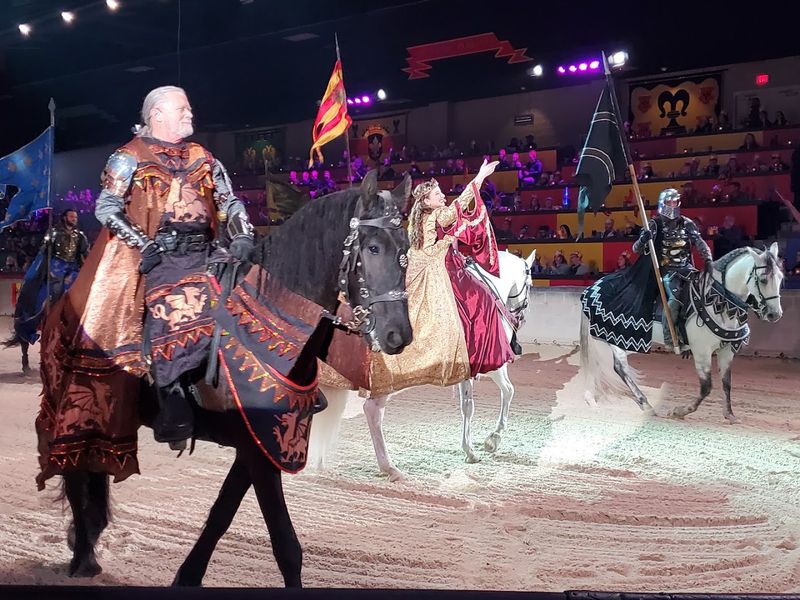
It would be easy to assume Medieval Times belongs mostly to children, birthday parties, and nostalgia-driven parents. The Schaumburg location certainly works for all of that, but the more interesting truth is how well it holds adult attention once the show starts moving.
The evening taps into a kind of collective permission to be loud, playful, and slightly ridiculous, which is rarer than it should be in grown-up entertainment.
Part of that comes from the cast taking the material seriously enough for everyone else to relax. If the performers treated the spectacle like a wink-heavy joke, the illusion would collapse in minutes.
Instead, the commitment stays firm. Riders hit the arena with conviction, the combat has real pace, and the pageantry is presented with enough confidence that adults stop observing from a distance and start participating almost despite themselves.
The format also helps. Dinner gives your hands something to do, the cheering sections create instant investment, and the storyline supplies just enough structure to turn the competition into a shared event.
That combination makes it easier for groups with different tastes to meet in the middle. One person comes for the horses, another for the camp, another for the novelty of eating without utensils, and somehow the room pulls those motives into the same current.
That is the quiet achievement of Medieval Times in Schaumburg. It converts skepticism into involvement through pure follow-through.
By the end of the night, the castle is not interesting because it is unusual along a suburban road. It stands out because it commits fully to live entertainment as a social experience. In Illinois, that kind of all-in theatricality is harder to find than the turrets suggest.
Share this story