A slab of prime rib arrives at the table looking less like dinner and more like a personal challenge. It is rosy in the middle, surrounded by savory au jus, and thick enough to make the steak knife beside it seem slightly underqualified.
Across the table, a pair of golden crab cakes barely holds together under the weight of jumbo lumps of sweet crabmeat. This is a fairly ordinary evening at the Franklinville Inn, a historic South Jersey restaurant that has built its reputation without chasing culinary trends or reinventing itself every few years.
Located on Delsea Drive in Gloucester County, the inn serves the kind of polished American dinner people still dress up a little to enjoy. The menu covers plenty of ground, from hand-cut steaks to lobster tails, but two dishes have become its unofficial calling cards.
Regulars know them well, first-time diners quickly understand the fuss, and leftovers are far less common than good intentions.
A Historic South Jersey Inn With Staying Power
Long before Delsea Drive carried commuters between Gloucester County towns, the road formed part of the stagecoach route connecting Philadelphia with Cape May. The trip covered roughly 85 miles, and Franklinville marked about one-third of the journey for travelers heading toward the shore.
What is now the Franklinville Inn offered those passengers a place to stop, eat, rest, and gather themselves before the coach continued rattling south.
The surrounding settlement was once known as Little Ease, a wonderfully odd name supposedly inspired by an injured sawmill worker who asked for “a little ease” after being carried into the local hotel.
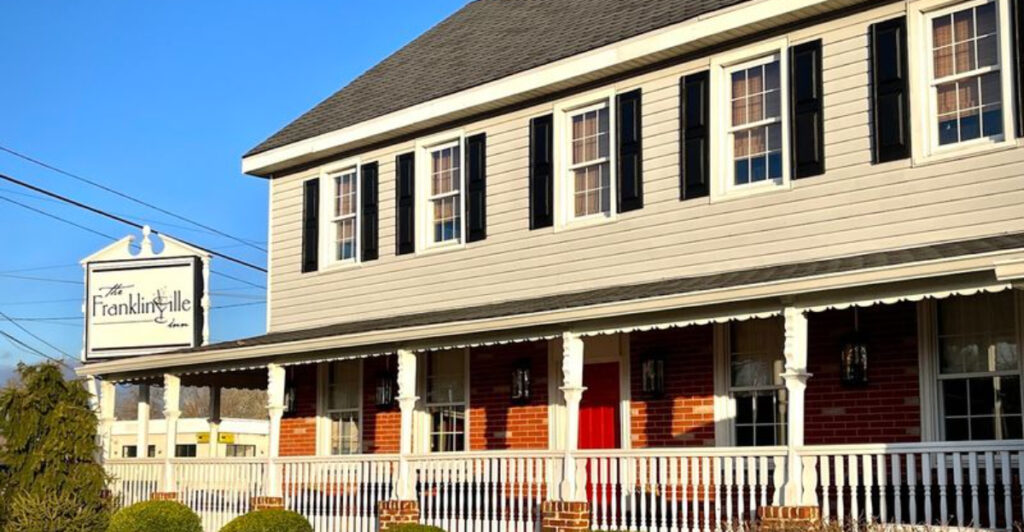
The village grew around Reed’s Branch near the headwaters of the Maurice River, with a sawmill, general stores, churches, homes, and the stagecoach stop at its center. Today, the restaurant at 2526 Delsea Drive does not feel like a historical exhibit where everyone must whisper and admire the woodwork.
Its past is visible, but the building is still doing what it was built to do—feeding people who have traveled some distance to get there. That continuity gives the place much of its appeal.
The Franklinville Inn has polished the experience without sanding away all its character, pairing restored architectural details with white tablecloths, well-set tables, and a menu rooted firmly in classic American dining. It also occupies a useful middle ground in South Jersey.
The atmosphere is refined enough for an anniversary, retirement dinner, or milestone birthday, yet familiar enough that longtime customers do not treat every visit like a formal ceremony. History provides the backdrop, but dinner remains the main event.
The Slow-Roasted Prime Rib That Built a Loyal Following
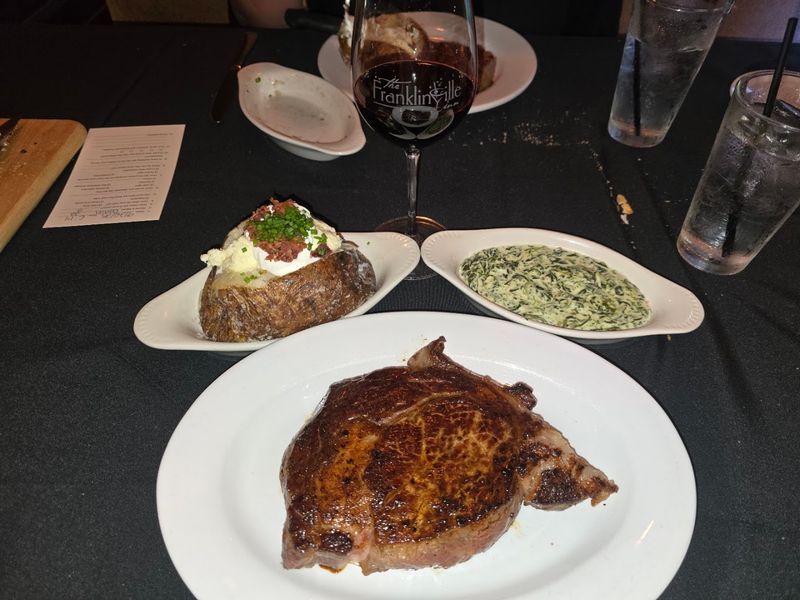
Then the server puts down the prime rib, and conversation briefly becomes optional. The Franklinville Inn slow-roasts the beef for tenderness and serves it with au jus, keeping the presentation simple enough that the meat has nowhere to hide.
There are no towers of garnish or streaks of sauce competing for attention. What arrives is a thick, deeply browned cut with a juicy interior, rich marbling, and the kind of beefy flavor that explains why prime rib once ruled special-occasion menus.
The current menu offers a regular portion for $52, a 34-ounce Queen cut for $65, and a staggering 64-ounce King cut for $110. The last two are not merely larger dinners; they are decisions that should probably be discussed with the table before ordering.
Size gets plenty of attention, but consistency is the real reason the dish has developed such a following. Prime rib can disappoint quickly when it is rushed, overcooked, or sliced too thin.
Here, the slow-roasting method gives the fat time to soften and the meat time to remain tender from edge to center. The au jus adds moisture and depth without burying the flavor under salt or seasoning.
Choose a baked potato loaded with butter, cheddar, sour cream, bacon, and chives for the full steakhouse experience, or go slightly less traditional with mashed sweet potatoes and cinnamon butter.
Creamed spinach and sherried mushrooms are also available for anyone who believes vegetables are best when treated with the same generosity as the beef.
The King cut may earn the photographs, but even the regular portion delivers the essential experience—a properly cooked, unapologetically old-school prime rib that makes a strong case for leaving lighter appetites at home.
Jumbo Lump Crab Cakes That Let the Crab Shine
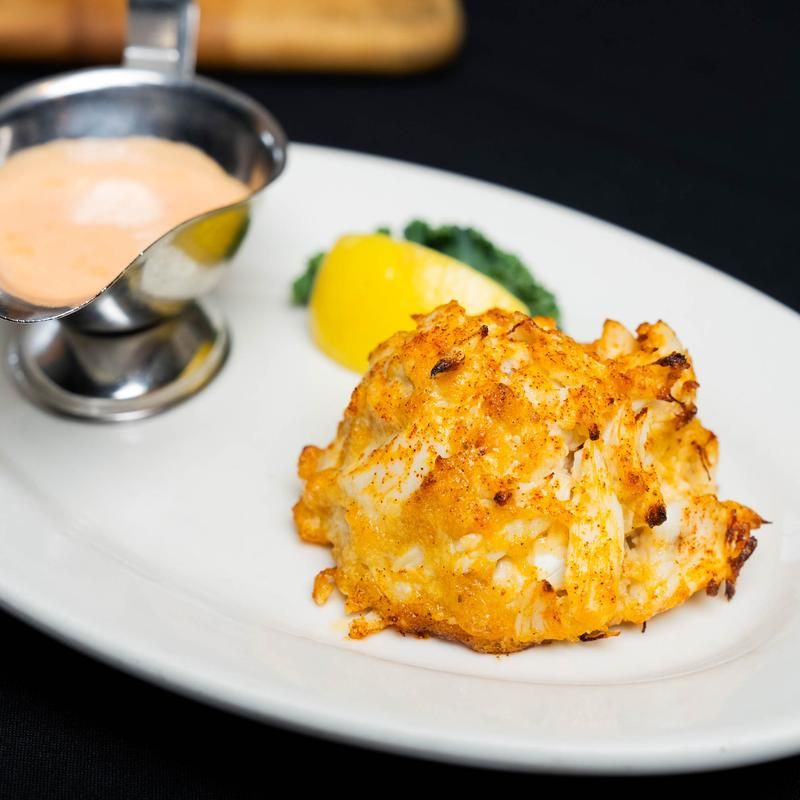
A good crab cake should taste primarily of crab, which sounds obvious until you have eaten one padded with enough breadcrumbs to qualify as a dinner roll. Franklinville Inn takes the more disciplined approach.
Its crab cakes are built around jumbo lump crabmeat, lightly seasoned and accompanied by roasted red pepper cream. The entrée is currently priced at $47 and includes the restaurant’s soup or salad plus a choice of side, while a single crab cake appears among the appetizers for $21.
Diners ordering the 9-ounce filet mignon can also add one for $19, creating a South Jersey version of surf and turf that avoids the usual lobster tail. What makes the dish memorable is its restraint.
Jumbo lump crab has a naturally sweet, delicate flavor, and it does not benefit from aggressive seasoning or a thick shell of filler. The cakes hold together just enough to reach the table, then separate easily beneath a fork into moist pieces of crab.
The roasted red pepper cream brings color, mild sweetness, and a little richness, but it remains a supporting player. A squeeze of lemon is often all the extra help the crab needs.
For anyone trying the inn for the first time, the appetizer portion offers a clever compromise, especially when the table is divided between Team Prime Rib and Team Crab Cake. Order one to share before the entrées arrive, and nobody has to spend the evening staring longingly at someone else’s plate.
Serious crab fans, however, will want the full entrée. Pair it with the horseradish potato salad for a little sharpness or the sautéed spinach with garlic and roasted peppers for something lighter.
These are not experimental crab cakes, and that is precisely the point. They are carefully made, generously filled, and confident enough to let the crab do most of the talking.
More Old-School Favorites Worth Saving Room For
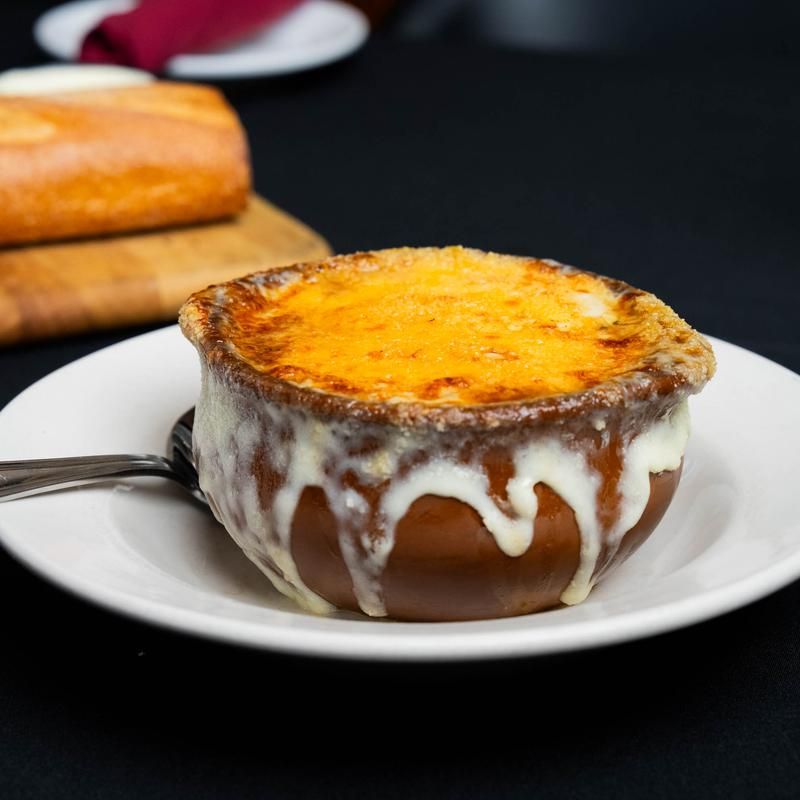
The menu does not begin and end with its two celebrities. In fact, it reads like a greatest-hits collection from the era when a celebratory dinner meant French onion soup, a properly aged steak, and dessert made in the kitchen rather than delivered in a plastic tray.
Start with the $14 crab bisque, prepared with lump crab, Old Bay, and sherry. It is rich without being merely heavy, and it provides a useful preview of how seriously the kitchen takes its seafood.
The French onion soup comes under a browned layer of aged provolone and Parmesan, while the iceberg wedge piles Danish blue cheese, bacon, tomatoes, and chives onto a cold, crisp quarter-head of lettuce.
Steak drinkers—and yes, that feels like the correct term here—can move from a martini or glass of red wine to a 9-ounce filet mignon, 14-ounce New York strip, or 22-ounce ribeye.
The steaks are aged and cut in-house, with current entrée prices ranging from $47 for the filet and strip to $54 for the ribeye.
Seafood choices include blackened salmon over Parmesan asparagus risotto, shrimp stuffed with jumbo lump crab, two South African cold-water lobster tails, and crab au gratin made with Parmesan and white cheddar.
There are also chicken Marsala, chicken piccata, slow-cooked baby back ribs, and filet tips Oscar topped with crab, asparagus, and hollandaise. Dessert continues the throwback pleasure.
The kitchen prepares its sweets in-house, including Belgian white chocolate crème brûlée, chocolate mousse, tiramisu soaked with espresso and Kahlúa, apple pie with vanilla bean ice cream, and cinnamon rice pudding finished with warm Baileys cream sauce. Most are currently $12.
Nobody needs dessert after a 34-ounce prime rib, of course. That has never stopped anyone from ordering cheesecake “for the table.”
A Warm Dining Room Made for Special Occasions
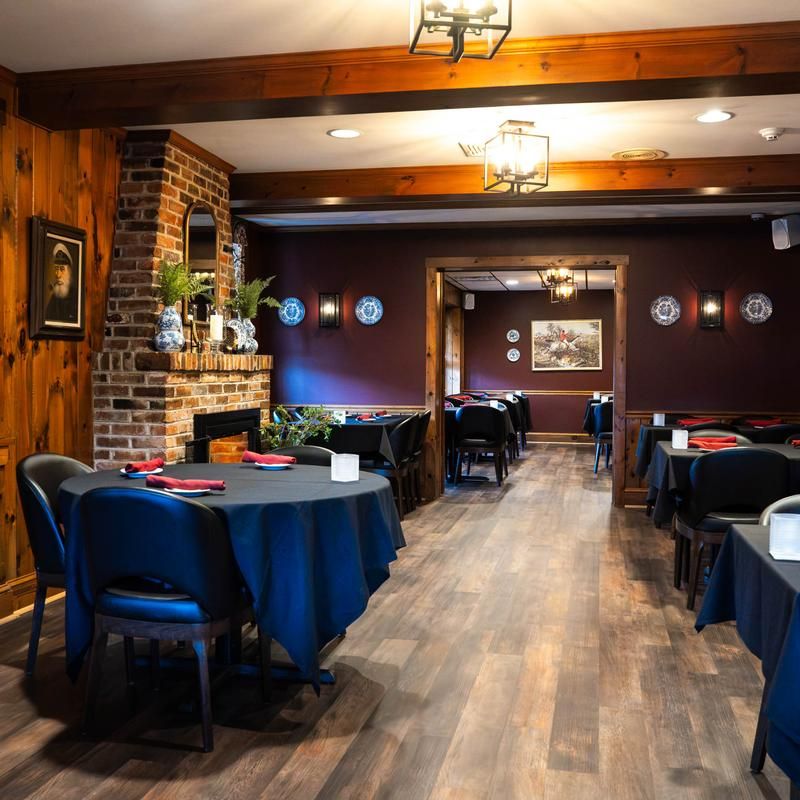
By 6 p.m. on a Saturday, the dining room has settled into its evening rhythm. Candlelight and warm fixtures soften the old walls, servers move between neatly arranged tables, and the occasional burst of laughter travels from one room to another.
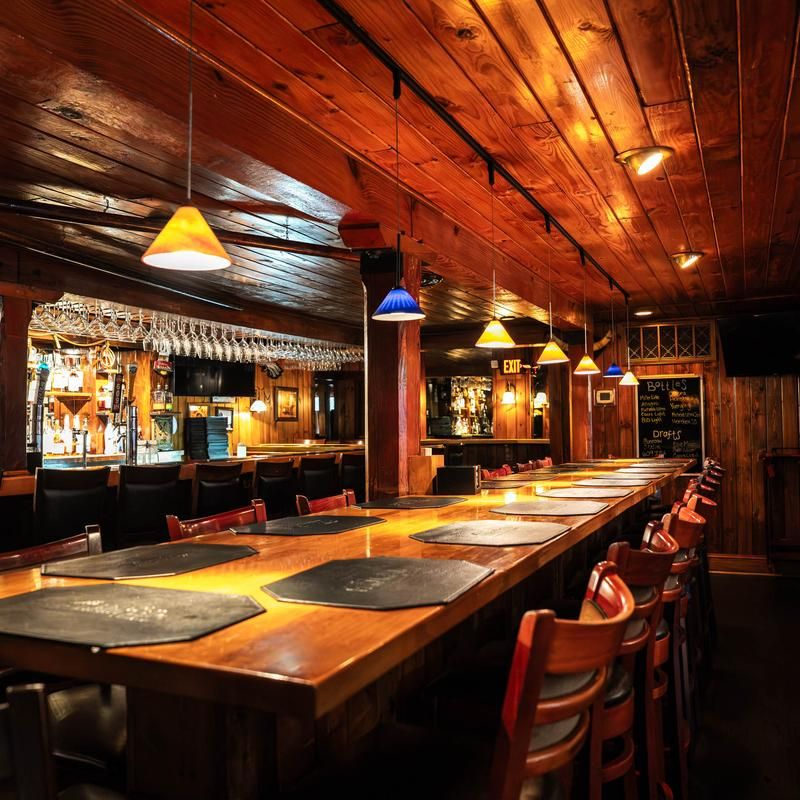
A fireplace anchors part of the restaurant, while original-looking beams, brick, dark wood, and traditional furnishings give the building a sense of age without turning dinner into colonial cosplay. The mood is intimate rather than hushed.
You can celebrate without feeling as though the next table is grading your manners. The restored inn also includes a comfortable lounge for cocktails and lighter dishes, plus private dining spaces designed for small gatherings of up to 12 guests.
That setup explains why the Franklinville Inn has become a dependable choice for occasions that deserve more ceremony than an ordinary weeknight meal.
Anniversaries fit naturally here, but so do engagement dinners, promotions, family birthdays, and the annual holiday meal where everyone agrees to behave for at least the first course.
Service is part of the equation. A restaurant built around prime rib, hand-cut steaks, and carefully prepared seafood needs a staff that understands timing, doneness, wine pairings, and the delicate art of checking on a table without appearing every 90 seconds.
The experience is polished, but it does not feel stiff or overly rehearsed. Smart-casual clothing fits the room comfortably, though plenty of diners use the occasion as an excuse to dress up.
Reservations are a sensible move, particularly for Friday and Saturday evenings, when tables can fill with regulars and celebration groups.
The restaurant currently serves dinner Tuesday through Thursday from 4:30 to 9 p.m., Friday from 4:30 to 10 p.m., and Saturday from 4 to 10 p.m. It is closed Sunday and Monday.
Why Generations Keep Coming Back to the Franklinville Inn

In South Jersey, restaurant loyalty is rarely quiet. People remember who made the best crab cake at their wedding rehearsal dinner, which server looked after their parents on an anniversary, and whether the prime rib was still as good when they returned five years later.
Those stories become part of a place’s reputation, passed around at family gatherings with the same confidence as directions that begin with “Take Delsea Drive.” The Franklinville Inn benefits from that kind of memory. Its appeal is not based on novelty, celebrity ownership, or a dish designed to go viral for three weeks.
It comes from delivering a recognizable experience with remarkable steadiness. Diners know they can order the crab bisque, prime rib, crab cakes, or filet mignon and receive the sort of meal they remember from the last celebration.
They know the room will feel dressed for dinner even when they are not. They know the menu will offer enough variety to satisfy the seafood devotee, the steak loyalist, and the relative who insists chicken Marsala is the only sensible restaurant order.
The building’s long history strengthens that connection. Stagecoach passengers once stopped in Franklinville because the journey demanded food, shelter, and rest; modern diners arrive by car, but they still come looking for hospitality and a meal substantial enough to justify the trip.
The inn has evolved from a roadside necessity into a destination, yet the basic promise has changed surprisingly little. At its best, it offers dependable cooking in a room that feels connected to the generations who ate there before.
The prime rib and crab cakes may get people through the door, but familiarity, careful service, and the pleasure of marking another occasion around the same table are what turn a good dinner into a family tradition.