On the way to Hawk Rise Sanctuary, the scenery does not exactly whisper “peaceful nature walk.” You pass the kind of Linden landscape locals know well: industrial buildings, service roads, utility lines, and the no-nonsense edge of Union County where New Jersey gets things done.
Then, almost out of nowhere, the pavement gives way to a quiet trail system, marsh grass starts moving in the wind, and birds take over the soundtrack.
That is the little magic trick here. Hawk Rise Sanctuary is not hidden in the mountains or tucked down some long rural lane.
It sits right in Linden, on land once tied to the city’s former landfill, now reshaped into a 95-acre preserve with flat walking trails, wetland views, boardwalk sections, and a surprising amount of wildlife. It is one of those places that makes you say, “Wait, this is here?” and mean it in the best possible way.
The Hidden Marshland Walk Tucked Behind Linden’s Industrial Edge
Linden is not pretending to be a sleepy woodland town, and that is part of what makes Hawk Rise Sanctuary so interesting. This is a city shaped by highways, rail lines, refineries, warehouses, and working-class neighborhoods.
Route 1 is nearby. The New Jersey Turnpike is not far off. You are in the thick of North Jersey’s industrial corridor, not some postcard version of the outdoors. That contrast is exactly what makes the first few minutes at Hawk Rise feel so satisfying.
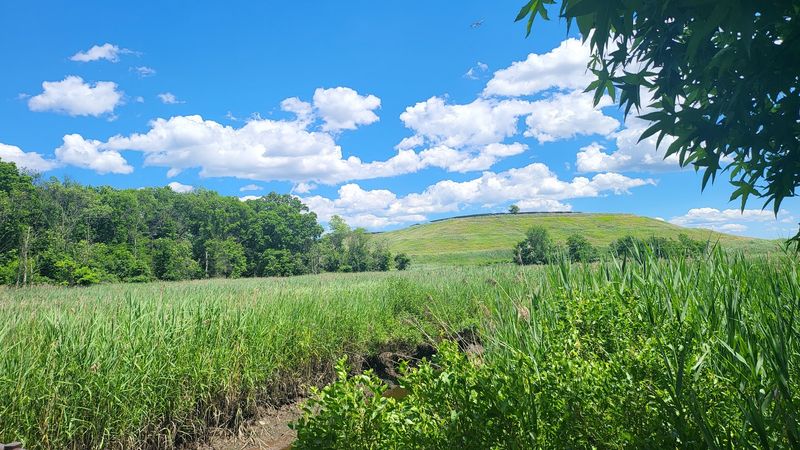
You arrive expecting maybe a small patch of trees and a few benches. Instead, the trail pulls you into a broad wetland landscape with marsh grass, open sky, wooded pockets, and viewing areas where the Rahway River starts to feel like the main character.
The sanctuary sits on Range Road, and the approach is practical rather than picturesque. There is no grand stone entrance or dramatic overlook waiting at the curb.
You get a modest arrival, a visitor information area, and a trail that quietly gets better the farther you walk. That low-key setup actually works in its favor.
Hawk Rise does not feel staged. It feels reclaimed. The land around the sanctuary still reminds you where you are. You may hear traffic, planes, or nearby industrial activity.
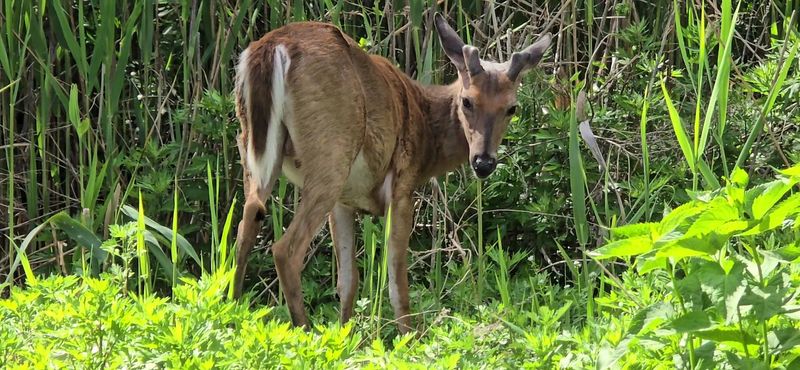
But those sounds fade into the background once you start noticing the smaller things: a red-winged blackbird flashing its shoulder patch, a turtle slipping off a log, reeds bending in the breeze, or a deer pausing just long enough to decide whether you are worth worrying about. For Union County locals, that is the real charm.
Hawk Rise does not ask you to drive two hours for a nature reset. It gives you one right behind the everyday machinery of Linden, which somehow makes the quiet feel more earned.
How a Former Landfill Became a Quiet New Jersey Wildlife Escape
The best thing about Hawk Rise Sanctuary is not just that it exists. It is that it exists here, on land connected to the former Linden Landfill.
That backstory gives the place a little grit, and honestly, New Jersey nature is often better with a little grit. The sanctuary opened to the public in 2012 after years of environmental cleanup, planning, and habitat work.
The transformation involved the City of Linden, the New Jersey Department of Environmental Protection, New Jersey Audubon, and local partners who helped turn a closed landfill and surrounding wetlands into a public greenway.
In plain English, land that once had a very different job now serves birds, turtles, school groups, walkers, and anyone who needs a quiet hour outside.
The numbers help tell the story. Hawk Rise covers about 95 acres. Roughly 55 acres are grassland converted from the former landfill, while the rest includes salt marsh and wooded wetland habitat. That mix is why the place feels more varied than its short trail mileage suggests.
One stretch gives you a meadow-like view. Another pulls you close to wetland edges. Then the boardwalk sections and overlooks open things up again. There is something very Jersey about that kind of reinvention.
We are a state full of places people have underestimated, paved over, cleaned up, argued about, and then rediscovered. Hawk Rise fits right into that tradition.
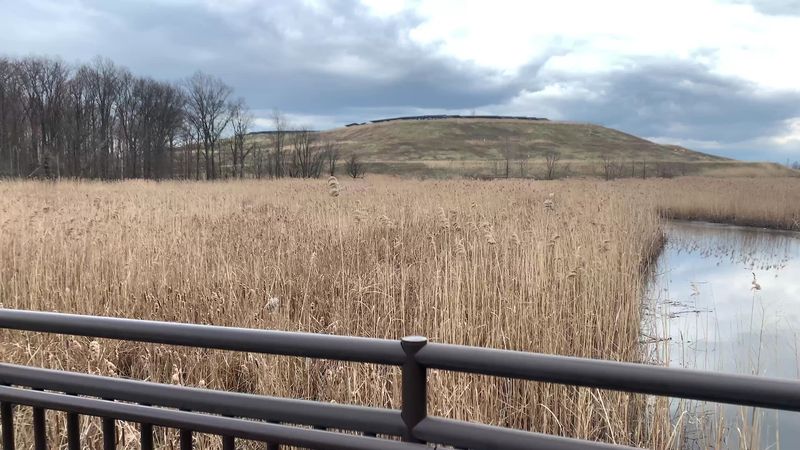
It does not erase its past. The capped landfill is still part of the landscape, now covered and contained, doing a quieter job than it used to.
That history also makes the sanctuary feel more meaningful than a typical neighborhood trail. You are not just walking through pretty nature.
You are walking through proof that damaged land does not always have to stay written off. Sometimes it gets a second act, complete with marsh birds and interpretive signs.
The Boardwalk Trail That Carries You Right Over the Wetlands
The trail system at Hawk Rise is short enough for a casual stroll but interesting enough that you will probably slow down without meaning to.
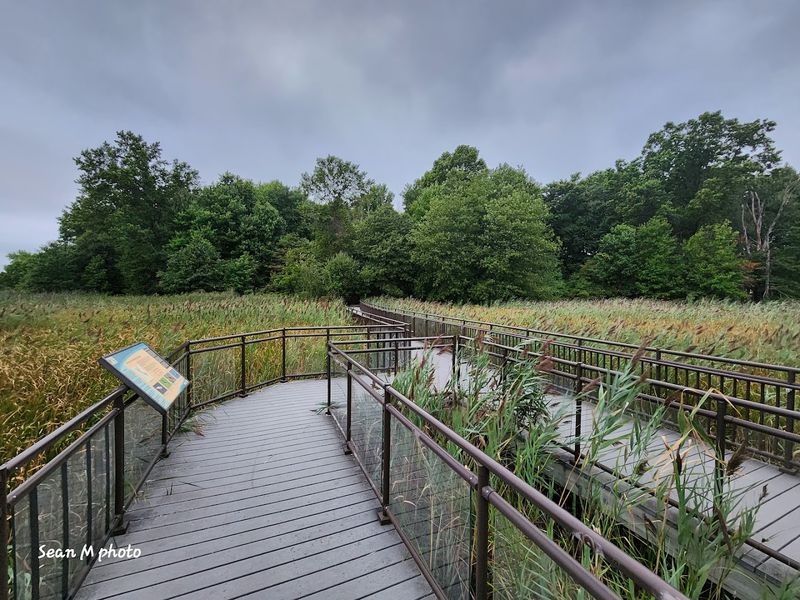
The full walking route is about 1.5 miles, and the terrain is mostly flat, which makes it approachable for families, older visitors, beginner walkers, and people who want fresh air without turning the afternoon into a workout.
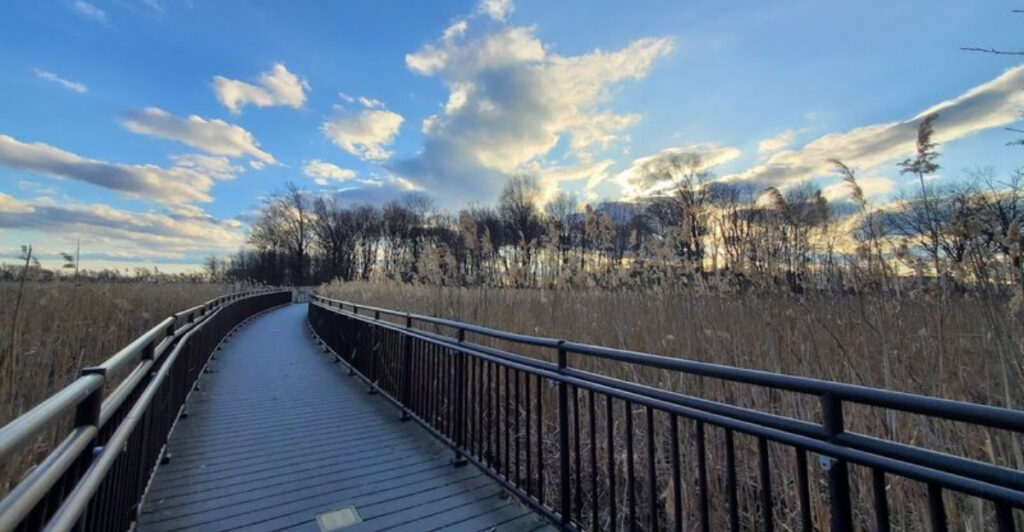
The boardwalk portions are the highlight. They lift you over wet ground and marshy sections, giving you that satisfying feeling of walking through a habitat without stomping all over it.
Instead of peering at the wetlands from a distance, you get to move through them at eye level, with reeds close enough to rustle beside you and water-loving wildlife tucked into the edges. This is not a long, dramatic boardwalk like you would find at the Shore.
It is quieter and more practical, built to connect the sanctuary’s habitats while protecting the sensitive ground underneath. That makes it feel less like an attraction and more like an invitation to pay attention.
The boards may creak a little underfoot. The view changes every few yards. A patch of mud might show tracks. A shallow pool might hold frogs in warmer months.
The rest of the trail includes gravel and natural-surface stretches, with forks that let you choose your route. The sanctuary also has viewing areas and interpretive signs that explain what you are looking at, which is useful because marshland can be easy to underestimate.
At first glance, it might look like just grass and water. Spend a little time there and you start noticing layers: tidal influence, bird movement, nesting cover, insect activity, and the way the Rahway River shapes the whole place.
It is an easy walk, but not a boring one. Hawk Rise is the kind of trail where the distance is not the point. The point is how much is happening inside that distance.
Why Birdwatchers Keep Coming Back to Hawk Rise Sanctuary
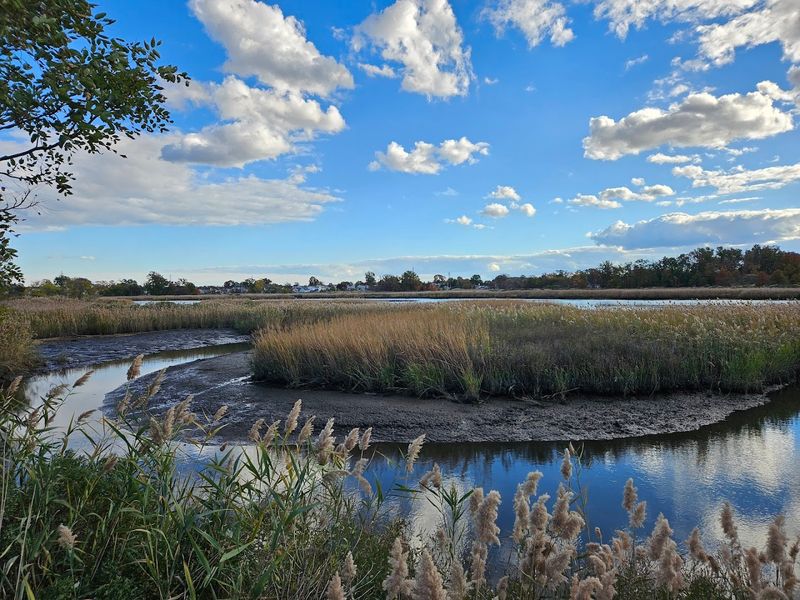
Birders love places where different habitats meet, and Hawk Rise has that working in its favor. Grassland, wooded wetland, salt marsh, river edge, pond habitat, and brushy cover all sit close together here.
That variety gives birds options, which gives birdwatchers reasons to keep checking back. You do not have to be the kind of person who can identify a warbler by one blurry wingbeat to enjoy it, either.
Hawk Rise is friendly to casual birdwatching because there is a good chance something obvious will show up. Red-winged blackbirds are a classic marsh sight.
Herons and egrets can appear around wet areas. Raptors may pass overhead.
In migration seasons, the sanctuary can feel especially lively, as birds use these pockets of habitat while moving through a heavily developed part of the state. The name “Hawk Rise” sets expectations, and yes, watching the sky is part of the fun.
But the sanctuary is not only about hawks. Its bird appeal comes from the whole mix.
A quiet walker might notice sparrows moving through grass, woodpeckers working the trees, ducks tucked into water, or swallows cutting across open air. Even if you do not know the names, the activity gives the walk a little suspense.
New Jersey Audubon has also helped keep Hawk Rise connected to education and public programming, including guided nature events. That matters because birding can feel intimidating when you are new.
A place like this lowers the barrier. You can show up with binoculars, a phone app, or nothing at all and still enjoy the show. The best birding strategy here is simple: walk slower than you think you should. Stop at the overlooks.
Listen before you move on. Scan fence posts, treetops, reed edges, and the waterline. Hawk Rise rewards patience, but it does not punish beginners.
What You Might Spot Beyond the Reeds and Rahway River
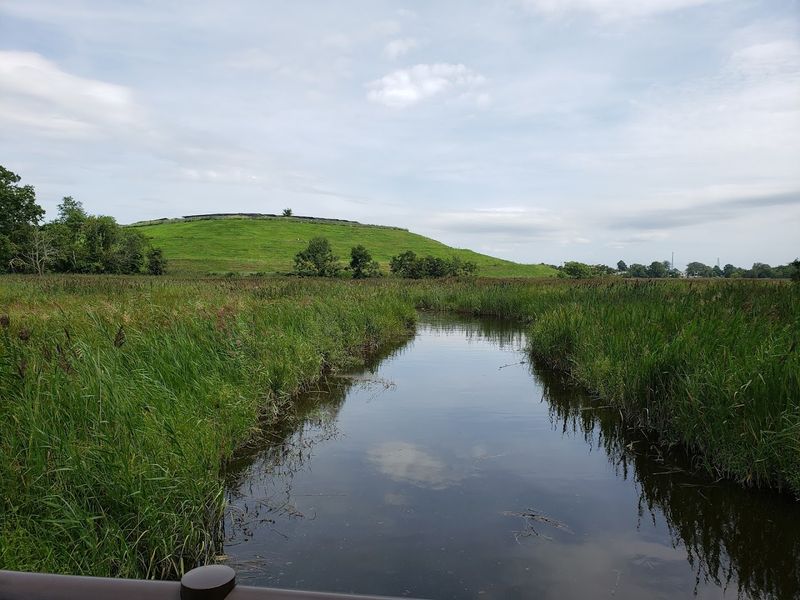
The Rahway River gives Hawk Rise much of its personality. It brings movement, food, moisture, and a little wildness into a part of Linden where you might otherwise expect nothing more than pavement and chain-link fence.
Along the trail, the river and nearby marshes create the kind of habitat that draws far more life than a quick glance would suggest. Birds are the easiest wildlife to notice, but they are not the only residents worth watching for.
The sanctuary’s wetlands and wooded areas support turtles, frogs, salamanders, small mammals, and plenty of insects that keep the food web humming.
In warmer months, the edges of the trail can feel busy in a miniature way: dragonflies hovering, frogs calling from hidden spots, butterflies working through sunny patches, and turtles taking advantage of whatever log or muddy bank has the best light.
Deer are also part of the Hawk Rise experience. They are common enough that regular visitors are rarely shocked to see one, though it still feels like a treat when a deer steps into view against an industrial backdrop.
That is the visual oddity of this place in one quick scene: wildlife doing perfectly normal wildlife things in a location where you half expect the natural world to have packed up and left. The plant life adds another layer.
Marsh grasses shift with the seasons, from bright green in summer to warmer gold and tan later in the year. Wooded wetland areas bring shade, leaf litter, and a different sound underfoot.
The grassland created over the former landfill has its own open feel, with sky playing a bigger role than you might expect on such a compact walk. None of it is flashy, and that is the point.
Hawk Rise is not trying to overwhelm you. It works by making you notice what is already there, especially the life that thrives in overlooked corners.
What to Know Before You Visit This Easy Union County Trail
A little planning makes Hawk Rise Sanctuary easier to enjoy, mostly because the place is simple and lightly developed. It is open daily from sunrise to sunset, and the trail is free to access.
The walking route is about 1.5 miles, mostly flat, and manageable for a relaxed outing rather than a serious hike. Comfortable sneakers are usually enough, though shoes you do not mind getting a little muddy are smart after rain.
Facilities are limited, so set your expectations before you go. There is a Porta-Potty, but not a full visitor center, café, playground, or staffed nature building.
Bring water, especially in summer, because the open marshland sections can feel warmer than expected. Bug spray is a good idea in mosquito season.
Binoculars are worth bringing even if you are only mildly curious about birds. The sanctuary is located on Range Road in Linden, and first-time visitors should not be put off by the industrial approach.
You are going the right way. That slightly odd arrival is part of the whole experience.
It is also wise to check current conditions if there has been heavy rain, since wetland trails can get soggy in spots. Dogs are not allowed on the trails, which helps protect wildlife and keeps the sanctuary calmer for birdwatching.
For some visitors, that may be inconvenient; for the marsh birds and ground-level critters, it is a pretty good deal. Spring and fall are especially rewarding because of bird activity and comfortable walking weather, but winter has its own stripped-down appeal.
With fewer leaves and less trail traffic, the landscape feels more open, and the industrial-meets-wild contrast becomes even sharper. Hawk Rise is an easy Union County walk, but it leaves you with something bigger than the mileage: a reminder that New Jersey still has room for small surprises in the places people usually drive past.
Share this story