History comes alive when you can stand just steps away from the machines and artifacts that shaped it. The Indiana Military Museum in Vincennes houses an extraordinary collection of World War II vehicles, aircraft, uniforms, weapons, and immersive exhibits that bring decades of military history into sharp focus.
From restored tanks and vintage military aircraft to detailed battlefield displays, the museum offers one of the most comprehensive collections in the Midwest. Whether you’re a military history enthusiast or simply looking for one of Indiana’s most fascinating hidden attractions, this museum delivers an experience that’s both educational and unforgettable.
The Yard Full of Armor, Wings, and Double Takes
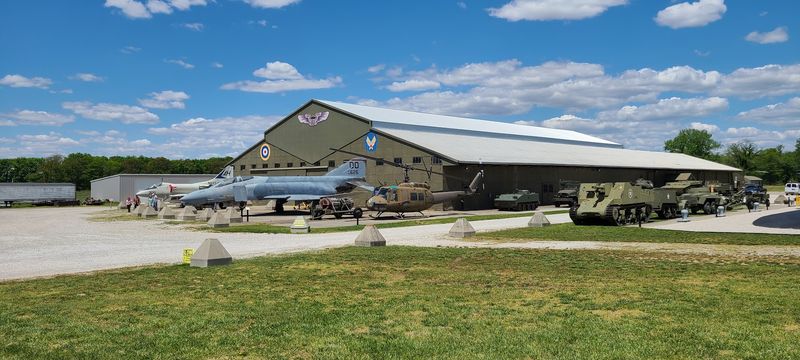
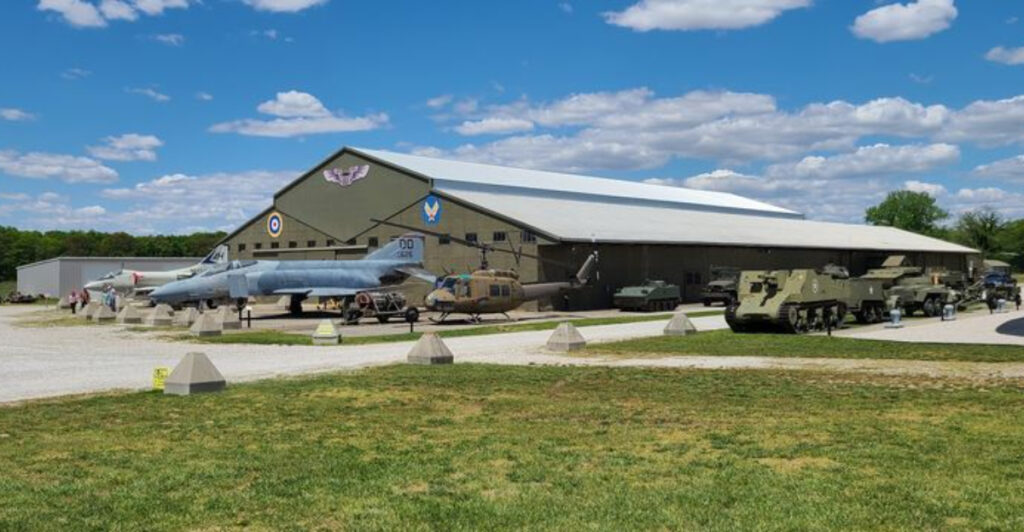
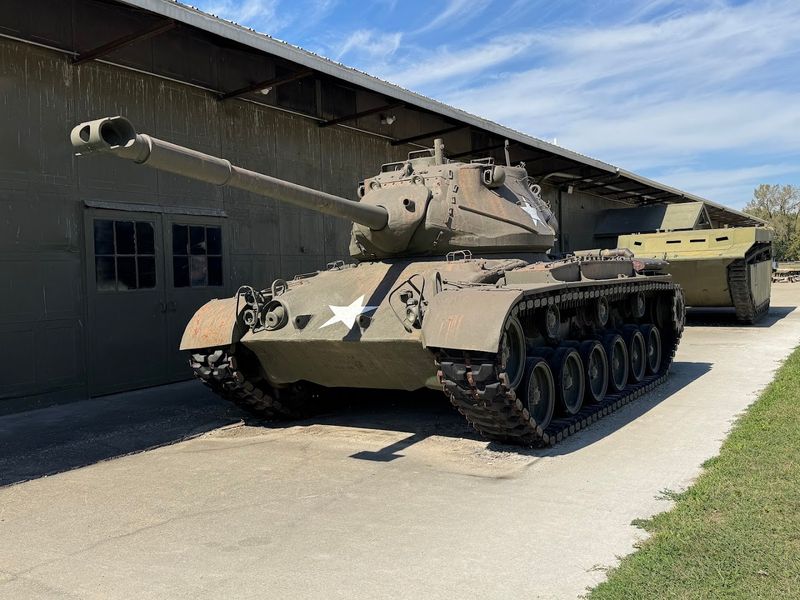
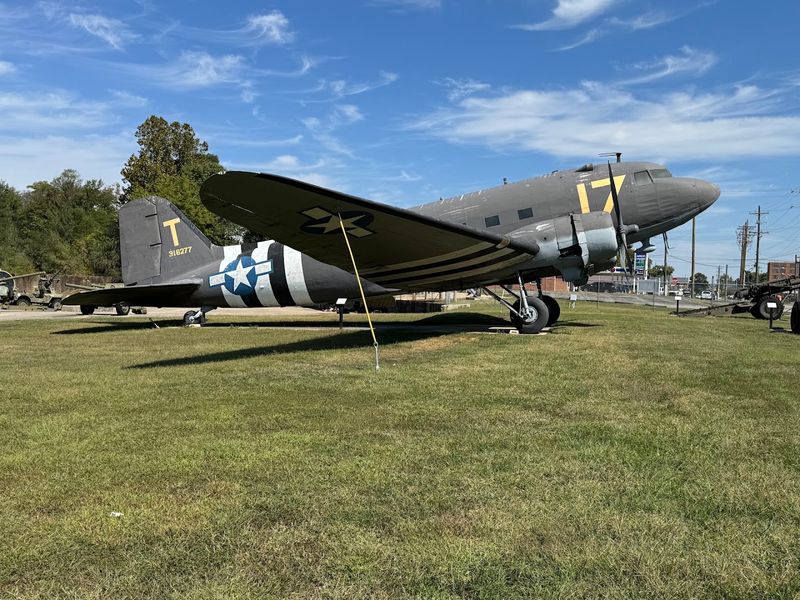
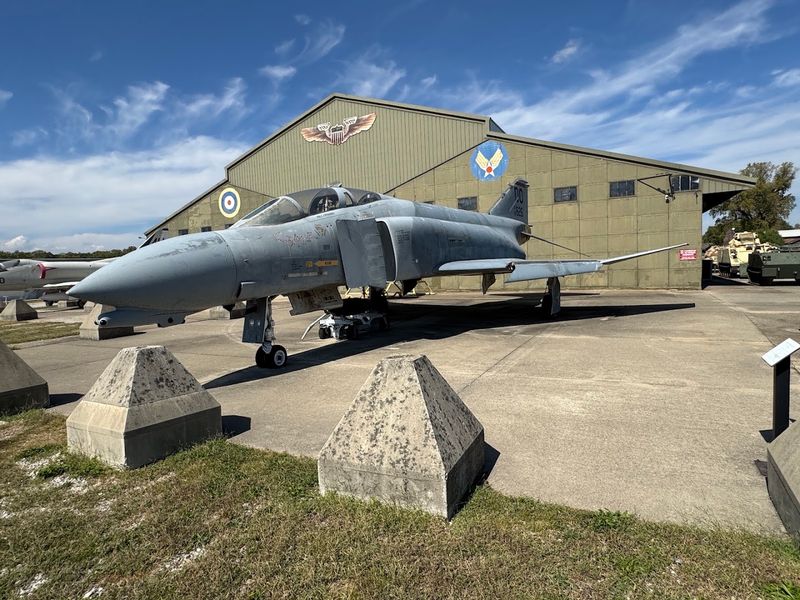
Before the indoor galleries even enter the picture, the Indiana Military Museum makes its case outside. The grounds are lined with tanks, armored vehicles, artillery, aircraft, and large military hardware that instantly changes the scale of the visit.
Instead of easing you in gently, the museum opens with steel, wings, tracks, and the kind of silhouettes that stop conversation mid-sentence.
That outdoor display matters because it frames the museum as more than a room of objects behind glass. You are looking at machines built for movement, force, transport, and survival, and many of them are shown close enough to study their bulk and design.
Rivets, faded paint, blunt edges, cockpit shapes, and heavy treads give the grounds a strong visual rhythm long before you read a single label.
The arrangement also helps the place feel expansive. Even though this is a museum in Vincennes rather than a giant metro institution, the exterior lineup gives it a broad, almost airfield-like presence.
Planes and helicopters pull your eyes upward, while tanks and transport vehicles anchor the scene at ground level with a different kind of gravity.
There is also an important pacing advantage here. Starting outdoors lets you scan the big picture first, then move inside with your curiosity already sharpened by questions about eras, conflicts, and technology.
You are not entering cold. You are entering after a visual preview that has already signaled that the collection is deeper than expected.
For many travelers, this first encounter becomes the moment the museum shifts from interesting stop to serious destination. It is bold, direct, and impossible to confuse with a small-town side attraction.
Before the front door does any work at all, the grounds have already announced that Indiana Military Museum operates on a much bigger scale.
Inside the Timeline: A Walk Through American Conflicts
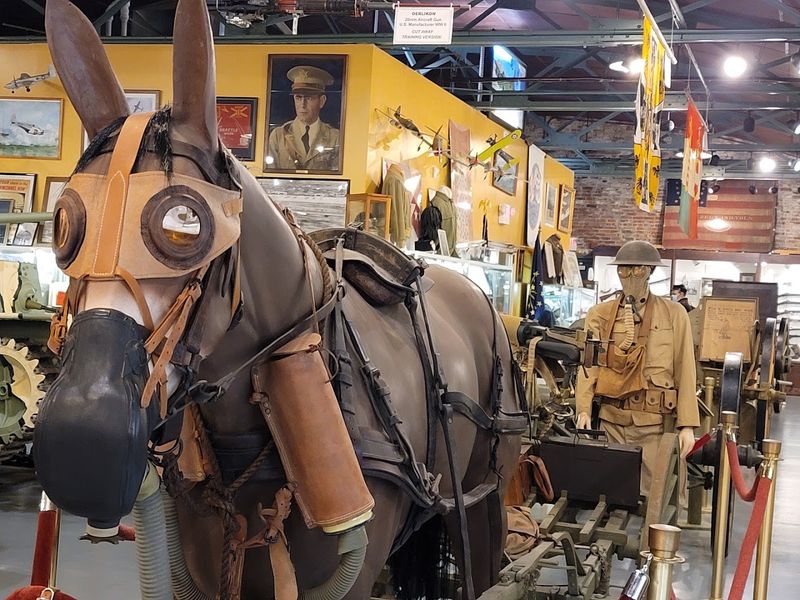
Step inside, and the museum shifts from spectacle to structure. One of its strongest moves is the way it organizes military history across American conflicts, creating a chronological path that gives the collection shape rather than letting it feel like a warehouse of disconnected relics.
That approach makes the visit easier to follow, especially when so much material is packed into the rooms. Uniforms, small artifacts, documents, insignia, personal items, and equipment work together to tell a longer story than any single vehicle outside could manage.
Instead of reducing history to major names and famous battles, the displays show how wars changed the objects people carried, wore, read, repaired, and relied upon.
The scale narrows from tanks and aircraft to human-sized details, and that change in focus is one of the museum’s biggest strengths.
The galleries also reward slow looking. You may notice a case of medals, then realize the nearby field gear adds another layer, and then catch a text panel that places the entire section in a wider national context.
That layering keeps the rooms from becoming static. The eye moves, then the mind starts connecting eras, technologies, and everyday military life.
Because the museum covers such a broad span of service history, pacing becomes part of the experience. Some sections invite quick scanning, while others pull you in close enough to read every label.
The best strategy is not rushing for headline artifacts but letting the sequence do its work. The museum has clearly been arranged to build momentum.
By the time the WWII material starts appearing in fuller force, the setup has already done something valuable. It has shown where those artifacts fit in the longer military story, turning them from isolated highlights into part of a larger progression. That makes the later sections hit harder and land with more clarity.
Why the WWII Collection Commands the Room
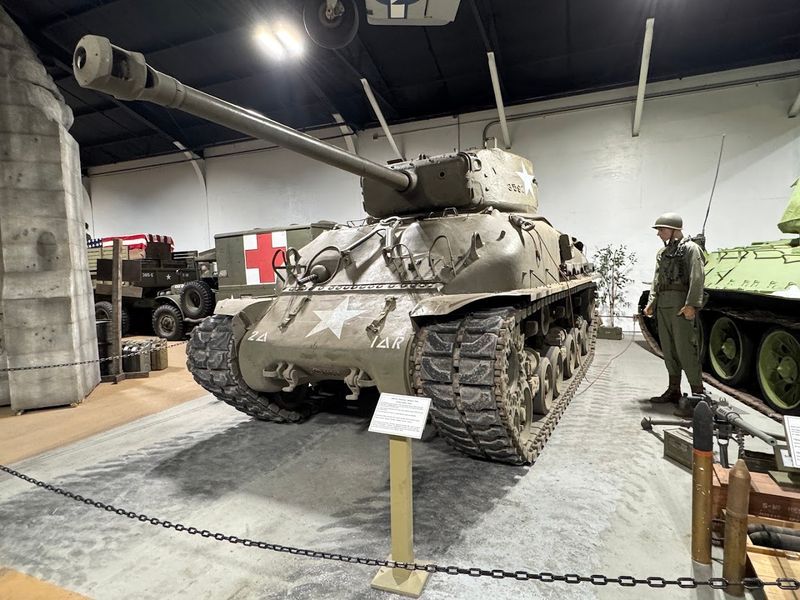
World War II is the magnetic center of attention here, and the museum handles that draw with real depth. This is not a single-cabinet nod to the era or a token wall of posters.
The collection reaches across uniforms, battlefield equipment, personal artifacts, vehicles, and objects connected to major military figures, creating a section that carries both scale and texture.
What gives the WWII material its force is the way big history and close-range detail share the same space. You might be looking at a vehicle one minute and then leaning toward a set of smaller items the next, noticing stitching, metalwork, insignia, or tableware linked to larger wartime narratives.
That constant shift between macro and micro keeps the galleries lively and prevents the subject from flattening into textbook familiarity.
Rare pieces add another layer of excitement. The museum has built a reputation for displaying items that trigger an immediate, how is that here reaction, and that sense of discovery is crucial to the visit.
It is one thing to expect WWII artifacts in a military museum. It is another to encounter unusual pieces that reset your expectations of what a regional institution can hold.
The layout helps too. Instead of isolating WWII behind a grand statement and empty space, the museum surrounds the period with dense visual context.
Cases, interpretive displays, and larger equipment create a packed, immersive effect that mirrors the scale of the conflict itself. You are not nudged past a greatest-hits list. You are dropped into a thick field of material evidence.
For anyone drawn to wartime aviation, armor, or personal relics, this section is where time starts disappearing. You look up thinking ten minutes have passed and realize an hour is gone.
The museum earns that kind of attention by offering variety, rarity, and enough substance to keep every new case or vehicle from feeling like a repeat of the last.
The Annex, the Barracks, and the Trench You Do Not Expect
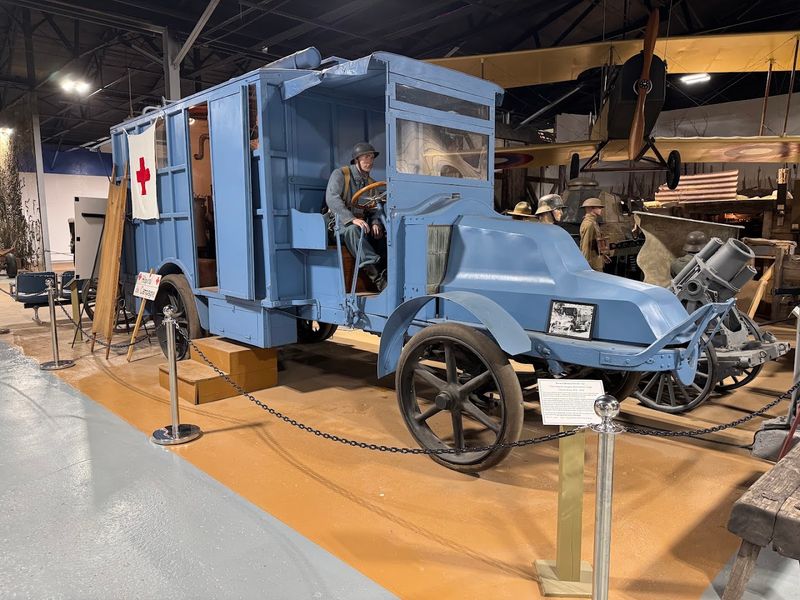
One of the smartest reasons to give this museum extra time is that some of its most memorable material sits beyond the standard gallery expectation.
The second building, often called the annex, broadens the visit with a mix of exhibits that feel more immersive, more unusual, and in a few cases wonderfully unexpected. This is where the museum starts leaning into environments, not just artifacts.
A recreated or preserved barracks setting changes the way military history reads. Instead of focusing only on combat hardware or decorated uniforms, the museum brings attention to daily living arrangements, routines, and the built spaces that shaped service life.
Bunks, room layout, and utilitarian design make military history more tangible because they describe how people actually occupied time between the moments history books usually emphasize.
The trench exhibit pushes that effect further. Walking through a trench installation gives spatial meaning to a subject that often gets reduced to photos and maps.
Narrow passages, rough surfaces, and enclosed lines of sight create an immediate understanding of terrain and vulnerability. You do not need dramatic effects to grasp the point.
The structure itself does the work. Additional standout pieces deepen the annex’s appeal, especially when the collection includes unusual medical, support, or home-front material that rounds out the war story.
A surgical sterilization truck, a Rosie the Riveter exhibit, and bunker elements shift the narrative beyond frontline machinery alone. That variety keeps the museum from becoming predictable.
This part of the property is also where the place starts feeling especially layered. You move from artifact viewing to spatial experience, from labels to walk-through scenes, from polished cases to rougher constructed settings.
In practical terms, that means the annex should never be treated as an optional add-on. It is a major part of why the museum has such a strong reputation among repeat visitors.
Indiana Stories Hidden Among the Global History
For all the aircraft, armor, and headline artifacts, one of the museum’s most effective qualities is its local grounding. The Indiana Military Museum does not treat military history as a distant chain of famous battles disconnected from place.
It repeatedly brings the story back to Indiana service members, regional ties, and the people whose lives connect global conflict to this part of the state.
That local dimension changes the tone of the visit. Large equipment can impress on sight alone, but personal stories create scale in a different way.
A uniform, a portrait, a medal grouping, or a named artifact linked to an Indiana individual narrows the focus from nations and armies to one life, one family, one town. Suddenly the collection is not only about military history.
It is about proximity. This matters especially in Vincennes, a city already rich with historical identity. The museum fits that setting well because it extends the area’s relationship with the past without feeling locked into a single era.
You can move through broad American military history while still finding reminders that local communities carried part of that burden in every generation.
There is also an editorial intelligence in balancing celebrity artifacts with lesser-known stories. Recognizable names may catch attention first, but they do not completely dominate the rooms.
The museum appears interested in preserving both nationally significant material and the personal record of service that is easier to lose over time. That balance keeps the collection grounded.
By threading Indiana through the displays, the museum gives the visit extra clarity for in-state travelers and a stronger sense of place for everyone else. It explains why this museum exists here rather than anywhere.
The result is not a generic military collection dropped into southern Indiana. It is a museum that uses location to sharpen meaning, adding civic texture to every room.
How to See It Without Racing Past the Best Parts
The easiest mistake here is underestimating how much ground the museum covers. With two buildings, an outdoor display area, and immersive sections that slow your pace naturally, this is not a quick pop-in between errands.
If you arrive treating it like a 45-minute stop, the collection will outrun your schedule almost immediately. A better approach is to split the visit into phases.
Start outside with the large vehicles and aircraft so your eyes can adjust to the collection’s scale, then move into the main building where the chronological exhibits establish context.
After that, save enough energy and time for the annex, because it contains some of the most distinctive displays on the property and changes the rhythm of the whole experience.
Scanning works in some rooms, but not all of them. Certain cases are dense in the best way, packed with material that rewards a slower pass after an initial sweep.
If a section catches your attention, give it the extra minutes. The museum is strong precisely because it offers more than one level of engagement. You can get the broad overview quickly, but the real payoff often sits in the second look.
Timing matters too. Since the museum operates daily from 10 AM to 4 PM, arriving earlier in the day gives you the broadest margin without forcing a rushed finish.
Mid-visit fatigue is real in a collection this packed, so it helps to pace yourself rather than charging through the opening galleries and fading by the annex.
This is also a good place to stay curious and flexible. A knowledgeable volunteer, an overlooked display corner, or an outdoor detail you missed on the first loop can easily redirect your route.
The museum supports that kind of wandering. It is structured enough to guide you, but open enough to reward a slower, self-directed visit that leaves room for surprise.
A Vincennes Stop That Plays Far Bigger Than Its Size
Some museums impress because they are grand, polished, and expected to impress. The Indiana Military Museum stands out for the opposite reason.
It delivers the scale, rarity, and density of a much larger institution while sitting in a place many travelers would never assume holds one of Indiana’s most ambitious military collections.
That contrast is the key to its appeal. Vincennes is already a city where history has room to breathe, and this museum adds a distinctly visual, object-driven layer to that identity.
Instead of asking you to imagine the past in abstract terms, it surrounds you with vehicles, uniforms, field equipment, trench spaces, barracks details, and artifacts that carry war history into physical view.
The museum also avoids feeling one-note. Aviation fans have aircraft to study. Armor enthusiasts get tanks and tracked vehicles.
Readers of military history find cases full of material culture, while families and casual travelers have enough large-scale spectacle to stay engaged even without deep subject knowledge.
That range is harder to pull off than it looks, especially in a collection so full. Practical details strengthen the package rather than weighing it down.
Daily hours from 10 AM to 4 PM make planning straightforward, and the layout supports both focused enthusiasts and broad-interest visitors who simply want a strong afternoon destination.
Because there is so much to absorb, the museum works best when treated as a main event rather than an afterthought.
If your radar goes up for places that overdeliver without much swagger, this address belongs on the list. Indiana Military Museum is vivid, substantial, and unusually generous in what it puts in front of you.
By the time you step back outside and see the aircraft and armor again, the whole property reads differently. It is no longer surprising that all of this is here. The surprise is that more people still do not know.
Share this story