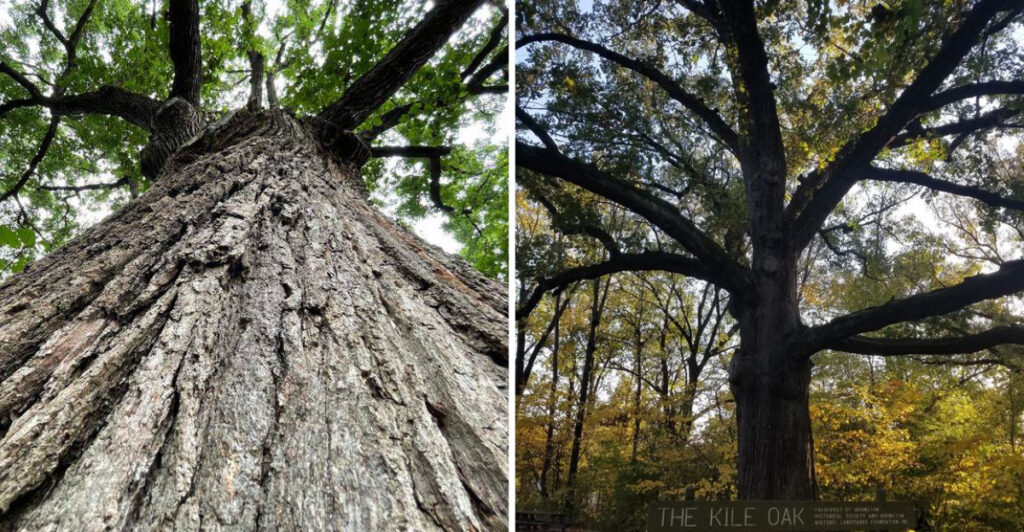
Indiana hides plenty of historic places, but few are as extraordinary as one that’s still alive. Tucked into Indianapolis’ historic Irvington neighborhood, the Kile Oak gives visitors the rare opportunity to stand beside a majestic bur oak estimated to be around 500 years old.
This towering natural landmark has witnessed centuries of Indiana history, quietly surviving as the city grew around it. Despite its extraordinary age and size, the tree remains tucked away in a peaceful neighborhood setting, making the discovery feel even more special. Whether you’re fascinated by history, nature, or unique hidden gems, the Kile Oak is one of Indiana’s most unforgettable places to visit.
A Giant Waiting on a Quiet Street
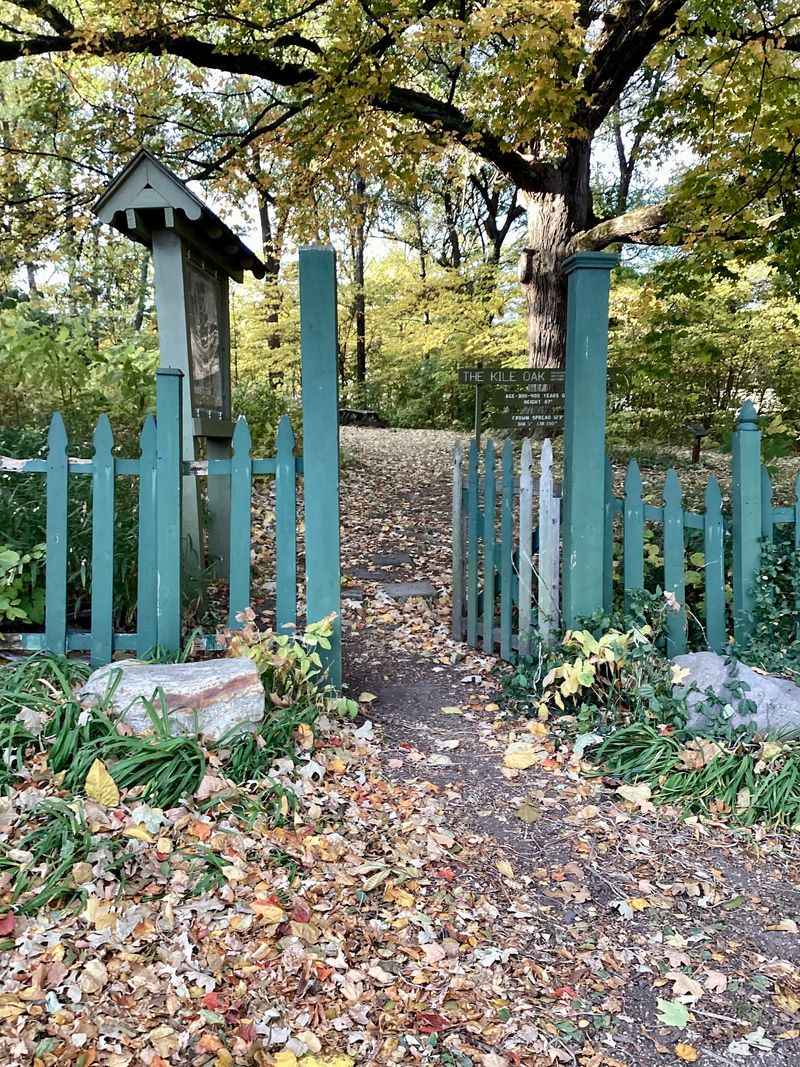
One of the strangest parts of visiting the Kile Oak is how normal the street looks at first. You pass houses, lawns, and parked cars, then suddenly an enormous tree rises above everything around it.
The contrast is the whole point, because the oak does not sit inside a vast forest or a busy city square. Instead, it occupies a compact landmark space at 5939 E Beechwood Ave in Irvington, a historic east side neighborhood in Indianapolis. That tucked-away setting changes the mood right away.
A place this old and large seems like it should announce itself from blocks away, yet the Kile Oak asks you to pay attention.
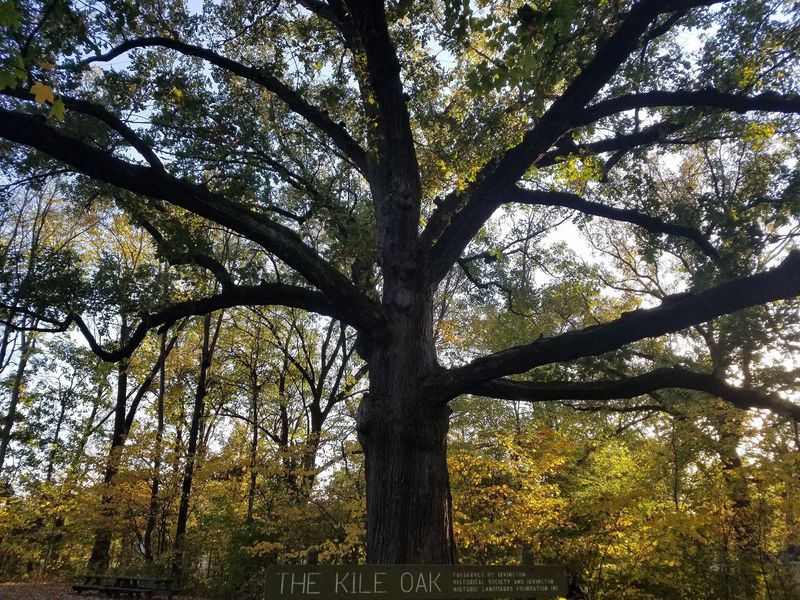
Looking up from the sidewalk, the first thing most people notice is scale. The trunk is thick, the canopy spreads outward with authority, and the branches look shaped by centuries of weather rather than careful landscaping.
Even before learning any dates or local stories, the tree gives off the kind of presence that makes nearby houses appear temporary.
That visual surprise matters for a simple reason. It reminds people that pieces of the natural world can survive inside ordinary neighborhoods, hidden in plain sight for years.
Plenty of Indianapolis residents have lived nearby without realizing one of the city’s best-known old trees is right there behind a gate.
For first-time visitors, the smartest approach is to slow down before arriving. Do not expect a grand entrance or flashy visitor center.
Watch for the small preserved lot, notice how the branches spread over the site, and let the setting do its work. The Kile Oak makes its strongest first impression not with noise, but with size, age, and the surprise of finding it where you least expect it.
Standing Beside a Tree That Predates Indiana
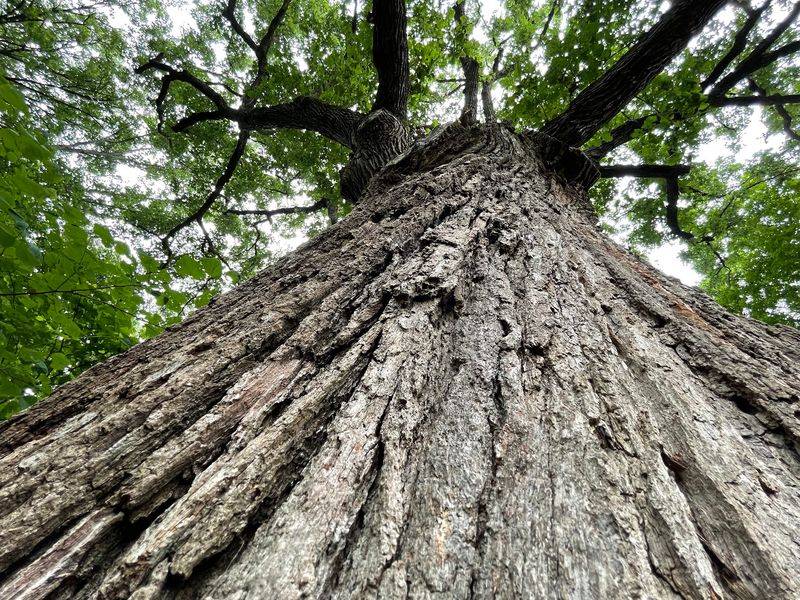
Age becomes real at the Kile Oak when you stand next to the trunk. Reading that a tree may be 400 to 500 years old is one thing.
Seeing bark that has held its ground through generations of storms, growth, and branch loss is something far more physical.
The Kile Oak is widely recognized as one of the oldest trees in Indianapolis, and it is often described as a burr oak of remarkable age. That means it likely began growing long before Indiana became a state, long before Irvington became a neighborhood, and long before the city around it spread street by street.
Few local landmarks can tell time in that way without saying a word. Size adds to the experience. Older signage and local descriptions have long emphasized the trunk’s impressive girth, while more recent comments note that the tree has lost some large limbs over time.
Even with that natural wear, the oak still dominates its little plot with heavy branches and a thick base that instantly shows why preservation matters.
Visitors who enjoy history often search for buildings, monuments, or museum rooms. The Kile Oak offers a different type of historical contact.
Here, the main attraction is alive, still rooted in place, and still changing. You are not looking at a frozen artifact. You are meeting a living organism that has survived by adapting year after year.
That is why the best moment at the site is usually the simplest one. Pause, look up into the crown, then back at the trunk, and imagine how many seasons have passed over the same ground.
In a city full of movement and construction, the Kile Oak gives Indianapolis a rare vertical timeline made of wood, bark, and patient endurance.
Why Irvington Protects This Corner of Indiana
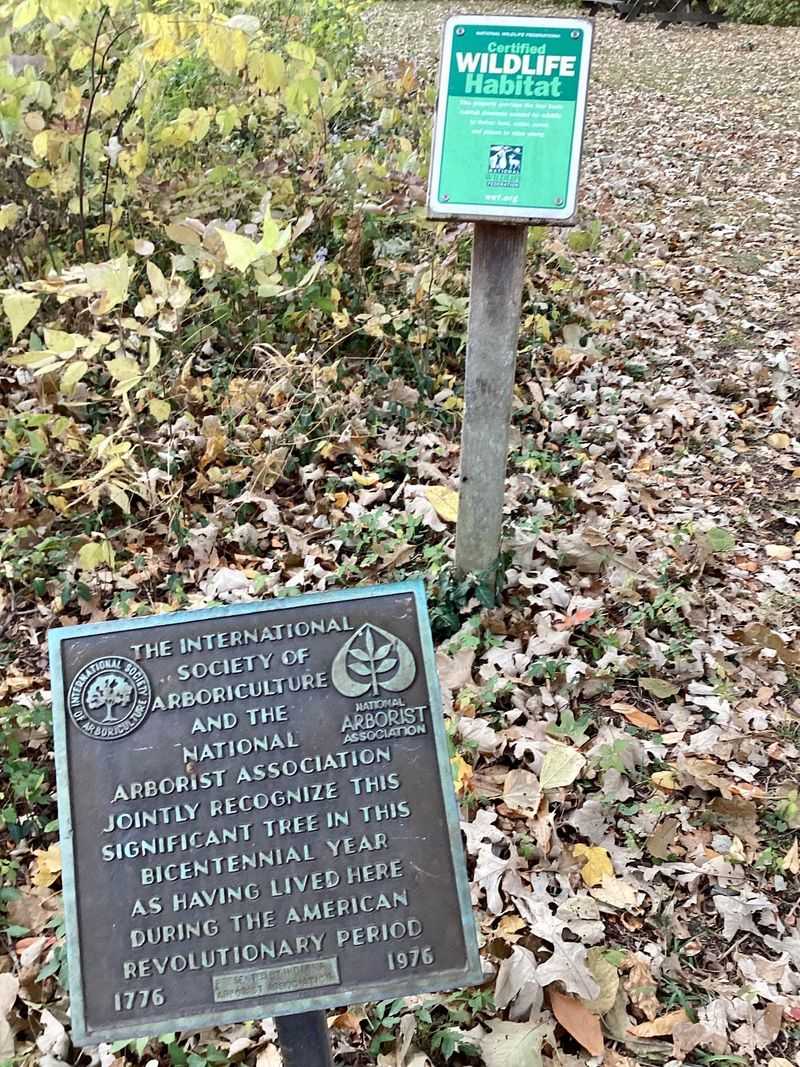
Preserving an old tree sounds simple until weather, safety, and money enter the picture. The Kile Oak is not just a big tree sitting by itself.
It is a historical landmark that needs regular attention, especially because age brings both beauty and risk. Local stewardship is a major part of the story here.
Public information tied to the site explains that the property is owned and managed by the Irvington Historic Landmarks Foundation, a volunteer-driven nonprofit also connected with other preservation work in the neighborhood.
That detail helps explain why conditions at the site can change, including temporary closures after storm damage or falling trees.
Some visitors arrive expecting a small open garden and then find gates locked or parts of the area restricted. Rather than seeing that as a disappointment alone, it helps to understand the reason.
Safety concerns, repair costs, and the health of the grounds all shape what access looks like from season to season.
There is also a larger lesson in that effort. A tree this old cannot be treated like a standard park feature that can be replaced in a few years.
Once major damage happens, centuries of growth cannot be restored. Protecting roots, soil, nearby plant life, and visitor pathways becomes part of keeping the oak alive for future decades.
For travelers, the practical takeaway is easy. Check expectations before heading over, respect any barriers on site, and avoid treating the space like a playground.
The Kile Oak represents a form of preservation that is quieter than restoring a grand house, but no less serious. In this part of Indiana, caring for one tree has become a neighborhood promise, and that promise is visible in every effort to keep the landmark standing safely.
Small Park, Big Presence
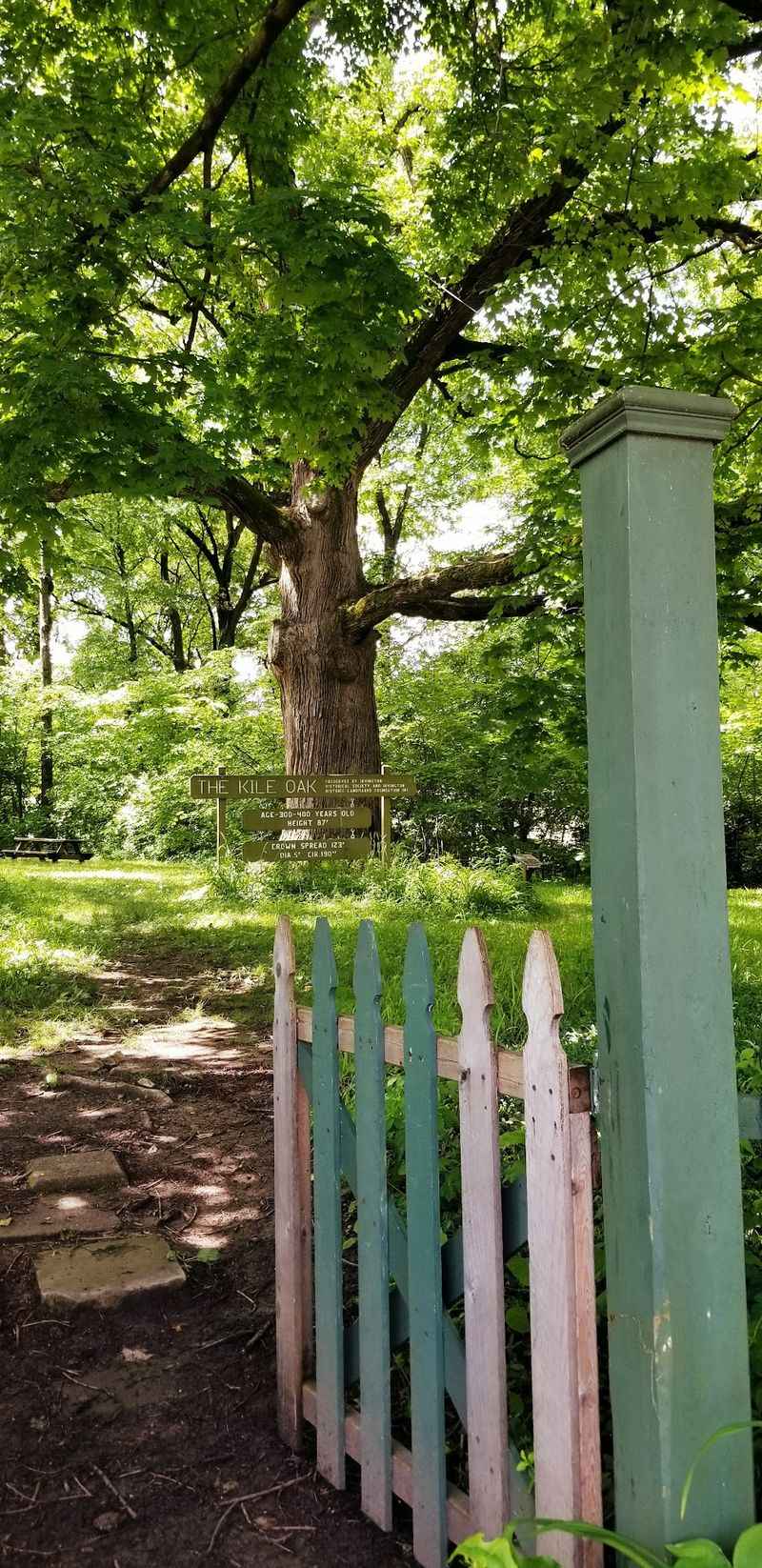
Not every landmark needs acres of land to leave an impression. The Kile Oak sits within a small preserved green space, and that focused setting makes the tree feel even more remarkable.
There are no playgrounds, sports fields, or long trails competing for attention. From the moment you arrive, everything points back to the oak itself.
The park exists for a clear reason: to protect one of Indianapolis’ oldest living landmarks. Fencing, pathways, and the surrounding open space help safeguard the tree while still allowing visitors to appreciate its enormous scale.
Instead of wandering through a larger park searching for the main attraction, you are standing almost immediately in front of the reason the site was preserved. That changes the rhythm of the visit.
Rather than moving quickly from one feature to the next, most people naturally slow down. Walking around the perimeter reveals how differently the tree looks from each angle.
One view highlights the massive trunk, another emphasizes the sprawling canopy, while another shows just how dramatically the branches tower over the neighboring homes. The surrounding neighborhood also becomes part of the experience.
Seeing an oak of this size surrounded by ordinary houses makes its age and endurance easier to appreciate. The contrast reminds visitors that remarkable natural landmarks do not always survive in remote forests.
Sometimes they remain quietly rooted in the middle of everyday life. That perspective makes even a short visit worthwhile.
Bring a camera, take a slow walk around the site, and spend a few moments simply looking up through the canopy. The Kile Oak proves that a single protected tree can give an entire block a sense of history, scale, and identity that few larger parks could match.
The Tree Changes With the Season
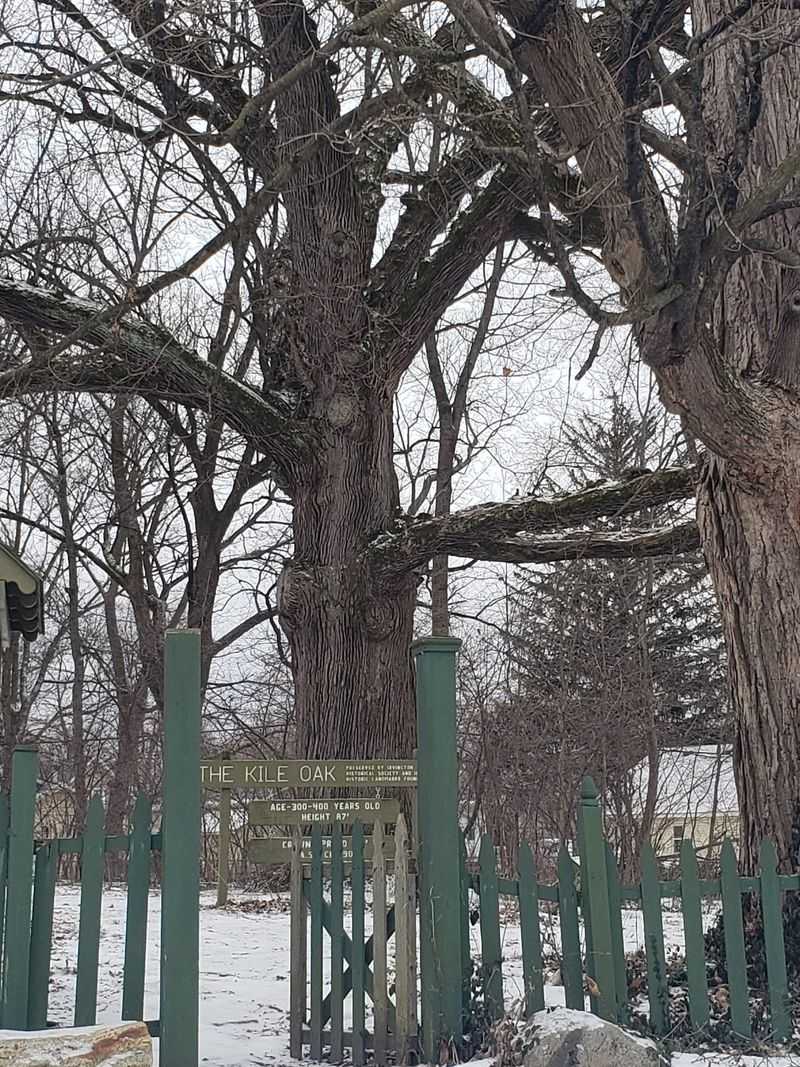
A second visit to the Kile Oak may look very different from the first. Seasonal change is part of the draw, because an old burr oak has a way of showing time in large, obvious gestures.
Summer brings deep shade and thick green cover, while colder months reveal the full architecture of the limbs. That matters at this site more than at many others. Since the tree is the main attraction, every shift in leaf color, branch outline, and ground cover changes the entire experience.
In warm weather, the canopy can make the small lot appear fuller and softer. In fall, the shape of the crown stands out against the neighborhood sky with more contrast and color.
Conditions on the ground can change too. Some local comments mention overgrowth or mosquitoes during certain times of year, which is helpful practical information for anyone planning a stop.
Comfortable shoes, insect spray in warmer months, and a little patience go a long way at a site that leans more natural than polished.
Photographers and curious walkers can use the seasons to choose the type of view they want. Leafy months emphasize scale and shelter.
Bare-branch months show structure, age, and the dramatic spread of wood that centuries have built, broken, and rebuilt.
If timing is flexible, aim for morning or later in the day when the light adds texture to the bark and gives the branches stronger definition. The Kile Oak does not need a festival or event to change character.
A shift in weather is enough. Watching the same landmark through different seasons turns a quick visit into a better understanding of how a very old tree continues to live, adapt, and command attention in the middle of Indianapolis.
How to Visit Without Missing the Point
Some places reward speed. The Kile Oak does the opposite. The best visit begins with a simple mindset: arrive expecting a short, thoughtful stop rather than a packed attraction filled with activities and amenities. Because the site is small and conditions can change, a little planning helps.
The grounds are generally open daily beginning at 8 AM, though temporary restrictions may occur for maintenance, preservation work, or weather-related safety concerns. Checking the latest information before heading over can help avoid surprises.
Once you arrive, the most important thing is to respect the space. Stay outside any closed or protected areas, avoid climbing on the tree or disturbing the roots, and remember that the surrounding soil is part of what keeps this centuries-old landmark healthy.
Preserving a living tree requires just as much care as preserving a historic building. The stop also pairs naturally with a walk through Irvington itself.
The neighborhood is known for its historic homes, tree-lined streets, local shops, and relaxed atmosphere, making it easy to turn a visit to the Kile Oak into a longer afternoon exploring one of Indianapolis’ most distinctive districts.
Photographers can also take advantage of the surrounding streets, where wide views show the oak rising above nearby homes while closer shots highlight the texture of the bark and the sprawling branches.
The most important tip, however, is not about timing or photography. It is about perspective. Do not judge the Kile Oak by the standards of a large tourist attraction. Judge it by its rarity.
Standing beside a living tree that has watched centuries of Indiana history unfold is an experience few places can offer, and that quiet sense of perspective is exactly what makes the visit memorable.
Why This Indianapolis Landmark Stands Apart
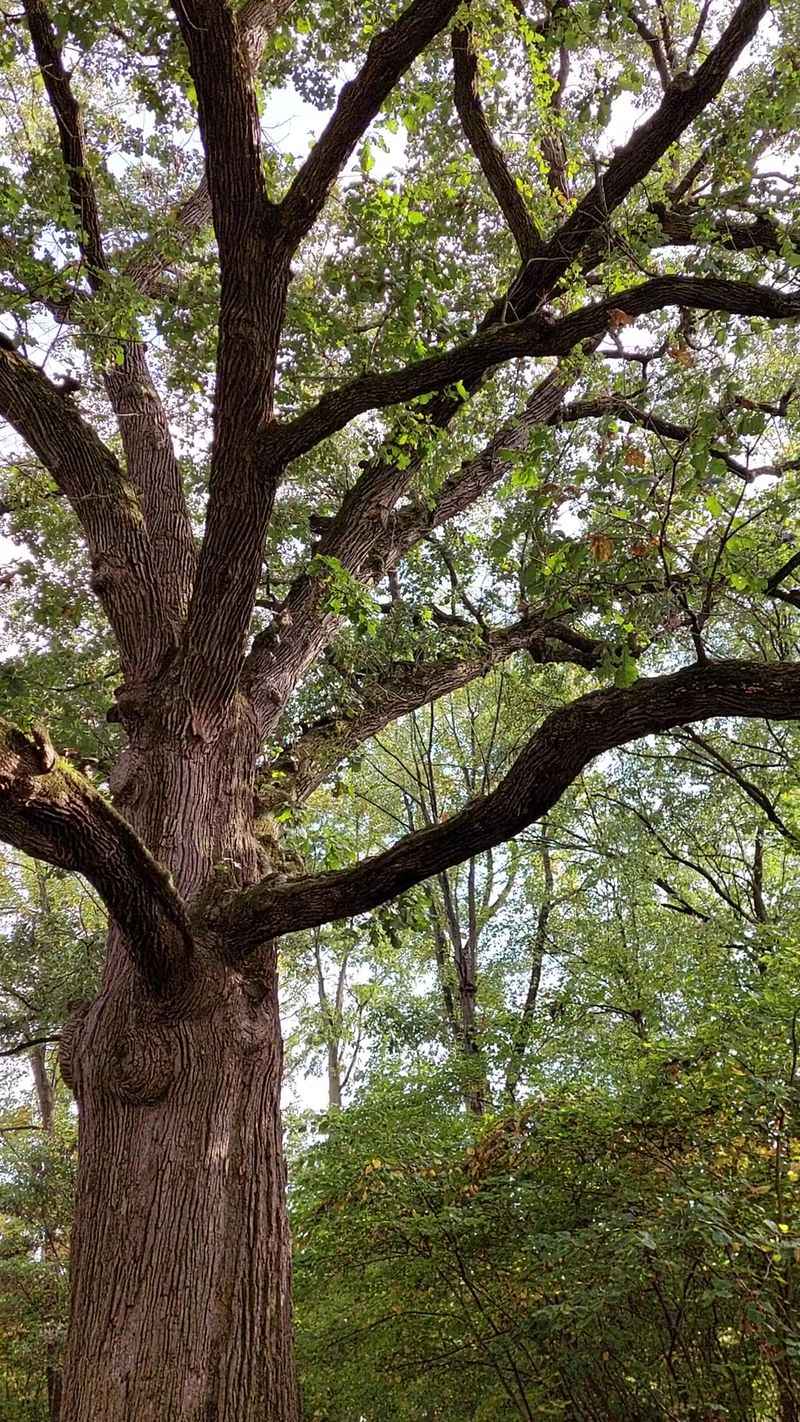
Plenty of local attractions offer history through plaques, rooms, and timelines. The Kile Oak does it with bark, shadow, and scale.
That difference is exactly why the site stands apart from more familiar stops around Indianapolis. At one level, the appeal is easy to explain. It is rare to find a tree in an urban neighborhood that is both deeply old and publicly recognized as a landmark.
At another level, the draw is harder to shrink into a single sentence, because the experience combines nature, city history, preservation work, and simple visual awe all in one small setting.
The tree also cuts across different kinds of interest. History fans can think about how long it has stood in place. Nature lovers can study the structure of a mature burr oak.
Neighborhood explorers get the added surprise of finding such a major living landmark tucked into Irvington instead of placed front and center in a giant downtown park.
That mix gives the Kile Oak unusual staying power as a destination. It suits a solo walk, a short family outing, a photo stop, or a detour for anyone exploring east side Indianapolis.
Even people who do not usually plan trips around trees can understand the appeal once they see the trunk rising over the block.
The sharpest takeaway is simple. The Kile Oak offers a rare chance to stand beside a living piece of Indiana that may have started growing centuries before the modern city formed around it.
No flashy setup is needed to make that meaningful. A quiet lot, a historic neighborhood, and one enormous oak are enough.
In a state full of parks and green spaces, this small Indianapolis landmark earns attention by doing one thing exceptionally well: putting human time next to tree time, and letting the comparison speak for itself.
Share this story