Bison’s Bluff in Schaumburg is one of Illinois’ most imaginative nature playgrounds, giving kids the chance to splash, climb, dig, balance, and explore in an outdoor setting designed to inspire creativity. Located within Spring Valley Nature Center, this one-of-a-kind play space replaces ordinary plastic equipment with streams, boulders, logs, sand, wooden bridges, and hands-on features that encourage active, open-ended play.
Every visit feels like a new adventure, with plenty of opportunities for children to connect with nature while burning off energy. If you’re searching for one of the best family-friendly attractions in Illinois, this hidden playground belongs at the top of your list.
Where the Playground Looks More Like a Mini Wilderness
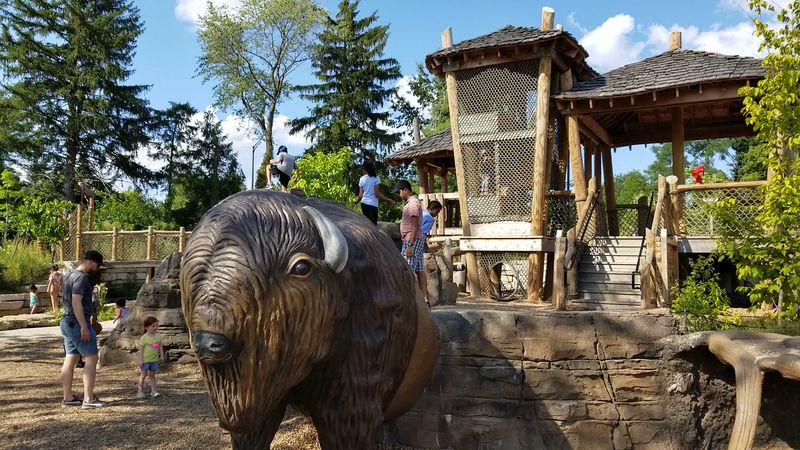
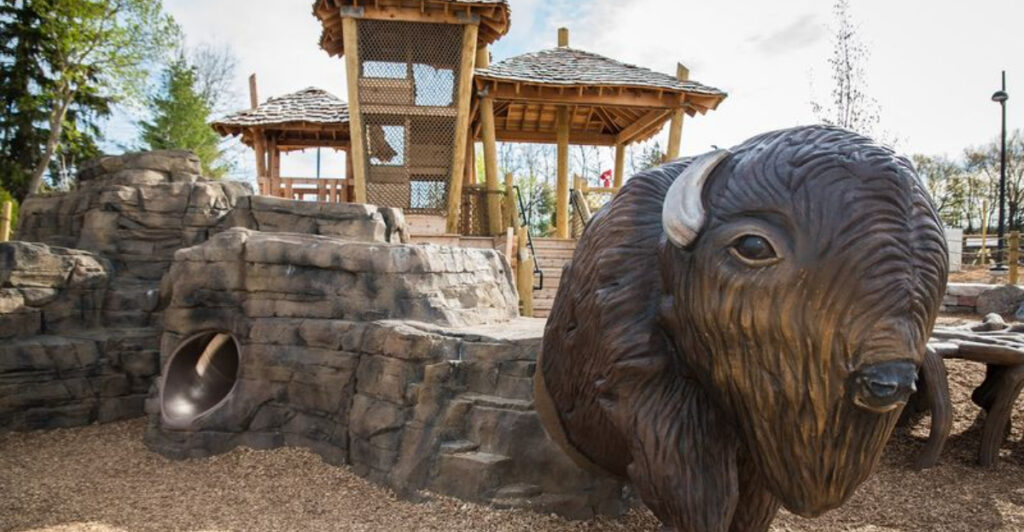
The first surprise at Bison’s Bluff is that it does not read like a typical suburban playground at all. Instead of bright plastic towers rising from rubber flooring, the scene opens with stone, timber, moving water, and pathways that look borrowed from a small nature preserve.
That visual shift changes your expectations before a child even starts climbing. Everything seems arranged to pull attention outward rather than upward. Kids are drawn toward boulders, shallow channels, sandy edges, and wooden structures that blend into the landscape instead of dominating it.
Adults can scan the space and immediately understand that this is a place built for roaming, testing, splashing, and circling back.
The setting inside Spring Valley adds to that effect. You are not pulling up to an isolated lot beside a busy commercial strip and stepping onto a standard park pad.
The playground sits within a broader natural area, so the mood is quieter, greener, and more tucked away than the address alone suggests.
That sense of enclosure matters for families with younger children or kids who move fast the second they spot open space. Thoughtful boundaries, landscaping, and defined play zones help the area feel contained without making it feel fenced in or rigid.
The whole layout encourages freedom, but not chaos. Even before the signature features come into focus, the materials tell the story.
Wood looks like wood, stone looks like stone, and water behaves like water instead of acting as a decorative background feature nobody is supposed to touch.
At Bison’s Bluff, the environment is the equipment. That is why the place lands so differently on arrival. It does not simply offer children a playground near nature.
It lets nature shape the playground itself, and that decision gives the entire experience more texture, movement, and purpose.
The Water-and-Stone Zone Kids Make a Beeline For
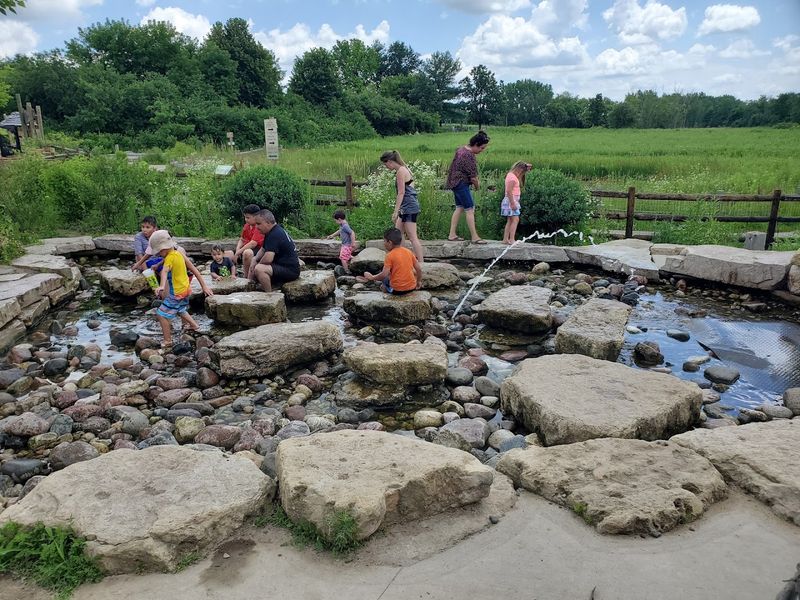
If one area defines Bison’s Bluff, it is the water-and-rock play zone where children can splash, step, balance, and experiment without the experience feeling overprogrammed.
The shallow stream, small waterfall elements, and crossing points create the kind of activity that keeps kids occupied far longer than a single slide ever could. It is active play with a loose, exploratory rhythm.
What works so well here is the mix of motion and decision-making. A child can choose to follow the water, hop across stones, stand at the edge and watch, or head straight into the splashy section and commit fully.
That variety lets different comfort levels exist side by side, which is part of why families with mixed ages can settle in more easily.
The texture of the place matters just as much as the layout. Wet rock, packed sand, timber edges, and moving water create a constantly shifting set of sensations underfoot and at hand.
Instead of repeating the same action over and over, kids adapt to the terrain as they play. That makes the area more than a cooling feature on a warm day.
It becomes an informal lesson in balance, observation, and cause-and-effect, all without turning into a lecture disguised as fun. Water invites experiments naturally, and this playground smartly leaves room for them.
Parents should expect damp shoes, sandy legs, and the possibility that leaving this zone will require negotiation. Bringing a towel, a change of clothes, or at least footwear with decent traction is the kind of practical move that can save the rest of the outing.
This is not the corner where kids stay clean. And that is exactly the appeal. The stream is not there to be admired from a bench.
It is there to be entered, crossed, splashed through, and circled again until the whole place starts feeling like a tiny outdoor expedition.
Climbing, Sliding, and the Art of Letting Kids Test Themselves
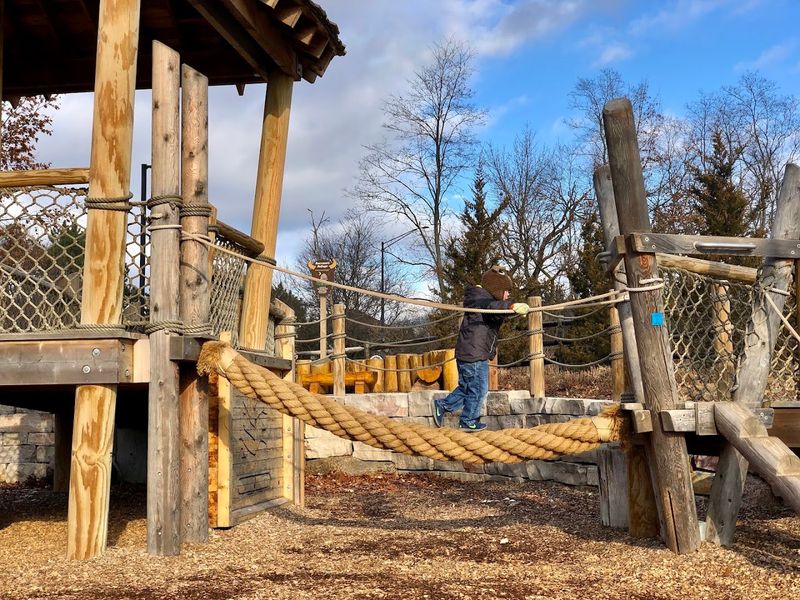
Beyond the water features, Bison’s Bluff keeps the energy high with climbing areas that ask for a little more judgment than a standard ladder-and-platform setup.
Large rocks, uneven surfaces, timber structures, and elevated elements encourage kids to plan their next move instead of following a single obvious route. That turns physical play into a small problem-solving exercise.
The difference is easy to notice once children spread out. Some head for slides, some scramble toward boulders, and others get interested in bridges, lookout points, or the challenge of getting from one surface to another without touching the ground.
Rather than funneling everyone through the same sequence, the layout supports a dozen mini adventures at once. This kind of design often appeals to a broad age range because it does not reduce challenge to height alone.
Younger kids can explore lower elements and repeat manageable tasks, while older children can push for more complex routes and longer loops through the play space.
The equipment does not feel segmented into strict age boxes. There is also a noticeable confidence-building side to the experience. Natural materials introduce irregularity, and irregularity asks children to pay attention to footing, grip, and momentum.
In a carefully designed environment, that kind of risk feels constructive rather than reckless. For adults, the practical takeaway is simple: shoes matter here. This is a playground where traction counts more than fashion, and a child who arrives in flimsy footwear may be frustrated fast.
It helps to dress for active movement rather than a quick photo stop. That active structure is a big reason the playground stands out. Kids are not only entertained.
They are invited to gauge distance, climb with intent, recover from small slips, and keep going, which gives the entire place a stronger sense of purpose than many polished but forgettable play spaces.
Tiny Details That Keep the Place Interesting for Longer
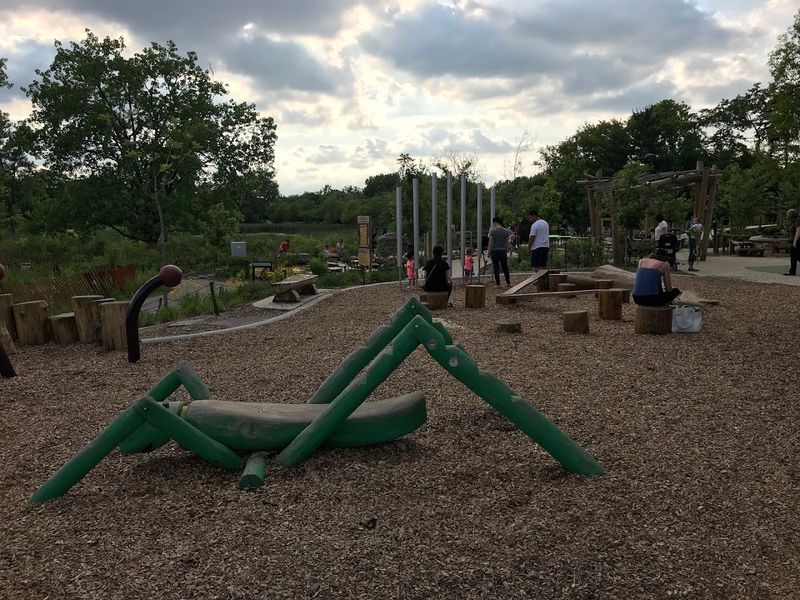
Bison’s Bluff earns extra points for the smaller features that keep children engaged after the first rush toward water and climbing areas.
This is where you notice oversized musical elements, sand play components, little routes between zones, and educational touches that add variety without slowing down the fun. The playground keeps revealing itself in layers.
That matters because many family destinations burn bright for twenty minutes, then flatten out once every obvious feature has been tried. Here, the rhythm lasts longer.
A child who has finished balancing on rocks might wander toward a sandy digging area, then drift to interactive sound elements, then head back across a bridge for another round in the stream.
The transitions are part of the design success. Nothing feels too far apart, yet the zones are distinct enough that moving between them refreshes the experience instead of repeating it.
Kids can reset their attention without needing a whole new destination. Subtle interpretive signs and caregiver-friendly prompts also fit naturally into the setting.
They do not overpower the place or interrupt play with heavy-handed messaging. Instead, they reinforce the idea that curiosity, sensory exploration, and outdoor confidence are part of the point.
There is also real visual charm here. Wooden creature forms, native plantings, textured surfaces, and playful natural references give the playground a storybook quality without pushing it into theme-park territory.
It stays grounded, which is why the details register as thoughtful rather than gimmicky. For adults, these extras can be the difference between a short stop and a genuinely satisfying morning or afternoon. When children keep discovering new corners, fewer demands for immediate departure follow.
Bison’s Bluff understands that replay value is not just about bigger structures. It comes from giving kids many different ways to interact with the same landscape.
Why This Schaumburg, Illinois, Spot Works Better Than a Standard Park
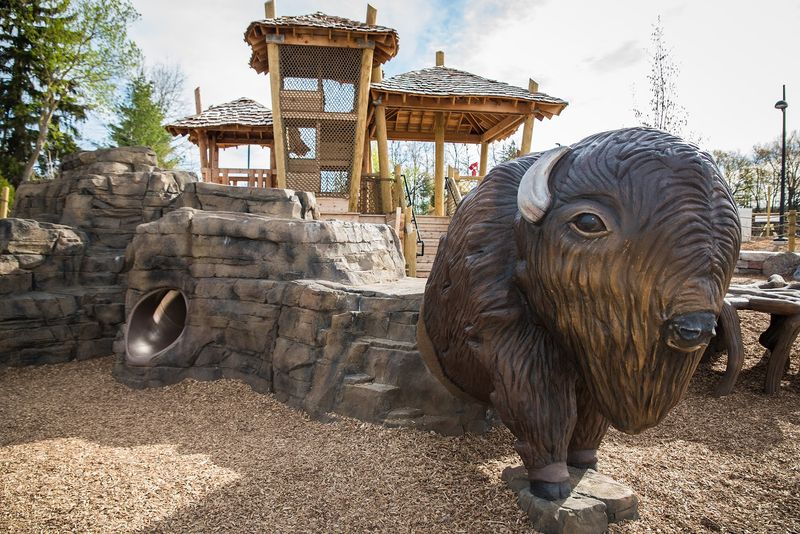
Bison’s Bluff stands out in Schaumburg because it does more than provide a place for children to burn energy. It connects play to a larger natural setting, which changes the entire pace of a family outing.
Instead of arriving, playing hard for half an hour, and heading back to the car, you can build a fuller experience around the site.
The playground sits within Spring Valley, and that broader context gives the visit an unusual amount of flexibility. Families can pair active play with a walk, a quieter loop through the grounds, or time spent noticing birds, trees, water, and seasonal changes.
The transition from structured exploration to open-ended wandering happens naturally. That is a major reason the place appeals even beyond the playground years.
A child may come for the stream and climbing features, while an adult notices the surrounding trails, the calmer atmosphere, and the way the landscape buffers the space from nearby suburban noise.
Everyone gets a slightly different version of the outing. There is also an educational undertone, but it arrives through setting rather than through obvious programming.
Children encounter natural materials, shifting terrain, and visible ecological cues simply by moving through the space. That kind of exposure can be more effective than any oversized sign telling them to appreciate the outdoors.
Within the Chicago suburbs, that combination is not automatic. Many parks are either highly developed and equipment-focused or scenic but not especially engaging for younger kids.
Bison’s Bluff bridges the gap by giving children a vivid place to play while keeping the surrounding environment central to the experience.
The result is a destination that fits local families, grandparents, and day-trippers surprisingly well. If you want one stop that covers movement, nature, and enough novelty to keep attention from fading too quickly, this Schaumburg, Illinois playground has a stronger editorial case than most neighborhood parks ever manage.
How to Plan the Visit Without Getting Tripped Up
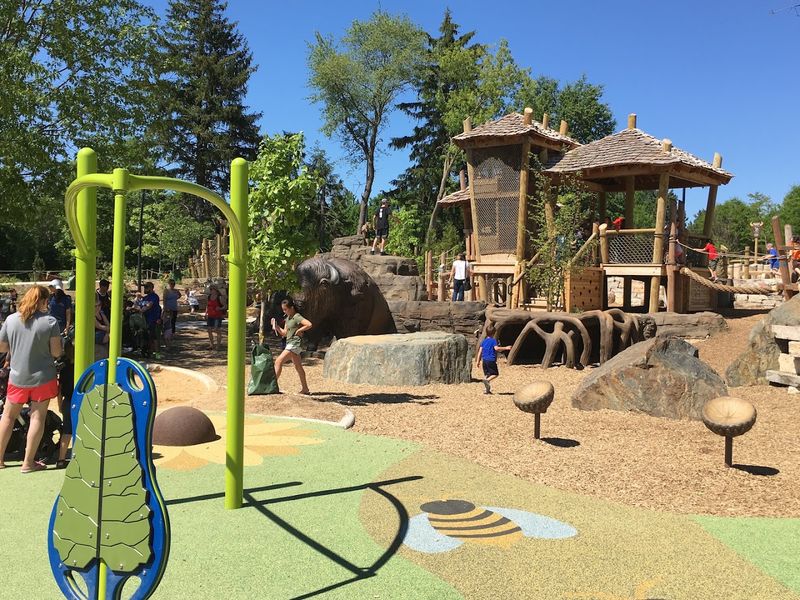
A little planning goes a long way at Bison’s Bluff because this is not the kind of place where you want to arrive unprepared and improvise everything.
The playground operates during set hours, currently opening at 10 AM and running into the evening, and families should expect a more managed setup than at a free neighborhood park. Knowing that in advance helps set the right expectations.
The most useful approach is to pack for water, sand, and movement. Bring clothes that can get messy, shoes with grip for climbing and wet surfaces, and a backup outfit if warm weather is in play.
Snacks and water are smart too, especially if you are hoping to stretch the visit into a larger outing around Spring Valley. Another practical note involves timing and capacity.
Popular nature playgrounds can get busy, especially on warm weekends, school breaks, and prime afternoon hours. Arriving earlier in the day often gives families a little more breathing room before the busiest rush settles in.
Because the play area is actively maintained, there may be structured entry procedures, admission per child, and time limitations depending on the day or operational needs.
That setup will not appeal to everyone, but it also helps explain why the space stays in good shape despite heavy use. This is a high-touch environment, not a set-it-and-forget-it lot.
Families should also think through comfort details that are easy to overlook. Bug spray can be useful in warm months, and towels or sandals for after water play can make the trip home much easier.
Restrooms and picnic possibilities nearby add convenience, but it still helps to arrive organized. Handled well, the logistics are pretty manageable.
Bison’s Bluff rewards families who treat the outing like a mini outdoor adventure rather than a random stop between errands, and that small shift in preparation usually leads to a much smoother day.
A Kid-Centered Place That Still Respects Nature
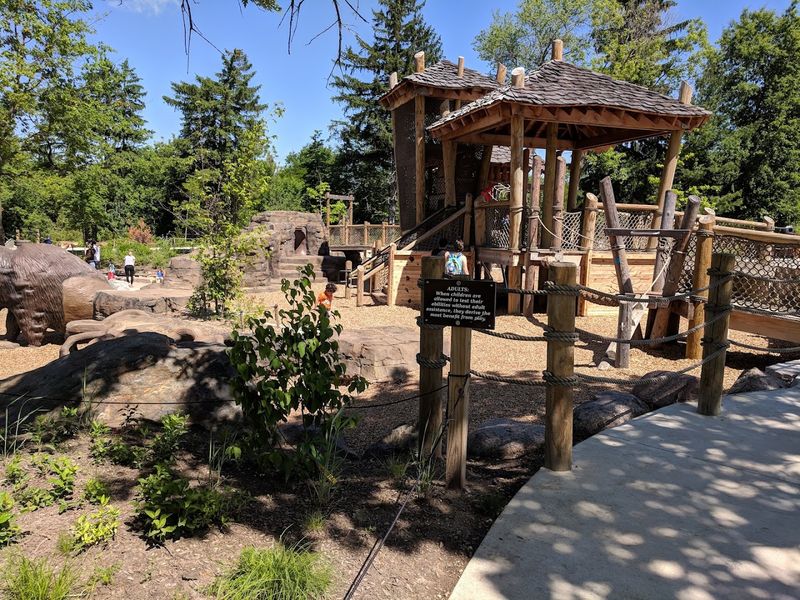
The strongest case for Bison’s Bluff is not that it is bigger, louder, or more extreme than other playgrounds. It is that the place understands children well enough to give them texture, freedom, and manageable challenge in one carefully shaped environment.
That combination is harder to find than it should be. Kids do not have to choose between nature and play here because the design merges the two. A shallow stream becomes a science experiment, a balancing route, and a splash zone at once.
Rocks become climbing practice, a stage set, and a confidence check, all before anyone notices how much energy has already been spent.
Adults benefit from that design too. There is more to watch, more for children to discover on their own, and more variety than the usual cycle of swing, slide, repeat.
Even the setting contributes to a calmer, more deliberate outing by surrounding the playground with a natural landscape rather than a sea of pavement.
That does not mean the place is friction-free. You may deal with wet clothes, sandy shoes, scheduling details, or a child who refuses to leave when time is up.
Those are real considerations, but they come attached to the exact kind of active, memorable play many families are hoping to find.
In a region full of competent parks, Bison’s Bluff has a clearer identity than most. It knows what it wants to be and follows through with materials, layout, and pacing that support the idea from start to finish. Nothing important about the experience feels accidental.
If your ideal family outing includes fresh air, imaginative play, and a place where kids can move with purpose instead of hovering around plastic equipment, this Schaumburg destination makes a strong final argument. Bison’s Bluff is not trying to imitate the average playground. That is precisely why it stands apart.
Share this story