Hidden beneath the trees of Charlestown State Park is one of Indiana’s most unusual historic sites. The former Rose Island Resort invites visitors to explore the remnants of a once-popular riverside getaway surrounded by forest, scenic Ohio River views, and peaceful walking trails.
With no paved roads leading through the island area and nature steadily reclaiming the landscape, the experience feels quiet, secluded, and wonderfully different from the state’s more familiar attractions. Whether you’re drawn by history, hiking, or the chance to discover an overlooked landmark, Rose Island offers one of Indiana’s most memorable outdoor adventures.
A Walk Down Into a Different World
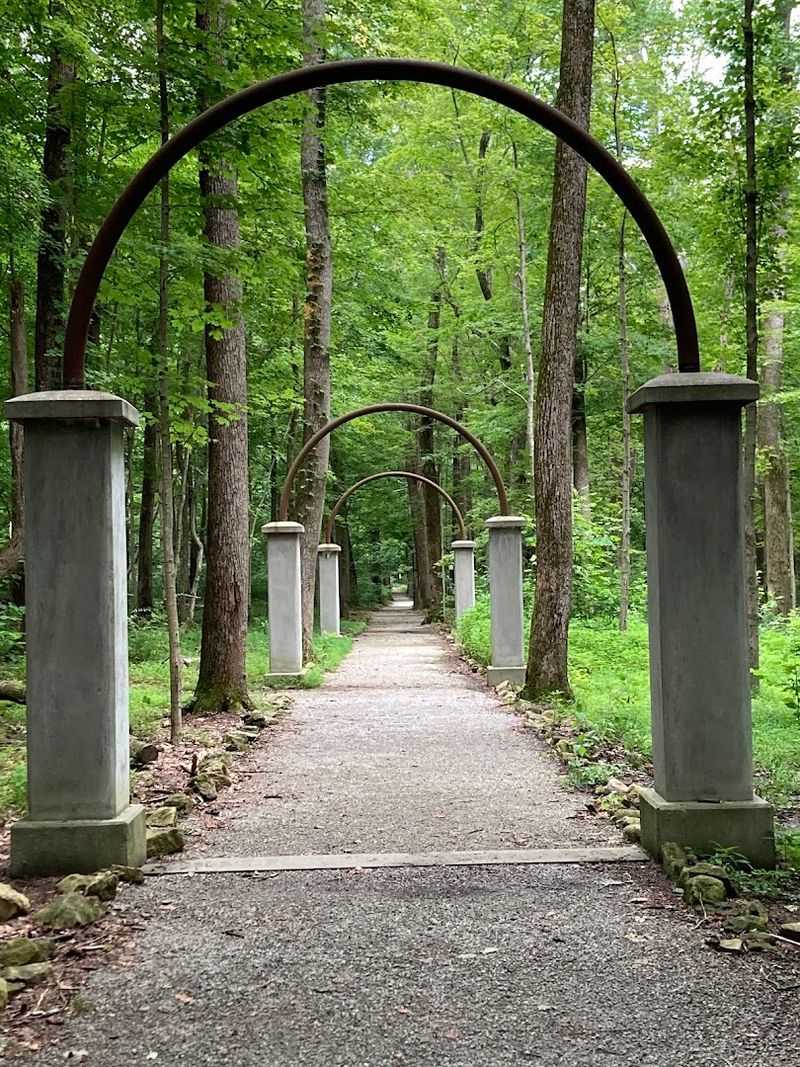
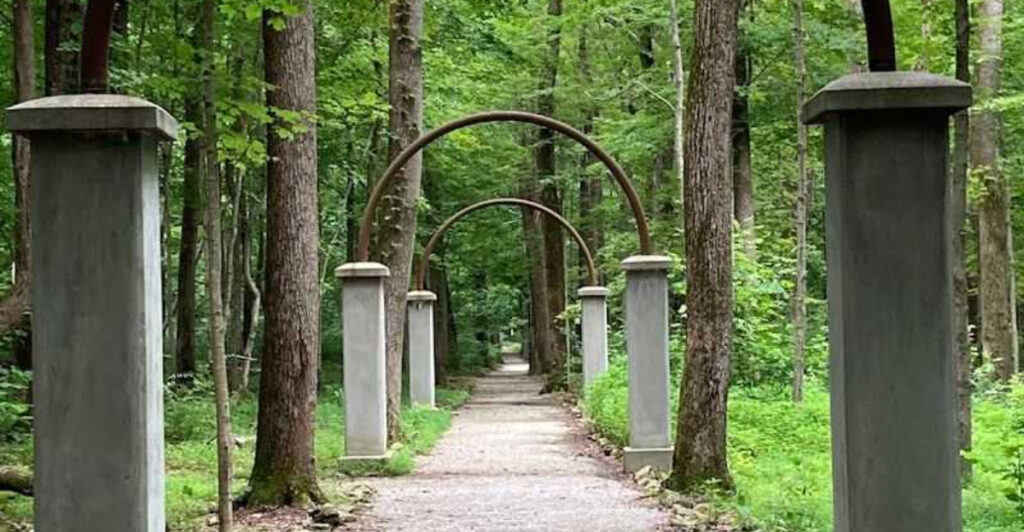
The visit starts with a change in pace. At Rose Island Resort, the route drops downhill through the woods, and that simple walk helps separate the site from busy daily life above.
By the time the trees open and the land levels out, the place already feels quieter, older, and more tucked away than most park stops.
That downhill approach matters because it shapes the whole experience. You are not driving from one attraction to the next or rolling into a packed lot beside the main sights.
Instead, you earn the first view on foot, with birds, leaves, and the occasional rustle from the forest taking over where engines would normally be.
Once below, the setting becomes easier to read. The Ohio River sits nearby, the woods wrap around the old resort grounds, and small historic features appear in a way that invites slow looking rather than fast scanning.
It is not flashy, and that is exactly why the area works so well. The landscape gives the ruins room to breathe. Families, history fans, and casual hikers can all enjoy that first stretch, but the return uphill deserves respect.
The main paved path is steep enough to make people stop for water and catch their breath, especially on warm days. Good walking shoes, a full bottle, and a plan to move at an easy pace can make the outing much more enjoyable.
Seen all together, the arrival is part of the attraction. Rose Island does not reveal itself in one dramatic sweep. It unfolds piece by piece, with a shaded descent, a broadening river landscape, and the feeling that the modern world has been left a little farther behind with every step.
Where Indiana History Still Shows Through the Trees
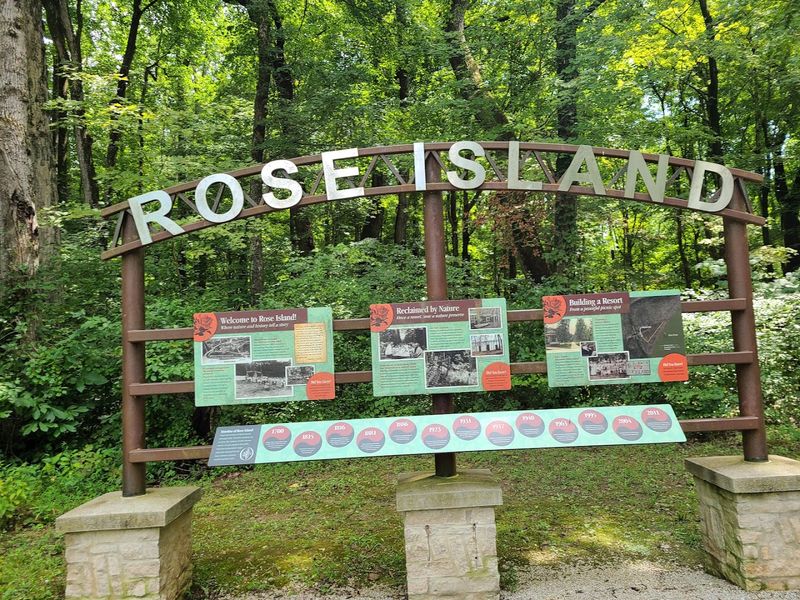
Long before it became a quiet hiking destination, Rose Island was a lively resort and amusement area along the river. Today, the noise is gone, but the story still shows through in foundations, scattered structures, and signs that explain what once stood here.
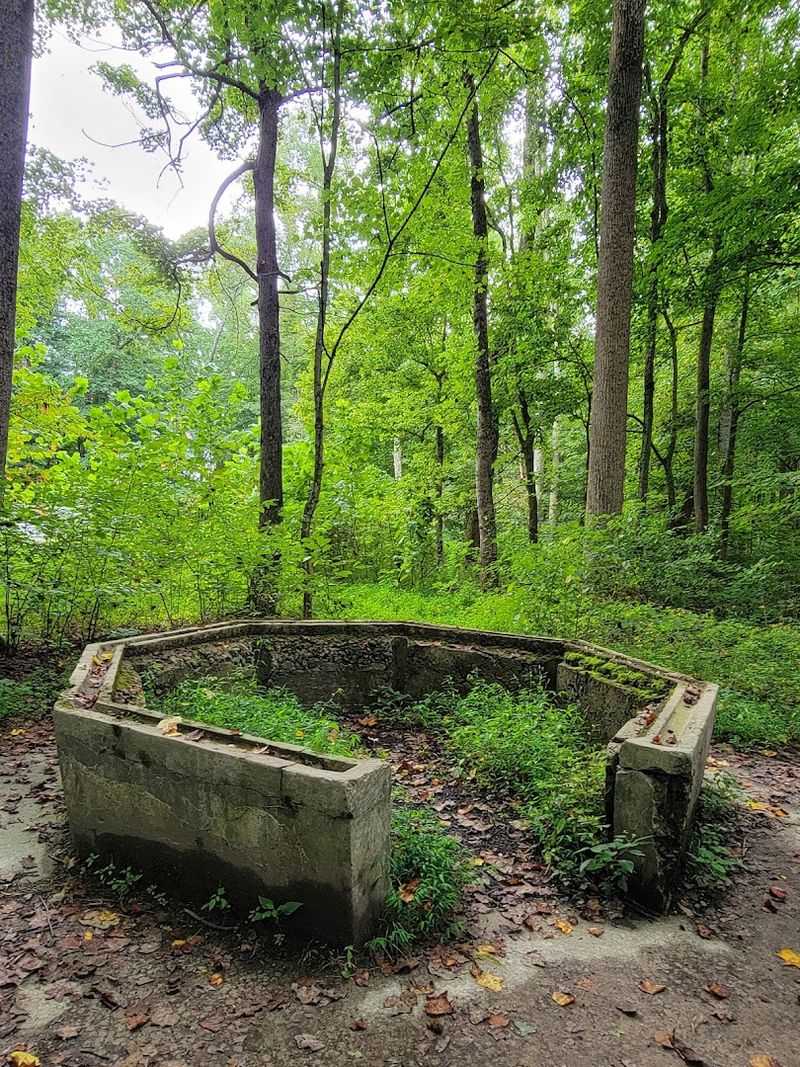
That contrast between then and now gives the site its strongest pull. Instead of giant ruins or preserved rides, visitors find fragments. Some remains are easy to spot, while others take a little imagination.
A picnic table, concrete pieces, flood markers, bridge features, and posted information help connect the modern trail to the lost resort that used to welcome crowds.
The history becomes even more interesting because the site was heavily damaged by the great 1937 flood. That event changed communities across the Ohio River Valley, and Rose Island never returned to its earlier resort life in the same way.
Knowing that background adds weight to every sign and every surviving piece of the landscape. There is a useful lesson here for first-time visitors. Go in expecting a historic ground to explore, not a giant abandoned amusement park frozen in place.
The experience is better when the goal is to read the land, study the markers, and notice how nature has folded itself around the old layout.
That makes Rose Island a strong stop for older kids, local history lovers, and adults who enjoy places with layers. It is not about big spectacle.
It is about piecing together a vanished resort from clues still standing in the open air, with forest shade above and river history running all through the scene.
No Cars, No Street Grid, Just River and Woods
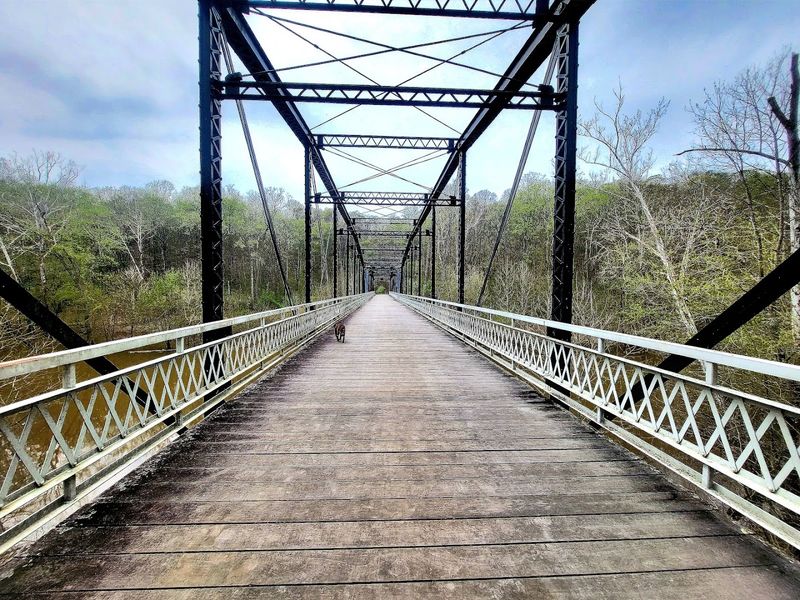
One of the most unusual things about Rose Island is what is missing. There are no streets carrying traffic through the old resort grounds, no rows of parked cars, and no paved road network connecting one attraction to the next.
Once you leave the trailhead behind, the landscape belongs almost entirely to walkers, with footpaths replacing roadways and the surrounding forest setting the pace of the visit. That absence of vehicles makes the site feel much farther from everyday life than its location suggests.
Although Rose Island sits within Charlestown State Park, the former resort has a secluded quality shaped by wooded hillsides, the nearby Ohio River, and open spaces where nature has gradually reclaimed what people once built. A footbridge, scattered ruins, and natural clearings now guide visitors through the property instead of intersections, parking lots, or traffic signs.
Nature has also become one of the site’s defining features. Trees, vines, and native plants surround the remaining foundations, softening the edges of concrete and blending the historic remnants into the landscape.
Seasonal changes constantly reshape the view. Summer foliage hides portions of the old resort beneath a dense green canopy, while winter’s bare branches reveal more of the original layout and make it easier to trace where buildings once stood.
For photographers, that balance between history and nature creates endless small moments worth noticing. A weathered foundation, sunlight filtering through the trees, or the quiet lines of the footbridge can become just as compelling as a wide river view.
Rose Island does not rely on one dramatic landmark. Its appeal comes from wandering slowly through a landscape where history and wilderness have gradually become part of the same story.
The Bridge, the Flood Markers, and the Best Small Details
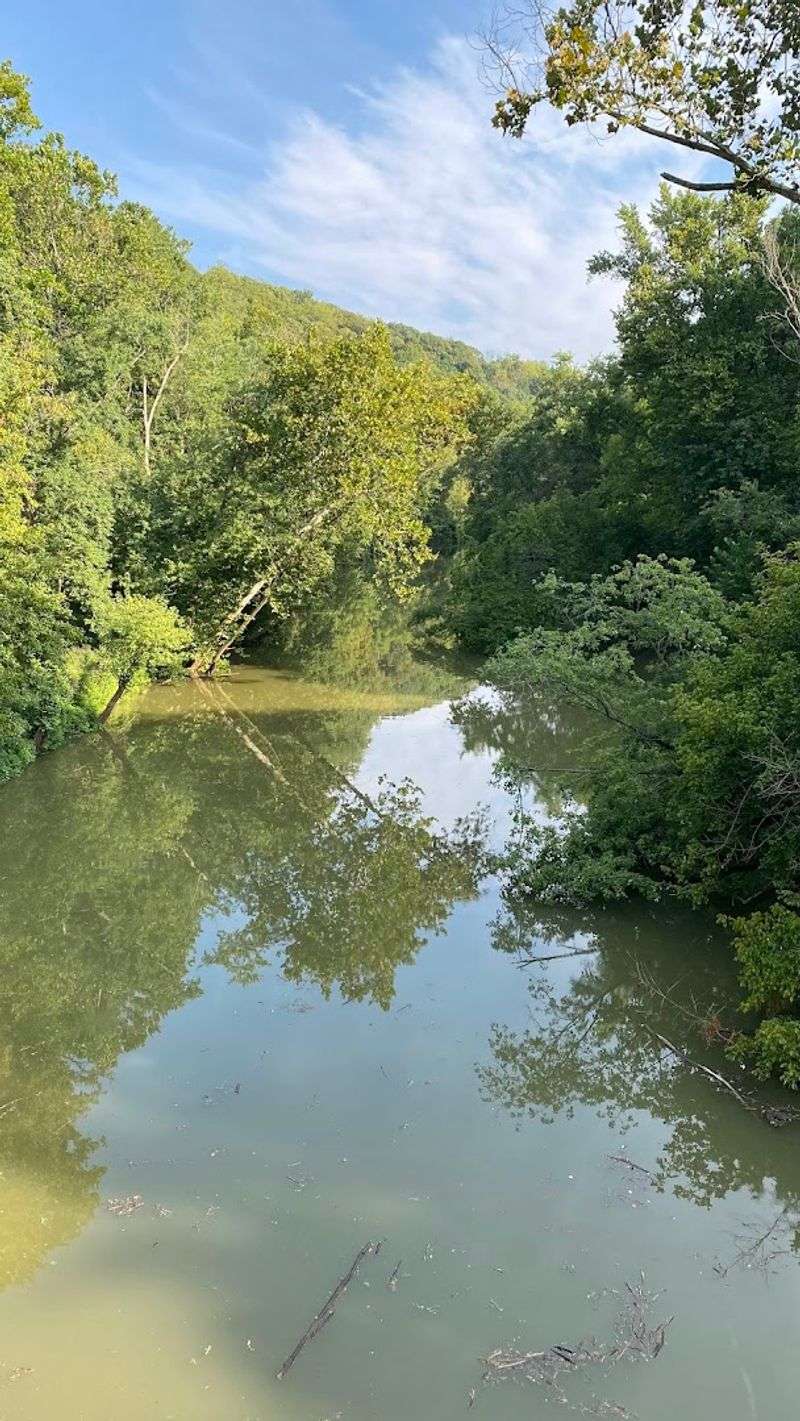
Some places win attention with one giant centerpiece. Rose Island takes a different route. Its most memorable features are often the smaller details that sharpen the story, especially the bridge crossing, the flood markers, and the scattered traces that explain how people once used the land.
The bridge is more than a handy way across. It acts like a threshold between ordinary hiking and a more layered historic landscape.
Stepping over it helps visitors notice changes in ground level, vegetation, and layout, and it quietly sets up the feeling that the site should be explored rather than rushed.
Flood markers add another strong dimension. They show just how powerful the river has been and give the old resort a real-world context beyond nostalgia.
Instead of treating the past like a postcard, the markers remind visitors that Rose Island was shaped by forces much larger than recreation, crowds, or summer fun.
Interpretive signs do important work too. Since many of the original features are gone or heavily altered, those signs help fill in gaps and keep the landscape from becoming just an empty clearing with a backstory.
Reading them while standing in place can make the missing structures easier to picture. That is why a slower visit usually pays off more than a quick lap. Stop at the markers, look twice at the foundations, and pay attention to how the trail lines up with open ground and tree cover.
Rose Island is full of modest visual clues, and together they create a more complete picture than any single structure could offer on its own.
Plan for the Climb Back Out
A lot of beautiful places ask for some effort, and Rose Island makes that deal very clear on the way back out. The walk down is easy on the legs, but the return climb is the part that catches unprepared visitors off guard.
Even strong walkers can end up slowing down, stopping at benches, and taking long drinks of water. The smartest move is simple. Treat the outing like a real hike, not a short stroll to a historic marker.
Wear sturdy shoes with grip, especially if the weather has been wet, and bring more water than seems necessary on mild days. Heat, humidity, and the steady grade can turn the climb into the hardest part of the visit.
There is another practical tip that matters. The main paved route may look intimidating, yet it is often the safer choice for many people because the surface is wider and more predictable.
Some alternate paths can be rougher, with mud, exposed roots, uneven rocks, and steeper natural footing after rain.
Timing helps too. Earlier hours are usually better in warm months because the air is cooler and the return uphill feels less draining.
A slower pace on the way down also saves energy later, especially for families with children, dog walkers, or anyone planning to stop often for photos and signs.
None of this means Rose Island is only for hard-core hikers. It simply rewards honest planning. Rest when needed, use the benches, and expect the climb to be part of the attraction rather than an afterthought.
Once that is built into the day, the site becomes much more enjoyable and far less likely to surprise anyone in the wrong way.
Best for Curious Walkers, Not Thrill Seekers
Expectations shape everything at Rose Island. Anyone arriving in search of a dramatic abandoned theme park with large surviving structures may leave puzzled.
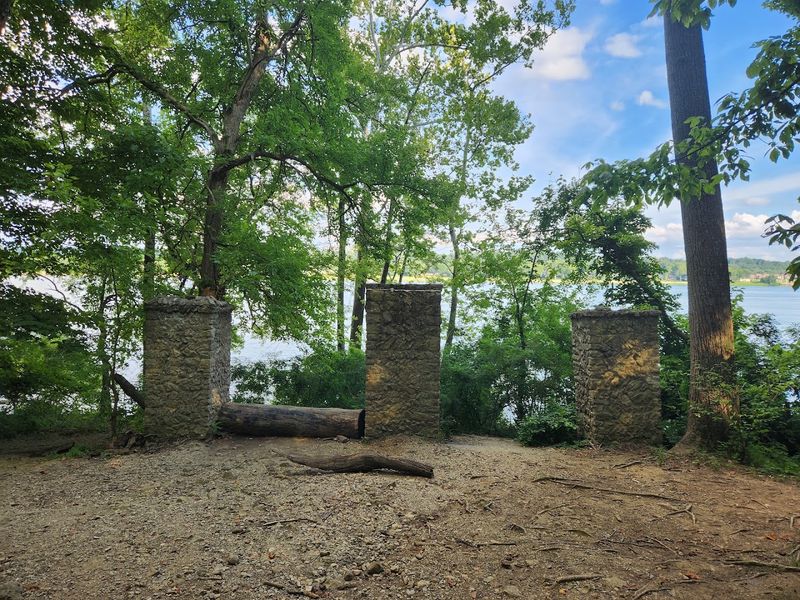
The site is much better suited to curious walkers who enjoy reading landscapes, connecting bits of history, and noticing how a former resort can fade into forest without fully disappearing.
That difference matters because Rose Island is subtle. Its appeal comes from context, not spectacle. A sign here, a foundation there, an old alignment in the open ground, and a river setting that explains why the resort once drew people in the first place all work together.
For school-age kids, the outing can be a good match if adults frame it the right way. It helps to present the area as a real-life puzzle about recreation, weather, floods, and changing land use.
Turning the walk into a search for clues makes the quieter remains more interesting than simply asking children to admire old concrete.
Adults who like local history usually get even more from the site when they allow enough time. Reading the posted material, comparing what remains to what once stood, and imagining the older layout can turn an ordinary walk into something more thoughtful.
The reward is not shock or drama. It is the slow satisfaction of understanding a place more clearly. That is why Rose Island stands apart from many travel stops. It does not try to entertain in obvious ways.
Instead, it invites observation, patience, and a little imagination. Visitors who meet it on those terms usually find a richer experience than the ground first suggests, especially with the woods closing in around a story that never completely vanished.
Why Rose Island Still Earns the Trip
Plenty of parks offer nice trails. Plenty of historic sites offer signs and stories. Rose Island stands out because it combines both in a setting that remains a little unusual for Indiana.
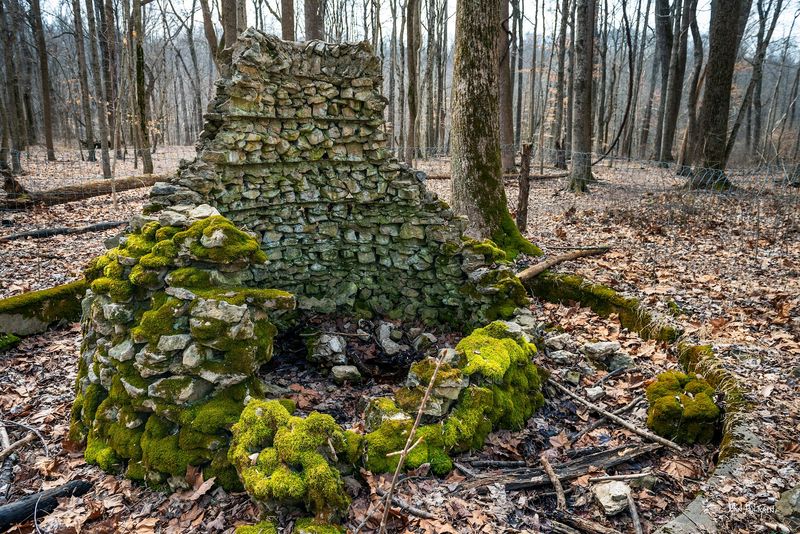
The old resort grounds, river backdrop, and car-free exploration create a trip that is active, educational, and visually distinct without needing big crowds or polished attractions. The place also captures a rare kind of tension. It is peaceful, but not empty of meaning.
It is beautiful, yet the beauty sits beside reminders of flood damage, lost structures, and changing human use. That mix gives the site more depth than a simple scenic overlook or a standard woodland loop.
Another reason it remains compelling is the way it rewards repeat visits. Seasonal shifts change the look of the trail and the amount of cover around the old remains.
Spring and summer bring fuller greenery, while colder months can reveal more structure in the ground and easier sightlines across the site.
For a half-day outing, the formula is strong. Arrive ready to walk, take the time to read the signs, pause at the bridge and flood markers, and save energy for the climb back.
Pairing the visit with the rest of Charlestown State Park can also round out the day for anyone wanting more miles on foot.
Rose Island is not trying to be louder or bigger than it is. Its strength comes from a quieter package: a former resort reached by descent, a riverside landscape shaped by history, and a route best explored step by step.
That combination gives southern Indiana one of its more unusual outdoor stories, hidden in plain sight below the hill.
Share this story