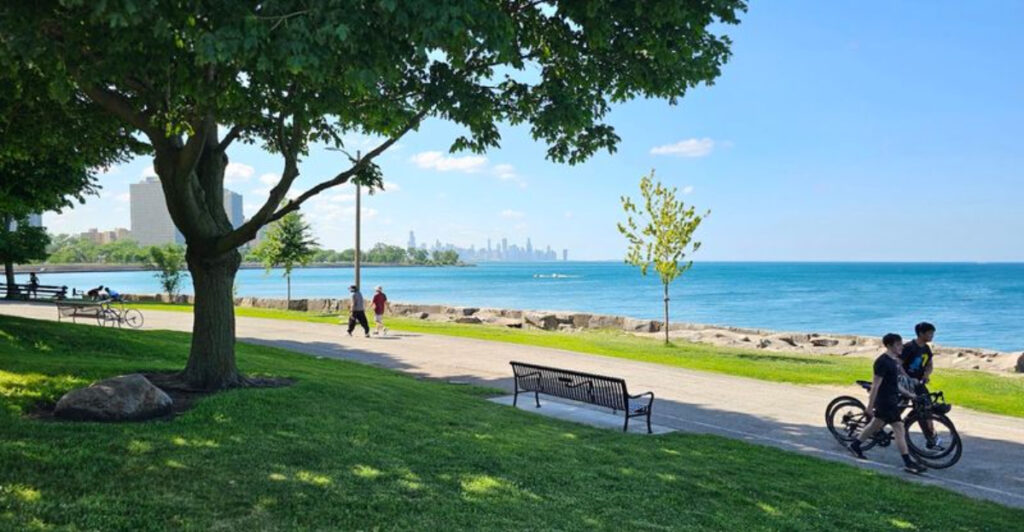
Chicago’s lakefront offers countless places to admire Lake Michigan, but few feel as peaceful as Promontory Point. Extending into the water from Hyde Park, this scenic peninsula pairs sweeping skyline views with historic limestone steps, open lawns, and a relaxed atmosphere that feels worlds away from the city’s busiest beaches.
It’s an ideal place for a picnic, a quiet walk, or simply watching sailboats drift across the lake while the skyline rises in the distance. Whether you’re visiting at sunrise, sunset, or on a warm summer afternoon, Promontory Point delivers one of Illinois’ most beautiful waterfront experiences.
Where the Skyline Finally Gets Some Space

Promontory Point makes its case fast. The peninsula pushes into Lake Michigan just far enough to give the skyline a cleaner stage, so downtown rises in the distance instead of crowding the frame.
That separation changes the entire experience, because the city stays present as a backdrop while the foreground belongs to grass, stone, trees, and open water.
The approach helps build that reveal. Paths wind through Burnham Park, then the land broadens and the horizon opens, with the city stretching north across the lake in one long sweep.
It is a view built on contrast: hard geometry far away, choppier waves up close, and broad lawns in between where people can spread out without compressing into a beach scene.
Even on busier days, the layout avoids that boxed-in feeling common at more central lakefront stops. There is room for picnics under shade, room for walkers drifting along the edges, and room for cyclists to pause before heading back onto the trail.
You are near enough to Chicago’s core to admire every recognizable tower, yet far enough south that the place breathes differently.
That distance is the whole trick. Promontory Point does not try to compete with the lakefront’s busiest social zones, and it does not need to.
It offers a calmer composition instead: skyline across the water, waves meeting stone below, and enough physical space that the scenery can actually register before the next crowd, vendor, or volleyball game demands attention.
Limestone Steps, Sharp Edges, and a Better Shoreline Seat
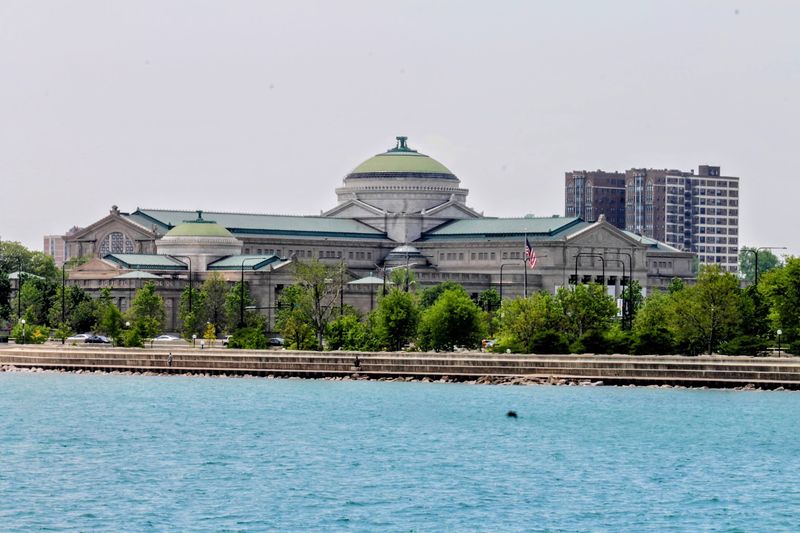
The most distinctive feature here is not a beach at all. Promontory Point is shaped by its limestone revetment, a stepped edge of stone that gives the shoreline texture, structure, and dozens of informal places to sit.
Instead of trudging across hot sand with a towel and cooler, you get a sturdier, more architectural relationship with the lake.
Those steps create different ways to use the water’s edge. Some people settle high up for the breeze and the broad view, while others move lower toward the rocks where the waves sound louder and the city looks slightly more cinematic across the surface.
The stone also changes how the place photographs, because every angle picks up layers: grass above, pale blocks below, then blue water and skyline beyond.
That arrangement gives Promontory Point a quieter rhythm than a typical swimming beach. There is still motion everywhere, with runners on the nearby path, dogs out for a walk, and small groups talking near the edge, but the design naturally encourages pauses instead of constant activity.
You look outward more often here, and the shoreline invites lingering rather than organized play. There is also a practical side to the stone.
It provides elevated perches, easy access to picnic areas, and a visual identity that separates the point from flatter, more interchangeable stretches of lakefront parkland.
The only caution is obvious once colder weather or wet conditions arrive: rock and spray can make footing slippery. On a clear, mild day, though, these limestone steps are the reason the whole place reads less like a beach and more like a lakeside lookout.
The Hyde Park Pace Changes Everything
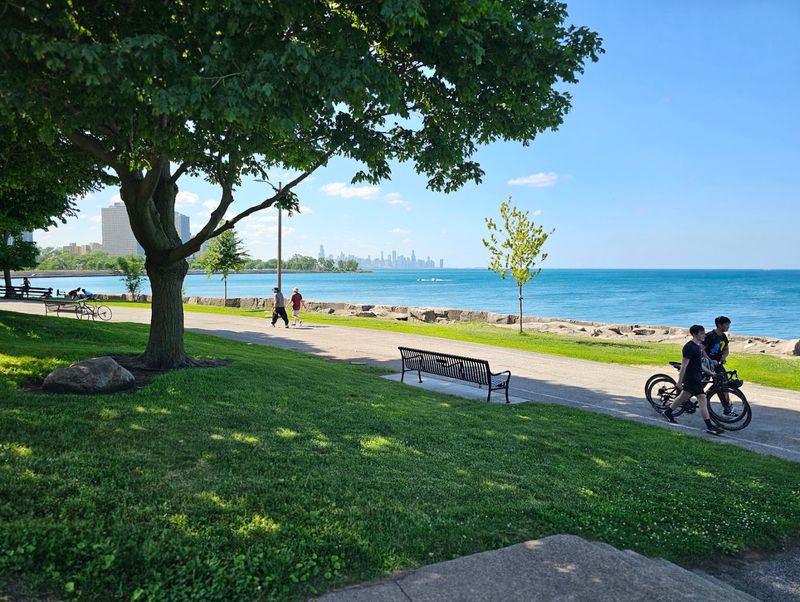
Location matters as much as scenery here. Promontory Point sits in Hyde Park, and that neighborhood context gives the park a different tempo from the city’s more tourist-heavy lakefront destinations.
You still get dramatic water and a marquee skyline, but the social energy is more local, more spread out, and less performative.
That shift shows up in small ways all over the grounds. The trail traffic keeps moving, dog walkers drift through at an unhurried pace, and groups claim patches of lawn without turning the entire shoreline into a single loud scene.
Instead of rows of umbrellas and a crowded swim setup, you find broad green space under mature trees and enough separation that conversations do not all blend into one constant roar.
Promontory Point also works well as a crossover spot rather than a one-note destination. It can be a picnic stop, a walking break, a biking pause, a sunset lookout, or a place to sit with coffee and watch the lake change color.
Because the space is flexible, people use it in ways that fit the day instead of submitting to the demands of a typical beach schedule.
That Hyde Park pace is a major part of the appeal. You are not isolated from the city at all, yet the point avoids the packed, all-day spectacle associated with more famous stretches to the north.
The skyline remains visible, the water remains close, and the park still feels like somewhere you can occupy casually. For anyone who wants lakefront scenery without beach-crowd choreography, this setting gets the balance right.
An Illinois Sunset That Plays to the Whole Horizon
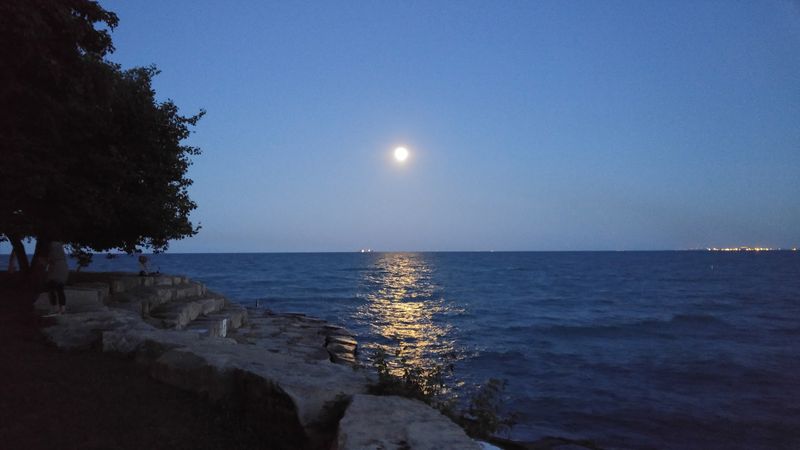
Promontory Point earns special attention late in the day. As the sun drops, the peninsula’s outward position gives you a broad western and northern sweep, so sky color, water reflection, and skyline silhouette all enter the scene together.
It is one of those Chicago spots where the evening unfolds across the entire horizon rather than concentrating in one narrow frame.
The view changes by the minute. Gold light hits the grass and tree trunks first, then the limestone edges soften, then downtown starts reading as a darker cutout beyond the water.
On clearer nights the buildings remain sharply legible for a long stretch, while haze can flatten them into a distant graphic band that makes the lake look even bigger.
This is also when the point’s social rhythm becomes especially noticeable. Small groups settle in with blankets or snacks, cyclists stop for a breather, and walkers slow their pace near the edge instead of rushing through.
Because the place is not built around a dense beach setup, the sunset experience feels distributed rather than stacked, with plenty of sightlines remaining open.
There is a practical reason to time your visit thoughtfully. Parking can tighten on especially nice evenings, and darker paths may feel less bright than some people prefer later at night.
Arriving before sunset solves both issues while giving you the full progression from daylight to color to city lights. In Illinois lakefront terms, that sequence is hard to top: breeze off the water, skyline across the distance, and a shore that never needs sand to deliver drama.
More Than a View: Picnics, Fire Pits, and Everyday Use
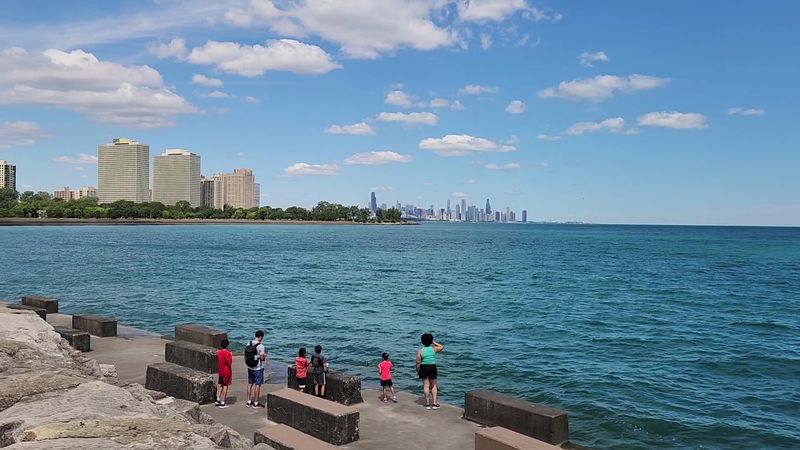
Promontory Point succeeds because it is usable, not just photogenic. The lawns give groups room to picnic without fighting for inches, trees add real shade on hot days, and the peninsula shape means the water never feels far away even when you choose a spot well back from the edge.
That practical comfort keeps the place active across more than one type of visit. It is easy to understand why the point works for celebrations and ordinary afternoons alike.
A small wedding can frame the skyline without battling downtown foot traffic, friends can gather around fire pits on cooler evenings, and families can spread out with food while still keeping the lake as part of the experience.
Nothing here relies on programmed entertainment, which makes the setting more adaptable. The park also benefits from nearby connections. It sits along the lakefront trail, so a visit can happen as part of a longer walk or bike ride instead of requiring a single-purpose outing.
57th Street Beach is close enough for anyone wanting a more traditional shoreline stop afterward, yet Promontory Point itself remains distinct because the landform, stone edges, and open lawn create a different mood entirely.
That versatility gives the point staying power through the seasons. Summer brings picnics and lingering at the water, colder months sharpen the wind and dramatize the shore, and even quick stops can feel rewarding because the site reveals itself fast.
The place is not overloaded with features, but it does not need to be. A strong peninsula, generous lawns, and lakefront infrastructure used well are enough to make it function beautifully.
How to Time It Right at Burnham Park Promontory Point
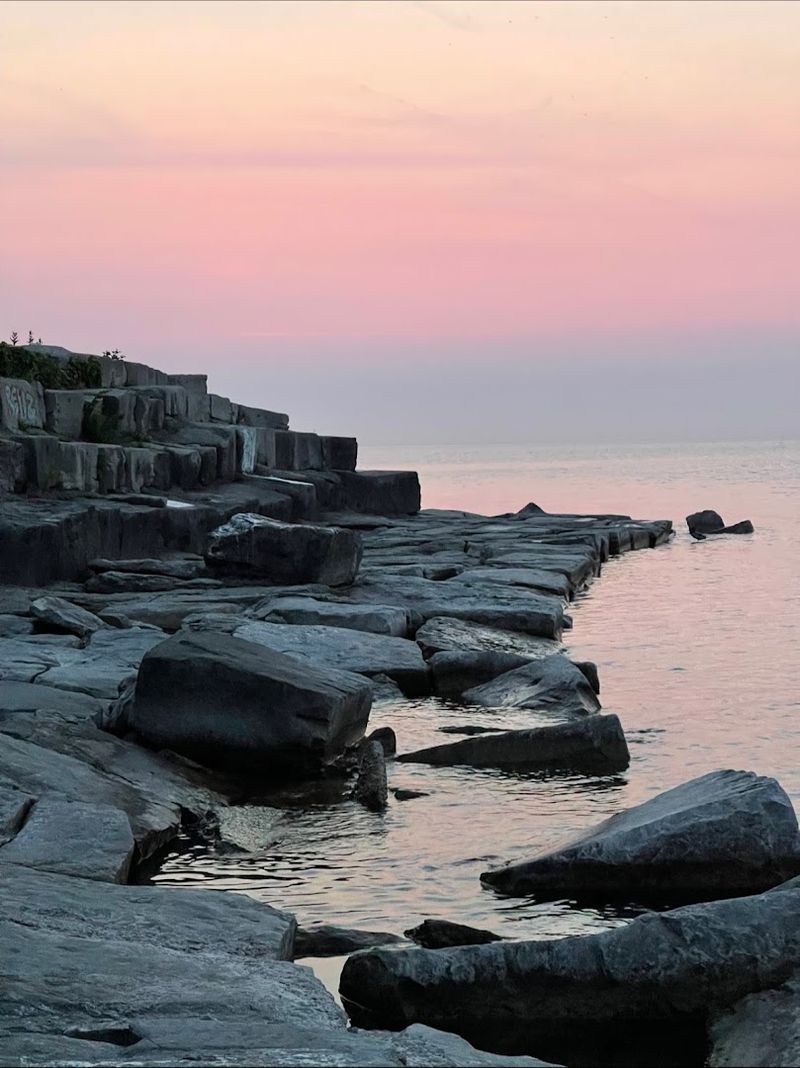
To get the best version of Promontory Point, timing matters more than gear. The park opens at 6 AM and stays accessible until late evening, which gives you several distinct ways to experience the peninsula depending on what you want from it.
Early hours lean quiet and spacious, while peak weekend afternoons can bring a fuller social scene and tighter parking.
Morning is ideal if your priority is clean sightlines and a calmer shoreline. The trail is active but not overloaded, the lawns still look fresh, and the skyline often reads crisply across the water before the day’s haze builds.
It is also the easiest time to notice how carefully the point is laid out, with broad grass, mature trees, stone edges, and paths all fitting together without visual clutter.
Late afternoon into sunset is the move if you want atmosphere without a beach-party script. You get changing light, a steady breeze, and enough people around to make the place feel lively, yet the park usually keeps its breathing room because activity spreads across the peninsula.
Weekdays tend to be easier for parking and for claiming a shaded picnic patch without negotiation. A few practical notes sharpen the visit.
Rocks can be slick in colder weather or after spray, evening lighting may feel dimmer along certain paths than some walkers prefer, and weekend nights can turn louder than a tranquil afternoon.
Still, the core strategy is simple: arrive a little earlier than instinct suggests, walk all the way out, and let the peninsula do the work. Burnham Park Promontory Point rewards unhurried timing better than packed itineraries ever could.
Share this story