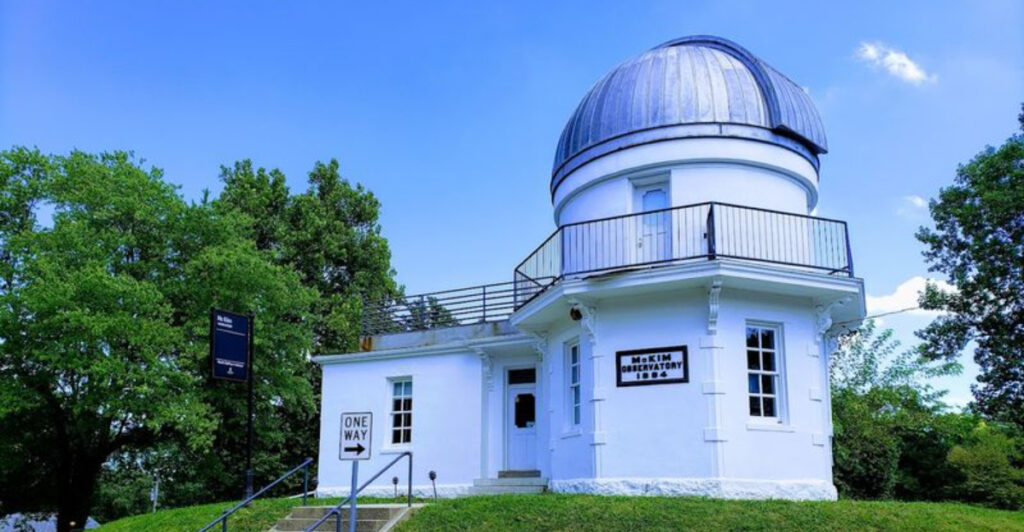
Few places in Indiana let you experience astronomy the way McKim Observatory does. Located on the campus of DePauw University in Greencastle, this historic observatory is home to a beautifully preserved 140-year-old telescope that still gives visitors remarkable views of the Moon, planets, star clusters, and other celestial objects during public observing events.
Rather than relying on digital displays, the experience connects you directly with the night sky through one of the state’s oldest working astronomical instruments. If you’re searching for a unique Indiana attraction that blends science, history, and unforgettable stargazing, McKim Observatory belongs on your travel list.
A Dome Rising Quietly Above the Neighborhood
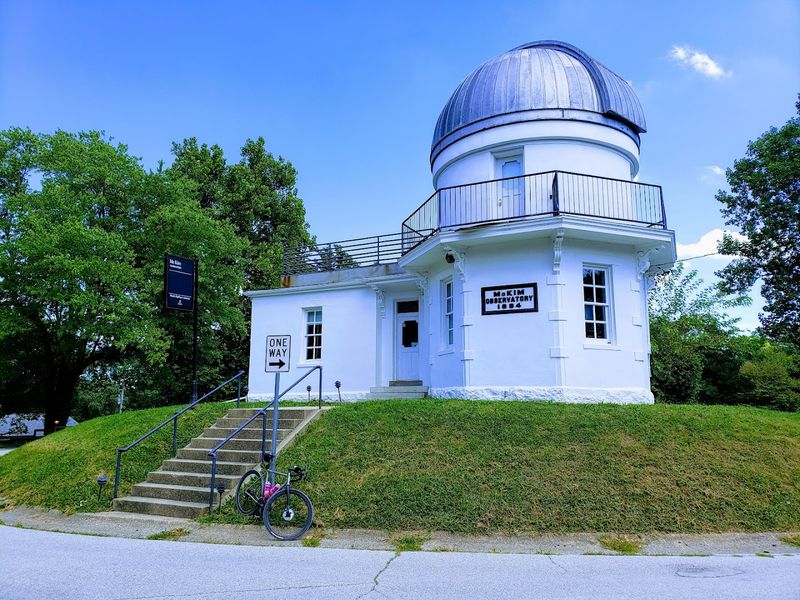
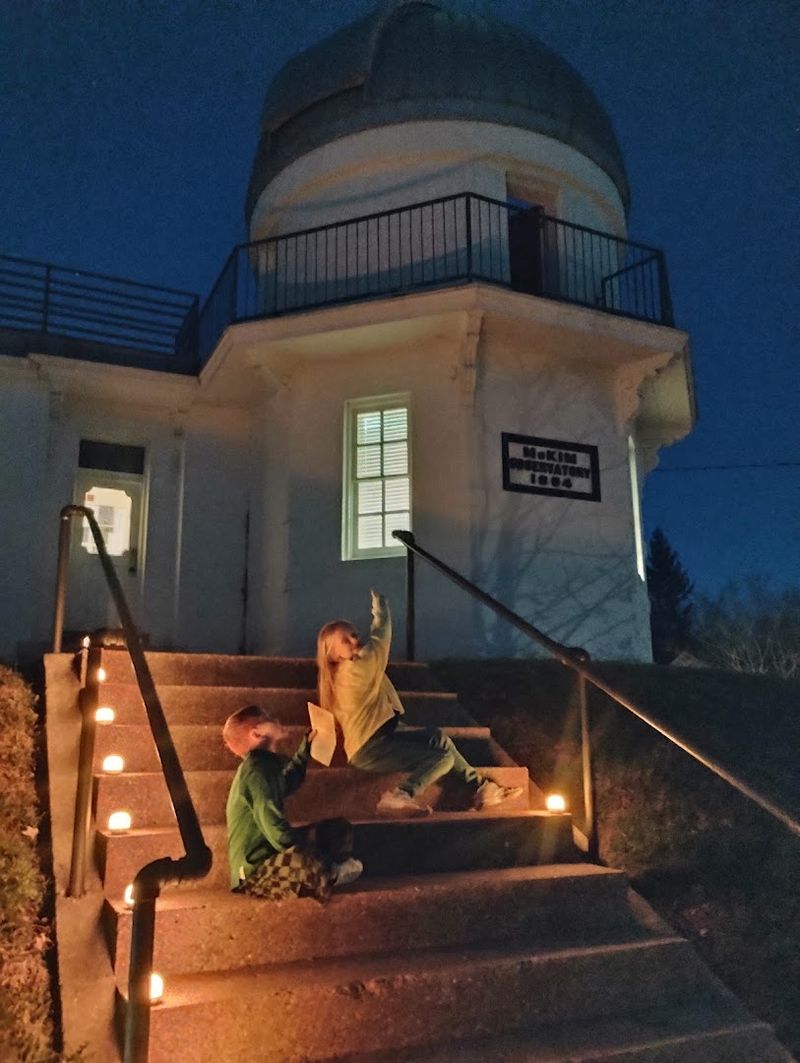
Set along Highridge Avenue in Greencastle, McKim Observatory makes an unusual first impression because it does not announce itself with oversized signs or a sprawling complex.
Instead, the building rises from an ordinary neighborhood with the compact confidence of a place that knows exactly what it is. The white dome immediately changes the scene, turning a residential block into a pocket of scientific history.
That contrast is part of the appeal. One moment you are passing homes and trees, and the next you are looking at an observatory that seems lifted from another era of astronomy, when public stargazing relied on mechanical craft, patient observation, and dark skies.
The building’s proportions feel intimate rather than monumental, which makes the encounter sharper, not smaller, because the dome becomes more surprising at close range.
McKim Observatory benefits from that sense of discovery. It stands as a local landmark without needing grand theatrics, and its scale hints at the kind of experience waiting inside: personal, tactile, and rooted in the old architecture of learning.
This is not a place built around spectacle in the modern museum sense, but around access to a real instrument, a real room under a real dome, and a direct view upward.
Even before the telescope enters the story, the setting does important work. It frames astronomy as part of community life rather than something remote and institutional.
In a town environment, with street parking nearby and the dome visible above the roofline, McKim feels both improbable and perfectly placed, a reminder that cosmic curiosity can live on a quiet Indiana street.
The 140-Year-Old Telescope Is the Real Headliner
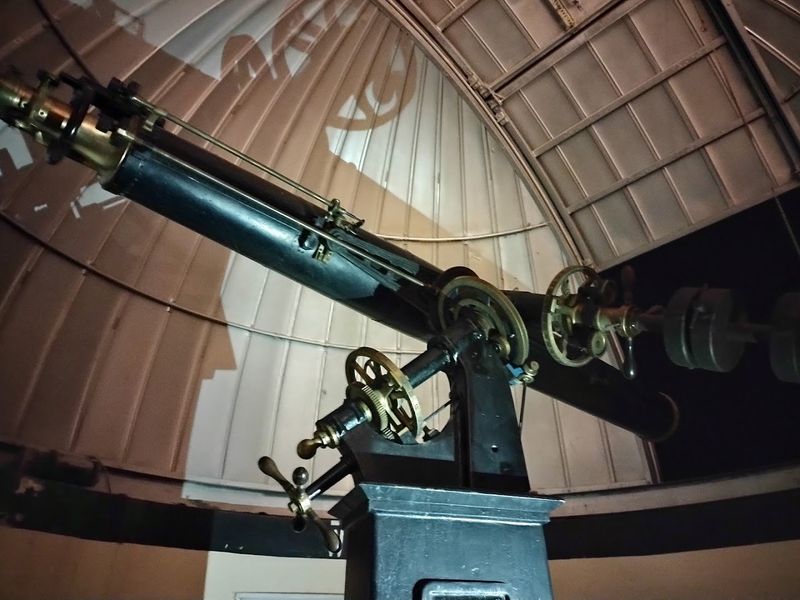
The signature experience at McKim Observatory is wonderfully direct: you come here to look through a historic telescope that still delivers the kind of skyward drama no screen can replace.
The instrument’s age matters because it changes the mood of the whole visit. This is astronomy through craftsmanship, not through simulation, and the hardware itself becomes part of the event.
Instead of standing back behind glass, you are close to the mechanics of observation. A narrow ladder leads to the eyepiece, and the process of getting into position adds a sense of ceremony that modern observatories often smooth away.
There is a physicality to the moment, from climbing carefully to settling near the top, that makes the view feel earned in the best possible way.
When conditions cooperate, sights like the Moon, Jupiter, or Saturn become the payoff. Lunar surface detail can appear crisp and textured, while bright planets stop being abstract points and become actual worlds with form, color, and presence.
That transition from knowing to seeing is where McKim scores hardest, because the telescope compresses distance in a way that never gets old.
The age of the instrument deepens that effect instead of limiting it. Looking through a telescope with more than a century behind it creates a rare continuity between past and present, as if generations of observers are linked by the same upward angle.
Plenty of attractions teach astronomy through panels and projections, but McKim’s central thrill is simpler and stronger: a historic lens, a dark sky, and your own eye at the center of it.
Inside the Dome, Old-School Astronomy Still Has Texture
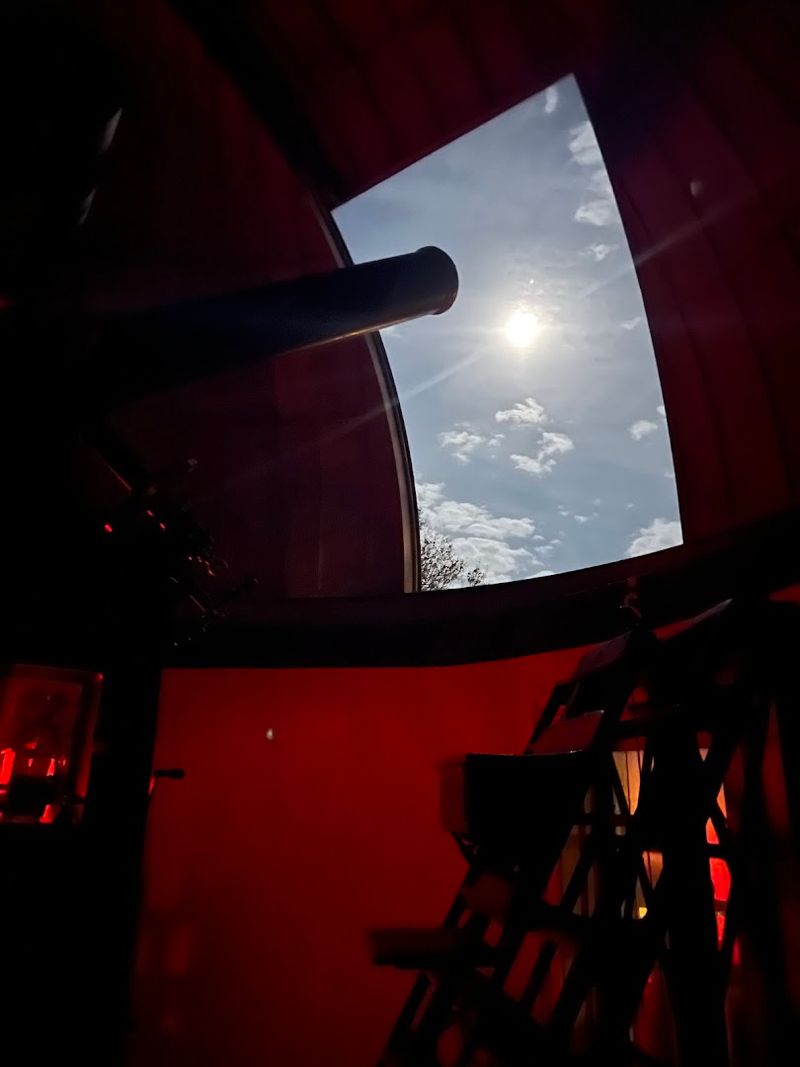
McKim Observatory works especially well because the experience is not limited to a single glance through the eyepiece. The interior carries the texture of older astronomy, where instruments, educational tools, and architectural details all help tell the story.
Rather than feeling stripped down, the small space feels concentrated, with each feature pulling extra weight. One of the more intriguing details tied to the observatory is an antique Bailey’s Astral Lantern used to help explain constellations. That kind of object does more than decorate a room.
It shows how sky education once blended precision and performance, using mechanical ingenuity to translate the night above into something learners could grasp before digital apps put star maps in every pocket.
The building itself adds to that hands-on character. A spiral staircase, compact rooms, and close quarters create a sense of participation that suits a historical observatory far better than a polished, overdesigned visitor center would.
You notice scale differently here, both the smallness of the structure and the largeness of what it is built to interpret.
That tension gives the visit depth. The dome overhead, the antique equipment, and the functional layout all remind you that astronomy is not only about distant objects but also about the tools humans invent to meet them.
McKim does not bury that relationship under flashy presentation. It keeps it visible in metal, wood, stair treads, and teaching devices, which turns a brief stop into a compact lesson in how stargazing used to be practiced, shared, and understood.
Why Indiana Nights Hit Differently Here
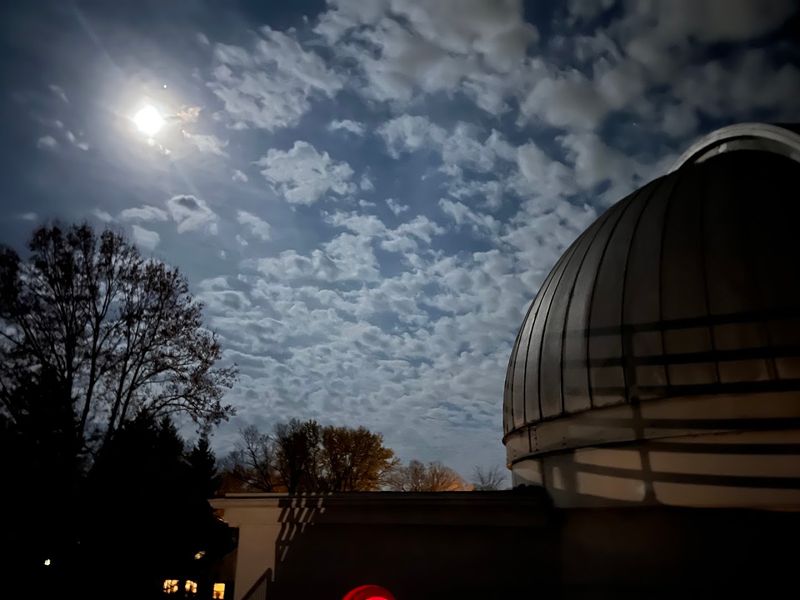
McKim Observatory is at its strongest after dark, when the building shifts from an interesting historic structure to an active portal for skywatching.
The timing matters because the experience depends on live conditions: cloud cover, brightness, seasonal targets, and the simple luck of a clear Indiana night. That unpredictability gives each visit its own rhythm.
On the right evening, the observatory can turn familiar celestial objects into headline material. The Moon is especially effective here because its surface details read immediately, with ridges, shadows, and crater edges that look dramatic even to first-time viewers.
Bright planets add a different kind of excitement, since Jupiter and Saturn offer the thrill of recognizing worlds usually encountered only in textbooks and images.
There is also a social energy unique to small observatories. You are not shuffling anonymously through a giant attraction with timed lighting effects and exit corridors.
The scale encourages slower conversation, shared anticipation, and the kind of focused attention that makes each turn at the telescope feel important rather than routine.
For families, this setup can be ideal because the wow factor arrives fast and clearly. For adults, the appeal lands in a slightly different way: the pleasure of encountering old astronomy equipment doing exactly what it was built to do, still capable of pulling people into the sky.
McKim does not need a massive production to create suspense. A dark dome, a waiting ladder, and the promise of a visible planet are more than enough in Greencastle, Indiana.
A Campus Landmark With Real Local Character
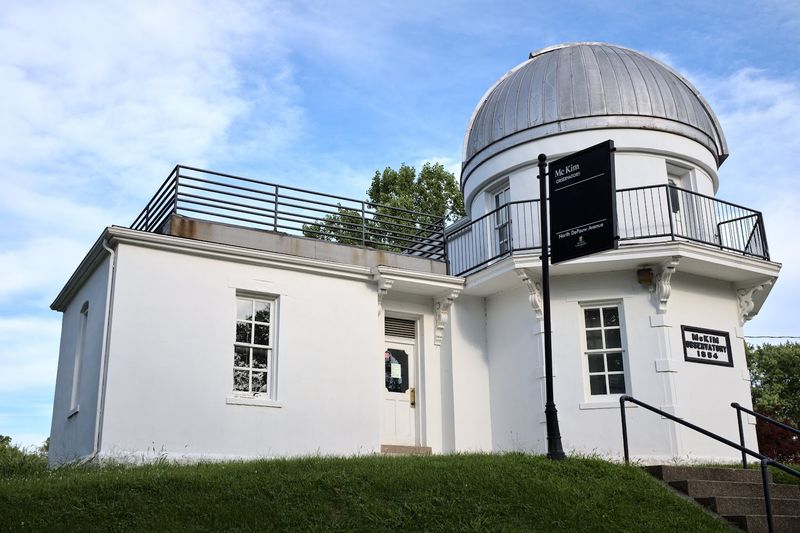
Part of McKim Observatory’s charm comes from how naturally it fits into Greencastle’s identity. This is not an isolated roadside attraction dropped into town without context.
It belongs to a college setting, a neighborhood setting, and a community tradition of sharing a scientific resource that could easily have become a locked historical artifact instead.
That local connection gives the observatory a different tone from larger science destinations. The building reads as a campus landmark, but not one sealed off from everyday life.
Its continued public appeal suggests something refreshing: serious educational history can remain approachable when a town treats it as a living place rather than a preserved backdrop.
McKim’s size actually strengthens that relationship. Because it is modest, every open event or viewing session feels personal and community-scaled rather than institutional.
The observatory becomes a point where academic heritage, neighborhood familiarity, and public curiosity overlap, which is much more interesting than the standard divide between campus and town.
There is also a broader Indiana angle here. In a state better known for racing, basketball, and covered bridges than astronomical landmarks, McKim offers a less expected kind of destination.
It adds texture to the region’s cultural map by showing that scientific history can be tucked into places that otherwise seem quiet and conventional.
That contrast makes the observatory memorable for travelers and meaningful for locals, because it proves a small building with a dome can carry far more civic character than its footprint first suggests.
Know Before You Go: Tight Spaces, Street Parking, Smart Timing
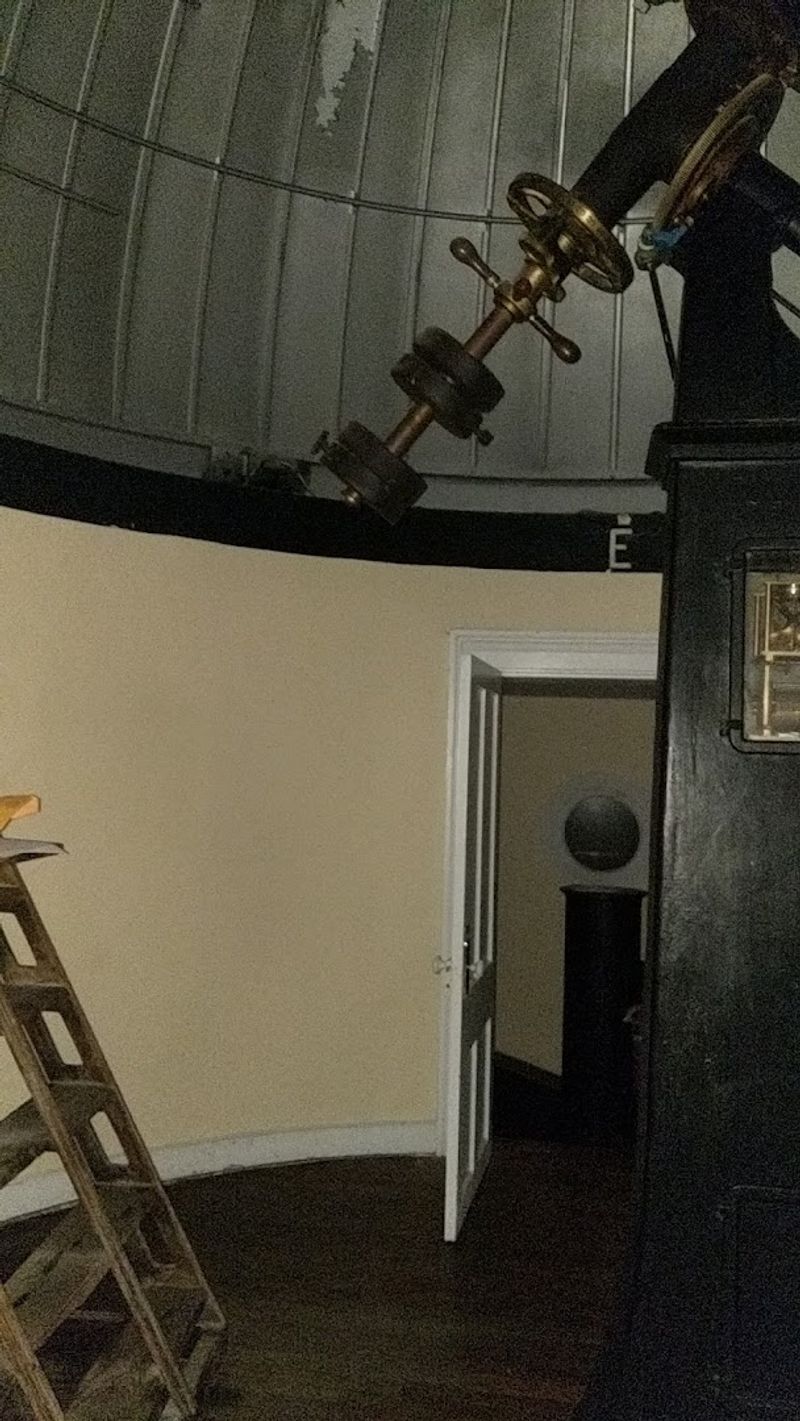
McKim Observatory rewards a little planning, and that preparation starts with understanding the building’s physical layout. This is a historic observatory, not a modern facility engineered around broad accessibility and visitor conveniences.
The compact design is part of the appeal, but it also means narrow stairs, a spiral staircase, and a ladder involved in reaching the telescope viewing position.
For some visitors, that will be an exciting piece of the experience. For others, it is an important consideration before making the trip, especially if mobility limitations are part of the equation.
The observatory’s small scale also means expectations should stay calibrated toward a focused, intimate visit rather than a lengthy, all-amenities attraction.
Practical details matter here. Street parking is the standard setup, and public restroom access may be limited, so it is smart to handle that before arriving.
Because sky viewing depends on conditions, flexibility helps too, especially if your main goal is to see specific objects like the Moon or bright planets during public observation opportunities.
The best approach is to treat McKim like a short, high-impact outing. Arrive with comfortable shoes, patience for stairs, and enough curiosity to appreciate both the telescope and the building around it.
If the sky is clear, the visit can deliver a surprisingly vivid payoff in a relatively small amount of time. If conditions are less cooperative, the historical setting still offers enough character to make the stop interesting.
Either way, this is a place where a little logistical awareness goes a long way toward making the experience smoother and more enjoyable.
The Last Look Up Is Why This Place Endures
McKim Observatory stands out because it offers a version of wonder that has not been polished into sameness. The building is small, the route to the telescope is hands-on, and the experience depends on the oldest formula in astronomy: clear skies and patient looking.
In an era dominated by frictionless digital images, that old method lands with surprising force. The observatory’s historic telescope is the centerpiece, but the deeper appeal comes from everything surrounding it.
The dome, the stairs, the antique teaching tools, and the neighborhood setting all shape the encounter into something more dimensional than a simple viewing stop.
You are not consuming a prepackaged presentation here. You are stepping into a working fragment of scientific heritage that still knows how to do its job.
That is why McKim has such strong identity. It does not chase novelty for its own sake, and it does not need to compete with giant institutions on scale.
Its strength is concentration: history, architecture, education, and celestial observation gathered into one compact observatory in Greencastle.
For travelers looking beyond predictable Indiana stops, this is an easy place to champion. It offers a clear, specific experience that very few destinations can match: climbing into position at a 140-year-old telescope and seeing the sky through a lens that has connected people to distant worlds for generations.
That combination of intimacy and cosmic reach gives McKim Observatory its edge. The address may be ordinary, tucked along Highridge Avenue, but the view it opens is anything but ordinary, and that contrast is exactly why the place continues to matter.
Share this story