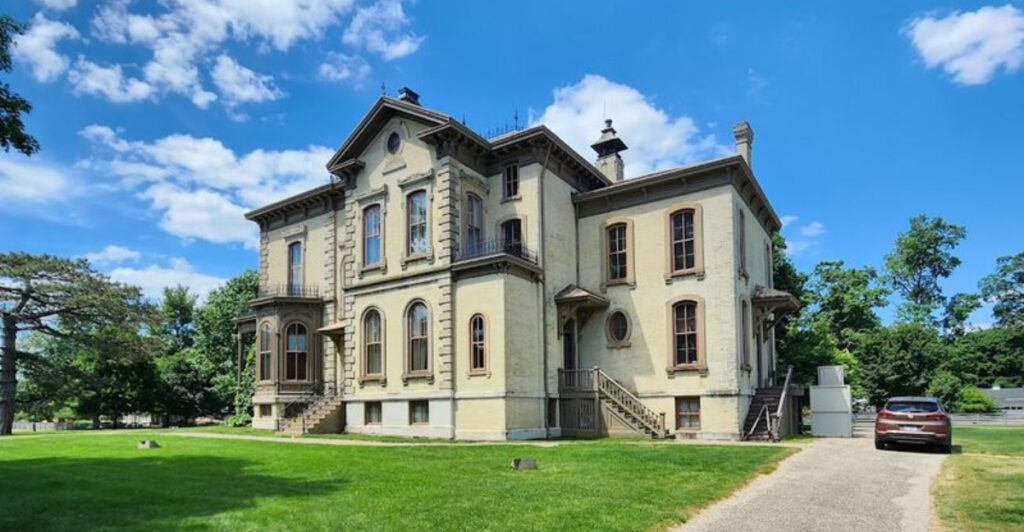
Elegant architecture has a way of stopping you in your tracks, and few Illinois landmarks make a stronger first impression than the David Davis Mansion in Bloomington. This beautifully preserved Victorian estate showcases soaring towers, intricate woodwork, colorful stained glass, and richly furnished rooms that capture the grandeur of the late 19th century.
Once home to Supreme Court Justice David Davis, the mansion offers guided tours that reveal both remarkable craftsmanship and the fascinating history of one of Illinois’ most influential families. Whether you’re passionate about architecture, history, or simply love discovering extraordinary places, this storybook-like mansion is an unforgettable destination.
A Roofline That Stops You Cold
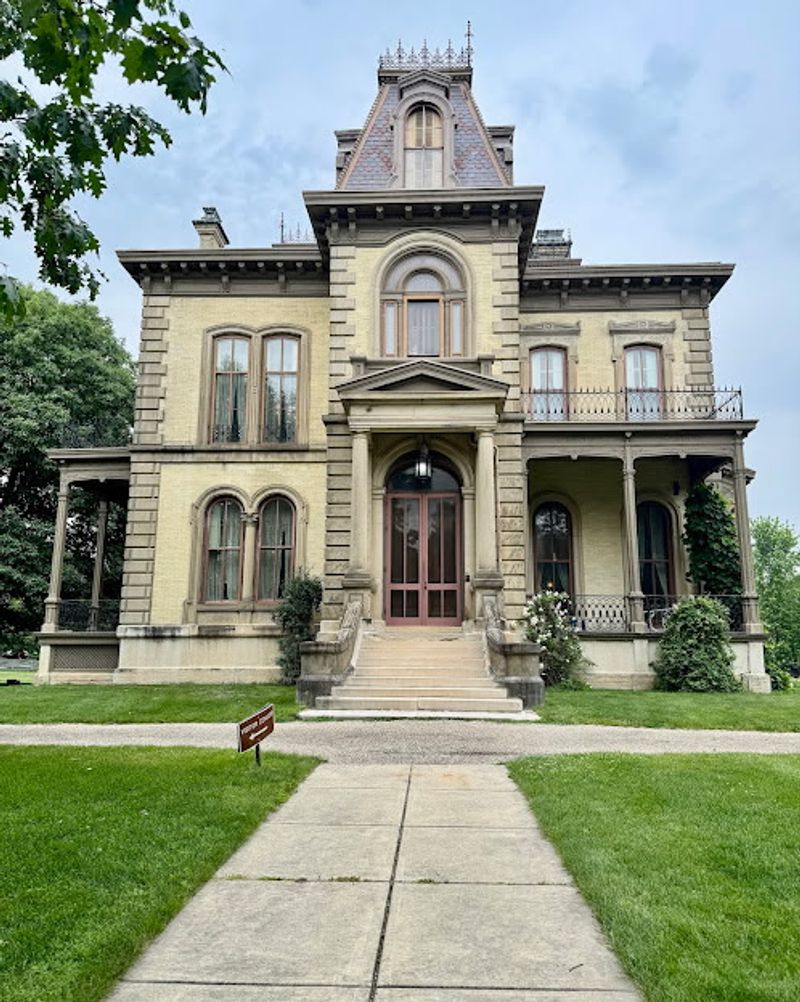
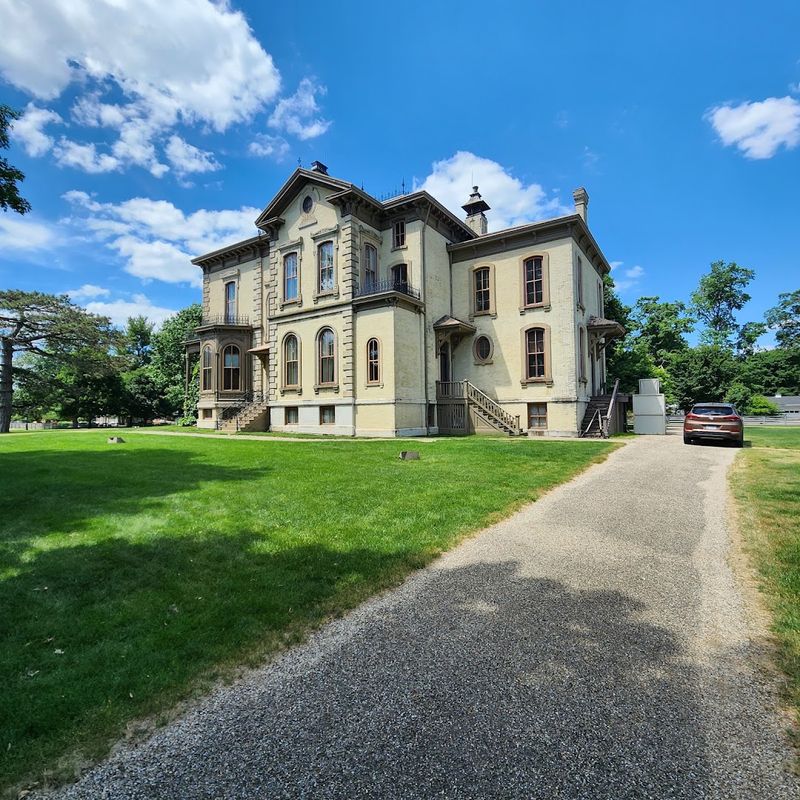
The first look at the David Davis Mansion is almost disorienting in the best way. Its Victorian massing rises with a kind of theatrical confidence, all steep angles, tall walls, and layered rooflines that make the house seem larger than the grounds should allow.
You expect a formal historic site, but the silhouette lands closer to a storybook manor planted right in central Illinois.
That visual punch comes from proportion as much as ornament. The house is tall, narrow in places, and full of vertical energy, so your eye keeps traveling upward from the foundation to the gables without settling for long.
Even before you learn anything about the family or the era, the architecture starts doing the work of introduction.
Walking the approach, details begin to sharpen. Window shapes, trim, and the confident footprint suggest wealth, but not in a flashy modern way.
Instead, the effect is old-fashioned ambition translated into brick, wood, glass, and a design language that wanted everyone arriving by carriage to notice exactly where they were.
Bloomington has plenty of solid historic character, yet this mansion operates on another level of presence. It does not blend into the neighborhood or politely recede behind trees.
It stands there with a slightly uncanny poise, almost like a film set, except the craftsmanship is real and the scale becomes more believable the longer you study it.
That is why the exterior matters so much here. This is not simply a prelude to the interior tour, but part of the full experience, because the house announces its personality before a guide says a word.
By the time you reach the entrance, you are already tuned into proportions, textures, and the peculiar grandeur that makes this Illinois landmark instantly hard to forget.
Inside the House, the Scale Keeps Changing
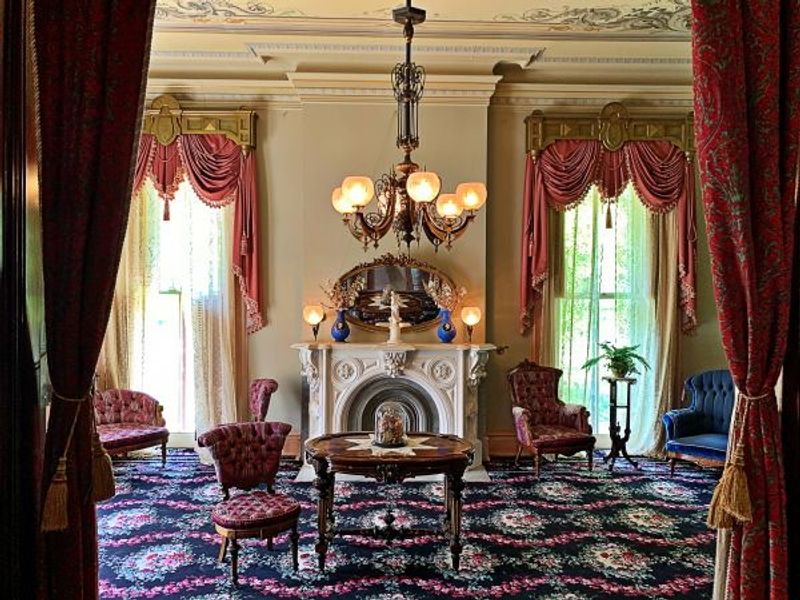
Once the tour moves indoors, the mansion stops being a striking object and becomes a sequence of carefully staged spaces. Room after room opens with its own ceiling height, sightline, and decorative logic, so the experience never settles into a predictable mansion rhythm.
Instead of one oversized hall followed by a blur of fancy furniture, you get shifting scale and a strong sense of how this house functioned.
That changing layout is one of the mansion’s smartest surprises. A formal room can lead into a space that feels more intimate, then open again into an area designed to impress, which keeps your attention active.
You are not just admiring period pieces from behind a rope, but reading how status, comfort, and daily routine were organized under one roof.
The restoration helps enormously because the house does not come across as hollow. Furnishings, finishes, and domestic details give it a lived-in quality rather than a staged museum stiffness.
That difference matters in a Victorian home, where scale alone can sometimes create distance, but here the rooms remain readable as places where people actually moved, hosted, and worked.
Guided access also shapes the experience. Since the interior is toured rather than casually wandered, you notice connections that might be missed on a self-guided visit, including circulation patterns between public rooms and more private corners.
The house reveals itself as a working system, not just a collection of elegant surfaces. By the time the route reaches upper levels and service spaces, the mansion feels more dimensional than it did from outside. You begin with spectacle, then discover planning, hierarchy, and domestic practicality embedded in every turn.
That progression gives the interior real momentum, and it is a big reason the house stays engaging well beyond the first wow moment.
The Craftsmanship Is the Real Showpiece
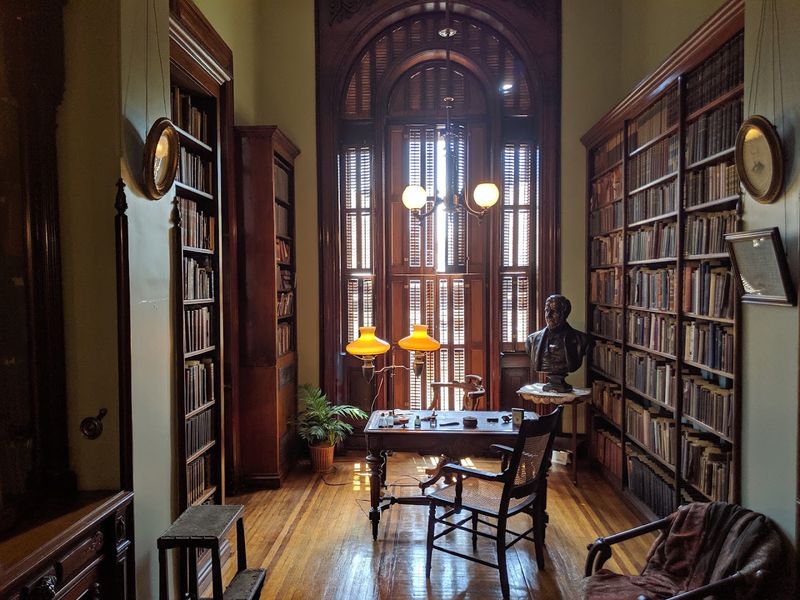
Plenty of historic mansions rely on sheer size to carry the visit. At David Davis Mansion, the finer reward is in the details that reveal how seriously nineteenth-century builders and owners treated the idea of a finished home.
Woodwork, hardware, trim, and room-by-room ornament create a quieter kind of drama, one that grows stronger the closer you look.
This is where the mansion shifts from impressive to absorbing. Instead of seeing decorative excess for its own sake, you start noticing choices that combine beauty with status, utility, and permanence.
Even features that could have been purely ornamental often support the broader logic of the room, which makes the craftsmanship feel integrated rather than pasted on.
The house is also known for presenting period technology alongside art and furnishings, and that adds an important layer. Victorian prosperity was not only about display, but also about modern convenience and smart domestic planning.
When those elements appear within restored spaces, the mansion becomes less of a frozen tableau and more of a snapshot of ambition in action.
Because so much survives or has been carefully interpreted, surfaces here carry real weight. Doors, stair elements, fireplaces, and built details do not read like generic old-house decoration.
They show how much labor went into making a residence feel current, polished, and socially legible in its own time.
That concentration of workmanship changes how you move through the tour. Your attention drops from the roofline and grand rooms to smaller clues: edges, textures, construction, and the little signs of quality that expensive homes advertised without needing neon.
In a place already loaded with visual character, those specifics provide the strongest proof that the mansion is more than photogenic – it is materially fascinating from one room to the next.
The Human Story Gives the Mansion Weight
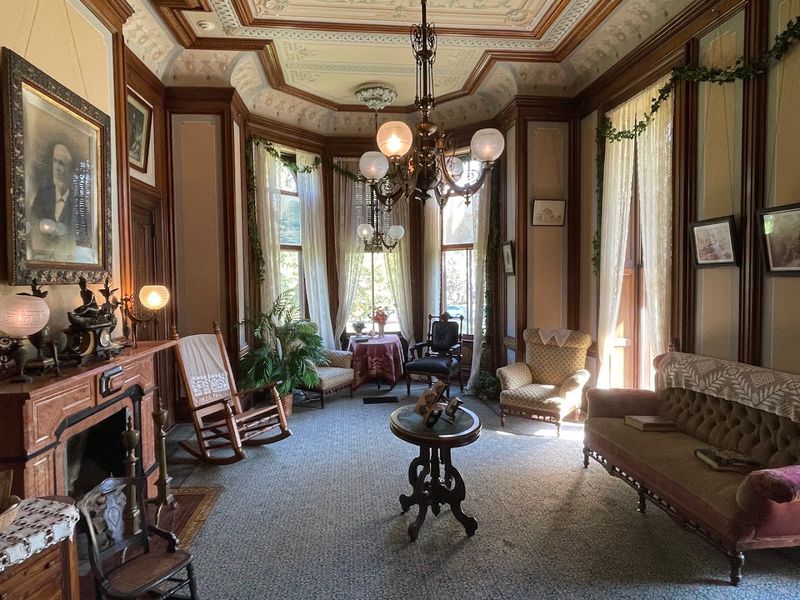
A mansion this dramatic could easily lean on architecture alone, but the David Davis story adds substance that keeps the visit grounded.
The house belonged to a prominent Illinois family, and the site gains depth when you connect its rooms to the people who built, used, and preserved them over time.
Instead of abstract grandeur, you get a domestic setting tied to public life, regional growth, and family routines. David Davis is a significant historical figure, and that connection naturally draws attention. Yet the mansion does not need to oversell prestige to hold interest.
The richer angle is how a powerful household translated position into everyday space, from entertaining rooms to service areas, and how those choices reflected the values and expectations of the period.
Sarah Davis matters here too, especially once you step outside the simplified idea of a famous man’s house. The property is often discussed in relation to gardens and seasonal beauty, which broadens the story beyond law and politics.
That domestic and landscape dimension helps the estate read less like a monument and more like a lived environment shaped by more than one person.
Letters and family documentation have also contributed to the house’s interpretation, giving guides and exhibits more intimacy to work with than many historic homes can offer. That kind of evidence sharpens the tour because the rooms are attached to decisions, habits, and relationships rather than vague period nostalgia.
The family remained connected to the property for decades, which helps explain why the mansion survived with so much identity intact.
All of this gives the house a steadier pulse. You are not only looking at Victorian design preserved behind velvet-rope distance, but at a household with social reach and private texture.
The result is a mansion that reads as history with human scale, even while its exterior still looks ready for thunderclouds and a movie camera.
Why Summer and Holiday Season Hit Differently in Illinois
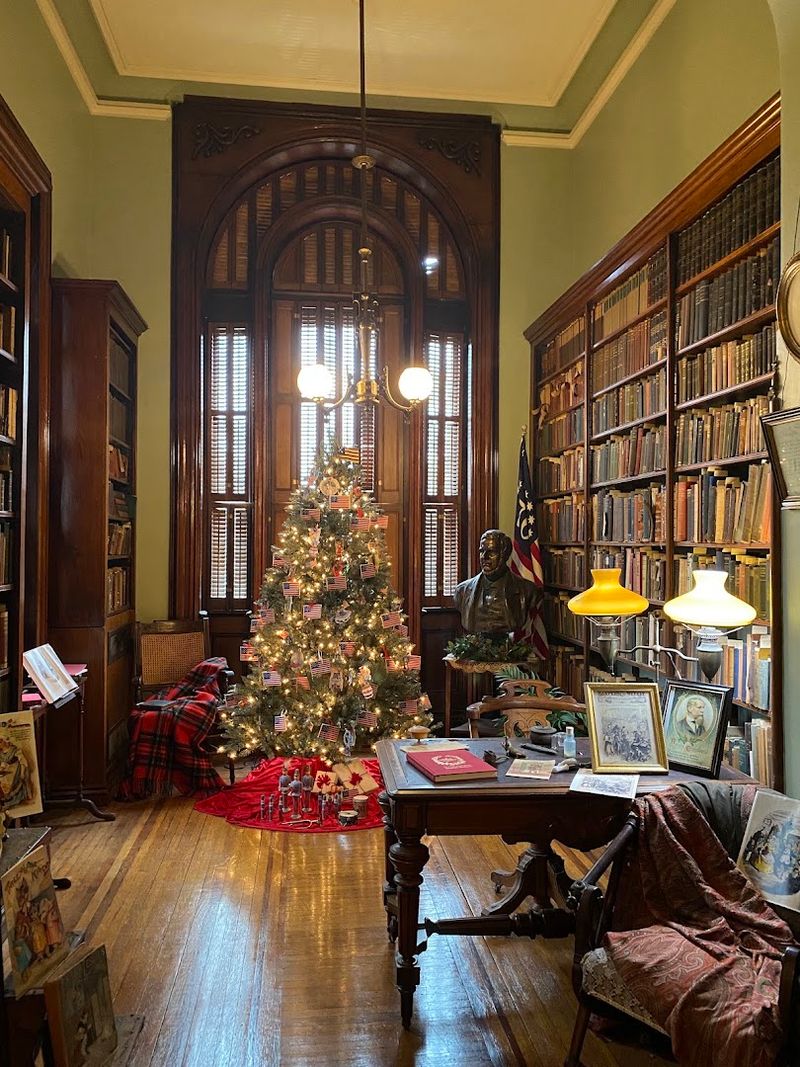
The mansion changes character with the season, which is one of the smartest reasons to time your visit rather than treating it like an interchangeable museum stop. In summer, the grounds soften the house’s dramatic lines with color and texture, making the estate look less severe and more layered.
You still get the towering Victorian profile, but now it shares the frame with gardens, lawn, and a brighter sense of place.
That seasonal contrast matters because the exterior can read almost gothic at first glance. When flowers are in bloom and the property is green, the house feels less stark and more expansive, as if the landscape is finishing the composition.
The result is especially good for anyone who enjoys photographing architecture without losing the human scale of the setting.
Then there is the holiday season, when the mansion takes on a very different energy. Historic houses often decorate for winter, but this one already has the height, texture, and room sequence to support rich seasonal staging.
Trees, period-leaning decor, and the natural drama of Victorian interiors give the mansion a festive look without needing gimmicks.
Those holiday presentations also serve a useful interpretive purpose. Instead of adding decoration as a superficial extra, they can help show how different rooms were used and how traditions evolved across time.
In a house where domestic life is central to the experience, seasonal displays feel like an extension of the story rather than a break from it.
If you can choose your timing, think about what version of the mansion you want. Summer highlights the estate setting and garden relationship, while winter decor pulls attention inward to rooms, ritual, and atmosphere.
Either way, the house has enough personality to carry the visit, but Illinois weather gives it two distinct visual lives that are both worth seeing.
How to See the Mansion Without Missing the Good Part
This is not the kind of place where you breeze by, snap one photo, and understand it. The David Davis Mansion works best as a guided experience, and planning around that makes a noticeable difference.
Since interior access is tied to tours, the smartest move is to arrive with enough time to catch the interpretive flow rather than wandering the grounds and hoping the house will explain itself.
That structure actually helps the visit. A short introductory component sets context, then the guided route turns architecture and furnishings into a coherent narrative instead of a disconnected parade of rooms.
You get the payoff in sequence, which suits a house this layered and keeps practical features, family history, and design choices connected.
The mansion is open Wednesday through Saturday, with daytime hours, and it is closed Sunday through Tuesday. That limited schedule gives the visit a little more intention than an all-day drop-in attraction.
If you are building a Bloomington stop around it, midday planning is your friend. The tour format also means the property is especially good for travelers who like informed interpretation but do not want a bloated, lecture-heavy experience. Historic homes can sometimes overwhelm with dates and names.
Here, the stronger approach is to let the guide unlock the logic of the house while you focus on spatial surprises, decorative details, and the unusual sense of intimacy that comes from seeing private and service areas together.
In practical terms, this museum rewards punctuality more than spontaneity. Show up at the right time, and the mansion opens into a rich hour of architecture, domestic history, and visual drama.
Show up casually after the tour rhythm has passed, and you will still see a striking exterior, but the heart of the experience remains behind the front door.
The Sharpest Reason This Mansion Stands Out
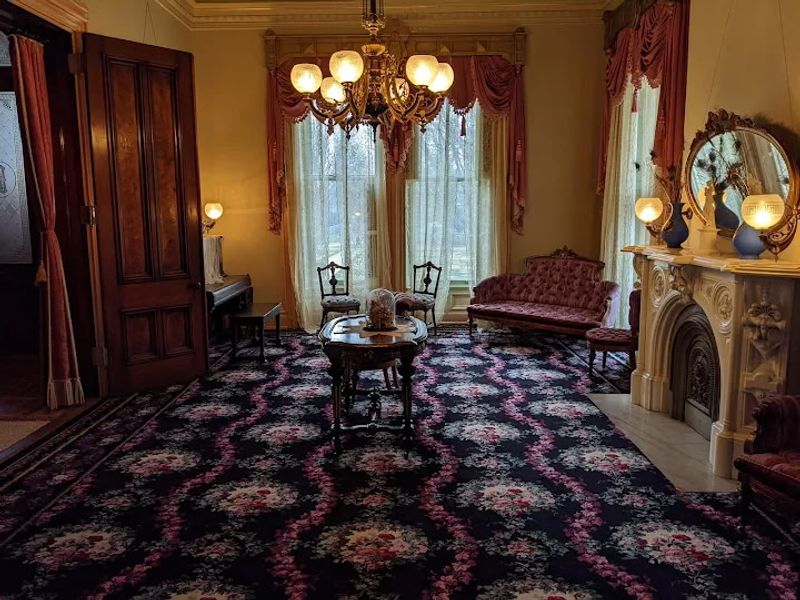
The strongest thing about the David Davis Mansion is not simply that it is beautiful, historic, or unusually well preserved. It is the way all three qualities lock together without canceling one another out.
Some house museums are historically important but visually dry, while others are photogenic shells with thin interpretation. This one manages to be architecturally strange, historically grounded, and genuinely engaging as a visit.
That balance starts outside with the silhouette. The mansion looks almost too dramatic to be real, especially in a Midwestern setting where you might expect grandeur to arrive in a more restrained package.
Then the tour shifts the story from spectacle to substance, showing how the building worked as a home, a status symbol, and a piece of Illinois history at the same time.
The preservation level matters too. A house like this can easily become a stage set of generalized Victorian mood, but here the rooms carry enough specificity to stay convincing.
Furnishings, layout, technology, and family context all reinforce one another, so the experience keeps gaining definition rather than flattening into one repeated aesthetic note.
There is also a rare accessibility to the place. Not every major historic home feels welcoming to casual travelers, especially if you are not arriving as a deep architecture buff.
David Davis Mansion meets you halfway by delivering immediate visual payoff, then rewarding closer attention with craftsmanship, human story, and an easy-to-grasp tour structure.
If you are searching for one historic site in Bloomington that delivers more than a checklist stop, this is the one to circle. You get a fairytale exterior, a richly interpreted interior, and a property that makes nineteenth-century ambition visible in every direction.
Few museums can carry that much personality without slipping into gimmick, and this mansion never needs to try that hard.
Share this story