Fries usually belong beside a hot dog, but Henry’s Drive-In in Cicero has spent decades proving they are just as good piled right on top. This Ogden Avenue institution keeps Chicago-area fast-food tradition alive with classic dogs, familiar toppings, and an old-school roadside atmosphere that feels increasingly rare.
The signature fries-on-the-dog presentation is simple, memorable, and exactly the kind of quirky detail that turns a quick lunch into a local tradition. For travelers chasing nostalgic Illinois eats or longtime residents craving something familiar, Henry’s offers a delicious reminder that legendary food does not need to be complicated.
Fries Right on the Dog, Not Just on the Side
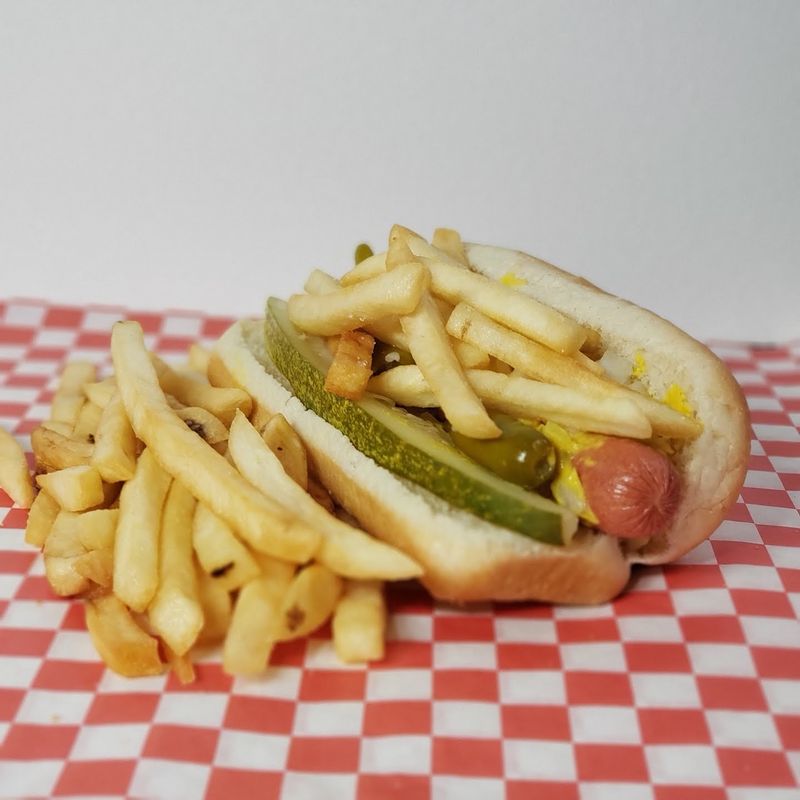
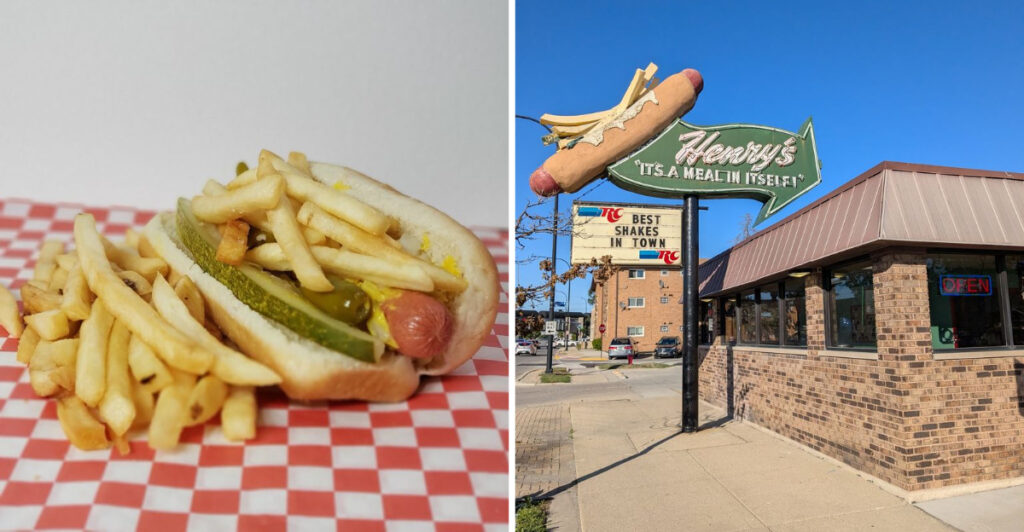
The first surprise at Henry’s is not hidden in a special sauce or elaborate topping combination. It arrives with the hot dog itself, served with French fries tucked into the same bundle so that the two classic drive-in staples become part of one unmistakable order.
That presentation has become closely associated with Henry’s, which has been serving hot dogs on Ogden Avenue since 1950. Long before unusual food combinations were designed to attract attention online, this Cicero stand had already found a simple way to make an everyday hot dog memorable.
The fries add salt, texture, and extra heft while keeping the meal firmly rooted in straightforward Chicago-area fast food. The combination also connects Henry’s to an older local hot dog tradition.
Its signature has been described in connection with the “Depression Dog,” an earlier style of Chicago hot dog known for being filling, affordable, and considerably less elaborate than the fully loaded versions many diners picture today.
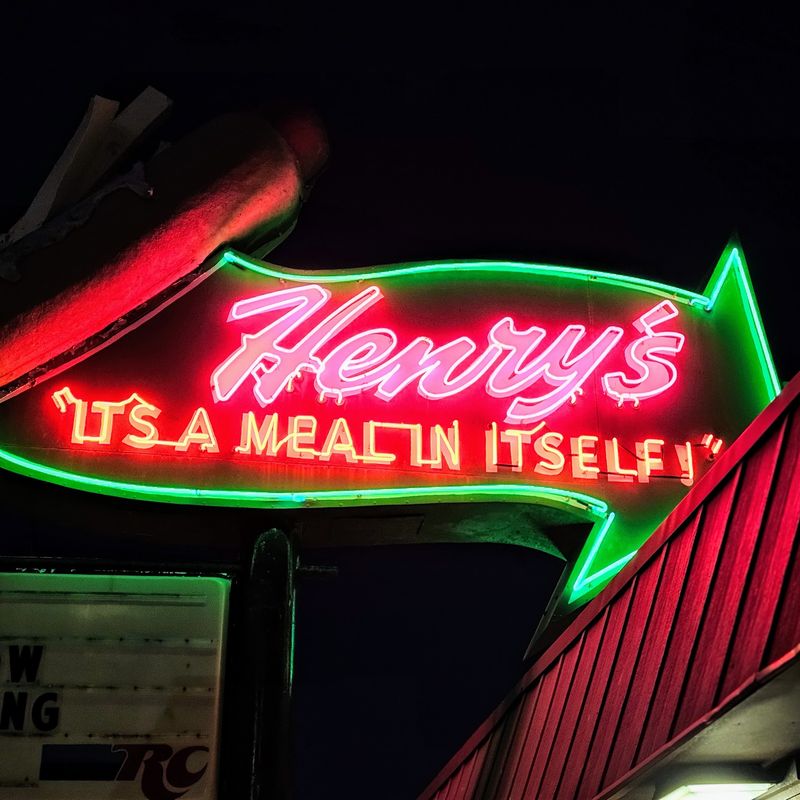
At Henry’s, fries help turn that simple order into what the restaurant’s famous roadside sign fittingly calls “A Meal In Itself.” More than 75 years of history give the presentation credibility that a newer restaurant could never manufacture.
The fries are not there because someone recently decided the dog needed a gimmick. They have become part of the visual identity people associate with eating at Henry’s.
For a first visit, that makes the signature dog the obvious starting point. Leave the fries where they arrive and eat the combination as intended.
Plenty of restaurants serve hot dogs and fries. Henry’s made the pairing recognizable enough that generations of customers have come to associate one particular version with a small drive-in on Ogden Avenue.
A Route 66 Stop Hiding in Plain Sight on Ogden Avenue
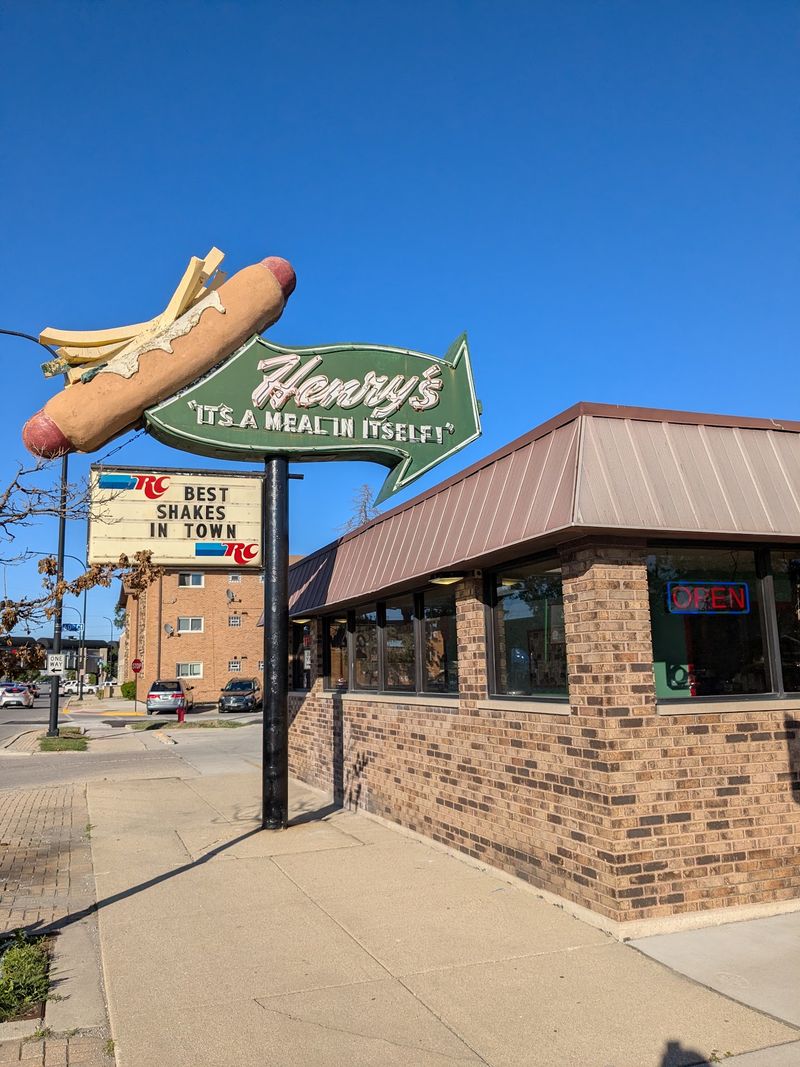
Ogden Avenue gives Henry’s a setting that makes immediate sense. This stretch is tied to old Route 66 history, so the restaurant is not just a neighborhood hot dog stand.
It also fits into a bigger American roadside story, the kind built on quick meals, bright signs, and repeat visits over many years.
That location adds weight to the place without needing fancy storytelling. A drive-in on a well-known historic road already carries a little drama, because people expect movement, stops, errands, and familiar food made fast.
Henry’s meets that expectation by being exactly what it says it is, a hot dog restaurant in Cicero with a strong old-school identity.
The address matters, too. Henry’s sits at 6031 W Ogden Ave in Cicero, not downtown Chicago and not in a polished tourist district. That helps explain why the place feels rooted in local routine instead of built around novelty.
For travelers exploring the Chicago area by car, the setting can shape the whole visit. You are not walking into a trendy concept built to imitate midcentury roadside culture.
You are stopping at an actual long-running roadside stand in the western edge of the city area, where the street itself helps tell the story.
At the same time, the location keeps Henry’s practical for regulars. It is easy to understand as part lunch counter, part neighborhood landmark, and part Route 66 attraction without becoming only one of those things.
That mix is useful because it explains why people looking for history, comfort food, or a classic Chicago-area roadside stop can all end up standing at the same counter, ordering the same fries-topped dog.
Why Henry’s Still Reads Like Classic Illinois Fast Food
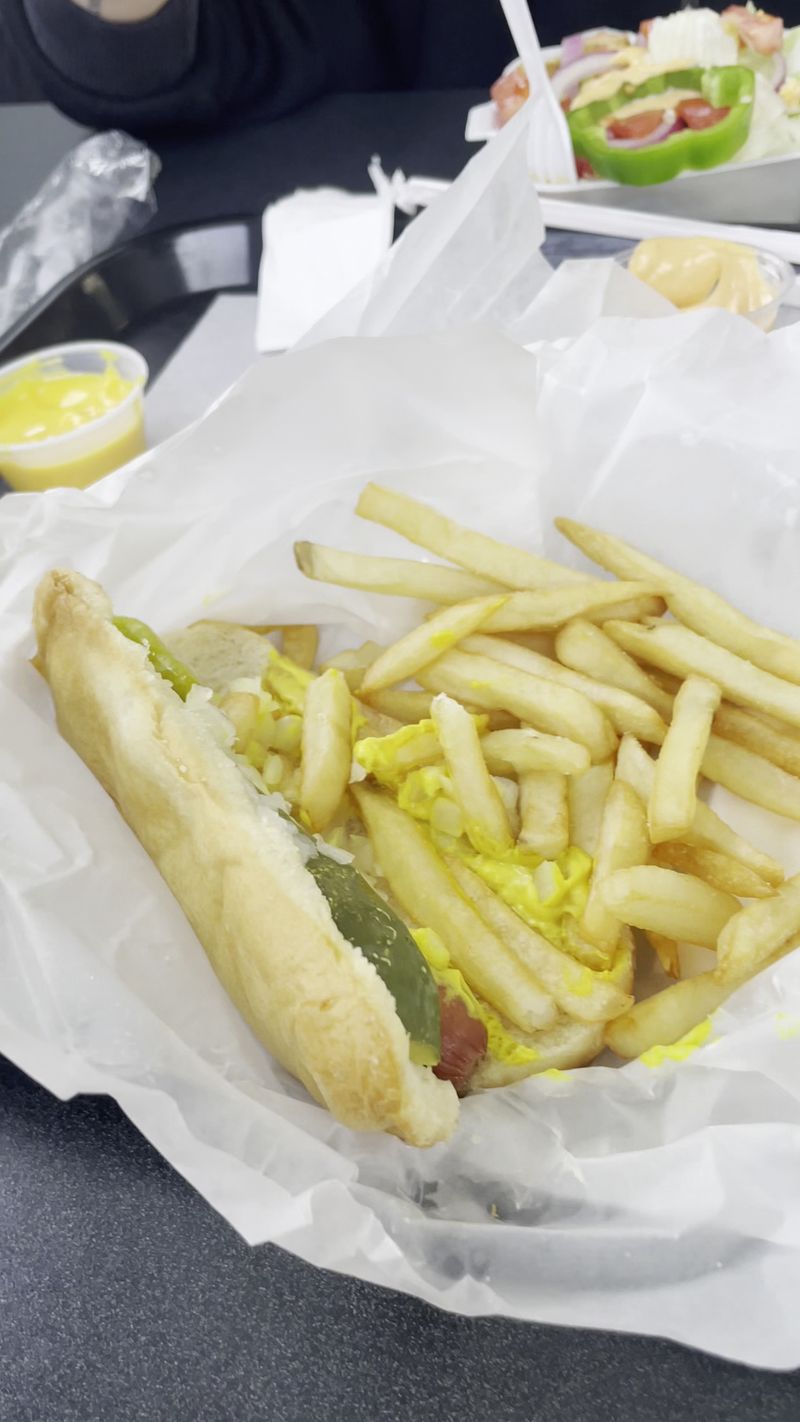
One of the easiest ways to understand Henry’s is to look past the single famous topping move and notice the format. This is a hot dog restaurant with the kind of menu people expect from a classic Chicagoland stand, where the food is quick, familiar, and built around everyday cravings instead of trends.
That old pattern still means something in Illinois. Henry’s is widely associated with Chicago dogs, and that places it inside one of the state’s strongest food traditions. In this region, a hot dog stand is rarely only about one item.
It is usually about a whole category of fast, filling foods that work for lunch, dinner, or a stop between errands. Available place information also points to other items people connect with Henry’s, including Italian beef, pizza puffs, shakes, chili dogs, chicken sandwiches, mozzarella sticks, and root beer.
That does not mean every order needs to wander all over the menu. It does show that the restaurant fits the broad, practical style of an established local stand rather than a one-note specialty counter.
What makes that useful for readers is simple. If someone in your group wants the signature dog and someone else leans toward a beef sandwich or a shake, Henry’s appears to have enough range to cover both moods.
You can focus on the famous dog without feeling trapped into only one kind of order. The Illinois part of the story matters because this kind of menu has a regional rhythm. It is direct, fast, and comfort-driven, with foods that are meant to be eaten without ceremony.
Henry’s keeps that tradition alive, and the fries-on-the-dog detail works best because it grows out of that world instead of fighting against it.
The Room Carries the Roadside Past
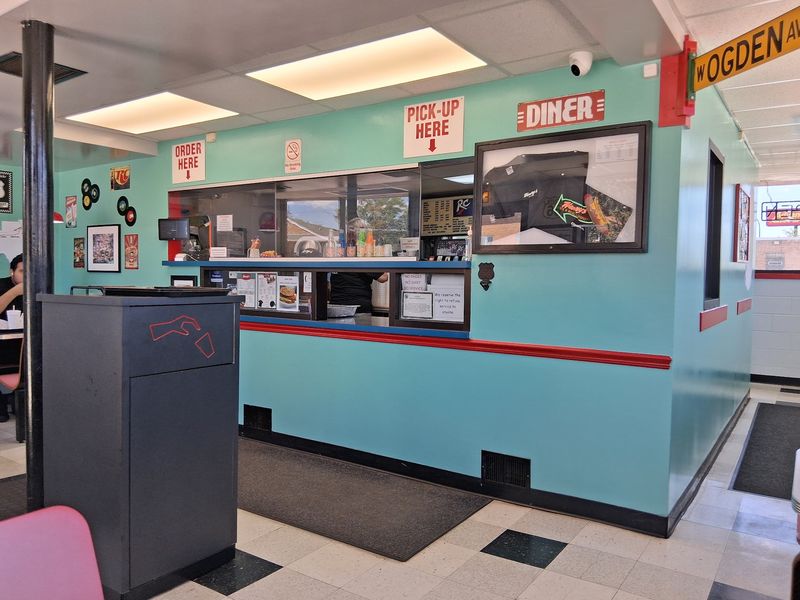
Food may get most of the attention at Henry’s, but the surroundings help explain why eating here feels different from stopping at a newer fast-food restaurant. The Cicero drive-in has been around since 1950, and pieces of that long history remain visible rather than being recreated simply for effect.
Old photographs are an especially fitting part of the atmosphere. Henry’s own history stretches across generations of customers and changes along Ogden Avenue, so images from earlier decades give visitors a chance to connect the restaurant they see today with the place longtime regulars remember.
The roadside signage adds even more character. Henry’s has long been associated with its memorable hot dog imagery and the phrase “It’s A Meal In Itself,” a slogan that neatly captures the uncomplicated personality of the restaurant.
It is exactly the kind of bold, easy-to-read message that made sense along heavily traveled American roads, where businesses had only seconds to catch a passing driver’s attention. That history feels particularly appropriate because Henry’s sits on Ogden Avenue, part of historic Route 66.
The location places the restaurant within a broader era of roadside dining built around cars, quick meals, recognizable signs, and businesses that became landmarks through repetition rather than elaborate design. Henry’s has not remained completely untouched.
Restaurants need maintenance and updates to keep operating, and newer touches do not erase the history that came before them. What matters is that the original roadside identity remains recognizable.
Look beyond the hot dog for a moment, and Henry’s becomes more than somewhere to grab lunch. Its photographs, signage, Ogden Avenue address, and decades of history preserve a small piece of the roadside culture that once defined countless stops along Route 66.
Generations Keep Henry’s in the Family Conversation
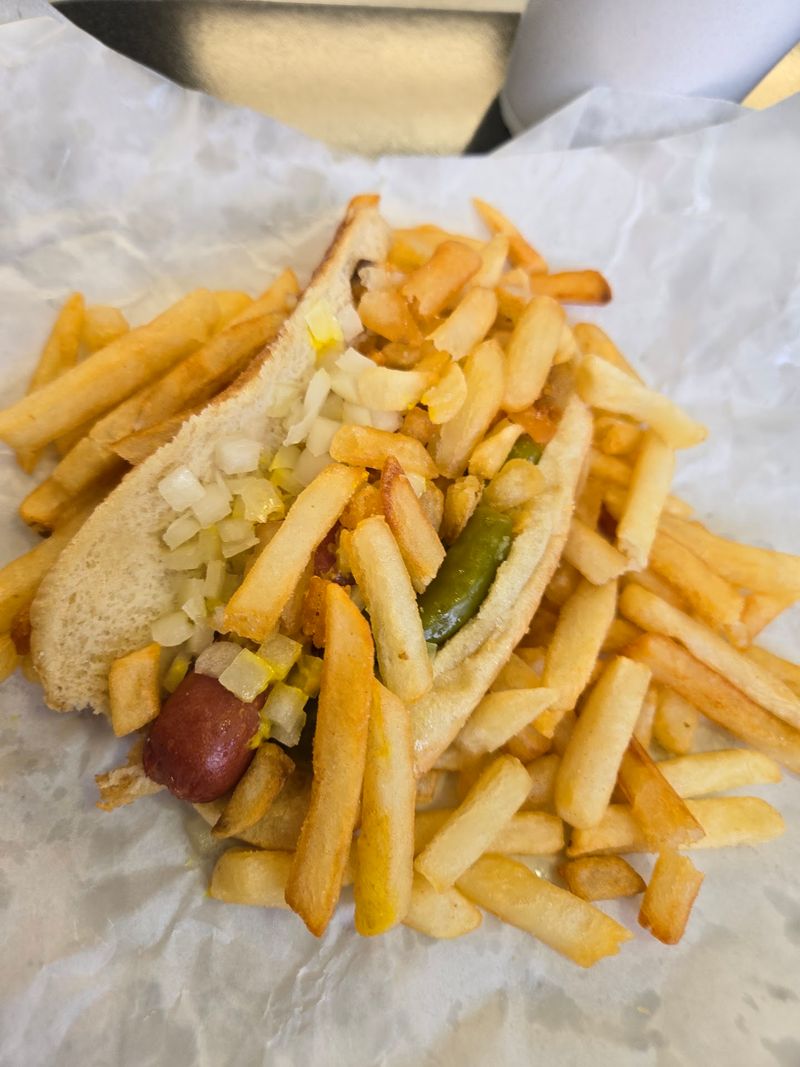
Longevity becomes more meaningful when customers keep returning for reasons that go beyond curiosity. At Henry’s, decades of repeat visits have allowed a simple Cicero hot dog stand to become part of family routines, childhood memories, and traditions passed from one generation to another.
That is a different kind of reputation from the attention earned by a trendy new restaurant. Henry’s has been serving customers since 1950, giving grandparents, parents, and children opportunities to know the same name at very different points in their lives.
For some longtime customers, returning is as much about revisiting a familiar place as deciding what to eat. Public comments frequently carry that personal tone.
People recall earlier visits, describe returning after years away, or mention bringing family members along. Those stories cannot guarantee what every visitor will experience, but collectively they reveal something important: Henry’s has remained recognizable enough for people to attach memories to it.
Food is naturally part of that continuity. A distinctive hot dog served with fries is easy to explain to someone who has never visited, but longtime regulars do not need the introduction.
Familiar orders become shorthand for the restaurant itself, especially when the same meal is connected to trips with parents, friends, or relatives. That generational loyalty is difficult for a restaurant to manufacture.
Advertising can create awareness, but it cannot instantly produce decades of shared experience. Henry’s has had time to accumulate those connections naturally.
For a first-time visitor, that history adds another dimension to the meal. You may be arriving because you heard about the fries or Route 66, while the person at the next table could be returning to a place their family has known for decades. That is when a restaurant starts becoming a local institution.
Useful Details Before You Pull In
Not every memorable food stop is easy to use in real life, but Henry’s offers a fairly clear practical picture. It is a hot dog restaurant in Cicero with published daily hours, and that matters for anyone planning a stop around work, errands, or a Route 66 drive.
According to the provided place information, Henry’s opens at 10:30 AM Monday through Saturday and at 11 AM on Sunday.
Closing time is listed as 9 PM from Monday through Saturday, with Sunday closing at 8 PM. That schedule makes Henry’s a lunch and dinner destination rather than a late-night stand. If you are expecting a midnight hot dog run, this is not the setup.
There is also useful context in how the place seems to operate. Henry’s is described as a drive-in, and comments point to both indoor seating and the option to eat in your car.
Because those details come from customer observations rather than official policy language, it is smartest to treat them as likely features, not promises that every arrangement is always available the same way.
Another practical note comes from payment habits. One review specifically recommended paying in cash, but that is not the same as an official cash-only rule.
The cautious takeaway is simple: carrying cash could be helpful, yet visitors should not assume card payment is unavailable unless they confirm directly with the restaurant.
The phone number listed for Henry’s is +1 708-656-9344, and the website is henrys66.com. When a place has longstanding popularity and a defined schedule, checking current details before heading over is just common sense.
That is especially true if you are making a special trip for the famous fries-on-top hot dog and want the stop to match your timing.
Why Henry’s Simple Formula Has Lasted Since 1950
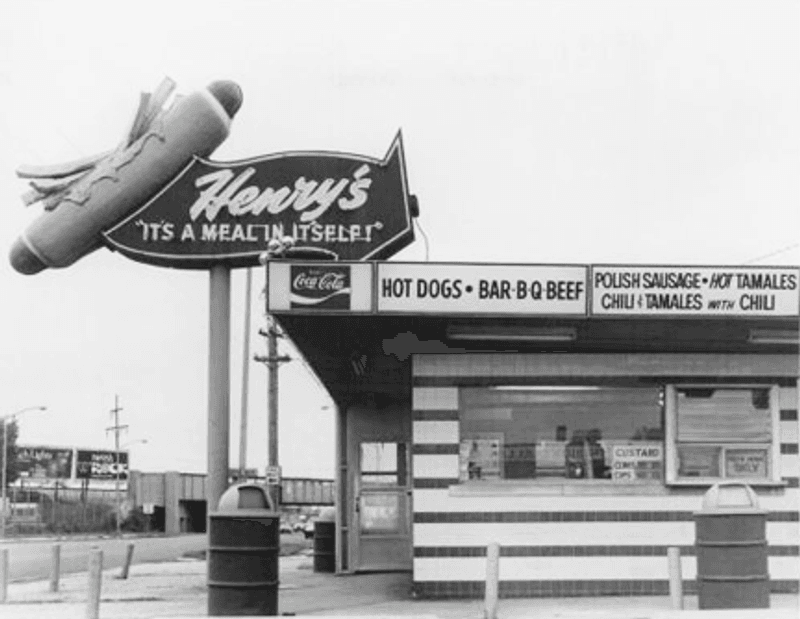
Restaurants do not remain memorable for more than 75 years simply because they are old. Longevity means more when customers can still explain what makes a place distinctive, and Henry’s has several advantages working together: a recognizable signature order, a historic roadside location, and an identity that has remained easy to understand since 1950.
There is nothing complicated about the formula. Henry’s serves the kind of fast food associated with classic Chicagoland stands, including hot dogs and other familiar comfort-food favorites, from a location on historic Ogden Avenue.
Its famous fries-and-hot-dog combination adds the detail that makes the restaurant instantly easier to remember. The Route 66 connection gives that simplicity even more context.
Roadside restaurants traditionally succeeded by offering food that was quick, filling, affordable, and distinctive enough to make travelers remember where they stopped. Henry’s still fits naturally into that tradition rather than looking like a modern restaurant trying to recreate it.
Its longevity also gives visitors something newer retro-themed restaurants cannot reproduce: continuity. The old photographs, familiar roadside identity, longtime customers, and decades of meals served at the same Cicero address connect the present-day restaurant to the generations that came before.
That does not mean Henry’s needs to remain frozen in 1950. A longstanding restaurant can change around the edges while protecting the details people recognize most.
And that may be the strongest explanation for why Henry’s still matters. It has never needed an enormous menu concept or elaborate reinvention to give people a reason to remember it.
Sometimes a local legend needs only a historic road, a straightforward meal, and one signature tradition distinctive enough to survive for generations.
Share this story