At 8 a.m. in Clifton, you can walk into Rutt’s Hut and order a deep-fried hot dog before some people have finished their first coffee. That alone tells you this place is working by its own New Jersey rules.
Sitting at 417 River Road, Rutt’s Hut does not need neon theatrics, reclaimed wood, or a menu full of chef-y adjectives to get attention. It has a fryer, a counter, a loyal crowd, and one very famous relish.
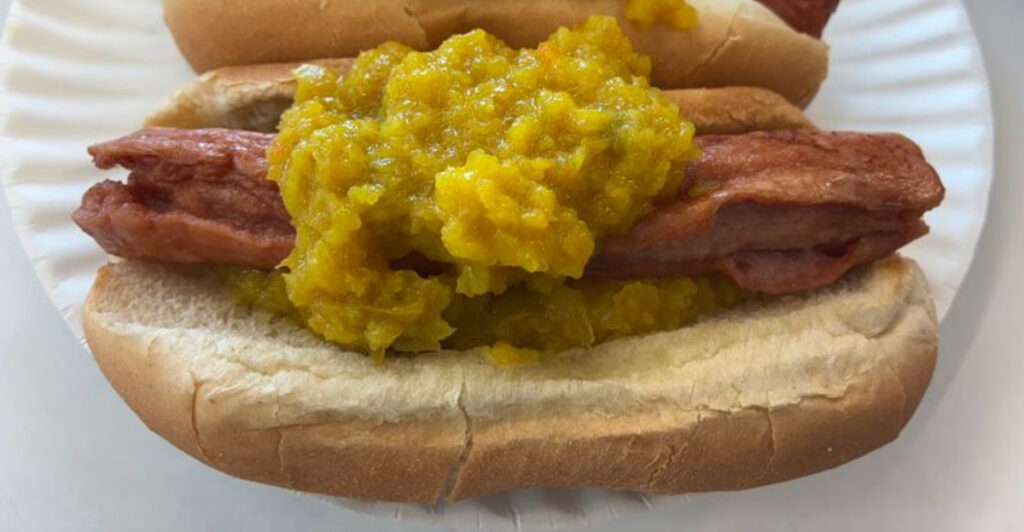
The stand has been around since 1928, and its signature hot dogs are called “Rippers” because the casings crack and split in hot oil. The relish has become almost as famous as the dog itself, thanks to a guarded blend of mustard and spices that people keep trying to describe, copy, and argue about.
That is usually how you know a Jersey food legend is doing its job.
The Tiny Clifton Stand With a Giant New Jersey Reputation
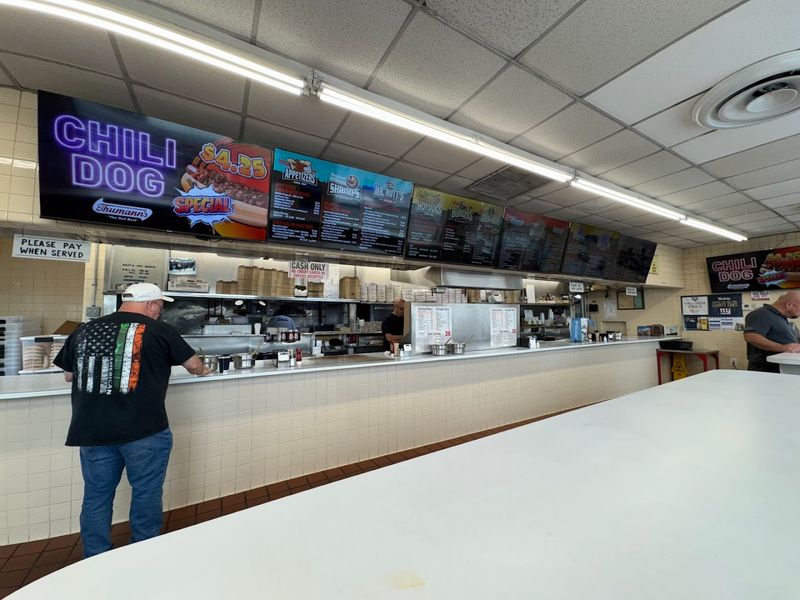
Rutt’s Hut is one of those places that makes more sense once you understand North Jersey. It is not tucked into a polished downtown or staged for weekend browsing.
It sits on River Road in Clifton, in the Delawanna section, the kind of road where you can be running errands one minute and suddenly remember you are dangerously close to a famous hot dog. The address is plain enough, 417 River Road, but the reputation attached to it is anything but plain.
The original roadside stand opened in 1928, which means Rutt’s Hut has been feeding people through nearly a century of changing highways, changing neighborhoods, and changing food trends.
That staying power matters in New Jersey, where diners, pizza counters, pork roll debates, and hot dog joints all have to earn their place in the local food memory.
Rutt’s Hut earned it by doing one thing in a very particular way: frying hot dogs until the skin splits. The building is not trying to charm you with carefully manufactured nostalgia.
Its appeal is more blunt than that. You go in, you order, you hear the shorthand, you watch people who clearly know the drill, and you realize the whole system has been running long before anyone started calling food “iconic” every five minutes.
Rutt’s Hut also has the kind of all-day hours that make it feel less like a stop and more like part of the local schedule. It posts hours from 8 a.m. to 10 p.m.
Sunday through Thursday, and 8 a.m. to 11 p.m. on Fridays and Saturdays, which means it can handle early cravings, lunch breaks, after-work detours, and late-evening “we’re already out, let’s go” decisions. That is how a little stand becomes bigger than its footprint.
Why Rutt’s Hut’s Secret Relish Has a Cult Following
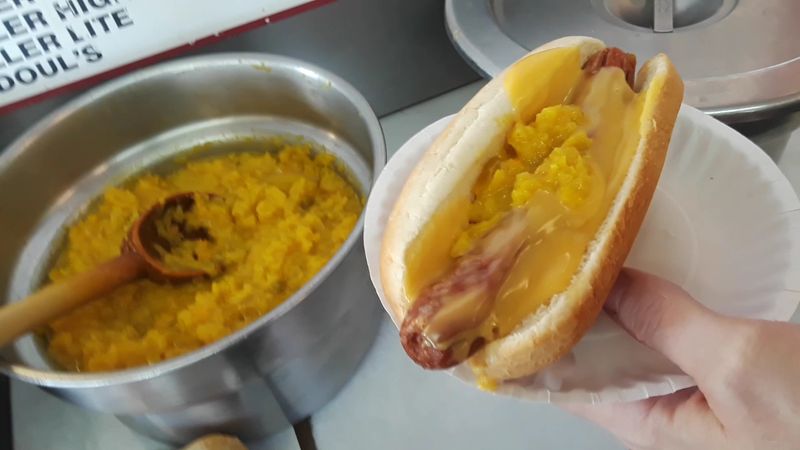
Here is the funny thing about the relish: it is famous partly because it refuses to explain itself. Rutt’s Hut describes it as a secret blend of mustard and spices, and honestly, that is probably all the public needs to know.
The fun is in the guessing. It is not the standard bright-green sweet relish that looks like it belongs at a ballpark.
It leans sharper, warmer, and more savory, with that mustardy punch that wakes up the fatty snap of the hot dog instead of covering it. The texture matters, too.
A good topping at a place like this cannot be too polite. It has to grab on, sit in the bun, and make each bite a little messier in the best possible way.
Locals talk about it with the same casual certainty they use for pizza allegiances. They may not be able to list the ingredients, but they know when it belongs on the dog, how much is enough, and why it feels wrong to leave without trying it.
That is what separates a topping from a signature. Anyone can add ketchup, mustard, onions, or chili to a hot dog.
Rutt’s Hut built a whole layer of identity around something spooned over the top. The relish works because it understands the Ripper underneath it.
A deep-fried hot dog has more edge than a steamed one. The casing snaps, the outside gets wrinkled and blistered, and the flavor turns richer.
A soft, sugary relish would disappear. This one pushes back. It cuts through the oil, adds tang, and gives the hot dog a flavor that is unmistakably Rutt’s. It is not fancy. It is not delicate. It is the kind of thing people insist you taste before you decide whether you “get” the place.
The Famous Ripper That Snaps, Splits, and Steals the Show
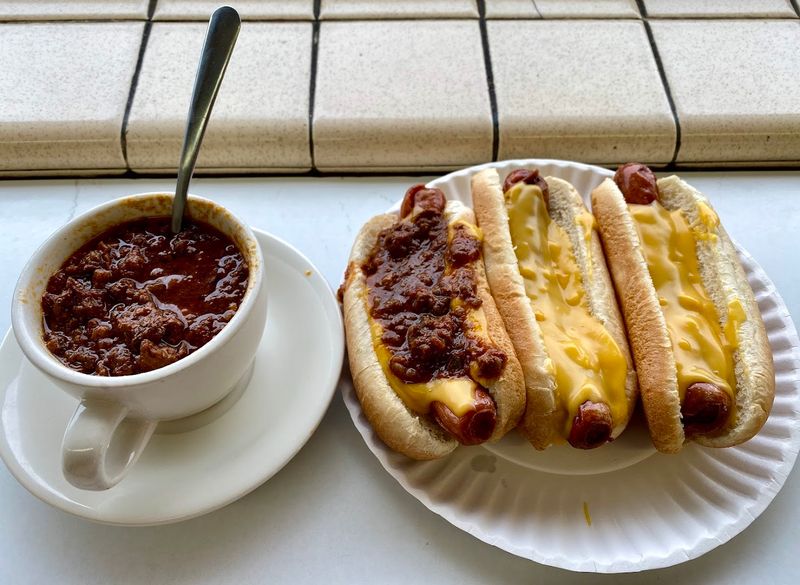
Stand close enough to the counter and the Ripper makes its own introduction. The hot dog goes into the oil smooth and comes out transformed, with the casing cracked open in jagged little splits.
That is not a mistake in the kitchen. That is the whole point.
Rutt’s Hut says its frying process causes the casings to crack and split, giving the hot dogs their “Ripper” name. It is a beautifully Jersey food term, too: direct, a little aggressive, and somehow affectionate.
The result is a dog with more texture than the average backyard frank. You get the snap first, then the salty richness, then whatever topping you had the good sense to add.
The regular hot dog is listed at $2.35 on Rutt’s Hut’s menu, with cheese at $2.80, which is almost startling in an era where a casual lunch can turn into a small financial event.
There are other styles in the local vocabulary, including the lighter “In-And-Out,” the well-done “Weller,” and the deeply charred “Cremator,” but the Ripper is the one to start with because it is the house language.
It gives you the balance that made the place famous: not too timid, not completely scorched, just crispy enough to understand why people have been talking about it for decades. This is also where restraint helps.
You do not need to build a skyscraper of toppings. A Ripper with relish and mustard has plenty going on.
Add fries or onion rings if you want the full counter-meal effect, but let the dog do the work. The pleasure of it is simple, fast, and very specific.
It tastes like somebody figured out exactly how far a hot dog can go before it stops being humble.
What First-Timers Should Order at This Old-School Hot Dog Landmark
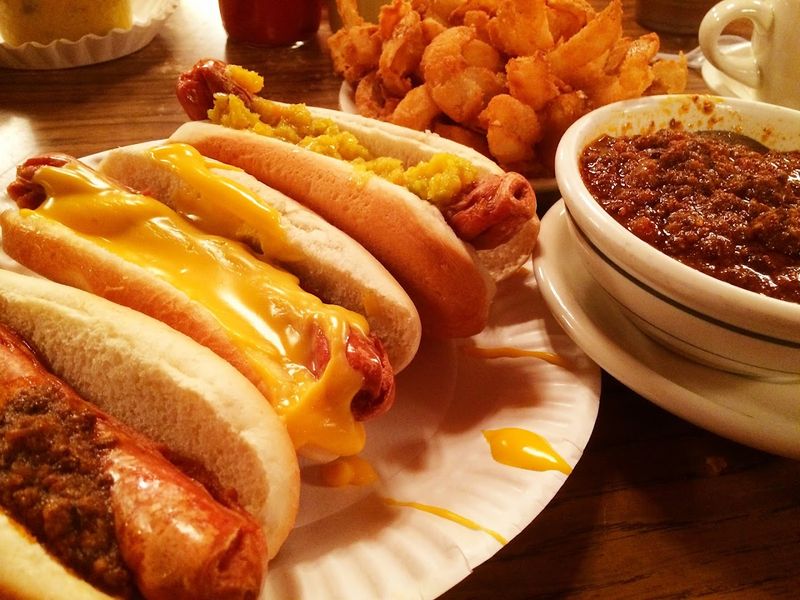
The smartest first order at Rutt’s Hut is not complicated. Get a Ripper with relish.
If you are going with someone else, get a second one with mustard or cheese so you can compare without turning lunch into a committee meeting. The menu lists the regular hot dog at $2.35 and the cheese version at $2.80, so doubling up is not a wild move.
Fries are listed at $2.20, cheese fries at $2.65, and French fried onion rings at $2.85, which gives you the classic supporting cast without pulling focus from the real reason you came.
If you are hungrier than you expected, the hot dog platter comes with potato salad, cole slaw, and garnish, and the menu also wanders into burgers, fish sandwiches, barbecue beef, barbecue pork, Taylor ham, egg sandwiches, Greek salad, seafood, roasts, and even homemade rice pudding.
That range is part of the charm. Rutt’s Hut may be famous for one thing, but it still reads like an old-school New Jersey food stop that expects regulars to come in for whatever meal fits the hour.
First-timers should resist the urge to overthink. This is not a place where the “correct” order needs a dramatic backstory.
The right move is to start with the item that made everyone talk. Then add the relish, because skipping it is like going to a shore town and refusing to look at the water.
You can always branch out later. The Weller is there for people who want more crunch. The Cremator is there for the brave, the curious, and the slightly chaotic. But the first visit belongs to the Ripper.
It is the cleanest way to understand why a modest hot dog counter in Clifton has become a food reference point for the whole state.
How a No-Frills Roadside Stop Became a Garden State Legend
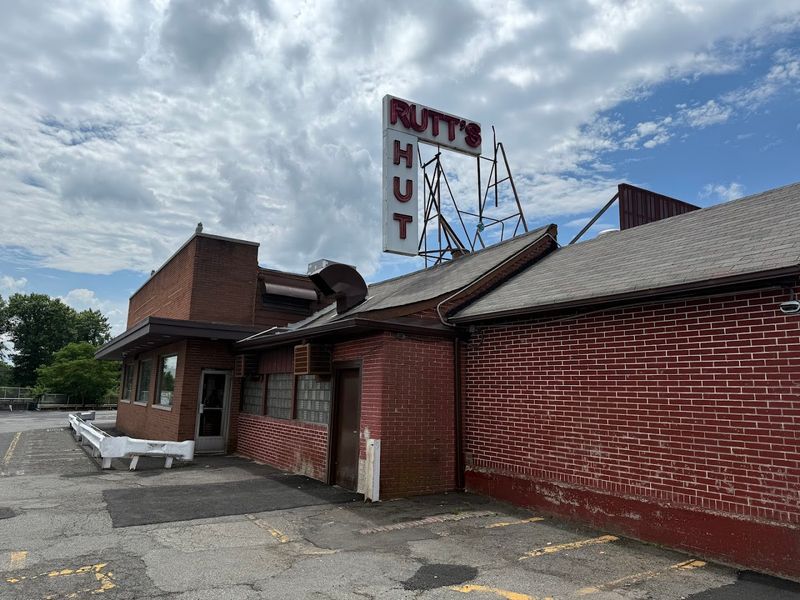
Before Rutt’s Hut became a name people traded in food conversations, it was a roadside stand opened in 1928. That detail matters because the place did not become beloved by chasing trends.
It started with a practical kind of roadside cooking and kept its identity close. The Ripper was not invented for Instagram closeups or listicle fame.
It came from a cooking method that made the hot dog casing split in oil, and the name stuck because people remember a word like that. New Jersey is good at preserving places like this when they feel honest.
Not every old spot survives, of course. Plenty disappear under rent hikes, redevelopment, family changes, or the slow creep of “new concept coming soon” signs.
Rutt’s Hut has managed to stay recognizable because the core experience is still easy to explain. You go to Clifton. You order a deep-fried hot dog. You put the secret relish on it. You eat it hot, probably faster than you planned. That is the whole pitch, and it has worked for nearly 100 years.
The menu has expanded far beyond hot dogs, with everything from burgers and fish and chips to roast turkey, pork chops, spaghetti, and egg platters, but the legend still rests on the fryer. That is very New Jersey, too.
Some of the state’s best food places have enormous menus, but everyone knows the one thing you are supposed to get. Rutt’s Hut does not need to look precious because it has something better than polish: continuity.
Generations of customers have stood in line, learned the lingo, picked their level of crispness, and passed the habit along. At some point, a restaurant stops being just a restaurant and becomes part of the way people explain where they are from.
Why People Keep Driving Back for One More Bite
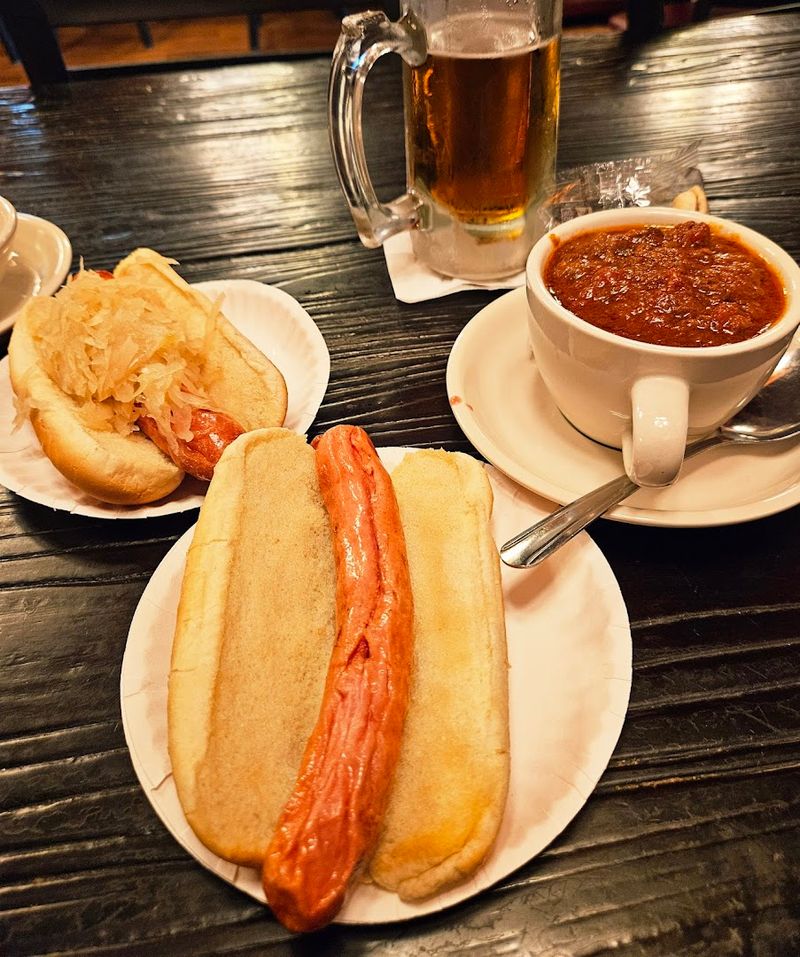
A return trip to Rutt’s Hut usually starts with a very small lie: “I’ll just grab one.” Then the smell hits, the menu board starts making suggestions, and suddenly one Ripper sounds lonely. That is the pull of the place.
It is not just that the hot dog is good, although it is. It is that the whole experience is repeatable in a way people crave.
You know what you are getting. You know it will arrive without fuss.
You know the relish will do that sharp, mustardy thing against the fried casing. You know the first bite will be too hot, because patience is apparently not part of the tradition.
The hours help, too. Since Rutt’s Hut is open from morning into the evening, and later on Fridays and Saturdays, it fits into real life instead of demanding a special occasion.
It can be lunch after errands, a stop before heading home, a quick detour with someone who has never been, or a nostalgic visit for someone who has been going since childhood. The prices also keep the ritual feeling accessible.
When a regular hot dog is listed at $2.35, fries at $2.20, and onion rings at $2.85, the meal still has that rare old-school feeling of being casual in both mood and cost. But the bigger reason people come back is simpler than any menu detail.
Rutt’s Hut tastes like itself. In a state where everyone has opinions about the best slice, the best diner, the best bagel, and the only acceptable name for pork roll or Taylor ham, that kind of identity counts.
The Ripper gives you the snap. The relish gives you the argument.
Together, they give Clifton a hot dog stand people keep talking about long after the paper plate is empty.
Share this story