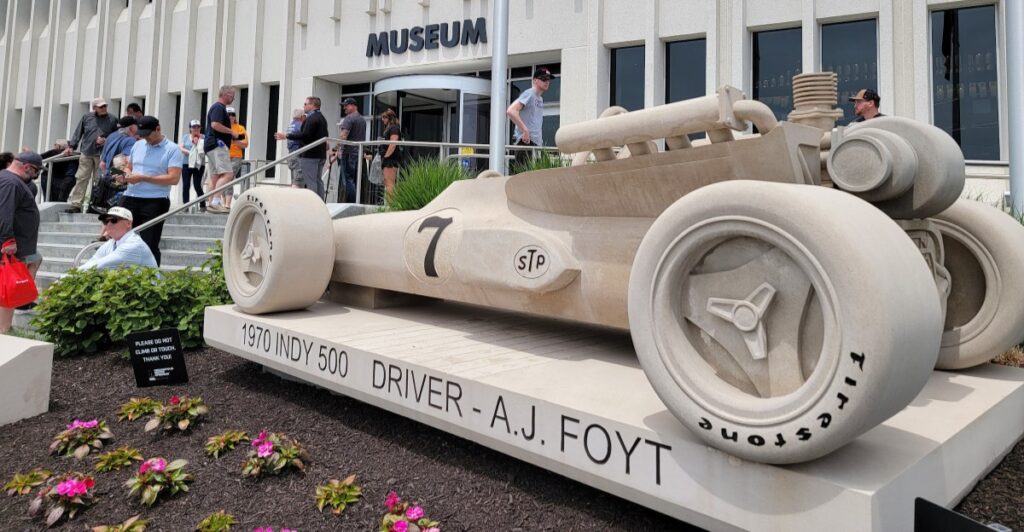
Few museums can compete with having one of the world’s most famous racetracks right outside the door. The Indianapolis Motor Speedway Museum puts more than a century of racing history within arm’s reach, surrounding visitors with legendary cars, gleaming trophies, and stories from the drivers who helped make the Indy 500 an international spectacle.
Freshly renovated exhibits bring that history to life in ways that can captivate even people who rarely follow motorsports. There is speed, engineering, competition, and plenty of Indiana pride packed into the experience. You do not need to be a racing fan to understand why this Indianapolis museum turns heads.
A Museum Built Inside the Racetrack Itself
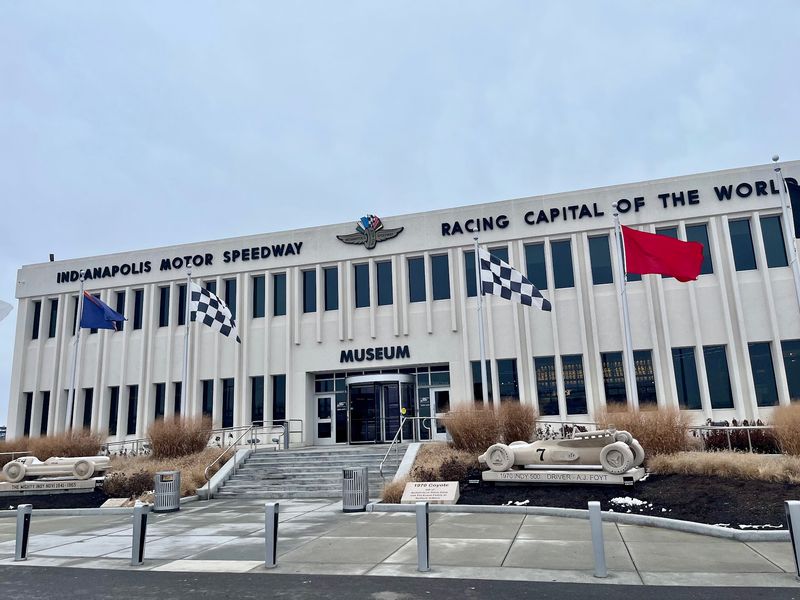
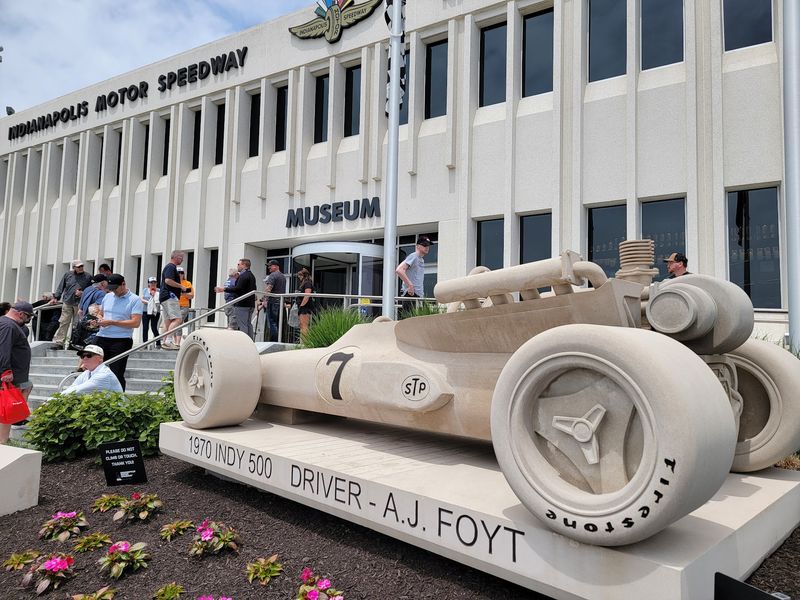
Picture a museum where the parking lot sits inside a racetrack. At the Indianapolis Motor Speedway Museum, that is exactly the setup. The building rests in the infield of the famous 2.5-mile oval, so the track wraps around you before you even buy a ticket.
Look up while walking toward the entrance and you will spot the tall grandstands stretching along the front straightaway.
The glass-and-steel Pagoda, the timing tower that rises over the finish line, pokes above the skyline. On some days, a car might even zip around the track while you stroll outside, and the engine noise bounces off the empty seats.
Location changes everything here. Most car museums sit in a quiet building far from where history happened. This one is planted right on the spot where drivers have battled since 1909, which gives every display extra weight. A trophy means more when the finish line it honors is a short walk away.
The grounds are huge. The Speedway ranks among the largest sporting venues on Earth, with room for hundreds of thousands of fans on race day. Without a crowd, the space looks wide open and a little unreal, like a giant stage waiting for the show to start.
Getting there is simple. The address on West 16th Street leads you through a tunnel under the track, a fun moment for kids and adults alike since you are literally driving beneath the racing surface. Follow the signs once you pop out on the other side, and the museum appears straight ahead.
Bring your camera before heading indoors. The open lawn around the building offers clean shots of the grandstands and track, and those photos look best in morning light before the afternoon sun climbs high.
Rows of Race Cars Spanning More Than a Century
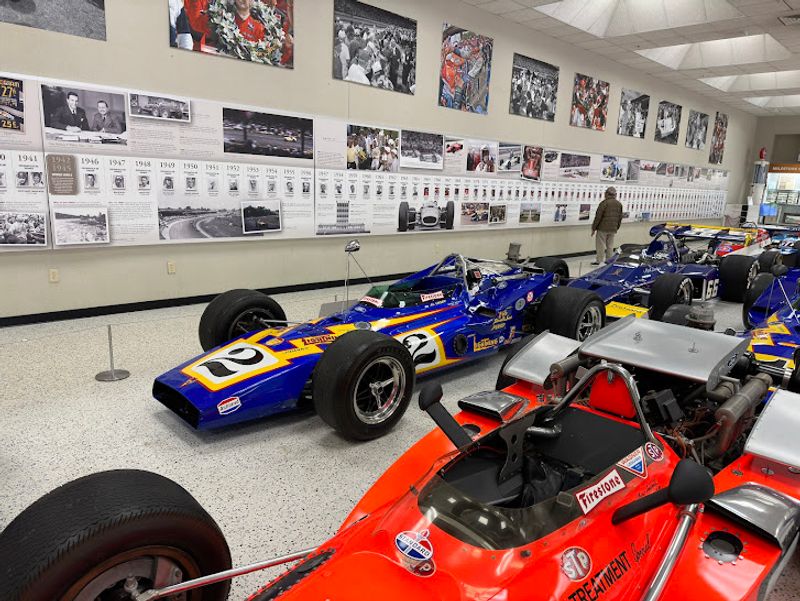
Early race cars look almost like bathtubs on bicycle wheels. Walk a few steps further and the shapes get lower, sleeker, and wilder, until you are standing beside modern IndyCars that seem built to slice through air. The collection turns into a timeline you can read with your eyes.
Around 50 cars sit on display at any time, with many more in the museum’s larger collection rotating in and out. That rotation means a return trip might show you machines you missed before.
Winning cars from different eras share the floor, so you can compare how builders solved the same problem, going faster, in totally different ways.
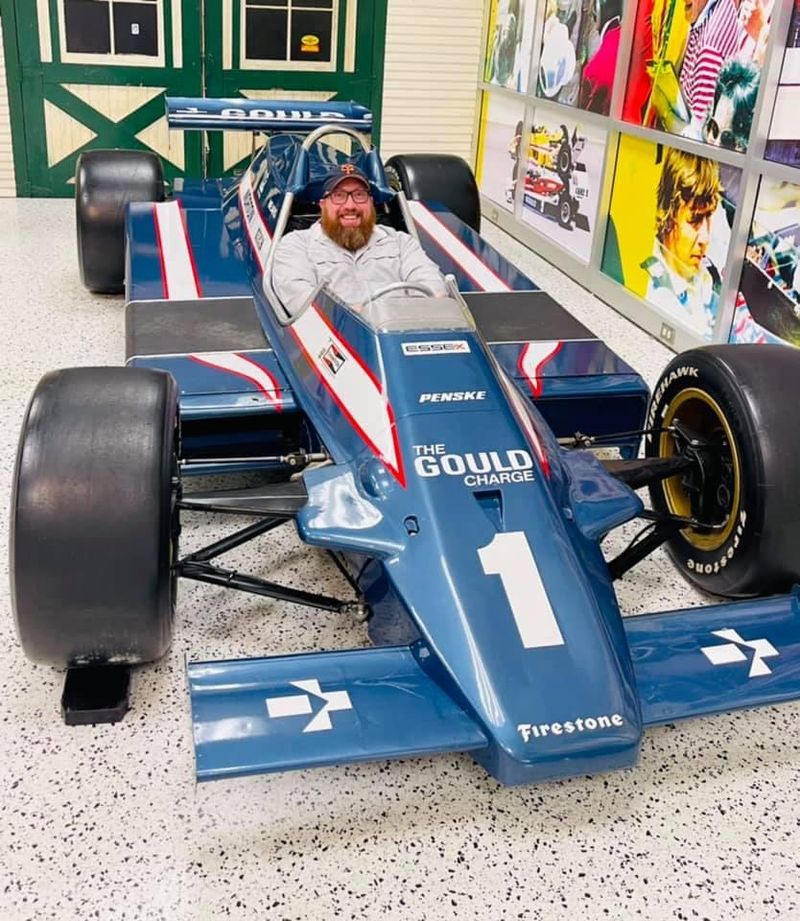
Pay attention to the small stuff. Early cars have exposed engines, skinny tires, and seats for a riding mechanic who helped the driver watch for trouble. Later models tuck the driver deep inside a narrow tub, with wings on the front and back pressing the car down onto the track.
A special group of official pace cars adds a splash of color. These are the street-style cars that lead the field before the green flag waves, and their paint jobs range from classic to flashy. Car fans often spend extra time here spotting models they recognize from the road.
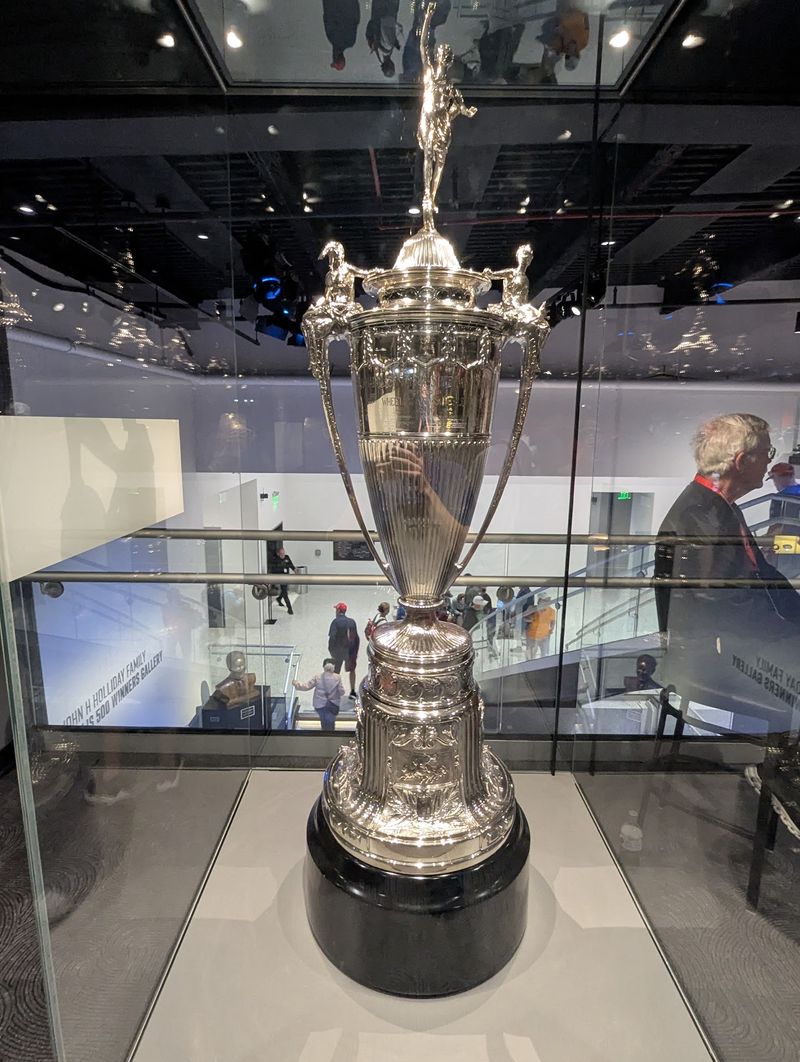
A wing honoring Penske Racing, one of the most successful teams in Indy history, highlights the machines behind many wins. The famous Borg-Warner Trophy, covered in the sculpted faces of winners, also towers over visitors and is much bigger than it looks on television.
Plan at least two hours for the galleries alone. Reading the placards slowly pays off, since each one explains what changed on that car and why it mattered. Families can make a game of guessing the decade before checking the sign.
Time Capsule Garages and the Surround-Screen Race Film
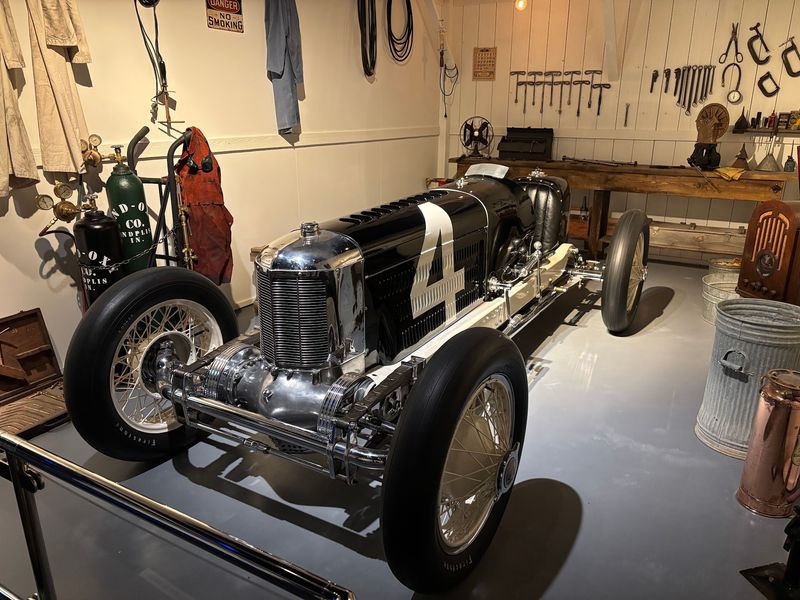
Tools tell stories too. Inside the museum, several race cars sit in recreated garages from their own time periods, surrounded by the wrenches, tire stacks, and workbenches a crew would have used back then. It is like peeking through a doorway into a pit crew’s workday from decades ago.
These time capsule garages make history easier to understand. A car on a plain platform looks cool, but a car next to a greasy toolbox and hand-painted signs shows how people actually built and fixed it. Kids can see that racing was always a team job, not just one brave driver.
Nearby, the Gasoline Alley area leads toward one of the museum’s biggest surprises, a film presentation that fills the walls and ceiling with moving pictures. Surround sound pours in from every side. Race cars roar past, crowds cheer, and military jets appear to thunder right overhead during a pre-race flyover moment.
Here is a smart tip. Head toward the center of the room and try to grab a front spot with nobody blocking your view. The picture wraps all the way around, so a clear sightline makes the scene much stronger and the speed feels real.
Skipping this film would be a mistake, even if you are short on time. It gives a sense of race day energy that a quiet hallway cannot, and it helps explain why hundreds of thousands of fans pack the stands every May.
Around the galleries you will also find helmets, fire suits, rings, and video interviews with drivers, including a large exhibit on Jeff Gordon. Each helmet shows paint designs that drivers chose to stand out at high speed, and spotting favorite colors becomes a fun side quest.
Hands-On Fun in the Interactive Zone
Ready to change a tire faster than your little brother? The interactive zone turns visitors into racers and pit crew members for an afternoon. Screens, buttons, and real equipment invite you to stop looking and start doing.
Racing simulators are the big draw. You sit in a cockpit-style seat, grip the wheel, and try to steer around the famous oval without spinning out. It sounds easy until you realize how fast the corners arrive and how gently real drivers must move their hands.
A mock pit stop lets friends or family members race each other at swapping a tire. Real crews finish their work in only seconds, and trying it yourself shows just how tough that is. Expect laughing, a little yelling, and maybe a rematch.
Other stations test your reaction time with quick computer games. You wait for a signal, then slap a button as fast as you can. Drivers need lightning reflexes, and these games give a fair idea of the split-second timing involved.
Younger kids are well covered too. Play areas give small visitors room to burn off energy between galleries, which helps parents enjoy the exhibits without constant reminders to stay still. Benches and rest spots are placed around the museum for grown-ups needing a breather.
Accessibility is handled well. Elevators connect the floors, so strollers, wheelchairs, and older relatives can move around comfortably. On hot summer days or chilly winter afternoons, the indoor layout also makes this a solid weather-proof outing.
Save the interactive zone for the middle of your visit rather than the start. Kids who have already seen the cars understand what they are simulating, and the hands-on break recharges everyone before the rest of the galleries.
Kissing the Bricks on an Indiana Track Tour
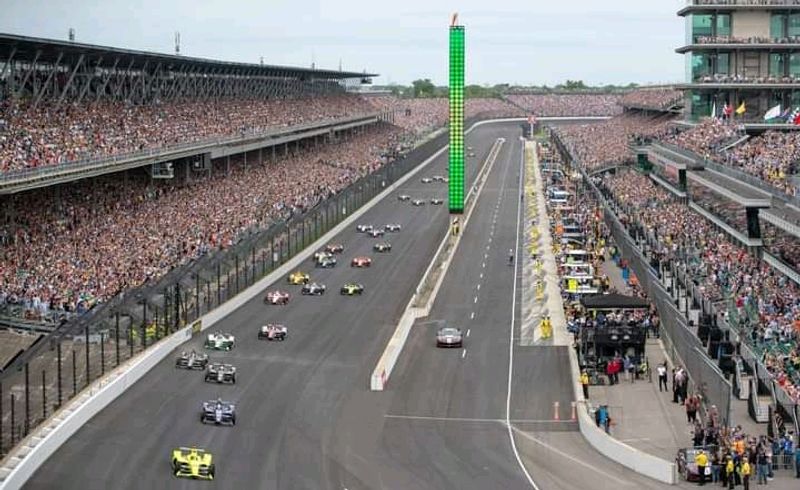
Winners do it, and so can you. Since the 1990s, champions at the Speedway have knelt at the finish line to kiss a strip of old bricks, and the Kiss the Bricks tour lets regular visitors copy that famous moment.
Those bricks carry serious history. The track was once paved entirely with millions of bricks, earning it the nickname the Brickyard. Today only a single yard-wide strip remains exposed at the start-finish line, a small reminder of the surface drivers raced on long ago.
The tour includes a ride around the full oval on a bus. Watching the banked turns from the track itself shows how steep and wide they really are. A handy tip is to sit on the driver side of the bus, since that faces the inside of the track and gives better views as you circle the corners.
When the bus stops at the bricks, everyone gets a chance to hop off, kneel down, and pucker up for a photo. Bring a friend to snap the picture, because the angle with the Pagoda rising behind you makes a great keepsake.
Timing matters. Right after a major race, you might even spot fresh tire marks from a winner’s victory burnout. Rain can pause tours, so on stormy days it helps to watch the sky and book when the weather clears.
Tours cost extra on top of museum admission, around fifteen dollars per person for this option based on recent pricing. That makes it one of the easiest add-ons to justify, since few people ever get to ride the same pavement as Indy 500 legends. Wear comfortable shoes. Getting on and off the bus and walking to the bricks adds up.
Golf Carts, Garages, and the Victory Podium
Some doors at the Speedway stay closed to most fans. A longer golf cart tour opens several of them, rolling small groups through corners of the property that regular ticket holders rarely see up close.
Stops can include the Pagoda, the media center where reporters write race stories, the winner’s circle, and the famous garage area. Standing where champions have celebrated with milk, a long Indy tradition, puts you inside the scenes you have watched on TV.
This tour runs longer and costs more than the bus ride, roughly fifty-five dollars based on recent pricing, and it lasts around an hour and a half. The price buys time and access, plus smaller groups that make asking questions easy.
Guides make a huge difference. Many are longtime fans or volunteers who know tiny details about the track, like which driver crashed where or how the garages have changed. Their stories turn empty buildings into places full of drama.
A shorter podium tour is another option for visitors who want a taste of the behind-the-scenes spots without the full ride. Choosing between them depends on your schedule and how deep you want to go. Hardcore racing fans usually pick the golf cart. Casual visitors with kids might prefer something quicker.
Weather plays a role here as well. Carts are open to the air, so cold winter days can make the ride chilly, and summer afternoons get hot. Dress in layers and bring water during warmer months.
Booking ahead is smart for weekends and busy race months, when spots fill fast. On quiet weekdays, you may be able to decide on the spot. Either way, check tour times at arrival so you can plan museum browsing around your departure.
Smart Timing, Tickets, and Why It Earns Its Fame
Nine to five, seven days a week. That steady schedule makes the museum easy to squeeze into almost any Indianapolis trip, whether you are in town for a conference, a family visit, or a race weekend.
Admission recently ran around twenty-five dollars per adult, with tours added separately. Costs can climb for a family, so it helps to decide ahead which extras matter most. Many visitors find one tour plus the museum hits the sweet spot.
Crowds shift with the calendar. May brings Indy 500 fever, and race weeks fill the grounds with fans. For a calmer visit, try a weekday outside major events, or even a rainy day, when the halls often feel roomy and relaxed.
Expect to spend about three hours in the museum alone, longer with a tour. The building involves plenty of walking, so sneakers beat sandals. Food is available on site, and bringing your own snacks is allowed, which helps with hungry kids and tight budgets.
Recent renovations gave the galleries a clean, modern look with brighter lighting and fresh storytelling. Staff and volunteers roam the floors ready to answer questions, and their knowledge often surprises first-timers who came in knowing nothing about racing.
So why do travel lists rank this place among the planet’s most incredible stops? It combines a world-famous venue, a deep car collection, hands-on fun, and rare access to sacred racing ground in one visit. Few museums let you study a winning car in the morning and kneel at its finish line after lunch.
Arrive near opening time for the quietest galleries. Head to the cars first, grab lunch, then save your tour for the afternoon, when you will appreciate every turn of the track even more.
Share this story