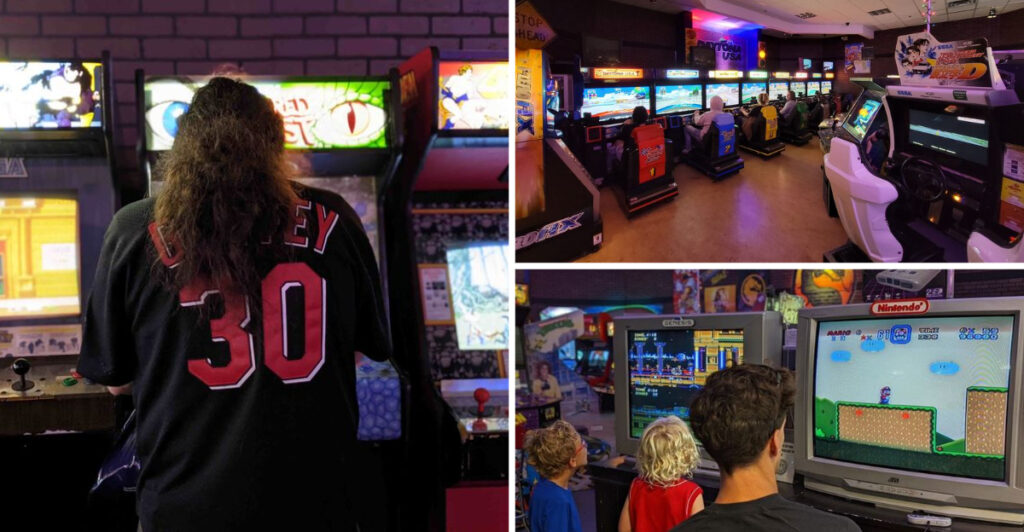
Boss Battle Games in Indianapolis is the kind of place that can make a regular afternoon feel like a trip back in time. It is a video arcade packed with pinball machines, classic cabinets, racing games, and more, all surrounded by glowing arcade lights that echo the mall arcades many people remember from the 1990s.
The best part is that the old-school look is matched by a simple all-day admission model, so the focus stays on playing instead of feeding machines with coins. For anyone curious about why this Indiana spot stands out, the details inside tell the story.
Neon Glow, Dark Room, Instant Time Warp
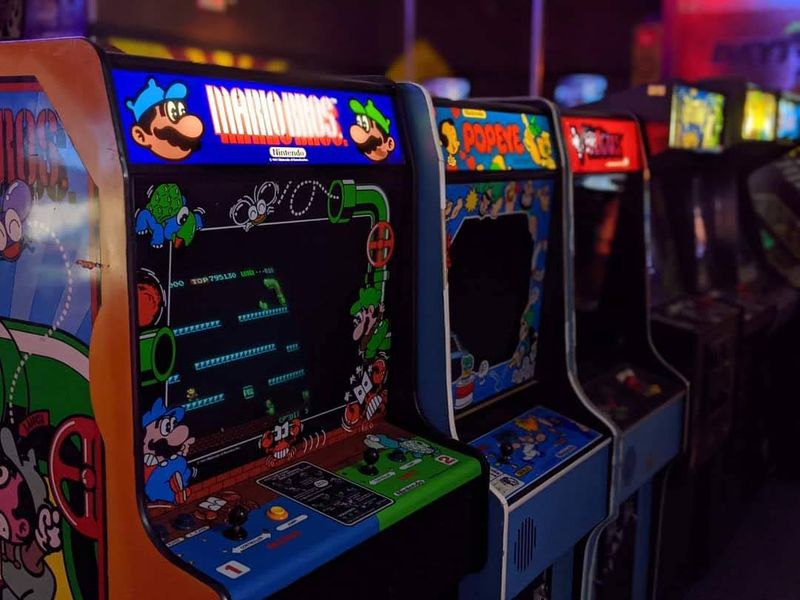
Bright color hits first. At Boss Battle Games, the mix of glowing screens, lit marquees, and pinball backglasses creates the kind of room that instantly recalls the arcade corner of an older shopping mall, where every machine tried to outshine the one beside it.
The space works because it stays true to the visual language of arcades instead of dressing it up into something overly polished. Light bounces across cabinets, score displays blink in every direction, and the room keeps that slightly dark, game-first look that helps the machines stand out.
Rather than feeling like a modern entertainment center with a retro theme, it reads as a real arcade built around the games themselves. A 1990s mall arcade was never only about playing. A 1990s mall arcade was never only about playing.
It was about the glow, the noise, the sense that every machine held a different world, and the way rows of cabinets made even a short visit feel larger than life. Boss Battle Games taps into that same visual rhythm with a packed floor, a strong lineup of illuminated machines, and enough variety that the room never looks flat or repetitive.
Even the practical setup adds to the effect. Since the business uses a flat admission model instead of constant coin drops, nobody has to keep stepping back from a game to fish for tokens or swipe a card after every round.
The room keeps moving, and the eye stays on flashing start buttons, racing seats, and pinball tables instead of payment screens.
Some places borrow nostalgia as decoration. Here, the look grows directly out of the machines, which is exactly why the neon lands so well.
A Retro Arcade That Actually Centers the Games
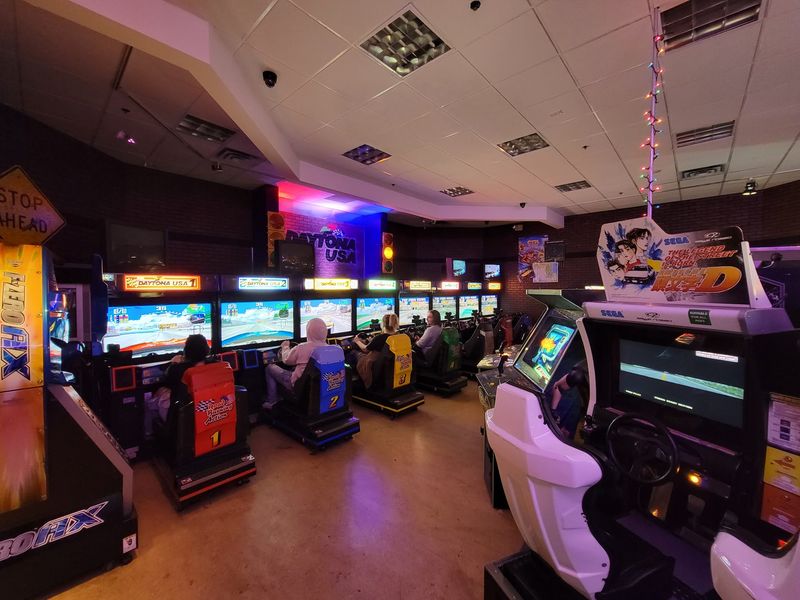
Plenty of places use retro as a style word. Boss Battle Games earns it by being an actual video arcade first, with a broad game selection spanning classic cabinets, pinball, racing games, fighting games, rhythm games, and console setups for older titles.
That range helps the arcade appeal to different generations without changing its identity. Someone looking for old-school staples can settle in at a vintage cabinet or pinball machine, while another player can head toward a racer, rhythm game, or versus fighter.
The lineup is not built around one novelty attraction. Instead, it recreates one of the best parts of traditional arcades: having many completely different kinds of games within easy reach.
That variety also encourages experimentation. A familiar title might pull someone in first, but unlimited play makes it easy to try a machine that would normally get passed over.
There is no need to decide whether an unfamiliar game deserves another swipe or handful of tokens. Players can test it, move along, and circle back later if it clicks.
That freedom brings back the wandering quality that made older arcades so entertaining. A visit does not have to follow a plan or revolve around one headline attraction.
Pinball can lead to an arcade classic, which can lead to a racing game, followed by something entirely unfamiliar. The mix also keeps nostalgia from becoming the arcade’s only selling point.
Older machines provide the throwback appeal, while the broader selection gives younger players and longtime gamers plenty to explore on their own terms. Retro works best when it is active, noisy, and full of options. At Boss Battle Games, the machines are not background decoration. They are the reason the place exists.
Why the All-Day Wristband Changes the Whole Mood
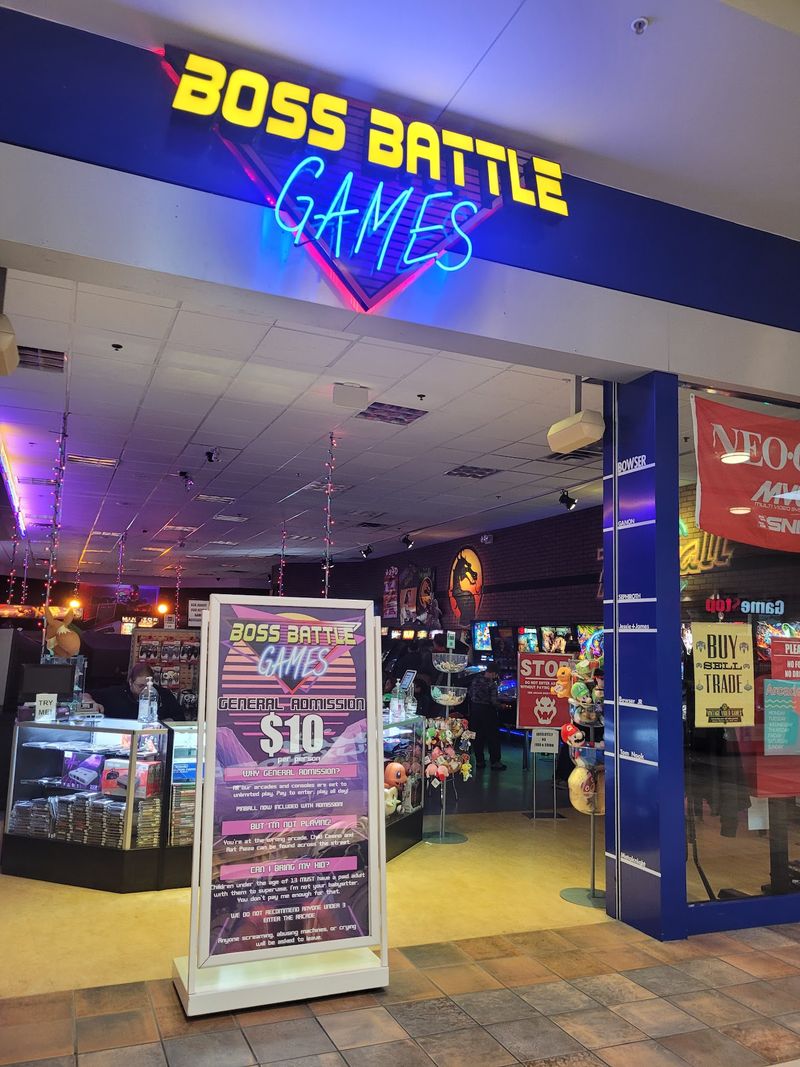
One small wristband changes the pace of the visit. Boss Battle Games uses an all-day admission model, and that setup quietly solves one of the biggest problems with many modern arcades, where fun keeps getting chopped up by swipes, credits, and the steady math of every single play.
General admission is currently $15 per person and includes unlimited play, with hours that usually begin at noon and run later on Friday and Saturday. That means the day can unfold in a much looser way.
Instead of asking whether a game is worth another dollar, people can try something odd, return to an old favorite, or keep battling a difficult machine without watching money disappear round by round.
It also restores a very old arcade habit: wandering. In the mall era, a lot of the fun came from drifting from cabinet to cabinet, spotting a game that looked cool, and giving it a chance.
Unlimited play brings back that freedom. A racing game does not have to beat out pinball for the last few tokens. A tough fighting game does not feel risky to test. Curiosity becomes part of the entertainment.
Since Boss Battle Games sits inside Castleton Square Mall, same-day reentry can be especially useful. Visitors can play for a while, step out for food or shopping, then return later.
Flat-rate admission does more than save coin pockets. It removes friction, and once that friction is gone, the arcade starts behaving like the free-roaming playground people remember from decades ago.
Racing Seats, Fighters, and Pinball Keep the Energy Moving
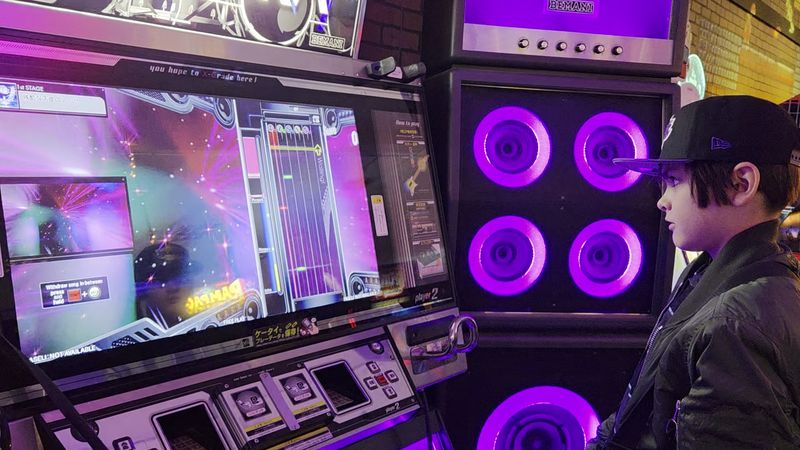
Not every arcade has a heartbeat. At Boss Battle Games, the energy seems to come from the mix of machine styles, especially the combination of racing games, fighting games, and pinball, three formats that each create a different kind of motion in the room.
Start with the racers. Public details point to racing games as one of the standout categories, and that makes sense in a place chasing the spirit of a 1990s mall arcade.
Driving cabinets are visual magnets. They are larger, louder, and easier to spot across the floor than many standard uprights.
A sit-down racing cabinets or linked competition changes the room because it turns one corner into a mini spectacle, complete with engine sounds and people leaning hard into turns. Fighting games bring a different rhythm. Instead of broad motion, they create face-to-face intensity.
Two players stand at a cabinet, a small crowd can gather, and every match has a built-in start and finish. That format has long been central to arcade culture, and it gives a retro venue an edge that pure single-player nostalgia cannot match.
Boss Battle Games has been associated with fighting game tournaments as well, which fits naturally with that style of play.
Then there is pinball, another frequently mentioned strength. Pinball adds flash, mechanical noise, and a very different kind of skill from joystick games.
It slows some players down and locks others in for long sessions. Visually, a row of lit tables helps complete the classic arcade picture.
Put those categories together and the floor never settles into one speed. One section hums, another rattles, another erupts, and the arcade keeps shifting in a way that holds attention.
Why This Indiana Arcade Feels Right at Home in a Mall
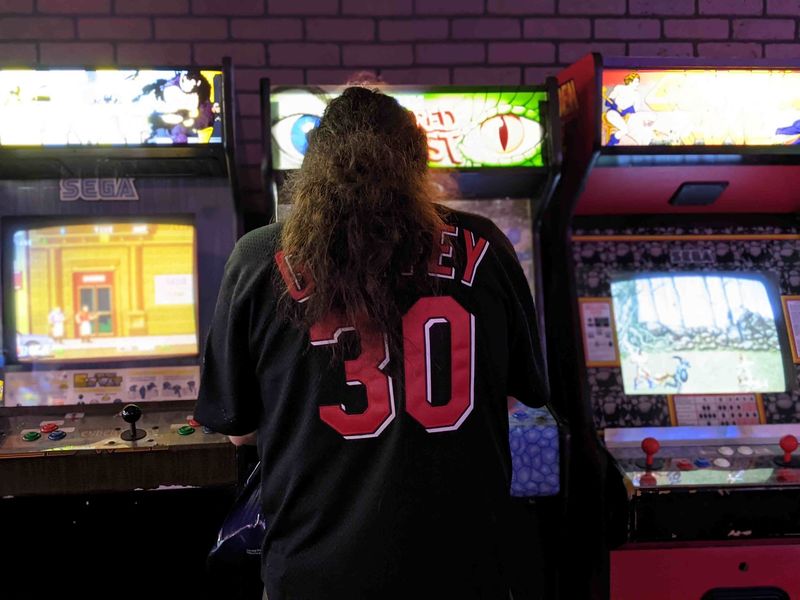
The mall connection at Boss Battle Games is not just part of the nostalgic theme. The arcade is actually located inside Castleton Square Mall in Indianapolis, which gives the 1990s comparison a much stronger foundation than retro machines and glowing screens alone.
That setting changes the experience before the first game even starts. Visitors can spend time browsing stores, stop for food, and then step into an arcade filled with pinball machines, classic cabinets, racers, and other games.
It recreates a familiar pattern from the height of mall culture, when an arcade could turn an ordinary shopping trip into something worth stretching out for another hour. Castleton Square also gives the throwback atmosphere a sense of place that would be difficult to manufacture elsewhere.
The arcade does not have to build a fake mall backdrop or surround its machines with decorative references to the era. The shopping-center setting is already there, while the glowing cabinets and game-heavy interior provide the shift in mood once visitors step inside.
The all-day admission setup fits naturally into that environment. Rather than treating the arcade as a single timed attraction, visitors can make it one part of a longer outing.
Play for a while, step away for food or shopping, and the mall offers plenty to do before another round of games. For Indianapolis families who remember when arcades were a standard part of a mall trip, the combination may feel especially familiar.
Younger players get the same basic formula without needing the nostalgia: stores, food, games, and plenty of reasons to linger. That is what makes the location such a strong part of Boss Battle Games’ identity.
The arcade does not simply imitate the old mall experience. It brings that style of gaming back inside an actual Indiana mall.
A Family Outing Without Ticket Counters or Prize Math
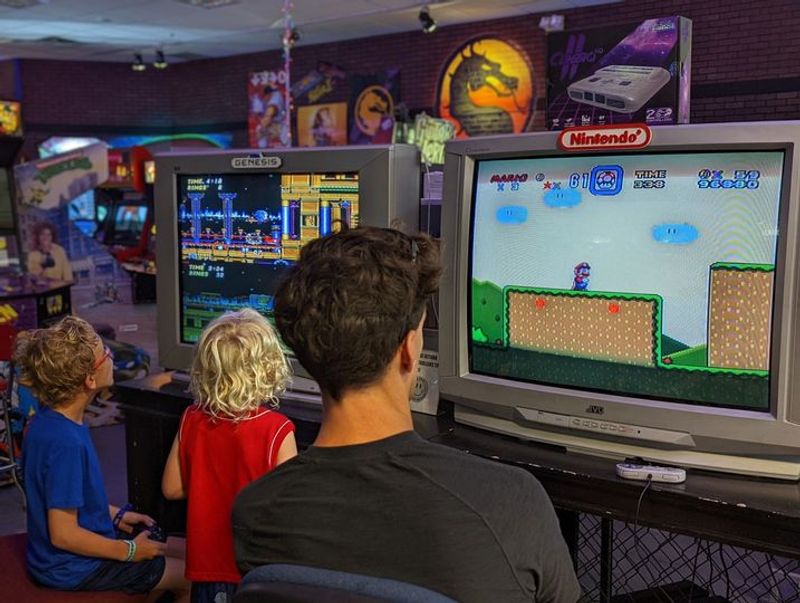
One of the biggest differences at Boss Battle Games is what is missing. There is no need to chase tickets, no giant prize wall shaping every decision, and no constant pressure to turn a short game into enough points for a plastic reward.
That changes the tone of a family outing. At redemption-heavy arcades, children can end up thinking about ticket totals and prizes as much as the games themselves.
Boss Battle Games shifts the attention back to playing. A parent can introduce a child to pinball, an old-school cabinet, or a racing game without calculating how many credits remain or whether another round is worth the cost.
The broad game selection also gives different generations room to find their own favorites. Adults who grew up around arcades may recognize machines and styles of play from earlier decades, while younger players can jump into racers, fighters, rhythm games, and other options without needing any connection to the nostalgia.
That cross-generational mix makes the arcade particularly well suited to a family outing. Parents and kids do not necessarily have to love the same games to enjoy the same visit, and unlimited play makes it easy to switch between machines or challenge each other without adding another charge every few minutes.
There is one practical rule families should know before arriving: everyone entering pays admission, including adults who expect to supervise rather than play. Knowing that beforehand makes it easier to decide whether the outing works for the whole group.
Once inside, however, that admission covers the games rather than feeding a cycle of credits and prize chasing. The result is refreshingly simple: pick a machine, press start, play as long as the competition stays interesting, then move on to the next one.
Part Arcade, Part Gathering Spot for Indianapolis Players
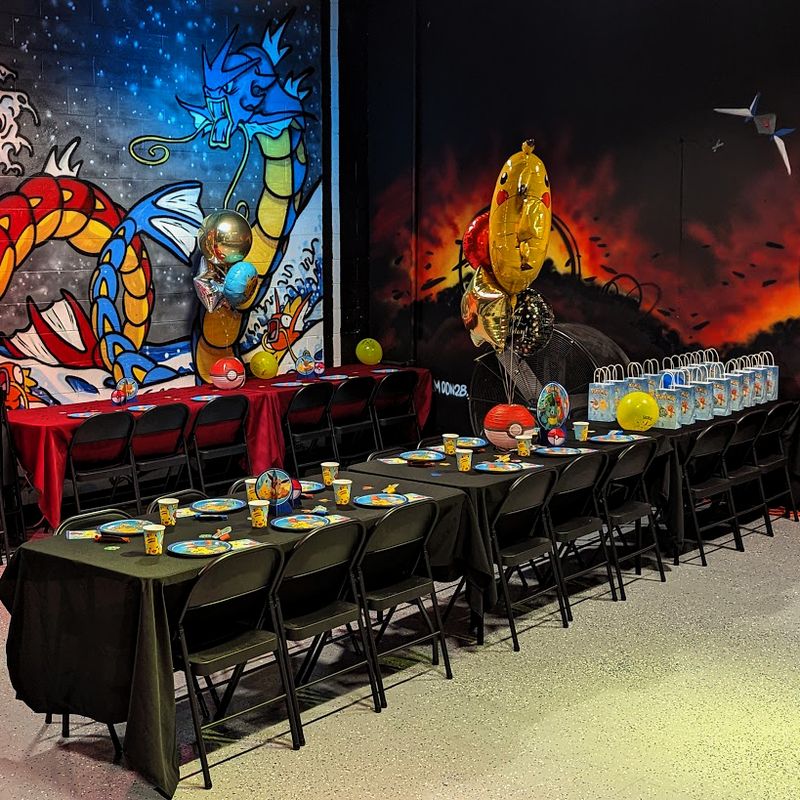
Some arcades are places people simply pass through. Boss Battle Games has a broader role, supporting parties, tournaments, private events, and other gatherings alongside everyday arcade play.
That activity helps separate the place from a collection of old machines preserved mainly for nostalgia. Boss Battle Games still celebrates classic arcade culture, but the games are being used for competition, social events, and long sessions with other players.
The past may provide much of the visual appeal, yet the arcade itself remains firmly active in the present. Competitive gaming is an important part of that picture.
Fighting games are naturally suited to in-person matches, where players can face each other, watch other rounds, and test their skills against someone standing only a few feet away. Organized events give that experience more structure and turn individual cabinets into gathering points for Indianapolis players.
Parties and private rentals broaden the audience further. Groups can build an event around unlimited arcade play rather than treating the machines as a short activity between other entertainment.
A dedicated party space also gives celebrations somewhere to regroup before everyone heads back onto the arcade floor. The business reaches beyond its own location as well, with game rentals available for conventions and other events.
That side of the operation shows how Boss Battle Games participates in the wider gaming community instead of relying entirely on people discovering it during a trip to Castleton Square Mall. That makes a fitting final layer to the story.
Boss Battle Games can recreate plenty of the sights and sounds associated with a classic mall arcade, but it is not trying to freeze that era behind glass. Tournaments, parties, events, and everyday players keep the machines in use and the culture around them moving forward.
Share this story