The first clue that Jersey Spirits Distilling Co. is not your usual night-out spot is the address. You are not pulling up to some polished Main Street storefront with Edison bulbs in the window and a chalkboard pretending to be rustic.
You are heading into the Pio Costa Manufacturer’s Complex in Fairfield, past the kind of working buildings where New Jersey actually makes things.
Then, tucked inside Building 7, Unit 40B, you find the surprise: a true grain-to-glass distillery turning regional grains, fruit, botanicals, and a lot of hands-on know-how into vodka, bourbon, whiskey, gin, rum, grappa, and Jersey Hooch.
It feels very Jersey in the best possible way. Practical on the outside, inventive on the inside, and not too interested in being precious about itself.
Come in for a tour or tasting, and suddenly that cocktail in your hand has a backstory.
The Fairfield Distillery Making New Jersey Spirits From Scratch
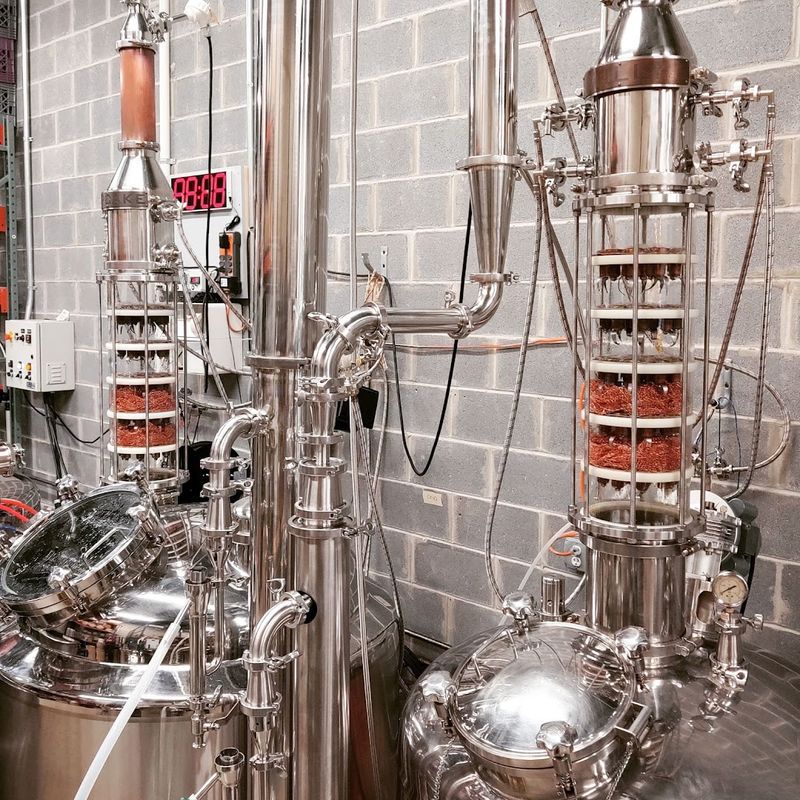
Fairfield may not be the first place that pops into your head when someone says craft spirits, which is exactly why Jersey Spirits Distilling Co. is such a satisfying local find. This is not a tasting room pretending to be a distillery while someone else does the hard part in another state.
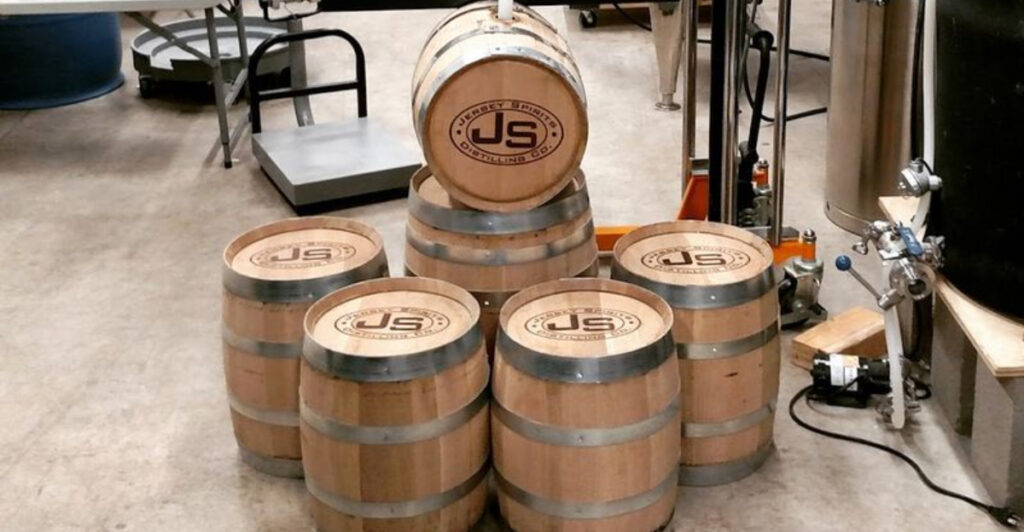
Jersey Spirits makes its products inside its own distilled spirits plant on Bloomfield Avenue, handling the messy, technical, very real work of mashing, fermenting, distilling, aging, blending, bottling, and packaging right there in Fairfield.
That matters because plenty of brands can buy bulk spirits, dress them up with a label, and tell a nice story.
Here, the story is in the tanks, barrels, stills, and bottles. The distillery describes itself as hyper-local, and that is not just a cute phrase for the merch table.
Its raw materials come from New Jersey farms when possible, with other grains, fruits, and produce sourced from nearby regional providers in New York and Pennsylvania when needed. Even the location has that wonderfully unpolished North Jersey practicality.
You are in an industrial complex, not a fake farmhouse, and that makes the whole thing feel more honest.
The cocktail lounge is open Wednesday and Thursday from 4 p.m. to 7:30 p.m., Friday from 4 p.m. to 9 p.m., Saturday from 2 p.m. to 9 p.m., and Sunday from 2 p.m. to 6 p.m., so it works just as well for an after-work stop as it does for a weekend outing.
The tour side is flexible, with self-guided information in the tasting room and staff-led tours available by appointment, announcement, or when the right team is on hand. That casual setup fits the place.
You are visiting a working distillery, not filing into a theme park attraction.
Why Grain to Glass Matters More Than You Think
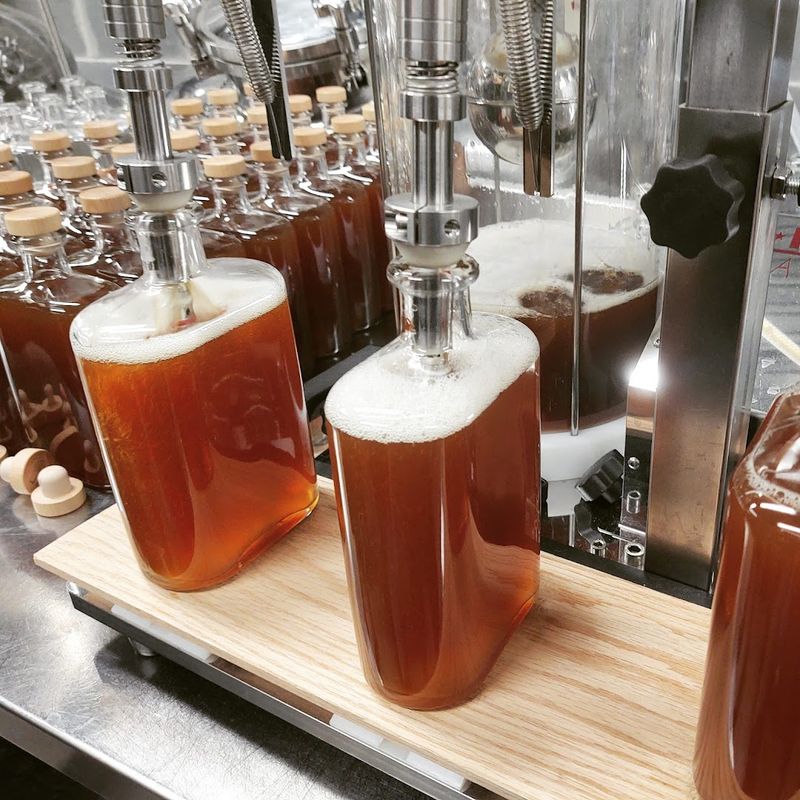
The phrase grain to glass gets thrown around so much that it can start to sound like something designed for a candle label. At Jersey Spirits, it is more literal than decorative.
The point is control. When a distillery starts with raw ingredients instead of someone else’s finished alcohol, every choice leaves a fingerprint on the final spirit.
The grain bill matters. The water matters. The yeast matters. The length of fermentation matters.
The proof coming off the still matters. The barrel, the blending, the resting, the filtering, and even the decision not to add artificial flavoring all matter.
That is why a tour here can change how you look at a bottle on the bar. Vodka is no longer just “the clear one.” Bourbon is no longer just “the Kentucky thing,” because bourbon can legally be made anywhere in the United States as long as it follows the rules.
Gin is not just juniper in a fancy glass. It is a spirit built around botanicals, balance, vapor, timing, and restraint.
Jersey Spirits leans into that educational side without making guests feel like they accidentally enrolled in night school. Their own TRUE philosophy stands for Taste, Real, Unique, and Educate, which is a pretty good summary of the visit.
The distillery emphasizes real ingredients, no chemical flavor additives, and a willingness to make products that do not feel copied from the big national brands. That last part is important.
Craft spirits are most interesting when they are not trying to be a smaller version of something mass-produced. They are better when they taste like a person made decisions along the way.
At Jersey Spirits, those decisions are part chemistry, part palate, and part stubborn New Jersey independence. By the time you hear how many steps stand between raw grain and a neat pour, that cocktail in front of you starts looking a lot less simple.
Inside the Process That Turns Raw Ingredients Into Smooth Spirits
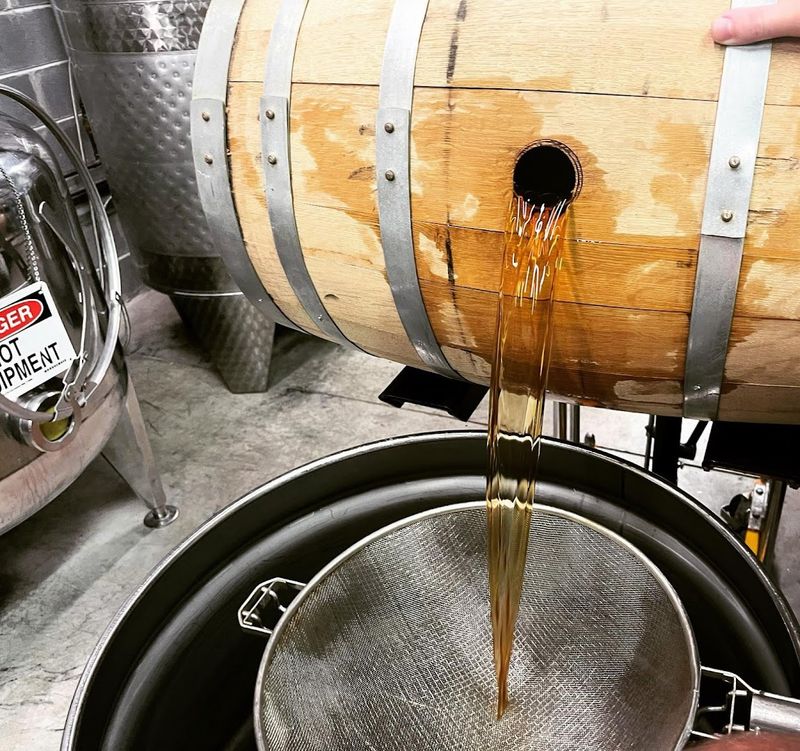
There is a moment on a distillery visit when the romance wears off in the best way. You stop thinking about polished bottles and start noticing hoses, tanks, barrels, valves, temperatures, and the faint smell of fermentation doing its weird little magic trick.
Jersey Spirits makes that process feel understandable without sanding off the science. Alcohol is not created during distillation, which surprises a lot of people.
The alcohol begins with fermentation, when yeast consumes sugar and produces alcohol as a byproduct. Distillation comes after that, separating alcohol from water and other materials while helping shape the flavor.
The distillery’s process starts with grains from local and regional farms and providers, then filtered water run through a reverse osmosis system. From there, they add a proprietary mineral blend, adjust pH, heat the water, mash it with grain, pitch yeast, and let fermentation run for several days.
Once fermentation is finished, the grain is strained out and the liquid heads to the still. That is where the careful part begins.
Distillers collect and separate cuts, deciding what belongs in the finished spirit and what does not. Aged spirits go into barrels.
Clear spirits rest. Finished products are proofed with steam-distilled water, then filtered, bottled, and packaged.
It is not glamorous in the champagne-commercial sense, but it is fascinating. Jersey Spirits is also a continually working facility, with production operations running four to five days a week, so you may see tanks in use, stills running, or bottling happening depending on when you visit.
That unpredictability is part of the charm. The best tours do not feel canned.
They feel like you stepped into someone’s actual workday and got a better drink out of it.
The Tasting Room Experience Feels Equal Parts Cozy and Clever
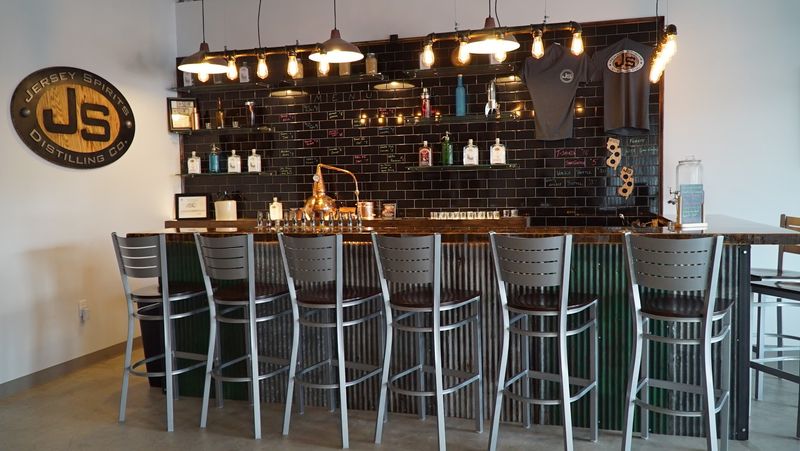
Before you even taste anything, look at the bar. The Jersey Spirits tasting room has the kind of details that reward people who actually pay attention to the room they are standing in.
The bartop was refurbished from beams taken out of a late-1800s barn in South Jersey. The weathered corrugated steel on the bar came from a mid-1800s chicken coop in northwestern New Jersey.
The tabletops were made from reclaimed floorboards from another South Jersey barn. That is not generic “rustic chic.” That is New Jersey material getting a second life inside a New Jersey distillery, which is much better.
The space still feels like part of a manufacturing facility, but someone clearly cared enough to make it warm, bright, and comfortable. You can sit at the bar, grab a table, read the wall panels about the distilling process, and work your way through a tasting or cocktail without needing to pretend you know every technical term.
The drink menu is where the place gets especially fun. You can keep it classic with a martini or Old Fashioned, but the lineup also gets playful with seasonal specials and flights.
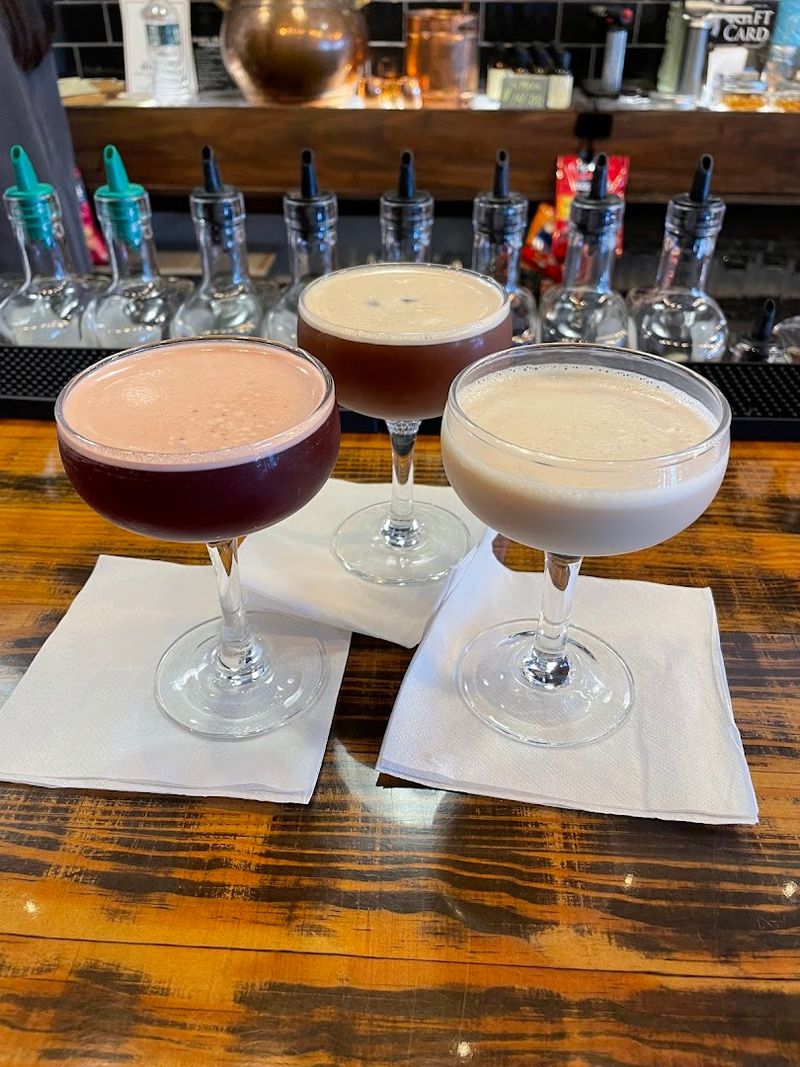
The espresso martini flight, for example, has included a classic version, a raspberry chocolate version, and a pistachio version, which is exactly the sort of thing that makes a group stop mid-conversation and start comparing sips.
The distillery also sells bottles, shirts, glasses, barware, and other take-home goods from the tasting room, so it doubles as a retail stop.
There is no need to dress it up too much. It is a good room for people who like cocktails, people who like local businesses, and people who appreciate the rare New Jersey establishment that can be both practical and a little mischievous.
From Vodka to Bourbon Every Bottle Has a Jersey Story
The bottle lineup at Jersey Spirits is bigger than many first-time visitors expect. This is not a one-vodka, one-gin, thank-you-for-coming kind of place.
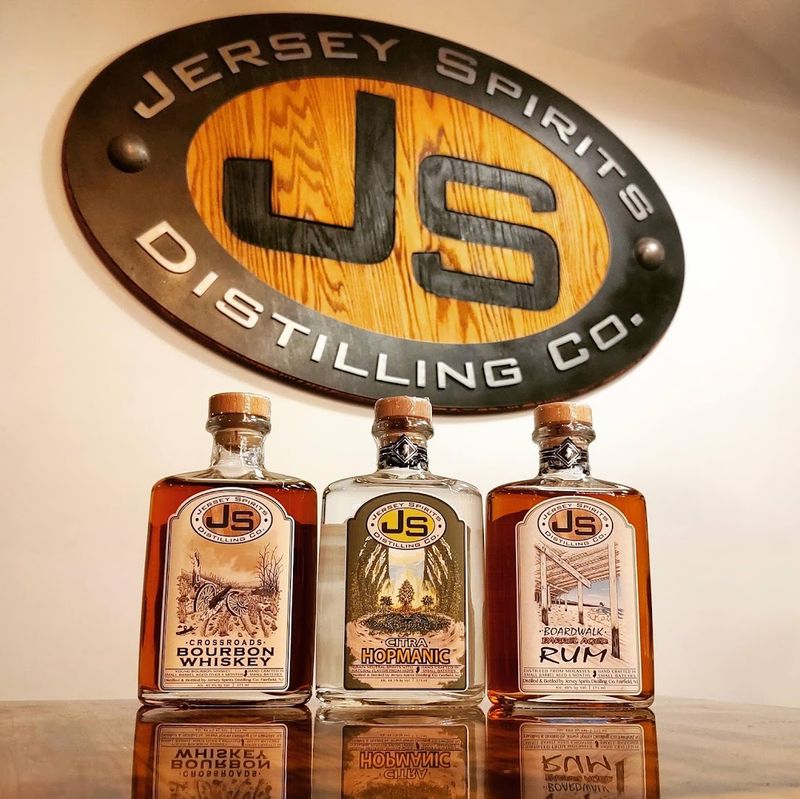
The distillery makes vodka, flavored vodka, gin, rum, bourbon, American whiskey, rye whiskey, single malt whisky, grappa, bitters, and Jersey Hooch, which is their licensed, aboveboard answer to the old moonshine idea. The names alone give the shelves a sense of place.
Main Street Vodka is made from an all-corn mash, distilled to a high proof, and filtered through activated carbon. Main Street Hot Pepper Vodka uses serrano, jalapeño, habanero, and Italian long hots for actual pepper flavor instead of fake heat.
DSP.7 Gin starts with a corn-based neutral grain spirit and is redistilled through a vapor basket with botanicals and spices. Boardwalk Rum brings the shore into the name without turning the bottle into a souvenir shop gimmick.
The whiskey side is where New Jersey pride gets especially loud. Patriot’s Trail Bourbon is a high-rye bourbon made from corn, rye, and barley, aged in new American oak.
Crossroads Bourbon is made from corn, rye, wheat, and barley and is tied to the distillery’s claim of producing the first aged bourbon whiskey in New Jersey since before Prohibition.
Then there are the sweeter, stranger, more seasonal ideas: Jersey Hooch Apple Pie made mostly with cold-pressed apples, Holiday Nip with New Jersey cranberries, apples, maple syrup, and ginger, and PBJ Sandwich Hooch, which sounds like a dare until you remember that fun is allowed.
The best part is that the tour gives those bottles context. You are not just sampling flavors.
You are tasting a local business thinking out loud.
Why This Tour Might Make You Rethink Your Next Cocktail
Most people order cocktails by habit. Vodka soda because it is easy.
Old Fashioned because it feels reliable. Gin and tonic because someone at the table reminded you gin exists.
A visit to Jersey Spirits nudges you out of that autopilot mode. Once you have seen how much work goes into the base spirit, the drink stops being only about the mixer, garnish, or glassware.
You start noticing whether the vodka has texture, whether the rye brings spice, whether the bourbon carries vanilla and oak without getting too heavy, whether the gin’s botanicals are sharp, floral, citrusy, or quietly weird in a good way. That is the real value of the tour.
It gives you just enough knowledge to become more curious without turning you into the person at dinner who lectures everyone about mash bills.
The self-guided displays in the tasting room help, and when staff are available for a guided tour or a deeper conversation, the experience can move from casual sipping into proper behind-the-scenes territory.
Jersey Spirits also offers more involved events, including blending-style experiences and classes, so there is room to go deeper if you are the type who hears “custom bourbon blend” and immediately straightens up in your chair. But even a simple visit can reset the way you think about craft spirits.
It becomes harder to treat a bottle as interchangeable after you have stood near the equipment, heard the process, and tasted the results within a few feet of where they were made. That is the quiet trick Jersey Spirits pulls off.
It makes craft feel less mysterious, less fussy, and more impressive at the same time.
Share this story