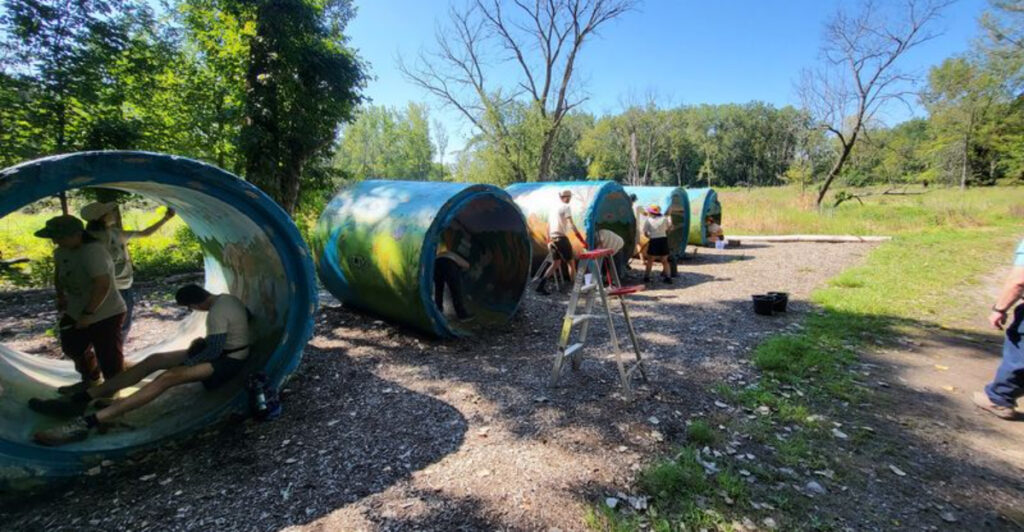
A painted concrete pipe in the woods is not usually a sign that you have made a good life choice, but at Teaneck Creek Conservancy, it is your first clue that this place plays by its own rules. One minute you are near Bergen County traffic, with I-80 and the New Jersey Turnpike doing their usual loud, impatient dance nearby.
The next, you are following a footpath past wetlands, old trees, bird chatter, recycled sculpture, and little flashes of art tucked into the landscape like someone hid them there for you to find. This is not a huge, rugged hike or a polished garden where everything feels arranged for a brochure.
It is scrappier, stranger, and more interesting than that. Set on 46 acres in Teaneck, this free nature preserve turns a short walk into a scavenger hunt through New Jersey’s environmental comeback story.
Teaneck Creek Conservancy Turns A Bergen County Walk Into A Treasure Hunt
A few seconds off the highway, the mood changes so quickly that it almost feels like a trick. Teaneck Creek Conservancy sits at 20 Puffin Way, tucked near Teaneck Road, DeGraw Avenue, Fycke Lane, Glenpointe, and some of the busiest pavement in North Jersey.
On paper, that sounds like the last place you would expect to find a quiet pocket of wetlands and woodland trails. In person, the contrast is exactly what makes it fun.
The preserve is open free of charge, 365 days a year, from dawn to dusk, which makes it one of those rare Bergen County escapes that does not require a ticket, a reservation, or a whole day of planning.
You can park in the limited lot near Puffin Way or look for street parking along Fycke Lane, then step into a place that feels surprisingly removed from the rush around it.
The trail system is not enormous, but that is one of its strengths. With just over 1.3 miles of groomed trails, Teaneck Creek is manageable enough for a relaxed walk, a kid-paced outing, or a quiet reset between errands.
The reward is not elevation or a dramatic overlook. The reward is paying attention.
One bend might bring you to an outdoor classroom. Another might reveal a painted installation, a carved detail, or a bench that feels more like a small artwork than a place to tie your shoe.
Even the signs and trail markers feel like part of the experience, nudging you to look closer instead of rushing through. This is the kind of place where “just a quick walk” quietly becomes 45 minutes of wandering, pausing, pointing, and wondering how many times you have driven past without realizing what was hiding back here.
This Former Dump Site Became A 46 Acre Eco Art Escape
Here is the part that makes Teaneck Creek feel especially Jersey in the best possible way: this pretty little escape had to fight its way back. The land was once tied to the construction mess and road-building boom around Routes 80 and 95, and for decades it carried the scars.
Old tires, broken concrete, asphalt, construction debris, and dumped material were not background details. They were part of the landscape.
In the early 1900s, the 46-acre property was even intended to become a landfill. A clay liner was placed on the land for that purpose, but the landfill itself never happened.
The liner stayed, the hydrology was disrupted, invasive plants took hold, and the site became one of those battered urban wetlands that people learn to ignore because fixing it seems too complicated.
Then, in 2001, a group of environmentalists, artists, educators, volunteers, community leaders, and Bergen County partners began treating the place not as a lost cause but as a challenge worth taking personally.
By 2006, Teaneck Creek Park had emerged with groomed trails, an outdoor classroom, and ecological art exhibits that turned the land’s damage into part of its identity. That is what makes the preserve feel different from a standard park.
It does not pretend the mess never happened. It uses the old debris as raw material, memory, and warning label.
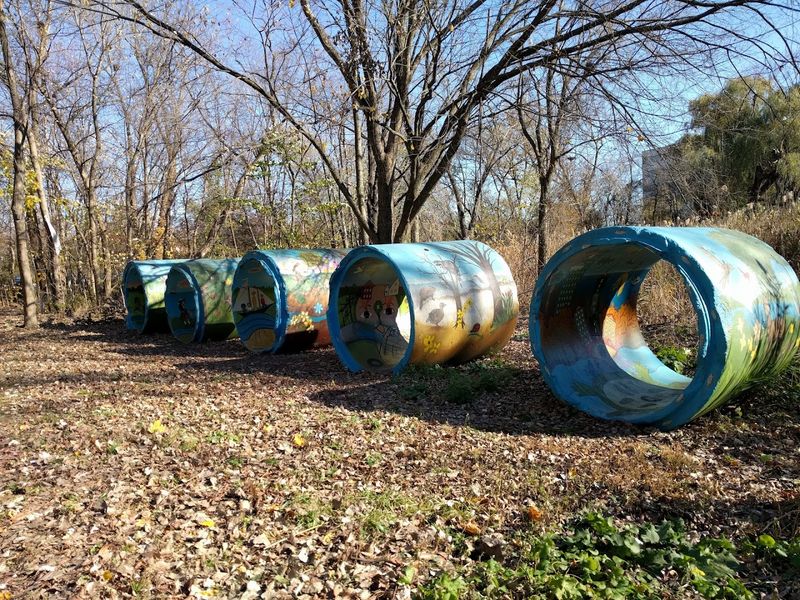
Chunks of highway concrete become sculpture. Drainage pipes become painted history lessons.
Rubble becomes a labyrinth. A major habitat restoration later brought even more change, restoring and creating 20 acres of wetlands in the Teaneck Creek watershed.
So when you walk here, you are not just passing through a pretty patch of trees. You are walking through a place that had to be argued for, cleaned up, reimagined, and rebuilt by people stubborn enough to see a park where others saw a dumping ground.
The Trails Are Easy But The Surprises Keep Coming
You do not need hiking boots, trekking poles, or a dramatic “I conquered the mountain” selfie face for this one. Teaneck Creek Conservancy is made for an easy wander, with a network of groomed paths that lets you loop through woods, wetland edges, open areas, and art stops without turning the day into a fitness test.
That said, easy does not mean boring. The trails work because they are layered.
One stretch feels like a neighborhood nature path. Another suddenly has the atmosphere of an outdoor gallery.
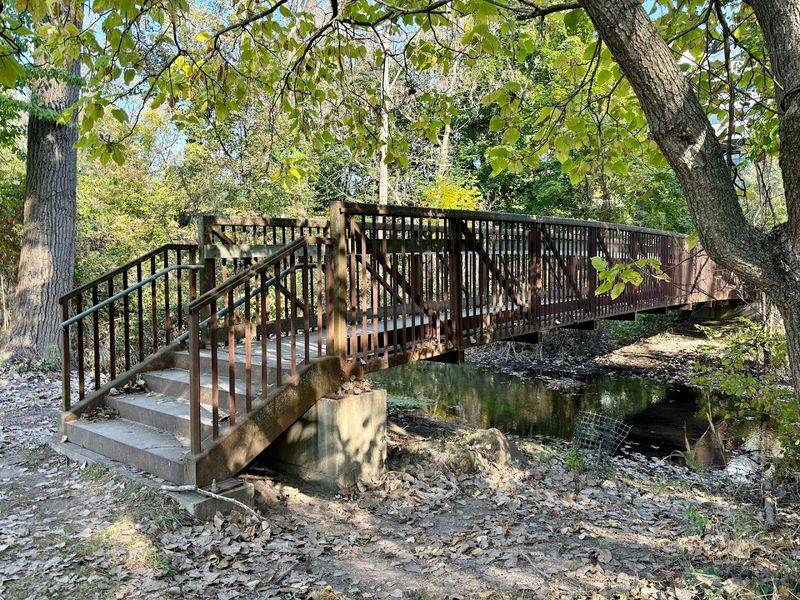
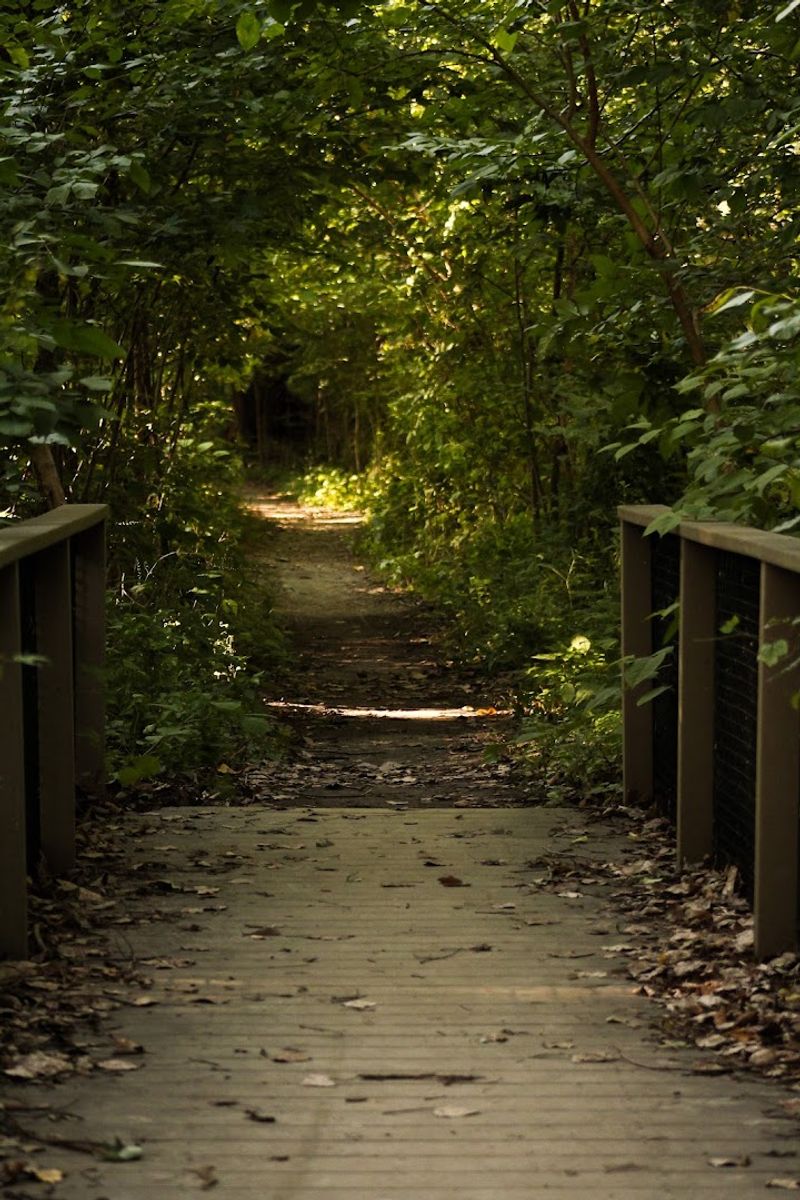
Another leads to a bridge, a creek view, or a spot where the trees close in just enough to make Bergen County feel much farther away than it is. There are multiple entrances, and each one gives the preserve a slightly different personality.
Puffin Way is the main practical starting point for many visitors, especially if you are driving. Fycke Lane has its own sense of arrival, with public-facing art and access to areas near the outdoor classroom.
The DeGraw Avenue entrance works better for pedestrians, while the eastern side connects toward the Five Pipes area and Glenpointe Bridge. The preserve asks for the usual common-sense respect, but with a few important specifics.
Stay on the trails, keep dogs leashed, do not enter the wetlands, and leave bikes and motorized vehicles out of the equation. This is a passive recreation space, not a speed course.
It is also worth knowing before you go that there are no bathrooms on site, so plan accordingly. That tiny practical detail matters, especially if you are bringing kids or making it part of a longer Bergen County outing.
What you get in exchange is a walk that never feels like it is simply moving from point A to point B. The trail map helps, but the better approach is to slow down and let the place reveal itself.
At Teaneck Creek, the best discoveries are usually a few steps past where you thought the interesting part was over.
Sculptures And Labyrinths Make The Woods Feel A Little Magical
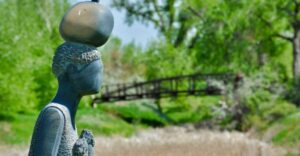
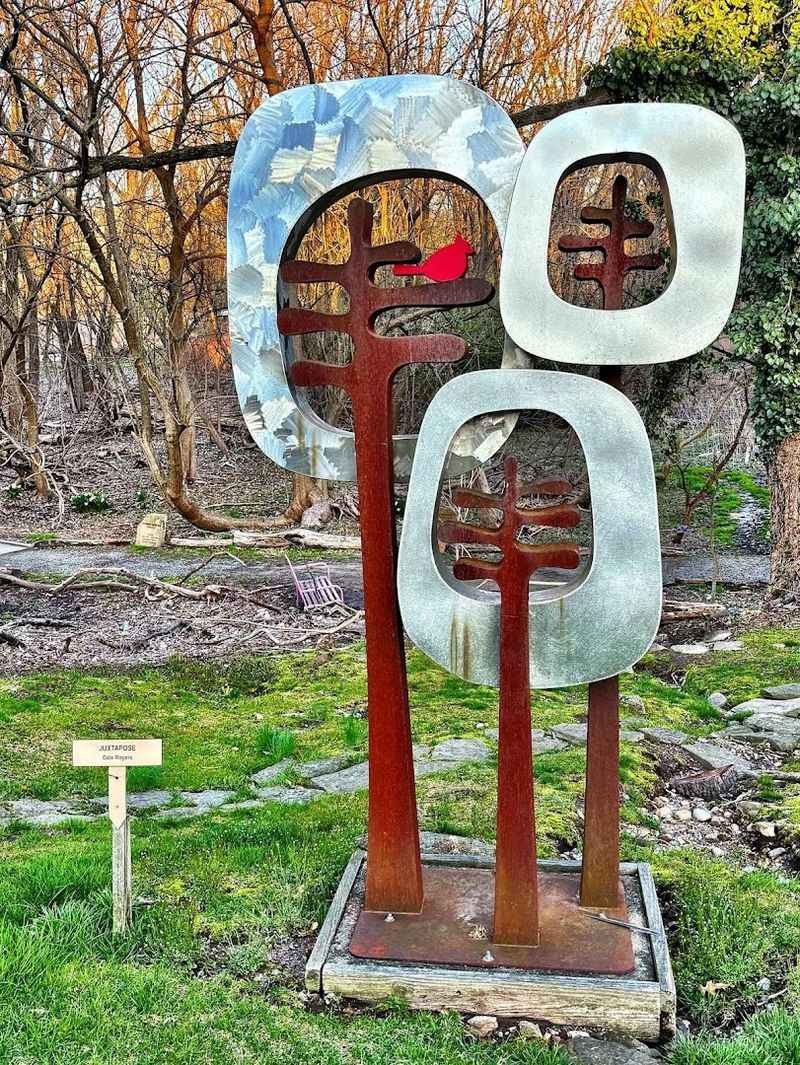
The art here does not sit behind glass or wait politely on a pedestal. It shows up in the dirt, beside the trails, on recycled concrete, around trees, and in places where you might not expect art to be hanging out at all.
That is the whole point of Teaneck Creek’s EcoArt spirit: nature, history, community, and reuse all tangled together in plain sight. The Turtle Peace Labyrinth is one of the preserve’s signature installations, and it feels like the emotional center of the place.
Created by Ariana Burgess with artist-in-residence Richard Mills and hundreds of volunteers, families, and community groups, the labyrinth was built from recycled concrete debris found on site.
Its turtle-like design nods to Lenape presence and creation stories, while its quiet clearing gives visitors a place to walk, think, and stop checking the time for a few minutes.
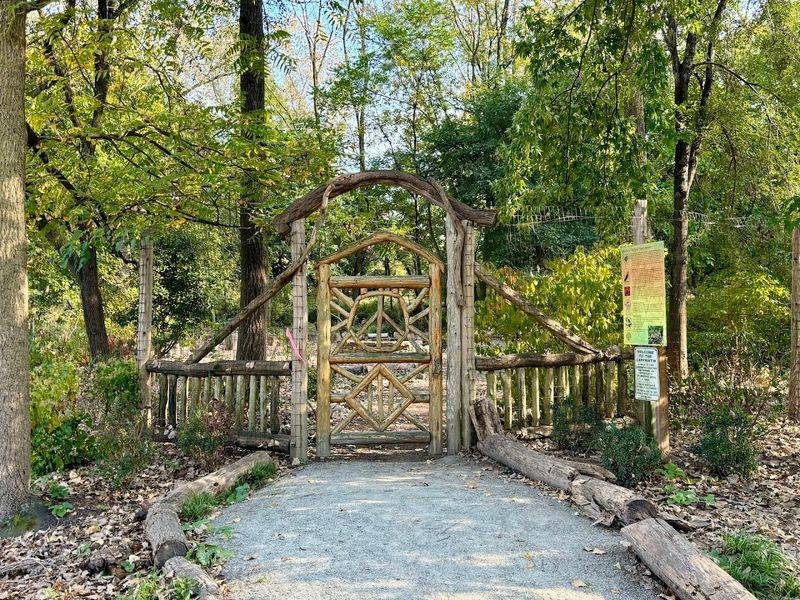
Nearby, David Robinson’s Gate and Tower frame the labyrinth area with a rustic, handmade feel. The tower even gives you a reason to look up, which is good advice for the whole preserve.
Then there is Five Pipes, the kind of installation that sounds odd until you see it. These five large concrete drainage pipes were too big and disruptive to remove, so the conservancy turned them into art.
Muralist Eduardo Alexander Rabel led students and volunteers in transforming them into a visual journey through different eras, from prehistory and colonization to industrialization, the 20th century, and the future. Other pieces keep the scavenger-hunt feeling going.
Lynne Hull’s Migration Mileposts uses recycled concrete slabs to connect the site to migrating birds and the Atlantic Flyway. Richard Kirk Mills’ Walking Trees Talking Trees gives trees their own zinc-plate voices.
Zachary Green’s Egret Bench brings mosaic work to the Fycke Lane entrance, while the Frog Compass, based on a winning design by Teaneck High School student Sylvana Dipre, adds a newer community-made surprise to the grounds. It is whimsical, yes, but not random.
Every piece has a job. Some explain the land. Some mourn what happened to it. Some celebrate what came back. Some simply make you grin in the middle of the woods, which is not a bad public service.
Wildlife Wetlands And Old Trees Give The Art A Living Backdrop
Look past the installations, and the preserve starts showing off in quieter ways. Teaneck Creek is part of the historic Meadowlands landscape, a reminder that this heavily developed corner of New Jersey was once defined by wetlands, creeks, marshy edges, and the slow work of water.
Even after all the dumping, filling, roadbuilding, and invasive growth, the place still holds onto that older identity. The restoration work matters because wetlands are not just scenery.
They handle stormwater, support wildlife, filter runoff, cool the landscape, and give birds, insects, amphibians, and native plants a fighting chance in a densely built area. At Teaneck Creek, that science is not hidden in a report somewhere.
You see it in the wet ground, the creek corridor, the plantings, the observation areas, and the careful reminders not to wander off trail. Birders have good reason to linger here.
Community science records have documented more than 160 bird species through eBird checklists at Teaneck Creek, while iNaturalist observations have captured a broader range of plant and animal life.
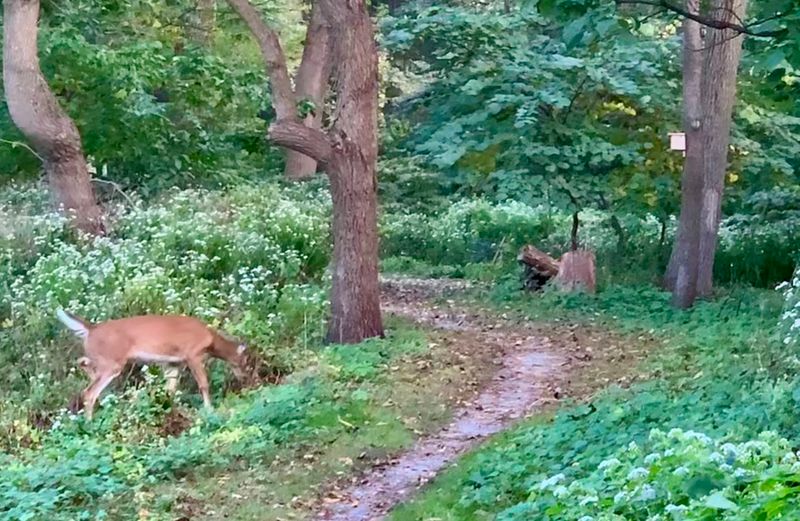
Even if you are not the type to carry binoculars, you can still enjoy the smaller signs of activity: a rustle in the leaves, a flash of wings, a mallard on the water, a deer watching from a distance, or the sudden racket of birds deciding you have walked too close to their business.
The trees add their own personality. Some are old enough and odd enough to feel like they have opinions, which makes the Walking Trees Talking Trees installation feel especially fitting.
This is not a manicured arboretum where every branch seems coached into place. It is wilder than that, with fallen leaves, uneven edges, vines, damp soil, and the kind of natural clutter that makes a restored urban wetland feel alive.
That living backdrop is what keeps the art from feeling decorative. The sculptures do not compete with the landscape.
They help you understand it, especially the messy parts. Teaneck Creek is pretty, but it is not precious.
It is a working recovery story with feathers, mud, roots, recycled concrete, and the occasional perfectly placed surprise.
Why This Teaneck Hideaway Is Worth Wandering Slowly
The best way to visit Teaneck Creek Conservancy is to resist treating it like a checklist. Yes, you can come looking for the Turtle Peace Labyrinth, Five Pipes, Migration Mileposts, the Egret Bench, and the Frog Compass.
You should. They are part of what makes the place memorable.
But the real charm comes from the in-between moments, when you stop rushing from one named feature to the next and let the preserve get a little weird in its own quiet way. It works especially well for locals because it does not ask much from you.
No admission fee. No timed entry. No sprawling drive deep into the mountains. No need to turn the outing into a production.
It is right there in Teaneck, close to the New Jersey Turnpike, I-80, and the George Washington Bridge, which makes the calm feel almost mischievous. Bring a coffee and walk slowly.
Bring kids and let them spot the next odd object before you do. Bring a leashed dog and take the route at sniffing speed.
Bring someone who thinks Bergen County is all traffic and errands, then enjoy watching that opinion wobble a little with every painted pipe and wetland overlook. This is not New Jersey’s biggest preserve, and it is not trying to be.
Its magic is more specific. It is a 46-acre patch of land that was nearly written off, then remade by people who believed art could explain ecology and ecology could heal a damaged place.
The result feels handmade in the best sense, full of visible effort and unexpected grace. By the time you leave, the sculptures may be what you remember first, but they will not be the only thing that sticks.
There is also the sound of the creek, the odd comfort of old concrete becoming something useful, the birds working the wetland edges, and the satisfying thought that even in one of New Jersey’s busiest corners, a damaged piece of land can still become something quietly wonderful.
Share this story