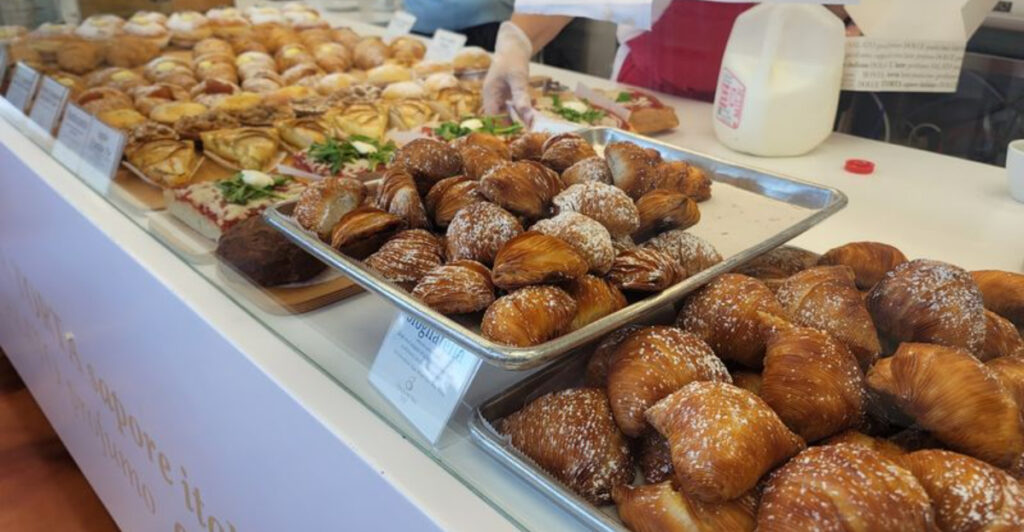
Clear acrylic chairs, dramatic food photography, and a gleaming pastry case are not what most drivers expect to find along Route 23 in Wayne. Then the scent of espresso and warm cornetti reaches the door, and Palazzone 1960 suddenly makes perfect sense.
This family-owned caffetteria combines a modern Italian dining room, a serious coffee program, a full lunch menu, and enough handmade pastries to derail even the firmest plan to “just grab a cappuccino.”
Sfogliatelle sit beside bomboloni, pignoli cookies, cakes, and glossy fruit tarts, while panini and pasta remind visitors that dessert is only part of the operation. The concept feels polished, but the story behind it stretches back more than six decades.
Palazzone 1960 is rooted in one family’s journey between New Jersey and Italy, and that history shows up in everything from the baking techniques to the unhurried coffee ritual. It is a restaurant, bakery, and café rolled into one unusually delicious stop.
A Slice of Modern Italy Hidden in Wayne
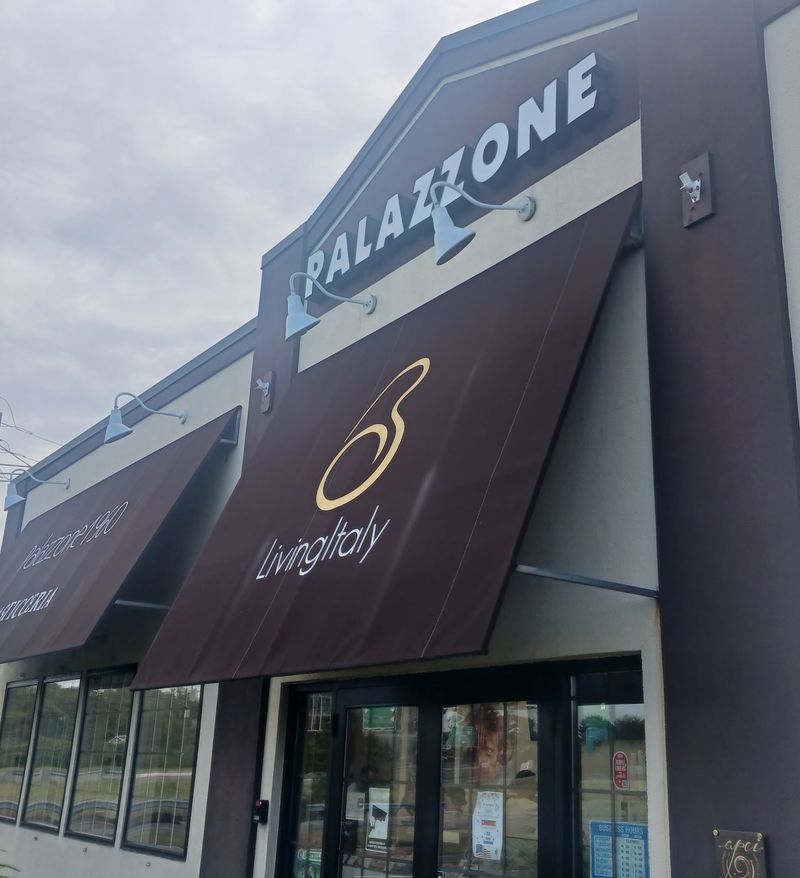
The Palazzone family’s New Jersey story began in 1960, when Remo and Giulia Palazzone opened their first pastry shop in Clifton. After establishing the business, the couple eventually returned to Italy to raise their four children, carrying their baking traditions back across the Atlantic.
Decades later, their son Giancarlo revived the family’s American chapter by opening Palazzone 1960 in Wayne in 2012. That history explains the number in the name, but it also explains why this place feels more grounded than a restaurant built around an Italian theme.
The recipes, techniques, and café customs come from a family that has spent generations moving between Italy and New Jersey. Giancarlo’s skill has earned recognition well beyond Passaic County, including honors connected to celebrated Italian pastry chef Iginio Massari and the Pastry Chef Ambassadors of Italian Excellence.
Still, Palazzone 1960 does not present itself like a formal culinary showcase. It sits at 190 Route 23 North, surrounded by the everyday traffic and shopping plazas familiar to anyone who drives through Wayne.
Step inside, though, and the highway fades quickly. White tables, transparent ghost chairs, bright natural light, and oversized photographs of Italian food create a contemporary space closer to a Milan café than an old-school red-sauce restaurant.
The room looks stylish without making lunch feel like an occasion requiring polished shoes. Outdoor tables beneath terracotta-colored umbrellas offer another option when the weather behaves.
Palazzone is closed on Mondays and currently opens from 8 a.m. to 7 p.m. Tuesday through Sunday, giving it several personalities over the course of a day.
It can be a quiet morning espresso stop, a casual lunch destination, or the place where someone walks in late afternoon intending to buy six cookies and leaves holding a cake box.
The Bakery Case Is a Destination All Its Own
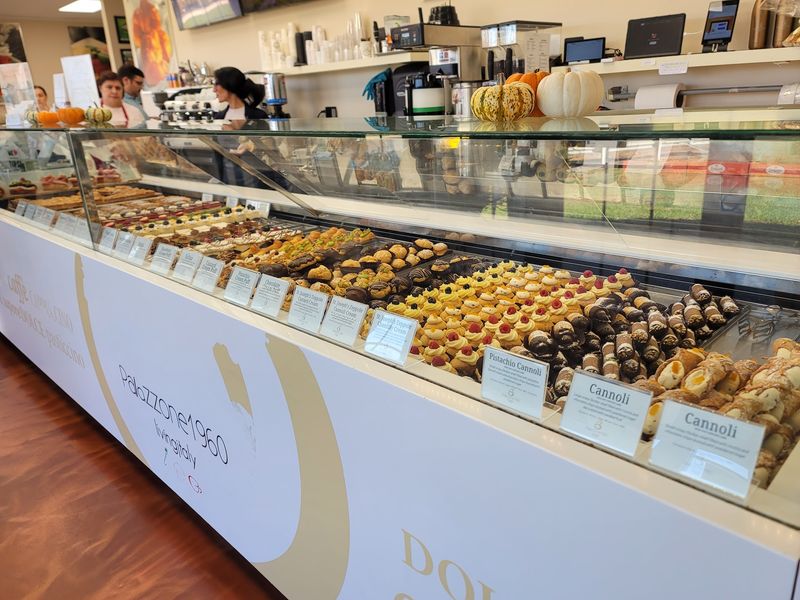
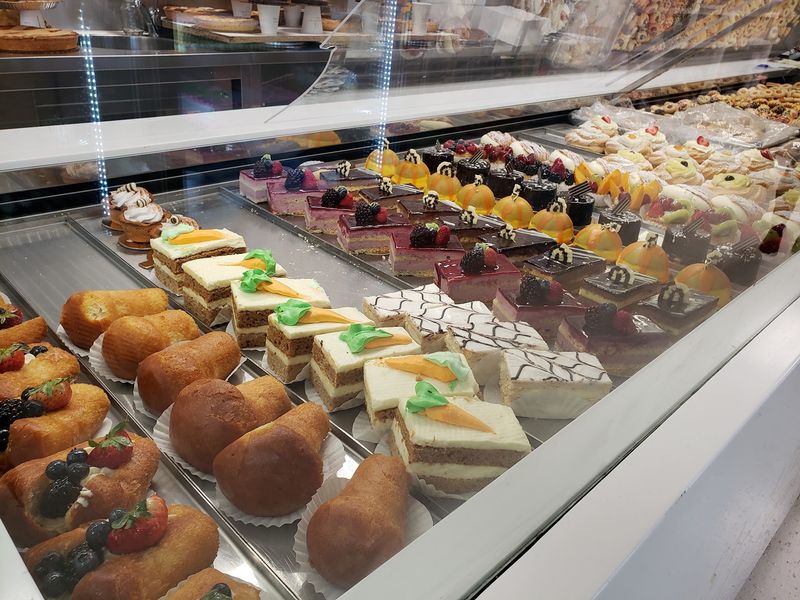
Walk through the front door with a firm order in mind, and the display case will almost certainly challenge it. Rows of pastries, cookies, cakes, and chilled desserts stretch behind the glass, each competing for attention with neat finishes and unapologetically generous fillings.
This is not a token dessert counter attached to a restaurant. Baking is the foundation of the Palazzone family business, and the selection makes that clear before anyone hands over a menu.
Individual pastries make it easy to build a mixed box, while cookies are sold by the pound for customers who know one or two will never survive the ride home. Shortbread varieties, crisp biscotti, chewy almond cookies, and pine-nut-covered pignoli cookies turn an ordinary bakery run into a serious decision-making exercise.
Larger desserts cover everything from casual Sunday dinners to full-scale celebrations. Palazzone offers round cakes beginning at six inches, plus larger formats that extend to full sheet cakes.
The lineup includes classic Italian combinations built around pastry cream, chocolate, fruit, ricotta, and nuts rather than towering layers of sugary frosting. Gelato adds yet another reason to linger at the counter, particularly during a warm North Jersey afternoon.
Seasonal specialties change the view throughout the year. Zeppole arrive around St. Joseph’s Day, while colomba and chocolate eggs appear for Easter.
Panettone becomes a centerpiece during the Christmas season, carrying on one of the bakery’s most important Italian traditions. That rotating calendar keeps regulars checking the case even when they already have a dependable favorite.
The most sensible strategy is to order the item that first caught your eye, then add at least one thing you have never tried. Palazzone’s smaller pastries reward curiosity, and a box with six different shapes is far more fun than six versions of the same safe choice.
Traditional Italian Pastries Steal the Spotlight
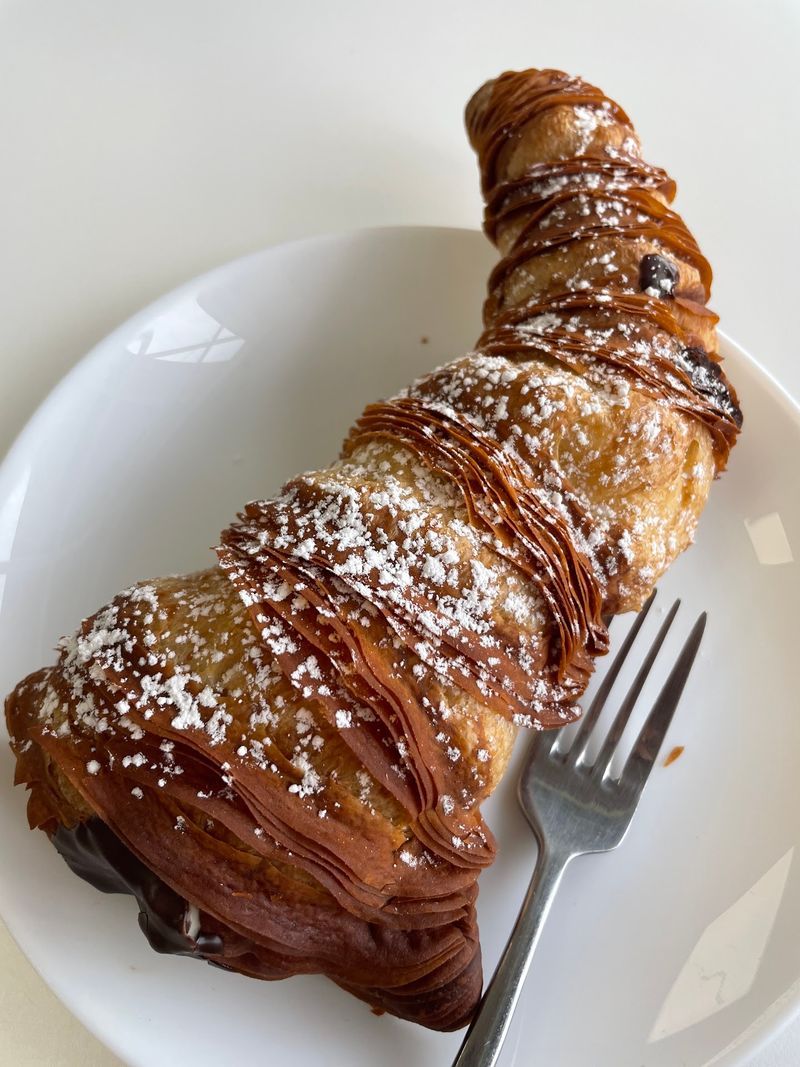
Few baked goods announce themselves quite like a sfogliatella. Its crisp, shell-shaped layers flare outward like paper-thin ribbons, hiding a sweet ricotta filling beneath a dusting of powdered sugar.
Making one properly requires patience and precision, which is why finding a good version can be surprisingly difficult. At Palazzone 1960, it is one of several pastries that taste like they belong in an Italian bar rather than beside a gas station on Route 23.
The bombolone offers the opposite texture. Soft, round, and filled with cream, it resembles a doughnut until the first bite reveals a lighter crumb and a distinctly Italian sense of restraint.
Cornetti fill the breakfast side of the case, looking similar to croissants but eating softer and slightly sweeter. Depending on the day’s selection, they may arrive plain or filled with cream, chocolate, jam, or Nutella.
Pasticciotti bring a sturdier pastry shell around a smooth custard center, while crostate pair buttery crusts with fruit preserves such as apricot. Then there is torta della nonna, the beloved Tuscan-style tart layered with pastry cream and finished with pine nuts.
Cannoli remain essential, of course, with crisp shells filled generously enough to make eating one neatly a losing battle. Lobster tails, cream puffs, fruit tarts, and rum-soaked babà may also tempt anyone who came specifically for the classics.
The variety matters because these desserts are not interchangeable bundles of sugar. A sfogliatella crackles and shatters; a bombolone yields softly; a pignoli cookie bends with an almond chew.
Each pastry delivers its own texture and regional tradition. Newcomers do not need to recognize every Italian name in the case.
Pointing at the most intriguing item is a perfectly respectable ordering method, and the staff can explain what is filled, flaky, creamy, nutty, or best paired with coffee.
Espresso Turns Every Visit Into a Small Ritual
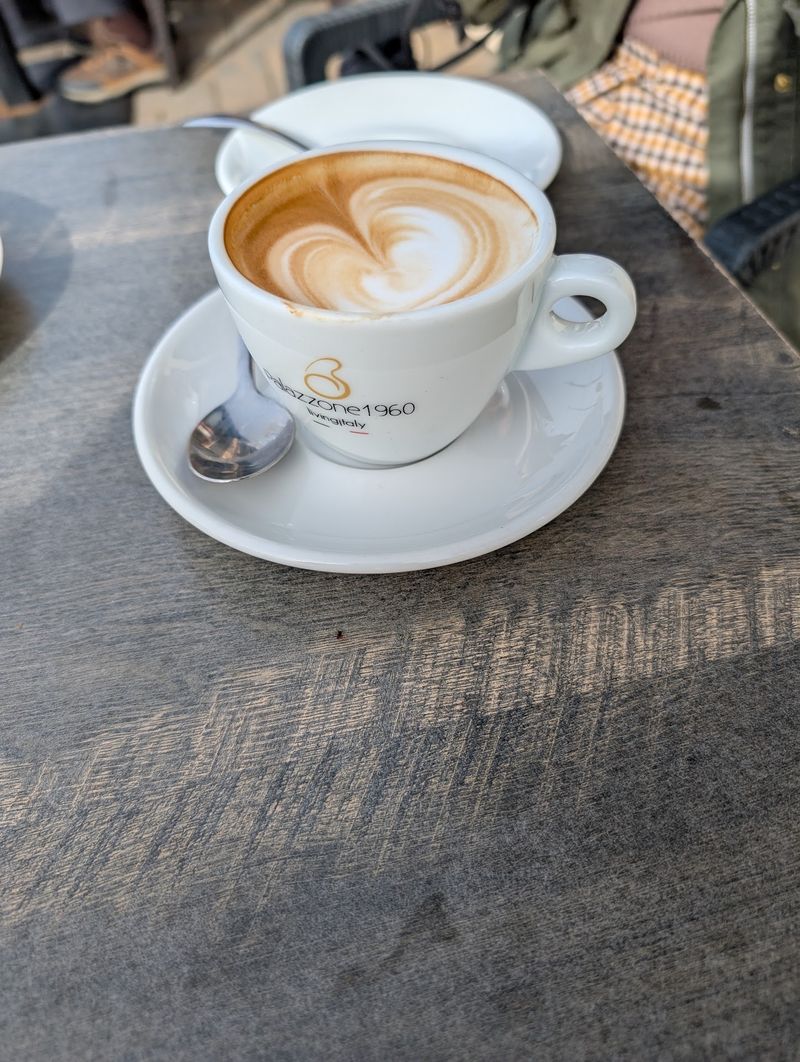
At a typical New Jersey coffee stop, speed wins. The cup is oversized, the lid goes on immediately, and the first sip happens somewhere between the parking lot and the next traffic light.
Palazzone 1960 follows a different rhythm. Its caffetteria treats coffee as something to pause over, even if that pause lasts only ten minutes.
The house uses a custom blend of roasted beans, and the menu moves well beyond a basic drip coffee. A straight espresso provides the clearest introduction, served small, concentrated, and unapologetically strong.
Cappuccino softens the intensity with steamed milk and a cap of foam, while a macchiato adds only a small mark of milk to the espresso. Named specialty drinks such as the Milano, Firenze, Verona, and Mokaccino give sweeter or creamier preferences room to play without pushing the Italian café identity aside.
Hot chocolate is another worthy choice, especially when paired with a crisp pastry rather than treated like a children’s-menu afterthought. The trick is matching the drink to the bakery case.
A cappuccino and cornetto make an ideal breakfast, particularly before the lunch crowd arrives. Espresso cuts through the richness of a cannolo or cream-filled bombolone, while a macchiato works beautifully alongside almond-heavy pignoli cookies.
The Amalfi, which brings hazelnut and ice cream into the coffee conversation, can practically serve as dessert by itself. Porcelain cups and small tables encourage visitors to stay long enough to taste what they ordered.
Nobody needs to perform an elaborate Italian ritual or pretend Route 23 is a cobblestone street in Rome. The pleasure is simpler than that.
A properly made coffee arrives at a sensible size, a fresh pastry lands beside it, and for a few minutes there is no reason to rush either one.
The Savory Menu Is Just as Tempting
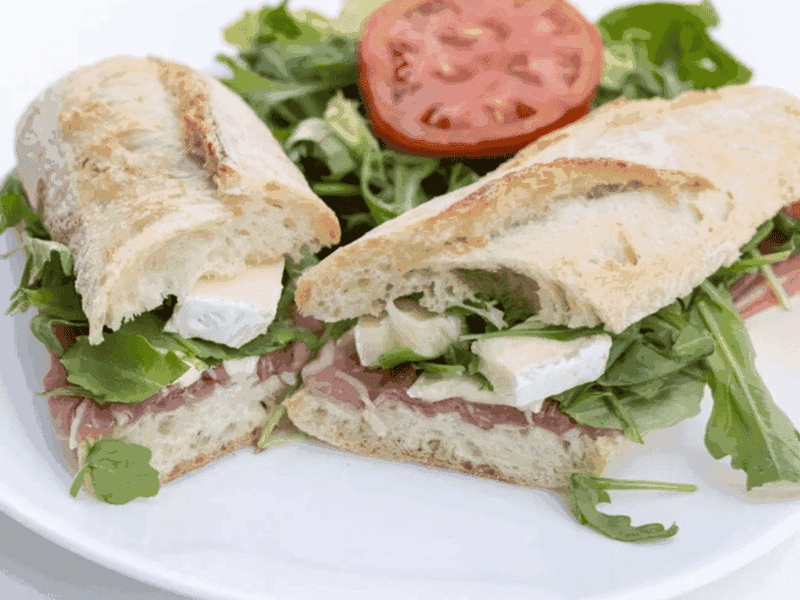
Around 11 a.m., the caffetteria begins revealing its other identity. Lunch specials run until 4 p.m., and the kitchen moves from morning pastries into panini, salads, antipasti, pasta, and risotto.
The shift feels natural rather than tacked on; the same Italian ingredients that make the bakery compelling also give the savory side its character. Panini are a smart starting point.
Cured meats such as prosciutto pair with cheese, tomato, arugula, or other fresh components on crusty bread that can stand up to the filling without becoming an obstacle. These are composed sandwiches, not overstuffed deli monuments built for social media.
Salads receive more attention than the usual pile of greens beside a pastry case. Options have included combinations such as shrimp with avocado and the Capriccione, offering a lighter lunch that still feels considered.
Pasta dishes and rotating weekly specials bring more substantial choices, while risotto allows the kitchen to show a slower, more traditional style of cooking. The specials are worth checking before settling on a regular order because they change from week to week and may include regional preparations not found on the permanent menu.
What ties everything together is the absence of the heavy, one-note quality that sometimes defines Italian-American lunch menus. Sauces complement rather than bury the pasta, fresh greens bring bitterness and snap to rich meats, and portions leave just enough room to revisit the pastry case.
That last detail is important. Ordering lunch here while pretending dessert will not happen is optimistic at best.
Palazzone’s wide hours also make the savory menu useful for different kinds of visits. It works for a sit-down midday meal, a panino picked up on the way through Wayne, or a late lunch followed by espresso.
Delivery is available through major platforms, but eating on-site keeps the bakery case within dangerously convenient reach.
One Remarkable Stop Brings It All Together
Wayne has plenty of Italian restaurants and North Jersey certainly has no shortage of bakeries. What makes Palazzone 1960 unusual is not the presence of either one; it is how confidently the café combines a bakery, coffee bar, lunch kitchen, gelateria, and family history without allowing any single piece to feel secondary.
Morning regulars can settle in with cappuccino and cornetti when the doors open at 8 a.m. Lunch brings panini, pasta, salads, risotto, and rotating specials.
Later in the day, the same room fills with customers collecting cookie trays, celebration cakes, or pastries for after dinner. Each visit can serve a different purpose, yet the place never loses its identity.
Even the modern design contributes to that balance. The white tables and clear chairs avoid the predictable trattoria look, while the vivid wall photography and crowded pastry case keep the room from feeling sterile.
It is contemporary Italy filtered through the practical habits of suburban New Jersey, where ample parking matters and someone is always picking up dessert for a family gathering.
The family’s second location and production facility in nearby Little Falls extends the business beyond the Wayne café, but Route 23 remains the best place to experience all its parts at once.
Here, the connection between Giancarlo Palazzone’s pastry work, his parents’ original 1960 venture, and the family’s years in Italy becomes tangible. It is there in the layered sfogliatelle, the pine nuts pressed into soft almond cookies, the properly proportioned espresso, and the bread surrounding a prosciutto panino.
Palazzone 1960 does not recreate Italy as a novelty. It carries forward a family’s version of it, shaped by decades on both sides of the Atlantic and served daily from an unexpectedly stylish corner of Wayne.