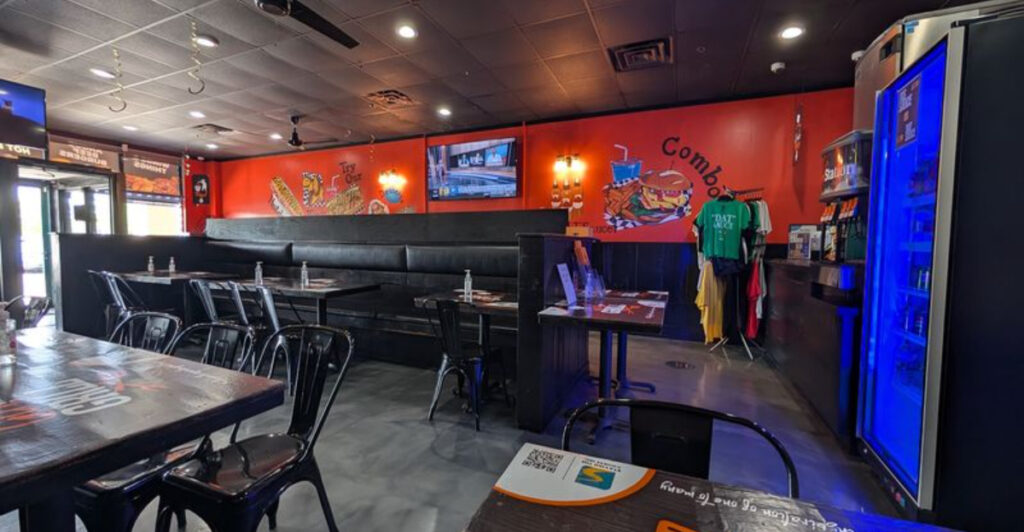
A plain envelope replaces the check at one Voorhees restaurant, and what goes inside is entirely up to the family holding it. Twenty dollars, $200, or whatever the household can manage earns the same buffet dinner and the same seat at the table.
There is no cashier watching, no minimum contribution, and no uncomfortable explanation required. This is Pay What You Can Night at Girl With a Grill, a South Jersey comfort-food spot where owner Lashaun Crawford is tackling more than the rising cost of eating out.
She wants parents, children, siblings, cousins, and in-laws to slow down long enough to share an actual meal. Televisions go dark, phones get tucked away, and conversation becomes part of the evening’s unofficial menu.
Backed by years of community outreach, Crawford’s monthly dinner shows how wings, fried fish, hot dogs, and a little trust can create the kind of family night that feels increasingly hard to arrange.
Girl With a Grill Brings Big-Hearted Comfort Food to Voorhees
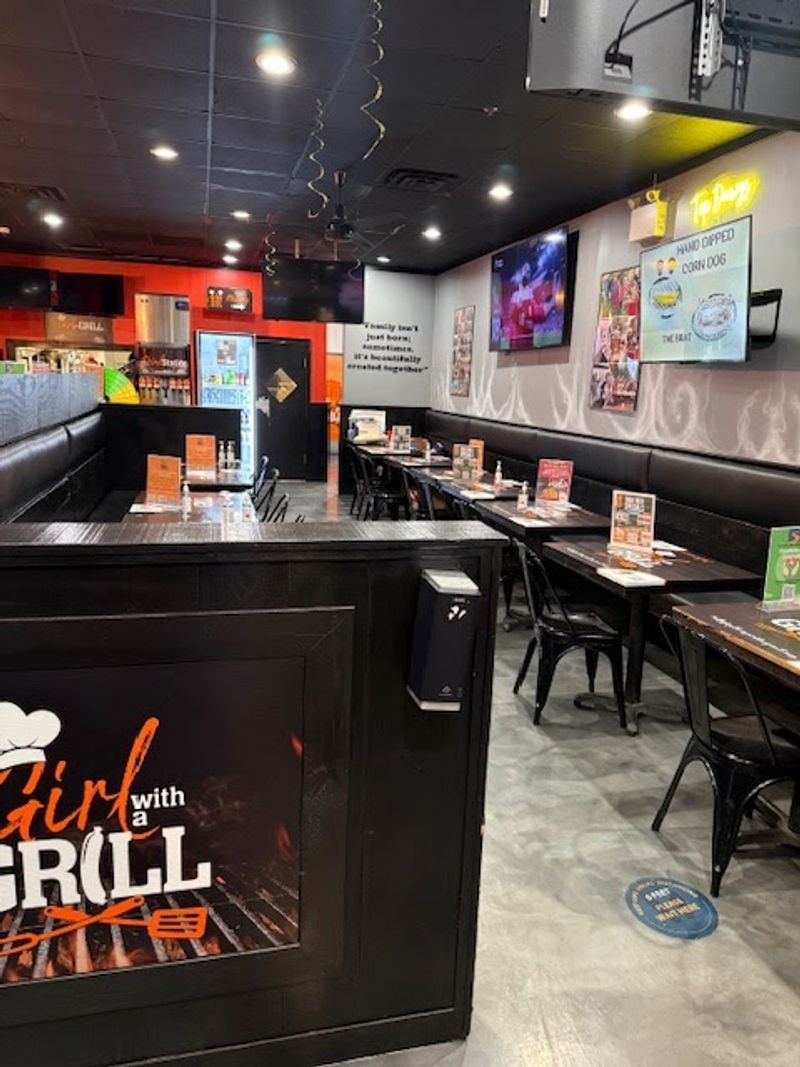
Tucked into the Ritz Center at 910 Haddonfield-Berlin Road, Girl With a Grill is the sort of place where ordering a hot dog can turn into a surprisingly serious decision.
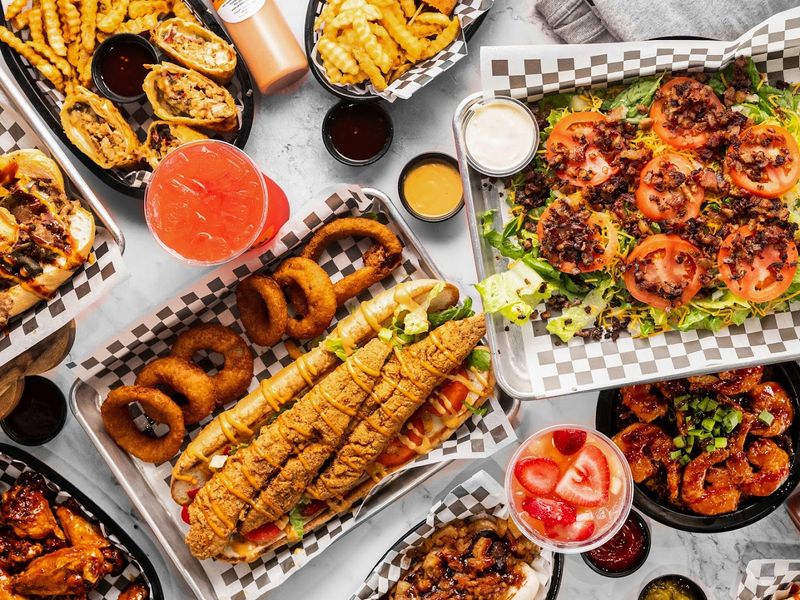
A customer could keep things familiar with The Classic, dressed with ketchup, mustard, relish, and onions, or wander into much wilder territory with The Wave Rider, which piles crabmeat, shrimp, lettuce, tomato, and the restaurant’s signature Dat Sauce onto the bun.
The South of the Border adds chili, cheese, jalapeños, guacamole, lettuce, tomato, onion, and tortilla chips, while the Good Morning wraps the dog in bacon and finishes it with a fried egg and shredded cheese. The menu does not stop at creative franks.
Half-pound burgers, hand-breaded chicken tenders, wings, loaded fries, sausages, onion rings, rice bowls, and seafood platters give families plenty of ways to build a meal. There are meatless choices, too, including an Impossible Burger and the Vegetarian Voyage made with Beyond Sausage.
It is casual, playful food rather than precious food, which fits the restaurant’s larger purpose beautifully. Parents do not have to convince children to appreciate a tiny garnish or decode a complicated tasting menu.
They can order something familiar, grab a table, and settle in. Lashaun Crawford opened the Voorhees restaurant in February 2025 after spending more than two decades in the food industry.
Although the dining room was new, the giving spirit behind it was not. Crawford had already spent years feeding people throughout South Jersey and Philadelphia, and that instinct followed her through the front door.
Girl With a Grill may lead with towering hot dogs and crispy comfort food, but its personality comes from the belief that a restaurant can serve its neighborhood in ways that go well beyond lunch and dinner.
Lashaun Crawford Wants to Bring Families Back to the Dinner Table
For Crawford, the troubling part is not simply that restaurant prices have climbed. It is that many families rarely sit down together anymore, even when everyone happens to be under the same roof.
Parents work overtime, second jobs, and side hustles to keep up with expenses. Children carry phones and tablets to the table.
Televisions fill the quiet, schedules collide, and a shared dinner becomes something people intend to arrange later. Later, of course, has a habit of getting crowded.
Crawford designed her family nights to interrupt that pattern. Her goal is not merely to distribute discounted meals; it is to create an evening when relatives can learn what is happening in one another’s lives.
Food provides the reason to gather, but conversation is the main event. That focus also explains why the dinner is reserved for families.
It is not intended for a solo meal or a date night, though Crawford uses a broad and welcoming definition of family. Guests do not have to fit the traditional two-parent household or even be related by blood.
Siblings, cousins, in-laws, guardians, and children can all come together. The important part is arriving as a group with real family connections and treating the evening as shared time.
That distinction gives the event a different character from a standard restaurant promotion. Nobody is racing through a cheap meal before heading somewhere else.
The whole setup encourages people to stay present. Crawford understands how easily money worries can overshadow a family outing, especially when a single dinner for several people can strain an already tight weekly budget.
By removing that pressure for one night, she gives families room to focus on each other. The result is something both simple and strangely rare: relatives sitting around one table, eating hot food, trading stories, and paying attention.
Pay What You Can Night Removes the Cost of Eating Together

There is no fixed price at these special dinners, and the payment process is intentionally private. Each family receives an envelope, places whatever contribution it can afford inside, and drops it into a box.
No register displays the amount. No server checks the contents.
One household might leave $20, another might contribute $200, and both are welcomed without judgment. The anonymity matters because generosity works best here when dignity comes with it.
Families experiencing a difficult month do not need to announce their circumstances, while diners with more room in their budget can quietly help support the next event. The only food-related rule is practical and fair: take what you plan to eat.
That keeps waste under control and helps the buffet stretch far enough for everyone in the room. Crawford has generally scheduled the dinner later in the month, often on a Monday when the restaurant would otherwise be closed.
The event grew quickly after its launch. One dinner in May 2025 brought in roughly 40 families and more than 150 people during a two-hour window from 5 to 7 p.m.
Demand was strong enough that the following month’s event was extended by an additional hour. Those numbers make the need difficult to dismiss.
They also show that the evening appeals to more than households facing food insecurity. Some families may come because restaurant dining has become a luxury; others may simply appreciate the event’s deliberate break from normal routines.
Crawford has funded the initiative with donations and money from the restaurant rather than relying on grant support. That makes each dinner an act of faith as much as an operating decision.
She has remained committed to continuing because the mission is larger than balancing one evening’s receipts. The envelope system asks everyone to contribute honestly, but it never turns a family’s ability to pay into the price of belonging.
Phones and Televisions Stay Off While Family Conversations Take Over
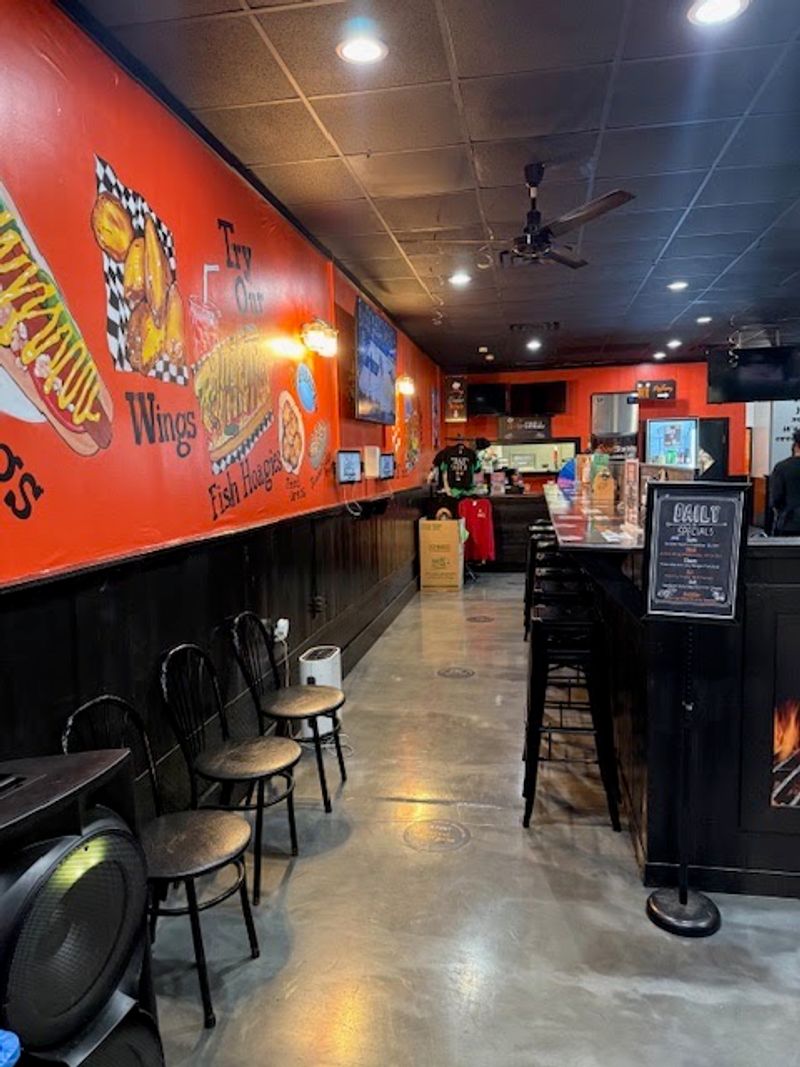
Picture the room at the start of dinner. Plates are being filled, chairs scrape lightly across the floor, and children are deciding which buffet item deserves the most space.
What is missing may be even more noticeable: televisions are not blaring above the tables, and phones are not sitting beside every cup. During Pay What You Can Night, the usual electronic distractions are deliberately pushed aside so families can engage with one another.
That sounds like a small adjustment until you consider how often a restaurant table becomes a collection of separate screens. One person checks a message, another watches a video, and a third scrolls while waiting for the food.
Everyone is technically together, but the evening passes without much actual exchange. Crawford wants these dinners to work differently.
Families share stories, catch up on problems and victories, and get involved in one another’s business in the affectionate sense of the phrase. A child might finally describe what happened at school.
A parent may hear about a worry that had been hidden behind an easy “fine.” Cousins can laugh over the same ridiculous memory instead of forwarding separate clips to one another. The food creates natural pauses and easy conversation starters, which is one reason a buffet works so well.
People move around, compare plates, recommend dishes, and return to the table with something new to discuss. Nobody is expected to deliver a dramatic heart-to-heart on command.
The night simply clears enough space for connection to happen on its own. At the first event, families reportedly lingered over stories and created the kind of ordinary memories that often become important later.
The no-screen approach is not presented as a lecture about modern technology. It is a temporary reset.
For a few hours, the brightest thing at the table is not a phone display but the realization that everyone has time to listen.
A Buffet of Wings Hot Dogs and Fried Fish Keeps Everyone Well Fed
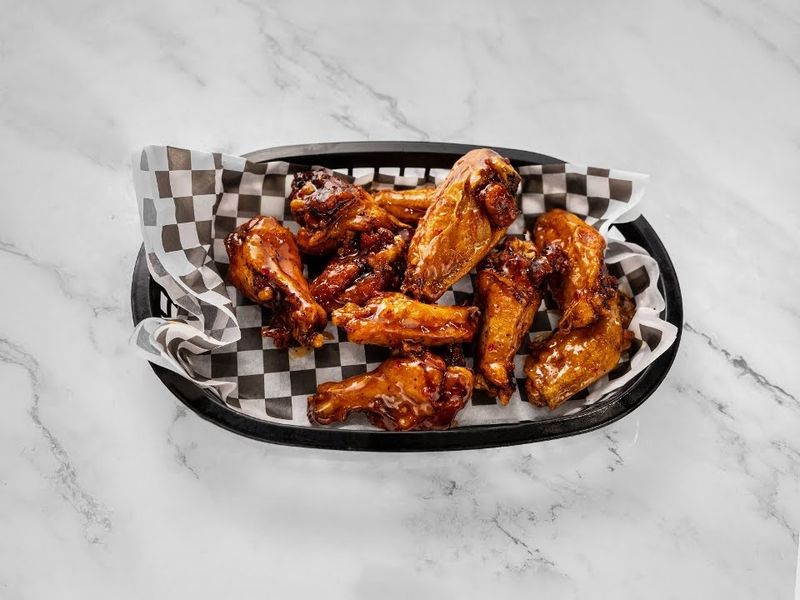
A family-focused dinner needs food that people genuinely want to eat, and Girl With a Grill has plenty of crowd-pleasers to draw from.
The Pay What You Can evenings use a buffet format stocked with selections connected to the restaurant’s regular menu, allowing guests to choose their own combination rather than commit to one entrée.
Wings are an obvious favorite, especially with flavors that range from barbecue and garlic Parmesan to sweet chili, jerk, hot honey garlic, and lemon pepper.
Fried fish brings a heartier option to the spread, while hot dogs, sausages, fries, and other familiar comfort foods keep younger or pickier diners from staring suspiciously at their plates.
On an ordinary visit, the menu offers a sense of just how wide Crawford casts the net. The Chi-Town dog comes loaded with tomato, relish, pickle, sport peppers, mustard, and celery salt.
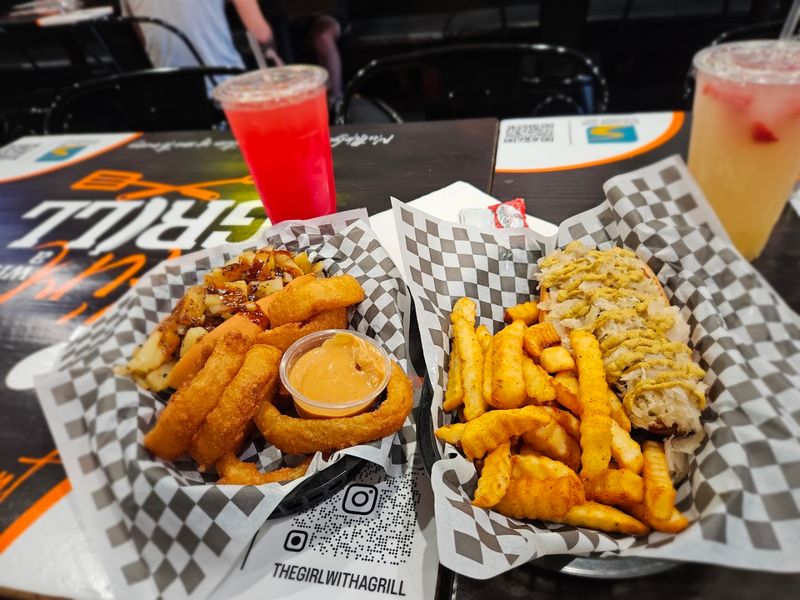
The Tropical combines grilled pineapple and onions with bacon, cheese, and barbecue sauce. There are Polish and Italian sausages, a bratwurst with sauerkraut and grilled onions, and a half-pound burger for anyone who would rather skip the hot dogs entirely.
Chicken tenders are hand-breaded, loaded fries arrive under chili, cheese, bacon, jalapeños, green onions, and Dat Sauce, and sides include crinkle-cut fries, sweet potato fries, tater tots, baked beans, coleslaw, and yellow rice.
That variety is especially useful during a family buffet because nobody has to negotiate one shared order or worry about wasting the cost of an untouched entrée.
Children can try a small portion, adults can build a more adventurous plate, and everyone can return for another helping if something proves irresistible. It is generous food without ceremony, served in a setting where the purpose is to relax rather than impress.
A towering hot dog may earn the first grin, but the bigger pleasure is seeing a full table eat at the same pace.
Years of Community Givebacks Fuel the Restaurant’s Mission
Long before the envelopes appeared at Girl With a Grill, Crawford was already using food to reach people who needed it.
Through her nonprofit organization, Staying the Course, she and her team have distributed meals in Camden, Philadelphia, and other communities, often setting up without advance publicity so assistance reaches people in the immediate area rather than becoming a promotional spectacle.
In roughly two and a half years, the nonprofit served more than 15,000 people through community projects, giveaways, and outreach events. That history makes Pay What You Can Night feel less like a clever restaurant campaign and more like the next chapter of work Crawford had already begun.
Her approach is rooted in giving first and sorting out the logistics along the way. Grants would make the dinners easier to sustain, but their absence has not changed the commitment.
Restaurant funds, private donations, volunteer energy, and customer contributions keep the table set. The monthly event also broadens the idea of food insecurity.
A household does not have to be completely without food to feel the strain of feeding several people well. Hot meals cost money, schedules create pressure, and families may fall back on whatever is fastest rather than sitting down together.
Crawford addresses the financial problem without losing sight of the emotional one. She feeds people, but she also gives them an excuse to stop moving.
That combination is what makes the effort distinctive. The restaurant’s regular menu pays the bills with Angus beef hot dogs, brisket sausage, wings, seafood, and loaded fries; its special family night measures success in conversations restarted and relatives reunited around one table.
At Girl With a Grill, community service is not framed as a separate project hanging beside the business. It is built into the way Crawford understands hospitality, one anonymous envelope and one shared dinner at a time.