The first clue that this is not your usual Cape May outing is the sound. Not gulls over the beach, not boardwalk music, not the clink of ice in a plastic cup, but a hammer striking hot metal somewhere down a shaded lane.
Historic Cold Spring Village sits close enough to Cape May’s Victorian inns and seafood spots that you can be there in minutes, yet it feels like someone quietly moved the calendar back by nearly two centuries.
Instead of storefronts selling beach towels, you get restored rural buildings, heritage gardens, farm animals, costumed interpreters, and old trades being worked by hand.
It is not a museum where history sits politely behind glass. It is a place where a printer might be setting type, a blacksmith might be working the forge, and a country lane can make modern New Jersey feel very far away.
The Open Air Village Hiding Minutes From Cape May
Three miles north of Cape May City, tucked between Route 9 and Seashore Road in the Cold Spring section of Lower Township, Historic Cold Spring Village feels like the kind of place you could easily drive past if you were distracted by beach plans, dinner reservations, or the eternal Jersey Shore question of where to park. That is part of its charm.
One minute you are in familiar Cape May County vacation mode, and the next you are standing inside a recreated rural South Jersey village built around the everyday rhythms of the 1800s.
The site covers more than 30 acres, and the experience is intentionally spread out, with shaded paths, historic buildings, gardens, a farm area, and little stops that reward slow wandering rather than rushing from one “main attraction” to the next.
Historic Cold Spring Village is open for the 2026 season Thursday through Sunday from 11 a.m. to 4 p.m. through Labor Day weekend, with special event weekends continuing in the fall; current single-day admission is listed at $16 for adults, $12 for children ages 3 to 12, and free for children under 3.
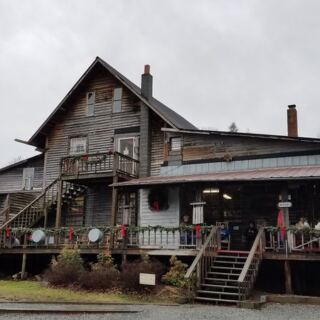
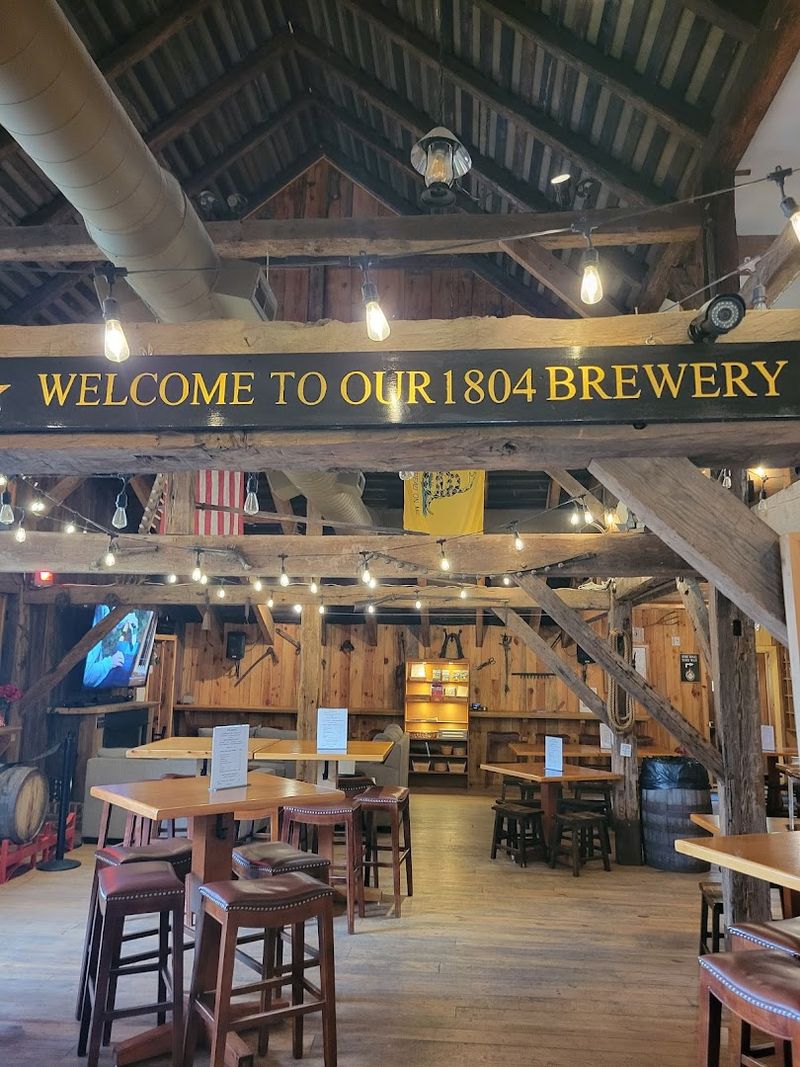
Visitors should also note the practical little local detail that the Route 9 gate is currently closed, so entry is through Seashore Road near Cold Spring Brewery.
That setup makes it especially easy to pair the village with a Cape May day that is not entirely beach-based. You can spend the morning watching blacksmithing and print demonstrations, break for lunch nearby, and still be back near the water before sunset.
But the better move is to give it breathing room. This is not a quick photo stop. It is a place that works best when you let the gravel paths, porch steps, barns, and old tools pull you in one detail at a time.
Why Historic Cold Spring Village Feels Like Stepping Into Another Century
What makes this village work is that it does not try to turn the past into a costume party. The mood is more lived-in than theatrical, more “daily life in old South Jersey” than polished theme park.
Cape May County describes Historic Cold Spring Village as an Early American open-air living history museum focused on South Jersey’s “age of homespun,” roughly 1790 to 1840, when rural households depended heavily on handmade goods, practical skills, agriculture, and local trades.
That phrase matters because it explains why the place feels different from a grand mansion tour or a Victorian streetscape.
The story here is not only about wealthy families, fancy furniture, or seaside resorts. It is about the ordinary work that kept a community running: making tools, printing notices, tending crops, mending clothing, cooking, raising animals, teaching children, and trading goods.
The buildings do a lot of the storytelling before anyone even says a word. You can move from a small dwelling to a shop, from a schoolhouse to a farm area, and the scale of everything keeps the past human.
Doorways are modest. Rooms are practical. Workspaces are arranged around function, not decoration. That is the secret.
You are not just told that life was slower or harder; you can feel it in the size of the rooms, the weight of the tools, and the way every building seems to have a job. Even the location helps.
Cape May is famous for its Victorian personality, but Historic Cold Spring Village pulls the timeline back further, toward the rural communities that shaped this part of South Jersey before beach tourism became the headline. It is a reminder that Cape May County was not always about summer rentals and sunset dinners.
Long before that, it was farms, trades, small settlements, and people making what they needed with what they had.
Restored Buildings Make the Past Feel Surprisingly Alive
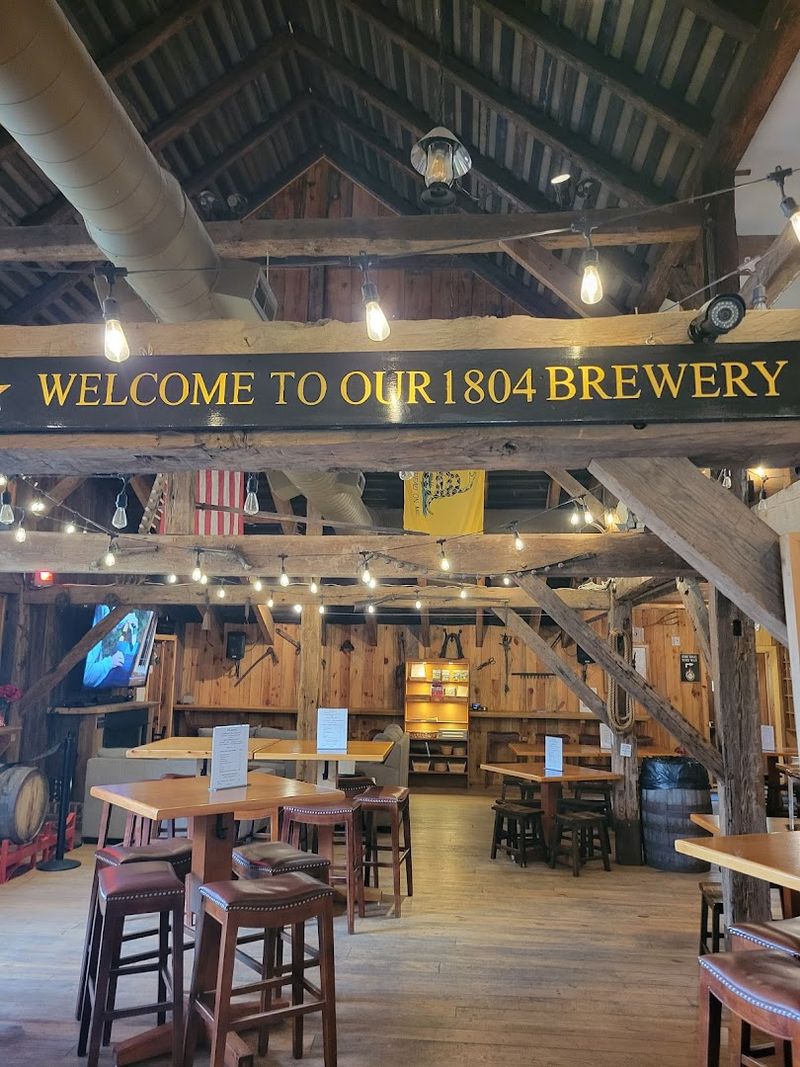
A plain wooden building can tell on itself if you look long enough.
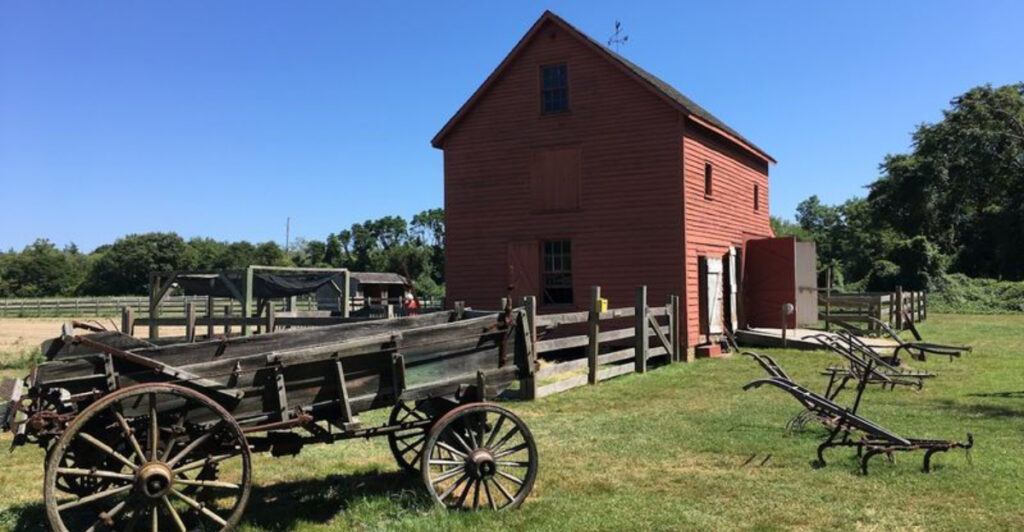
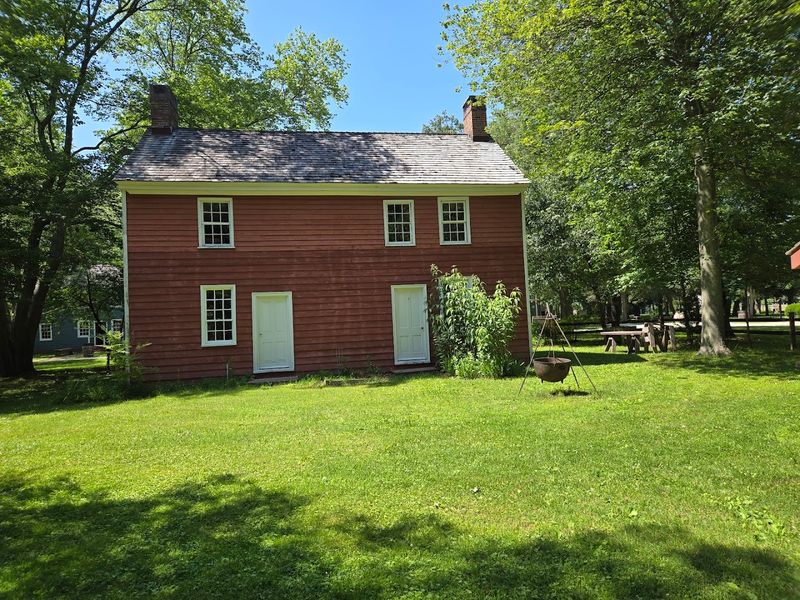
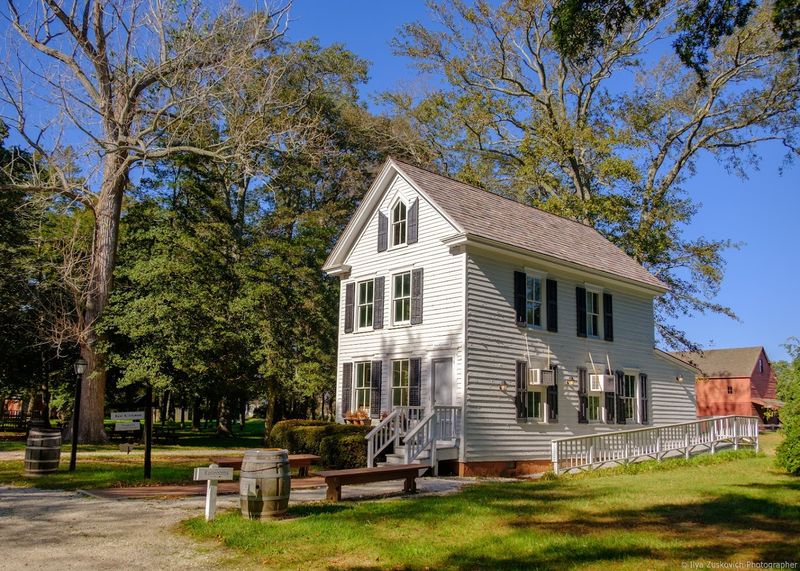
At Historic Cold Spring Village, the details are not flashy, but they are exactly what make the place satisfying: old floorboards, clapboard walls, low-ceilinged rooms, simple windows, workbenches, fences, porches, and the kind of architecture that was built to be used, not admired from a distance.
The village contains more than two dozen restored historic structures and authentic reconstructions brought together from Cape May County and the surrounding region, creating the feeling of a small working community rather than a single museum campus.
The historical landscape includes 27 restored buildings, according to the village’s current visitor information, and those buildings sit across more than 30 acres.
That number is impressive, but the real pleasure is how specific each stop feels. The Village Print Shop, for example, occupies a building dating to around 1830 that was originally known as the Reverend David Gandy House; today, it is used to demonstrate early printing presses and print production.
Elsewhere, names like the Dennisville Inn, Marshallville schoolhouse, Cox Hall Cottage, and Spicer Leaming House point to the larger Cape May County story hiding inside the village’s lanes. These are not vague “old-timey” façades dropped into place for atmosphere.
They are tied to local communities, old trades, and the practical architecture of South Jersey life. That is why the village rewards people who like to poke around a little.
A building may look simple from the outside, then suddenly become interesting when you notice the tool marks, the hearth, the interpreter’s explanation, or the way a room had to serve several purposes at once. The past feels less like a chapter heading and more like a place where somebody had chores to finish before supper.
Blacksmiths, Printers, and Craftspeople Bring the 1800s Back
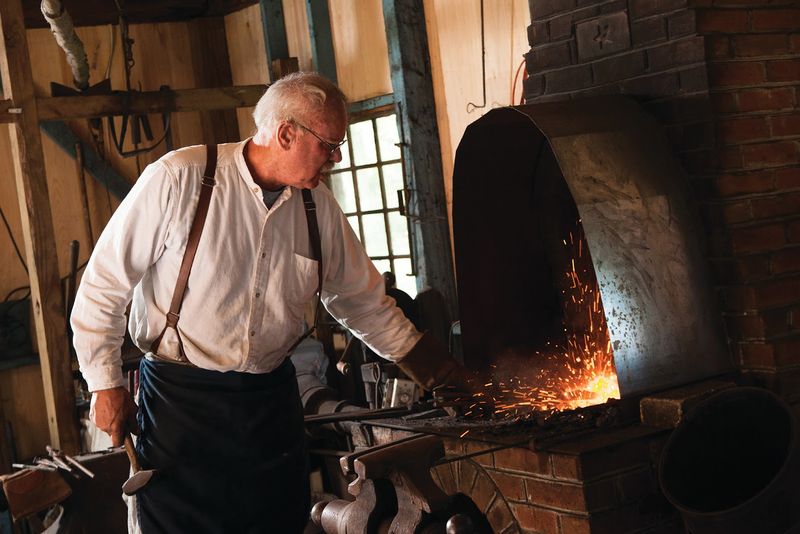
The forge is usually the stop that gets people to pause, even the ones who thought they were just along for a pleasant little walk. There is something about blacksmithing that cuts through every modern distraction.
Fire, metal, hammer, anvil. No app can improve it.
Historic Cold Spring Village leans into that hands-on energy with historically clothed interpreters demonstrating trades such as blacksmithing, printing, woodworking, basket weaving, bookbinding, and more.
These demonstrations are the difference between reading a sign about 19th-century life and actually understanding why skilled trades mattered.
A blacksmith was not simply making decorative ironwork for fun. He was part repair shop, part toolmaker, part problem-solver.
A printer was not merely producing souvenirs. Printing shaped how a community spread news, advertised goods, shared public notices, and recorded events.
The Village Print Shop gives visitors a close look at early presses and production methods, which is especially satisfying in a world where most words now appear by tapping glass. The best part is that these stops feel conversational.
You can linger, ask a question, watch a process unfold, and notice just how much patience went into objects that modern life has made almost invisible. A basket, a broom, a bound book, a tin item, or a wooden tool suddenly becomes more than an antique-looking thing.
It becomes proof of time, skill, and necessity. Kids tend to lock onto the fire and motion first, while adults often end up surprised by how absorbing the quieter demonstrations are.
Watching someone work by hand has a way of slowing everybody down. The village does not need dramatic reenactments every five steps.
The drama is already there in the work itself, in the hiss, scrape, thump, and careful repetition of trades that once held communities together.
The Age of Homespun Comes With Farm Animals, Gardens, and Country Store Charm
Some of the best moments here happen away from the buildings, where the village starts to feel less like a collection of structures and more like a working rural landscape. The farm area is a big reason for that.
Historic Cold Spring Village includes an 8-acre 1800s-style organic farm, and visitors may see animals such as Levi, the village horse, along with sheep, chickens, a Brahmin rooster, calves, and piglets, depending on the season and programming. That single detail does a lot of heavy lifting.
It reminds you that “the 1800s” was not only about architecture or clothing. It was also about feeding people, raising animals, managing crops, and doing physical work in every kind of weather.
The farm grows organic heirloom crops such as tomatoes, squash, eggplant, and peppers, with produce sold at the Country Store and also used by the Cold Spring Grange Restaurant. Suddenly, the gardens are not decorative filler.
They are part of the story. They show what a rural South Jersey community needed to survive and how tightly food, labor, and local trade were connected.
The Country Store adds a lighter note without breaking the spell. It has that old-fashioned browsing appeal that fits the village well, especially after you have watched craftspeople make objects the slow way.
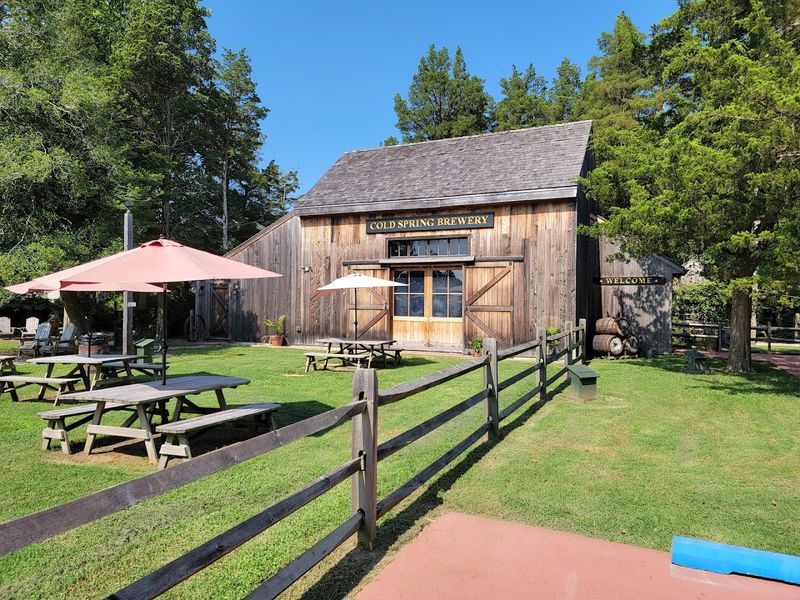
The nearby Cold Spring Grange Restaurant and Cold Spring Brewery also make the area feel more like a full Cape May County stop than a school-field-trip leftover. The brewery is especially fitting because it occupies the village’s broader orbit without turning the history into a gimmick.
You can come for the blacksmith and gardens, then remember that this is still New Jersey, where even a walk through the age of homespun can end near a cold drink and a restored grange building.
Why This Cape May Time Capsule Is More Than a History Lesson
The smartest thing about Historic Cold Spring Village is that it never asks visitors to care about history in the abstract. It gives them things to notice first.
A child sees a horse. Someone else hears a hammer. A gardener spots the heirloom crops. A design lover notices the modest old buildings.
A Cape May regular realizes this quiet place is telling a completely different shore story than the one told by Victorian porches and beachfront hotels. That layered appeal is what keeps the village from feeling like homework.
Cape May County notes that children can participate in projects, try on costumes, make crafts, and play games, which makes the visit especially approachable for families who want more than signs and silence. But adults get plenty out of it too, partly because the village makes the past feel physical.
You see how much labor lived inside ordinary objects. You understand why a trade mattered.
You notice how small, practical, and local life could be. You also get a fuller picture of Cape May County, a place many people associate almost entirely with beaches, birding, Victorian inns, and seafood dinners.
Those things are wonderful, but they are not the whole story. Historic Cold Spring Village fills in another chapter: rural South Jersey, early American work, local craft, farm life, and the unglamorous daily routines that shaped the region long before vacation traffic became part of the landscape.
It is charming, yes, but not in a fragile or precious way. It has dirt paths, animals, tools, smoke, gardens, and buildings that were made to be useful.
That is why the time-capsule feeling lands. You are not just looking back at the 1800s.
For a few hours, you are walking through the texture of how that century actually worked.
Share this story