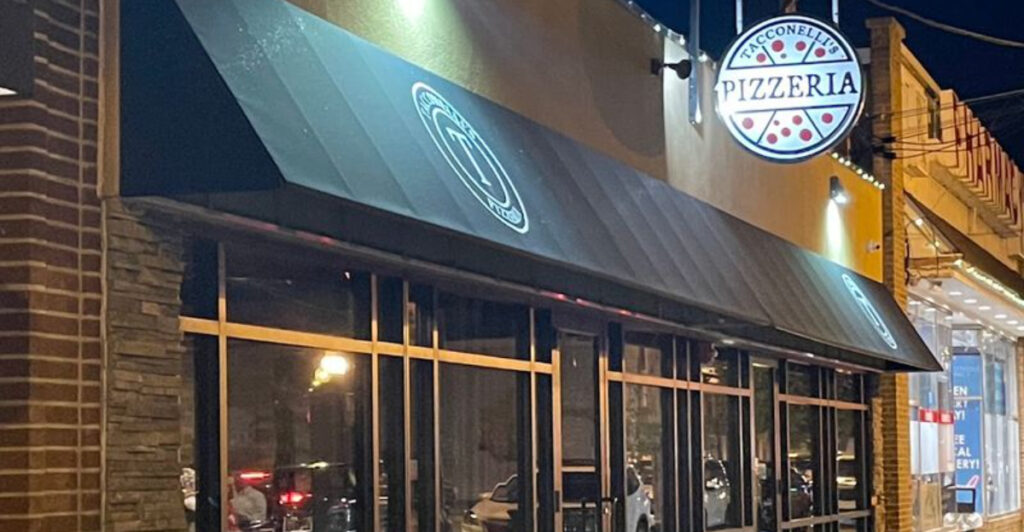
Fresh basil lands on the pizza in bright green leaves, creamy mozzarella melts into small white pools, and vivid tomato sauce peeks through every open space. Nothing about the Margherita at Tacconelli’s Pizzeria feels overworked.
That simplicity is precisely what makes the first bite so memorable. The crust arrives thin, blistered, and sturdy enough to carry a slice without collapsing under the cheese.
Its crisp underside gives way to a light chew, while charred spots around the rim bring the faint smokiness that separates a good brick-oven pie from an ordinary one. This is pizza stripped down to its essentials and made with the confidence of a family that has spent generations standing near a hot oven.
Located at 27 West Main Street in Maple Shade, Tacconelli’s blends South Jersey warmth with a pizza tradition stretching back more than a century. The restaurant feels comfortably removed from trends, yet the Margherita can still stop a table mid-conversation.
Tacconelli’s Brought Its Old-World Pizza Tradition to Maple Shade
Maple Shade became part of the Tacconelli family story in 2003, when Vince Tacconelli Jr. and his wife, Doris, opened a pizzeria closer to their South Jersey home. By then, the name already carried serious weight among Philadelphia-area pizza fans.
The family had spent decades building a reputation for thin-crust tomato pies, and the New Jersey location brought that same style across the Delaware River without sanding away its old-school character.
The restaurant sits along West Main Street, roughly 10 miles east of Center City Philadelphia and only a short drive from Cherry Hill.
Its location makes it easy to reach, but the rustic exterior feels more like something discovered on a back road. A weathered wooden sign, warm yellow walls, and climbing greenery give the entrance a lived-in charm that suits the food waiting inside.
Tacconelli’s did not simply duplicate the Philadelphia operation and call it a day. The Maple Shade restaurant expanded the experience with homemade salad dressings, desserts, and fresh pasta, giving diners more reasons to settle in for a full meal.
Pizza, however, remains the center of gravity. Vince Jr. continued making the same style of pies associated with the family’s earlier restaurant, using familiar ingredients and working alongside cooks who understood the established method.
There is now another New Jersey location at 164 Haddon Avenue in Haddon Township, but Maple Shade holds a special place as the family’s first Garden State outpost. Reservations are accepted by phone, an increasingly rare touch that fits the restaurant’s traditional personality.
Dinner is generally served Wednesday through Sunday, with Friday lunch adding a brief daytime window. Those limited hours help explain why the dining room can develop such an energetic buzz once the ovens are hot and pizzas begin crossing the room.
A Century-Old Family Recipe Lives On in Every Thin-Crust Pie
The story begins in 1918, when Giovanni Tacconelli left Chieti, Italy, and came to Philadelphia. After working as a laborer, he returned to the craft he already knew and began baking bread.
Giovanni believed a proper brick oven was essential, so he enlisted several friends to help construct an enormous oven measuring approximately 20 feet by 20 feet. That oven was built for bread rather than pizza, but it laid the foundation for everything that followed.
Production stopped during World War II when Giovanni’s sons, who helped run the bakery, entered military service. Once the family returned home in 1946, he found a new purpose for the oven.
Instead of restarting the bakery exactly as it had been, Giovanni began making Old World tomato pies using a technique taught to him by his mother. He later passed that knowledge to his son Anthony, turning a practical postwar decision into a multigenerational family business.
That history matters because Tacconelli’s pizza does not taste as though it was designed in a corporate test kitchen. The crust is thin without becoming brittle, the toppings are deliberately restrained, and the sauce remains an active part of the pie instead of hiding beneath a heavy blanket of cheese.
Even the menu’s suggestion that diners limit themselves to three toppings reveals the underlying philosophy. Too many additions can weigh down a thin crust and blur the individual flavors, so restraint is treated as part of the recipe rather than a lack of imagination.
More than a century has passed since Giovanni arrived from Italy, while the family’s tomato-pie tradition itself dates to 1946. Through moves, new generations, and an expanded menu, the essential formula has remained recognizable.
Flour, sauce, cheese, heat, and experience still do most of the talking.
The Margherita Pizza Proves That Simple Ingredients Can Steal the Show
There is nowhere for a Margherita pizza to hide. When a pie depends almost entirely on tomato sauce, fresh mozzarella, basil, and crust, one weak ingredient can throw the whole thing off.
Tacconelli’s version succeeds because each component knows its role. The sauce tastes bright and tomato-forward, supplying acidity and a little natural sweetness without turning the surface soupy.
Fresh mozzarella is scattered across the pie rather than spread from edge to edge, leaving enough open space for the crust and sauce to remain distinct. Basil adds color and an unmistakable herbal fragrance that becomes more noticeable as the warm pie reaches the table.
The result is balanced rather than overloaded. Each slice offers crisp crust, soft cheese, lively tomato, and basil without any one flavor steamrolling the others.
Just as important, the toppings are applied carefully enough that the thin base stays intact when lifted. The online ordering menu lists the Margherita at $18, placing it only a few dollars above the classic Red Pie and standard White Pie.
There is also a White Margherita, made with fresh mozzarella, spices, basil, and pecorino, for anyone who loves the basic idea but wants to skip the tomato sauce. Still, the traditional red version is the clearest expression of what Tacconelli’s does well.
Its appeal is not tied to a novelty topping or an extravagant presentation built for social media. It is the sort of pizza that makes you notice small details, from the char along the rim to the way the mozzarella softens without burying the sauce.
In a state where pizzerias compete with everything from mustard pies to towering Sicilian squares, Tacconelli’s earns attention by making four familiar elements taste unusually complete.
A Hot Brick Oven Gives the Crust Its Signature Char and Chew
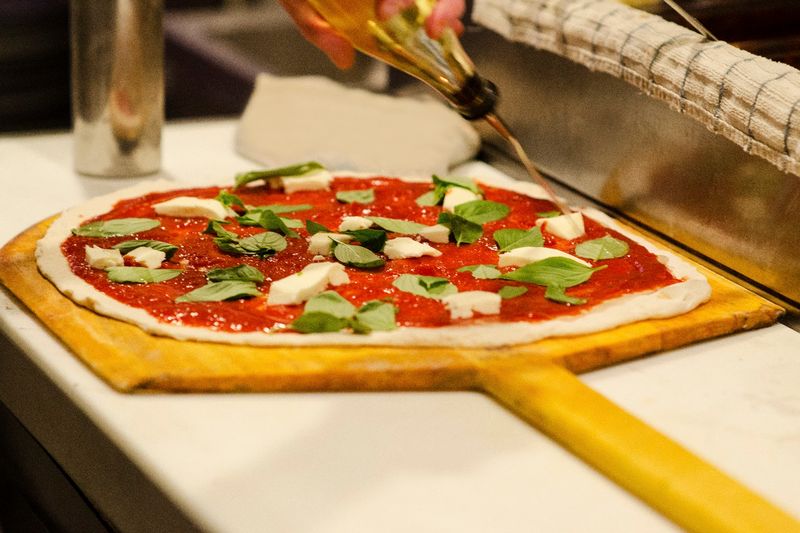
Watch the kitchen for a few minutes and the rhythm becomes clear. Stretched rounds of dough slide toward the oven on long peels, disappear into the heat, and return with bubbling cheese and dark freckles around their edges.
That fast transformation is responsible for one of Tacconelli’s defining features—the crust. It is thin enough to remain crisp across the bottom but not so dry that it snaps like a cracker.
Near the outer rim, the dough develops a gentle chew and scattered blisters, creating texture without the oversized, bread-heavy border found on some Neapolitan pies. Brick-oven heat does several jobs at once.
It sets the base quickly, gives the underside its browned finish, and chars isolated spots before the interior moisture disappears. That balance is especially important with the Margherita, since fresh mozzarella can release liquid as it warms.
A sluggish bake could leave the center soft and overloaded, but Tacconelli’s crust retains enough structure to support the sauce and cheese. The char is not a flaw or an accident.
Those darker patches introduce a toasted edge that plays against the sweetness of the tomato and the milky mozzarella. This style also explains why the kitchen encourages restraint with toppings.
Pepperoni, mushrooms, onions, sausage, spinach, prosciutto, arugula, and other additions are available, but stacking too many onto one pie would interfere with the crust’s quick, clean bake. For takeout customers, the restaurant even offers pies cooked three-quarters of the way so they can be finished in a home oven.
It is a practical solution to the unavoidable problem of transporting thin-crust pizza: trapped steam can soften a fully baked base inside the box. Finishing the pie at home restores some of that just-baked snap and brings the oven experience remarkably close to the kitchen table.
White Pies Tomato Pies and Fresh Pasta Round Out the Menu
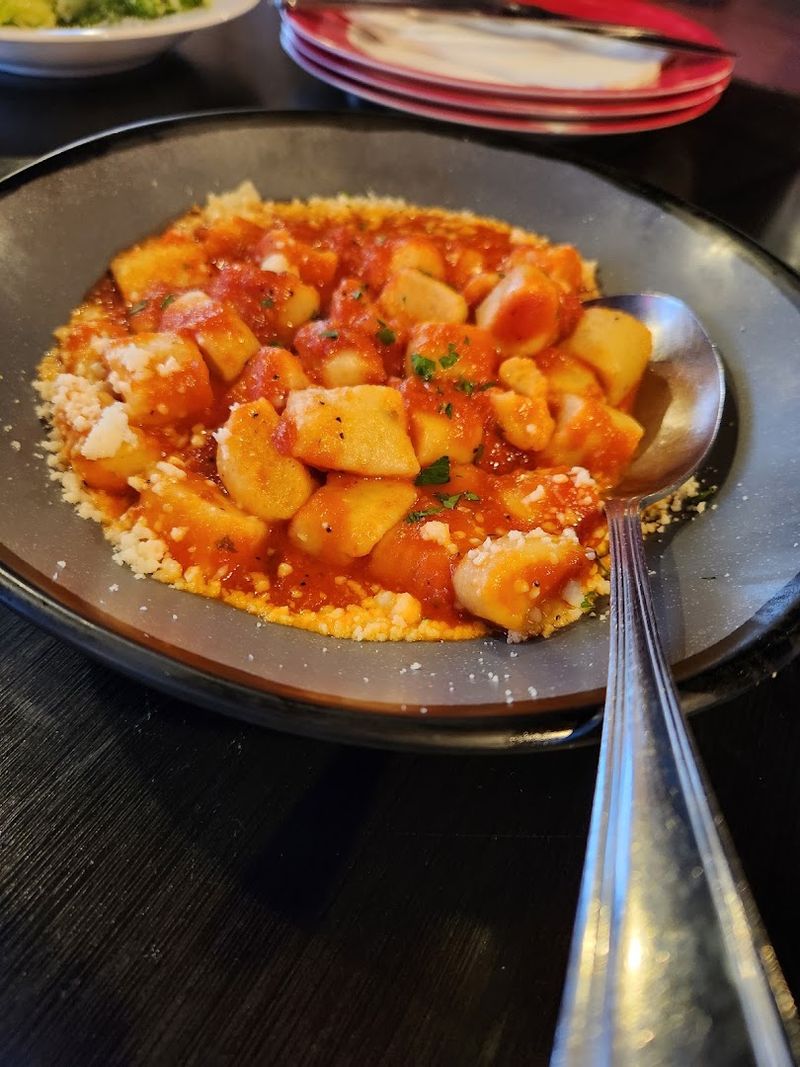
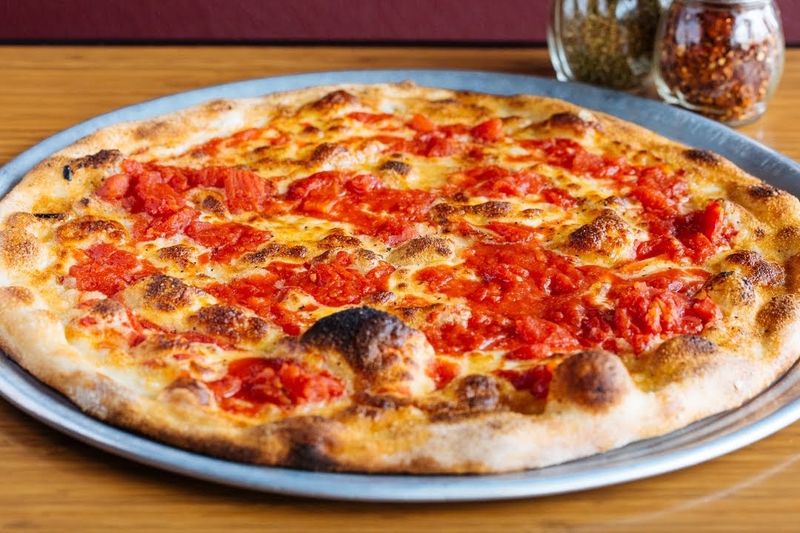
Pizza decisions become surprisingly difficult once the rest of the menu enters the conversation. The Tomato Pie is the most stripped-down option, arriving with sauce and no cheese for $14.50.
It is an excellent test of the crust and tomato sauce because nothing else gets in the way. At the opposite end of the spectrum, the Formaggio combines mozzarella, provolone, and Asiago, offering a sharper and richer bite than a standard cheese pie.
Diners who cannot choose between red and white can order several half-and-half combinations, including a split Red and White Pie or a Formaggio divided between tomato sauce and spices. The classic White Pie, listed at $15.50, uses mozzarella, salt, black pepper, and garlic.
Its simplicity has made it one of Tacconelli’s signatures, with the garlic adding plenty of personality without turning every slice into a contest of excess. The Signature builds on that base with spinach and chopped tomatoes, while the Marinara uses a slightly spicy sauce and Asiago.
Sharp provolone pies, Buffalo chicken, barbecue chicken, and a white pie with chopped tomatoes stretch the selection without losing the thin-crust format. The Maple Shade kitchen also makes fresh pasta, and the offerings can change with ingredients and availability.
Recent choices have included mafalda with roasted greenhouse tomato sauce and burrata, gramigna with house-made garlic-and-peppercorn sausage, roasted red peppers, and heirloom tomatoes, and orecchiette with chicken ragù. Freshly extruded pasta is even sold dried and bagged in-house.
Salads include Caesar, Greek, house, and wedge versions, while dessert can mean tiramisu, hazelnut cheesecake, or the wonderfully over-the-top Dooley—a 12-inch dessert pizza with chocolate morsels, chocolate syrup, sliced bananas, and powdered sugar.
It is enough variety to support a leisurely dinner, but not so much that anyone forgets why they came.
The Cozy Old-School Atmosphere Makes Every Meal Feel Special
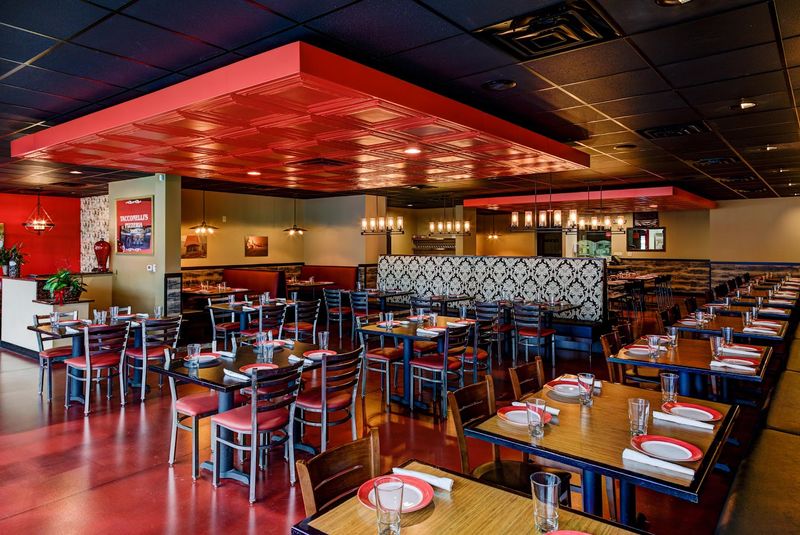
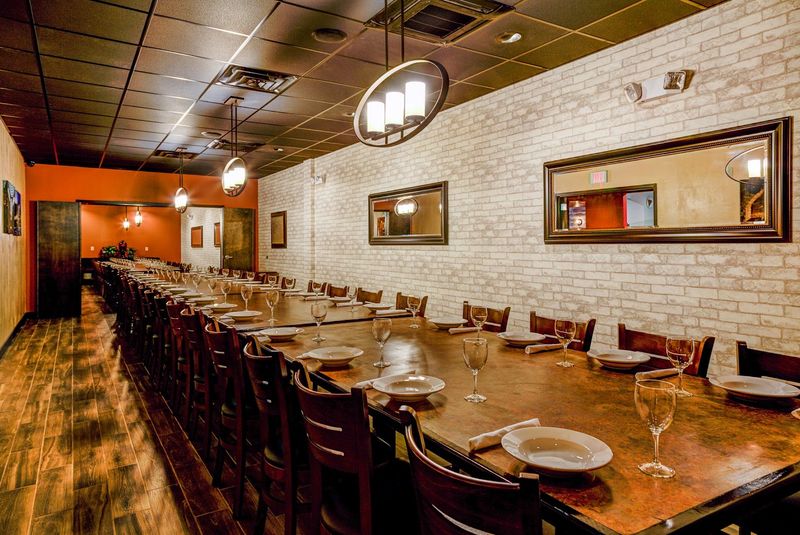
By dinner, warm light settles across the stone walls and distinctive red ceiling tiles while the open kitchen provides the evening’s entertainment. There is no need for a complicated theme when diners can watch dough being stretched, topped, and sent into the oven.
The steady movement gives the room energy, but the layout still feels comfortable enough for a family meal or a long conversation with friends. Tacconelli’s occupies a useful middle ground between neighborhood pizzeria and occasion restaurant.
You can arrive casually dressed and split a Red Pie on an ordinary Wednesday, yet the dining room has enough character to suit a birthday dinner or a small celebration. Private dining is available for groups of 20 to 60, reinforcing the restaurant’s role as a gathering place rather than a quick slice counter.
The service style matches the surroundings. Staff members know a menu filled with half-and-half combinations, specialty cheeses, and optional toppings, so they can steer newcomers without turning pizza ordering into a lecture.
Regulars, meanwhile, tend to arrive with strong opinions already formed about White Pies, tomato pies, and whether a Margherita should be accompanied by a salad or followed by chocolate cake. The Maple Shade location currently serves dinner from 4 p.m. to 9:30 p.m.
Wednesday through Saturday and from 3 p.m. to 8:30 p.m. Sunday, along with Friday lunch from 11:30 a.m. to 2 p.m.
That compact schedule concentrates the crowd, especially on weekends, making a phone reservation a sensible bit of old-fashioned planning. Once seated, though, the experience never feels stuck in the past.
It simply reflects a restaurant confident enough to keep the parts that work: a hot oven, a practiced family recipe, a lively room, and a Margherita pizza with no reason to be anything more complicated than delicious.