A bronze Mary rises above the Warren County hills like she has been keeping watch there forever, her rosary visible from below and her mantle suggested by the sharp roofline beneath her. Then you remember you are still in New Jersey, just off Mountain View Road in Asbury, not somewhere along a pilgrimage route in Portugal.
That little surprise is part of what makes the National Blue Army Shrine of Our Lady of Fatima feel so different from a usual day trip. It is quiet without feeling empty, impressive without feeling showy, and spacious enough that visitors can move at their own pace.
Some come for Mass, some for the Rosary, some for the gardens, and some simply to stand still for a few minutes in a place built for prayer. On 150 acres of farmland, the shrine feels less like an attraction and more like a deep breath.
The Blue Army Shrine Turns Warren County Farmland Into A Place To Breathe
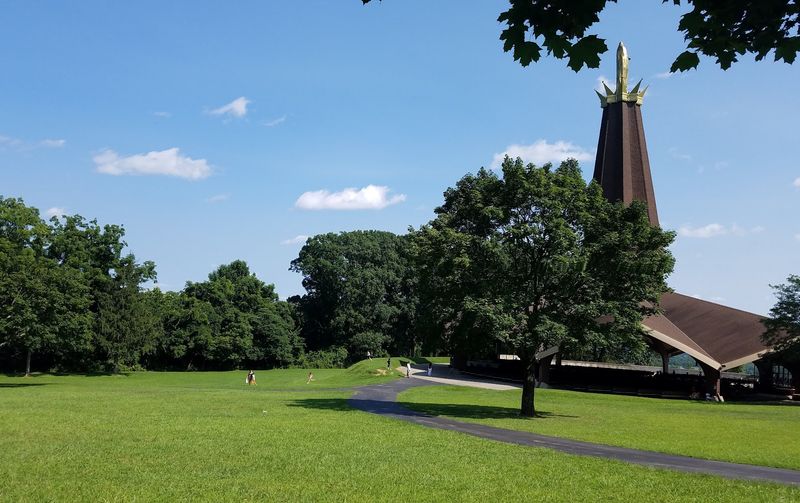
The first thing that makes the National Blue Army Shrine feel unusual is the setting. This is not tucked into a busy downtown block or surrounded by parking garages and traffic lights.
It sits on Mountain View Road East in Asbury, a Warren County community where the roads still have that rolling, rural New Jersey rhythm. Fields, trees, and open sky do a lot of the work before you even reach the shrine grounds.
That matters because the whole place is built around slowing down. The shrine covers about 150 acres, which gives visitors room to wander without feeling like they are being pushed from one stop to the next.
You can arrive for a scheduled devotion, walk the grounds afterward, pause near a statue, or simply follow the paths until the noise in your head starts to settle. It is the kind of place where even a casual visitor ends up lowering their voice.
The shrine is officially connected to the World Apostolate of Fatima, also known as Our Lady’s Blue Army, and its focus is the message associated with Our Lady of Fatima in Portugal. That connection gives the grounds a very specific identity.
This is not just a pretty chapel with nice landscaping. It is a New Jersey pilgrimage site built around prayer, conversion, peace, and Marian devotion.
Still, you do not have to know every piece of Fatima history to feel the pull of the place. The layout makes the experience easy to understand.
The main shrine draws your eyes upward, the chapels invite you inward, and the gardens give you space to move quietly from one thought to the next. In a state known for speed, density, and sharp elbows, this corner of Asbury feels almost stubbornly calm.
The Main Shrine Rises Like A Landmark Of Quiet Devotion
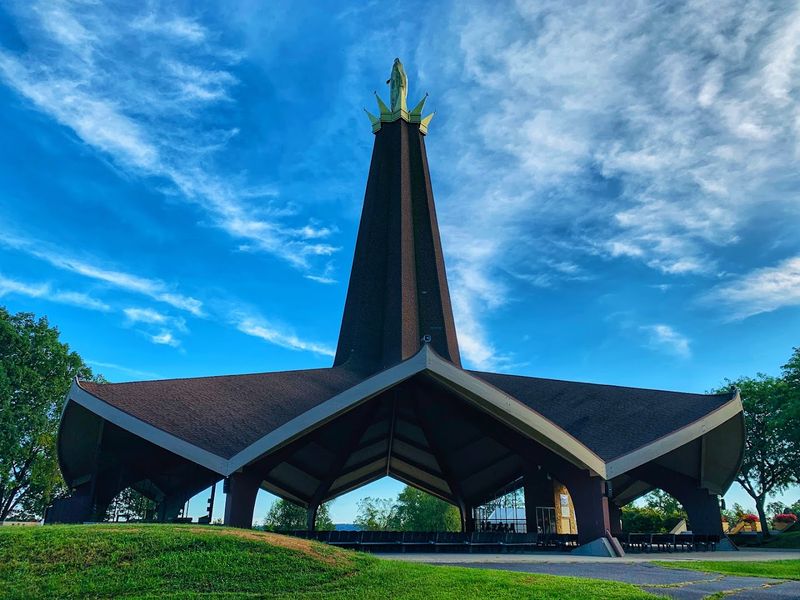
The main shrine announces itself with height, but not in a flashy way. The bronze statue of the Immaculate Heart of Mary stands above the shrine, lifted high over the grounds, while the roof beneath it is meant to suggest Mary’s mantle stretching protectively over her children.
It is a big visual idea, and from below, it works. You do not need a long explanation to understand the feeling it is going for.
Built in 1978, the shrine has the kind of architecture that feels unmistakably tied to its purpose. It is angular, open, and ceremonial, with the statue and spire giving the whole property a focal point.
From certain angles, the structure looks almost like it belongs in another country, which is exactly why it makes such an impression in rural Warren County. One minute you are driving through farm roads, and the next you are looking at a Marian shrine that feels much larger than its surroundings.
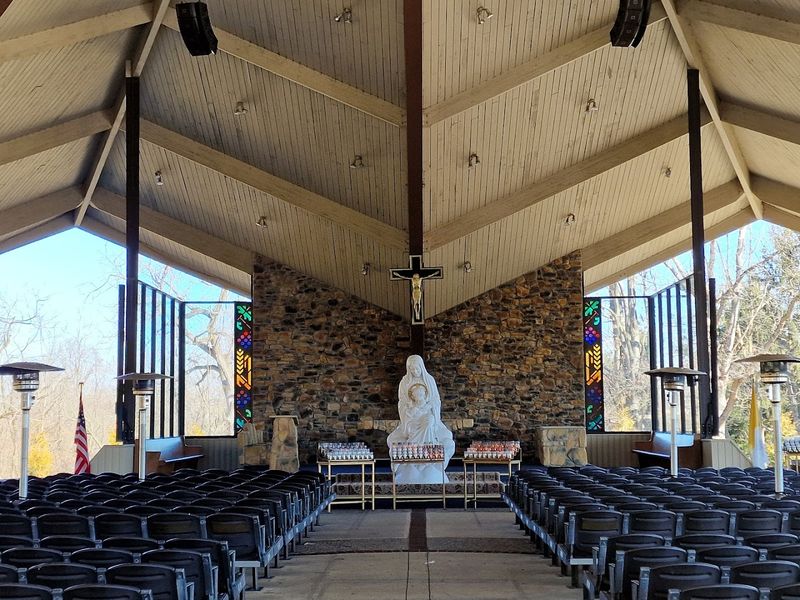
Inside the shrine, the Blessed Sacrament Chapel is at the spiritual center of daily life here. That is where the rhythm of prayer becomes most visible, especially around the regular Rosary, confession, and noon Mass schedule.
Visitors who come outside of formal events may still find the building meaningful as a place to sit, look, and let the architecture do what it was designed to do. What keeps the main shrine from feeling overwhelming is the quiet around it.
There is open air on every side. The paths do not rush you.
The devotional statues and spaces around the grounds soften the scale of the central structure, so the experience becomes less about standing in front of something massive and more about moving through a place with many small moments. That balance is what gives the shrine its particular charm.
The Holy House Chapel Brings A Piece Of Loreto To New Jersey
One of the most fascinating stops on the property is the Holy House Chapel, because it connects New Jersey not to Portugal, but to Loreto, Italy. The chapel is a scale replica of the Holy House of Loreto, long venerated in Catholic tradition as the home of the Holy Family.
That alone would make it notable, but the Blue Army Shrine version has an extra detail that gives it a stronger sense of connection: stones from the Holy House in Loreto were pulverized and added to the mortar used in the chapel. That is the kind of fact that changes how you look at the room.
Suddenly the chapel is not merely a copy or a themed religious space. It is built to carry a physical link to the original holy site.
For pilgrims, that detail matters. For curious visitors, it gives the chapel a texture that is hard to fake.
The Holy House Chapel was dedicated in 1973, before the main shrine itself was completed. That makes it feel like one of the older anchors of the property, a quieter and more intimate counterpoint to the large outdoor presence of the main shrine.
Where the statue above the shrine draws your eyes skyward, the Holy House Chapel pulls your attention inward. It is smaller, closer, and more still.
Inside, details connect the chapel further to Fatima devotion. The altar includes a section associated with the chapel in Tuy, Spain, where Sister Lucia, one of the three Fatima children, received an important later vision.
A wooden statue of St. Joseph, shown as he appeared during the Miracle of the Sun at Fatima, is also part of the chapel’s devotional character. Even for visitors who are not deeply familiar with those stories, the chapel has a way of making history feel close.
It is one of the reasons the shrine feels less like a single building and more like a layered pilgrimage route.
The Capelinha Makes Fatima Feel Closer Than You Expect
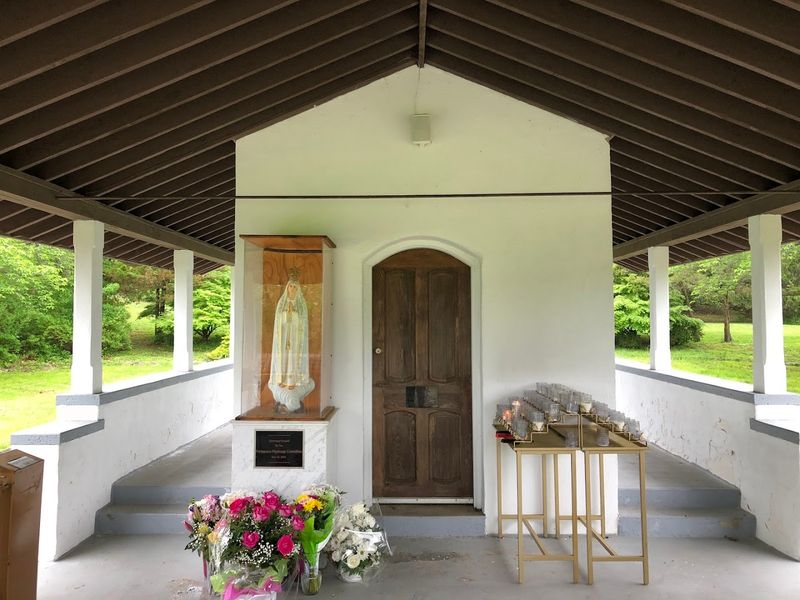
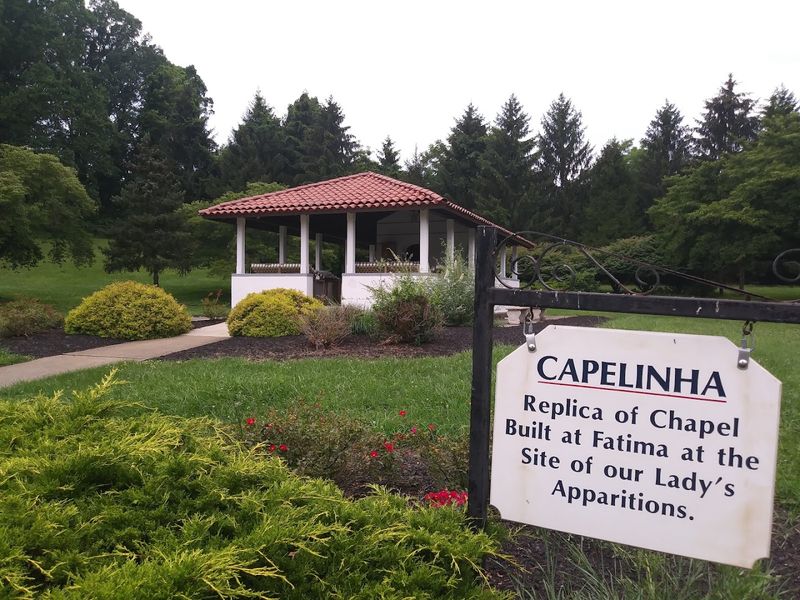
Fatima can feel like a faraway word until you stand in front of the Capelinha at the Blue Army Shrine. The name means “little chapel” in Portuguese, and that simplicity is part of its power.
It is a replica of the Chapel of Apparitions at Fatima, the small chapel built near the site where three shepherd children reported seeing the Virgin Mary in 1917. On the New Jersey grounds, the Capelinha gives visitors a direct visual connection to Portugal.
It is not trying to compete with the larger shrine or overpower the landscape. It is modest, focused, and deeply tied to the story that inspired the whole place.
For many pilgrims, this is one of the stops that makes the visit feel most like a journey rather than a tour. The Capelinha also houses the Pilgrim Virgin Statue, an exact replica of the statue carried in procession at Fatima.
That detail gives the space a ceremonial importance, especially during major celebrations and processions. During the Fatima season, from May through October, the shrine’s 13th-of-the-month events bring larger groups to the grounds, and the Capelinha often becomes part of the movement of the day.
There is something striking about seeing a Portuguese devotional landmark translated into a New Jersey setting. The farmland, the open paths, and the familiar Jersey sky are still there, but the Capelinha changes the emotional temperature of the place.
It makes the distance between Asbury and Fatima feel smaller. It also gives the shrine one of its most memorable contrasts.
You can be standing in Warren County, not far from everyday roads and local towns, and still feel like you have stepped into a tradition that stretches across oceans, languages, and generations.
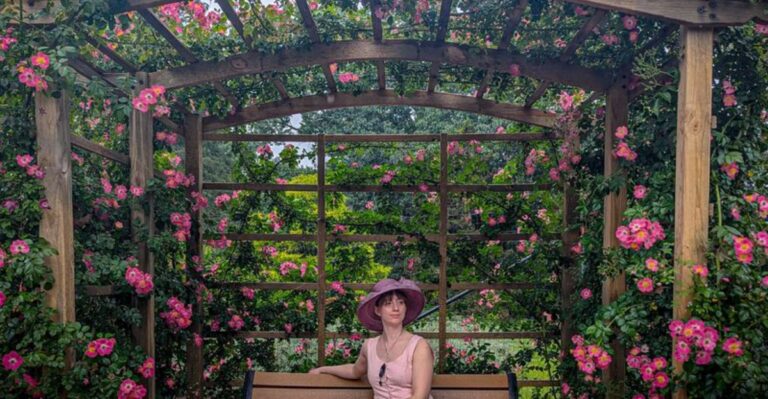
The Rosary Garden Turns A Simple Walk Into A Moving Prayer
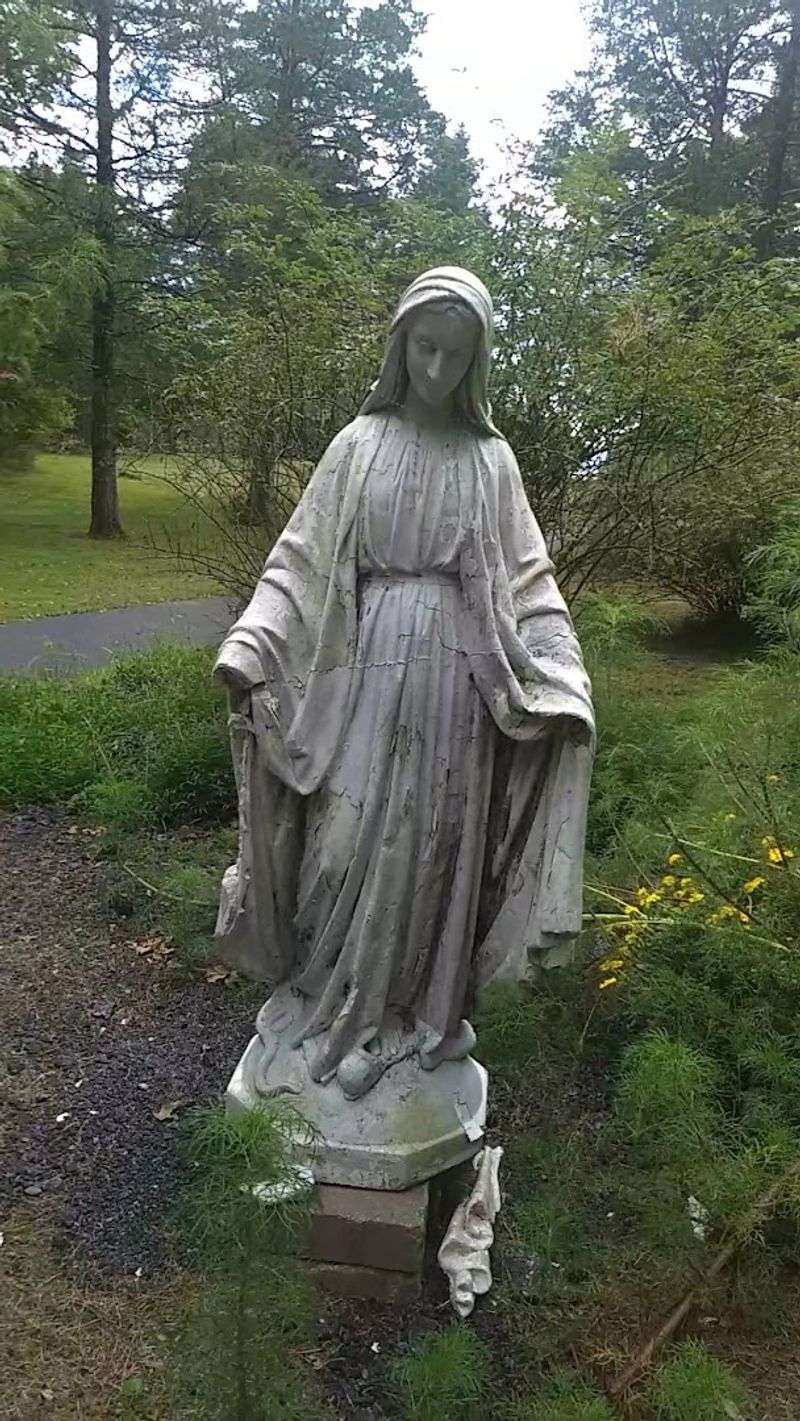
The Rosary Garden is where the shrine becomes a walk instead of a single stop. That may sound small, but it changes the whole experience.
Sitting in a chapel asks one kind of attention from you. Walking a garden asks another.
Here, prayer becomes something you do step by step, with the landscape giving your thoughts room to spread out. The garden fits naturally with the Fatima message, since the Rosary is central to the shrine’s daily rhythm.
A Rosary is prayed at 11:30 a.m. each day, just before the noon Mass, but the garden gives visitors another way to enter into that devotion. You can move through slowly, pause where you need to, or simply let the repetition of the path steady you.
Even if you are not praying the full Rosary, the setting encourages a slower pace. This is also where the shrine feels especially approachable.
Not every visitor wants to start inside a chapel or attend a full schedule of devotions. Some people need to walk first. Some need space. Some arrive with children, older relatives, or friends who are curious but not quite sure what to expect.
The garden gives everyone an easy place to begin. Nearby outdoor features add to that sense of gentle movement through the grounds.
The Stations of the Cross are also part of the shrine’s outdoor devotional landscape, giving visitors another route for reflection. Statues and quiet corners appear throughout the property, so a visit can become as structured or as informal as you want it to be.
There is no need to rush this part. The point is not to “finish” the garden. The point is to let the walk become part of the visit.
Daily Mass And Peaceful Grounds Make This Asbury Shrine Worth The Trip
The shrine’s daily schedule is one of the reasons it feels alive rather than simply preserved. The grounds are open daily from 9 a.m. to dusk, and the regular devotional rhythm includes the Rosary at 11:30 a.m., confession around that same time and after Mass, and Holy Mass at noon.
For visitors planning a first trip, that noon Mass is the easiest anchor around which to build the day. The gift shop adds a practical stop before or after time on the grounds.
It carries Catholic books, rosaries, prayer cards, and devotional gifts, which makes sense for a pilgrimage site where many visitors want to bring something home for themselves or for someone they love. The shop also helps keep the visit grounded.
After the chapels, gardens, and big views, a small browse through shelves of rosaries and holy cards feels like part of the same rhythm. Timing can shape the experience.
A quiet weekday may feel deeply personal, with more room to wander and sit. The 13th-of-the-month Fatima celebrations from May through October bring more people, more ceremony, and a stronger sense of shared pilgrimage.
Portuguese Day and other special events can add processions, outdoor prayer, and a community energy that feels very different from a simple solo visit. What makes the Blue Army Shrine special is that it works in both moods.
It can be a formal Catholic pilgrimage, a peaceful place to pray, or a reflective stop for someone who appreciates sacred architecture and quiet grounds. It asks for no performance from you.
You can attend Mass, walk the Rosary Garden, visit the Holy House Chapel, stand near the Capelinha, or simply look up at the statue above the shrine and let the silence do its work.
Share this story