A plastic palm tree leans over a kidney-shaped swimming pool while a glowing starburst sign promises air conditioning, color television, and the kind of vacation your grandparents might still talk about
A few blocks away, a yellow tram car rolls past flashing arcades as its famous recorded warning cuts through the smell of pizza, funnel cake, and warm salt air.
This is Wildwood, where the middle of the 20th century never entirely packed its bags. Spread across a five-mile barrier island in Cape May County, the Wildwoods combine space-age motels, an enormous boardwalk, amusement piers, and beaches so wide that reaching the water can feel like a small expedition.
The whole place is colorful, loud, nostalgic, and proudly unusual. Yet beneath the neon and playful excess is a genuinely welcoming shore town that generations of families have made part of their summers.
Wildwood does not simply remember the 1950s. It keeps them glowing after dark.
Wildwood Feels Like a Neon-Soaked Trip Back to the 1950s
Most beach towns update their appearance every few decades. Wildwood somehow turned its refusal to blend in into one of its greatest strengths.
Drive along Atlantic or Ocean Avenue and the usual chain hotels give way to low-rise motels dressed in turquoise, coral, lemon yellow, and tropical green. Signs shoot toward the sky, balconies curve around corners, and decorative starbursts appear on everything from railings to lobby walls.
Even before reaching the beach, visitors know they have arrived somewhere different. This distinctive character took shape during the postwar tourism boom.
American families had more cars, more leisure time, and a growing appetite for road trips. Wildwood’s motel owners competed for their attention with buildings designed to be spotted through a windshield.
A plain rectangular sign would not do when a giant boomerang, rocket, or glowing palm tree could lure travelers off the road. The result was a playful local version of midcentury modern design now widely known as Doo-Wop architecture.
The name fits the buildings’ era as well as their personality. These motels appeared when vocal harmony groups filled jukeboxes and space-age optimism influenced everything from automobiles to kitchen appliances.
Wildwood’s retro look is not limited to a carefully staged block. It stretches through entire neighborhoods, mixing original motels with diners, miniature golf courses, ice cream stands, and newer businesses that have embraced the same colorful spirit.
The town feels less like a museum display than a vintage postcard that people can still step inside. Guests swim beneath old neon signs, sit on second-floor balconies, and walk to the boardwalk just as vacationing families did more than half a century ago.
Colorful Doo-Wop Motels Give the Town Its One-of-a-Kind Look
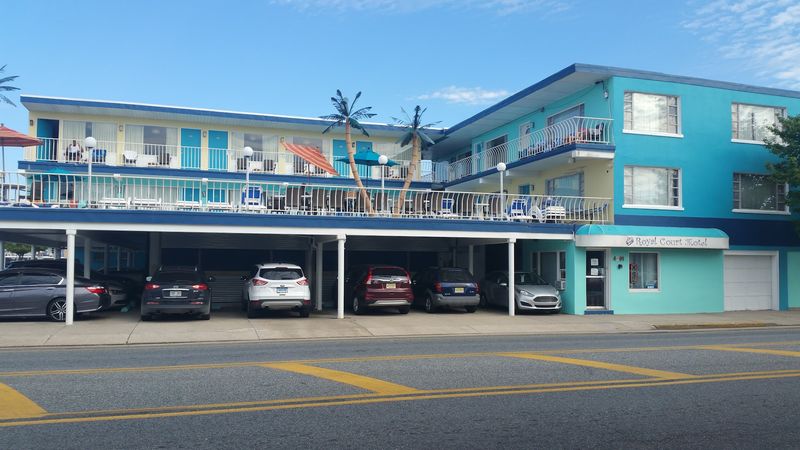
Look closely at Wildwood’s motels and their wonderfully odd details begin to reveal themselves. The Caribbean Motel on Atlantic Avenue has a sweeping crescent-shaped pool and a dramatically angled ramp that appears ready to launch guests into orbit.
The Satellite Motel announces itself with a sign worthy of a science-fiction movie, while the Starlux leans into chrome, bright colors, and retro-futuristic curves. Names such as the Waikiki, the Bel Air, and the Pink Champagne add their own layer of midcentury vacation fantasy.
These buildings were designed to sell an experience before travelers even stepped into the lobby. Plastic palm trees suggested tropical islands.
Angular roofs and flying-saucer shapes captured America’s fascination with space travel. Large windows, exterior corridors, and pools placed prominently near the street allowed passing motorists to see the fun already underway.
Owners also borrowed imagery from far beyond New Jersey. Polynesian themes sat beside Swiss chalets, Caribbean resorts, and Hollywood-inspired glamour.
Architectural consistency was never the goal. Standing out was what mattered, and each motel tried to be brighter, stranger, or more memorable than the property next door.
Preserving that character has required real effort. Many classic motels disappeared as land values rose and larger developments arrived.
The Doo Wop Preservation League, founded in 1997, has worked to document the remaining architecture and encourage owners to protect its defining features.
Visitors can dig deeper at the Doo Wop Experience Museum and Neon Sign Garden at 4500 Ocean Avenue, directly across from the Wildwoods Convention Center.
Displays include salvaged motel signs, period furniture, architectural details, and memorabilia from the resort’s postwar boom. The collection helps explain why those exuberant buildings matter.
They are not merely cute backdrops for vacation photos. Together, they form one of America’s largest surviving collections of midcentury resort architecture.
The Wildwood Boardwalk Packs Nearly Two Miles With Classic Shore Fun
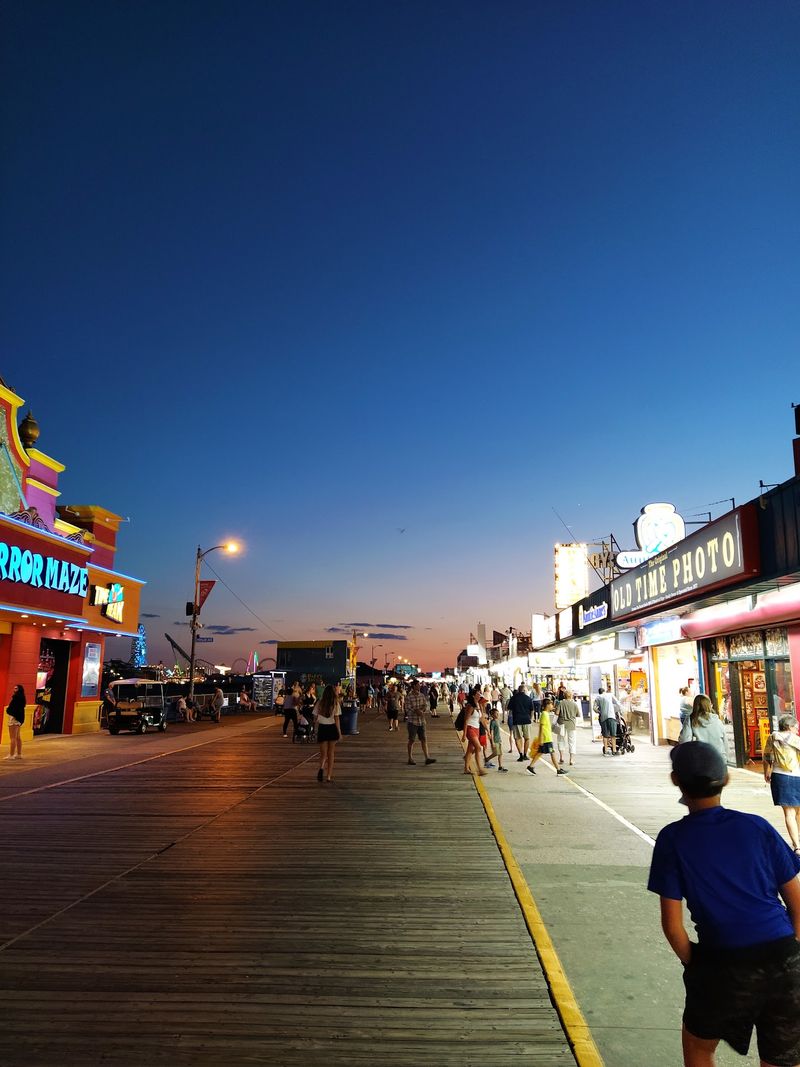
By late afternoon, the ocean breeze starts carrying the unmistakable scent of caramel corn, hot oil, and pizza toward the beach. That is the boardwalk announcing itself.
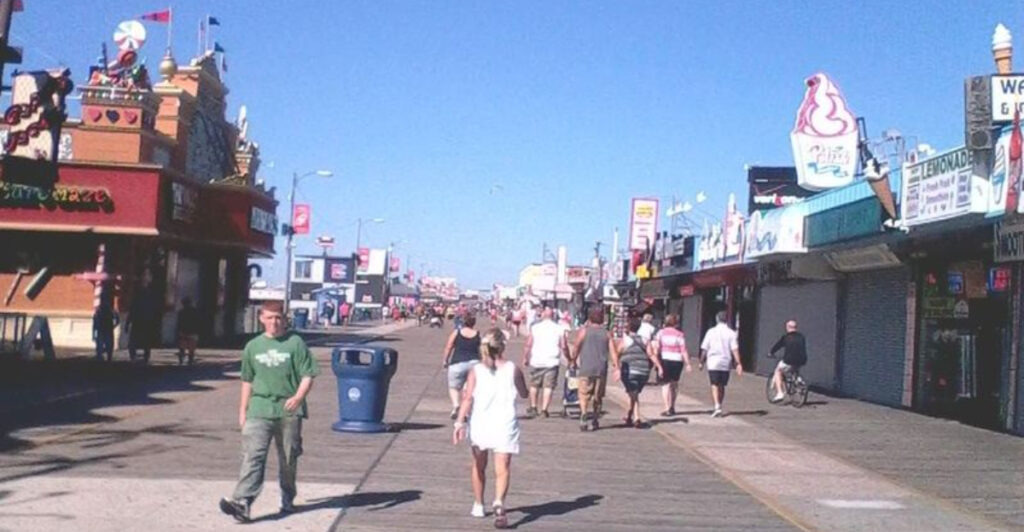
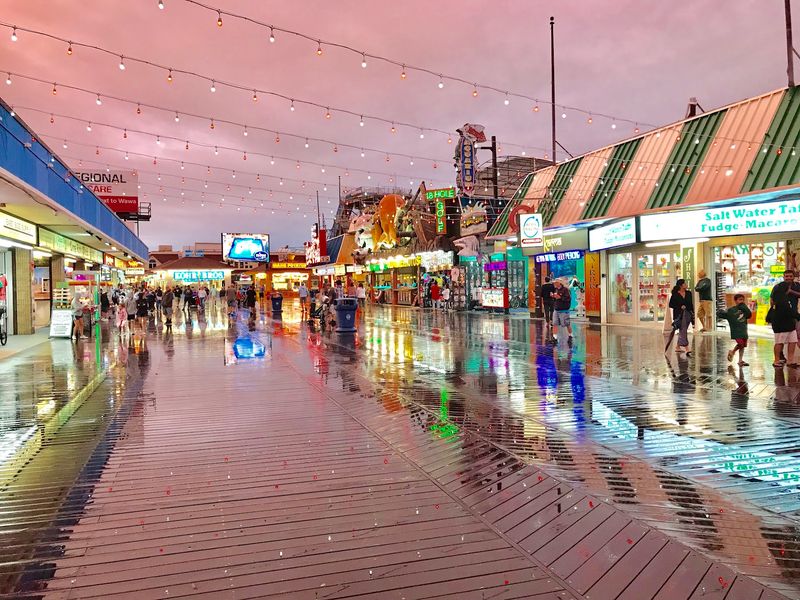
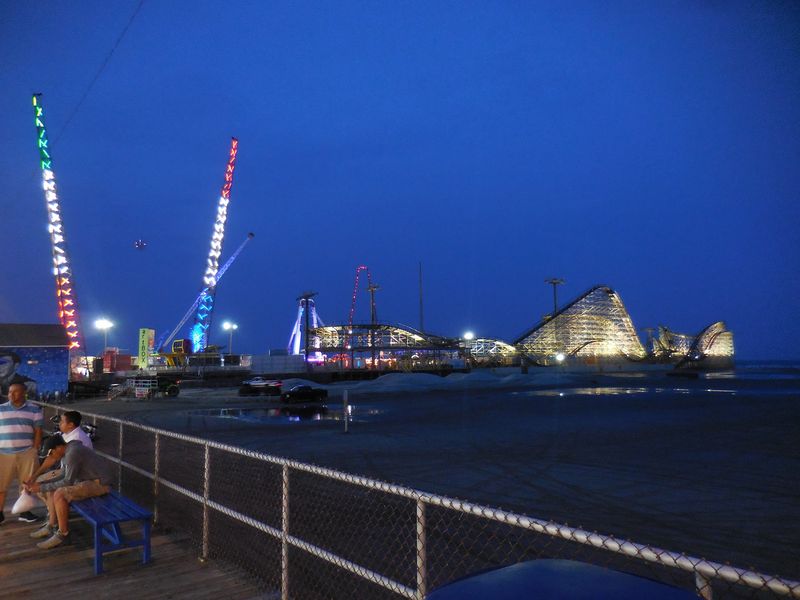
Its 38 blocks stretch almost 2.5 miles from Cresse Avenue toward 15th Avenue in North Wildwood, creating a long ribbon of food counters, souvenir shops, amusement rides, games, and glowing signs beside the Atlantic. Morey’s Piers supplies much of the skyline.
Its three amusement piers and beachfront water parks bring together more than 100 rides and attractions, from small carousels to roller coasters that twist above the boards.
The Giant Wheel rises over Mariner’s Pier, while the Great Nor’Easter sends riders looping over Surfside Pier with their feet dangling beneath them.
Adventure Pier adds the Great White, a wooden coaster whose track seems to dive straight toward the beach. Wildwood’s boardwalk is equally skilled at separating visitors from their snack money.
Curley’s Fries serves hand-cut potatoes in paper cups, Mack’s Pizza has been feeding boardwalk crowds since 1953, and Kohr Bros. continues the frozen-custard ritual with tall vanilla-and-orange twists.
Add slices of pizza, cheesesteaks, funnel cakes, lemonade, and saltwater taffy, and a simple walk can easily become a progressive dinner.
The quieter details are part of the fun, too. Arcades still reward well-aimed skee-ball shots with streams of tickets.
Shops sell airbrushed shirts, hermit crabs, beach towels, and souvenirs no one knew they needed until that exact moment. Early mornings belong to bicycles and walkers, but after sunset, the boardwalk becomes a moving wall of music, flashing lights, and competing aromas.
It is busy and unapologetically commercial, yet its traditions feel deeply personal to families who return to the same pizza window every summer.
The Sightseer Tram Car Has Been Rolling Past Vacationers Since 1949
“Watch the tram car, please” may be the most famous sentence on the entire Jersey Shore.
The cheerful warning plays repeatedly as Wildwood’s yellow-and-blue Sightseer Tram Cars glide along the boardwalk, prompting pedestrians to shuffle aside while children imitate the voice long after the vehicle has passed.
The tram’s story began well beyond New Jersey. The original cars were built for the 1939 New York World’s Fair in Flushing Meadows.
Wildwood businessman Gilbert Ramagosa later brought them to the boardwalk, where they began carrying passengers on June 11, 1949. The first one-way fare was just 10 cents.
More than seven decades later, the cars remain both practical transportation and one of the town’s most recognizable symbols. That usefulness should not be underestimated.
A complete boardwalk stroll covers almost 2.5 miles in one direction, and a day of sand, rides, and shopping can make the return trip feel much longer. The open-sided tram lets passengers rest their feet while watching arcades, food stands, and amusement piers slide past at a leisurely pace.
Riders can flag one down at designated points and travel in either direction during the operating season. The recorded warning became part of Wildwood history almost by accident.
Floss Stingel, a local resident, recorded the now-famous phrase in 1971. Her voice proved so effective and distinctive that it has remained with the tram cars for generations.
Newer recordings and occasional variations have appeared, but the original cadence still immediately brings Wildwood to mind. Plenty has changed around the tram over the years.
Rides have come and gone, motels have disappeared, and boardwalk businesses have changed names. Yet the sight of those long yellow cars weaving gently through the crowd makes the place feel reassuringly familiar, even to someone visiting for the first time.
Wide Free Beaches Leave Plenty of Room to Enjoy the Jersey Shore
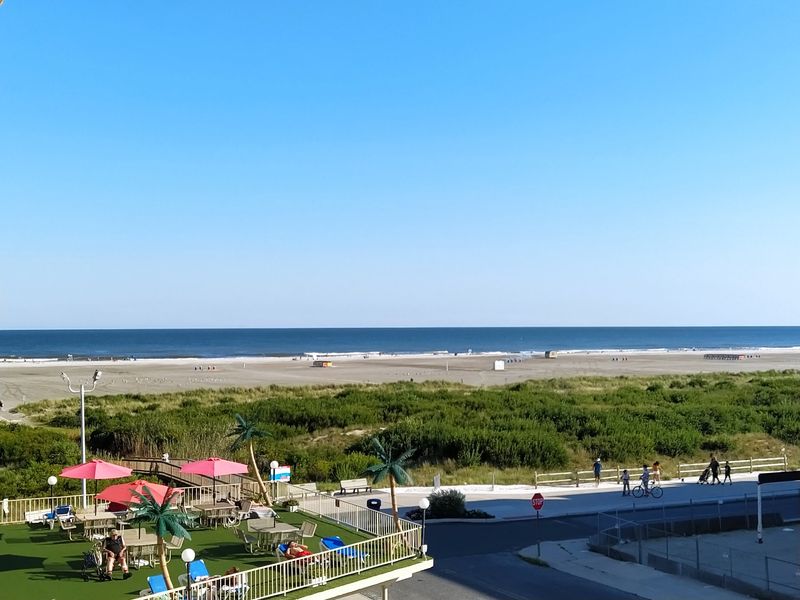
The first surprise is the price. Unlike many Jersey Shore communities, the Wildwoods do not require beach tags.
Visitors can walk onto five miles of sand in Wildwood, North Wildwood, and Wildwood Crest without purchasing a daily, weekly, or seasonal badge. For a family planning several beach days, that difference can leave a meaningful amount of money available for parking, lunch, or another round of amusement rides.
The second surprise is the distance to the ocean. Wildwood’s shoreline has expanded over time, creating beaches famous for their extraordinary width.
From the boardwalk, the Atlantic can look deceptively far away. Crossing the sand with chairs, umbrellas, coolers, and children in tow sometimes feels like a workout before the beach day has officially begun.
That generous space has obvious advantages once everyone settles in. There is room for large blankets, sandcastles, Frisbees, and groups that would feel squeezed together in narrower shore towns.
Busy summer weekends still draw crowds, but the scale of the beach keeps the experience from feeling overly compressed. Different stretches have slightly different personalities.
Wildwood places visitors close to the boardwalk’s rides and food, making it easy to move between sand and entertainment. Wildwood Crest generally feels quieter and more residential, while North Wildwood offers convenient access to its own dining and recreation.
The Wildwoods also provide designated surfing areas and a dog-friendly beach near Glenwood Avenue, marked by an enormous red fire-hydrant sculpture. Beach taxis help with the long trip across the sand during the summer, but there is something memorable about making the walk under that enormous open sky.
When the boardwalk finally fades behind you and the waves come into focus, Wildwood feels wonderfully spacious.
Glowing Signs and Old-School Charm Make Wildwood Unforgettable
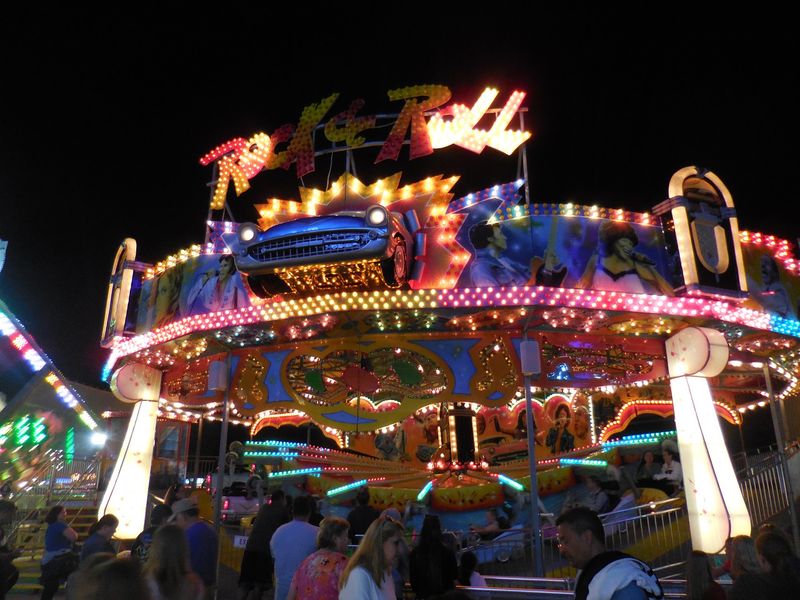
Wildwood becomes its most cinematic around dusk. The blue sky deepens, amusement rides flicker to life, and motel signs begin glowing one letter at a time.
A plastic palm tree looks slightly ridiculous in daylight but completely convincing under neon. Suddenly, the whole town seems less like a quirky collection of old buildings and more like a carefully preserved vision of the American summer.
The best way to appreciate that transformation is simply to wander. Atlantic Avenue holds many of the most recognizable Doo-Wop motels, while the Neon Sign Garden outside the Doo Wop Experience Museum brings rescued pieces of Wildwood history together in one place.
Guided evening trolley tours also explore the architecture during the season, passing starbursts, sweeping rooflines, and vintage signs when their colors are at their brightest. Even the town’s ordinary pleasures carry a nostalgic edge.
Breakfast might mean pancakes in a chrome-trimmed diner. An afternoon can move from the free beach to an arcade, followed by a tram ride and a paper tray of fries.
At night, families lean over motel balcony railings while the distant boardwalk hum drifts through the air. None of this feels especially polished, and that is part of Wildwood’s appeal.
The town has rough edges, competing colors, enormous signs, and more than a little lovable kitsch. It does not hide its age or attempt to imitate newer resorts.
Instead, it keeps old traditions in circulation and lets each generation add its own memories. That combination is difficult to reproduce.
Other beach towns have sand, rides, and frozen custard, but Wildwood surrounds them with rocket-shaped signs, vintage motels, and a tram car warning that has echoed across the boards since the Nixon era.
It is strange, cheerful, and unmistakably itself—the rare seaside town where nostalgia still feels alive rather than displayed behind glass.