
A white missile points toward the sky near the edge of the Jersey Shore, and somehow that is not the strangest part of this hike. The strange part is how casually it appears.
One minute, you are walking through sand, scrubby coastal growth, and the kind of wind-bent landscape that makes Sandy Hook feel a little wilder than the rest of the Shore. The next, you are near a preserved Cold War missile site that once helped defend the New York metropolitan area.
That mix is what makes the dune hike here such a great New Jersey outing. It is not a mountain hike, and it is not a boardwalk stroll.
It is a sandy, slightly odd, deeply local walk through dunes, maritime forest, military history, and salt air, all tucked inside Gateway National Recreation Area at the very top of Monmouth County.
Sandy Hook’s Famous Dune Trail Feels Nothing Like a Typical Shore Walk

There is a reason Sandy Hook never feels quite like the Shore towns farther south, even when the beach traffic is doing its best impression of July in New Jersey. This narrow peninsula has ocean on one side, bay on the other, and a long military past sitting right in the middle.
The Sandy Hook Unit of Gateway National Recreation Area covers most of the peninsula and includes miles of beaches, the Fort Hancock and Sandy Hook Proving Ground National Historic Landmark, a multi-use path, walking trails, and the oldest continuously operating lighthouse in the country.
That is a lot to pack into one sandy strip of land, and the dune trail makes you feel it in a way a regular beach day usually does not.
You are close to the water, but not always staring at it. The trail tucks into low coastal growth, sandy soil, and short, wind-shaped trees that make the place feel rougher around the edges than a polished boardwalk town.
Instead of arcade sounds or the smell of funnel cake, you get rustling brush, gulls overhead, and the occasional reminder that Fort Hancock was once a serious military post, not just a photogenic collection of old buildings. The whole walk has that very New Jersey talent for mixing things that should not quite go together.
Beach towels and Cold War history. Dune grass and skyline views.
A casual stroll that suddenly turns into a history lesson. It is short enough to fit into a relaxed Sandy Hook day, but unusual enough that it does not feel like filler between swimming and lunch.
The South Dune Trail Is Short Easy and Full of Surprises

At first glance, the South Beach Dune Trail sounds almost too easy to be memorable.
The trail itself runs between Parking Lot L and the beach just north of the Nike Missile Launch Site, while the nearby Old Dune Trail runs between Parking Lot E and the beach south of the missile site, giving visitors a way to connect sandy paths, beach walking, and Fort Hancock scenery into a compact outing.
The trick is that Sandy Hook miles do not always behave like regular miles. A flat walk over sand, dirt, gravel, and occasional deeper patches of beach-like sand can make your legs pay attention without turning the outing into a workout you need to train for.
That is part of the appeal. You can show up in sneakers, bring water, wear a hat, and feel like you have actually wandered somewhere instead of simply followed a sidewalk.
The route also changes character in small but satisfying ways. One stretch feels open and beachy, another slides into maritime forest, and another pulls you close enough to old military remnants that you start looking around more carefully.
The South Beach Dune Trail continues through short trees and brush, with partial shade rather than a full canopy, so it can feel hotter than expected on bright summer days. It is not the kind of trail where every turn announces itself with a dramatic overlook.
Its surprises are quieter: sandy trail markers, a side route toward South Beach, a sudden military structure, a glimpse of the park’s layered past. That is what makes it fun.
It asks for just enough effort to feel like a hike, then rewards you with a setting that is far stranger and more interesting than its easy rating suggests.
The Nike Missile Launch Site Is the Feature You Won’t Want to Miss

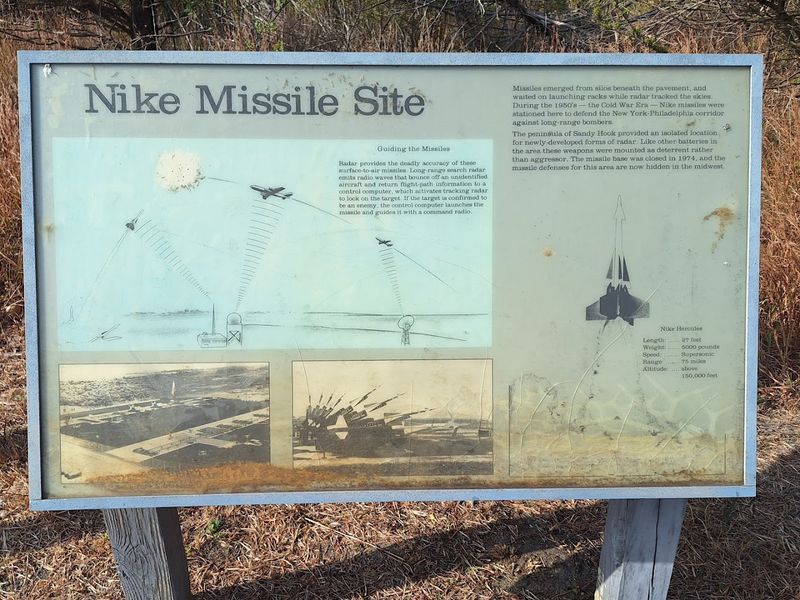
The moment that makes this hike stick in your memory is the Nike Missile Launch Site, because nothing says “only in New Jersey” quite like finding Cold War air defense history near a beach where people are also worrying about sunscreen and sandwiches.
At Sandy Hook, the Nike Missile Radar Site was part of the system that once helped protect New York City, and National Park Service tour information notes that radar here guided missiles as part of Cold War-era air defenses built in the 1950s.
The preserved Nike site is commonly associated with Fort Hancock’s role in defending the New York metropolitan area, and tours are offered on select weekends from April through November, depending on the park schedule.
Even if you are not there during a tour window, the presence of the site changes how the whole hike feels.
You start noticing the landscape differently. Sandy Hook no longer reads only as a beach escape; it becomes a strategic point at the mouth of New York Harbor, a place where geography mattered enough to shape military planning for decades.
The missile site adds a jolt of seriousness without making the walk heavy. It is more eerie than gloomy, more fascinating than intimidating.
The oddness comes from the contrast. There is salt air, beach grass, and summer light, and then there is the hard geometry of military infrastructure built for a very different kind of worry.
New Jersey has plenty of places where history is marked by plaques and restored rooms, but this one feels more immediate. You do not have to squint very hard to imagine how different Sandy Hook must have felt when this quiet corner of the Shore was tied to radar screens, alert crews, and the anxieties of the Cold War.
Fort Hancock Gives This Beach Hike a Fascinating Military Backstory
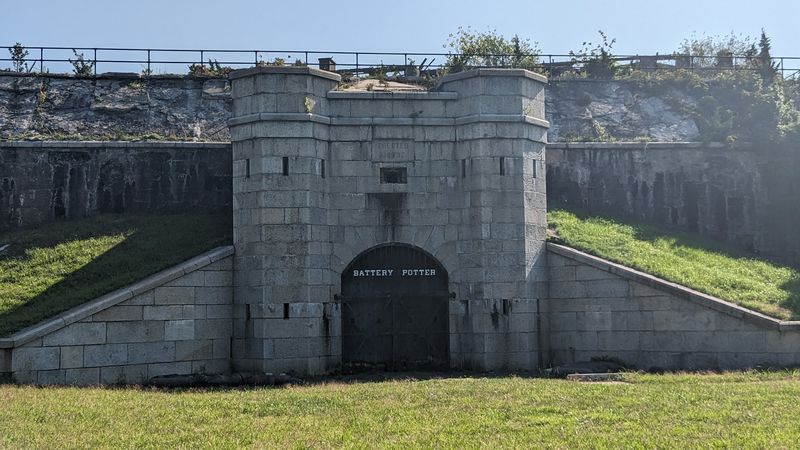
Long before Sandy Hook became a favorite beach-and-biking day trip, Fort Hancock gave the peninsula a job to do.
The Fort Hancock and Sandy Hook Proving Ground National Historic Landmark covers the entire peninsula and preserves the military history of Sandy Hook, including the distinctive yellow brick buildings where Army operations took place and where officers and enlisted personnel lived.
That context matters because the missile site is not some random historic object dropped into the dunes. It is part of a much larger story about coastal defense, harbor protection, weapons testing, and the strategic value of this narrow piece of land at the entrance to New York Harbor.
The old post gives the hike an extra layer, especially if you spend time wandering before or after the trail. Fort Hancock’s buildings have a weathered presence that is hard to fake.
Some look stately, some lonely, some like they are still deciding whether they belong to the past or the present. Nearby, the Sandy Hook Lighthouse adds another thread to the story, reminding visitors that this place has been guiding, guarding, and watching the harbor for a very long time.
The National Park Service notes that Sandy Hook includes the oldest continuously operating lighthouse in the country, which is one of those facts locals love dropping into conversation because it sounds almost too good to be true. Walking here, you get the sense that Sandy Hook has always been useful as well as beautiful.
The dunes and beaches may be what pull people in on a warm day, but Fort Hancock is what gives the outing its backbone. It turns a pleasant walk into something with a little grit and a lot more story.
Sand Forest and Skyline Views Make the Trail Feel One of a Kind

The scenery on this hike does not try to knock you over all at once, which is probably why it works so well. Sandy Hook is more about contrast than spectacle.
The trail moves through sandy soil, brush, short trees, and beach-adjacent terrain, with stretches of maritime forest that provide partial shade and enough texture to keep the walk from feeling exposed the whole way. It is the kind of landscape that rewards paying attention.
The plants are tough because they have to be. The trees look shaped by wind and salt.
The sand appears where it wants, sometimes politely underfoot and sometimes deep enough to slow you down. Then, just when the setting starts to feel quiet and tucked away, Sandy Hook reminds you where you are.
The New York City skyline can appear across the water on clear days, a clean little visual joke from a trail that otherwise feels far from city life. One side of the experience is all dune grass, scrub, and shore wind.
The other is skyscrapers across the bay. That pairing is one of Sandy Hook’s best tricks.
The park’s multi-use path, beach routes, and historic areas all play with that same sense of overlap, but the dune trail makes it feel especially personal because you are moving at walking speed through the softer, sandier parts of the peninsula. There is no need for big drama here.
The appeal is in the way the landscape keeps changing its mind. Is this a beach walk, a forest path, a military-history stop, or a skyline lookout? Somehow, yes. That is why a short hike at Sandy Hook can linger longer than expected.
What to Know Before Planning Your Sandy Hook Hike
A little planning makes Sandy Hook much easier, especially once summer parking season kicks in.
Gateway National Recreation Area does not charge an entrance fee, but Sandy Hook does charge for beach parking from the Saturday of Memorial Day weekend through Labor Day, with a $20 daily vehicle fee and a $100 seasonal vehicle fee.
Fees are collected from 8 a.m. to 6 p.m., and the park is cashless, so bring a card or contactless payment method rather than relying on cash. Parking at Fort Hancock is always free, which is useful if your day is more about hiking, history, and wandering the old post than setting up on the sand.
Still, Sandy Hook can get busy when the weather is good, and arriving early is one of those local habits that saves a lot of irritation. The trail itself is not difficult, but it is still a coastal hike, so treat it with a little respect.
Bring water, sunscreen, bug spray, and shoes that can handle sand. Shade can be patchy, ticks are a real consideration in brushy areas, and a breezy day can trick you into forgetting how much sun you are getting.
It is also worth checking current park alerts and program schedules before heading out, especially if you are hoping to catch a Nike site tour, since those operate on select weekends from April through November.
The best version of the day is unhurried: walk the dune trail, linger around Fort Hancock, look toward the skyline if the air is clear, and let Sandy Hook be its wonderfully strange self, part beach escape and part history lesson, with a Cold War surprise sitting quietly in the sand.
Share this story